REVIEW · BAY OF ISLANDS
Bay of Islands: 9000ft Skydive
Book on Viator →Operated by Skydive Bay of Islands · Bookable on Viator
Skydive high above New Zealand’s Bay of Islands. This one starts with the showy geography: 44 islands across bright water, plus a route that can line up big “oh wow” moments over the coast. I especially like that it’s a tandem jump with a trained instructor handling the scary parts while you focus on feeling the air and watching the islands slide below.
The second thing I love is the structure: you’re not just dropped and forgotten. You get guided check-in, safety gear, and the chance to buy instructor-captured photos and video after. The main drawback to weigh is time and nerves—processing can take a while, and conditions can be weather-dependent, so plan for a bigger window than the flight itself.
In This Review
- Key Highlights You’ll Care About
- From 9,000 Feet: What You Actually See Over the Bay of Islands
- Price and Logistics: What $204.11 Really Buys
- Transfers and Check-In: How to Plan Your Day Without Stress
- The Tandem Jump: Safety Gear, Instructor Control, and Photo Add-Ons
- What Happens Above: Freefall, Then the Mellow Canopy Ride
- The Bay’s Sights From the Air: A Stop-by-Stop View Map
- Safety First: Weight Limits, Scuba Timing, and Condition Checks
- Who This Skydive Fits Best (And Who Should Think Twice)
- Value at $204.11: Is It Worth It for Your Trip?
- Should You Book This 9,000-Foot Bay of Islands Skydive?
- FAQ
- How high is the jump for Bay of Islands 9000ft Skydive?
- Is pickup included?
- How long does the experience take?
- Are photos or video included?
- What is the weight limit?
- Can I skydive if I scuba dived recently?
- What’s the cancellation policy?
Key Highlights You’ll Care About
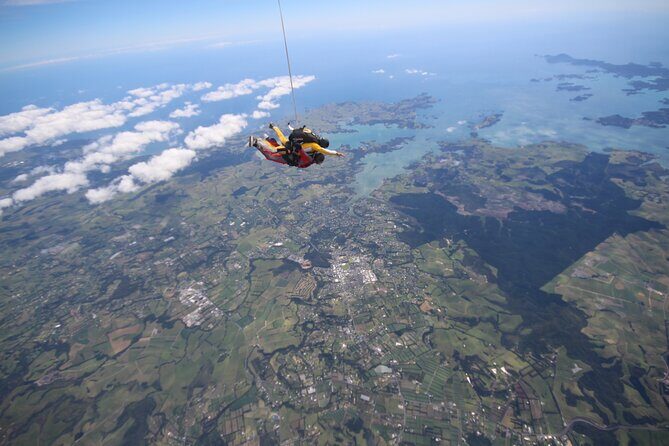
- About 9,000 feet: big altitude for a proper freefall, then a slower canopy ride
- Tandem instructor control: you’ll be strapped in and guided end-to-end with safety equipment provided
- Clear-day geography: you may catch views where the Tasman Sea meets the Pacific
- Pickup from Paihia/Kerikeri and the cruise port: easier logistics if you’re not staying near the drop zone
- Max 20 travelers: smaller groups than you might expect, helping keep the flow moving
- Instructor photos/video for sale: a nice souvenir option after you land
From 9,000 Feet: What You Actually See Over the Bay of Islands
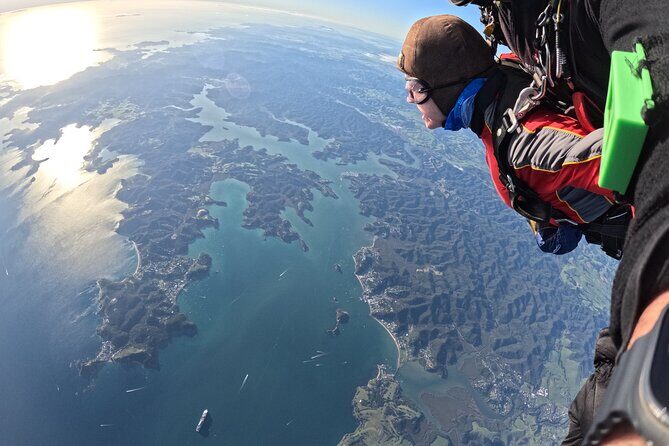
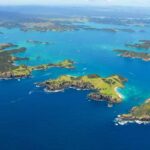
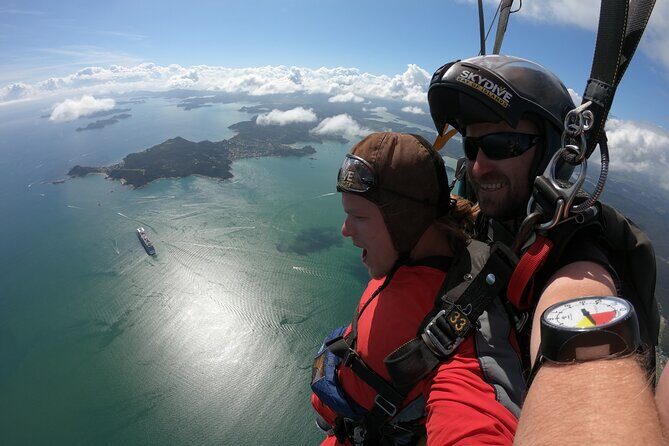
If you like coastlines, this area is built for the air. The Bay of Islands is famous for its island scatter—think multiple pieces of land separated by water you can read like glass from above. When you jump from around 9,000 feet (2,750 meters), you get enough height to see the pattern: long shorelines, sheltered inlets, and islands spaced so you can follow the shape of the bay as it curves.
On a clear day, you can also potentially catch the dramatic meeting of water bodies—the spot where the Tasman Sea meets the Pacific Ocean. It’s the kind of detail that turns a fun view into a “wait, I know where I am” moment, especially in a country that’s big on geographic labels.
One more view bonus: even if your exact flight path doesn’t put a specific landmark front and center, this region’s geography is so varied that you’re still likely to see a mix of coastal towns, rugged peninsulas, and islands with beaches and marine life below. That variety matters, because it keeps the experience from feeling like one long blink-and-you-miss-it scene.
You can also read our reviews of more tours and experiences in Bay of Islands.
Price and Logistics: What $204.11 Really Buys
At $204.11 per person, the value is mostly about what’s included in the experience package—not just the jump. You’re getting a tandem skydive (with all training and safety equipment provided), a jump window that’s typically wrapped into an about 4-hour block, and complimentary pickup options from central Paihia and Kerikeri, plus the cruise port.
You also have a built-in souvenir system. Instructor-captured photos and video are not included in the base price, but the setup is there for you to purchase after the flight. For a lot of people, that’s the sweet spot: you get the real-time moment without worrying about operating a camera while your heart is doing its own independent project.
Two logistics points to plan around so the day feels smooth:
- You’ll be asked to present printed tickets/vouchers at the drop zone.
- You’ll need to call 1 hour before your skydive time to confirm that conditions are suitable for jumping.
Those aren’t “small” details. They’re the difference between a calm start and a last-minute scramble.
Transfers and Check-In: How to Plan Your Day Without Stress
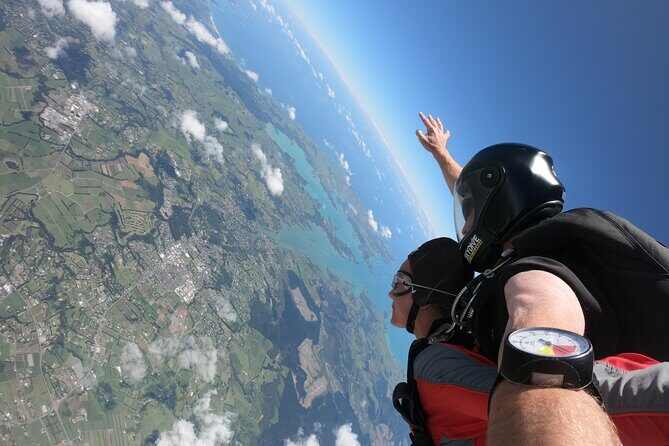
Most skydive days feel like they run on weather and operations. Here, you should assume the “time to finish” is shorter than the “time you’ll be there.” The jump itself typically takes about 1.5 hours, but you should allow 2 to 4 hours. That extra padding is for weather changes and the reality that aviation plans can shift.
The experience is capped at 20 travelers. That helps. Smaller numbers usually mean less chaos and fewer bottlenecks when you’re getting geared up and processed. Still, one important practical warning from a prior participant: processing took a long time for their group, and they ended up in the last group after many others. You can’t control the crowd, but you can control your day-plan. Build in patience, bring a snack if you’re waiting a while, and keep your phone charged because you’ll want it once you’re done.
Pickup helps you avoid local navigation headaches. If you’re staying in central Paihia or Kerikeri, or you’re at the cruise port, two-way transfers are offered. That’s a genuine quality-of-life upgrade, especially if you’re juggling luggage or trying to fit the skydive into a tighter travel schedule.
The Tandem Jump: Safety Gear, Instructor Control, and Photo Add-Ons
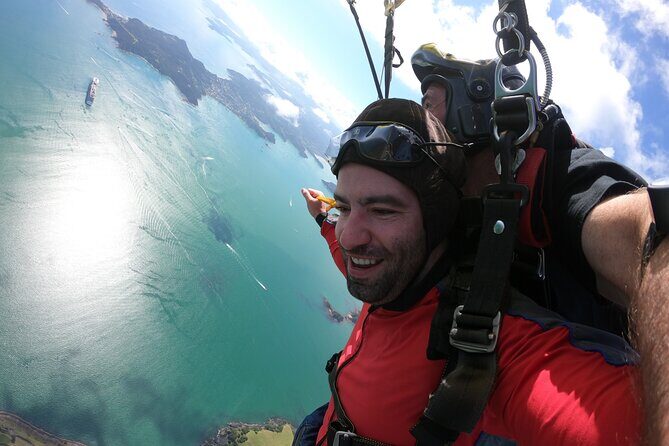
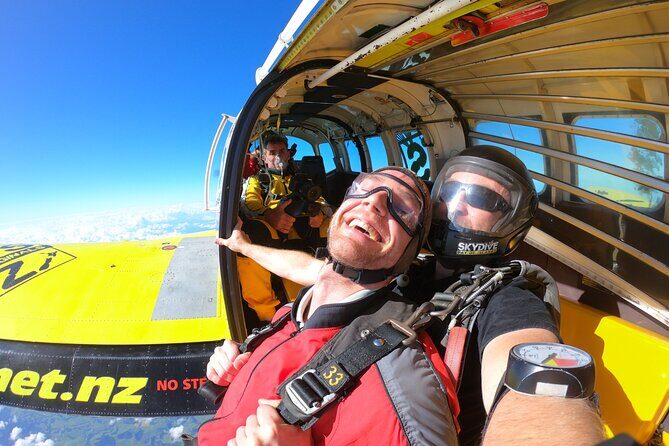
A tandem skydive is reassuring for a simple reason: you don’t manage the jump. An instructor does. You’re fitted with all training and safety equipment, and you jump while securely harnessed to your tandem partner.
From a comfort standpoint, it also helps that the experience includes an instructor-led flow. You’re not guessing what happens next. You get the steps, the gear, and the guidance to get you from nervous energy to grounded landing.
Photo and video matter too, even if you’re the type who thinks you’ll remember everything. Once you’re under canopy, you’ll be focusing on not getting your arms too enthusiastic. Buying photos/video afterward is a smart way to capture the moment without making you juggle cameras during the action.
Now, the balanced part: one participant had a very negative take on the way an instructor responded when they appeared nervous. They specifically named an instructor, Andrew, and described comments that made them feel worse rather than reassured. I can’t sugarcoat that. If you know you get anxious, do yourself a favor: tell the staff at check-in that you’re nervous and ask what their plan is for calming you down during gear-up. The goal is to set expectations early, not mid-air.
What Happens Above: Freefall, Then the Mellow Canopy Ride
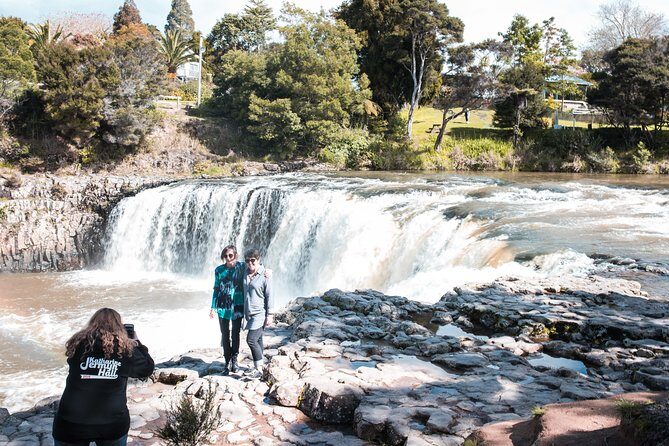
You’re going up to altitude first, then you leap. From around 9,000 feet, the freefall is the headline: fast, loud (in the way your body hears wind), and very physical in that moment when your brain catches up to what’s happening. This is the part people talk about afterward, because it’s intense in a short burst.
After freefall comes the slower canopy descent. This section is where you can actually see more clearly. The air shifts from “survive the moment” to “enjoy the view.” You’ll likely notice the coastline’s shape more, and you’ll have time to follow islands and bays as they slide past beneath you.
One subtle but important benefit of that canopy phase: it gives you time to mentally store the experience. Freefall is overwhelming. Canopy is where you turn it into a memory you can explain later.




The Bay’s Sights From the Air: A Stop-by-Stop View Map
Even though your skydive is a direct thrill activity, the area you fly over has a lot of distinct “this is why I’m here” points. Here’s how the region’s featured places connect to what you’re seeing and what you might notice.
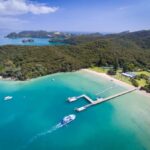
First, there’s the broad island view: the Bay’s island archipelago, with 144 islands referenced as part of what makes the area so famous. From the sky, the defining feature is the spacing—water cuts between land so you can spot inlets, sheltered beaches, and the way marine life thrives in calmer coves.
Next, there’s the significance of the north. The northernmost tip of New Zealand is referenced as a spiritual and geographic marker where the Pacific and Tasman water meet. Important caveat: it’s noted that it’s not directly visible during most skydive jumps. Still, it adds context when you’re looking around and trying to connect the coastline to real-world maps.
You also have coastal town views that can show up depending on the day’s flight path. One coastal town offering sweeping Bay views is often visible on jumps. You may also catch a historic town across the bay from Paihia, with a picturesque waterfront. Those are the kinds of landmarks that help the jump feel less like an anonymous coastline and more like a specific place you can name.
Then comes history with an aerial twist: the birthplace of modern New Zealand area. Those grounds are described as holding significant historical value, and the idea is that you get an overhead look at the surrounding region. Even if you don’t process every detail at altitude, it’s a good reminder that this isn’t just a holiday coast—it’s tied to major national storylines.
Another view category is land-and-water contrast. The largest island in the Bay of Islands is highlighted as having hiking trails and crystal-clear waters, and that makes sense from the sky: you can spot where land mass changes the water color and where shorelines look more protected. It’s also a reminder that after the jump, you could turn the day into a hike or a beach stop if you still have energy.
Inland, there’s another historic element: a town home to New Zealand’s oldest stone buildings, surrounded by lush greenery. While you won’t be landing inland from the skydive, it’s part of the wider “Bay of Islands identity,” and it can be a fun mental thread as you travel around the region afterward.
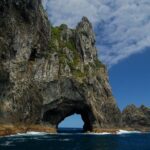
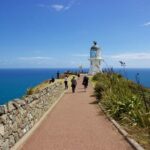
You’ll also have coastal drama points. One is a famous rock formation with a natural archway off the coast of Cape Brett. Another is Cape Brett’s rugged peninsula character—coastal cliffs and panoramic ocean views. Even from overhead, rugged coast is easy to read: sharp edges, broken rock shapes, and shorelines that don’t look soft or sandy.
Finally, there’s the human history angle near Matauri Bay, tied to a memorial dedicated to the Rainbow Warrior ship, which was bombed in 1985. It’s not a “fun” fact, but it’s real. Seeing or referencing that kind of site makes the whole Bay feel layered, not just pretty.
Safety First: Weight Limits, Scuba Timing, and Condition Checks
This is the part I pay the most attention to when I’m choosing a skydive, and you should too.
The experience has a strict 100 kg weight limit. If you think you might be near that mark, you’re advised to contact the operator so they can answer questions. Don’t guess. Confirm.
Closed-toe shoes and comfortable clothing are requested. That’s basic, but it matters because you’ll be moving around during gear-up and boarding.
There’s also a timing rule that’s easy to miss: if you’ve gone scuba diving in the last 24 hours, you can’t go skydiving due to pressure changes. If that’s you, plan your trip order—either dive earlier in your vacation or schedule your skydive after enough time has passed.
Finally, call 1 hour before your skydive time to confirm conditions are suitable for jumping. Weather can change. Operations can change. This call is how you avoid showing up for a day that might not fly.
Who This Skydive Fits Best (And Who Should Think Twice)

This skydive is a good match if you want a big adrenaline hit without needing to learn anything in advance. Tandem jumps are built for first-timers. You should also have a moderate physical fitness level, based on the requirements.
Service animals are allowed, which can matter for people who need that support.
If you’re traveling with a tight schedule, keep in mind that the day is weather-sensitive and the overall window is 2 to 4 hours. If you’re trying to squeeze it between other tours back-to-back, you’ll want buffer time.
If you’re someone who gets nervous, you should be honest about it at check-in. One previous participant raised concerns about an instructor’s response to their nerves (they mentioned Andrew by name), so your best move is to speak up early and ask for reassurance during gear-up. Most tandem instructors are trained to handle first-timers, but nobody should have to fight anxiety alone.
Value at $204.11: Is It Worth It for Your Trip?
For the money, you’re paying for:
- a tandem jump from around 9,000 feet
- safety equipment and instruction
- the photo/video system (optional purchase after)
- transfers from central Paihia and Kerikeri and the cruise port (complimentary collection service)
Is it cheap? No. But it is typical for a tandem skydive where you’re literally being carried through one of the most intense experiences people can do on holiday. The value is strongest if you:
- don’t already have a strong photo/video plan (because the staff capture it for you)
- want the Bay of Islands to be part of your story, not just a background region
- are okay with a few hours of waiting while operations align with the weather
The strongest positive pattern in the feedback is safety-conscious execution and instructors doing a great job once you’re strapped in. A separate negative story exists around the tone of one instructor when someone was nervous. That doesn’t erase the overall value, but it does mean it’s worth communicating your comfort needs early.
Should You Book This 9,000-Foot Bay of Islands Skydive?
Book it if you want a bucket-list style skydive that also lets you feel the Bay’s geography—islands, coasts, peninsulas, and the meeting of waters on clear days. The tandem format is built for first-timers, and the combination of views plus instructor-led safety is the reason this activity earns repeat love.
Consider a different plan if:
- you’re close to the 100 kg limit and haven’t confirmed
- you scuba-dived in the last 24 hours
- you hate waiting around for weather and want a tightly scheduled minute-by-minute day
- you know you panic easily and prefer a skydive operation where you can be reassured consistently (in which case, talk through expectations early)
If you go in prepared, you’ll get the best of both worlds: adrenaline up top, calmer sightlines under canopy, and a Bay of Islands view that sticks long after the wind quiets down.
FAQ
How high is the jump for Bay of Islands 9000ft Skydive?
You jump from around 9,000 feet (about 2,750 meters).
Is pickup included?
Yes. Complimentary collection service is offered from central Paihia and Kerikeri, and transfers are also available from the cruise port.
How long does the experience take?
It typically takes about 1.5 hours to complete the skydive, but you should allow 2 to 4 hours total in case of weather and operational changes.
Are photos or video included?
Souvenir photos and a DVD are available to purchase, but they are not included in the price.
What is the weight limit?
There is a strict 100 kg weight limit. If you think you may be near the limit, you should contact the operator for questions.
Can I skydive if I scuba dived recently?
No. If you have gone scuba diving in the last 24 hours, you cannot go skydiving due to pressure changes.
What’s the cancellation policy?
Free cancellation is available up to 24 hours in advance for a full refund. If you cancel less than 24 hours before the experience starts, the amount paid is not refunded.