REVIEW · WHANGAREI
Hundertwasser Art Centre Admission Ticket
Book on GetYourGuide →Operated by Hundertwasser Art Centre · Bookable on GetYourGuide
A colour- and nature-first museum, in Whangārei. I love how the Hundertwasser Art Centre turns architecture into something you can walk through, not just look at, and how it pairs his ideas with the Wairau Māori Art Gallery right from the start. The place also pays off for your time: in one day you can see major works, then finish high above the town at the Golden cupola.
My second favorite is the rooftop experience: the Afforested Roof is part of the art itself, and the climb to the 360° views gives your visit a clear payoff. The only catch I’d flag is timing and comfort: you’ll want closed-toe shoes and a pace that works for rooftop walking and stairs, especially if you arrive close to closing (open 10am–4pm daily).
In This Review
- Key Things I’d Prioritize Here
- Price and What Your $17 Ticket Actually Buys
- Arriving at the Hundertwasser Art Centre: Where the Day Starts
- Wairau Māori Art Gallery: Contemporary Māori Art in the Same Footprint
- Hundertwasser in New Zealand 1973–2000: Originals Plus Real Concepts
- Afforested Roof: When the Building Becomes Living Art
- Golden Cupola 360° Views: The Payoff Moment
- Optional Guided Tour vs. Audio Guide: Picking Your Style
- MuseumShop: Art Prints and Gifts to Take Home
- Accessibility and Who This Day Works Best For
- Practical Tips for a Smooth Visit
- Should You Book This Hundertwasser Day Trip?
- FAQ
- How much is the Hundertwasser Art Centre admission ticket?
- How long is the experience?
- What are the opening hours?
- What does the ticket include?
- Is a guided tour included in the ticket price?
- Is there an audio guide?
- Where do I start the visit?
- Is the centre wheelchair accessible?
- What should I bring?
- Is there a cancellation policy?
Key Things I’d Prioritize Here
- Largest Hundertwasser collection outside Vienna: you’re not just getting a taste.
- Wairau Māori Art Gallery: you’ll see contemporary Māori art alongside Hundertwasser’s vision.
- Afforested Roof: a living roof you can explore, not a background detail.
- Golden cupola for 360° Whangārei views: the best “wow” moment is at the end.
- Optional guided tour window: Thursday to Sunday at 11:00am adds context if you can fit it.
Price and What Your $17 Ticket Actually Buys
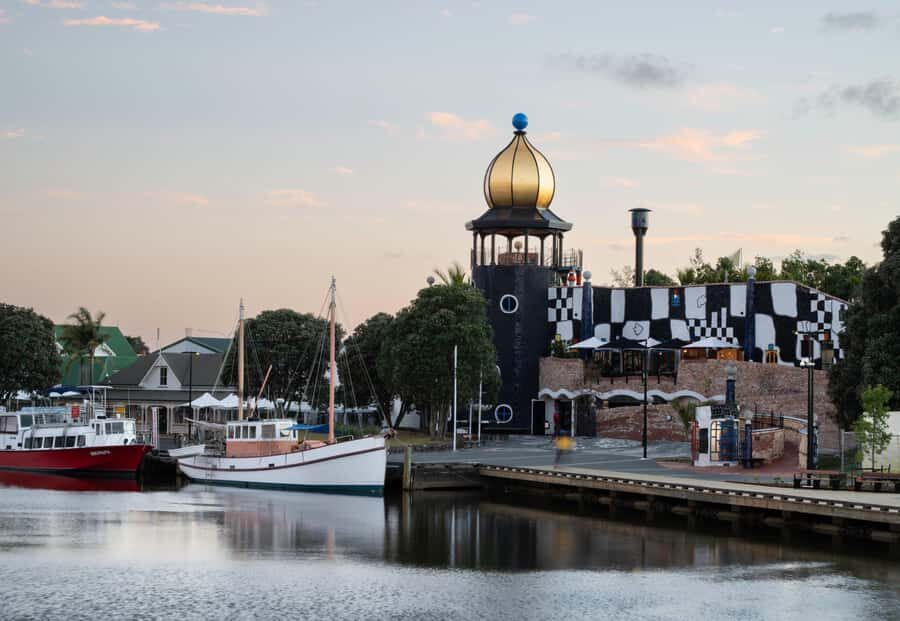
The admission ticket is $17 per person, and it’s priced like a museum day, not a special “add-on tour.” In practice, that matters because the ticket covers the core experience: entry to the Hundertwasser in New Zealand 1973–2000 exhibition, access to the Wairau Māori Art Gallery, and time on the afforested roof plus the climb to the Golden cupola.
If you add the optional guided tour, it costs extra (listed as $20 per person). I think that’s worth considering only if you like explanations: these tours run Thursday to Sunday from 11:00am–12:00pm, and they’re designed to give stories about Hundertwasser’s life, ideas, art, architecture, and ecological vision. If you’d rather go at your own pace, the audio guide is available daily, so you’re not stuck.
For a short trip to North Island, this is also a good value because it’s one site with a full arc: indoor art, a cultural gallery, then an outdoor rooftop payoff.
Arriving at the Hundertwasser Art Centre: Where the Day Starts
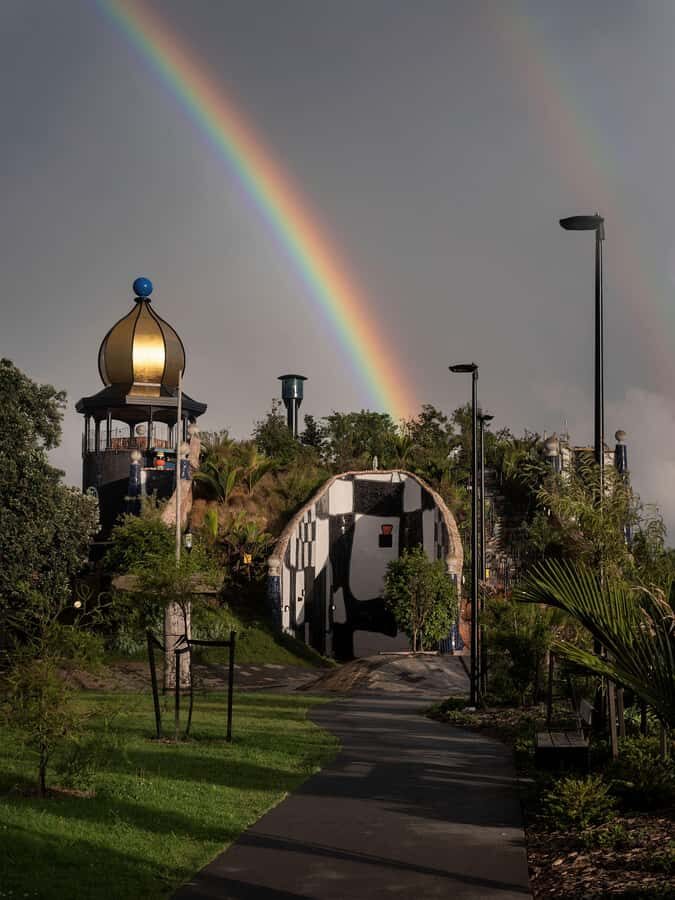
Your meeting point is the Hundertwasser Art Centre with the Wairau Maori Art Gallery, so you’re basically starting inside the experience. The visit begins the moment you walk in, and the centre is designed like a guided path even when you’re self-guiding.
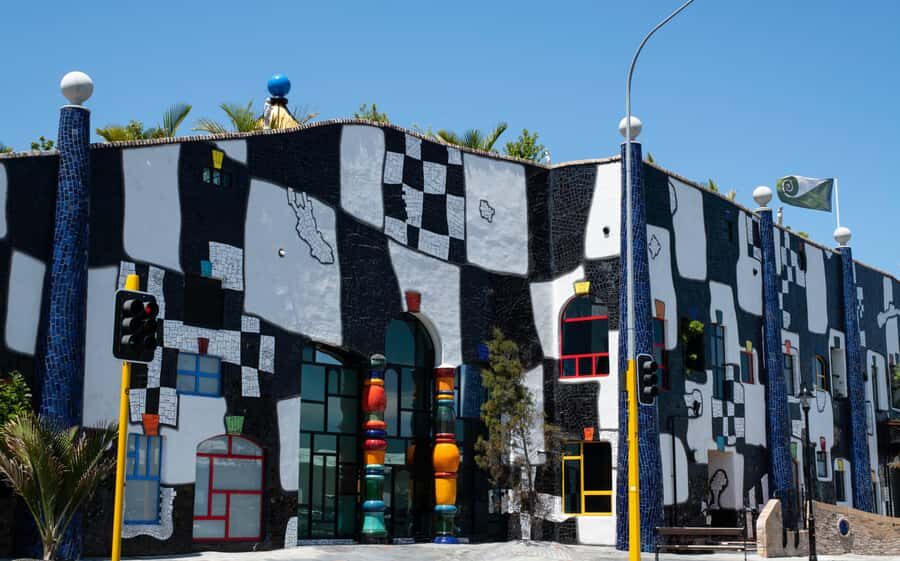
Before you jump into the main exhibitions, pay attention to the floor and the way materials are handled. Expect irregular tiled floors, handcrafted mosaics, and living walls that make the building feel part of the environment rather than separate from it. I find that’s important here: if you only treat it like a normal museum, you’ll miss the whole point of why the architecture is doing work.
Practical tip: this place rewards a slow first pass. Give yourself a few minutes to get your bearings, then you’ll enjoy the exhibits more later.
Wairau Māori Art Gallery: Contemporary Māori Art in the Same Footprint
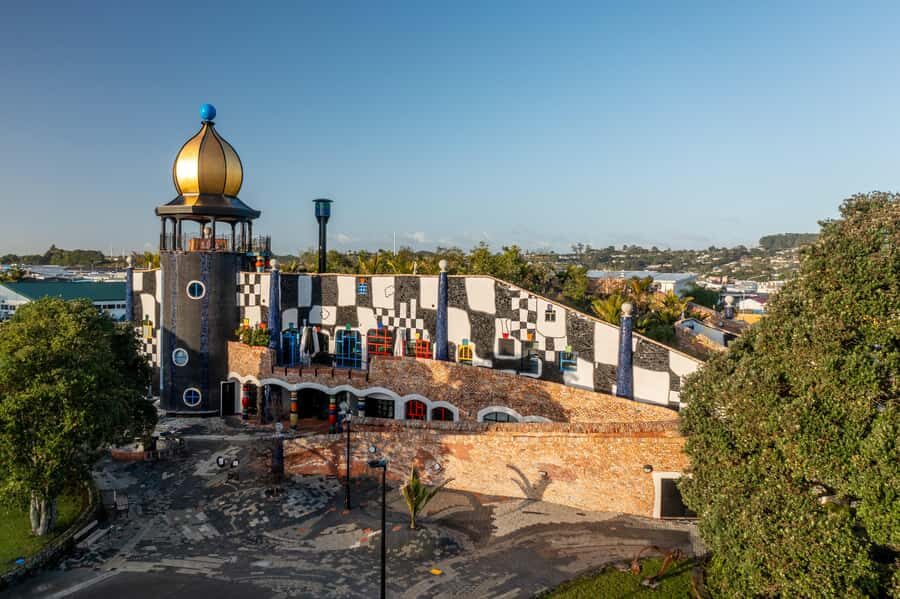
After you’re oriented by the building’s design, you’ll step into the Wairau Māori Art Gallery. The centre positions this gallery as Aotearoa’s first public contemporary Māori art space, and it’s meant to run as a conversation alongside Hundertwasser’s legacy.
What you’ll actually do here is simple: you see changing exhibitions by leading Māori artists. That rotation is a big deal for repeat visits and also for accuracy if you’re trying to see something specific during your trip. Instead of a single fixed “Māori section,” you’re getting a working gallery that’s alive and current.
Why I think this pairing works: it keeps your visit from turning into a one-artist theme park. You’re seeing that ideas about land, creativity, and identity aren’t restricted to one European art framework.
If you’re short on time, aim for quality over speed: read the gallery information, take in the artworks on their terms, and then continue onward rather than rushing through.
Hundertwasser in New Zealand 1973–2000: Originals Plus Real Concepts
Next comes the main exhibition, Hundertwasser in New Zealand 1973–2000. This is where you’ll get the centre’s biggest concentration of his work outside Vienna, and you’ll see more than just finished paintings.
Expect original paintings and tapestries, plus architectural models and ecological projects. That combination matters because Hundertwasser isn’t presented here like a painter who happened to build things. You get a fuller sense of how he connected art, built form, and environmental thinking.
If you like art that has rules of its own, you’ll appreciate what you see: curved lines, irregular geometry, and design that feels organic rather than mechanical. It can be easy to spot the colour first, but I recommend you also look at the materials and the structure. The models and ecological projects help you connect the visual style to a set of beliefs.
One more practical note: this gallery area is where you’ll likely spend your longest indoor time. If you’re visiting on a busy day, give yourself a buffer so the rooftop isn’t a scramble.
Afforested Roof: When the Building Becomes Living Art
After the indoor exhibits, the day pivots outdoors with the afforested roof. This is described as a living artwork planted with native species, and you can wander the rooftop before heading up to the view.
This is the part I’d call the “character check” for your visit. If you enjoy calm walking, taking photos, and watching how plants soften the architecture, you’ll love this section. If you’re rushing or you dislike outdoor walking in variable weather, it can feel like time you didn’t plan for.
What makes it special for your itinerary is that the rooftop isn’t just a bonus view. It’s part of the experience design, tied to the same idea that nature and creativity belong in the same frame.
Bring closed-toe shoes and take it slow on the roof paths. Even if you’re comfortable on stairs, rooftops ask you to watch your footing.
Golden Cupola 360° Views: The Payoff Moment
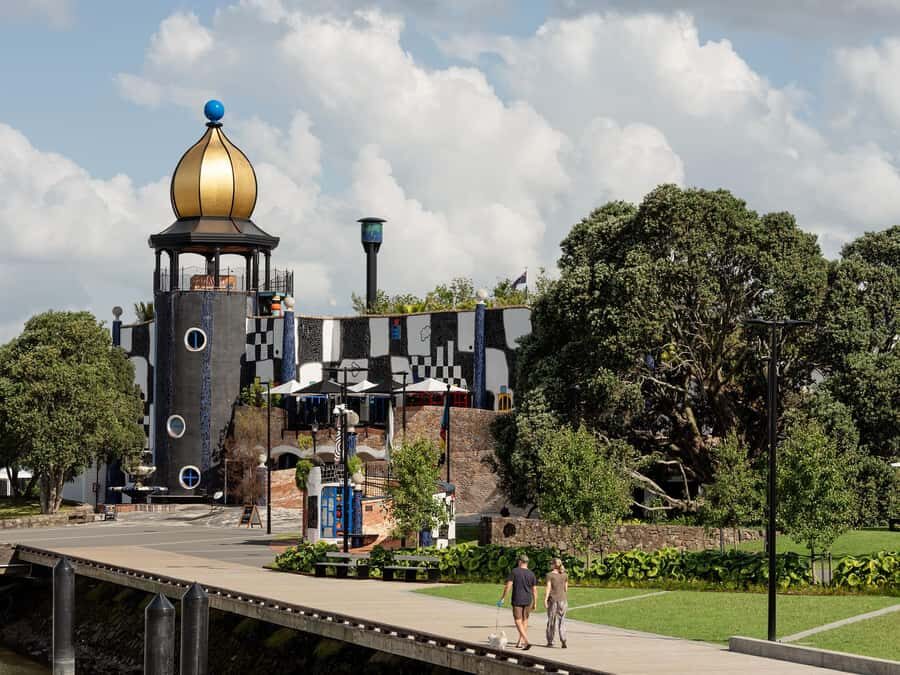
Then you climb to the Golden cupola for panoramic 360° views of Whangārei and beyond. This is the clear ending highlight, and it’s one of the reasons I’d plan your day so you’re not too tired when you reach the rooftop.
When you’re up there, you’re not just collecting a souvenir photo. The viewpoint helps you understand why this site is so satisfying: you see the town basin, the surrounding area, and how the centre’s unusual design sits in a normal landscape below.
Tip: if you’re photographing, take a few minutes to scan the view first, then shoot. Quick shots often miss the best angles because the cupola gives you a wraparound view.
Optional Guided Tour vs. Audio Guide: Picking Your Style
From Thursday to Sunday, there’s an 11:00am–12:00pm guided tour. The purpose is storytelling—Hundertwasser’s life, his ideas about art and architecture, and his ecological vision—so it’s especially helpful if you want context while you’re walking through the exhibits.
If you don’t want to time your day around the tour, you can use the audio guide, which is available daily. Audio guides work well when you like moving at your own speed, pausing when a detail grabs you.
My practical take: choose guided tour if you enjoy explanations and you’re there on a day that matches the schedule. Choose audio guide if you want flexibility, or if you’re visiting during hours when the guided time doesn’t fit your rhythm.
MuseumShop: Art Prints and Gifts to Take Home
Your visit ends in the MuseumShop. This is included as part of the day’s access, so you don’t need to plan for it as an extra step later.
You’ll find unique gifts, art prints, books, design pieces, and handcrafted items inspired by Hundertwasser’s world. Even if you don’t buy, it’s a useful final stop because it helps you track the themes you liked best—colour, design, nature, and the way art can show up in everyday objects.
If you’re trying to match a gift to someone’s taste, glance at the items before you commit, so you don’t end up buying something you only liked because you were tired.
Accessibility and Who This Day Works Best For
The centre is wheelchair friendly and fully accessible. That includes lift access to all exhibition levels, the afforested roof, and all facilities. If you use mobility aids, this is a real advantage over many small museums where the rooftop part is the first thing that gets hard.
This experience also fits families and couples who like art plus a strong sense of place. The centre is not suitable for babies under 1 year, so if that’s relevant to your group, plan accordingly.
If you have limited time in Whangārei, this site still works because the ticket covers the full arc: indoor exhibitions, a contemporary Māori art gallery, then the rooftop and Golden cupola views.
Practical Tips for a Smooth Visit
A few details make the difference between a good day and a rushed one.
- Wear comfortable shoes and closed-toe footwear, since you’ll be walking around galleries and on the rooftop.
- Bring a camera if you care about the view from the cupola and the architecture details.
- Have some cash if that’s useful for you in the shop area.
- Use your time order: start with the galleries, save energy for the rooftop climb, and treat the cupola as the payoff.
Also, plan around opening hours: it’s open 7 days a week, 10am–4pm. If you arrive late, you may end up feeling rushed for the climb and view, which is the part most people remember.
Should You Book This Hundertwasser Day Trip?
I’d book the Hundertwasser Art Centre ticket if you want more than a quick art stop. The combination of the Hundertwasser in New Zealand 1973–2000 exhibition, the Wairau Māori Art Gallery, and the rooftop design means you get art, cultural context, and a view that makes sense as an ending.
Skip or reconsider if you don’t like rooftop walking or you need a very short indoor-only museum experience. The roof and cupola are central here, not optional.
If you can plan for the Thursday–Sunday 11:00am guided tour, you’ll likely get extra value from the storytelling. If not, the audio guide lets you stay flexible.
Bottom line: for $17, this is a strong value day in Whangārei—especially if you like art that’s built into the place you’re standing in.
FAQ
How much is the Hundertwasser Art Centre admission ticket?
The admission ticket is listed as $17 per person.
How long is the experience?
The experience is listed as valid for 1 day.
What are the opening hours?
The centre is open 7 days a week from 10am to 4pm.
What does the ticket include?
Your ticket includes entry to the Hundertwasser in New Zealand 1973–2000 Exhibition, access to the Wairau Māori Art Gallery, access to explore the afforested roof, and the ability to climb to the Golden cupola. It also includes free access to browse the MuseumShop.
Is a guided tour included in the ticket price?
No. Guided tours are an optional extra. They run Thursday to Sunday from 11:00am to 12:00pm and cost $20 per person in addition to your admission.
Is there an audio guide?
Yes. An audio guide is available daily as an optional extra.
Where do I start the visit?
Your meeting point is the Hundertwasser Art Centre with Wairau Maori Art Gallery.
Is the centre wheelchair accessible?
Yes. The Hundertwasser Art Centre is fully wheelchair friendly, with lift access to exhibition levels, the afforested roof, and facilities.
What should I bring?
Bring comfortable shoes, a camera, cash, and closed-toe shoes.
Is there a cancellation policy?
Free cancellation is offered up to 24 hours in advance for a full refund.