REVIEW · COROMANDEL PENINSULA
Whangamata: Donut Island Guided Kayaking Experience
Book on GetYourGuide →Operated by Surfsup Kayaks Ltd · Bookable on GetYourGuide
Kayaking near Whangamata feels like an outdoor secret mission. You paddle from Whangamata Beach out to Donut Island’s wildlife-sanctuary lagoon, surrounded by native bush and volcanic cliff rock. I love the mix of wild scenery plus real, hands-on kayaking, and I also like that you’re treated as a guest in a protected area. The main drawback to plan for is weather: swell and wind can make the entrance tricky, and some days you may not go all the way inside the donut.
For 2 hours, this tour keeps things moving without feeling rushed. You’ll cover about 600m off the coast, work your way through inlets, and then settle into the turquoise lagoon where the pace can slow down. You can even add a swim when conditions allow. If you hate being in the ocean environment, or you’re not comfortable around waves and rocks, this won’t be the relaxing option.
Also, keep your expectations tied to the reality of a coastal sanctuary. Access is limited because of geography and conditions, and that’s part of why it stays special. One more consideration: it’s not suitable for everyone, including pregnant people, wheelchair users, people who are visually impaired, or anyone over 275 lbs (125 kg).
In This Review
- Key highlights to look for
- Whangamata to Donut Island: what this 2-hour paddle really delivers
- The wildlife sanctuary rules: why conservation is part of the fun
- How the route works: narrow entrance, swell, and wind reality
- Donut Island lagoon and volcanic rock formations: the wow factor
- Gear and safety: the wetsuit, dry bag, and real ocean risks
- Guides, small-group pace, and how support shows up
- Value check: $62 for gear, a guide, and a real protected place
- Best time, best conditions, and what to do when it’s windy
- Who this tour suits (and who should skip it)
- Should you book the Whangamata Donut Island kayak tour?
- FAQ
- How long is the Whangamata to Donut Island kayaking experience?
- What’s included in the $62 per person price?
- Do I need to bring my own swimsuit and towel?
- Can I swim during the tour?
- Is this tour okay for first-time kayakers?
- What happens if weather is too rough to go inside Donut Island?
Key highlights to look for
- Small group of up to 8 people, so you’re not fighting for space in the lineup.
- Kayak (or paddleboard) access through a narrow entrance, which depends on wind and swell.
- Whangamata Beach to Donut Island with dramatic volcanic cliff formations along the way.
- Wildlife sanctuary lagoon with native fauna and a sense of quiet that’s rare on busy coastlines.
- Swim whenever you please when conditions are safe for it.
- Safety and comfort gear included: wetsuit, life jacket, dry bag.
Whangamata to Donut Island: what this 2-hour paddle really delivers
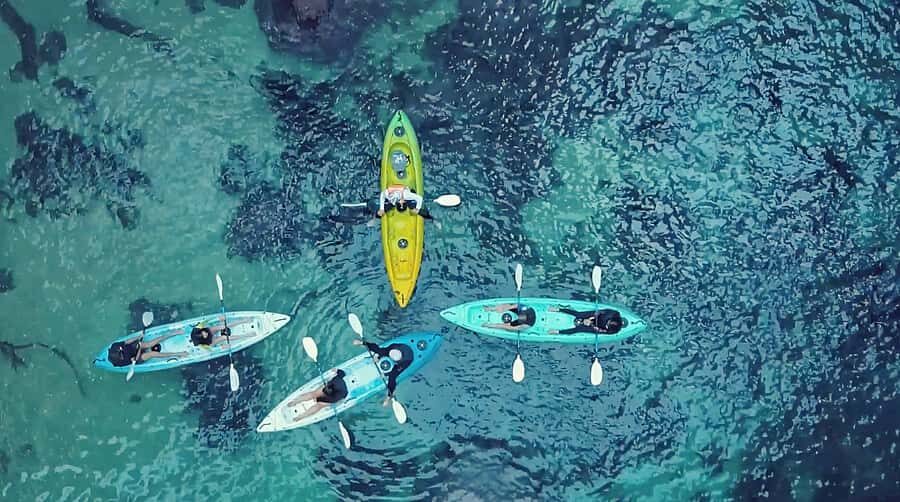
This is a short tour, but it has the feel of a full little adventure. You start right by the beach in Whangamata and then head out toward a cluster of islands that are protected as wildlife sanctuary. The goal is simple: get you kayaking to a place that’s visually striking, and keep you there long enough to feel the change from open water to sheltered lagoon.
The timing matters. In just two hours, you don’t have to overthink logistics or spend your whole day traveling. Instead, you focus on technique, staying relaxed, and taking in the volcanic rock shapes as you move. You’ll paddle in and out of inlets, then spend time in that lagoon area where the water can look calm and turquoise.
If you’ve never kayaked before, the tour can still work. Some past guests specifically noted it felt doable for first-timers. That’s usually because the guide sets the pace, keeps everyone together, and handles safety positioning while you practice the basics.
The wildlife sanctuary rules: why conservation is part of the fun
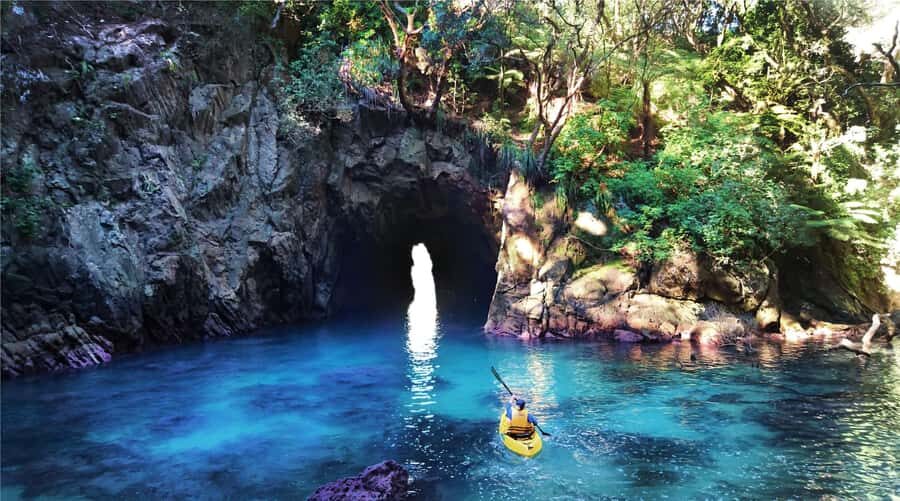
Donut Island isn’t just scenery. It’s a wildlife sanctuary, and the tour comes with a clear message: act like a guardian, not a tourist with a megaphone.
That changes your mindset in a good way. You’re not doing a drive-by photo stop. You’re entering a protected coastal environment where native flora and fauna live close to the water. The guides are there to keep you in the right places and moving safely. And because it’s a sanctuary, the experience feels more thoughtful than typical sightseeing.
The bonus here is that the setting is so remote-feeling. Even when you’re near a town like Whangamata, the sanctuary area gives you a sense of getting away. One of the reviews called it breathtaking, and that’s what the sanctuary status tends to create: fewer disturbances, more quiet, and more natural behavior from wildlife you might spot.
How the route works: narrow entrance, swell, and wind reality
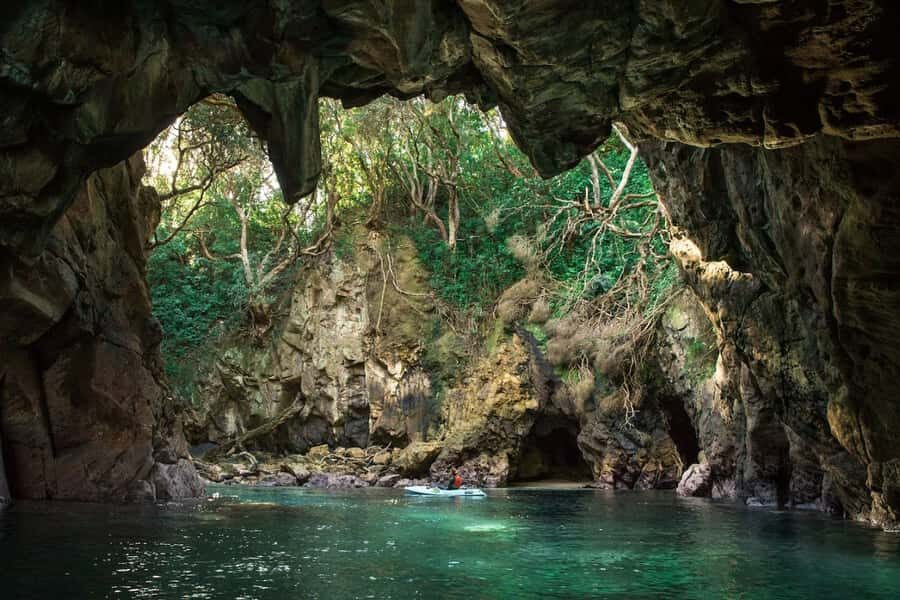
Here’s the part you should take seriously: access depends on conditions. Because the islands are shaped the way they are, the entrance into the key lagoon area is narrow. That’s why the tour uses kayaks or paddleboards that can squeeze through where other options can’t.
When wind and swell cooperate, it’s smooth. When they don’t, the tour can adjust. Some guests noted that on rougher days, they couldn’t go inside Donut Island. In those cases, the guide pivoted to an alternative island beach and an extra local touch (like leaf tea in some instances).
So plan for two possible outcomes:
- Best-case: you get through the narrow entrance and spend time in the donut lagoon.
- Rough-day version: you still kayak out and enjoy dramatic coastline and a fallback stop.
Either way, you’re still on the water, still surrounded by volcanic formations, and still guided by an experienced team that’s watching conditions constantly.
Donut Island lagoon and volcanic rock formations: the wow factor
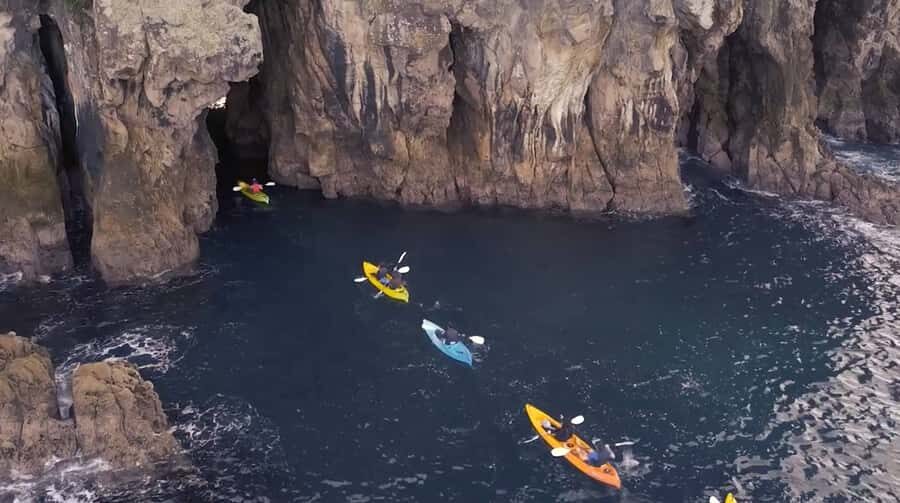
The payoff is the lagoon. Guides steer you toward a turquoise, sheltered space that feels almost unreal after open water paddling. You’ll see volcanic cliff rock formations along the route, and those formations help explain why this coastline looks so dramatic.
Volcanic coastlines are great because the rocks aren’t just pretty. They create the shapes that influence currents, swell patterns, and even where wildlife concentrates. So when you’re looking at those cliff rocks, you’re also looking at the physical reason the sanctuary is so distinctive.
What you might notice once you’re inside the lagoon is the shift in sound and movement. Outside, wind and waves push the water around. Inside, you often get calmer conditions where you can focus on drifting, birdwatching, and enjoying the textures of the rock and shoreline.
And yes, some groups have even reported wildlife surprises such as birds seen in or near cave-like areas. Don’t count on a specific animal every time, but the sanctuary setting increases your chances of seeing something living and local instead of just staring at scenery.
Gear and safety: the wetsuit, dry bag, and real ocean risks
This tour includes the gear that matters most for comfort in New Zealand coastal water:
- kayak and paddle (or paddleboard, as noted for access)
- life jacket
- dry bag
- wetsuit
- local guide
That dry bag is a big deal. You’re out on the water close to rocks and waves. You don’t want your phone or keys swimming along with you.
You also get a wetsuit, which helps you handle cooler water. Several people mention wind and roughness making it more challenging, but the wetsuit and life jacket make the experience feel manageable rather than risky.
Now the blunt part: the operator explicitly warns about the risk of capsizing in deep water, rocks, waves, and wind. In other words, you should treat this like an ocean activity, not a calm pond paddle.
Practical prep helps:
- bring a swimsuit, beach towel, and beach sandals
- pack a change of clothes for afterwards
- wear sunscreen and a hat
- bring water
Also, the tour prohibits alcohol and drugs. That’s a good rule for any water-based activity, and it keeps the safety focus where it belongs.
Guides, small-group pace, and how support shows up
Small group matters here because conditions can change fast. With a limit of 8 participants, your guide can keep closer control, watch spacing, and assist quickly if someone needs help.
The guide quality is one of the strongest themes in the feedback. Names that come up include Dylan, Adam, Dakota, Hannah, Mauro, Francois, Molly, Elliot, Bella, Jim, and Ben. More importantly than the names is the pattern: guides are friendly, supportive, and active about safety and instruction.
A few specific examples from the experience vibe:
- Guides helped people who fell in or needed assistance.
- Guides adjusted the plan when the water was too rough to enter the donut.
- The pacing was described as a good fit even for first-time kayakers.
If you want a tour where you’re not just handed gear and sent out, this is that kind of setup. You’ll get local knowledge about the island area and what makes the sanctuary important.
Value check: $62 for gear, a guide, and a real protected place
Let’s talk money in plain terms. At $62 per person for 2 hours, you’re paying for three big things:
1) a guide who manages ocean conditions and group spacing
2) included safety and comfort gear (life jacket, dry bag, wetsuit)
3) access to a protected sanctuary environment that’s not easy to reach
You’re not paying for a long day or a bus ride. You’re paying for a guided water experience, and those included items are part of the value math. If you had to rent a wetsuit and get your own safety setup, the cost would climb.
The one thing not included is food and drinks. That means you should plan for your own water and you might want a light snack before or after, depending on your timing. Some guides incorporate a local leaf tea stop on the way or as part of alternative stops; that has shown up in feedback, but you shouldn’t treat it as a guaranteed part of every outing.
When you compare this to other short activities in the Coromandel, what makes this feel fair is the direct access. You’re not just looking at islands from shore. You’re moving under guidance, using the lagoon’s geography, and seeing volcanic formations up close.
Best time, best conditions, and what to do when it’s windy
You don’t control the ocean. The good news is that the tour is designed around that reality. Wind and swell can change hour to hour, and the experience is weather dependent. If conditions cancel the trip, the operator seeks an alternative date or an alternative activity, or refunds the total cost if they can’t make that work.
Your best move as the customer is simple:
- call ahead if you’re unsure about conditions
- arrive ready for wind, not only sunshine
- be mentally flexible about whether you enter the donut lagoon fully
If it’s windy, it can get more physical. That doesn’t automatically mean a bad day. Some people found windy conditions challenging but still memorable, especially because the guides supported them.
If you go in expecting a calm movie scene and the ocean gives you something more active, you’ll have a better time.
Who this tour suits (and who should skip it)
This is a great match for people who want an ocean activity with a guided safety net. It also suits first-timers who can follow directions and paddle through mild-to-moderate conditions.
You should think twice if:
- you’re pregnant (not suitable)
- you use a wheelchair (not suitable)
- you have visual impairment (not suitable)
- you’re over 275 lbs (125 kg)
- you don’t feel comfortable in deep water around rocks, waves, and wind
If you’re comfortable getting wet, wearing a wetsuit, and moving with a small group, you’ll likely enjoy it. The tour is short, the gear is included, and the payoff is a sanctuary setting you can’t really replicate without water access.
Should you book the Whangamata Donut Island kayak tour?
I think you should book this tour if you want a short, guided kayak experience with a strong sense of place. The combination of wildlife sanctuary access, dramatic volcanic coastline, and the chance to swim when safe makes the $62 feel like a fair trade for what you get.
Skip it if you’re looking for a calm, beginner-friendly stroll on sheltered water only. The ocean here can be rough, and the operator is clear that capsizing risk exists in deep water with waves and wind.
If you’re flexible about conditions—ready for the day to adjust—you’re exactly the kind of traveler who will benefit. Bring the swimsuit, pack the change of clothes, wear sunscreen, and let the guide handle the route.
FAQ
How long is the Whangamata to Donut Island kayaking experience?
It runs for 2 hours, so it’s a compact outing that fits well into a half-day plan.
What’s included in the $62 per person price?
The tour includes a kayak and paddle (or paddleboard access where conditions allow), a local guide, a life jacket, a dry bag, and a wetsuit.
Do I need to bring my own swimsuit and towel?
Yes. You’ll want swimwear, a beach towel, sunscreen, a hat, and water, plus beach sandals and a change of clothes for afterward.
Can I swim during the tour?
The experience is set up so you can go for a swim whenever you please, assuming conditions are safe.
Is this tour okay for first-time kayakers?
It can be doable for first-time kayakers, especially because the tour runs with a small group and an active guide focused on safety and support.
What happens if weather is too rough to go inside Donut Island?
Tours are weather dependent, and conditions can change fast. If the provider cancels due to weather, they’ll look for an alternative date or an alternative activity, or refund the cost if an alternative isn’t possible.