REVIEW · WHITIANGA
Whitianga: 2-Hour Cathedral Cove and Volcanic Coast Cruise
Book on GetYourGuide →Operated by Ocean Leopard Tours · Bookable on GetYourGuide
Cathedral Cove feels different from the water. This 2-hour Mercury Bay cruise out of Whitianga puts you close to volcanic rock formations and the movie-famous shoreline, while a local guide keeps things moving with real talk about geology and wildlife.
I especially like the purpose-built boat setup: cushioned seating and sunshade mean you can actually enjoy the ride, not just survive it. I also love how the captain/guide works for photos, often helping everyone get their best angle without rushing you.
The only real catch is weather. If the sea turns choppy or wind picks up, your ride may feel rougher than you hoped, and the schedule can shift, like it did for at least one group that lost about 30 minutes.
In This Review
- Quick hits before you go
- Whitianga Wharf: getting on board without stress
- A 2-hour cruise on a purpose-built boat (comfort matters)
- Cathedral Cove at Te Whanganui a Hei: what you’re really seeing
- The volcanic coast portion: blowholes, pinnacles, and caves
- Islands and nearby beaches: Hahei and Lonely Bay from the water
- Wildlife spotting in Mercury Bay: dolphins, whales, and more
- Live guide commentary: the difference between seeing and understanding
- Price and value: is $83 worth a 2-hour cruise?
- What to bring: simple gear that prevents a miserable day
- Who this cruise suits best (and who should skip it)
- Should you book this Cathedral Cove and Volcanic Coast cruise?
- FAQ
- How long is the Whitianga Cathedral Cove and Volcanic Coast cruise?
- Where do I meet for the tour?
- Is food and drinks included?
- Is there live tour commentary?
- What should I bring?
- Is hotel pickup included?
- Can I cancel for a refund?
Quick hits before you go
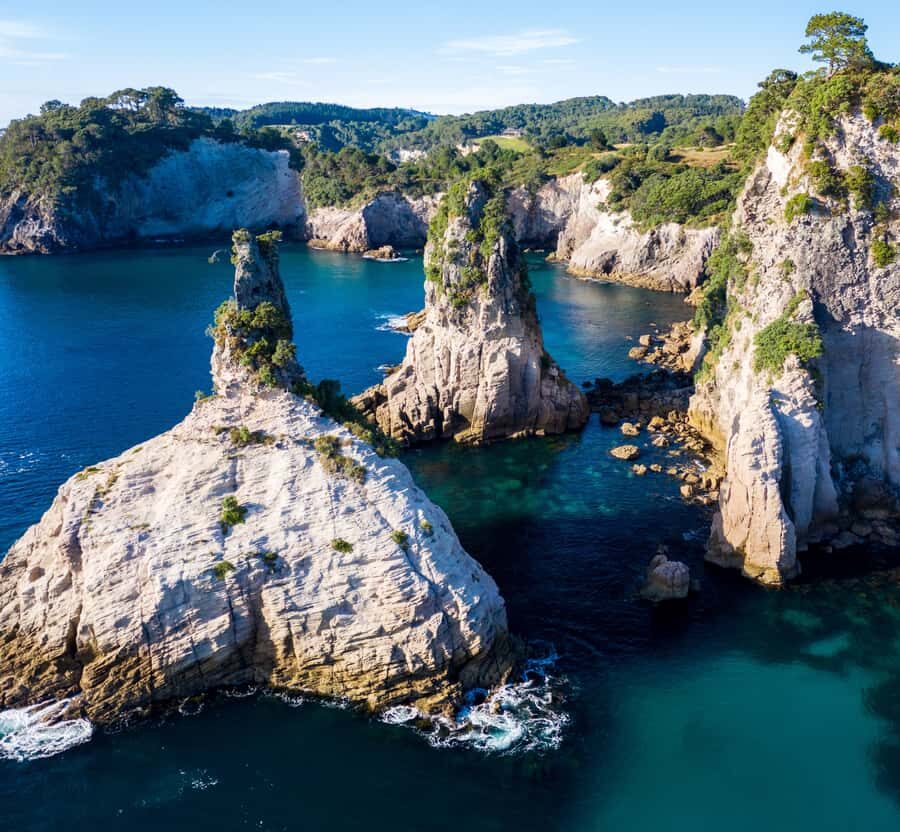
- A close-range Cathedral Cove viewing: you see Te Whanganui a Hei Marine Reserve from the water rather than from a distant viewpoint.
- Live English commentary that’s funny and practical: guides explain what you’re looking at and when to look for wildlife.
- Volcanic-coast wow factors: giant blowholes, pinnacles, and sea caves show you what erosion does over time.
- Wildlife spotting is part of the plan: keep watch for dolphins, whales, and orcas, plus the occasional penguin or schooling fish.
- A small, smoother feel than bigger boats: many riders describe it as intimate and not cramped.
- Photo-friendly guiding: guides/captains make time for shots and help both sides of the boat.
Whitianga Wharf: getting on board without stress
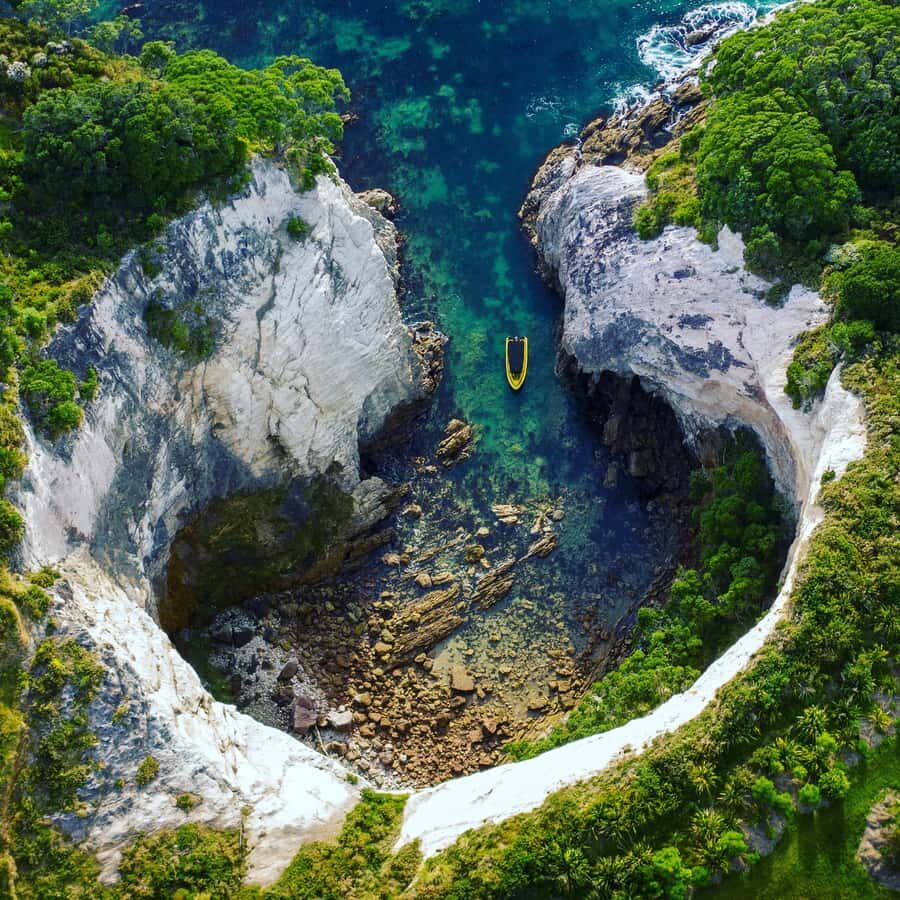
The tour departs from Whitianga Wharf on the Esplanade (14 Esplanade, Whitianga). Plan to arrive 15 minutes early, because you’ll want a little buffer for boarding and settling in.
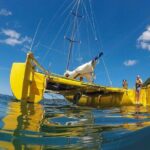
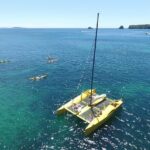
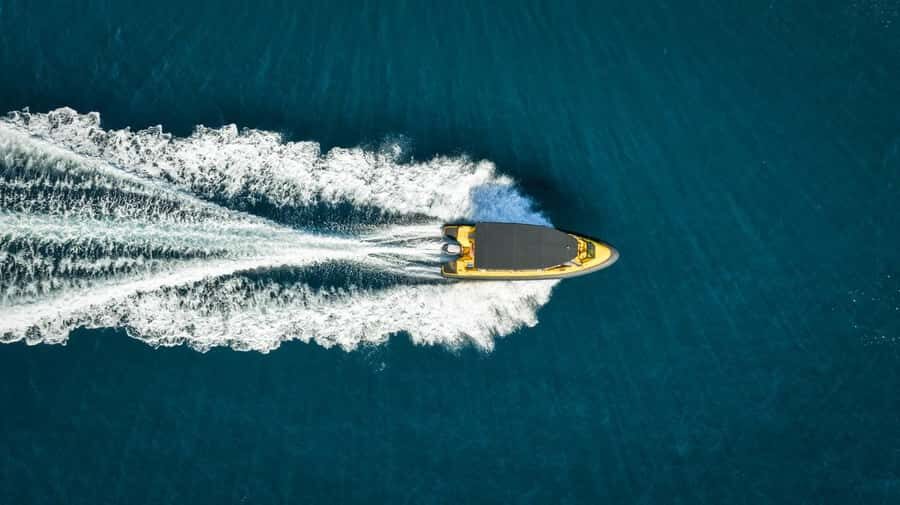
Most often, the tour boat is yellow and black on the jetty. If the skipper is already aboard, you’ll likely be able to go right down the ramp; if not, you’ll wait for the captain to return and then everything moves quickly.
You can also read our reviews of more boat tours in Whitianga
A 2-hour cruise on a purpose-built boat (comfort matters)
This is a 2-hour scenic cruise designed specifically for Mercury Bay’s coastline. The boat has cushioned seats and a sunshade, which makes a huge difference when you’re out on the water longer than you expected or the sun is strong.
You also get a ride that many people describe as smooth. Part of that is good boat handling, and part of it is that the route is paced to keep everyone comfortable while still getting you close to the action.
Yes, the ride can feel fast at points. If you like speed and open-water views, you’ll probably enjoy that energy; if you prefer a slow scenic drift the whole time, manage expectations and dress for spray and wind.
Cathedral Cove at Te Whanganui a Hei: what you’re really seeing
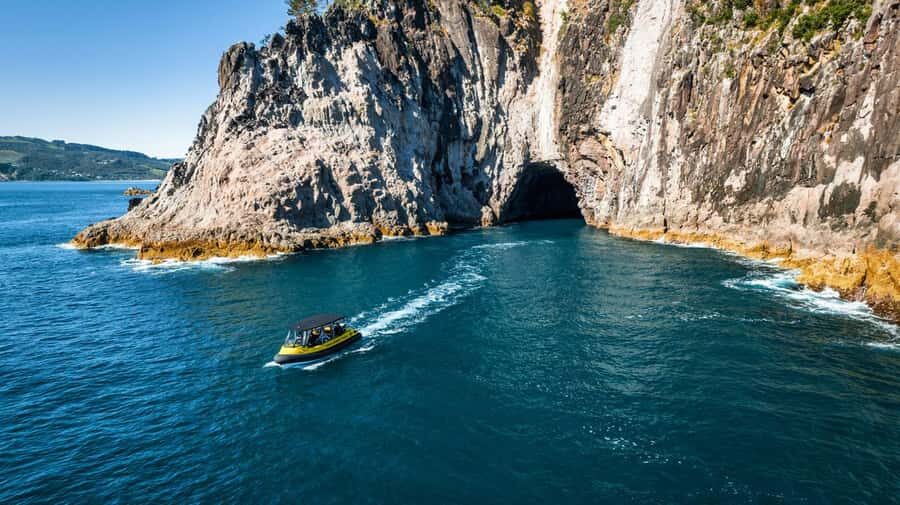
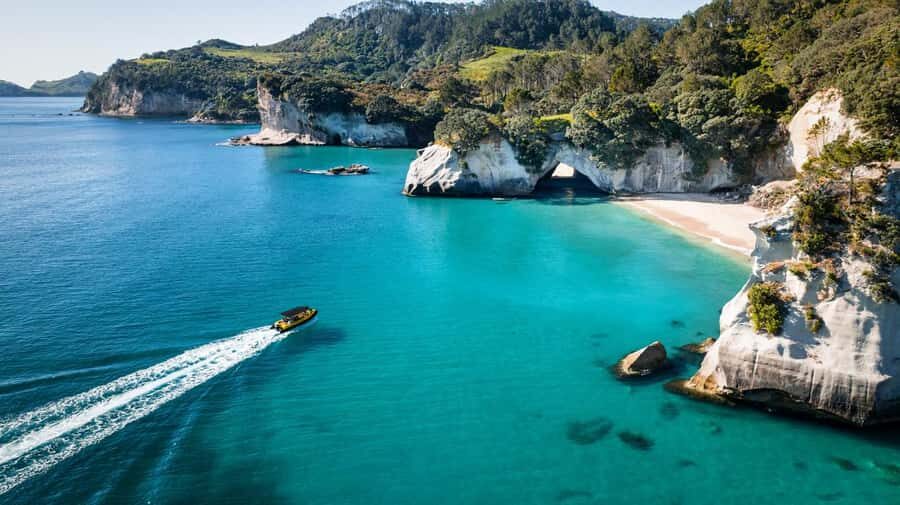
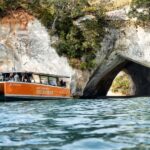
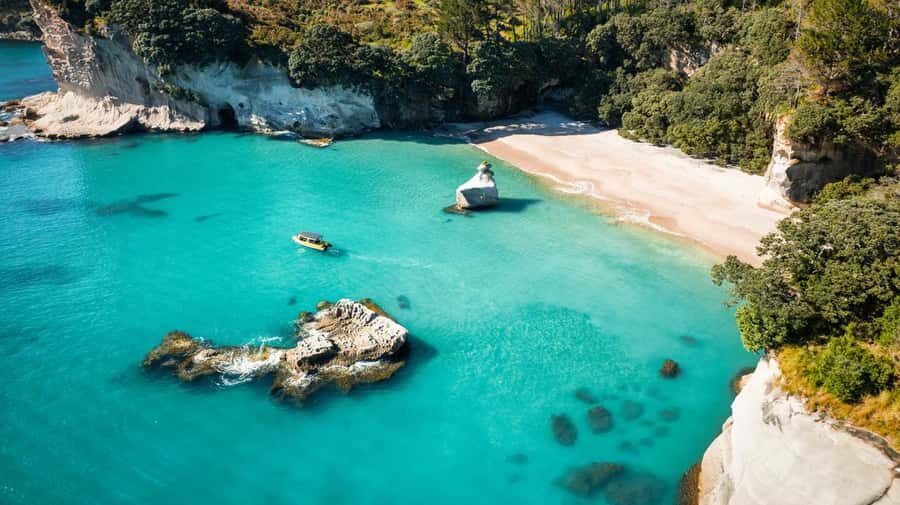
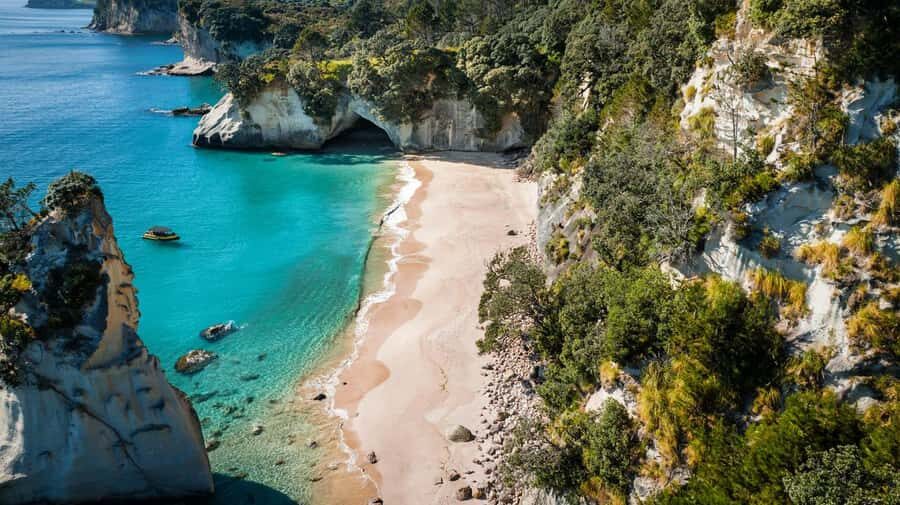
Cathedral Cove is the headline, and the cruise is set up for exactly that. You’re viewing it within Te Whanganui a Hei Marine Reserve, a protected area that draws more than 150,000 visitors per year.
What makes a boat tour worth it is perspective. From the water, you understand the shapes, scale, and how the coastline fits together with the surrounding beaches like Hahei and Lonely Bay. The rock formations look less like a postcard and more like a living, changing coastline under constant wave work.
This is also one of the places where the Maori heritage is part of what makes the site meaningful, not just a backdrop. And yes, Cathedral Cove was used as a filming location for Narnia, so if you recognize the setting, you’ll feel that connection right away.
The volcanic coast portion: blowholes, pinnacles, and caves
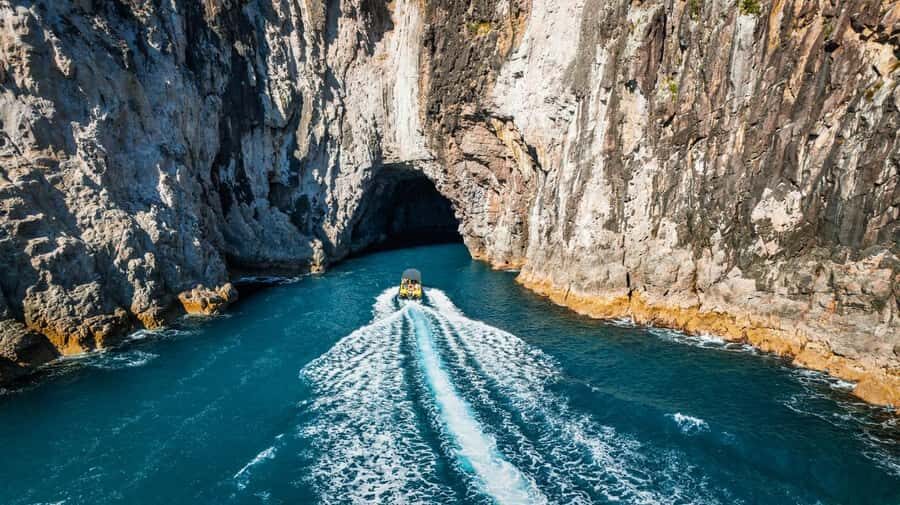
After you get rolling, the cruise explores around 12 kilometers of rugged volcanic coastline. This stretch is where the scenery shifts from pretty beaches to dramatic coastal machinery: blowholes, pinnacles, and sea caves.
You’ll hear the guide point out what you’re looking at and why it’s there. On a coastal walk, you mostly see one angle at a time; from the water, you can track how waves attack rock layers, carve hollows, and leave weird, sculpted features behind.
One highlight that comes up a lot is the Orua Sea Cave. Some explanations focus on how it ties into the bigger story of plate tectonics, including the idea of where the Asian and Pacific tectonic plates meet over the area.
If your photo style is close-up rock shapes and texture, this section is where the camera time pays off. Even if you’ve seen images before, the coast from the sea gives you a sense of depth and motion that flat photos can’t.
Islands and nearby beaches: Hahei and Lonely Bay from the water
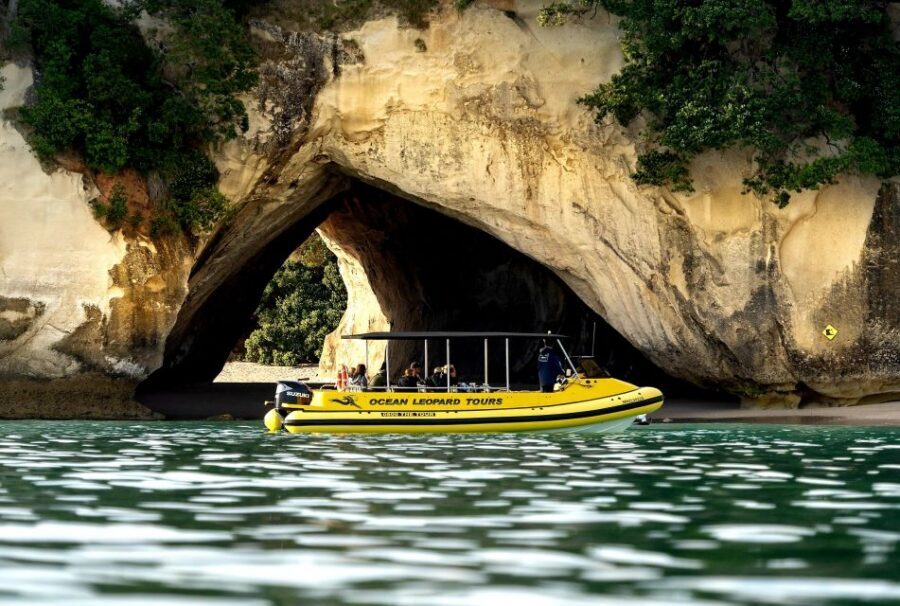
Between Cathedral Cove and the volcanic features, the cruise also works in the surrounding beaches—especially Hahei and Lonely Bay. Seeing them from the water helps you understand the coastline’s layout, including which coves feel sheltered and which areas are exposed.
You don’t need a long hike to get the payoff here. The value is that the cruise gets you closer to the shore than larger boats can, so you get more of the visual detail without spending the entire day walking or driving between viewpoints.
Keep in mind you’re still on the boat for the experience. If you’re hoping for a full-on land excursion, this isn’t sold that way; the activity is about viewing and learning from the water, not stepping onto multiple shore stops.
Wildlife spotting in Mercury Bay: dolphins, whales, and more
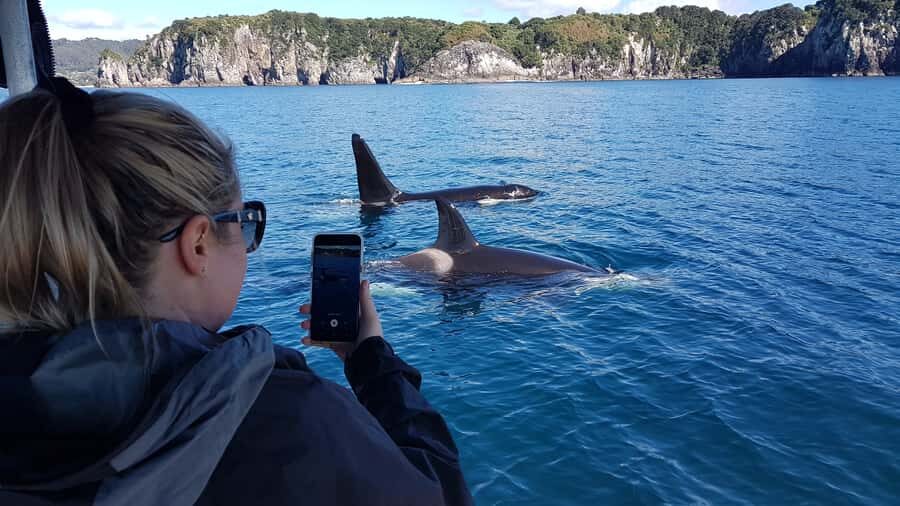
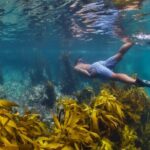
Your guide keeps a lookout for dolphins, whales, and orcas, and you’re encouraged to keep eyes on the water too. Wildlife sightings aren’t guaranteed, but this part of the tour makes sense because you’re positioned along a coastline where marine life can show up.
The wildlife talk can get specific. In the more detailed guidance, you might hear about local species and the kind of habitat you’re passing, and some groups report seeing things like blue penguins, snapper, and schooling fish along the route.
One thing I like is that the captain and guide usually connect the spotting to the area you’re sailing through. That turns random luck sightings into something you can actually interpret, instead of just watching and hoping.
Live guide commentary: the difference between seeing and understanding
This cruise runs on live English commentary, and that’s not a small upgrade. When someone explains what you’re looking at—geology, coastal processes, and why certain spots matter—you’ll “read” the coastline as you go.
In the field, the guides and captains named in recent trips include Sam and Justin. Riders describe their approach as friendly, funny, and clear, with a steady rhythm that doesn’t drown you in facts.
Just as important, the guide tends to manage photo time. Many accounts emphasize that the captain checks that everyone gets a chance to photograph and may adjust the boat position so both sides get good views of the same formation.
Price and value: is $83 worth a 2-hour cruise?
At $83 per person for 2 hours, you’re paying for three things: close access, guided interpretation, and a low-effort way to cover the best coastal highlights. This is where the “smaller boat” approach matters, because it’s tied directly to how close you can safely get to the coastline and key viewing points.
Compared with spending extra time driving between scattered viewpoints, this tour compresses a lot into one outing. You get Cathedral Cove, nearby beaches, and volcanic features all in one go, without the time cost of independent route planning.
Is it perfect value if you’re on a tight schedule? Likely, yes—because 2 hours is a manageable chunk even on a busy North Island itinerary. Is it perfect value if you hate boats or get seasick easily? Then you’ll want to think twice, since the whole experience is on the water.
What to bring: simple gear that prevents a miserable day
The basics are straightforward, and you’ll be glad you packed them. Bring comfortable shoes, sunglasses, a camera, and a jacket, since sea wind can cool things down quickly.
Also plan for sun and glare. Sunscreen and a sunhat help more than people expect, especially when you’re on the water and the light bounces off the surface.
If you have them, bring binoculars. Some people arrive with them and use the extra reach to watch for wildlife more effectively.
Food and drinks are not included, so bring refreshments if you want a snack or water. Even on a cool day, it’s nice to have something on hand, especially if you’re photographing nonstop.
Who this cruise suits best (and who should skip it)
This is a strong match for couples, families, and anyone who wants big coastal scenery with minimal walking. It’s also a great choice if you want a guided outing that feels safe and structured, with time to ask questions and get photo angles.
If you’re the type who loves nature explanations, volcanic geology, and wildlife chances, you’ll probably get extra value from the live commentary. If your travel style is more hands-on hiking or beach time on foot, you may feel slightly constrained by the viewing format from the boat.
If you’re sensitive to rough water, take weather seriously. The coast is stunning, but sea conditions drive comfort.
Should you book this Cathedral Cove and Volcanic Coast cruise?
If you want the easiest way to see Cathedral Cove and the volcanic coast up close, I’d book it. The combination of a purpose-built boat, live guide narration, and photo-friendly guidance is exactly what makes this kind of tour feel worth the money.
Book it even more confidently if you care about perspective—rock formations and caves look completely different when you’re right off them. And if you love wildlife, this is one of the more natural ways to fit that hope into a short trip.
Hold off only if boats make you uncomfortable or you know you hate cold wind at sea. Otherwise, get your jacket, bring your camera, and plan to arrive a few minutes early—you’ll have a smooth start and a front-row seat to one of New Zealand’s best coastal shows.
FAQ
How long is the Whitianga Cathedral Cove and Volcanic Coast cruise?
The cruise lasts 2 hours.
Where do I meet for the tour?
You meet at Whitianga Wharf, Esplanade – 14 Esplanade, Whitianga 3510, New Zealand.
Is food and drinks included?
No. Food and drinks are not included.
Is there live tour commentary?
Yes. You get live commentary from a local guide in English.
What should I bring?
Bring comfortable shoes, sunglasses, a jacket, and a camera. Sunscreen, a sunhat, and camera/binoculars are also recommended.
Is hotel pickup included?
No. Hotel pickup and drop-off are not included.
Can I cancel for a refund?
Yes. You can cancel up to 24 hours in advance for a full refund.