REVIEW · CAPE KIDNAPPERS
Cape Kidnappers Gannet Colony Private Tour
Book on GetYourGuide →Operated by Gannet Safaris Overland · Bookable on GetYourGuide
Gannets up close on a cliff farm. On this Cape Kidnappers private tour, I like how it mixes panoramic Hawkes Bay views with real, working wildlife access to the world’s largest accessible mainland gannet colony. You’ll get within a few feet of nesting adults and chicks, watching preening and courtship rituals up close. The main thing to consider is that this is not an easy stroll; it’s not suitable for wheelchair users and it can be a challenge if you have limited mobility.
I also like the way the tour walks you through the broader story of the place, not just the birds. You’ll tour the 2,500-acre station, spot sheep and beef farming, and pass through a 200-hectare native bush conservatory where Kiwi and Tuatara are part of the conservation work. And with tea/coffee included on a 3-hour private outing, it feels like good value for time in the field, not a rushed bus stop. Guides such as Richard, Lesleigh, and Jo have been praised for answering questions and sharing their love for New Zealand’s flora and fauna.
In This Review
- Key Things That Make This Tour Worth It
- Cape Kidnappers Station: farm work and wildlife conservation in the same frame
- Hawkes Bay cliff-top stops and the geology you can actually see
- The 200-hectare native bush conservatory: Kiwi and Tuatara context on the way
- Getting within a few feet of nesting gannets and chicks
- How the private-group format makes the tour feel smoother
- Price and logistics: what $591 per group buys you
- Who this tour suits best (and who should think twice)
- Should you book the Cape Kidnappers Gannet Colony Private Tour?
- FAQ
- How long is the Cape Kidnappers Gannet Colony Private Tour?
- Where does the tour take place?
- How many people are in a group?
- What’s included in the tour?
- What should I bring?
- Is the tour suitable for wheelchair users or people with mobility impairments?
- Is the tour guided in English, and can I cancel?
Key Things That Make This Tour Worth It
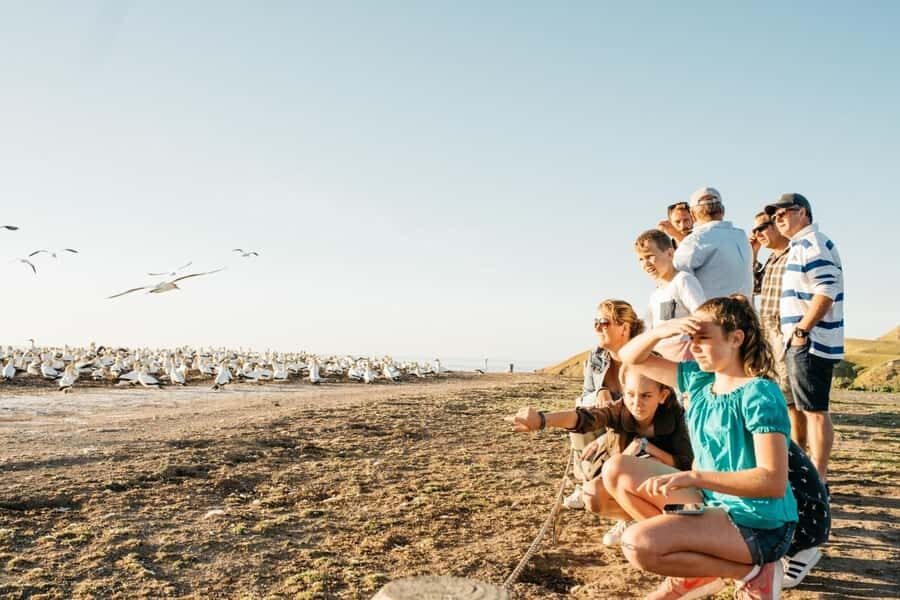
- World’s largest accessible mainland gannet colony with viewing right at the nesting area
- A working farm plus conservation across Cape Kidnappers Station’s 2,500 acres
- Cliff-top geology and Hawkes Bay panoramas from stops above the colony area
- Native bush conservatory and a chance to connect the dots with Kiwi and Tuatara
- Private-group attention on a 3-hour plan, plus tea/coffee to keep you going
Cape Kidnappers Station: farm work and wildlife conservation in the same frame
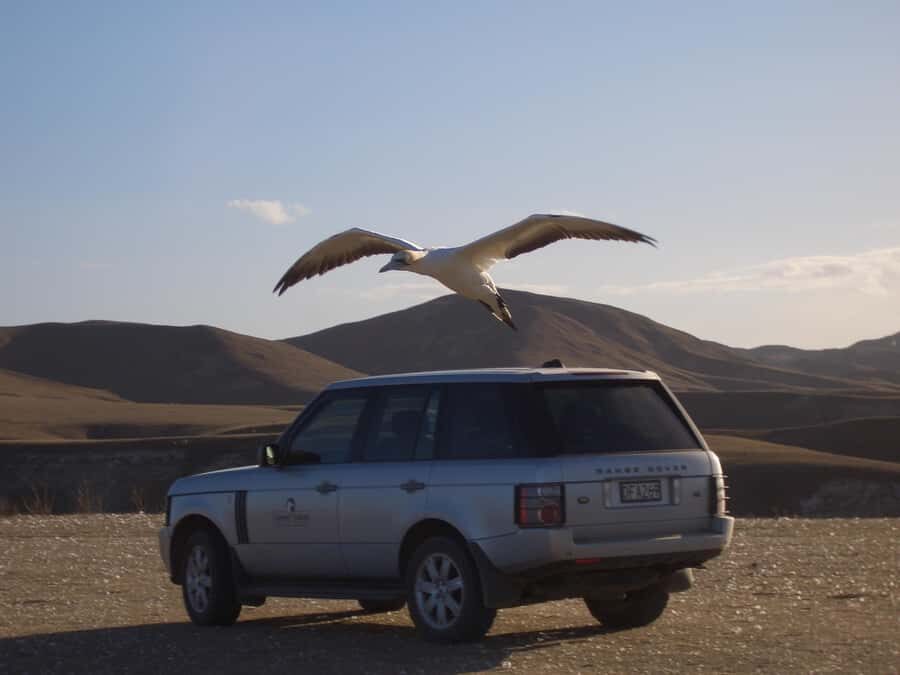
Cape Kidnappers has a way of turning your expectations upside down. You start in a real place with real farming. This is a privately owned wildlife sanctuary tied to a working station, not a fenced-off viewing platform where you just stand and look.
You’ll move through about 2,500 acres of Cape Kidnappers Station and see how sheep and beef farming fits into daily life on the property. For you, that matters because it explains the “why” behind the conservation. Birds like gannets don’t exist in a vacuum. Habitat protection, land stewardship, and careful management all play a role, and seeing the farm setting helps you understand that the sanctuary has to function year-round.
One detail that makes the whole vibe feel grounded: you’re not just watching nature. You’re watching a working landscape that’s been managed to support wildlife. That’s the type of setting where conservation feels practical, not theoretical.
And since this is a private group, you’re less likely to get lost in the flow of other people. You can ask questions, get clarification, and spend a little longer on the bits that grab your attention (like birds, farming, or the bush).
Hawkes Bay cliff-top stops and the geology you can actually see
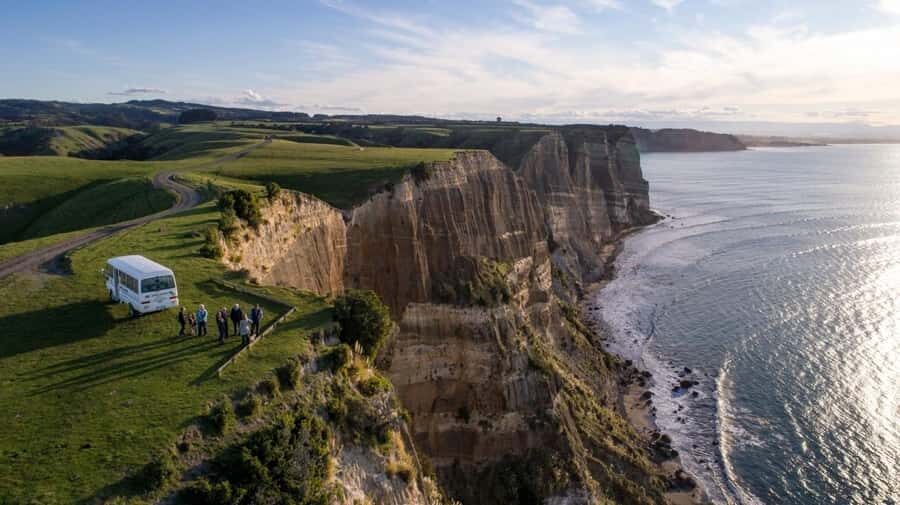
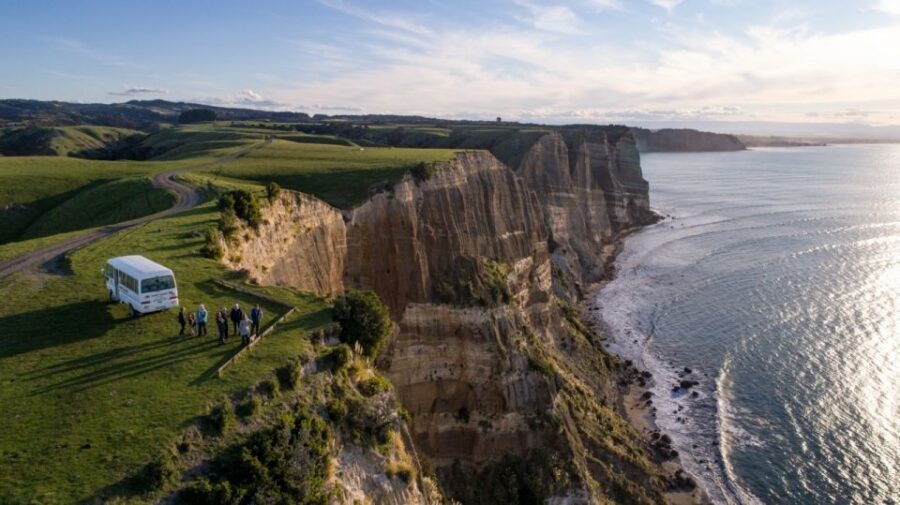
The most visual payoff starts with the cliff-top viewpoints. The tour takes you out to places where you can look across Hawkes Bay and take in the scale of the coastline. It’s the kind of view that helps you understand what you’re about to see, because the gannets are tied to the geography here.
Then there’s the geology stop. You’ll look down at the cliffs and get a clear sense of what the land is doing—how the shoreline and rock shapes create the conditions that birds use for nesting. Even if geology isn’t your thing, it’s hard to switch off. The cliff faces are right there, and the explanation gives you something to notice beyond the scenery.
For photography, these cliff-top moments are useful. You’ll likely get better context shots before you reach the colony area. And for your patience, they work as a smooth transition. You’re moving from broad panoramas to birds at close range, without feeling like you’re being marched straight into the main event.
The 200-hectare native bush conservatory: Kiwi and Tuatara context on the way
A big reason I like this tour is that the gannets aren’t the only story. You spend time touring a 200-hectare native bush conservatory, and you’ll also encounter mentions of Kiwi and Tuatara as part of the conservation work there.
Now, what you should expect in terms of sightings is not guaranteed by the information you have. What you can count on is the education component. The conservatory setting helps you see that Cape Kidnappers isn’t a single-species attraction. It’s a broader sanctuary effort, covering different animals and different habitats.
This matters because it changes how you experience the gannet colony. After you’ve seen the bush conservatory and learned the land is managed for multiple native species, the gannets become part of a bigger conservation picture. You’re not just admiring birds—you’re connecting the dots between land management and animal survival.
Also, Kiwi and Tuatara have a special place in New Zealand’s conservation conversations. Even if your visit is focused on gannets, hearing how the sanctuary supports other unique species gives the tour more depth without getting heavy or overly academic.
Getting within a few feet of nesting gannets and chicks
This is the moment. The tour gets you close to the largest accessible mainland gannet colony. You’ll reach the area where adults and chicks are nesting, preening, and carrying out courtship behavior.
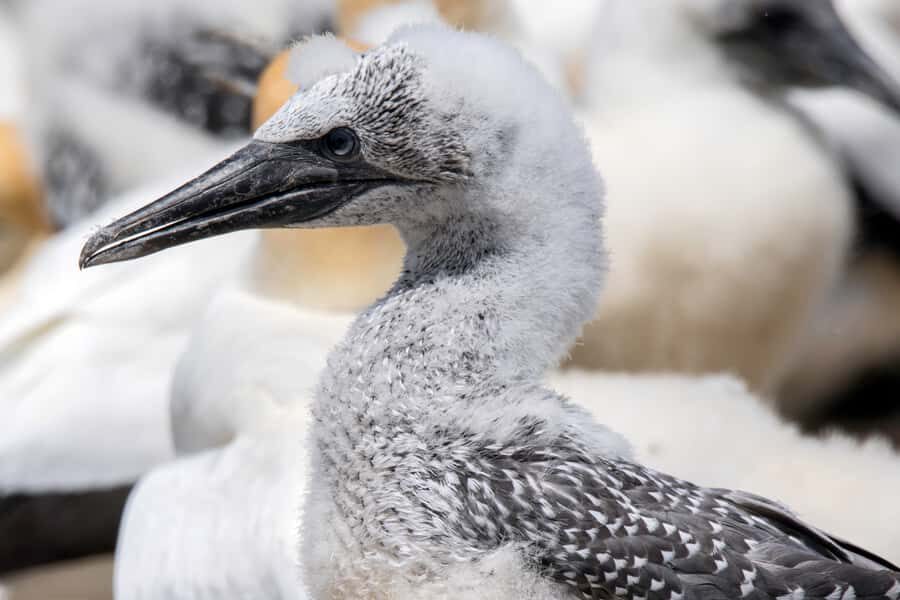
The best part about this kind of access is that it makes birds feel real. It’s not just a distant speck on a cliff. You’re close enough to notice details like the gannets’ eye markings and their golden crowns. Those features sound like small stuff, but when you see them clearly, it makes the whole colony feel personal and vivid.
You’ll also watch behavior. That includes chicks and adults doing the daily routines you might otherwise miss from farther away. Preening is oddly calming to observe. Courtship dances add a lively, almost theatrical rhythm to the colony scene. And the nesting activity gives you a sense of urgency and focus that photos alone usually can’t capture.
A practical note: you’ll want comfortable shoes and clothing that you don’t mind getting dusty or wind-touched. When you’re viewing birds up close, you spend time standing where you can see and listen well. The tour is only 3 hours, but that time can feel packed because the colony viewing is the centerpiece.
If you’re the type of traveler who likes animals in motion—behavior, not just presence—this is the payoff you’re coming for.
How the private-group format makes the tour feel smoother
This tour is private, and pricing is set per group (up to 4). That matters more than it sounds. With a small group, your guide can adjust pacing. If you want more time at the colony to watch the adults and chicks, you’re less likely to feel stuck in a rigid schedule.
Your guide is English-speaking and is clearly focused on field questions. From past experiences, guides like Lesleigh have been praised for sharing knowledge and answering questions, and Jo and Richard have also received strong feedback for hosting and guiding well. The consistent theme in the feedback is that you’re not just along for the ride—you’re part of the learning.
Also, the tour includes tea/coffee. That’s a small inclusion, but it makes a difference on a 3-hour outing where you might be outdoors and moving between views and viewing points. It’s the kind of touch that keeps your energy steady while you concentrate on birds and scenery.
You should bring snacks too. The tour includes tea/coffee, but there’s no mention of a full meal. Having a snack helps you stay comfortable without rushing through the experience.
Price and logistics: what $591 per group buys you
The price is $591 per group for up to 4 people, and the duration is 3 hours. If you do the math, that often works out to a reasonable per-person cost when you’re traveling with someone and splitting the group price.
Where value shows up is in two areas:
First, you’re paying for access and guidance. Getting within a few feet of nesting gannets isn’t a casual self-guided thing. A guide also helps you understand what you’re seeing—why the birds do certain behaviors, and what the sanctuary is doing beyond the nesting area.
Second, you get a tour that’s not only birds. You also tour the station’s working farm elements and the native bush conservatory area. If you only wanted gannet viewing, you could find simpler options. But if you like a fuller sense of place—farm, conservation, and cliffs—this private structure feels like a better fit for your time.
Logistics are fairly straightforward: there’s no accommodation pickup and drop-off included. You’ll need to sort transport to and from the meeting point on your own. That’s not a deal-breaker, but it’s the kind of practical detail that can affect the total cost and time if you’re staying far away.
Who this tour suits best (and who should think twice)
This is a great match if you:
- Want close-up wildlife viewing with real behavior, not just a quick photo stop
- Enjoy learning while you walk through a working landscape
- Prefer a smaller, private pace over crowded group tours
- Value a short, focused outing with a clear centerpiece
It’s not the best choice if you have mobility impairments or use a wheelchair. The tour is described as not suitable for wheelchair users, and it also calls for comfortable shoes, which points to uneven outdoor walking.
If you’re traveling with kids, this could be exciting because gannets are visually striking and the colony viewing is active and engaging. But you’ll still want everyone prepared for outdoor walking and cliff-top terrain.
Should you book the Cape Kidnappers Gannet Colony Private Tour?
Yes, you should book this tour if you’re aiming for close gannet viewing in a setting that makes sense beyond the birds. The combination of cliff-top panoramas, farm-and-conservation context, and the chance to see adults and chicks up close is exactly what turns a wildlife stop into a real experience.
You might pause if you need wheelchair-friendly access or if walking on outdoor paths is a concern for you. The tour is short at 3 hours, but it’s not designed to be slow and barrier-free.
If your main goal is birds, bring sensible footwear, a few snacks, and a curious mindset. This is the kind of outing where you’ll leave thinking about behavior—preening, courtship, nesting—rather than just the sight of a colony from far away.
FAQ
How long is the Cape Kidnappers Gannet Colony Private Tour?
The tour lasts 3 hours.
Where does the tour take place?
It takes place in North Island, New Zealand, at Cape Kidnappers Station.
How many people are in a group?
It’s a private group, priced for up to 4 people.
What’s included in the tour?
Tea and coffee are provided.
What should I bring?
Bring comfortable shoes, snacks, and comfortable clothes.
Is the tour suitable for wheelchair users or people with mobility impairments?
No. It is not suitable for people with mobility impairments or wheelchair users.
Is the tour guided in English, and can I cancel?
The tour includes an English live tour guide. You can cancel up to 24 hours in advance for a full refund.