REVIEW · FRANZ JOSEF AND FOX GLACIER
Mount Cook Spectacular Helicopter Flight from Fox Glacier
Book on Viator →Operated by Glacier Helicopters · Bookable on Viator
Fox Glacier is small, but the sky here is huge. This helicopter ride gives you Fox and Franz Josef Glacier views you cannot get any other way, plus a snow landing on Aoraki/Mt Cook where you can step onto the snow and take real photos. My only caution is that camera angles can be tricky depending on where you sit inside the helicopter.
What makes this outing special is the mix of big flying time and actual time on snow. In about 40 minutes in the air, you soar over ice crevasses, the Southern Alps spine, and out toward the coast—then come back to Fox Glacier base with the kind of scenery you’ll remember even if photos don’t turn out perfectly.
In This Review
- Key Points to Know Before You Go
- Fox Glacier to Aoraki/Mt Cook by Helicopter: What the 40 Minutes Really Gives You
- Main Street Check-In at Fox Glacier: Gear Rules and a Simple Prep Plan
- Flying Over Fox and Franz Josef: Reading Glaciers From the Air
- Crossing the Southern Alps Spine Toward the Coast
- The Signature Moment: Landing on Aoraki/Mt Cook Snow
- A Chance to Touch Franz Josef or Fox Glacier Snow (About 10 Minutes)
- Price and Value: Is $416.90 Worth It?
- Who Should Book This Helicopter Flight (and Who Might Pass)
- Should You Book the Mt Cook Flight from Fox Glacier?
- FAQ
- How long is the helicopter flight?
- Where do I meet for the tour?
- Does the tour end back where it starts?
- Can I choose my departure time?
- Will we land on Aoraki/Mt Cook?
- Is there also a landing near Franz Josef or Fox Glacier?
- What’s included in the price?
- Is food or drink included?
- What should I bring?
- Are there restrictions on what I can bring onto the flight?
Key Points to Know Before You Go
- 40 minutes in the air means you’re not just rushing over the mountains
- Glacier + summit snow landing: you’re not only sightseeing from above
- Choose your departure time in advance to fit your South Island schedule
- Helicopter photo stops happen during the flight, not just at the end
- Weather decides the plan since flights run all year round only if conditions allow
- No extra gear: selfie sticks, drones, tablets/iPads, and bags aren’t allowed on board
Fox Glacier to Aoraki/Mt Cook by Helicopter: What the 40 Minutes Really Gives You
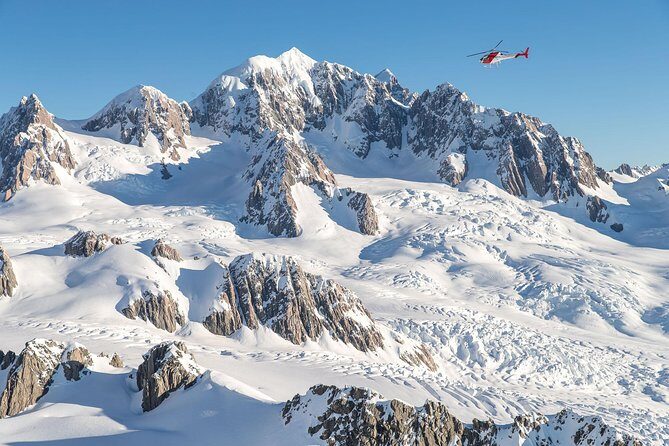
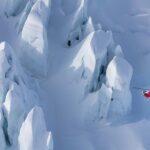
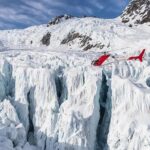
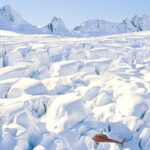
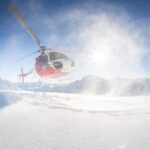
This is a flight built for views, not waiting. You start in Fox Glacier township and take to the air for roughly 40 minutes (flight time), with the pilot bringing you over the ice fields and peaks that define the Southern Alps. Helicopters turn mountains into close-up objects. From the ground, glacier crevasses look like texture. From the air, they become shapes—cracks, shadows, and folded ice that suddenly make the scale feel real.
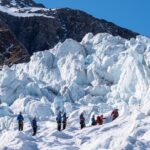
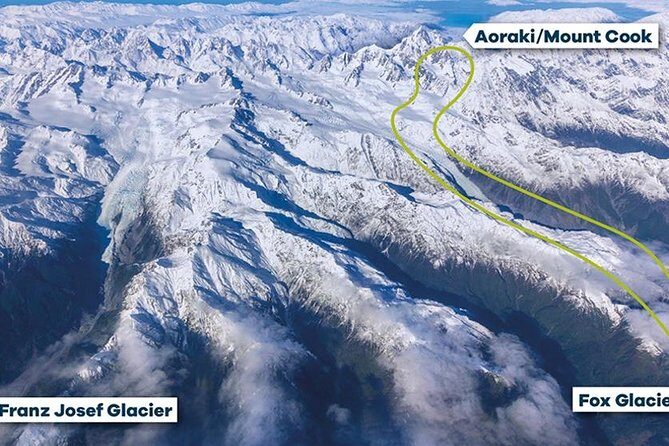
One reason I like this format is that you get both “big picture” and “close picture.” You’ll fly above glacial icefalls, crevasses, and neves (snowfields that feed the glaciers), then the route crosses the Southern Alps spine. That’s the stretch where the terrain shifts from green valleys to steep, rugged ridgelines fast.
And yes, you get the kind of coast-to-mountains perspective that only a direct flight can deliver. As you look outward, you can see how the Tasman Sea rolls in at the edge of the world, while jagged peaks sit inland. It’s the same region you read about in guidebooks, but from above it turns into a clear map you can actually visualize.
A few more Franz Josef and Fox Glacier tours and experiences worth a look
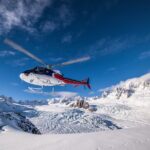
Main Street Check-In at Fox Glacier: Gear Rules and a Simple Prep Plan
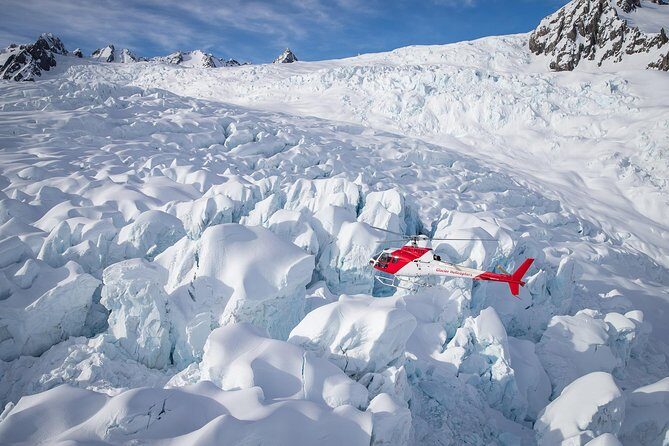
The meeting point is Glacier Helicopters on Main South Road (SH6) in Fox Glacier. You’ll take your seat at the base before departure, and you’ll end back at the same point.
This part is straightforward, but a few rules matter because they affect what you can bring and how you’ll enjoy the flight:
- Plan to bring warm clothes, because you’re in cold mountain air.
- Bring sunglasses—snow glare and bright skies are real up there.
- Wear sturdy footwear for the snow landing.
- Have your camera ready, and keep it easy to access.
Safety rules are also strict: for example, selfie sticks, drones, flammable liquids, lighters, and iPads/tablets are not allowed. Bags of any description also aren’t allowed on the flights, so travel light. If you’re used to carrying a daypack everywhere, make this one flight-day exception.
There’s also a weight limit of 331 lbs per passenger, so check that early. And if you’re traveling with kids, children must be accompanied by an adult. The operator also notes the activity runs all year round only weather permitting.
Simple advice: show up dressed for cold and ready to move quickly. Once you’re in the aircraft, you’ll want your hands free for photos and your focus on the views—not on rummaging through gear.
Flying Over Fox and Franz Josef: Reading Glaciers From the Air
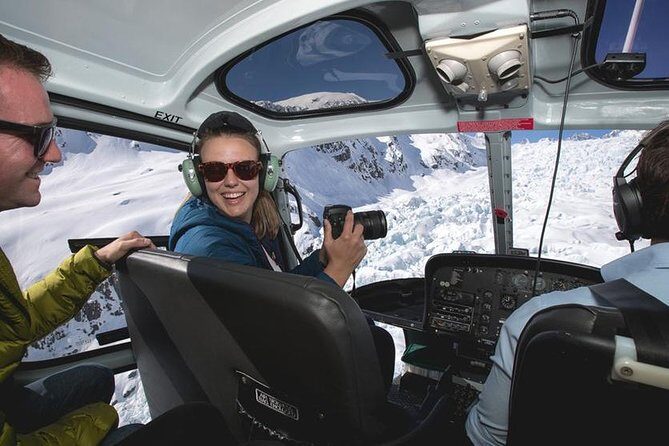
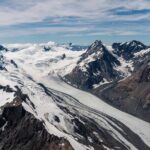
Once you lift off, the flight does what road travel can’t. Glaciers are hard to understand from ground level because you’re seeing only a narrow slice. From the helicopter window, you can trace the shape of the ice flow—where it funnels, where it fractures, and where snow gathers and changes into moving ice.
You’ll fly over both Fox Glacier and Franz Josef Glacier, and the route is designed to show you the glacial world in layers. Crevasses and ice creaks become visible as a pattern, not just a scary rumor from hiking trails. The mountains above and around them add scale—sharp ridges act like rulers against the softer snow fields.
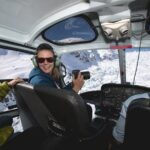
One detail I’d plan around: photography is not guaranteed to be perfect from every seat. The helicopter layout can limit angles, and the glass/positioning means you’ll sometimes have a tradeoff between a clear view and a steady shot. If you care about photos, be flexible. You may get your best images when you pause and let your eyes adapt to what’s directly in front of you, not just what your camera wants to capture.
Still, the overall point holds: the helicopter is the best way to see these glaciers as a connected system—icefall, snowfields, crevasses, then the surrounding peaks that hem it in.
Crossing the Southern Alps Spine Toward the Coast
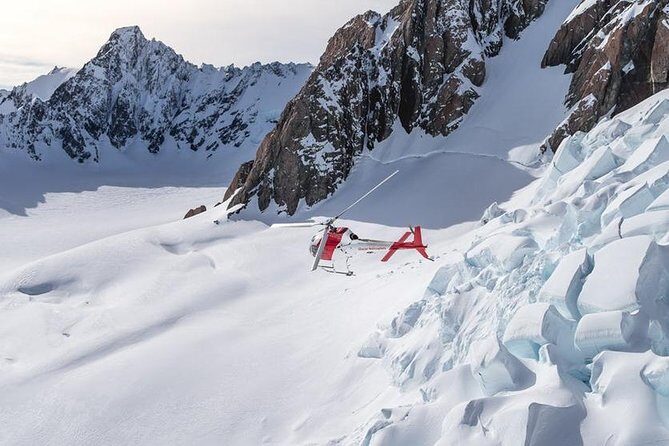
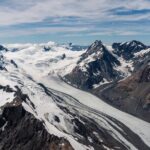
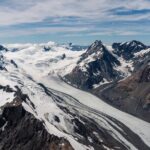
As the flight crosses the high country, the scenery becomes more dramatic and more graphic. That’s the segment where you see the Southern Alps spine—a long, steep backbone of peaks rather than isolated mountains.
This is where the pilot’s route matters. Helicopters can shift position quickly, so you’re not locked into one direction for the entire flight. You’ll get panoramic sightlines that help you understand the geography: how deep valleys sit between high ridges, how snow zones transition into rock faces, and where the weather and light change the look of the snow.
And then, if visibility is good, you can see toward the coast. Seeing the Tasman Sea from the air gives you a reality check on distance: you go from jagged alpine detail to open water in one glance. It’s also helpful for planning the rest of your day, because you’ll get a mental picture of where the ocean sits relative to the mountains you’ve been driving through.
The Signature Moment: Landing on Aoraki/Mt Cook Snow
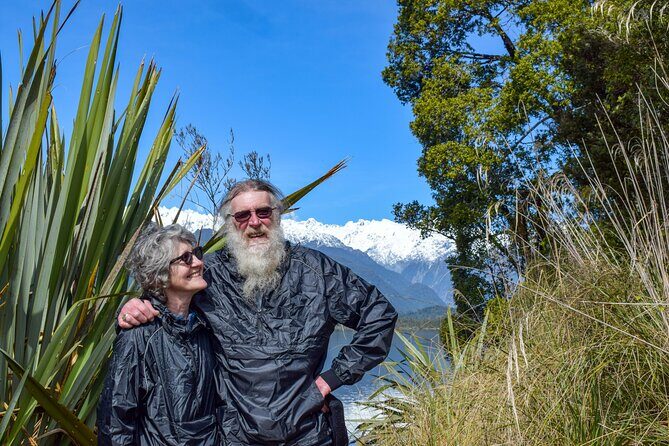
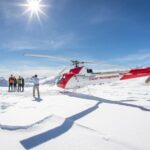
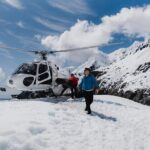
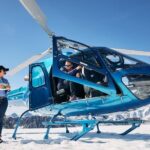
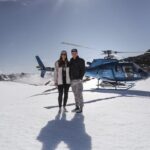
The headline here is the snow landing on Aoraki/Mt Cook. The flight isn’t only about looking; it’s about stepping onto snow at New Zealand’s highest peak. That landing changes the feeling of the experience immediately.
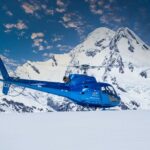
From the air, mountains are views. From the ground, mountains become texture: cold air, firm snow under your boots, and a sense of scale you can’t recreate on the ground from far away. Even a short stop is enough to take photos from new angles and to look back at the flight path you just followed.
You’ll hop out for photo opportunities and then return to base. That means you get that rare combo: time above the ice and time on the snow. If you’ve only ever seen Mt Cook from the road, this makes it feel closer to the center of the action rather than a distant landmark.
Practical tip: keep your camera in hand once you land. This is the part where people often fumble for equipment because everyone is busy looking around. Cold conditions can slow down hands too, so think ahead.
A Chance to Touch Franz Josef or Fox Glacier Snow (About 10 Minutes)
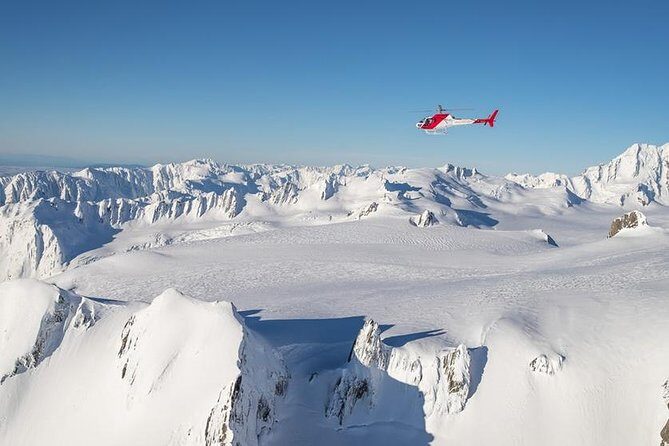
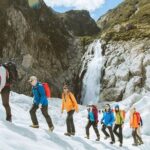
The experience includes a snow landing on a glacier, and the route can include a short touchdown near Franz Josef or Fox Glacier high in the snow (listed as about 10 minutes). Not every flight day will feel identical—weather and operational factors can shape what the pilot can safely do—so treat this as a bonus when it happens.
When it’s part of your itinerary, that short landing is a neat contrast to Mt Cook. You’ll be closer to the glacier itself, which helps you connect what you saw from the air with what you feel when you step onto the snow. It’s also a great chance for photos with a different background than the towering peaks.
The tradeoff is time. Because the whole ride is built around a flight plus landings, the glacier touchdown (if included) won’t feel like a hike. It’s a snapshot stop: get your bearings fast, snap your photos, and move on.
Price and Value: Is $416.90 Worth It?
Let’s talk money honestly. At $416.90 per person, this is not a casual add-on. But the value comes from what you’re buying: access and altitude time.
Most sightseeing in Westland and the Southern Alps means driving, walking, and settling for viewpoints. Here you’re paying for a controlled, guided flight where the pilot positions you for the best angles over ice crevasses, glaciers, and the Southern Alps, and then you get a snow landing rather than just a photo stop from a parking lot.
The other value factor is duration. Forty minutes in the air is long enough to see real variety, not just a quick pass. If you’re short on days in the South Island, this kind of helicopter experience can compress several hours of scenic driving into one concentrated hit of mountain scenery.
What’s not included is also important. There’s no food or drink, and there’s no hotel pickup/drop-off. So you’ll want to plan your meal and transportation around the meeting point on Main South Road. Also, the operator says flights run all year round, weather permitting, and Christmas operates only half day (9 am to 12 pm), so schedules can be tighter during peak dates.
If you go in with the mindset of buying time in the sky—and being okay with cold gear and a brief stop on snow—you’ll likely feel this price is in the right ballpark for a once-in-a-while moment.
Who Should Book This Helicopter Flight (and Who Might Pass)
This experience fits best if you:
- Want a glacier-and-mountain viewing plan that beats driving time
- Like photo opportunities and don’t mind quick moments outdoors
- Are comfortable with cold weather and short walking moments on snow
- Have limited time and want Mt Cook access without a multi-day trek
You might pass if:
- You’re hoping for a long guided hike (this is not that type of outing)
- You don’t want a strict rules setup (no selfie sticks, no drones, no bags)
- You need hotel pickup and don’t want to handle getting to the base yourself
- You’re sensitive to helicopter rides and the idea of being in a small aircraft
Also remember the 331 lbs weight limit and the fact that kids need an adult. If you’re traveling as a family, it can still work, but plan the day so the kids are dressed properly and ready to move for the snow moment.
Should You Book the Mt Cook Flight from Fox Glacier?
If you’re torn, use this quick decision test. Book it if you want the clearest way to see glaciers up close and you’re excited by the idea of stepping onto snow at Aoraki/Mt Cook. This flight is built for people who want their South Island memories to feel visual and immediate.
Hold off if you’re expecting perfect photos regardless of seat position. You might get strong images, but the aircraft layout can affect camera angles. And if you’re traveling on a strict schedule, keep in mind the flight depends on weather permitting—the operator can reschedule or refund if it’s canceled for poor conditions.
My bottom line: for value, the win is the combination of helicopter time plus a true snow landing. If that’s what you came for, this is one of the most efficient ways to touch Mt Cook and the glacier country in a single day.
FAQ
How long is the helicopter flight?
The flight time is approximately 40 minutes.
Where do I meet for the tour?
You meet at Glacier Helicopters on Main South Road, SH6, Fox Glacier 7859, New Zealand.
Does the tour end back where it starts?
Yes, the activity ends back at the meeting point.
Can I choose my departure time?
You can request your preferred departure time in advance.
Will we land on Aoraki/Mt Cook?
Yes. The experience includes a snow landing on Aoraki/Mt Cook, with photo opportunities after you step out.
Is there also a landing near Franz Josef or Fox Glacier?
The itinerary includes a stop where you may land on Franz Josef or Fox Glacier high in the snow for about 10 minutes.
What’s included in the price?
Included are a professional pilot, scenic helicopter flight, snow landing on a glacier, photo opportunities, and views of Franz Josef Glacier, Fox Glacier, and Aoraki/Mt Cook.
Is food or drink included?
No, food and drinks are not included.
What should I bring?
Bring warm clothes, sunglasses, sturdy footwear, your camera, and a sense of adventure.
Are there restrictions on what I can bring onto the flight?
Yes. Selfie sticks, drones, flammable liquids, lighters, iPads/tablets, and bags of any description are not allowed. Confirmation is received at booking time, and for weather-related cancellations you’ll be offered a different date or a full refund.