REVIEW · FRANZ JOSEF AND FOX GLACIER
Mount Cook Spectacular Helicopter Flight from Franz Josef
Book on Viator →Operated by Glacier Helicopters · Bookable on Viator
Franz Josef to Mount Cook in one shot sounds unreal until you’re actually watching glaciers from above. This 40-minute helicopter flight has two standout perks: you’ll get a close-up snow landing at Aoraki / Mount Cook, and you’ll fly the full arc over Westland Tai Poutini National Park to spot both Franz Josef and Fox Glaciers from the air.
What I really like about this kind of flight is that it compresses a huge chunk of the Southern Alps into one small window—no long drives, no waiting for a perfect hike day. The main thing to consider is weather: strong winds can change the plan, and the company may adjust what you see and how long you’re flying.
In This Review
- Key Things That Matter Most on This Flight
- From Franz Josef Heli-Pad to the Southern Alps Ceiling
- The Glacier-to-Mount Cook Route: What You’ll See and Why It’s Worth It
- Stop 1: Landing on Franz Josef Glacier Neve
- Stop 2: Flying Over Icefalls and Crevasses With Real Scale
- The Mount Cook Snow Landing: The Moment You’ll Remember
- Time in the Air vs. Weather Reality (Strong Winds Can Change Plans)
- Price and Value: $416.90 for a 40-Minute Alps Shortcut
- What’s Included, What’s Not, and the Rules That Affect Your Day
- Booking Tips: How to Pick the Right Departure and Set Yourself Up
- Who This Helicopter Flight Suits Best
- Should You Book Mount Cook Spectacular From Franz Josef?
- FAQ
- How long is the Mount Cook Spectacular helicopter flight?
- How much does the tour cost?
- Where do I meet for the flight?
- Will I get a snow landing?
- What happens if the weather is bad or winds are too strong?
- Is there free cancellation?
Key Things That Matter Most on This Flight
- Snow landing at Mount Cook gives you real high-altitude time on pristine snow, not just window views
- Two glaciers from above: Franz Josef Glacier and Fox Glacier, plus ice crevasses and glacier detail
- Route over Westland Tai Poutini National Park with aerial scenery across the Southern Alps spine
- Circle the Mount Cook summit so you see the mountain’s dramatic shape relative to the ice fields
- Small group (max 12 travelers), which helps keep the flight experience personal
- Professional pilot commentary keeps the ride understandable and worth it even if it’s your first helicopter
From Franz Josef Heli-Pad to the Southern Alps Ceiling
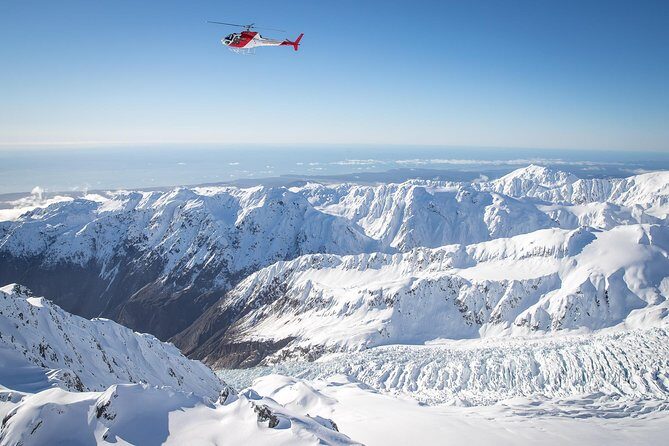
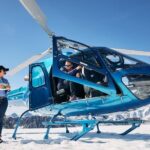
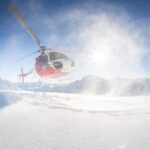
Your experience starts in central Franz Josef, at the Glacier Helicopters base on Main Road (SH6). You’ll check in for your chosen departure time, then climb aboard and lift off above town, with the pilot getting you oriented quickly—where you’re heading and what you’ll be looking for.
This matters more than it sounds. Helicopter flights can feel fast once you’re off the ground, so clear guidance helps you actually notice what you paid for: the glacier features and the way the Southern Alps cut across the West Coast. The company runs multiple departures during the day, and you can request your preferred time when booking.
You’ll also want to be mentally ready for the vibe. This is a short ride with big views, so bring your camera plan (and your comfort plan). You’ll be wearing warm layers, and you’ll likely be staring out the windows for stretches, then grabbing a few photos during the moments the scenery lines up best.
A few more Franz Josef and Fox Glacier tours and experiences worth a look
The Glacier-to-Mount Cook Route: What You’ll See and Why It’s Worth It
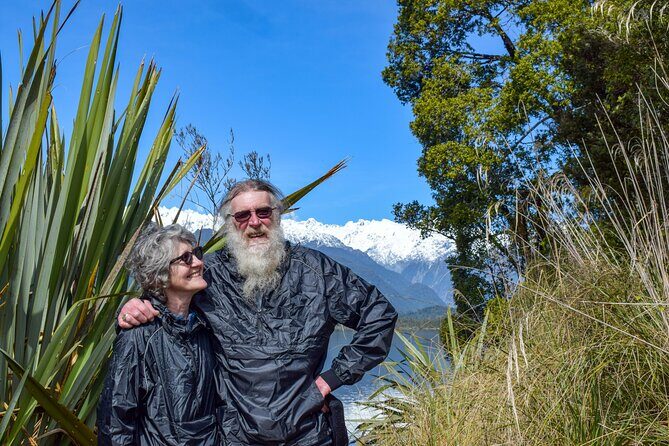
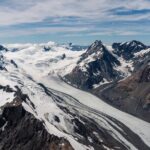
Once you’re up and heading inland, the route takes you across the spine of the Southern Alps. That’s not just a geography fact—it’s why the views feel different as you go: you move from the glacier valleys toward the alpine mass of Mount Cook, and the textures of ice and rock change as the terrain rises and tightens.
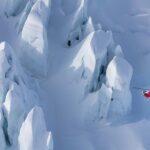
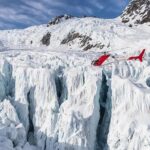
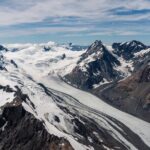
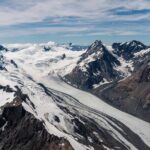
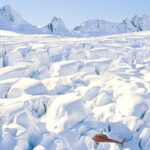
A key highlight is seeing both of New Zealand’s West Coast glaciers from the air: Franz Josef Glacier first, then Fox Glacier as you cross the mountains that run parallel to the coastline. From above, glaciers don’t look like the neat, postcard ice you might expect. You get a more honest picture—icefalls, crevasses, and the way the glacier’s surface breaks and flows over time.
Then you approach the Mount Cook area. Aoraki / Mount Cook is the country’s highest peak, and you’ll circle the summit as part of the flight pattern. On clear days, it’s a rare chance to see how the summit sits in relation to the glaciers and high-altitude snowfields rather than just as a name on a map.
And it’s not random sightseeing. Mount Cook and the surrounding area are protected as part of a UNESCO World Heritage Site, which is one reason the scenery looks both dramatic and tightly “held” by the geography.
Stop 1: Landing on Franz Josef Glacier Neve
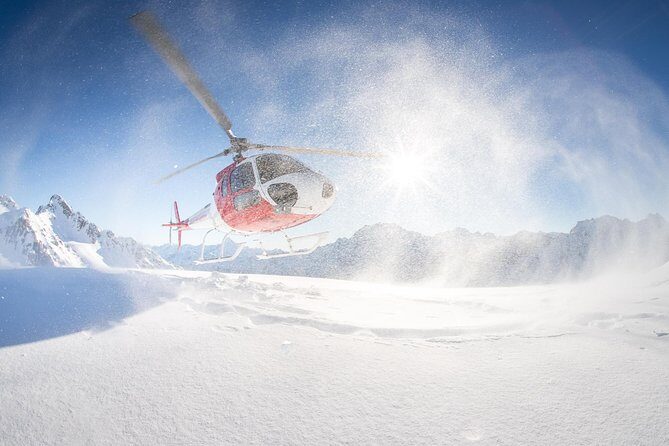
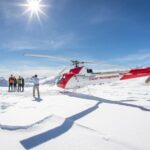
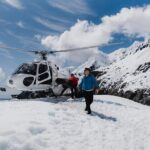
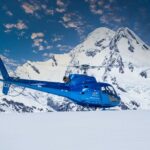
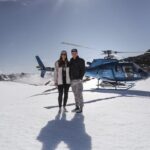
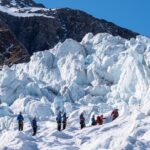
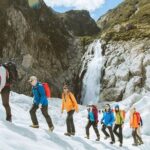
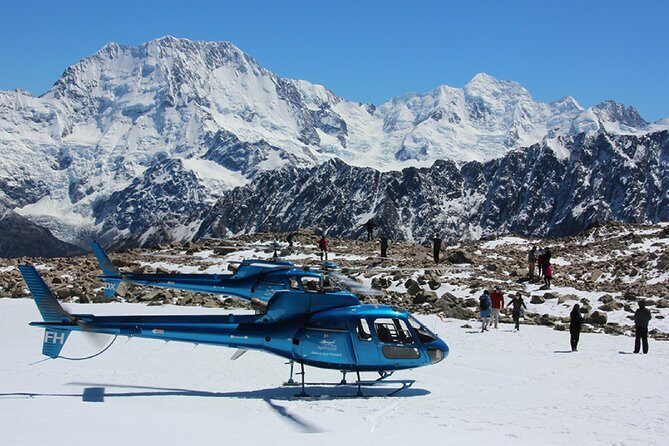
Your first big moment is the touchdown at Franz Josef Glacier, landing on the neve—fresh, compacted snow on the glacier’s surface. This is where the whole experience stops being only visual and becomes physical. You can step onto snow, look around, and take photos that feel more grounded than a window shot.
Why this landing hits: Franz Josef Glacier is massive, and from ground level you often only see part of the ice and surroundings. From a glacier landing, you get scale right away. You can stand there long enough to take in how wide the ice expanse is and how the glacier environment feels up close.
Practical note: you’re outside on snow, so warm clothes and sturdy footwear matter even if it’s a sunny day. The experience recommends warm layers and solid shoes, and I’d take that seriously. Wind at altitude can turn “nice weather” into “why is it so cold now?” in minutes.
Stop 2: Flying Over Icefalls and Crevasses With Real Scale
Between the glacier landings and Mount Cook, you’ll spend time flying over glacier terrain—ice crevasses, towering peaks, and the sharp contrasts between snow and rock. Even if you’ve seen glacier photos before, the overhead view tends to change how you understand them. Crevasses look like lines on the map; from the air they feel like scars across a living surface.
This is also where the professional pilot’s role shows up. You’ll get running commentary while you fly, which helps you connect what you’re seeing to where you are in the route. If you’re prone to getting motion-sick, a well-paced explanation can also help you keep your focus stable.
A small detail that makes the difference: small group size (up to 12) keeps the cabin quieter and lets you pay attention without constant distractions. On a 40-minute flight, every minute counts.
The Mount Cook Snow Landing: The Moment You’ll Remember
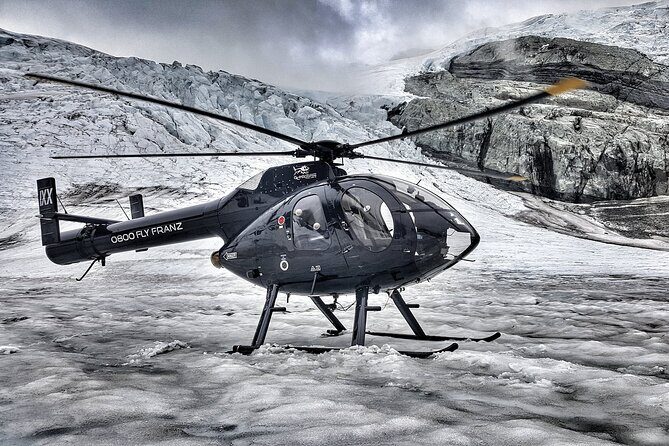
The big “I can’t believe this is happening” moment is the snow landing at Mount Cook. After flying the route toward Aoraki / Mount Cook—crossing alpine areas and getting close enough to appreciate the summit—you’ll touch down and have time to take in the high-altitude views from snow.
This part is valuable because it’s not just photo-stop theatre. You get a break from looking out the windows long enough to stand, breathe mountain air, and take photos with the peak as your backdrop. It’s also one of the clearest ways to understand scale: Mount Cook feels less like a distant landmark and more like a giant you’re standing near.
Timing is still tight, though. You’re not getting a long walk here. The goal is to create a quick, powerful mountaintop moment that fits inside a 40-minute overall experience.
And yes, weather can affect the exact run. If conditions over Mount Cook are strong, you may see adjustments in flight time or the focus of the route. That’s not ideal, but it’s part of reality when you’re flying in a high-alpine environment.
Time in the Air vs. Weather Reality (Strong Winds Can Change Plans)
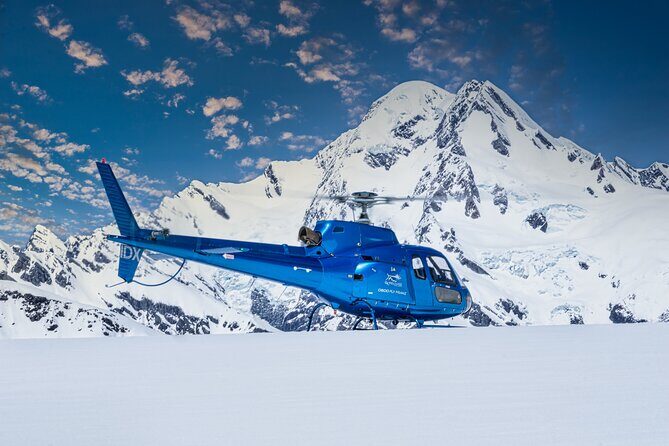
This flight runs all year round, weather permitting, and it’s built around moving quickly through the best viewing window. On the West Coast, weather can shift fast—especially around big mountains—so it’s smart to expect possible changes.
If winds are strong over Mount Cook, the flight might be adjusted (for example, swapping to a shorter flight that still covers the glaciers and includes a snow landing). The main point for you: book it with flexibility in mind. You’re buying a weather-dependent helicopter experience, not a guaranteed “exact route, exact minutes” package.
If the tour is canceled due to poor weather, you’ll be offered either a different date or a full refund. If the minimum number of travelers isn’t met, you’ll also be offered another date/experience or a full refund. That kind of safety net is worth considering when you’re deciding whether to spend this much on one day.
Price and Value: $416.90 for a 40-Minute Alps Shortcut
At $416.90 per person, this is not a budget splurge. But value here is about what you’re purchasing: access to the Mount Cook summit area and both West Coast glaciers from the air, plus a snow landing. Most ground experiences in this region take a lot of time and still don’t deliver the same “from above, up close” perspective in one compact window.
You also get what often justifies helicopter pricing elsewhere: a professional pilot and a route designed specifically for high-impact views. You’re not just paying for flight time; you’re paying for the navigation, timing, and decision-making that keep the experience within safe flying conditions.
What you should budget for separately: food and drinks are not included, and there’s no hotel pickup or drop-off. You’ll get the mobile ticket and meet at the company base location. For me, that makes it easier to plan day-of time, but you’ll still need transport to and from Franz Josef.
Group size stays modest (max 12), which can feel like better value than bigger-ride alternatives. The cabin doesn’t turn into a crowded waiting room; it turns into a concentrated viewing session.
What’s Included, What’s Not, and the Rules That Affect Your Day
Included:
- Professional pilot
Not included:
- Food and drinks
- Hotel pickup and drop-off
You should also know the flight has strict safety rules about what you can bring. The experience does not allow selfie sticks, drones, flammable liquids, lighters, iPads/tablets, or bags of any description. That means you’ll want to travel light—camera in hand or secured to your person, warm layers in an accessible way.
Safety limits matter too: there’s a stated total weight per passenger of 331 lbs. If you’re close to that range, it’s worth double-checking how the operator measures and what the cabin policy is, so there are no surprises at check-in.
For comfort, pack sunglasses and sturdy footwear, and bring warm clothes even if the forecast looks mild. Helicopter rides can feel chilly fast once you’re above the valley.
Booking Tips: How to Pick the Right Departure and Set Yourself Up
Because departures run throughout the day, try to book for the time that best matches your day’s weather reality. On the West Coast, conditions can change quickly, so don’t build an over-scheduled day around the helicopter. Leave buffer time on both ends so you’re not rushing to make it to check-in.
Also, consider how you’ll handle timing if weather forces changes. You’re likely to get a best-possible alternative date or refund if things cancel due to conditions, which is helpful. Still, plan your wider itinerary with enough flexibility to make the helicopter your priority.
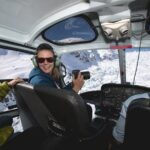
If it’s your first time in a helicopter, this type of operator can make a huge difference. One pilot named Andy stood out for being friendly, excited, and for updating passengers during the ride. That kind of in-air guidance can help you feel comfortable and help you actually enjoy the views instead of worrying about what’s coming next.
Who This Helicopter Flight Suits Best
This is a strong fit if:
- You want maximum “ice-to-mountain” impact in one short day
- You’re drawn to glaciers but don’t want to spend hours on the ground chasing viewpoint after viewpoint
- You want a true souvenir moment, especially the snow landing at Mount Cook
- You like getting close to dramatic scenery without doing a full hiking day
It may be less ideal if:
- You’re hoping for a guaranteed, exact flight duration every time regardless of weather
- You want a relaxed, unstructured day with lots of time on the ground
- You have travel plans that can’t shift at all if winds affect Mount Cook
Should You Book Mount Cook Spectacular From Franz Josef?
My take: if you’re in Franz Josef and you can afford this price, book it with your weather mindset set appropriately. The combination of glacier flying, seeing both Franz Josef and Fox Glaciers from above, and then touching down on snow near Aoraki / Mount Cook is the kind of experience that’s hard to replace anywhere else.
Choose this flight if you want a high-impact day rather than a long one. The small group size, professional pilot, and the fact that you get out onto snow for photos make it more than just a scenic helicopter spin.
If your schedule is tight or you hate weather uncertainty, keep a backup plan in your head and consider booking with the understanding that conditions over Mount Cook can change the exact run. But if you’re flexible, this is one of the most efficient ways to see the Southern Alps’ ice and peaks in a single outing.
FAQ
How long is the Mount Cook Spectacular helicopter flight?
The flight time is approximately 40 minutes.
How much does the tour cost?
It costs $416.90 per person.
Where do I meet for the flight?
You meet at Glacier Helicopters, 30 Main Road, SH6, Franz Josef / Waiau 7856, New Zealand. The tour ends back at the meeting point.
Will I get a snow landing?
Yes. The flight includes a touch down for a snow landing near Mount Cook.
What happens if the weather is bad or winds are too strong?
The experience requires good weather. If it’s canceled due to poor weather, you’ll be offered a different date or a full refund.
Is there free cancellation?
Yes. You can cancel for a full refund up to 24 hours in advance of the experience start time. If you cancel less than 24 hours before, the amount paid is not refunded.