REVIEW · TAUPO
Self-Guided Geothermal Tour in Orakei Korako
Book on Viator →Operated by Orakei Korako Cave Thermal Park · Bookable on Viator
There’s a reason Orakei Korako feels wilder than most geothermal stops. This self-guided walk pairs silica terraces, bubbling mud pools, hot springs, and geysers with a separate treasure: the Ruatapu Cave and its thermal mirror pool.
Two things I really like here are the flexible self-paced route (you decide how long to linger at each feature) and the fact that the park still feels remote. You also get the added “change of scenery” element from the round-trip ferry, so the geothermal area feels like it’s on its own little stage.
The main consideration is physical: the trail includes steps and steep sections, so you’ll want a moderate fitness level and a game plan for your knees and hydration.
In This Review
- Key things to know before you walk
- Taupo’s Orakei Korako: what makes this geothermal park feel different
- Price and timing: is $35.37 worth it for a self-guided visit
- Getting there: the meeting point and the ferry across the lake
- The 2.5 km boardwalk loop: how to pace a self-guided geothermal circuit
- Orakei Korako Cave & Thermal Park: geysers, mud pools, and silica terraces
- Ruatapu Cave: the rare geothermal cave and the thermal mirror pool
- What to bring and what to watch for at the site
- Who this suits best (and who might want a different plan)
- The real value: why this tour often feels less crowded
- Should you book Orakei Korako for a self-guided geothermal visit?
- FAQ
- How long does the self-guided Orakei Korako tour take?
- What is included in the ticket price?
- Is this tour guided by a person?
- Do I get a mobile ticket?
- Are ferry transfers included?
- What are the opening hours?
- Does it run in bad weather?
- Are there toilets on the geothermal trails?
- Can I get a full refund if my plans change?
Key things to know before you walk
- Self-guided means you control the pace: you can slow down for steam vents, terraces, and mud pools without waiting for a group.
- You’ll cover a 2.5 km boardwalk loop with stairs, so wear shoes with solid grip.
- The Ruatapu Cave is the standout stop with the rare thermal mirror pool feature.
- Lake ferry transfers are included on demand for the round-trip across the water to the geothermal area.
- Geyser timing is unpredictable even when the park has many active geysers.
- It’s family-friendly with caveats: kids are welcome with an adult, but the terrain isn’t practical for strollers.
Taupo’s Orakei Korako: what makes this geothermal park feel different
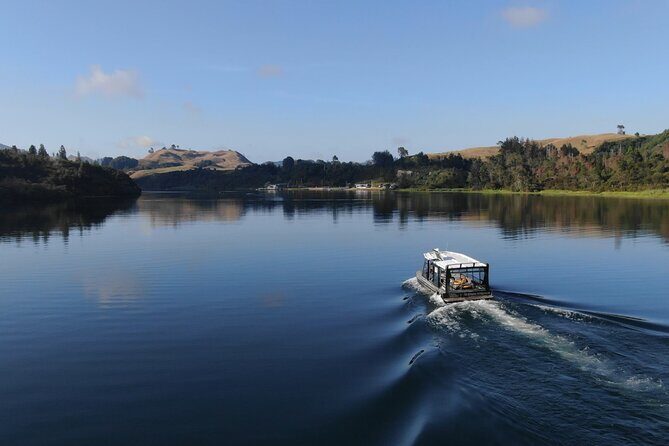
Orakei Korako is in the Taupo area, and it has a slightly different vibe than the more famous geothermal complexes. Instead of feeling like a single busy attraction, you get a structured boardwalk through an active geothermal zone, plus a cave visit that adds real mystery.
What makes it click for me is the mix of sights that change as you move: steam rising from rock, boiling mud pools, and hot springs that show up in bursts of color and heat. And since you’re not stuck to a tour schedule, you can follow the “most interesting steam right now” logic that nature always seems to demand.
This tour is also set up to keep things simple: a mobile ticket, a clear meeting point, and a self-guided visit designed for a roughly 2-hour outing. That makes it a good fit when you want a genuine geothermal experience without committing to a long day.
You can also read our reviews of more guided tours in Taupo
Price and timing: is $35.37 worth it for a self-guided visit
At $35.37 per person, this is a relatively low-cost way to see a major geothermal area with ferry access. The value comes from what you actually get for that price: admission included for the geothermal park experience, plus return ferry rides on demand.
You’re looking at about 2 hours total (approx.). The time also lines up well with the typical visit flow here: ferry across, boardwalk circuit and cave viewing, then ferry back. If you’re traveling between Rotorua and Lake Taupo, this works nicely as a focused “stop-and-see” moment without eating up an entire day.
The park operates from 8:00 AM to 3:30 PM (Mon–Sun) for the listed season window. Since the site runs in all weather conditions, your best strategy is to pick a time when you’ll still have energy for stairs and a bit of walking, even if it’s foggy or rainy.
Getting there: the meeting point and the ferry across the lake
Your start and end point is at Orakei Korako Geothermal Park & Cave, 494 Orākei Kōrako Road, Taupo 3083. The tour ends back at that same meeting point, so you’re not dealing with a complicated pickup or drop-off.
The other big logistics piece is the ferry. You get round-trip ferry rides on demand, which is more than just transportation. That short crossing changes how the whole experience lands: you get a fresh view of the geothermal area before you walk, and the boat ride adds a sense of distance from the mainland.
In practice, this means you should plan your arrival time so you’re not rushing the ferry moment. Also note that this area can feel remote, so your “back to your car or accommodation” plan matters.
The 2.5 km boardwalk loop: how to pace a self-guided geothermal circuit
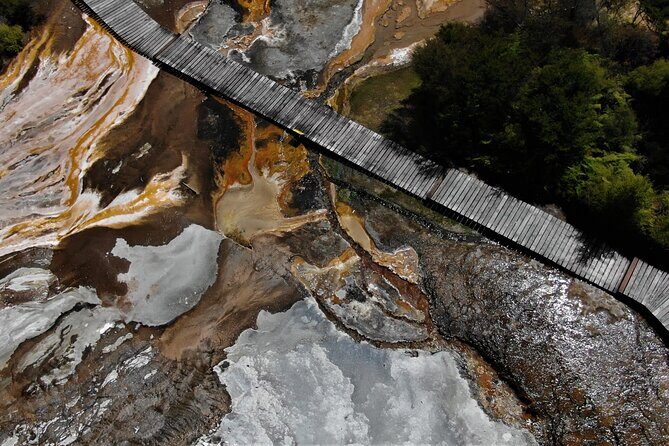
The core experience is a 1.5-mile / 2.5 km boardwalk route through the geothermal area. It’s designed to be mostly straightforward to follow, with signs and clear trail layout, but it does require you to accept stairs and changes in elevation.
Here’s the pacing advice I’d give you:
- Start at an easy rhythm. Let your eyes adjust to the steam and color first, then go back and slow down at the best-looking mud pools and terrace sections.
- If you’re cautious on stairs, take small rests. The route is short on paper, but it can feel longer when you’re stopping often to watch bubbling activity.
A practical note from real on-site experience: the trail can be tiring if you’re expecting a flat nature stroll. It’s safe and well built, but it still asks you to move—especially if you do the cave stop and return at a steady pace.
Orakei Korako Cave & Thermal Park: geysers, mud pools, and silica terraces

This is where the “active geothermal zone” feeling shows up in full force. Orakei Korako is known for having some of the most active geysers in New Zealand, with up to 23 natural geysers working through the area on their own schedule.
What you’ll notice quickly is variety:
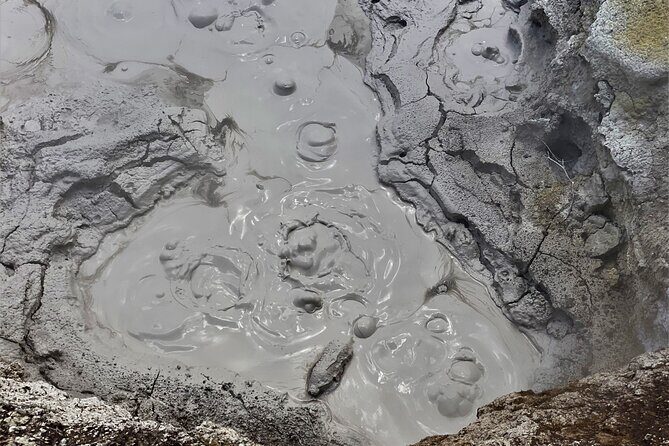
- Mud pools that look solid until you see them doing their boiling work up close.
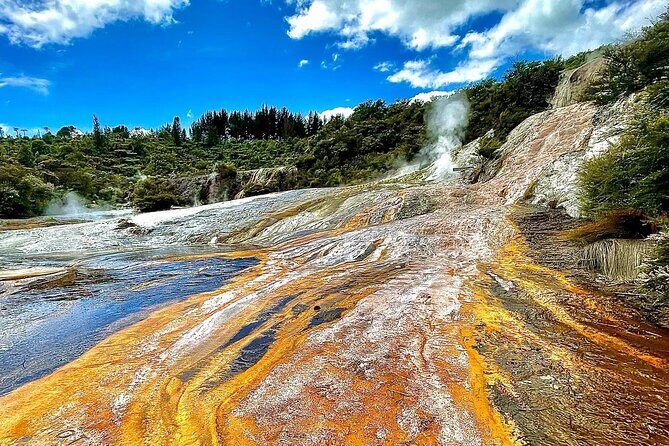
- Hot springs with mineral deposits that create color shifts as you angle your view.
- Steam vents that sometimes vent quietly, and sometimes feel like they’re working at full volume.
The geology changes as you walk, and the boardwalk keeps you close enough to see the action without wandering off-trail. One of the most satisfying parts is that the park never feels static. Even on a self-guided visit, you end up doing a loop where you see a feature, move on, and then return to find it behaving differently.
Also, some geothermal activity can be random. You might spot geysers during your visit, but you should treat that as a bonus, not a promise. The upside is that even when you don’t catch the biggest eruption, you still get close-up geothermal drama: steam, bubbling water and mud, and the textures of silica terraces.


Ruatapu Cave: the rare geothermal cave and the thermal mirror pool
If Orakei Korako is the main act, Ruatapu Cave is the reason many people plan this trip in the first place. The cave is one of only two geothermal caves in the world, and it features a thermal mirror pool that creates a genuinely strange, surreal feel.
In a self-guided setting, this stop matters because it breaks up the open-air boardwalk experience. You’re no longer just watching steam from terraces; you’re encountering geothermal activity in a different environment where the visuals and atmosphere feel tighter and more mysterious.
The cave visit also rewards patience. Don’t rush through it like a checklist stop. Give yourself a few minutes to stand back, look, and let your brain adjust to what you’re seeing—especially if your weather conditions are foggy or misty, since steam and light can change fast in these spaces.
What to bring and what to watch for at the site
Because this is self-guided and you’re mainly outdoors, your packing list should be about comfort and stamina.
Here’s what you should plan for:
- Good walking shoes for stairs and jarring steps down. The trail is safe, but your knees will feel it if your footwear is soft or slippery.
- Water. The route includes enough steps and stops that you’ll want hydration, even if the weather is cool or damp.
- Weather-appropriate clothing. The tour runs in all weather, so dress for rain, mist, and wind, not just sunshine.
One extra reality check from the on-site experience: it can feel warmer at the geothermal area than at the visitor center area before the ferry. That means layers can help, but you don’t want to be over-bundled for a warm, steamy walk.
Also, if you’re thinking about timing your break, know that the explore areas don’t have toilets. There is a small cafe onsite, but plan bathroom breaks before you head fully into the geothermal route.
Who this suits best (and who might want a different plan)
This is a great match if you want a self-guided nature experience where you can spend time at the spots that catch your eye. It also helps if you like “hands-off logistics”: you’re following a boardwalk and signage, not listening to a group schedule.
You’ll also like it if you’re interested in geology and geothermal behavior. Watching mud pools bubble and observing silica terraces at close range is a very different feel from a viewpoint-only stop.
Here’s who should be careful:
- You should be comfortable with moderate physical fitness. Steps and steep sections can be a challenge.
- It’s not a practical choice for strollers or pushchairs, given the terrain.
- Children can go as long as they’re accompanied by an adult, and a carrier or backpack style approach can make the terrain more manageable.
If you’re very sensitive to walking stairs or have mobility limits, you might find other geothermal options easier to manage. But if stairs don’t derail you, this is one of the more satisfying ways to see geothermal activity up close without feeling overly managed.
The real value: why this tour often feels less crowded
One reason this park gets picked by people who have done more mainstream geothermal stops is its “keep it wild” feel. The geothermal boardwalk is a defined experience, but the overall setting doesn’t feel like a parade.
The tour also has a maximum of 100 travelers, which helps maintain breathing room on the route. And because it’s self-guided, you’ll naturally spread out: you’ll move at your own speed and arrive at viewpoints at slightly different times than everyone else.
That matters because geothermal features are best enjoyed when you can stop and watch. If you’re crowded, you spend more time shifting position than learning what the site is doing.
Should you book Orakei Korako for a self-guided geothermal visit?
I think this is worth booking if you want a short, high-impact geothermal day with flexible timing. For the price, you get a lot: a structured boardwalk circuit, ferry transfers across the lake, and the rare Ruatapu Cave experience.
Book it if:
- You’re happy to handle stairs and a 2.5 km walk on boardwalk sections.
- You like seeing natural processes at your own pace.
- You want something a bit more remote-feeling than the usual top geothermal highlights.
Skip it or swap in a different option if:
- You’d rather avoid stair-heavy walking.
- You need a stroller-friendly route.
- You don’t like planning around limited facilities on the trail (like the lack of toilets in the explore areas).
If you can manage the physical side, you’ll come away with a real sense of how active geothermal terrain looks and behaves up close, plus a cave stop that you won’t find at ordinary hot-spring parks.
FAQ
How long does the self-guided Orakei Korako tour take?
It’s listed at about 2 hours total (approx.). The admission portion is shown as about 1 hour 30 minutes, with time added for the ferry and walking.
What is included in the ticket price?
Your ticket includes the self-guided geothermal park admission and return ferry rides on demand. GST is included in the price too.
Is this tour guided by a person?
No. It’s completely self-guided, with no guide during the visit.
Do I get a mobile ticket?
Yes. The experience uses a mobile ticket.
Are ferry transfers included?
Yes. Round-trip ferry rides are included on demand, taking you across the lake to start the geothermal walk and back again at the end.
What are the opening hours?
The park hours are listed as 8:00 AM to 3:30 PM, Monday through Sunday.
Does it run in bad weather?
Yes. The experience operates in all weather conditions, so you should dress appropriately for rain and mist.
Are there toilets on the geothermal trails?
There aren’t toilets in the explore area. Plan bathroom stops before you head out.
Can I get a full refund if my plans change?
Yes. Cancellation is free, and you can cancel up to 24 hours in advance for a full refund. If you cancel less than 24 hours before the start time, the amount paid isn’t refunded.