REVIEW · NELSON
Te Tau Ihu West Coast Wilderness
Book on Viator →Operated by Helicopters Nelson New Zealand · Bookable on Viator
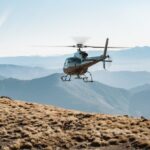
A West Coast helicopter day beats the usual drive. You get mountain-and-beach landings and two-way talk with your pilot, then fly over Kahurangi, Abel Tasman, Golden Bay, and Farewell Spit. It feels like a greatest-hits sampler, but with real landings at the good bits.
I especially like the focus on short, high-impact stops rather than long bus time. And the inclusion of lunch (served as a proper picnic-style spread) makes the whole half-day feel complete. One thing to keep in mind: this trip really depends on good weather, so the schedule can shift if conditions aren’t right.
In This Review
- Key highlights before you go
- Why this Nelson helicopter route feels special
- Meet at Nelson Airport, then settle in for a half-day
- Kahurangi National Park: mountain and beach landings (the main event)
- Abel Tasman National Park: golden beaches and granite cliffs from the air
- Wharariki Beach: arch-like rocks and Tasman Sea drama
- Farewell Spit and Puponga Farm Park Tracks: sand, birds, and long views
- Golden Bay: a short top-of-the-island finish
- Lunch on a mountaintop picnic: included and actually thoughtful
- Price and value: what $5,068.22 per group really means
- Weather, clothing, and the small things that make it smoother
- Who this tour is best for (and who should think twice)
- Booking advice: how to get the best version of your day
- Should you book Te Tau Ihu West Coast Wilderness?
- FAQ
- How long is the Te Tau Ihu West Coast Wilderness tour?
- Is this tour private?
- How many people are in a group?
- What landings and stops are included?
- Where do we meet?
- What’s included in the price?
- What should I wear or bring?
- What happens if the weather is poor?
Key highlights before you go
- Private group means only your party goes, so the pace stays yours.
- Two-way communication with your pilot keeps you informed in real time.
- Mountain and beach landings give you time on the ground, not just a flyover.
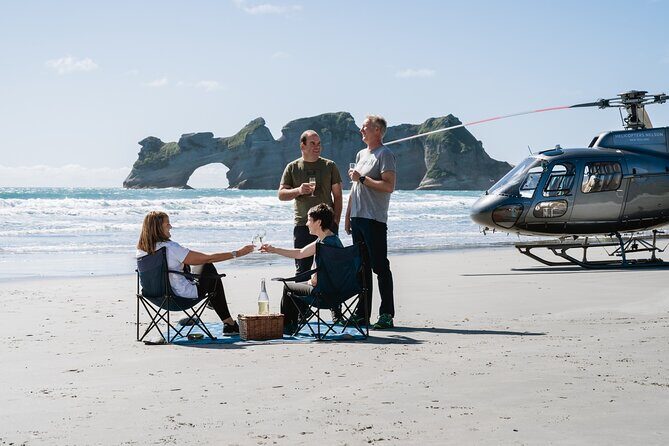
- Wharariki’s arch-like rock formations are part of the day’s best scenery stops.
- Farewell Spit + Puponga tracks mix long sandspit views with a bird-and-wetland setting.
- Lunch included helps you avoid the awkward half-day meal scramble.
Why this Nelson helicopter route feels special
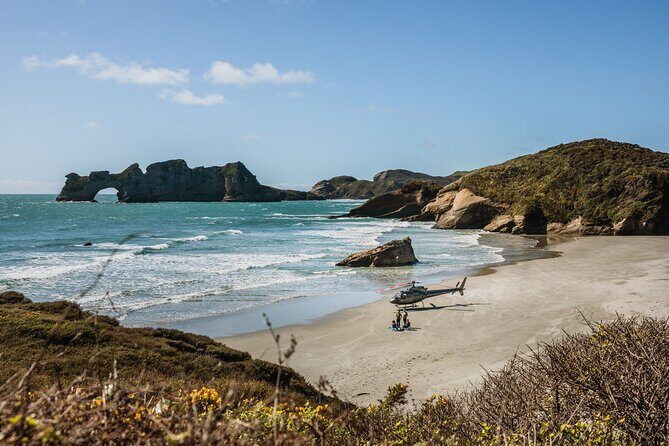
This is not a sightseeing flight that stays in the air the whole time. Your day is built around landing, walking a bit, and then lifting off again for the next big view. That means you’ll actually feel how the coastline changes—from rugged national park terrain to sandy coastlines.
The best part for me is the pacing. A normal tour tries to cover too much by car and ends up rushing. Here, you trade some time in the seat for time at the sites themselves, with the pilot calling the shots from above.
You can also read our reviews of more tours and experiences in Nelson.
Meet at Nelson Airport, then settle in for a half-day
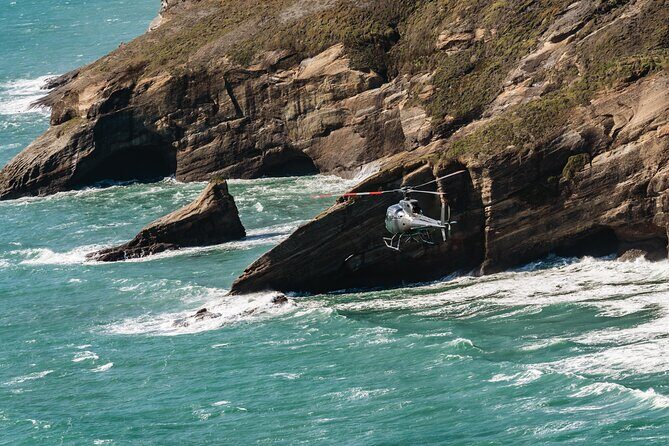
You start at 8 Dakota Street, Nelson Airport (Nelson 7011). The activity runs Monday through Sunday from 8:00 AM to 5:00 PM, and it’s planned as an approx. 5-hour outing overall.
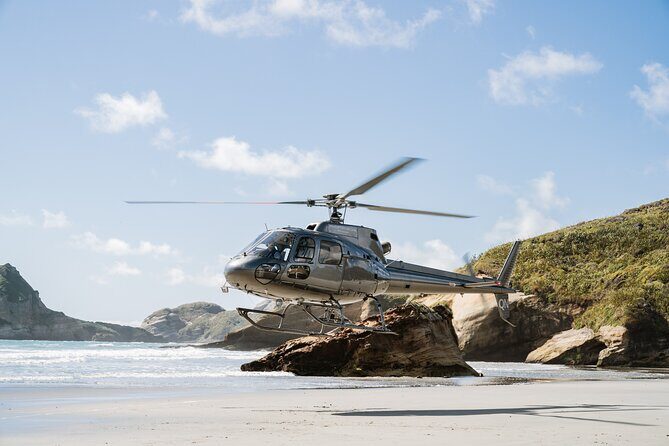
Your real time in the air is about 1 hour 40 minutes to 2 hours, spread across multiple national parks and coastal areas. Expect the day to feel like one continuous run: lift-off, short ground time, repeat.
Also, this is a private tour for up to 6 people, which matters. Smaller groups generally mean less waiting, fewer interruptions, and a better chance of keeping things calm and comfortable.
Kahurangi National Park: mountain and beach landings (the main event)
Kahurangi National Park is where the trip earns its wow factor. You’ll fly in over the park and then do a premium landing experience, including mountain-and-beach style sights. The day’s structure makes this the big anchor stop, so it’s where you’ll spend most of your on-the-ground time.
What I like here is the variety in one place. You’re not just looking at cliffs or just looking at sand. You get the sense of how the park’s rugged terrain and coastal stretches connect, which is hard to fully grasp from the road.
Practical notes: wear warm layers and plan on sturdy footwear. Even if the walk is easy, you’ll be outside long enough for wind and chill to matter—especially near exposed coastal points.
Abel Tasman National Park: golden beaches and granite cliffs from the air
Next comes Abel Tasman National Park, famous for golden beaches and sculptured granite cliffs. From a helicopter, you get that quick “map-to-reality” effect: the coastline looks like it was drawn for postcards, but you also see how the shape of the land controls the water and access points.
The time here is focused and efficient. This is good if you want the highlights without committing to a full hike day. It’s also good for mixed groups—adults, seniors, and families—because the activity level stays in the easy range.
If you’re the type who loves taking photos, this is a strong camera stop. You’ll want to spend a few minutes just panning between the beach lines and the cliff edges.
Wharariki Beach: arch-like rocks and Tasman Sea drama
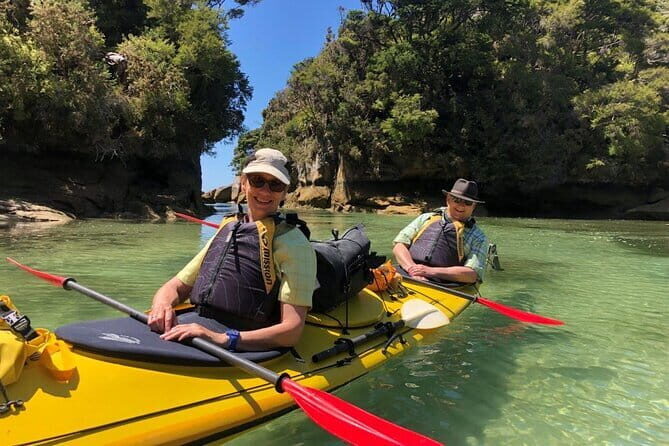
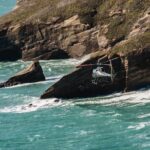
Wharariki Beach sits on the Tasman Sea side, west of Cape Farewell—the northernmost point of the South Island. It’s especially known for natural arch-like rock formations, and you’ll see those forms from both the air and during your time at the beach.
The value of the helicopter here is obvious: the arch formations are the kind of feature that looks impressive from one angle and then gets way more interesting as you change position. By landing, you can appreciate the scale without guessing.
Keep expectations practical. This is a beach setting, so wind and salt air are part of the deal. Bring a camera strap or something secure—gusty conditions can turn “quick photo” into “why is my hat leaving?”
Farewell Spit and Puponga Farm Park Tracks: sand, birds, and long views
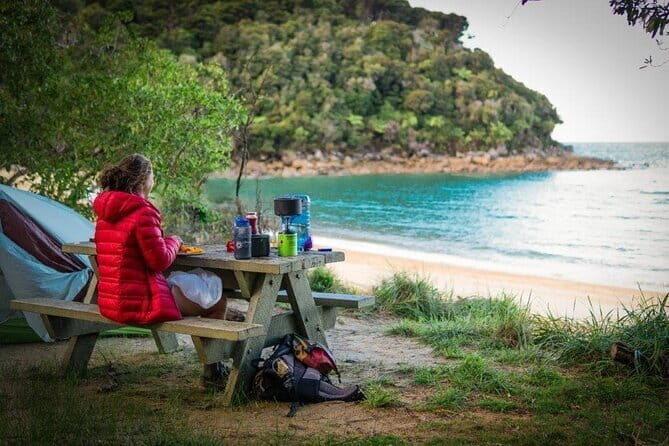
Farewell Spit is famous for being one of the longest natural sandspits in the world (listed as 34 km). It’s also a bird sanctuary and wetland of international importance, so you’re not only chasing scenery—you’re also in an ecosystem where wildlife viewing is often the point.
You’ll also stop at Puponga Farm Park tracks. The combination works well: you get wide sand-and-sky views, then you shift to a more track-and-walk feel that helps you slow down and actually take it in.
This is where the trip’s “land and land again” structure really shines. From the air, you see the scale of the spit. From the ground, you get a better sense of texture and space—how the sand and wetlands sit together, and how the shoreline bends away.
Golden Bay: a short top-of-the-island finish
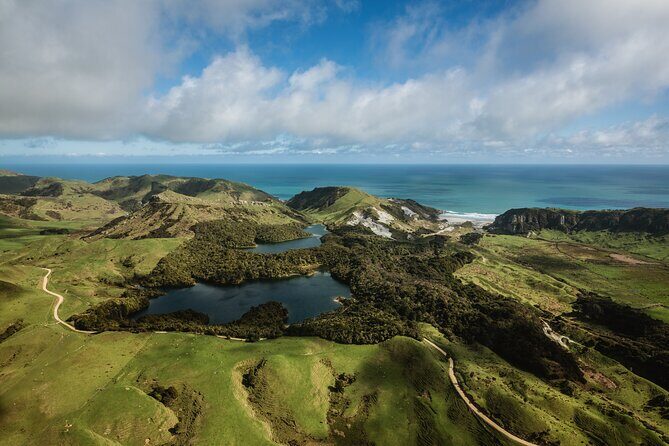
Golden Bay rounds out the day. It’s described as an extraordinary natural environment at the top of the South Island, and it’s given a shorter time window (about 30 minutes).
That shorter stop is not a weakness. It’s a smart finishing move. You end with another scenic reset after the sandspit and track time, so you don’t feel like you’re dragging yourself across the finish line.
If you have limited energy, this is also the kind of stop that can work. You get enough time to look, photograph, and enjoy, without being stuck for hours.
Lunch on a mountaintop picnic: included and actually thoughtful
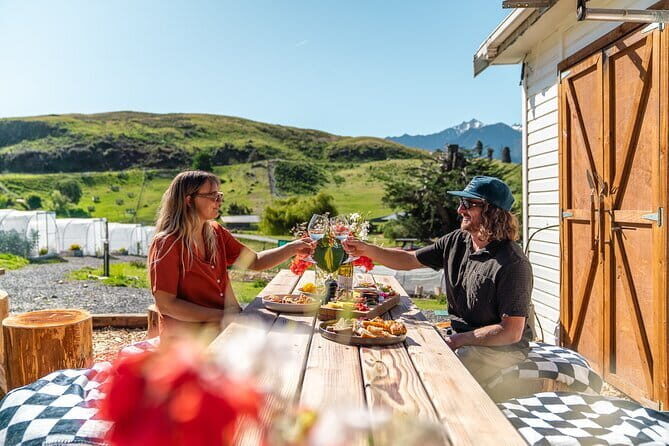
Lunch is included, along with landing and facility fees, national park fees, GST, and even alcoholic beverages. That matters because half-day tours often nickel-and-dime you for the basics. Here, you get fed properly and you don’t have to plan a meal around the tour.
The food is served as a picnic-style spread, and from the operation’s pattern you can expect a cheese-and-snack selection like cheese, crackers, bread, and grapes. It’s the kind of simple, portable meal that fits a helicopter day where sitting down for a long meal isn’t the plan.
One more practical upside: being on a private run means you’re not fighting for a bench or a table. You can take a few minutes, eat, and get back to the views.
Price and value: what $5,068.22 per group really means
The price is $5,068.22 per group (up to 6 people). If you’re booking with a full group, that works out to roughly $845 per person. If you have fewer people, the per-person cost rises, so this is best when you can split the group cost.
So what are you paying for? Three things:
- Time in the air (about 1h40–2h) over multiple major regions.
- Multiple landings, including a mountain landing component, not just a quick drop-and-go.
- All the included fees (national park fees, landing and facility fees, GST) plus lunch.
Compared to piecing together separate road-based activities, the value comes from compression. You’re seeing a lot of West Coast highlights without spending half your day driving.
Weather, clothing, and the small things that make it smoother
This experience requires good weather. If it can’t run due to poor conditions, you’ll be offered a different date or a full refund.
Plan like a local: dress for cool air and wind. Bring warm clothing and sturdy shoes, and don’t skip the camera—this route is built for photos. Most of the activity level is described as easy, so you’re not signing up for intense hiking, but you still need footwear you trust on uneven ground.
One more practical limit: the total weight per passenger is listed at 265 lbs. If you’re close to that, you’ll want to double-check before booking.
Who this tour is best for (and who should think twice)
I think this fits best if you:
- want big scenery fast, with real time on the ground
- have a small group (up to 6) and can share the cost
- care more about where you land than just where you fly over
- appreciate guided context from a pilot who can explain what you’re seeing
It may be less ideal if you:
- hate the idea that the day depends on weather
- prefer long walks and lots of time exploring one area in depth (this is a sampler with landings, not a deep stay anywhere)
Booking advice: how to get the best version of your day
If you want the smoothest experience, pick a flight time window that lets you stay flexible. Since the trip depends on conditions, it’s smart to avoid days where you have tight onward plans.
Also, go in with the right mindset. This is a high-compression, high-view day. You’ll get multiple regions and standout features, but the magic is in the sequence—seeing how the coastline and terrain change as you move.
If you’re traveling with family or seniors, the easy activity level makes it workable. Just be sure everyone can handle chilly wind and short walks on natural ground.
Should you book Te Tau Ihu West Coast Wilderness?
If you’re excited by the idea of private helicopter landings across Kahurangi, Abel Tasman, Wharariki, Farewell Spit, and Golden Bay, then yes—this is a strong booking. The pricing only makes sense when you share it across a group, and the included lunch plus fees add real value for a half-day format.
Book it when you can be flexible with weather, and when you want maximum scenery with minimum driving. If that sounds like your kind of trip, this one is hard to beat.
FAQ
How long is the Te Tau Ihu West Coast Wilderness tour?
The total experience is about 5 hours, with approximately 1 hour 40 minutes to 2 hours of flight time.
Is this tour private?
Yes. It’s a private tour/activity, and only your group participates.
How many people are in a group?
The tour price is per group up to 6 people.
What landings and stops are included?
The experience includes a mountain landing and multiple sightseeing stops such as Kahurangi National Park, Abel Tasman National Park, Wharariki Beach, Farewell Spit and Puponga Farm Park tracks, and Golden Bay.
Where do we meet?
The start point is 8 Dakota Street, Nelson Airport, Nelson 7011, New Zealand. The activity ends back at the meeting point.
What’s included in the price?
Included items are private tour, lunch, GST, landing and facility fees, national park fees, and alcoholic beverages.
What should I wear or bring?
Bring a camera, wear warm clothing, and bring sturdy shoes.
What happens if the weather is poor?
The tour requires good weather. If it’s canceled due to poor weather, you’ll be offered a different date or a full refund.