REVIEW · MANAWATU WHANGANUI
Tongariro Alpine Crossing: Round-Trip Shuttle Service
Book on GetYourGuide →Operated by Dempsey Buses Ltd · Bookable on GetYourGuide
A shuttle drops you into a volcanic icon. This round-trip shuttle service is built for one thing: getting you from lodging areas to the start of the Tongariro Alpine Crossing and back again with less driving stress. I especially like that the trip bundles Tongariro National Park fees and brings you straight to the hike’s trailhead start and finish.
You’ll still hike your butt off for 6–8 hours, though, and the biggest practical gotcha is you must plan like you’re carrying your own supply chain. The trail has plenty of toilets, but there are no water facilities, so you need to bring enough water for the whole walk.
In This Review
- Quick hits before you go
- Round-trip shuttle: why this hike feels easier
- Mangatepopo to Ketatahi: how the flow works
- The 6–8 hour hike: climbs, craters, and the late-stage grind
- Green and Emerald Lakes: the views you’re hiking for
- Volcanic terrain and changing weather: what you’re stepping into
- Transport comfort and safety briefing: the real perks
- What to pack: the items that keep you comfortable
- Price and value: is $41 actually a good deal?
- Who this shuttle works for (and who should skip it)
- Should you book this Tongariro shuttle?
- FAQ
- How long is the Tongariro Alpine Crossing experience?
- What does the $41 per person price include?
- Where are the start and finish points?
- What pickup locations are offered?
- Where are the drop-off locations?
- Is this a guided tour?
- What time does the shuttle run?
- What should I bring?
- What are the key restrictions?
- Is there free cancellation?
Quick hits before you go
- Round-trip, not one-way: you get a morning pick-up and afternoon return from the end point area
- Start and finish transfers: transport to Mangatepopo and pickup from Ketatahi in National Park Village
- Park fees included: Tongariro National Park fees are part of the price
- Airconditioned, seat-belted vehicles: low-emission buses with a comfort upgrade for long transit days
- Not a guided hike: you get a safety briefing and the correct logistics, but you handle the walking yourself
Round-trip shuttle: why this hike feels easier
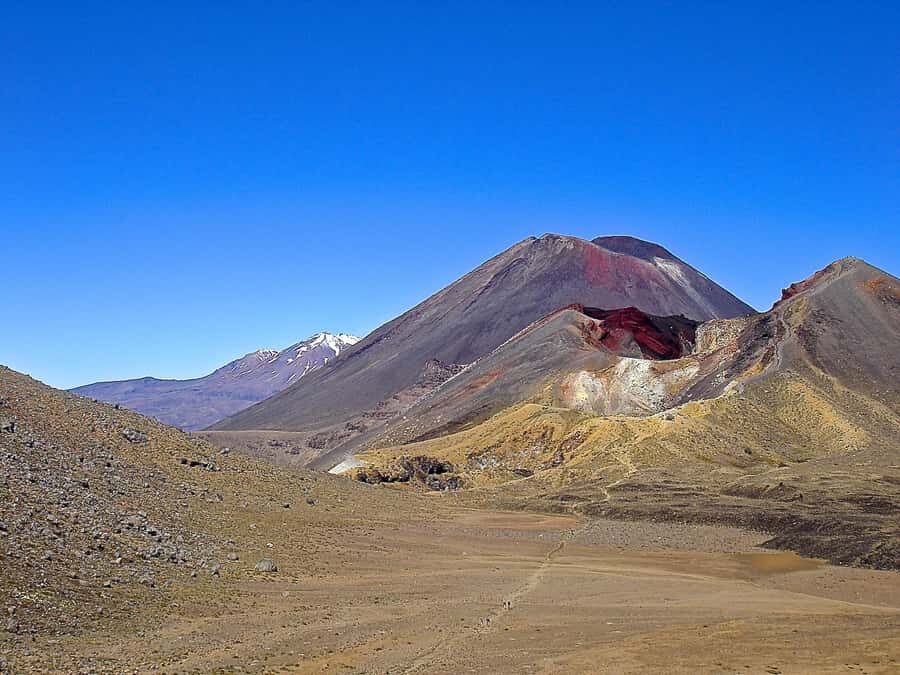
The Tongariro Alpine Crossing is famous for a reason, but it also has a simple reality: you’re far from parking-and-go comfort. This shuttle format is smart because it removes the hardest parts of logistics—how to get to the start (Mangatepopo) and how to get back from the finish (Ketatahi)—so you can focus on the hike itself.
For me, value here is not just “you pay less for transport.” It’s that you’re not juggling multiple decisions while weather and timing can change fast. You show up at one of the pickup points, get a safety briefing, and then you’re set up to hike the full route on your schedule window.
Mangatepopo to Ketatahi: how the flow works
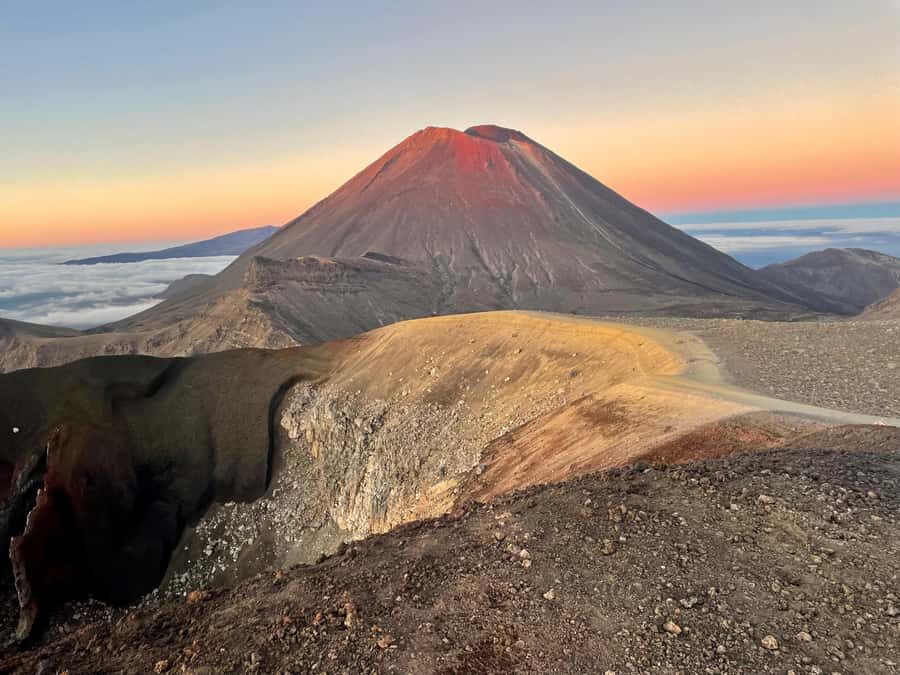
The service is a clean loop. You’re transported to the start point at Mangatepopo, you hike out and complete the crossing, then you’re picked up from Ketatahi in the National Park Village (Waimarino).
You get multiple pickup options in the National Park / Waimarino area, including:
- National Park Alpine Lodge
- Mountain Heights Lodge
- Tongariro Crossing Lodge
- Park n Ride to Tongariro National Park
- The Park Hotel Ruapehu
- Schnapps Bar
- The Crossing Lodge and Backpackers
Return drop-off points are also multiple, including:
- Schnapps Bar
- National Park Alpine Lodge
- Mountain Heights Lodge
- Park n Ride to Tongariro National Park
- The Crossing Lodge and Backpackers
- Tongariro Crossing Lodge
- The Park Hotel Ruapehu
That matters because the crossing is one day, and after it you’ll likely want the shortest possible ride back. If your accommodation is a long drive away from these zones, your post-hike evening can turn into an endurance event—so choose a drop-off that actually lines up with where you’re sleeping.
The 6–8 hour hike: climbs, craters, and the late-stage grind
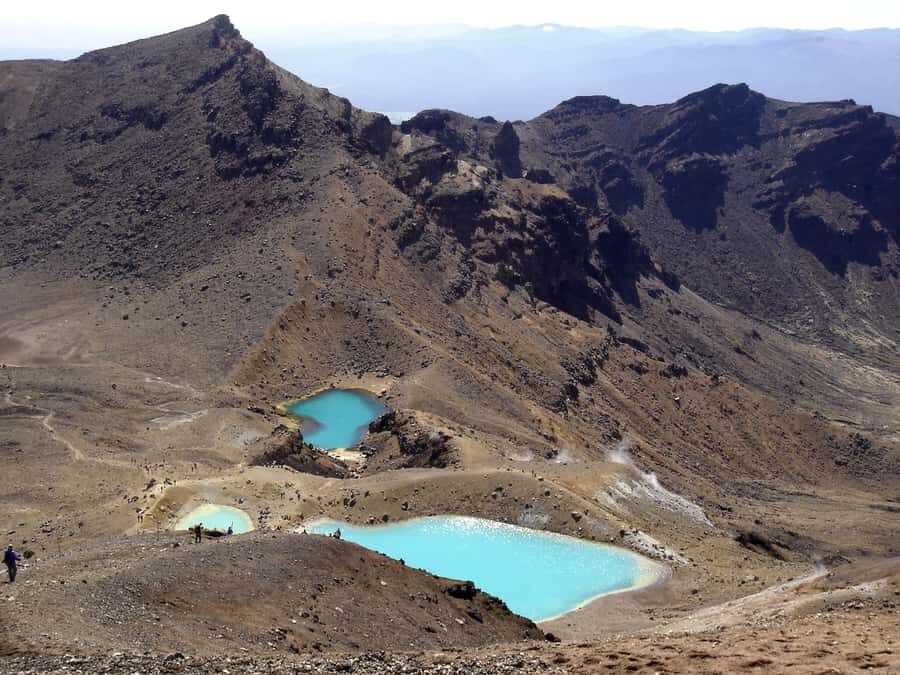
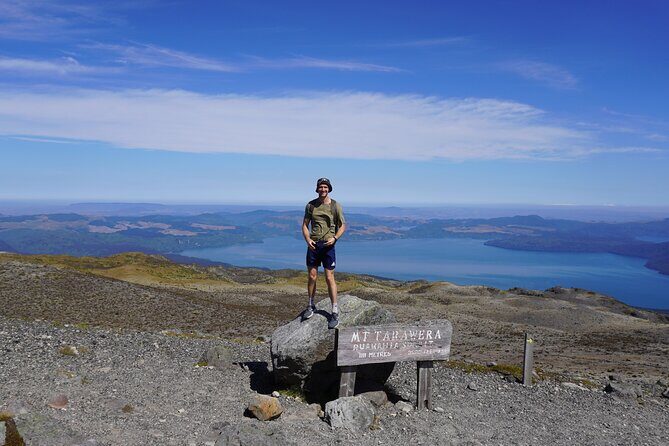
This is a big one-day walk. Plan on 6–8 hours on foot, depending on your pace, photo stops, and conditions. Expect some climbs and a trail that takes you through the park’s volcanic past—features shaped and colored by craters, vents, and dramatic changes in terrain.
A few practical notes that make your day smoother:
- The track is well marked, which helps when visibility drops or you’re tired.
- You’ll get plenty of toilets along the way, so you’re not guessing where to stop.
- The later part can feel more like a steady walk than the most technical-feeling sections. One review described the final stretch as dragging a bit and feeling more like a hiking track, so keep that in mind for your energy planning.
If you’re the kind of hiker who likes to move efficiently, you can likely keep good momentum. If you’re more photo-focused, give yourself a cushion. The crossing is best when you don’t rush it like a checkbox.
Green and Emerald Lakes: the views you’re hiking for
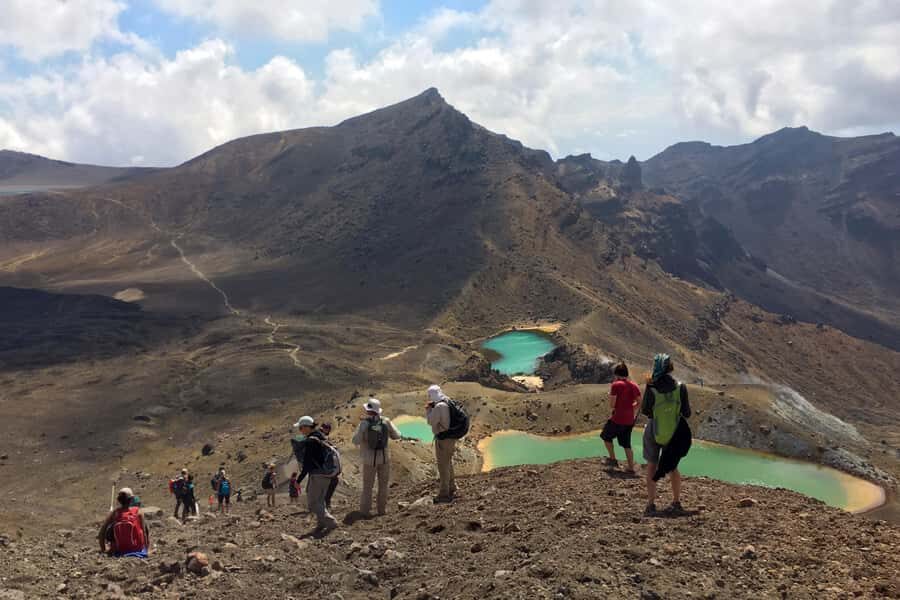
The star moments are the Green Lake and Emerald Lake areas. These lakes aren’t just scenic pauses; they help you understand what you’re walking through. Volcanic activity creates harsh ground and shifting colors, and the lakes reflect that story with striking tones.
Here’s what you should think about as you approach those viewpoints:
- You’re walking across terrain that looks otherworldly, so slow down and let your brain catch up.
- The color shifts can be subtle at a distance but pop up close—so if weather is good, you’ll enjoy spending a few extra minutes there.
- If the sky is low, you can still get value from the hike, but you’ll want to manage expectations. With cloud and mist, the experience becomes more about endurance and focus than big panoramic reveals.
Bring a snack for those lake moments. Not a huge meal—just something quick so you can enjoy the view without feeling shaky or drained.
Volcanic terrain and changing weather: what you’re stepping into
Tongariro National Park has the kind of rugged terrain that makes you respect the day you planned. The crossing runs through a region shaped by past volcanic activity, which creates the craters and vents you’ll see along the route.
That variety means your legs handle more than one “type” of challenge:
- Some sections are more climb-focused, so early pacing matters.
- Some sections feel steeper or more demanding underfoot, especially when conditions aren’t dry and grippy.
- Even when the grade isn’t brutal, the day adds up because the route is long and exposed in places.
Weather on Tongariro can be moody. This is why rain gear and weather-appropriate clothing aren’t optional add-ons. On a day like this, a light layer can be the difference between comfortable and miserable in minutes.
Transport comfort and safety briefing: the real perks
The shuttle ride is part of the value, and it’s not a “cattle car” situation. You’re on a modern airconditioned vehicle with seat belts, and it’s described as low-emission. That sounds like marketing until you realize how much time you’ll spend sitting before you start walking.
Also, drivers are described as fully trained, and you’ll get a safety briefing. That briefing matters because you’re heading into a hike where the route can feel intense even when the track is well marked.
One more thing: this is about transport. You’re not signing up for a guided trek where someone leads you step-by-step. You should arrive ready to follow signage and use your own hiking judgment.
What to pack: the items that keep you comfortable
The included service covers getting you to and from the hike, not your gear. The pack list is straightforward, but follow it like it’s written in stone.
You should bring:
- Food and drinks
- Hiking shoes
- Sunscreen
- Water
- Rain gear
- Weather-appropriate clothing
The big emphasis for me is water. With no water facilities on the route, you need to plan for the full hike time in your hydration math, not just “I’ll refill halfway.” If you tend to drink a lot while hiking, pack extra.
Also, think about the post-hike reality. Your legs can feel wrecked. It’s smart to keep your evening flexible and make sure your lodging isn’t too far from your drop-off.
Price and value: is $41 actually a good deal?
At $41 per person, this is one of the more budget-friendly ways to do the crossing in a one-day format—especially because the price includes:
- Transport to the start (Mangatepopo) and pickup from the finish (Ketatahi)
- Safety briefing
- Multiple pickup and return times
- Tongariro National Park fees
When a tour includes park fees and end-to-end transport, you get two things at once: you remove uncertainty, and you reduce the chance of getting stuck with extra costs and complicated timing. In your head, it turns the crossing into a single purchase with a clear output: start transferred, hike done, return transfer waiting.
What’s not included is also important. The service doesn’t cover kids under 6, pregnant women, people with mobility impairments, or hikers who aren’t able to manage the physical demands of the route.
Who this shuttle works for (and who should skip it)
This shuttle service is best for adults and hikers who want a stress-free logistics solution and are comfortable hiking the crossing on their own.
It’s not suitable for:
- Children under 6 years old
- Pregnant women
- People with mobility impairments
- People with heart problems
- Wheelchair users
It also has clear rules on what you can’t bring:
- Pets
- Drones
- Bikes
- Swimming
If you’re a fit hiker aiming for a classic day in Tongariro National Park, this setup makes a lot of sense. If you need step-by-step assistance on the trail, you should look for a guided option instead, because this service centers on transport and a briefing, not a leader on the track.
Should you book this Tongariro shuttle?
Book it if you want the crossing’s big payoff—volcanic craters, vents, and Green and Emerald Lakes—without spending your morning figuring out logistics. The included park fees, the morning-to-afternoon structure, and the multiple pickup/drop-off points in the National Park area are exactly what make a one-day hike feel doable.
Skip it (or choose a different format) if you:
- need a guided trek on the trail
- aren’t able to carry your own water and snacks for a long hike
- fall into the stated unsuitability categories
If you’re an independent hiker with the right shoes, rain gear, and hydration, this shuttle is a smart way to turn a famous hike into a simple, well-timed day.
FAQ
How long is the Tongariro Alpine Crossing experience?
The hike itself takes about 6–8 hours, with shuttle transport making it a one-day outing.
What does the $41 per person price include?
It includes transport to the start point (Mangatepopo) and pickup from the finish point (Ketatahi), a safety briefing, multiple pickup/return times, and Tongariro National Park fees.
Where are the start and finish points?
You’re dropped at Mangatepopo to start, and you’re picked up at Ketatahi in National Park Village (Waimarino) after you finish.
What pickup locations are offered?
Pickup is available from several locations, including National Park Alpine Lodge, Mountain Heights Lodge, Tongariro Crossing Lodge, Park n Ride to Tongariro National Park, The Park Hotel Ruapehu, Schnapps Bar, and The Crossing Lodge and Backpackers.
Where are the drop-off locations?
Drop-off options include Schnapps Bar, National Park Alpine Lodge, Mountain Heights Lodge, Park n Ride to Tongariro National Park, The Crossing Lodge and Backpackers, Tongariro Crossing Lodge, and The Park Hotel Ruapehu.
Is this a guided tour?
The service provides transport to and from the hike and includes a safety briefing; it is not described as a guided hike on the trail.
What time does the shuttle run?
The schedule includes a morning pick-up and an afternoon return service, with multiple pickup and return times depending on availability for your selected day.
What should I bring?
Bring food and drinks, hiking shoes, sunscreen, water, rain gear, and clothing suited to the weather.
What are the key restrictions?
Pets, drones, bikes, and swimming aren’t allowed. It’s not suitable for children under 6, pregnant women, people with mobility impairments, people with heart problems, or wheelchair users.
Is there free cancellation?
Yes, you can cancel up to 24 hours in advance for a full refund.