REVIEW · GREYMOUTH
TranzAlpine Train Journey from Greymouth to Christchurch
Book on Viator →Operated by Great Journeys New Zealand · Bookable on Viator
The TranzAlpine feels like a moving viewpoint. This one-way Greymouth to Christchurch rail ride threads the Southern Alps with GPS-triggered commentary, open-air viewing decks, and a dining car to keep the trip easy and relaxed.
I love the mix of seating: comfortable reserved seats when you want calm, plus open decks when you want air and photos. You’ll also like the GPS audio at every seat, since it turns passing places into something you can actually place on the map.
One thing to plan for: you go through real alpine conditions, so dress warm and don’t assume everything stays perfectly on schedule. If weather or line issues hit, you may see delays or replacement travel.
In This Review
- Key things that make this ride worth your time
- Getting on the Train in Greymouth: a smooth start and an easy seat plan
- Coast-to-Alps changeover: Greymouth through native beech rainforest
- Arthur’s Pass: where the Alps start feeling real
- Crossing the Southern Alps: open decks, smooth motion, and better photos
- Waimakariri River to the Canterbury Plains: gorges, then wide-open space
- The café carriage and the real timing of a near-five-hour day
- Price and value: is $151.26 a fair deal for this route?
- How to dress, pack, and plan your photos without stress
- Who this is best for (and who might not love it)
- Should you book the TranzAlpine Greymouth to Christchurch?
- FAQ
- How long is the TranzAlpine journey from Greymouth to Christchurch?
- Is this a one-way trip from Greymouth to Christchurch?
- Does the price include audio commentary?
- What time does the train depart from Greymouth?
- Where do I check in and board?
- Is food included on the train?
- What should I wear for this route?
Key things that make this ride worth your time
- GPS-triggered audio at every seat so you can follow what you’re seeing without squinting at guidebooks
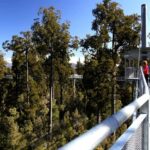
- Open-air viewing decks for photos and feeling the scale of the Alps
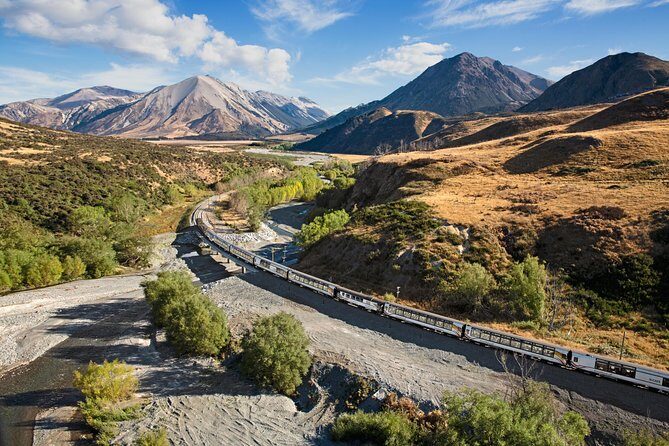
- Arthur’s Pass National Park segment where the scenery shifts into full mountain drama
- Waimakariri River gorges and valleys followed by a gradual flattening into the Canterbury Plains
- Licensed café carriage for snacks and light meals during the journey
- Small group cap of 15 travelers that helps keep the ride comfortable and not chaotic
Getting on the Train in Greymouth: a smooth start and an easy seat plan
Your day starts at 164 MacKay Street, Greymouth, with departure at 2:15 pm. I’d arrive early (the operator asks for 20 minutes before), since you’ll want time for check-in and to find your platform without rushing.
The train setup is designed for switching modes. You’ll have reserved viewing seats inside, and you can move to open decks when the light and angles are right. If you’re the kind of person who likes to “set up, watch, and then drift,” this format works well.
Pick a strategy before you board. If you want the best photo odds, plan to spend blocks of time at the open sections during key mountain moments. If you want fewer interruptions, stay seated and let the audio do the storytelling.
You can also read our reviews of more tours and experiences in Greymouth.
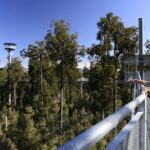

Coast-to-Alps changeover: Greymouth through native beech rainforest
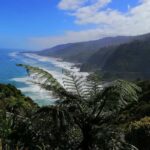
From the West Coast town of Greymouth, the route starts in a very different world than Christchurch. You travel from lush areas through native beech rainforest, and that “green wall” effect is part of what makes the ride feel special even when you’re not doing anything active.
This part matters because it slows you down. You’re not hauling luggage across stations or doing ticket math all day. You sit, you look, and the view changes at a steady pace you can actually enjoy.
The audio helps here too. Without it, a lot of forest can start to look repetitive. With GPS-triggered commentary, you can understand what you’re passing and why it’s there, which makes the whole middle chunk feel connected rather than random.
Arthur’s Pass: where the Alps start feeling real
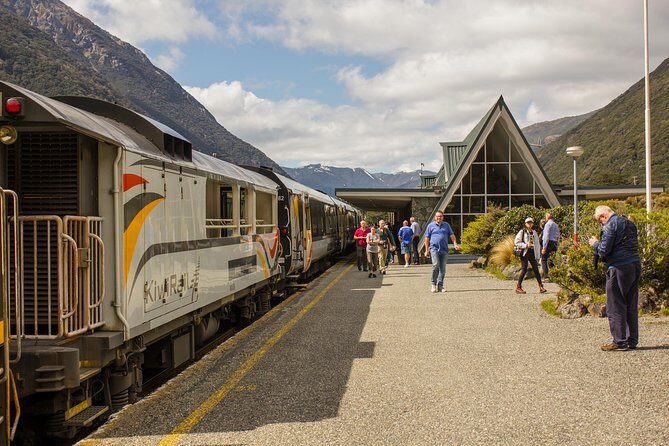
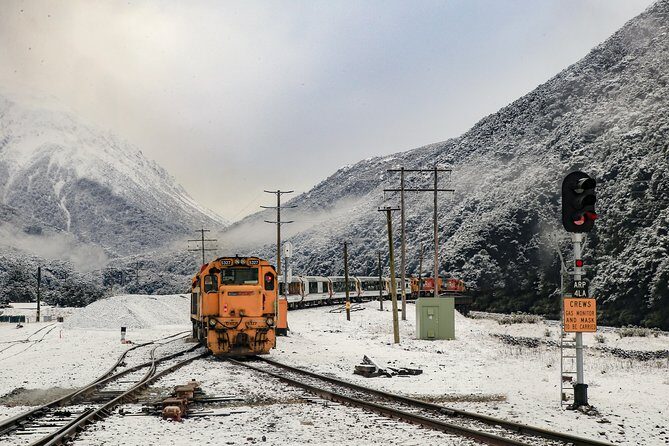
As the train heads into Arthur’s Pass National Park, the vibe changes from “pretty countryside” to “mountain country.” This is the moment many people remember, and it’s also why it’s worth staying awake and paying attention rather than treating the ride like background TV.
You get chances to get out at Arthur’s Pass for photos. That brief stretch of legs makes a difference, because you’re no longer only relying on window frames and train speed. It’s also when you’ll want your camera ready, since the views shift quickly.
Practical tip: dress for alpine conditions from the start. Even when the train is warm inside, the open-air decks can feel much colder once you’re higher or moving through passes. Bring layers you can shed and restack fast.
Crossing the Southern Alps: open decks, smooth motion, and better photos
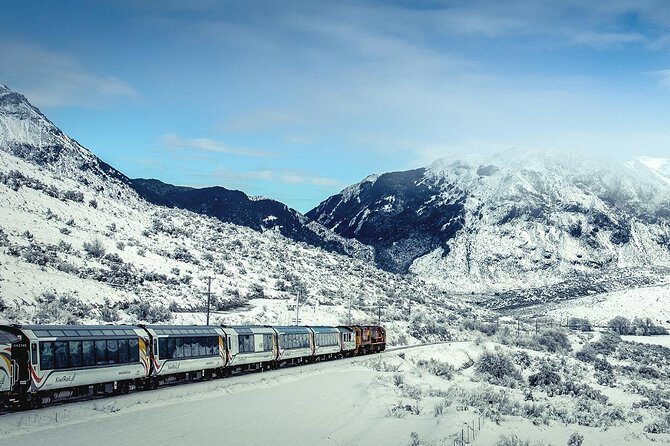
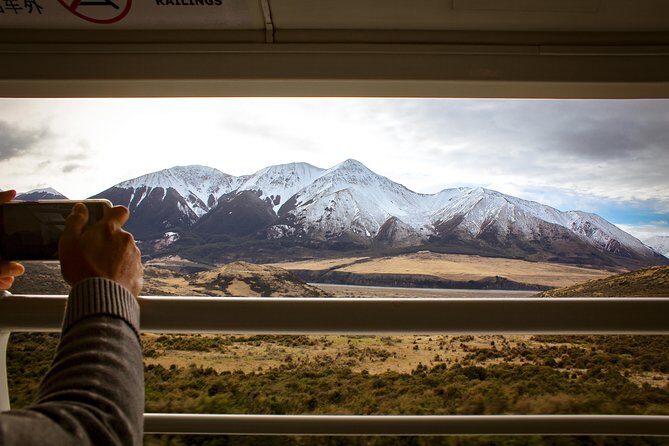
The main event is the move through the high peaks of the Southern Alps. This is where the “world class” reputation makes sense: big vertical angles, dramatic rock faces, and river corridors that you just can’t replicate from a road pull-off.
I like this route because the train feels designed for viewing. The ride is smooth, the seats are comfortable, and the open decks let you step out when the scenery turns cinematic. Even if you don’t love crowds, the chance to rotate locations keeps things from getting stale.
Photo-wise, don’t just aim for one shot. Try a quick cycle: warm up inside for a few minutes, then head out for the wider views, then return to the seat to cool down and check where you are on the route. It keeps you from spending the whole trip straining your neck in one spot.
If you care about the commentary, plan to use it. The audio is triggered through the headphones, and it’s timed to what you’re passing. One real-world tip: if your phone or laptop has a VPN running and you’re relying on onboard connectivity, it can interfere with getting audio to work right. When in doubt, ask staff for help.
Waimakariri River to the Canterbury Plains: gorges, then wide-open space
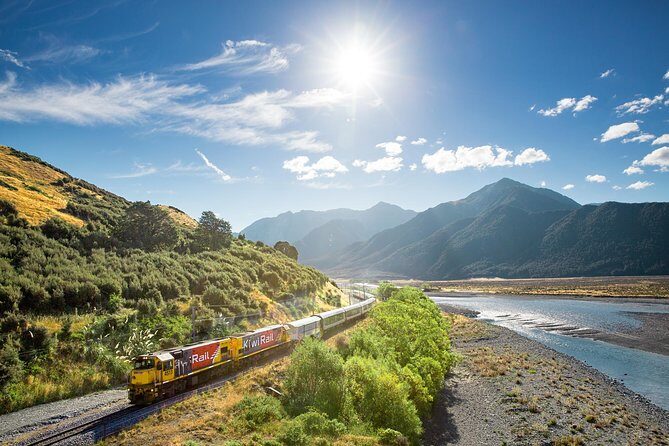
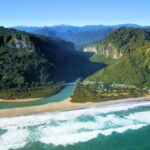
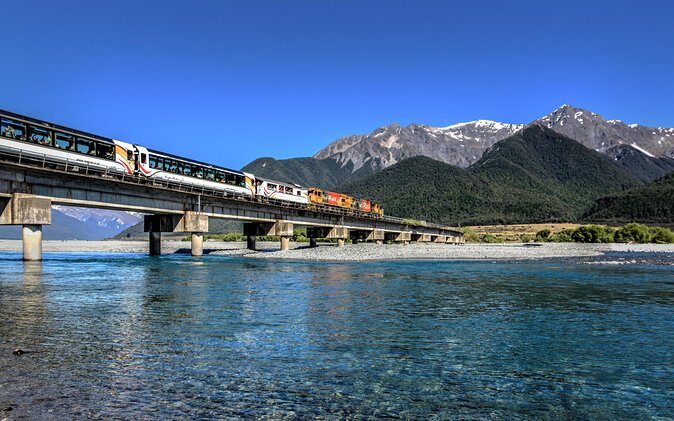
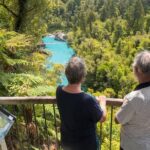
After the Alps, the scenery shifts again, and that’s what makes this journey feel like a full day of variety in less time than driving. You pass through gorges and river valleys of the Waimakariri River, then you gradually move toward the Canterbury Plains.
This transition is satisfying if you like contrast. The river country gives you depth and movement, while the plains open up the horizon. The result is that the ride doesn’t stay “high and dramatic” the whole time. It earns its changes.
The audio keeps this section from feeling like “just more scenery.” When you understand you’re moving from passes into river corridors, the view becomes more legible. You’ll spot how the land shapes travel paths and where the rivers have carved their routes.
The café carriage and the real timing of a near-five-hour day
The trip is listed at about 4 hours 50 minutes one way. In practice, it can run a bit longer depending on operating conditions and how long the train spends at stops, so plan like it’s closer to a full half-day commitment.
You’ll have access to a licensed café carriage for snacks and light meals. Alcohol isn’t included, but you can buy it. Food and drinks aren’t included in the fare, so I recommend treating the café as convenient rather than guaranteed “included lunch.”
This matters for value and comfort. If you time a meal for when you’re feeling hungry, you stay relaxed during the best viewing windows instead of scrambling for food at the end. If you’re the type who snacks, bring a little extra if you have dietary needs, since what’s available can vary.
Also, note the train setup: you can move between viewing areas without losing your place. That reserved-seat feel helps when someone in your party wants photos while you want quiet.
Price and value: is $151.26 a fair deal for this route?
At $151.26 per person, this is not a “cheap and cheerful” add-on. But it can be a strong value if you look at what’s included versus what you’d spend doing it another way.
Your fare covers the one-way rail journey, GPS-triggered audio, and the “paperwork” side like taxes and handling. You’re also getting multiple viewing options built into the carriage design—reserved seats plus open-air decks—so you’re not paying for transportation only. You’re paying for an experience that’s made for looking.
What costs extra is mostly what you’d expect: food and drinks (available for purchase) and alcohol. There can also be extra fees if you have excess luggage, and there’s no hotel pickup or guide included—this is more “show up, board, enjoy.”
To judge value honestly, ask yourself one question: do you want the Alps as a guided sensory experience, or do you want to drive and stop whenever you feel like it? If your priority is relaxation and guaranteed scenic viewing time, the train usually wins.
How to dress, pack, and plan your photos without stress
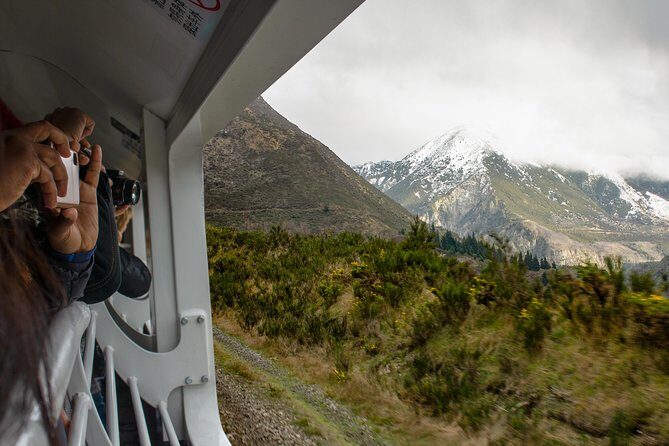
This route passes through the Southern Alps, so pack like it could change quickly. Warm layers help even if the station feels mild, because open-air decks can get chilly fast.
For bags, keep it manageable. The experience doesn’t include any special luggage handling, and excess luggage charges can apply where relevant. You’ll also want your hands free for camera moments, especially during stops like Arthur’s Pass.
A smart photo habit: don’t wait until the perfect moment. Move to your viewing area a little before the best angles show up, then stay until the scenery shifts. That way you catch the changeover, not just one frame.
If you’re traveling solo, it’s also an easier day than many tours because you always have a seat to return to. And if you’re moving between viewing areas, you won’t feel lost as long as you keep track of your carriage and seat.
Who this is best for (and who might not love it)
This is ideal if you want classic New Zealand scenery without the driving fatigue. It suits couples, families who want a low-effort day, and anyone who likes trains, photography, or just having time to watch the world go by.
It’s also great for people who appreciate interpretation. The headset audio turns the journey into something you can follow, including the key transitions from rainforest to passes to river valleys to plains.
You might want to reconsider if you’re easily bored by long stretches of scenery without big physical activity. The ride is scenic, but it is still a “sit-and-look” format for nearly five hours. If you expect nonstop action, you’ll be disappointed.
Should you book the TranzAlpine Greymouth to Christchurch?
I’d book this if your South Island trip wants one unforgettable, low-stress rail day with real mountain views. The combination of Arthur’s Pass, open-air viewing, and seat-based GPS audio is hard to beat when you want scenery without planning every turn and parking spot.
Skip it or think twice if you’re traveling at a time when you’re not expecting alpine conditions, or if you’d rather control every minute with your own car. Also keep a little flexibility in your schedule, since rail services can be affected by line incidents and maintenance.
If your goal is to experience the Southern Alps in comfort and come away with photos you actually earned, this one-way ride is a solid choice.
FAQ
How long is the TranzAlpine journey from Greymouth to Christchurch?
The journey time is about 4 hours 50 minutes (approx.) for this one-way service.
Is this a one-way trip from Greymouth to Christchurch?
Yes. This experience is a one-way rail journey from Greymouth to Christchurch.
Does the price include audio commentary?
Yes. The GPS-triggered audio commentary is included with your ticket.
What time does the train depart from Greymouth?
The start time is 2:15 pm.
Where do I check in and board?
You’ll start at 164 MacKay Street, Greymouth 7805. The operator asks that you arrive at least 20 minutes early to check in and receive your boarding pass.
Is food included on the train?
Food and drinks are not included in the fare. There is a licensed café carriage where you can buy snacks and light meals.
What should I wear for this route?
The train passes through the Southern Alps, so dress for alpine conditions and expect it to feel colder, especially if you spend time on open-air viewing decks.