REVIEW · MOTUEKA
16,500ft Skydive over Abel Tasman with NZ’s Most Epic Scenery
Book on Viator →Operated by Skydive Abel Tasman · Bookable on Viator
One jump, two islands, and a view you can’t screenshot. A 16,500-foot tandem free-fall over Abel Tasman puts New Zealand’s scenery into a single, unforgettable line of sight.
I like the way this experience targets the views that matter. The most standout feature is that the drop can show you both the North and South Islands in one jump, which is rare enough to be the whole point. I also appreciate the small group size (max 9), which makes the day feel less chaotic and more personal.
The one thing to plan for: even with an estimated 2 hours, your day can run longer due to weather and scheduling. One account mentioned the full experience took closer to 4 hours, with a wait on the ground—worth it, but it’s still time.
In This Review
- Key Things to Know Before You Go
- Why a 16,500-Foot Tandem Free-Fall Over Abel Tasman Makes Sense
- Getting to Motueka-Abel Tasman Airport: Pickup and What Your Day Feels Like
- Pre-Jump Briefing and the Crew Behind Your Safety
- The Flight Up: Watching Motueka Change Shape
- The Jump Moment: Free Fall, Photos/Video, and Seeing Both Islands
- Time on the Ground vs Time in the Air: Weather and Scheduling Reality
- Price and Value: What €206 Really Includes
- Who This Tandem Jump Suits Best (and Who Should Reconsider)
- Should You Book This Abel Tasman Aerial Experience?
- FAQ
- Where is the meeting point?
- How long does the experience take?
- What does pickup include?
- What’s the group size limit?
- Do you get photos or video?
- Is the experience weather-dependent?
- Is free cancellation available?
- Are service animals allowed?
Key Things to Know Before You Go
- 16,500 feet: you’re going high, so the calm build-up before free fall feels like part of the experience
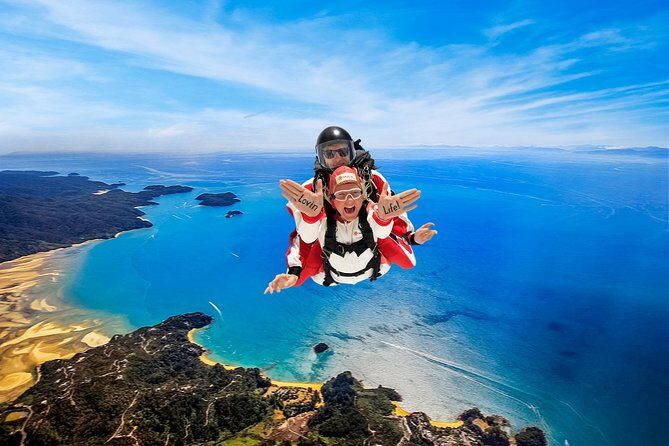
- Both islands in one jump: a big deal for your photo roll and your sense of place
- Max 9 people: fewer bodies means more straightforward attention during the briefing
- Pickup available anywhere in the region: less stress in a place where you may not have a car
- Photos and video provided: you’re not stuck trying to remember everything at the same time
- Good-weather dependent: your timing hinges on the sky doing what it should
Why a 16,500-Foot Tandem Free-Fall Over Abel Tasman Makes Sense
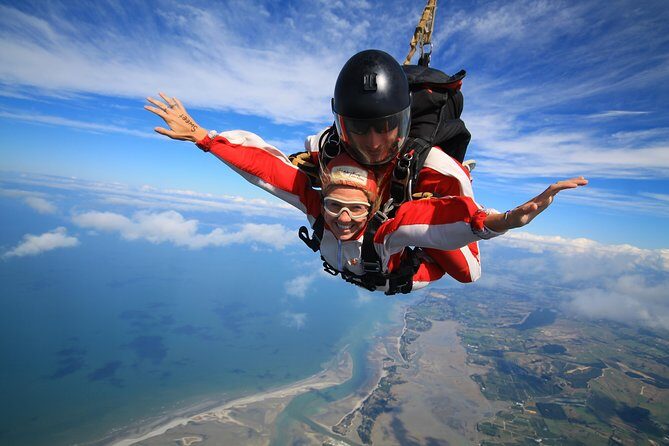
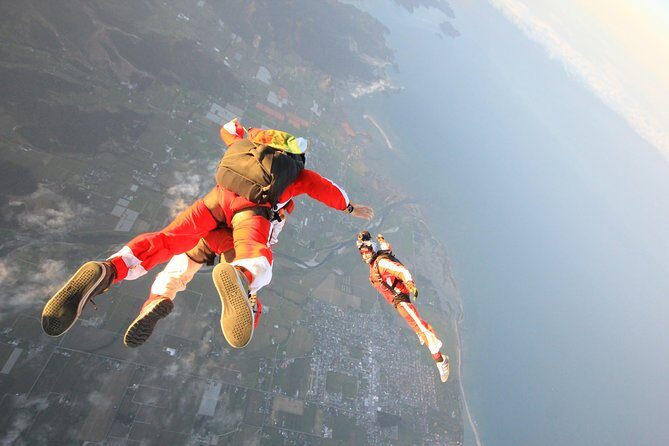
Most people come to Abel Tasman for beaches and forested hills—and that’s great. But what I love about choosing a high tandem free-fall jump here is that it changes the scale. From up there, the coast doesn’t look like a postcard. It looks like geography: the sweep of water, the shape of the bays, and the way the land folds into the sea.
The headline detail is the view. This drop zone is set up so you can see both islands from the air in a single jump. That isn’t just a brag line. It’s useful for you if you’re traveling with limited time in New Zealand, because you get a bigger “whole-country” perspective without needing multiple trips or complicated logistics.
And the height matters too. At 16,500 feet, you get more time for that transition from nerves to awareness—watching the world shrink and then reappear in smaller patterns. If you’re doing this as your first big adrenaline experience, the jump’s structure (pilot plus instructor) is designed so you can focus on looking out, not controlling anything.
You can also read our reviews of more tours and experiences in Motueka.
Getting to Motueka-Abel Tasman Airport: Pickup and What Your Day Feels Like
The meeting point is Motueka–Abel Tasman Airport, and the activity ends back there. If you’re staying in the wider Motueka area, the big practical win is that pickup is offered from anywhere in the region. That means you can show up without worrying about timing a rental car, parking, or navigating on a tight schedule.
Your ticket is mobile, and the site is near public transportation, which can matter if you’re building a flexible itinerary around other parts of the Top of the South. Service animals are allowed, which is a helpful baseline if you’re traveling with a companion animal.
Timing is where I’d set your expectations realistically. The tour duration is listed at about 2 hours, but one full account mentioned almost 4 hours for the day, including waiting. That’s not unusual for weather-driven activities. You’ll probably do fine if you plan this as the center of your half-day, not something to wedge between other timed plans.
Pre-Jump Briefing and the Crew Behind Your Safety
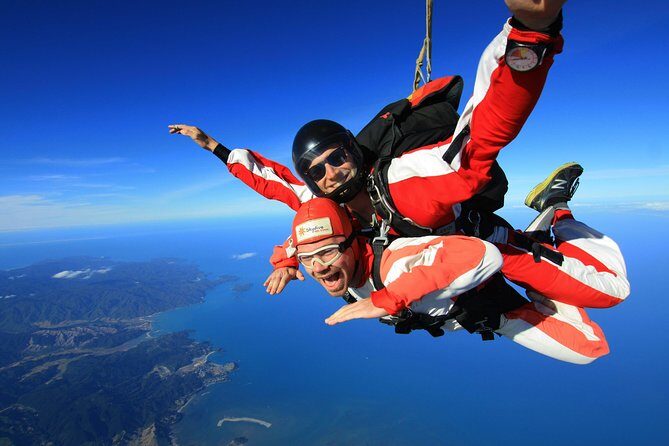
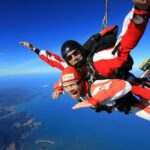
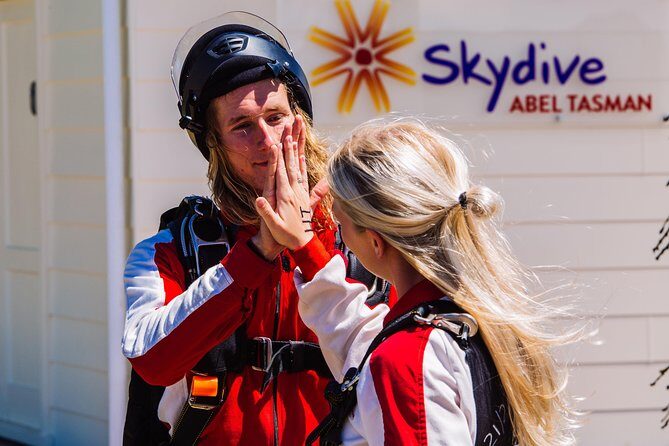
This is a tandem experience, so you’ll be with a trained pilot and instructor. That matters because your job as the passenger is simple: listen, follow directions, and be ready. The staff is set up to make the process clear, and the reviews emphasize how friendly and helpful the team can be.
A useful detail from the accounts: Rod and Will were named as guides on the day, and the people involved felt safe with them. Even if you don’t get the same names, that tells you what you’re looking for in the briefing—calm instruction, clear explanations, and guidance that helps your brain settle down. In a sport like this, good communication is part of the safety system.
Also pay attention to group size. With a maximum of 9 travelers, you’re not shuffled around among a huge crowd. That usually means fewer delays between steps, and more time for your questions before you board.
The Flight Up: Watching Motueka Change Shape
Once you’re in the air, the experience becomes a sequence of shifting viewpoints. Up high, Abel Tasman stops being “a place” and starts being “a pattern.” The coast stretches out, bays become shapes, and the sense of distance grows fast.
This is where you’ll likely notice one of the smartest design choices of tandem jumps: you’re not trying to manage your gear and your viewing at the same time. Your instructor stays focused on what you need for the jump, while you get to focus on the view. That’s also why photos and video are such a win here—because the moment moves quickly, and you’ll want something that captures the angle you can’t hold in your memory.
If you’re someone who hates waiting, the climb can be frustrating at first. But once you’ve got a window view, it flips. You start using the time to take stock: where you are relative to the coast, how the water looks from above, and how fast your brain adapts to the height.
The Jump Moment: Free Fall, Photos/Video, and Seeing Both Islands
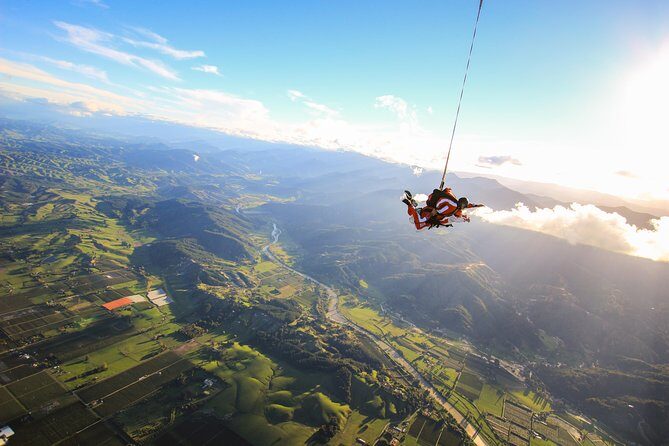
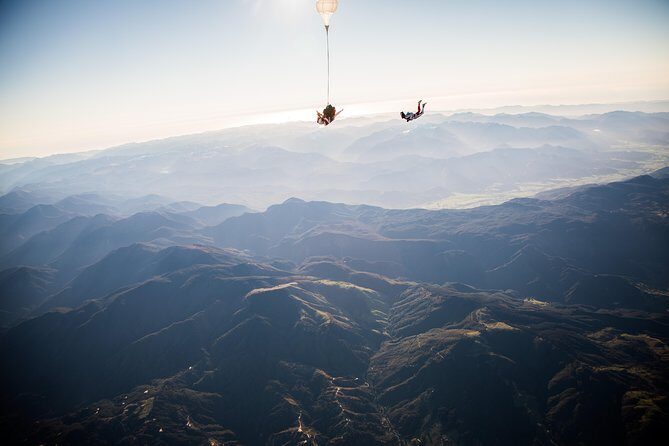
The highlight is the free fall itself—described as falling from the best piece of sky this part of New Zealand offers. In plain terms: you go from airplane calm to motion in a heartbeat, and then the world snaps into focus through the window of experience.
What makes this jump special for your travel story is the “double view” angle. The setup is designed so you can see the North and South Islands in a single jump. That means you’re not just capturing coastlines; you’re capturing national scale. It’s the kind of visual you’ll point to later and say, That’s why we came here.
And don’t underestimate the practical side of the photos and video. In a moment like this, you’ll forget half your thoughts mid-air. Having the documentation means you can replay the angles and remember the exact arc you flew, not just the feeling of speed.
For first-timers, the big mental trick is this: your body will react before your brain does. You’ll feel the rush, then you’ll start looking outward. The best days are the ones where you let your eyes do the work—count the bays, trace the coastline, and watch how the land and water connect.
Time on the Ground vs Time in the Air: Weather and Scheduling Reality
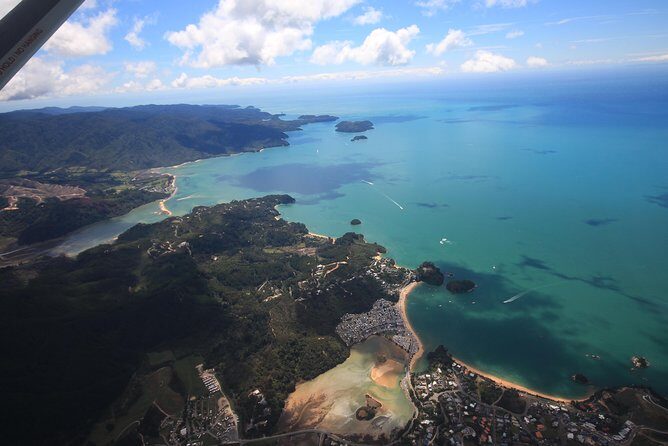
Everything here depends on good weather. That’s spelled out clearly, and it’s the reason your listed duration can stretch. If the sky doesn’t cooperate, the operator may adjust, reschedule, or cancel.
Here’s how to plan without stressing: treat this as a flexible block. Pick it for a day you can spare, and avoid stacking it right beside a hard-to-change commitment. The waiting mentioned in one account lines up with this reality—expect some downtime before you go, even if the jump itself is quick.
The good news is that when you do get the right conditions, you’re not just paying for adrenaline. You’re paying for a specific aerial perspective: the Abel Tasman region plus the rare chance to see both islands. In other words, the wait is often about getting the right jump, not just any jump.
Price and Value: What €206 Really Includes
At €206, this isn’t the cheapest activity on the Top of the South, so value matters.
What you’re paying for isn’t just the sensation. The package includes:
- pickup in the Motueka region
- a tandem setup with a pilot/instructor
- the high-altitude 16,500-foot experience
- photos and video so you can relive it properly
- a small-group format (max 9)
If you’ve done any solo “pay per piece” adrenaline activities elsewhere, you know how quickly costs rise once you add media, transfers, and time. Here, the basics are bundled in, and the small group helps you feel like a person, not a number.
Is it worth it? For me, it depends on your travel style. If you want the big view shot and you’re here for Abel Tasman, the “both islands from the air” feature pushes the value higher. If you’re tight on time or money, there are less expensive ways to see the region from land—but they won’t give you that scale shift.
Who This Tandem Jump Suits Best (and Who Should Reconsider)
This experience is for people who want a major view with clear guidance. Most travelers can participate, which makes it approachable for a wide range of ages and comfort levels, as long as you can follow instructions and handle the idea of heights.
You’ll likely enjoy it if:
- you’ve come to Abel Tasman for the scenery and want the best vantage point
- you want a bucket-list moment with support (pilot plus instructor)
- you care about remembering it properly, thanks to photos and video
- you prefer a smaller group setting
You might want to reconsider if you’re extremely time-sensitive, since delays can happen while waiting for suitable weather. And if you’re someone who panics easily at height—even with reassurance—this may be tougher than a moderate activity. In that case, I’d be honest with yourself before booking.
Should You Book This Abel Tasman Aerial Experience?
I’d book this if you’re choosing one “big view” activity in the Motueka/Abel Tasman area and you want something that feels like it belongs to the region. The combo of 16,500 feet, both islands in one jump, and photos/video makes it more than a thrill ride. It’s a travel memory with scale.
I’d think twice if your schedule is rigid or you’ll be annoyed by waiting. Also remember that weather is the boss here. If the sky isn’t right, you’ll be offered another date or a refund, but your timing will still take flexibility.
If you’re the type who wants your New Zealand trip to include a real aerial perspective—and you’d rather spend once on something special than chase multiple smaller experiences—this one fits the bill.
FAQ
Where is the meeting point?
The activity starts and ends at Motueka–Abel Tasman Airport, Motueka 7120, New Zealand.
How long does the experience take?
The duration is approximately 2 hours, though your total day may be longer depending on conditions.
What does pickup include?
Pickup is offered from anywhere in the Motueka region.
What’s the group size limit?
This experience has a maximum of 9 travelers.
Do you get photos or video?
Yes. You can preserve the moment with photos and video of your jump.
Is the experience weather-dependent?
Yes. It requires good weather, and if it’s canceled due to poor weather, you’ll be offered a different date or a full refund.
Is free cancellation available?
Yes. Free cancellation is available. You can cancel up to 24 hours in advance for a full refund.
Are service animals allowed?
Yes, service animals are allowed.
If you’d like, tell me your travel month and whether you’re starting from Motueka or elsewhere in the Top of the South—I can help you pick the smoothest way to slot this into your day.