REVIEW · MOTUEKA
13,000ft Skydive over Abel Tasman with NZ’s Most Epic Scenery
Book on Viator →Operated by Skydive Abel Tasman · Bookable on Viator
A 13,000-foot jump turns Motueka into the best kind of blur. What I love most is the tandem experience with no prior skydiving needed and the chance to watch Abel Tasman National Park and Tasman Bay roll out beneath you. One key consideration: this skydive runs only in good weather, so you’ll need a little flexibility on the day.
If you want an adventure that feels big but still runs smoothly, this one fits. You’ll either meet at Motueka-Abel Tasman Airport or use the offered hotel pickup, and the operation keeps groups small (up to 9), which makes it easier to get set up and stay calm.
In This Review
- Key Highlights I’d Put at the Top
- Entering The Plane: Why Motueka Feels Like the Right Place to Jump
- How Your 2 Hours Typically Unfold (Without Guessing)
- The Views Over Abel Tasman and Tasman Bay: What You’ll Be Looking For
- Tandem Coaching: How Beginners Stay Confident
- Price and Value: Is $209.41 a Good Deal?
- Weather Rules You Should Plan Around (This Is the Real Schedule)
- Staying Comfortable and Making It Feel Smooth
- Who This Skydive Fits Best (and Who Might Want a Different Choice)
- Should You Book Skydive Abel Tasman?
- FAQ
- Where do I meet for the skydive?
- How high is the skydive?
- Do I need skydiving experience?
- How long does the experience take?
- What happens if the weather is poor?
- Is there free cancellation?
Key Highlights I’d Put at the Top
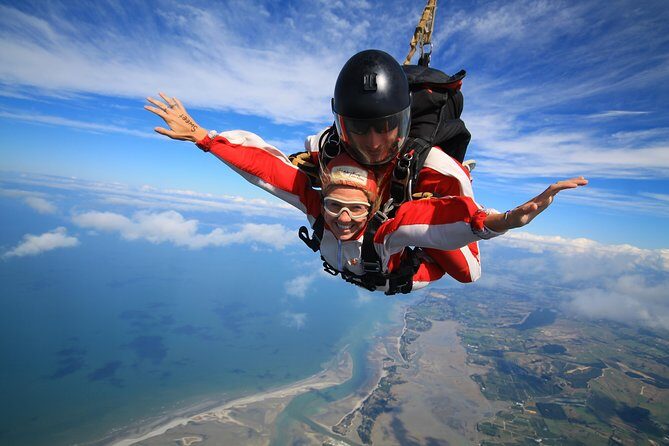
- 13,000 feet (4,000 meters) tandem jump for a proper first-time wow factor
- Beginner friendly tandem format with an experienced guide managing the jump
- Views stretch over Abel Tasman National Park and Tasman Bay, with scenery from both sides of the islands
- Motueka Airport meeting point keeps logistics simple, with pickup available if you need it
- Small group size (maximum 9 travelers) helps the experience feel personal
- Works on a tight window of 8:00 AM–5:00 PM each day during the listed season
Entering The Plane: Why Motueka Feels Like the Right Place to Jump
Motueka sits in a sweet spot for skydiving: you’re close enough to stay grounded in familiar routines, but positioned to see some of New Zealand’s most famous coastal scenery. This skydive is specifically set up from Motueka, and the pitch is simple—go up, jump out, then let the scenery do what marketing can’t. The goal is for you to look out and realize you’re not just doing an extreme activity. You’re also getting a front-row seat to a huge slice of the country.
The big selling point here is the combination of altitude and location. 13,000 feet is high enough to give you meaningful freefall time, and low enough that the whole experience still feels tightly managed from start to finish. Then the open-parachute phase kicks in, and that’s where the geography matters: Abel Tasman National Park and Tasman Bay are the focal points.
If you’re the type who likes your adrenaline with a view (and honestly, who isn’t?), this is one of the easier “yes” adventures to justify. You’re not choosing between thrill and scenery. You’re getting both.
You can also read our reviews of more tours and experiences in Motueka.
How Your 2 Hours Typically Unfold (Without Guessing)
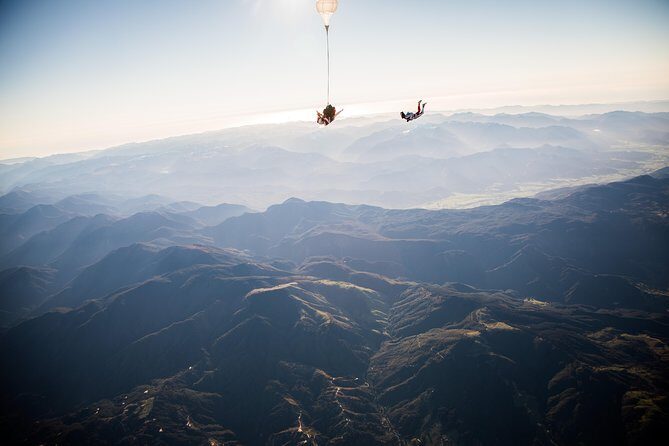
The total time is listed as about 2 hours, and that makes it easier to plan around other days—especially if you’re staying in the Nelson/Marlborough side of the South Island. While the exact timing of your aircraft and jump isn’t provided, the overall flow is consistent with tandem operations: arrive, get checked in, meet your guide, then get geared up and head out.
Here’s how to think about your day:
- Plan to be at Motueka-Abel Tasman Airport (or at pickup location) before your scheduled start window so you can move at a relaxed pace.
- Treat it like a controlled process. You’re not just “showing up and waiting”—you’re part of a small group and everything runs in sequence.
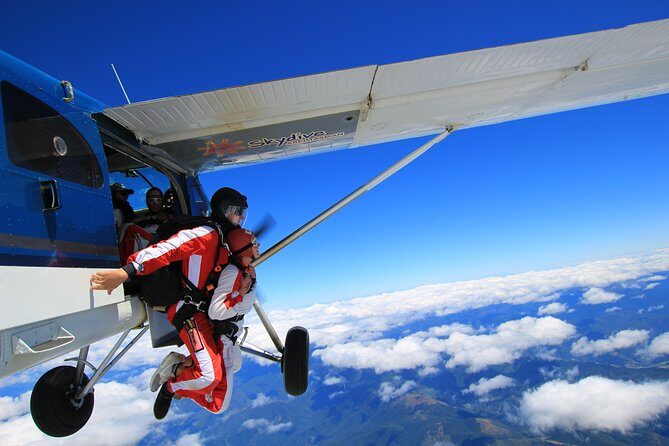
- Expect the biggest mental shift at the door of the plane: after that, it becomes a sensory experience more than a planning problem.
Because the experience ends back at the meeting point, you don’t have to worry about adding extra transportation steps afterward. That’s a small detail, but it matters. Adventure days are easier when you don’t tack on extra logistics at the end.
The Views Over Abel Tasman and Tasman Bay: What You’ll Be Looking For
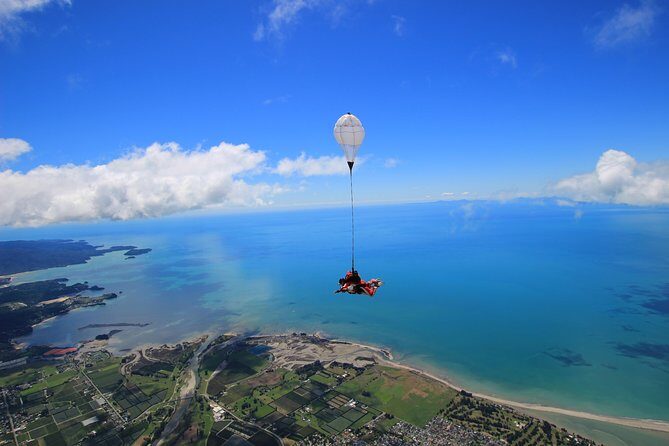
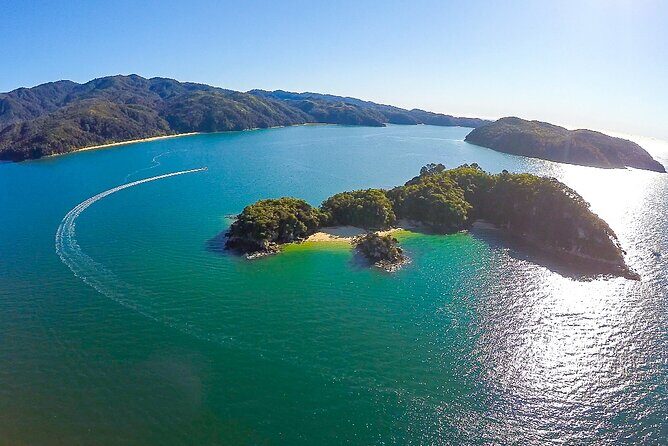
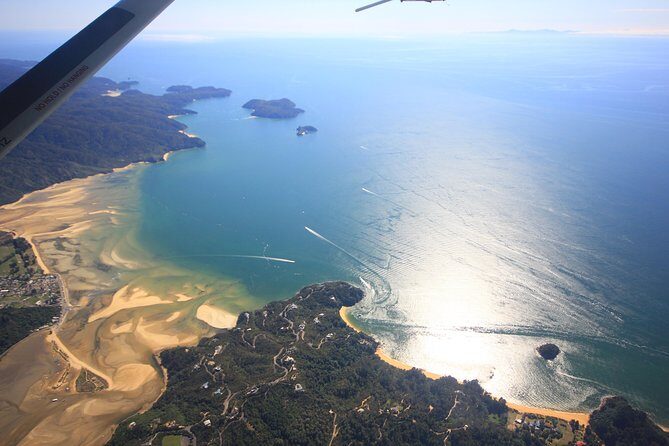
This skydive is all about looking down. You’ll jump from 13,000 feet, then you’ll go through freefall and later open your parachute to admire the views. That parachute phase is where you’ll really get to appreciate the shape of the coastline and the way the park meets the water.
The experience is described as one of the few drop zones in New Zealand that can show you views of both islands. I’d file that under “worth paying attention to,” because most skydives are limited to one region’s scenery. Here, the promise is that the flight path gives you a broader visual story than a standard single-area view.
When you’re up there, you’ll likely notice:
- The coastline and bay patterns, which tend to read clearly from the air.
- The contrast between land textures and water.
- The sheer scale—your brain isn’t used to seeing this kind of geography from above in motion.
One practical way to make the most of it is to keep your focus simple. Don’t try to “identify every inlet.” Instead, aim for a steady look: horizon first, then coastlines, then back to horizon. The scenery is the main event, and a calm viewing approach helps you actually enjoy it instead of just reacting to speed.
Also, if you’re worried you’ll be too nervous to enjoy the view: that’s exactly what the tandem guide is for. Your job is to follow instructions. Their job is to handle the mechanics so you can look out.
Tandem Coaching: How Beginners Stay Confident
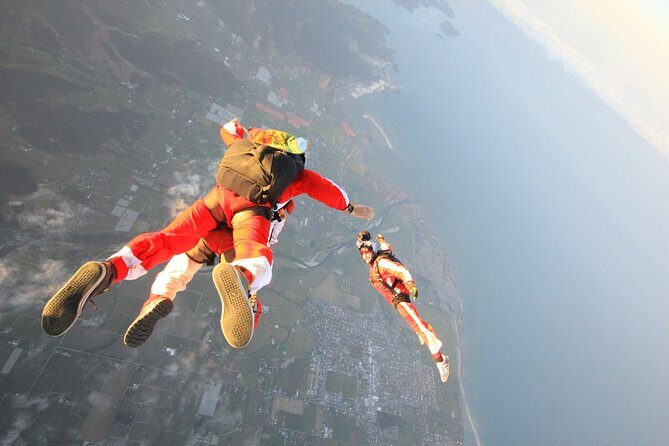
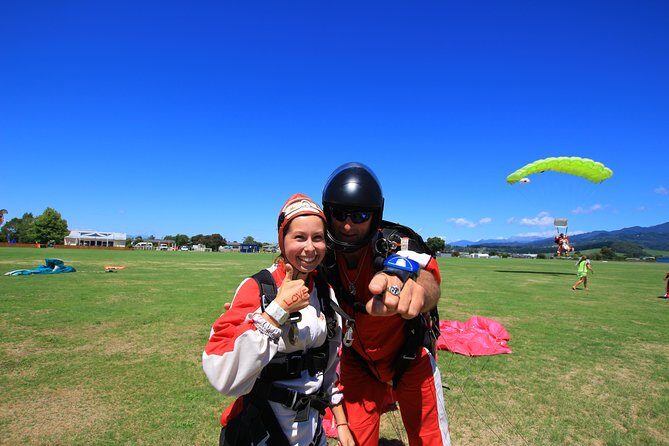
The experience is designed for people with no skydiving experience. That’s not just marketing language—it affects the whole experience style. When a skydive is tandem-focused and beginner-friendly, the operation can keep things consistent: you get instruction before you go, you jump with an experienced guide, and you’re not expected to manage any technical steps yourself.
A small detail from the reviews matters here: guides are described as enthusiastic and communicative. One tandem instructor named Hamisch is specifically mentioned as personable and very communicative. That kind of communication is more than friendliness. It usually means you’re less likely to be left guessing about what happens next, which is half the battle for first-timers.
What you can expect from a good tandem setup:
- Clear pre-jump guidance so you understand the basic flow
- A guide who leads, so you can focus on breathing and staying present
- A smoother transition from the plane to freefall, and then from freefall to parachute deployment
And here’s a slightly humorous truth I’ve learned from watching people do adventurous firsts: the fear often peaks right before the jump, not during it. Once you’re out, it becomes physical sensations and visuals. A confident guide can help you time your thinking so you don’t spiral.
If you’ve always wanted to try skydiving but never felt ready, this format is the most reasonable way to do it. You’re not paying to learn a sport. You’re paying to experience the moment safely and comfortably—while someone else handles the heavy lifting.
Price and Value: Is $209.41 a Good Deal?
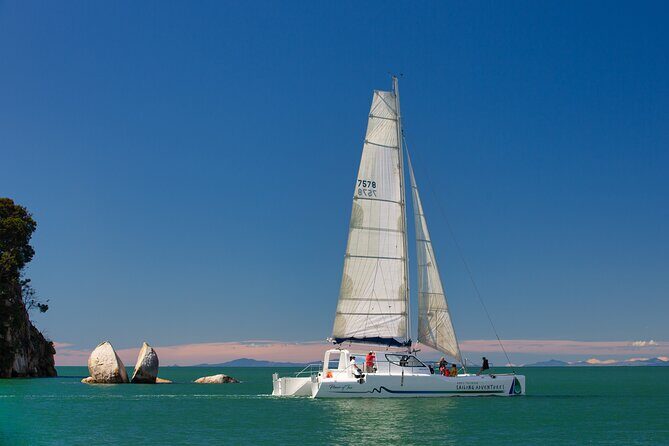
The price is listed at $209.41 per person, and the trick with adventure pricing is to look past the number and ask what you’re actually buying. Here, you’re paying for a full tandem package: a 13,000-foot jump, experienced instruction, and a short but complete outing (about 2 hours total), with optional pickup.
It also helps that the group size is limited to up to 9 travelers. Smaller groups often mean less waiting around and more attention during setup. That’s “value” in a practical sense, not just a feel-good marketing point.
Here’s the simple way I’d justify the spend if you’re on the fence:
- If you want the thrill, this jump’s altitude gives you a real sense of scale.
- If you want the view, Abel Tasman and Tasman Bay aren’t generic postcard scenery. They’re the kind of coast you can actually read from above.
- If you’re new to skydiving, tandem keeps you out of the learning curve and focused on enjoying the moment.
If you’re traveling on a tight budget, it’s still a splurge. But if skydiving is on your “someday” list, this one is positioned to be a memorable bucket-list day rather than a quick, forgettable thrill.
Weather Rules You Should Plan Around (This Is the Real Schedule)
This skydive requires good weather. That affects your day more than any opening-hours detail. If poor weather cancels the jump, the operator offers either a different date or a full refund. Either way, you’re not locked into a single-day outcome.
So how should you plan? Keep your overall itinerary flexible around this activity. If you’ve got a super-tight schedule with no wiggle room, skydiving becomes a gamble. If you’re traveling with buffer time—perfect.
Also, this is one of those activities where the “right conditions” are not just comfort-related. It’s about safety and the ability to fly and jump as planned. That means you should take the weather requirement seriously, even if the sun looks tempting at ground level.
Staying Comfortable and Making It Feel Smooth
Even when you’re excited, skydiving can be mentally intense. The good news: this experience is set up to reduce uncertainty.
- It’s based out of Motueka Airport, so you’re not dealing with complex transfer chains.
- You can use hotel pickup if that’s easier for your schedule.
- It operates with a maximum group size of 9, which helps keep the experience controlled.
Service animals are allowed, and the location is near public transportation. Those details won’t matter to everyone, but they can make a difference in how easy the day feels.
And one more thing: there’s no need to be a “sporty” traveler. The experience is described as suitable for most travelers. What matters more is being able to follow instructions and being open to the experience.
If you’re nervous, you’re not alone. The tandem format exists because fear is common. The best approach is to treat it like a guided lesson where the reward is the view you can’t get any other way.
Who This Skydive Fits Best (and Who Might Want a Different Choice)
This one is ideal if you:
- Want your first skydiving experience without handling the technical side yourself
- Love big scenery and want it to be part of the moment, not an afterthought
- Are traveling as a couple or small group and prefer an operation that’s not packed
It’s also a strong fit for adventure-minded travelers who are okay with weather flexibility. Since the experience needs good conditions, you’ll get the best results when you can adjust your plans.
If you’re someone who hates waiting for weather or has an immovable schedule, you might consider choosing a different activity as a backup. Not because this is unreliable, but because skydiving simply depends on the sky.
Should You Book Skydive Abel Tasman?
I think you should book this if you want a true “once-in-a-lifetime” day that blends altitude thrill with a coastline view you’ll talk about for years. The tandem setup lowers the barrier, and the focus on Abel Tasman National Park and Tasman Bay gives you a payoff that feels more personal than generic adrenaline.
I’d only hesitate if you have a rigid itinerary and no flexibility for weather changes. Otherwise, the combination of 13,000 feet, beginner-friendly guidance, and small-group operations makes this a high-probability good time.
FAQ
Where do I meet for the skydive?
You’ll meet at Motueka-Abel Tasman Airport in Motueka. Pickup is offered if you arrange it.
How high is the skydive?
The jump is from 13,000 feet (about 4,000 meters).
Do I need skydiving experience?
No. It’s suitable for beginners with no prior skydiving experience because it’s a tandem skydive with an experienced guide.
How long does the experience take?
The total duration is approximately 2 hours.
What happens if the weather is poor?
This experience requires good weather. If it’s canceled due to poor weather, you’ll be offered a different date or a full refund.
Is there free cancellation?
Yes. You can cancel for free up to 24 hours in advance for a full refund. If you cancel less than 24 hours before the start time, the amount paid isn’t refunded.