REVIEW · AUCKLAND
AKL: Te Puia Maori Haka, Kiwi Birds, Redwood & Blue Springs
Book on GetYourGuide →Operated by ENZOY Tours · Bookable on GetYourGuide
Rotorua in one long, well-fed day. You’ll get geothermal drama, Māori performance, and two very different nature breaks, all with hotel pickup and a guided Te Puia visit. It’s a classic North Island combo: earth heat in the morning, culture up close, then those turquoise spring waters before the drive back.
What I like most is the mix of hands-on nature and people-focused culture. The Pōhutu Geyser and mud pools at Te Puia make the geology feel real, and the Māori programme at Te Aronui a Rua (including waiata, poi dance, and haka) is the kind of thing that’s hard to recreate on your own.
One thing to consider: it’s an early start with a full day pace, and at least one guide-led explanation used prerecorded audio for some parts. If you’re the type who wants zero technology between you and the facts, go in knowing the experience is partly guided by live narration and partly by recorded audio.
In This Review
- Key highlights worth clearing your schedule for
- A full Rotorua day that starts before breakfast
- Te Puia Rotorua: geothermal heat you can actually see
- Māori arts and culture at Te Aronui a Rua
- Kiwi Birds, mud pools, and the reality of a guided flow
- Redwood Forest: photos, shade, and a calm reset
- Putāruru Blue Spring (Te Waihou Walkway): the cool water stop
- Timing, transport, and how the day stays workable
- What you get for about $226 per person
- Who this tour fits best
- Quick practical tips before you go
- Should you book this Rotorua day trip?
- FAQ
- How long is the Rotorua trip from Auckland?
- Where are the pickup and drop-off locations?
- What time does the pickup usually start?
- What happens at Te Puia?
- Is the Māori cultural performance included?
- Do you need lunch plans?
- How much time do you have at the Redwood Forest and Blue Spring?
- What is the Blue Spring like?
- What should I bring?
- What’s the price and what’s included?
Key highlights worth clearing your schedule for

- Pōhutu Geyser and geothermal mud pools at Te Puia, including the Kiwi Conservation Centre
- Māori arts and craft institute plus a cultural performance in Te Aronui a Rua
- Redwood Forest walk for big-tree photos and a calm break from geothermal steam
- Putāruru Blue Spring (Te Waihou Walkway) with cool, clear water that stays around 11°C year-round
- Two nature stops after the cultural morning, so you don’t spend all day sitting
A full Rotorua day that starts before breakfast
This is a 12-hour Auckland-to-Rotorua day trip built around a tight but comfortable rhythm. You’ll be picked up from Auckland CBD (usually 5:45–6:00 AM) or Auckland Airport Hotels (usually 6:15–6:30 AM), then you’ll head south through the Waikato countryside for a scenic drive.
The big reason this tour works well is that it doesn’t treat Rotorua like a checklist. You get a guided geothermal/culture block first, and then you’re given room to breathe with the redwoods and the Blue Spring before heading back to Auckland around 6:00 PM.
It’s not a slow “wander at will” day. You’ll move, you’ll watch, and you’ll stop for photos, coffee, and bathroom breaks when the schedule allows.
You can also read our reviews of more tours and experiences in Auckland.

Te Puia Rotorua: geothermal heat you can actually see
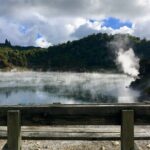
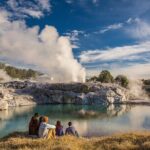
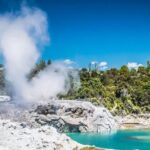
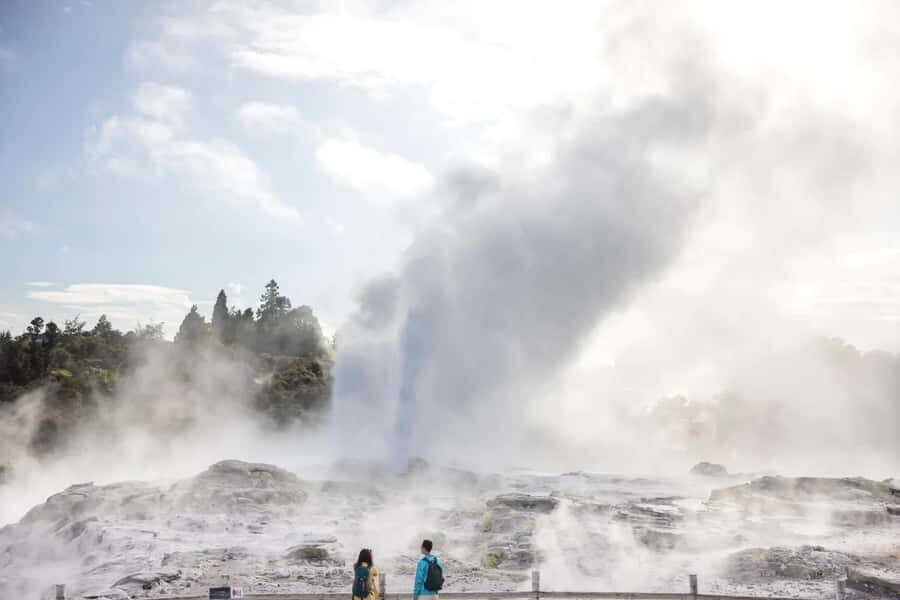
Te Puia is the main event, and the format matters. Your guided Te Puia experience lasts about 90 minutes and focuses on the geothermal park: the steam vents, bubbling mud pools, and the standout Pōhutu Geyser.
Pōhutu is described as the largest geyser in the Southern Hemisphere, and that size shows in how the place feels. Even if you’ve seen geysers elsewhere, Te Puia has a “this land is alive” quality because the action is right there in front of you: steam, colour in the mud pools, and that constant geothermal soundscape.
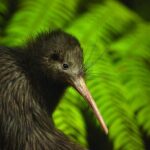
You’ll also spend time at the Kiwi Conservation Centre. It’s one of the more practical reasons to visit Te Puia as a group, because you get context about the Kiwi and what conservation efforts mean in New Zealand, rather than just a quick glance and go.
What you may appreciate: the tour is guided, not self-paced. That’s helpful here because geothermal areas can be visually impressive but confusing without explanations.
Māori arts and culture at Te Aronui a Rua
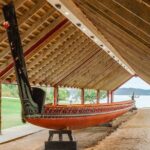
The cultural part of this day is serious, not a token show. You’ll visit the New Zealand Māori Arts and Crafts Institute to see traditional carvers and weavers at work, and then you’ll head into the meeting house Te Aronui a Rua for a performance programme.
The programme you can expect includes a traditional pōhiri welcome, waiata (song), mōteatea (chant), poi dance, and the haka. If you’ve only seen a haka in clips online, this format is more grounded because you’re hearing the structure and feeling the ceremony as it’s meant to be delivered.
Timing matters: you’re asked to arrive about 15 minutes early. That isn’t just for show. It gives you time to settle and avoid the awkward “standing in the back” feeling while the group is already in motion.
Food note: lunch is available at Te Puia cafés or restaurants, but it’s at your own expense. I like that the schedule gives you a clear point where you can decide what works for your budget.
Kiwi Birds, mud pools, and the reality of a guided flow
Te Puia is guided now, and that shapes the feel of your morning. One review praised the guide for not making the day feel rushed, which is what you want here. Geothermal parks and cultural performances can both feel like assembly-line tourism if the group is pushed too hard.
At the same time, not every guide experience is identical. One guide named Sid was described as friendly but using prerecorded audio for history and points of interest. That doesn’t automatically ruin the day, but if you’re picky about storytelling quality, it’s good to know that parts of the explanation may not be entirely live.
On balance, I think this structure is still strong because Te Puia’s key sights are fixed and time-sensitive. You’re not wandering around guessing where to look for the best steam or how to connect what you’re seeing to Māori cultural context.
Tip for your own planning: wear comfortable shoes and don’t overpack layers. Rotorua can feel different minute to minute near geothermal areas, and you’ll be on your feet during the guided time.
Redwood Forest: photos, shade, and a calm reset
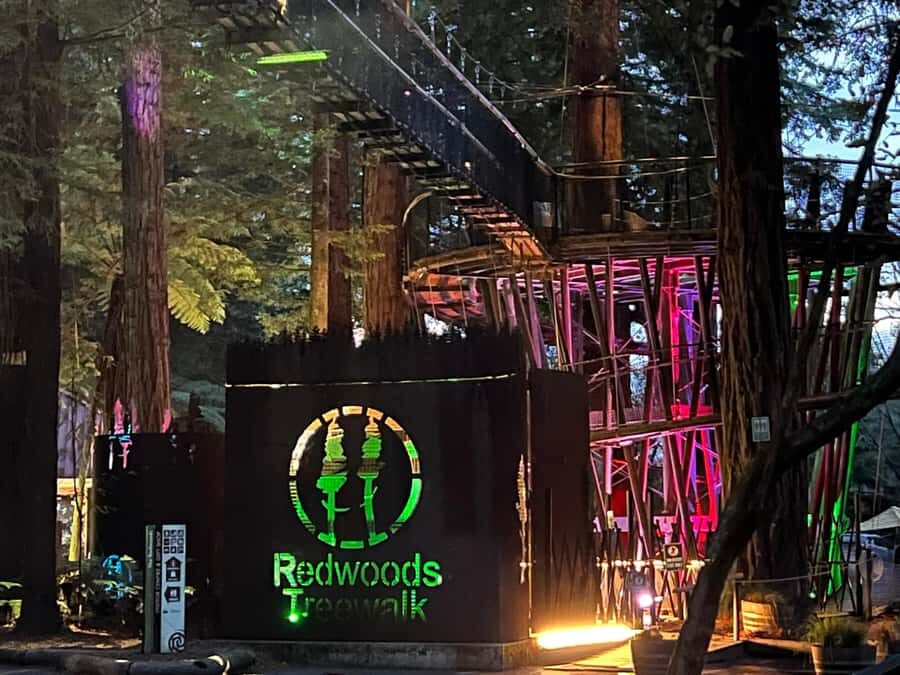
After Te Puia, the day shifts gears into Rotorua highlights and a short visit in the Redwood Forest. This is a free walk among towering trees, typically paired with a 30-minute stop for photo opportunities and a quick wander.
These are Californian redwoods, and that matters for the vibe. You’re trading geothermal steam for deep shade, tall trunks, and that “quiet cathedral” feeling under the branches. It’s a welcome contrast after the intensity of the geysers.
I like this break because it’s not just sightseeing. It gives you a chance to slow down your senses for a minute, stretch your legs, and reset before the drive to the Blue Spring.
Don’t expect big hikes. The idea is an easy walk and a few good photos, not a long trek.

Putāruru Blue Spring (Te Waihou Walkway): the cool water stop
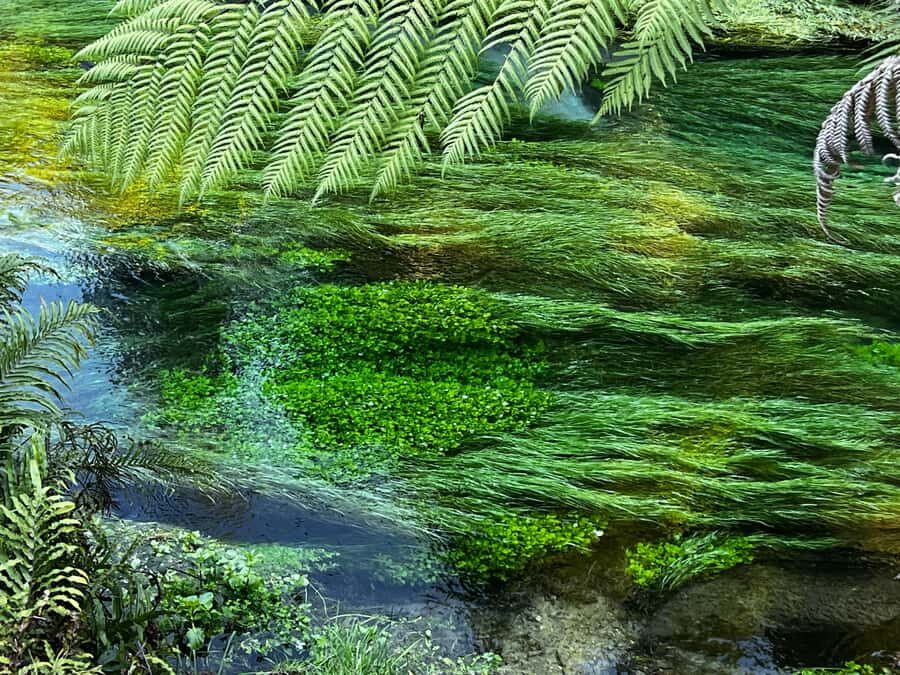
Then comes the part many people remember later: Putāruru Blue Spring, also called Te Waihou Walkway. Your visit is about 30 minutes, with time for photos and a short walk along the Waihou River area.
The water is described as crystal-clear turquoise, and the key detail is why it stays that way. It’s filtered for up to 100 years through underground rock, and it stays cool at around 11°C year-round.
That last number is practical. Even if it’s warm in the air, the water won’t feel warm. You’re not swimming here; you’re looking and walking, so your comfort is mostly about layers, shade, and wet ground around the walkway if conditions are damp.
This stop is also a nice “final nature hit” before the long return drive to Auckland. If you want one place where your photos look instantly better than you expected, this is likely it.
Timing, transport, and how the day stays workable
This is an early-start tour with a long round trip, and the transport plan is a big part of the value. You get round-trip bus transportation from your Auckland pickup location, and you’ll be dropped back at either Auckland CBD or the airport area.
The itinerary also includes a short stop in Tirau, a quirky town known for corrugated iron sculptures and dog- and sheep-shaped buildings. It’s basically a chance to stretch, grab a coffee, and use the bathroom before the Rotorua push.
Expect at least two main drive legs: about two hours from Auckland to Tirau, then onward to Rotorua (roughly another hour). That structure matters because it prevents the day from feeling like a single endless bus ride.
You’ll also want to be ready for group logistics. You should arrive at your hotel entrance about 10 minutes before pickup, and the tour asks you to arrive 15 minutes early for the Te Puia guided portion.
Guide and vehicle details can vary. ENZOY Tours staff will look for you via a vehicle sign or vehicle number, so it’s smart to have your confirmation info handy and double-check your hotel address and contact details.
What you get for about $226 per person
At $226 per person, this tour isn’t the cheapest way to do Rotorua, but it’s not just a ride-and-roam deal either. You’re paying for three things most independent travellers end up cobbling together:
1) Transportation round trip from Auckland
2) A guided Te Puia geothermal and Kiwi-focused experience
3) Access to the Māori arts and performance in a structured time slot
If you were to DIY this, you’d likely spend time coordinating transport, booking geothermal/cultural entry, and figuring out how to fit it all into one day without rushing. Here, the day is built around the big fixed attractions and keeps you moving between them efficiently.
Is it worth it? If your priority is seeing Te Puia plus Māori culture plus the Blue Spring in one day, then yes, the price feels tied to the real cost of time and logistics.
If your priority is slow travel, long walks, or deep independent exploration, you might find it a bit packed.
Who this tour fits best
This works best for:
- First-time visitors to New Zealand who want a high-impact Rotorua day without planning
- People who like guided context, especially around Kiwi conservation and Māori arts
- Travellers who enjoy contrasts: geothermal heat, cultural ceremony, then cool water and forest shade
It may not be ideal for:
- People with back problems, since you’ll be on your feet at multiple stops
- Anyone who wants a totally self-directed schedule and minimal group timing
One more practical note: the info says the tour is wheelchair accessible, but it also says it’s not suitable for wheelchair users. If mobility is a factor, I’d treat that as a flag to contact ENZOY Tours directly and confirm what “accessible” means in practice for seating, steps, and walking areas at Te Puia and the Blue Spring.
Quick practical tips before you go
Bring the basics and you’ll enjoy the day more:
- Comfortable shoes for walking at Te Puia and the short rainforest walk
- A hat and sunscreen, since you’ll likely have outdoor time
- A camera, since Te Puia steam, redwoods, and the Blue Spring water all photograph well
- Water and weather-appropriate clothing, because Rotorua conditions can shift
Also note:
- Smoking isn’t allowed on the tour experience.
And if you like communication ease during long transfers, having international roaming or a local SIM can help. The company also recommends using WhatsApp for quicker coordination.
Should you book this Rotorua day trip?
Book it if you want one guided day that hits Te Puia, Kiwi conservation, Māori culture, redwoods, and the Putāruru Blue Spring without the stress of planning transport and timing. The pacing is structured enough to prevent “missed sights” mistakes, and the cultural performance format at Te Aronui a Rua is the kind of experience that’s hard to replicate casually.
Skip or rethink if you’re sensitive to group schedules, have mobility or back issues, or you strongly prefer fully live narration over recorded audio. In at least one instance, the history explanation used prerecorded segments, so if that would bug you, ask about the guiding style before you go.
If you’re happy trading a little flexibility for a lot of highlights, this is a solid value way to see Rotorua from Auckland in a single day.
FAQ
How long is the Rotorua trip from Auckland?
The total duration is listed as 12 hours, with pickup in the morning and a return drive that brings you back to Auckland around 6:00 PM.
Where are the pickup and drop-off locations?
You can be picked up and dropped off at Auckland CBD or Auckland Airport Hotels, depending on the option you select.
What time does the pickup usually start?
For Auckland CBD hotels, pickup is typically between 5:45–6:00 AM. For Auckland Airport Hotels, pickup is typically between 6:15–6:30 AM.
What happens at Te Puia?
You’ll visit Te Puia Rotorua Geothermal Park with a guided experience that covers geothermal features like the Pōhutu Geyser, mud pools, and vents, plus a visit to the Kiwi Conservation Centre.
Is the Māori cultural performance included?
Yes. The tour includes the Māori arts and crafts institute visit and a cultural performance in Te Aronui a Rua, which includes items like a pōhiri welcome, waiata, mōteatea, poi dance, and the haka.
Do you need lunch plans?
Lunch is not included. Lunch is available at Te Puia cafes or restaurants, but you pay your own costs.
How much time do you have at the Redwood Forest and Blue Spring?
The Redwood Forest portion is listed as a photo stop and visit (about 30 minutes). The Blue Spring portion is also listed as a photo stop and visit (about 30 minutes).
What is the Blue Spring like?
Putāruru Blue Spring (Te Waihou Walkway) is described as crystal-clear and turquoise, with water filtered through underground rock for up to 100 years and staying cool at about 11°C year-round.
What should I bring?
Bring comfortable shoes, a hat, camera, sunscreen, water, and weather-appropriate clothing.
What’s the price and what’s included?
The price is listed as $226 per person, and it includes hotel pickup/drop-off, round-trip bus transport, the Te Puia visit with guide, the Māori cultural performance, and a Kiwi Conservation Centre visit. Coffee and lunch and personal expenses are not included.