
REVIEW · NAPIER
Discover Napier Earthquake: Self-Guided Audio Tour
Book on Viator →Operated by Citywalksz Ltd · Bookable on Viator
Napier’s 1931 earthquake still shapes the streets. This self-guided audio walk takes you through the areas hit hardest in Hawke’s Bay, then shows how the city came back. You’ll follow a simple GPS map while the narration explains what changed—and why.
I especially like the pacing: you can pause anytime for a coffee, a breather, or a quick look around. I also like that the stops are tightly chosen, with clear story focus at the Napier Municipal Theatre and Waiapu Anglican Cathedral.
One heads-up: the experience depends on your phone working smoothly, and the app can feel a bit clunky at times. If you dislike tech on the go, bring a charger and expect to spend a minute getting your setup right.
In This Review
- Key highlights before you start
- Napier’s quake story, explained as you walk
- Price and what you really get for $15.29
- Starting at Napier iSite: how the self-guided walk works
- Stop 1: Napier Municipal Theatre and the 1938 rebuild
- Between the stops: set your pace and use the city around you
- Stop 2: Waiapu Anglican Cathedral, from 1888 to the 1965 memorial
- What I’d emphasize: the best parts and the trade-offs
- Who this walk suits best in Napier
- Should you book this Napier Earthquake audio walk?
- FAQ
- How long is the Napier Earthquake self-guided audio tour?
- Where does the tour start and end?
- What’s included in the tour price?
- Do I need an admission ticket for the stops?
- Is the audio guide available in other languages?
- Do I need headphones or an audio device?
- Can I pause the audio during the walk?
- Is transportation included?
- What’s the cancellation policy?
Key highlights before you start

- Two major memorial stops that connect the quake to rebuilding choices you can still see
- English-only narration, built for a straightforward self-paced walk
- Audio files plus GPS map in a mobile-ticket format (no paper guide needed)
- Pause-and-go flexibility so you can fit this around snacks and sightseeing
- Simple walking route sized for an easy couple of hours in central Napier
- Small group cap (15 travelers) tied to the overall experience format, even though you’re exploring on your own
Napier’s quake story, explained as you walk

Napier is the kind of place where buildings aren’t just scenery—they’re evidence. This tour is built around that idea: you move from site to site while the audio connects the events of 1931 to what the city looks like now.
What makes it interesting is the way it focuses on details people often miss when they just pass through town. Instead of broad history, you get targeted stories tied to specific structures, including how materials performed during the quake and what communities did after the damage.
You’re not stuck in a museum room. You’ll be on foot, in the actual streetscape, using your own pace to decide how long to linger.
You can also read our reviews of more guided tours in Napier



Price and what you really get for $15.29

At $15.29 per person, this is priced like an add-on that won’t blow up your day budget. The value mostly comes from two things: the tour is long enough to feel like a real activity (about 2 hours, give or take), and it includes the digital content you need—audio files and a GPS map.
You should also know what isn’t included. You’ll need your own phone for navigation and listening, plus headphones. The listing also says an audio device isn’t included, so plan to use your smartphone.
Stops have no admission fees tied to the tour itself, which helps keep the outing straightforward. If you’re already planning to wander Napier’s center anyway, this turns that wandering into a guided-by-audio learning route.
Starting at Napier iSite: how the self-guided walk works
Your start point is Napier iSite Visitor Information Centre, 100 Marine Parade, Napier South. The tour ends at Veronica Sunbay, 3 Tennyson Street, Napier South, and the scheduled start time is 9:00 am.
The mechanics are refreshingly simple: download the tour content before you begin, then open the map that comes with it and follow along while the audio plays. The tour is self-paced, so if you want to pause to read something or take photos, you can.
Two practical tips will save you stress. First, download and get everything ready ahead of time—waiting until you’re outside can make the app feel worse than it already is. Second, bring a small power bank if you have a phone that drains fast; navigation and audio together can chew battery.
Because the tour is available only in English, it’s a good fit if you want history told clearly without a language barrier. The trade-off is obvious: if you need another language, this won’t meet your needs.
Stop 1: Napier Municipal Theatre and the 1938 rebuild
Your first story anchor is the Napier Municipal Theatre. It’s one of those sites where even the location has a history: the theatre was originally intended for Clive Square, but public petitions pushed it to its present site.
Then the tour moves from civic decisions to quake details. Most buildings in Napier’s centre were built with brick, but the lime-and-mortar mix used at the time failed badly during the earthquake. The theatre itself was destroyed in the 1931 quake and later rebuilt in 1938.
Why this stop works as part of a self-guided audio tour: it gives you a concrete takeaway about how construction choices can matter during disasters. Standing near the theatre, you’re not just hearing “there was damage”—you’re learning what went wrong and how the city responded afterward.
One possible drawback here is that you may wish for more on-site visual cues. The tour content is informative, but the overall experience can feel more audio-led than signage-led, so come ready to let your headphones do most of the talking.
Between the stops: set your pace and use the city around you
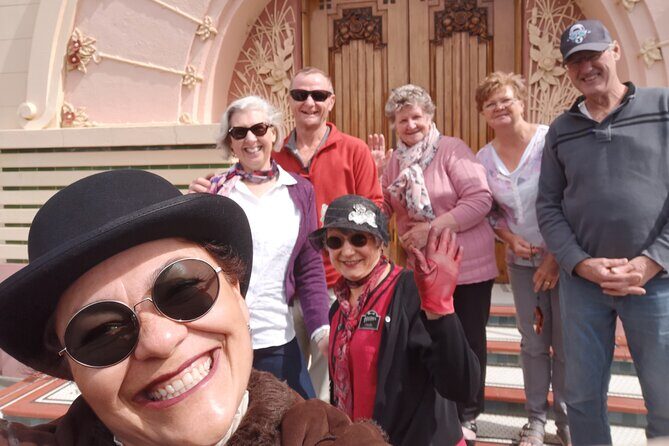
This is a walking-friendly outing designed for an easy couple of hours. You’re encouraged to keep moving at your own speed, which means you can stretch the time if you want to linger at each site or rush through if you’re tight on the schedule.
It’s also set up to fit normal travel life. You can stop for a bite to eat or do some shopping along the way, and you can pause the narration when you need a break.
Because the tour is only two main stops, the “in-between” part matters for how enjoyable it feels. If you like just wandering through town, this will feel natural. If you prefer a tightly segmented route with lots of frequent stops, you might find yourself wanting more stops than the two anchors provide.
Still, that’s also the point of self-guided exploring. You’re building your own rhythm, and Napier’s centre is the right kind of place to do that.
A few more Napier tours and experiences worth a look




Stop 2: Waiapu Anglican Cathedral, from 1888 to the 1965 memorial

The second stop is the Waiapu Anglican Cathedral. The story starts long before 1931: the first stone was laid in 1886, built in a traditional English design, and completed in 1888.
During communion on 3 February 1931, the building was completely destroyed, and one person was killed. That loss is described directly in the audio, and it shapes how you understand what comes next.
For the next 25 years, a temporary wooden cathedral was used. The present structure wasn’t completed until 1965, and the cathedral now serves as a living memorial to the people who rebuilt the city after the earthquake.
This stop is powerful because it bridges three timeframes: the original build, the moment of collapse, and the long recovery period. You don’t get the city’s resilience in a vague way—you get it through the rebuilding timeline.
As you listen, you’ll probably notice how the cathedral’s meaning isn’t just architectural. It’s about continuity: a community reorganized itself after destruction, then created a long-term place of worship and remembrance.
What I’d emphasize: the best parts and the trade-offs

This tour earns its good rating because it’s built for clarity and control. The audio and GPS map combination helps you follow along without needing a physical guide, and the narration is structured around a handful of meaningful locations rather than turning into a generic “walk and learn.”
The positive reviews line up with what you can expect from the design. People like that it’s easy to follow on a phone download and that it makes the earthquake’s impact feel real. They also appreciate having the freedom to go at their own speed on a day that’s more pleasant when you’re not stuck to someone else’s pace.
The main trade-off is technical and environmental. The app can be a little clunky, and the trail experience may not feel heavily supported by signage and pictures. That doesn’t ruin the tour, but it does mean you should keep your expectations realistic: this is an audio-led experience first, not a well-marked outdoor exhibit second.
My practical advice: treat your smartphone like part of the kit. Bring headphones, download before you leave, and plan for a little fiddling so you don’t lose time during the first stop.
Who this walk suits best in Napier

You’ll probably enjoy this most if you like history tied to real places rather than just facts on a page. It’s also a good match if you want a low-pressure plan: about 2–3 hours total, moderate walking, and plenty of flexibility to pause.
This tour is also ideal if you’re traveling in a style where you like to explore at your own pace. The format supports that—no waiting for a group to catch up, no awkward pauses because someone is behind.
It’s less ideal if you want a guided, high-touch experience. There’s no physical guide included, and admission fees for sites aren’t part of the package. It’s also only available in English, so language matters.
And if you’re the type who hates troubleshooting apps, you’ll want to go in prepared. The tour is manageable, but it does rely on your device and on downloading everything ahead of time.
Should you book this Napier Earthquake audio walk?
Yes, if you want a simple, meaningful way to understand Napier’s 1931 quake in the places where the recovery still shows. The pairing of audio storytelling with a GPS map makes it easy to turn a couple of hours of walking into something educational without locking you into a rigid schedule.
Book it especially if your goal for Napier is to see the city as it rebuilt itself—brick choices, destroyed structures, temporary replacements, and long-term memorials. You’ll come away with a clearer picture of what “resilience” meant when rebuilding took years, not days.
Skip it if you need lots of on-street visuals, or if you’d rather have a human guide handle the tech. In that case, you might prefer a different format that doesn’t depend on downloading and app playback.
FAQ
How long is the Napier Earthquake self-guided audio tour?
It takes about 2 to 3 hours (approx.), with an estimated run time of around 2 hours.
Where does the tour start and end?
It starts at Napier iSite Visitor Information Centre, 100 Marine Parade, Napier South. It ends at Veronica Sunbay, 3 Tennyson Street, Napier South.
What’s included in the tour price?
You get the audio files and a GPS map, and the experience is self-paced.
Do I need an admission ticket for the stops?
No admission fees are included or required for the stops listed. The tour itself notes free admission at the stops.
Is the audio guide available in other languages?
No. This tour is only available in English.
Do I need headphones or an audio device?
The audio device is not included, so you’ll need to listen using your own phone and headphones or another way to play the audio.
Can I pause the audio during the walk?
Yes. You can pause the audio guide when needed.
Is transportation included?
No. Transportation isn’t included.
What’s the cancellation policy?
You can cancel for a full refund if you cancel at least 24 hours before the experience’s start time. Free cancellation is allowed up to 24 hours in advance, based on local time.