REVIEW · NAPIER
Napier: Cape Kidnappers Gannet, Nature & Sightseeing Tour
Book on GetYourGuide →Operated by Gannet Safaris Overland · Bookable on GetYourGuide
Cape Kidnappers is gannet theater, and you’re in the front row. This 3-hour tour gets you right to one of nature’s loudest, most spectacular bird neighborhoods. I love the up-close cliffside viewing, and I also like how the guide connects the gannets to local stories and conservation work.
The two biggest wins for me are the sheer number of birds and the way you learn while you watch. You’ll see about 20,000 mainland gannets at the cape, plus chicks and adults doing their daily routines. Along the way, you also pass through a predator-proof reserve and a native forest, with commentary that covers Maori legends and what’s being protected.
One consideration: it can get windy and chilly up on the cape, and the bus seating may feel tight if you sit in the back row. Bring a warm layer even when the rest of Hawke’s Bay feels mild.
In This Review
- Key highlights to look for
- Cape Kidnappers: Why this gannet colony feels so special
- The 3-hour plan: what actually happens (and how little you walk)
- Getting to the colony: geological scenery and real farmland access
- Your front-row gannet moment: what you’ll see up close
- Maori legends and nature talks: more than facts, it’s meaning
- Predator-proof reserve and native forest stops: why conservation is part of the show
- Comfort, timing, and photo tips for the cape cliffs
- Price and value: is $59 fair for 3 hours?
- Who should book this tour (and who might want something else)
- Should you book the Napier Cape Kidnappers Gannet tour?
- FAQ
- How long is the Cape Kidnappers Gannet tour?
- Where does the tour start?
- Is there a lot of walking?
- How close will I get to the gannets?
- What’s included in the ticket price?
- What time of year can I see the gannets?
- What should I bring?
- Is this tour available for cruise ship passengers?
- Is the tour guided in English?
Key highlights to look for

- World’s largest mainland gannet colony at Cape Kidnappers, with birds visible September to early April
- Feet-away viewing with no required walking, thanks to air-conditioned 4×4 transport
- Gannet life up close: adults, chicks, preening, and the recognition dance
- Conservation stops including a predator-proof reserve and a native NZ forest
- Guide storytelling often includes Maori legends and practical nature facts
- Refreshments included (light refreshments like hot cuppa and biscuit in reviews)
Cape Kidnappers: Why this gannet colony feels so special
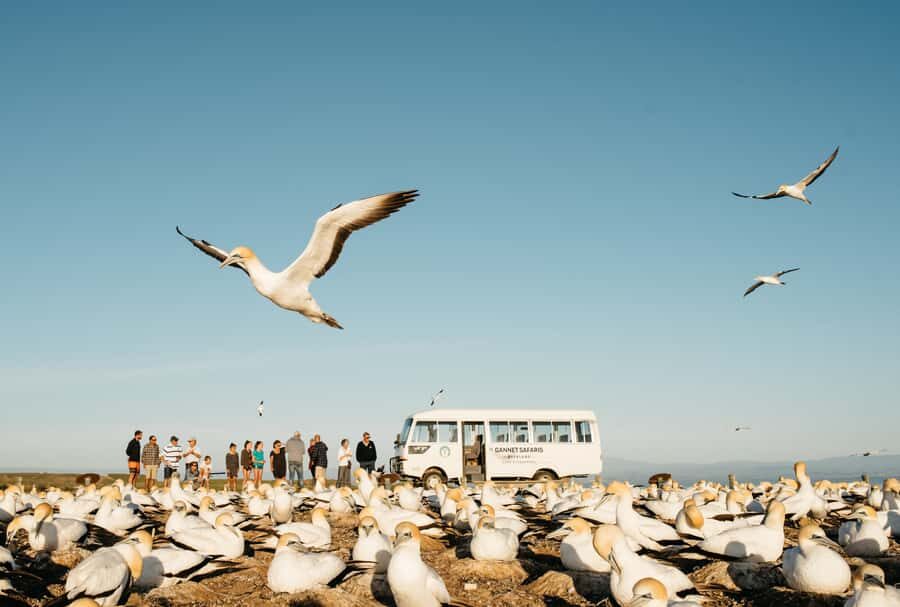
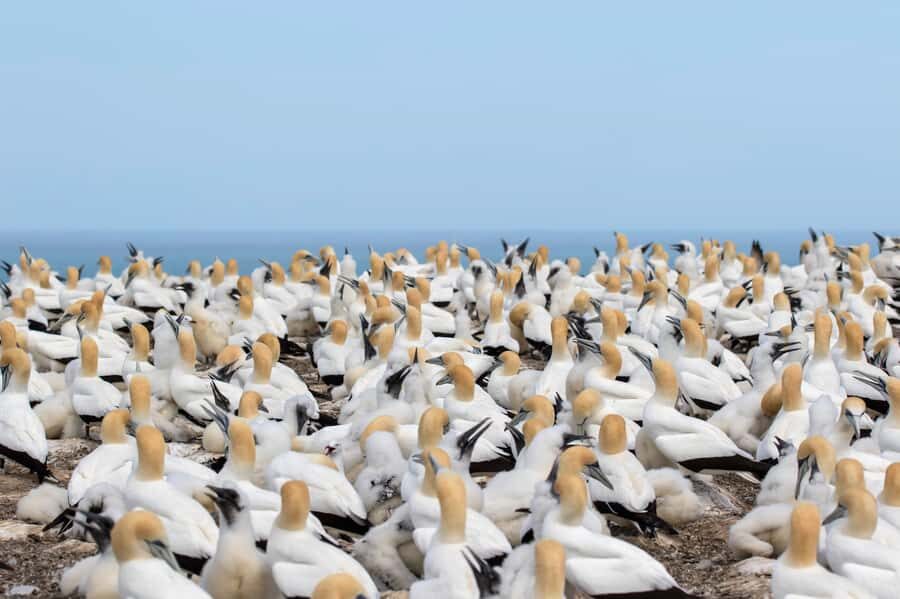
If you’ve ever wanted a wildlife experience that doesn’t require a hike, this is your kind of outing. Cape Kidnappers is famous for mainland gannets—big, bold seabirds with pale gold crowns and the black markings around their eyes. From there, you watch thousands of them operate like a daily schedule you can’t interrupt.
What makes it work is simple: the colony is accessible. Instead of searching long distances or squinting from far away, you’re positioned so you can see individual behavior. You catch the rhythm—adults tending nests, young birds in the mix, pairs settling in, and birds reacting to one another at very close range. And yes, these birds are also… very present. Expect the smell. It comes with the territory, like it or not.
The best part for me is that the experience isn’t just birds-on-a-boardwalk. You get the bigger picture: how this place fits into the surrounding ecosystem, and what local people are doing to protect habitat and wildlife. Reviews repeatedly mention guides bringing the story to life—names like Tom, Marty, Marcus, Garth, Trevor, and Jan show up often, and the common thread is strong on-the-ground storytelling and practical info.
You can also read our reviews of more tours and experiences in Napier.

The 3-hour plan: what actually happens (and how little you walk)
This tour is built around one main idea: you don’t need to work for the view. The drive uses an air-conditioned 4×4 coach, and the route gets you to the cape with minimal walking. That matters in two ways.
First, it keeps the experience friendly for more people. Even if you’re traveling with less mobile family members or you just don’t want a steep or long walk, you still get a close encounter with the colony. Second, it reduces “time lost” between scenic points. You spend most of your limited hours focused on the birds and the nature context.
A typical flow looks like this:
- You meet at Gannet Safaris Overland Ltd, 396 Clifton Rd, Te Awanga 4172 (look for the Gannet Safaris sign).
- You ride in the air-conditioned 4×4 coach, with stops along the way for scenery and interpretation.
- At the cape, you get gannet colony viewing and interaction with plenty of time near the birds.
- After the viewing, you head back, usually with the same guiding style—stories and explanations rather than a dead run of silence.
One small note: a couple reviews mention the ride can be a bit bumpy and that the back seats can make audio less clear (even though the guide is speaking). If you’re sensitive to sound, consider sitting closer to where the driver/guide will be heard best.
Getting to the colony: geological scenery and real farmland access
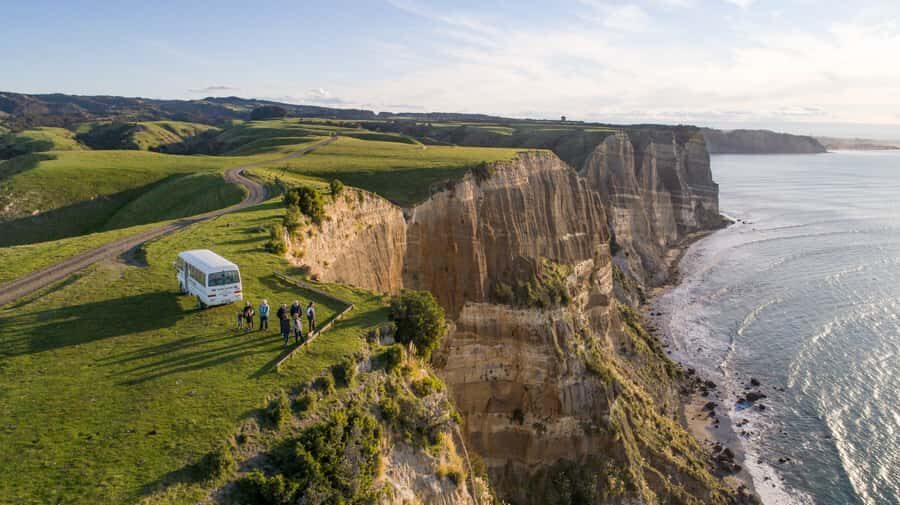
The trip out to Cape Kidnappers isn’t just a transfer. It’s part of why the tour feels worth it. You’ll travel through working countryside and coastal geology, with commentary that frames what you’re seeing. Along the way, the tour includes stops that help explain why this area matters ecologically—not just visually.
You’ll also get a look at a production forest, which might not sound exciting at first. But it’s a useful reminder that conservation and land use can sit side by side. In a place like this, habitat protection isn’t an abstract idea. It’s something managed in the real world, in between farms, reserves, and coast.
If you like nature experiences with context—how land management affects wildlife—this transport segment is a big part of the value. You’re not only paying to reach the birds. You’re paying to understand why the birds are here.
Your front-row gannet moment: what you’ll see up close
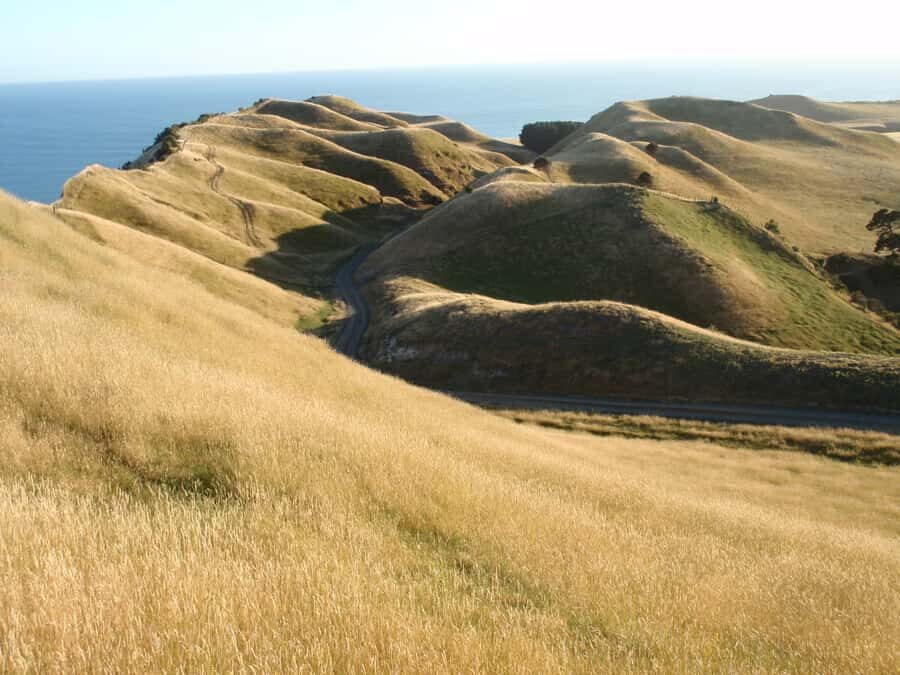
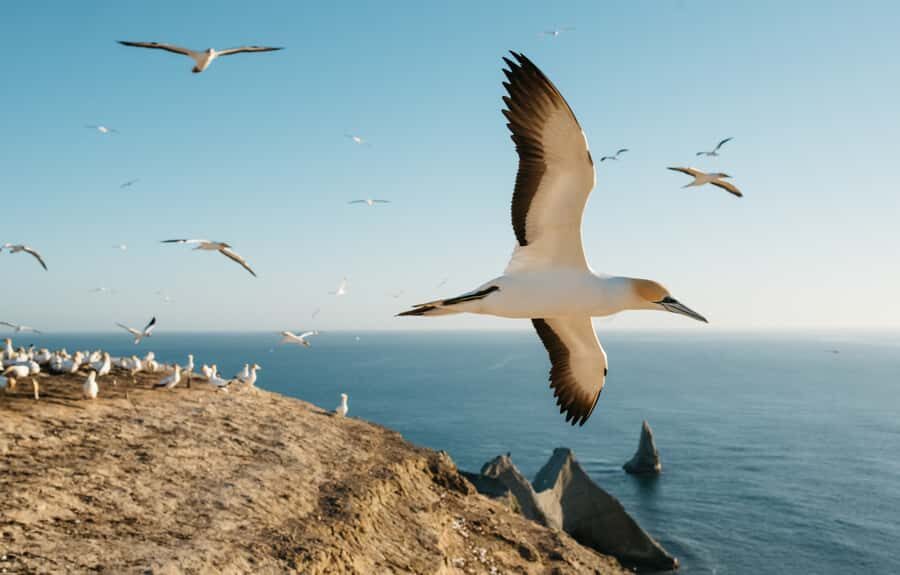
At Cape Kidnappers, you’re looking at the largest mainland gannet colony in the world. The colony size is the headline, but behavior is the show.
Here are the standout moments you can plan on:
- You’ll see adults and young birds nesting in long, organized rows.
- Birds carry out daily routines like preening and nest settling.
- Pairs often perform a recognition ritual—a kind of courtship check-in that helps them stay bonded at a crowded site.
- Above you, the birds have a huge presence. With roughly a 2-meter (6-foot) wingspan, you’ll spot their movement and feeding patterns as fish are brought back.
Timing matters. Gannets are present from September to early April. September is when they return to build nests. Chicks arrive in December and January, and they’re ready for their first flight in late April, when the cycle heads toward warmer climates.
If you’re choosing dates based on what you want to photograph or see, that seasonal rhythm can help. Want chicks in the mix? Aim for the mid-summer season into early autumn. Want adults nesting and the busiest colony vibe? Any time in that September-to-early-April window can deliver.
And yes—these birds are very close. That’s the point. The tour aims to get you within a few feet for viewing. You’ll also understand why they protect space. With so many birds together, the colony operates on rules, spacing, and timing. You’re watching a functioning system, not a display.
Maori legends and nature talks: more than facts, it’s meaning
One of the reasons this tour earns so many high marks is the storytelling. Alongside the bird biology, guides share local Maori legends and cultural connections to the area. It’s not just trivia. It gives you a lens for the coastline beyond “pretty place with birds.”
The commentary is also practical. Guides tie what you’re seeing to why the site is managed the way it is, and why certain conservation efforts matter. Reviews frequently note how guides keep the drive and stops interesting—often with a blend of humor and detail.
Since you’ll experience the colony at close range, that context changes how you watch. Instead of only thinking, Wow, that’s a lot of birds, you start thinking, How do these birds reproduce here, and what makes this place survivable for them?

Predator-proof reserve and native forest stops: why conservation is part of the show
The tour doesn’t stop at the cliffs. You also visit a predator-proof reserve and a native New Zealand forest.
That’s a big deal for two reasons.
First, it explains how New Zealand supports species recovery. A predator-proof reserve is designed to reduce threats so native wildlife can thrive. When you hear that, it reframes the trip from “watch wildlife” to “see wildlife protection in action.”
Second, the forest stop helps you appreciate the bigger ecosystem. Gannets are seabirds, but the land around the cape is still part of the story. The tour gives you a balanced view: ocean life on one side, habitat management on the other.
If you care about real conservation effort—how places are protected rather than just visited—this part of the tour is worth paying attention to. It also makes the morning feel fuller than a single photo stop.
Comfort, timing, and photo tips for the cape cliffs
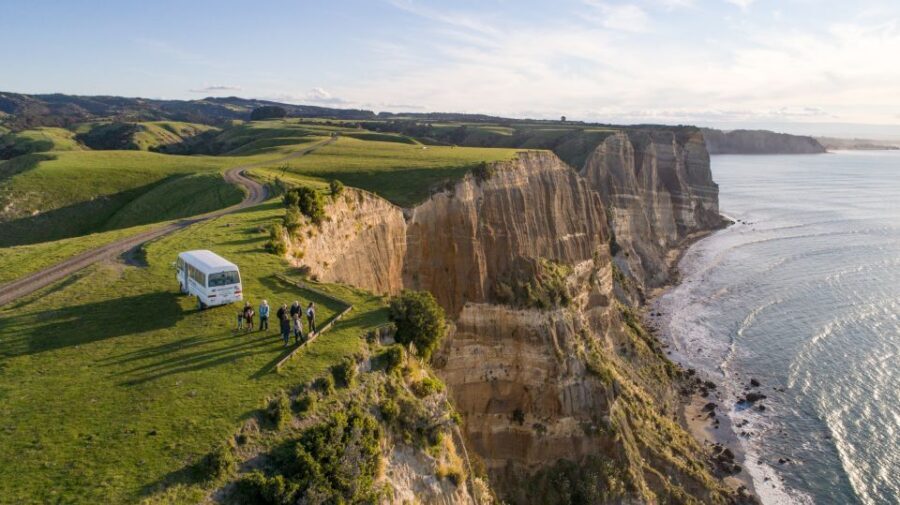
The tour’s comfort level is a major part of its appeal. You ride in air-conditioned transport, and the design includes “no walking required” if you don’t want to. That matters because the cape can be exposed, and walking in windy conditions can turn a great outing into a miserable one fast.
Bring a jacket. Several reviews directly call out the wind. Even on a warm day, the cape can chill you. Also, comfortable shoes are still a good idea in case you need to move around slightly at stops, but the tour is designed so you aren’t doing a hike.
For photos, you’ll be close enough that you can capture:
- nesting rows and group behavior,
- adults and chicks together,
- the look of the gannet’s facial markings,
- and bird-in-flight moments above you.
One practical strategy: take a few wide shots first to capture the scale, then shift to closer framing once you find a behavior that repeats (preening, nest settling, pair rituals). With so many birds, your best photos come from timing more than from luck.
Also: the birds can be smelly. It’s a common complaint, but it’s not a reason to avoid the experience. It’s part of the reality of being close to seabird colonies.
Price and value: is $59 fair for 3 hours?
At $59 per person for about 3 hours, this tour is fairly priced—especially because the product isn’t just access to a viewpoint. It includes:
- air-conditioned transport in a coach/4×4,
- an experienced driver/guide (in live operation, not a recording),
- light refreshments,
- and close viewing at the gannet colony with time to actually watch.
You don’t get hotel pickup or included meals, so you’ll need to plan around that. But if you’re staying in the Napier–Hawke’s Bay area, this kind of tour can be one of the most cost-effective ways to get “close-to-nature” access without renting a car for the day and figuring out logistics.
Value also comes from what you’re not paying for. You’re not spending extra time fighting traffic, searching private land access, or doing an exhausting trek to reach the best viewing spots. The tour is designed so you trade time and effort for meaning and observation.
And the reviews reinforce the value angle: people call it a highlight, a must-do, and a best-use-of-time experience in the Hawke’s Bay region, largely because the viewing is so close and the guiding is so engaging.
Who should book this tour (and who might want something else)
Book this if:
- you want an up-close wildlife experience without a hike,
- you’re interested in conservation and predator-proof reserves,
- you like guided storytelling (including Maori legends),
- and you’d rather spend your time watching birds than commuting long distances.
You might consider a different type of day trip if:
- you dislike close-proximity wildlife smells (they’re real here),
- you’re very sensitive to wind and cold without layers,
- or you strongly prefer roomy seating and perfect audio clarity on group transport.
That said, most reviews land on the same theme: the viewing time near the colony is the main event, and the guidance makes it easier to understand what you’re seeing and why it matters.
Should you book the Napier Cape Kidnappers Gannet tour?
Yes, I’d book it if Cape Kidnappers and gannets are on your list and you want a high-impact morning with low physical effort. The “feet-away” viewing is the headline, but the real reason it’s worth it is the blend: close bird watching plus conservation stops plus storytelling that gives you context.
If you can only do one wildlife outing in the area, this is a strong choice. Just pack a jacket for the wind, plan for the smell, and be ready to watch behavior—not only birds in flight. This is the kind of place where you stop thinking about your itinerary and start paying attention to what the colony is doing.
FAQ
How long is the Cape Kidnappers Gannet tour?
The tour lasts about 3 hours.
Where does the tour start?
You meet at Gannet Safaris Overland Ltd, 396 Clifton Rd, Te Awanga 4172, New Zealand, and you should look for the Gannet Safaris sign on the side of the road.
Is there a lot of walking?
No. Walking is not required for this tour if you do not want to.
How close will I get to the gannets?
The tour is designed so you can view the colony within a few feet of the birds.
What’s included in the ticket price?
Included items are an experienced driver/guide, light refreshments, comfortable air-conditioned transport, and gannet colony viewing and interaction.
What time of year can I see the gannets?
Gannets are visible from September to early April.
What should I bring?
Bring comfortable shoes and a jacket, especially because it can get windy or chilly up at the cape.
Is this tour available for cruise ship passengers?
No. This tour is not available for cruise ship passengers.
Is the tour guided in English?
Yes. The live tour guide speaks English.