REVIEW · FRANZ JOSEF TOWN
Franz Josef: Glacier Helicopter Ride with Snow Landing
Book on GetYourGuide →Operated by HeliServices.NZ Fox Franz Haast · Bookable on GetYourGuide
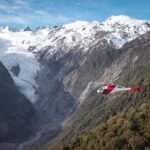
Franz Josef looks different from the sky. What makes this ride so special is the snow landing on the glacier and the up-close way you get Southern Alps peak views in just 20 minutes. I love how the flight time is short but packed, and I also love that you’re not just staring at ice from above; you step onto snow and soak it in. The one drawback to plan around is that the route and landing depend on safe weather conditions, so nothing is 100% guaranteed.
You’ll meet your helicopter group at the local partner’s base in Franz Josef, get fitted with headsets, and then you’re off. Small group size (limited to 10) helps keep the experience feeling personal, not rushed-and-rowdy. Just note there’s no hotel pickup or drop-off, so you’ll want to build in time to get to the base on your own.
In This Review
- Key things I’d focus on before you book
- Franz Josef Glacier from the cockpit: why this ride feels different
- Meeting at Franz Josef base: the part that’s simple and easy to miss
- The flight over the Southern Alps: what you’re really seeing
- The snow landing: photos are great, but it’s the scale that hits
- Safety and weather reality check
- Coming back over rainforest: the contrast you’ll notice on descent
- Pilot commentary through headsets: turning views into understanding
- Value check: is $203 for 20 minutes actually worth it?
- Small group (10 max) and comfort: why the experience feels personal
- Wheelchair accessible: what’s confirmed and what you should ask
- Weather, routes, and the snow landing: how to set expectations
- Quick tips for your day (so you enjoy it more)
- Who should book this helicopter glacier ride
- Should you book the Franz Josef snow-landing helicopter tour?
- FAQ
- How long is the helicopter ride?
- Does the tour include a snow landing?
- What’s included in the price?
- Is hotel pickup or drop-off included?
- How big is the group?
- Is it wheelchair accessible?
- What are the rules for infants?
- What language is the tour guide commentary in?
Key things I’d focus on before you book
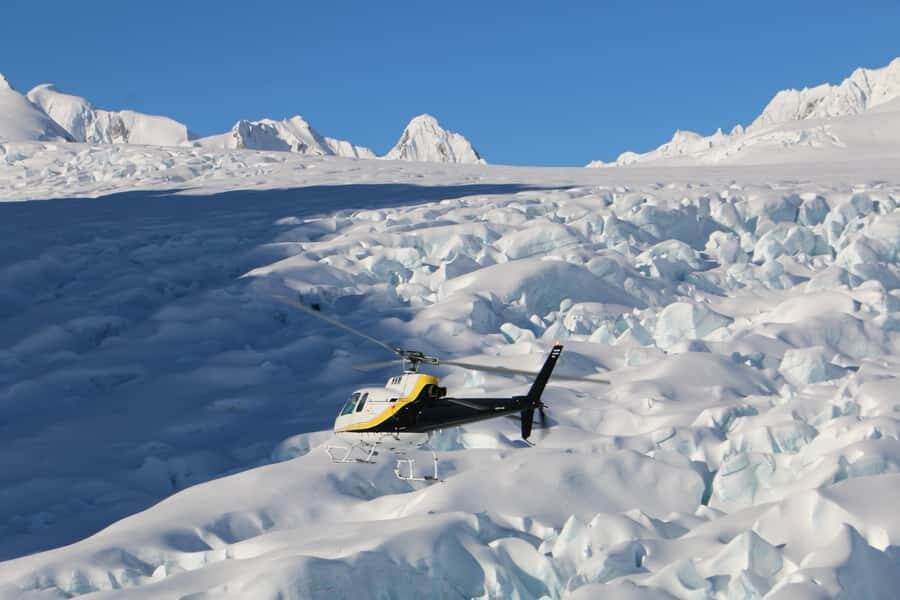
- Snow landing on the glacier: it’s the part that turns a scenic flight into a true stand-on-the-ice moment
- Ice pinnacles and crevasses from above: you’ll see glacier structure in a way you can’t get from the ground
- Southern Alps big views: clear sightlines can reveal major peaks like Mount Cook and Mount Tasman
- Pilot commentary through headsets: you’re guided in real time, not just left to guess what you’re looking at
- Weather-led flexibility: routes and landing sites can change for safety, so keep expectations flexible
Franz Josef Glacier from the cockpit: why this ride feels different
This is a glacier tour, but it doesn’t feel like the usual picture-stop experience. Instead, it’s built around two angles at once: first from the air, and then on foot during the snow landing. That mix matters. From the ground, crevasses and ice formations can be hard to read because you’re seeing a large object from one flat viewpoint. From above, your brain finally gets the scale and shape.
I also like that the experience is designed for fast awe without long hours of transit. At 20 minutes total, you’re not committing a whole day just to catch a glimpse. For a lot of people, that’s the sweet spot: you want the Franz Josef Glacier moment, but you still want room for the rest of your West Coast trip.
A few more Franz Josef Town tours and experiences worth a look
Meeting at Franz Josef base: the part that’s simple and easy to miss
Your tour starts at the local partner’s base in Franz Josef. The activity doesn’t include hotel pickup, so you’ll need to get there under your own steam. That’s not a dealbreaker, but it does change how you should plan your day. If you’re relying on taxis or a rental car, give yourself a little buffer so you don’t show up rushed.
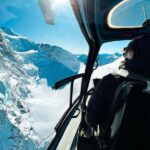
Once you arrive, you’ll board the helicopter and get set up with headsets. The headsets aren’t a minor add-on. They’re how the tour stays meaningful while the scenery moves fast. The pilot provides a running commentary so you can connect what you’re seeing with what it actually means in glacier country.
The flight over the Southern Alps: what you’re really seeing
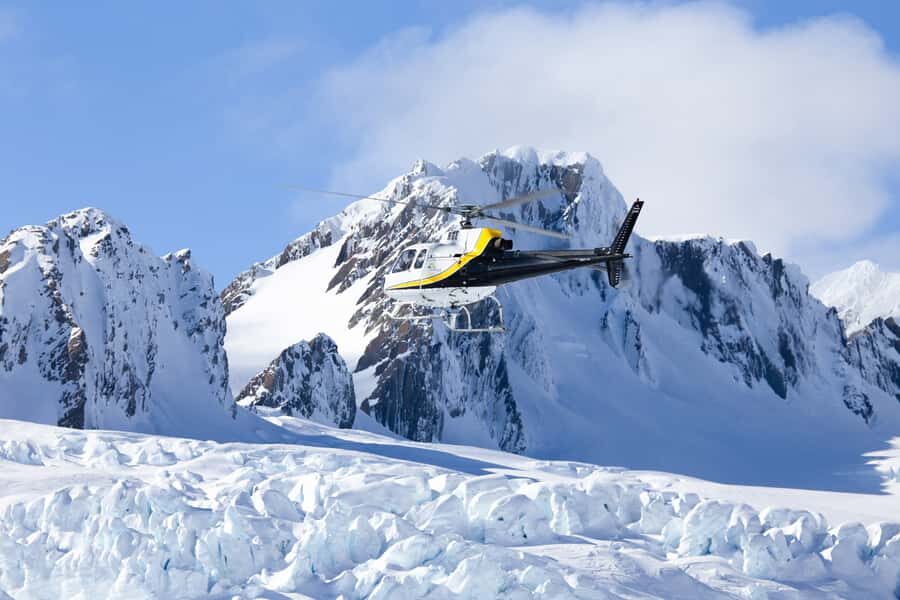
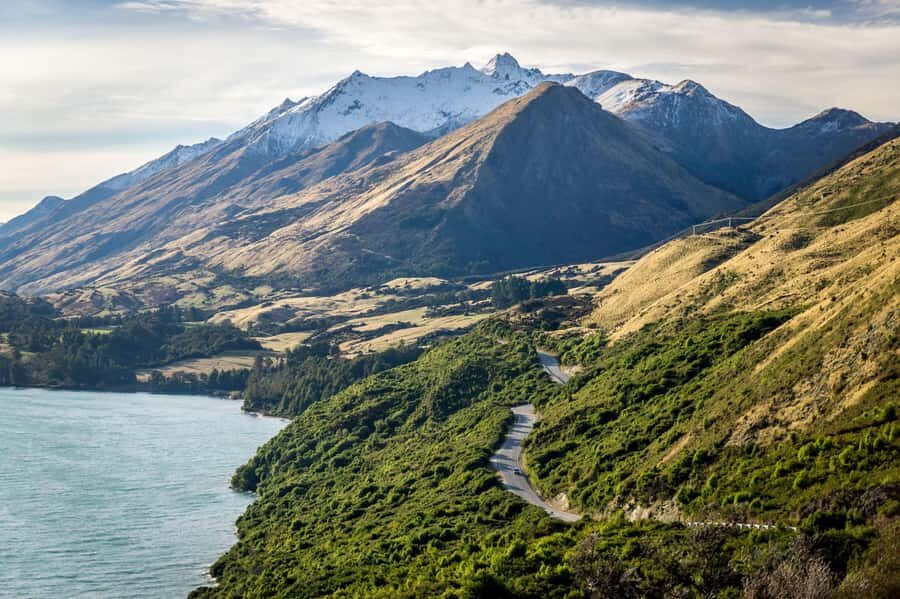
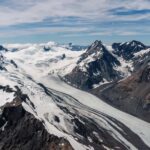
After takeoff, the helicopter heads into New Zealand’s Southern Alps, the mountain range that powers the drama of the West Coast. This is where you start getting that sense of scale: not just the glacier in front of you, but also the mountains rising around it.
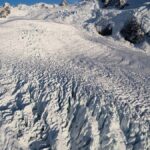
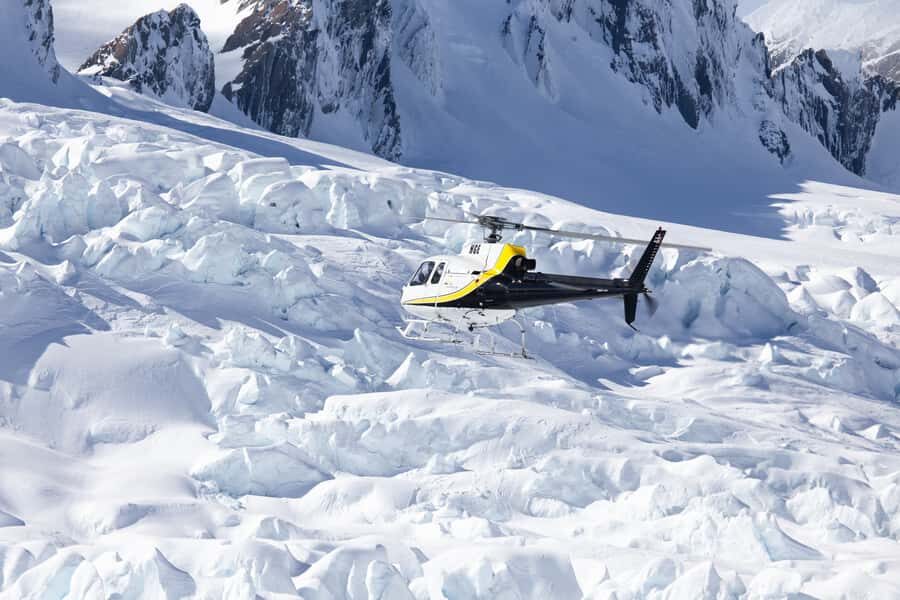
The most visually striking part is the pass over Franz Josef Glacier’s ice pinnacles and crevasses. From the air, those features look sharper and more organized because you’re looking down into the glacier’s texture instead of across it. Crevasses especially can read like cracks in a frozen world puzzle. You also get a chance to see snow-capped peaks that frame the entire region.
Your pilot and guides use the commentary to point out key mountain names, including Mount Cook and Mount Tasman, which are among New Zealand’s highest peaks. Even if you don’t know the peaks by heart, it helps to hear them named while you’re seeing them. It turns random mountain shapes into something you can place.
The snow landing: photos are great, but it’s the scale that hits
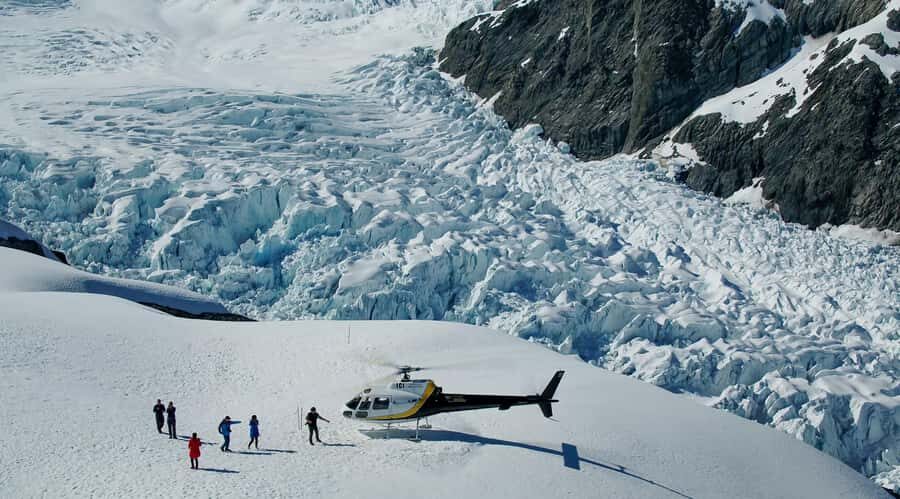
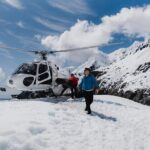
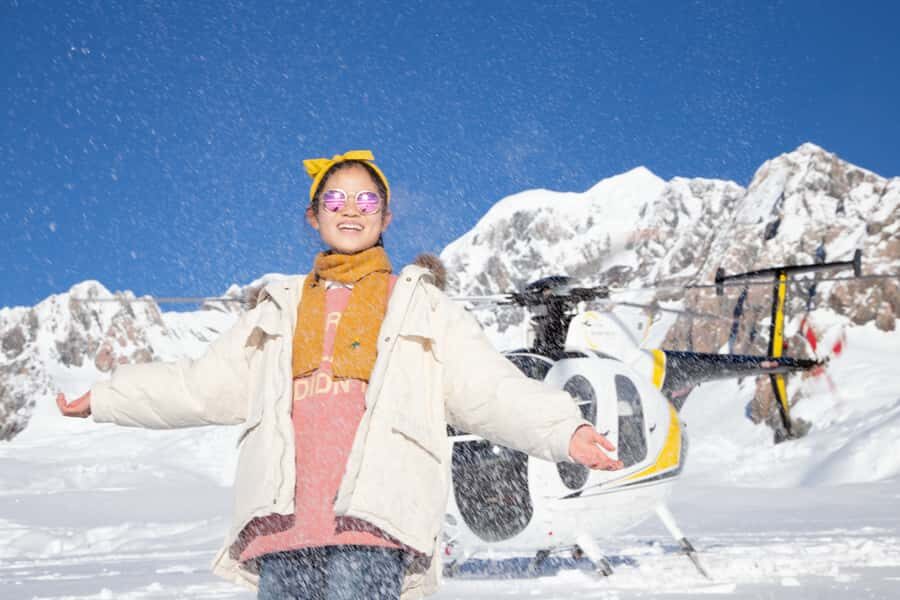
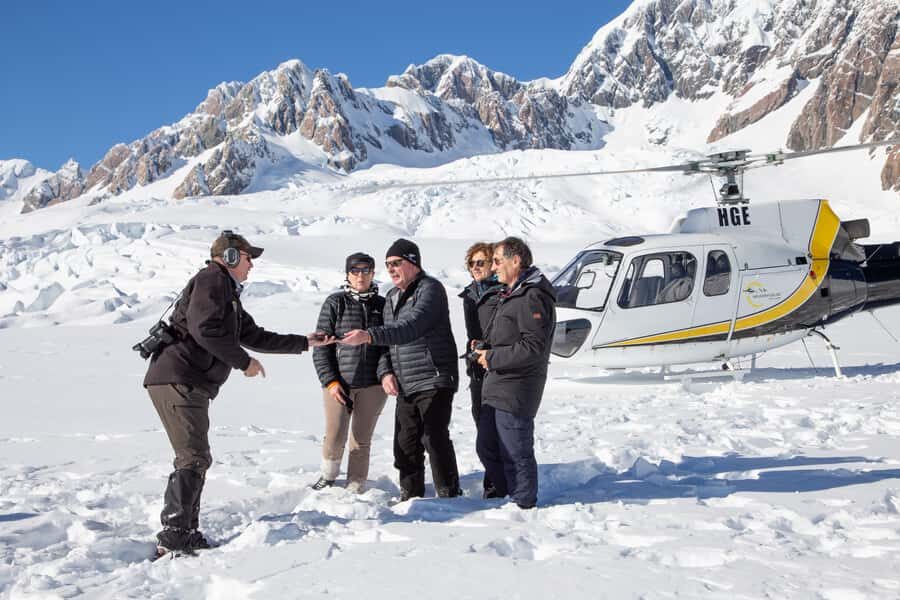
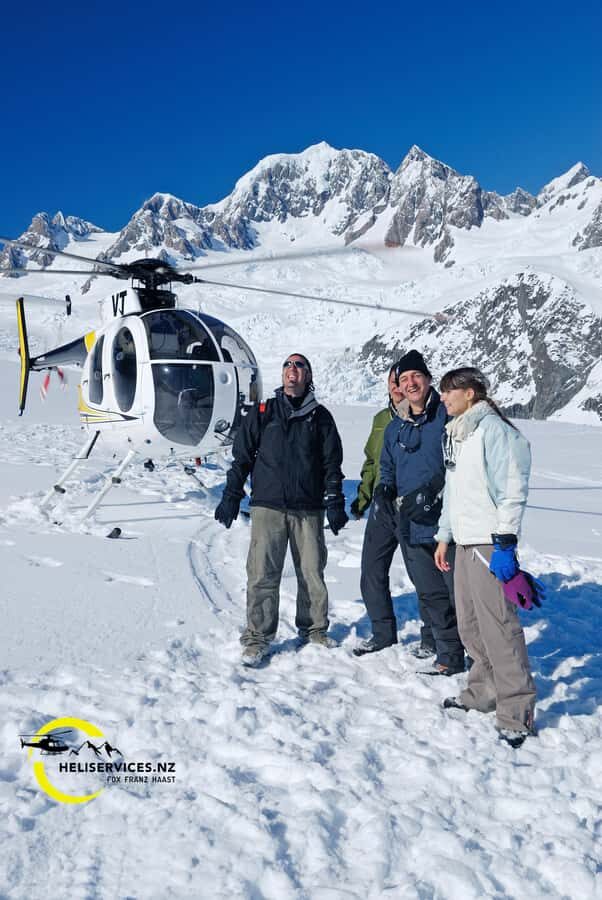
The snow landing is the headline for a reason. You arrive at a snowy landing site and take your first steps onto the ice-covered terrain. The tour gives you enough time to take photos and soak it in, and the feel is different the second your feet are on snow instead of strapped into a seat.
What tends to surprise people is just how complete the mountain-in-your-face feeling is. You’re not standing in a managed viewpoint. You’re in a high-mountain glacial environment where the scale is obvious fast: you’re small, the glacier is huge, and the surroundings look almost unreal in their structure.
You also get another angle on the glacier formations as you watch the approach and then later see the region change on the way back. One of the best parts is that you don’t need special photography skills to get good results. Even a basic phone camera will capture the contrast of snow, ice, and the mountain backdrop.
Safety and weather reality check
Because this is a glacier landing, your flight and landing are subject to safe and suitable weather conditions and at the pilot’s discretion. That means your exact route and snow landing details can shift. I’d treat this as part of the value, not a failure: the operator is prioritizing safe flying, and that’s what keeps the experience possible at all.
A few more Franz Josef Town tours and experiences worth a look
Coming back over rainforest: the contrast you’ll notice on descent
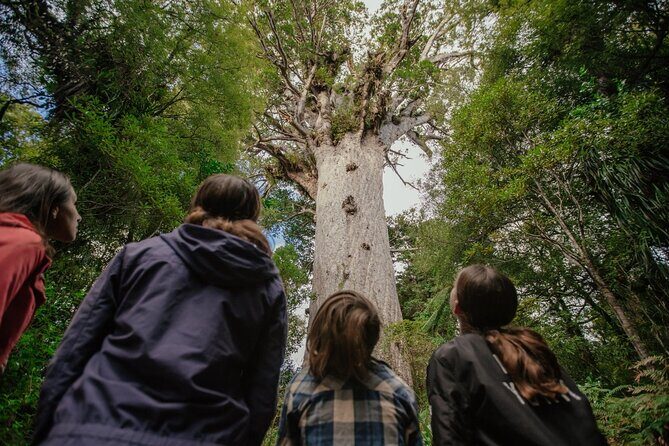
The return flight isn’t just a straight line back to base. As you descend, you’ll travel across temperate rainforest before landing back at the Franz Josef base. That contrast is one of the underrated benefits of a helicopter approach: you get a quick look at how the climate changes over short distances in this part of New Zealand.
From the air, rainforest looks like a dark green pattern with texture you can’t really see from walking tracks. Then, if you look back, you can connect that green texture to the ice above you. It helps the whole region make more sense.
Pilot commentary through headsets: turning views into understanding
One reason this tour earns such high marks is how it’s guided in the cockpit. You’ll wear headsets with a running commentary from your pilot, and you’ll hear about features of interest as they pass overhead. That’s a practical upgrade over tours that simply fly you around with silence.
Hearing names like Mount Cook and Mount Tasman while you’re seeing the peaks can make the whole experience feel more intentional. And the pilot commentary isn’t only about place names. It also helps you interpret glacier movement and glacier features so you’re not just looking at ice. You understand what you’re looking at.
If you’re the type who likes to feel oriented while sightseeing, this is a big plus. The commentary is also helpful if you don’t travel with a personal guide or if you’re short on time and want one good shot at getting the context.
Value check: is $203 for 20 minutes actually worth it?
At $203 per person for a 20-minute helicopter experience, the first question is obvious: is it too pricey for such a short time?
Here’s how I look at the value.
You’re paying for three things at once:
- A real snow landing on the glacier, not just a viewpoint flight
- Aerial access to crevasses and ice structure that’s hard or impossible to see clearly from the ground
- Guided interpretation via headsets, including named peak spotting
If you were doing this by walking tracks, you’d spend hours and still might not get the same “read” of the glacier’s shape. Ground viewpoints can be stunning, but the helicopter changes your perspective instantly. In other words, your time cost is low, and your access cost is high.
For many people, the snow landing is the deciding factor. A flight over mountains is special, but a step onto the snow is the kind of memory that doesn’t feel comparable to a standard viewing platform.
Small group (10 max) and comfort: why the experience feels personal
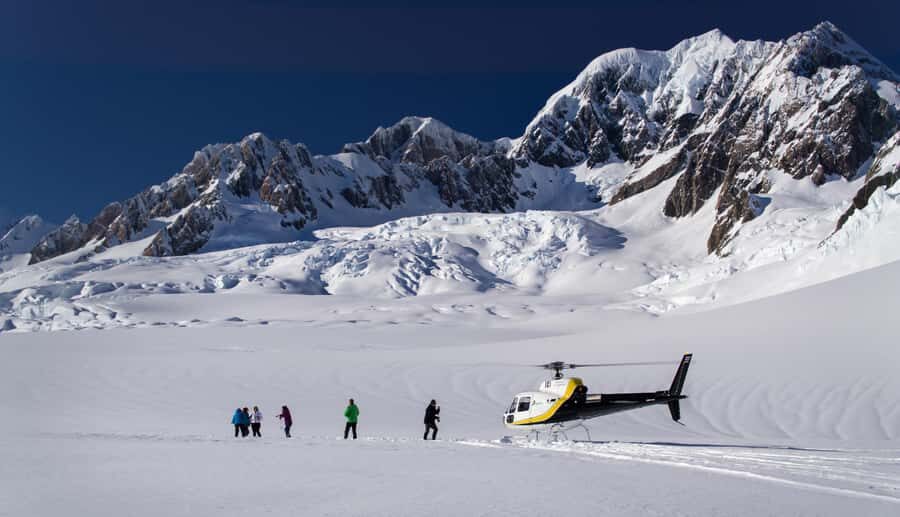
This tour is limited to 10 participants, which is another reason it works. Smaller groups generally mean less waiting around and fewer moments where the group becomes a chaotic pack.
Also, the way staff support passengers matters here. In the feedback you’ll read from people who were nervous, the common thread is reassurance and a steady, calming approach from the team. If you’re the type who worries about flying or doesn’t like the idea of heights, that support can make a big difference to whether the experience feels enjoyable.
Wheelchair accessible: what’s confirmed and what you should ask
This activity is listed as wheelchair accessible, which is a meaningful inclusion for a helicopter operation. That said, the details of how boarding and landing procedures work for each individual aren’t provided here. If you’re traveling with mobility needs, I’d contact the operator ahead of time to confirm the practical side, like how you’ll board and whether the snow landing will be available in the same way.
The good news: the tour does explicitly state wheelchair accessibility, so you’re not starting from a vague maybe.
Weather, routes, and the snow landing: how to set expectations
Because snow landings are safety-dependent, you should plan your day with flexibility. Flight routes and landing are subject to safe and suitable weather and the pilot’s discretion. Practically, that means:
- You might get a different route than the one you imagined
- The landing location might vary
- In some cases, the snow landing could be limited by conditions
The upside is that when weather cooperates, the views can be extremely clear, and your glacier visibility can be excellent. Many people focus on sunny, crisp conditions for glacier flying, but even if the sky is mixed, you’ll still be seeing ice and peaks from above, which is the core of the experience.
Quick tips for your day (so you enjoy it more)
This tour is short, so small prep choices matter.
- Dress warm enough for cold air and a snow landing. Even if you don’t stay outside long, you’ll be on snow for photos and walking time.
- Bring a plan for motion: a helicopter ride can feel like fast-changing perspective, so if you’re sensitive to motion, be prepared.
- Wear headphones/headsets if you’ll be using them by comfort level. The tour provides headsets, but your own comfort matters.
Also, since there’s no hotel pickup, double-check how you’ll reach the Franz Josef base in time. For a short flight, arriving late is the easiest way to ruin the day.
Who should book this helicopter glacier ride
I think you should book if you want a high-impact experience without a full-day schedule. This is especially strong for:
- First-time Franz Josef visitors who want glacier views that feel truly different
- People who value photo opportunities but don’t want a half-day hike
- Anyone who wants a guided explanation via headsets, including named peak spotting
- Families who can handle the short duration and want a memorable, “we did that” moment
I’d hesitate if you’re trying to build your schedule around a very specific time window, because departures and the snow landing depend on weather and pilot discretion. Also, if you dislike flying in helicopters, you’ll want to consider whether the reassurances and support you can receive will be enough for you.
Should you book the Franz Josef snow-landing helicopter tour?
If you’re on the fence, I’d make the decision based on one thing: the snow landing. If the idea of stepping onto glacier snow is what you’re chasing, this tour is built to deliver that moment, along with aerial glacier views you can’t easily replicate on foot.
And because it’s only 20 minutes with a small group limit, it’s a good use of limited time in the South Island. For most people, it’s the kind of experience that justifies itself the moment you see the glacier from above and then realize you’re actually stepping onto the ice.
If you want maximum value, aim for a day when the weather looks best, but keep your mindset flexible. When the flight works out, this is one of those experiences that stays with you long after the photos get uploaded.
FAQ
How long is the helicopter ride?
The duration is listed as 20 minutes total. Flight timing depends on availability and safe conditions.
Does the tour include a snow landing?
Yes, it includes a snow landing, but the flight routes and the snow landing are subject to safe and suitable weather conditions and the pilot’s discretion.
What’s included in the price?
The tour includes headsets for a running commentary by your pilot, plus commentary and pointing out areas of interest such as Mount Cook and Mount Tasman.
Is hotel pickup or drop-off included?
No. Hotel pickup and drop-off are not included. You’ll board at the local partner’s base in Franz Josef.
How big is the group?
It’s a small group, limited to 10 participants.
Is it wheelchair accessible?
Yes, the activity is listed as wheelchair accessible.
What are the rules for infants?
Infants 3 years and under and weighing less than 15 kg fly for free on an adult’s lap, but they must be declared as a passenger with the initial booking. If an infant is above 15 kg, the child fare applies.
What language is the tour guide commentary in?
The live tour guide commentary is English.