REVIEW · TAURANGA
Guided Māori History and Culture Tour to Rotorua and Tauranga
Book on Viator →Operated by Travel Ed t/a Mana Māori Experiences · Bookable on Viator
A single day with Māori storytelling can change how you see Rotorua. This small-group Tauranga-to-Rotorua tour is led by a Māori family business guide (often introduced as Les / Wereta) who connects places to real tribal stories going back to 925AD. I love the guide’s personal, values-based teaching, and I love the mix of site visits plus performance and a marae experience; one thing to keep in mind is that you’ll do short walks, and it can be challenging if you don’t enjoy 20 minutes or more on your feet.
The day runs about 6 hours, starting at 9:00am from the Port of Tauranga area, in a van sized for up to 9 travelers. You’ll also get practical value: multiple stops are free to enter, and lunch is handled at Tauranga Crossing with an iconic Kiwi pie.
If you want Māori culture told from an insider perspective—tied to specific landmarks, not generic facts—this is the kind of tour that helps things click fast. At the same time, the tour is history-heavy (including conflict at Gate Pā), so it’s best if you’re ready for respectful, serious moments along with the performances.
In This Review
- Key highlights to look for on this Tauranga to Rotorua tour
- Why this small-group Tauranga to Rotorua Māori tour feels personal
- Meeting at Port of Tauranga (and what that means for your day)
- Mount Maunganui drive-by: Mount’s stories before you even leave Tauranga
- Tauranga stop with an ancient navigational compass and 925AD arrival stories
- Gate Pa Memorial Reserve: how 1864 conflict is explained on foot
- Tauranga Crossing lunch: Patrick’s Pies is part of the experience
- Whakarewarewa, The Living Māori Village: the thermal valley plus performance
- Tahuwhakatiki Marae visit: community ties you can’t get from a brochure
- Price and value: is $148.39 a fair deal for a full 6-hour day?
- Who this tour suits best (and who may want to think twice)
- Booking tip: how to get the most out of your guide-led day
- Should you book this Māori culture tour from Tauranga to Rotorua?
- FAQ
- How long is the Māori history and culture tour from Tauranga to Rotorua?
- Where do I meet, and when does it start?
- Is pickup available?
- What stops are included during the day?
- Is lunch included?
- What should I know about walking and group size?
Key highlights to look for on this Tauranga to Rotorua tour
- A Māori family-business guide who teaches with stories and maps, not a script
- Small van group (max 9), so you get real conversation time
- Multiple meaningful free stops, including Tauranga and Gate Pa Memorial Reserve
- Whakarewarewa (Living Māori Village) with a cultural performance included
- Lunch included at Tauranga Crossing (Patrick’s Pies)
- Tahuwhakatiki Marae visit, with local traditions and community connections
Why this small-group Tauranga to Rotorua Māori tour feels personal
This tour works because it’s built around a storyteller guide. The focus isn’t just what you see—it’s why those places matter to Tauranga and Bay of Plenty tribes. When your guide is a descendant of Māori leaders, the details tend to land differently.
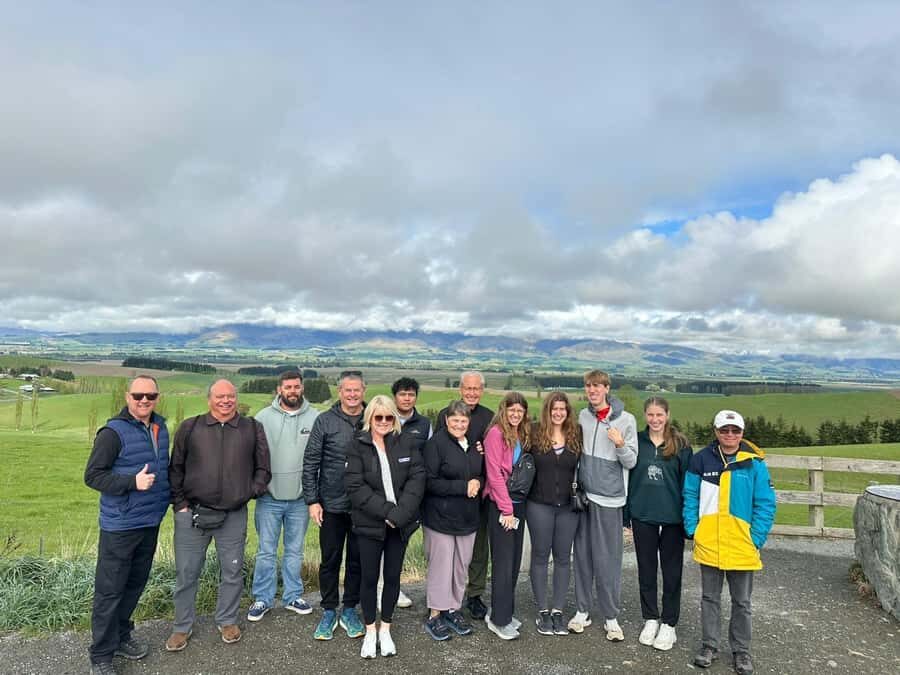
I also like that the group stays small. With a maximum of 9 travelers, you’re not watching from the back row while the guide talks past you. You get room for questions and for the pace to slow down when a story needs a moment.
The day does include walking—nothing like a hike, but plan for uneven “short stop” legs. If you know you struggle with 20 minutes of walking at a time, you’ll want to think ahead.
You can also read our reviews of more tours and experiences in Tauranga.


Meeting at Port of Tauranga (and what that means for your day)
The tour starts at 9:00am at Port of Tauranga Ltd, at 2 Salisbury Avenue, Mount Maunganui. You’ll return back to this same meeting point at the end of the experience, so you’re not spending your evening figuring out transport.
Pickup is offered, which can be a big deal if you’re staying near the port area or don’t want to play taxi roulette. You’ll also use a mobile ticket, which keeps the day simple and reduces the “where’s my paperwork?” stress.
The whole schedule is designed around travel time between Tauranga and Rotorua, so you aren’t squeezing the drive in on your own. Expect a full morning to early afternoon that keeps moving, but not so fast that you feel rushed.
Mount Maunganui drive-by: Mount’s stories before you even leave Tauranga
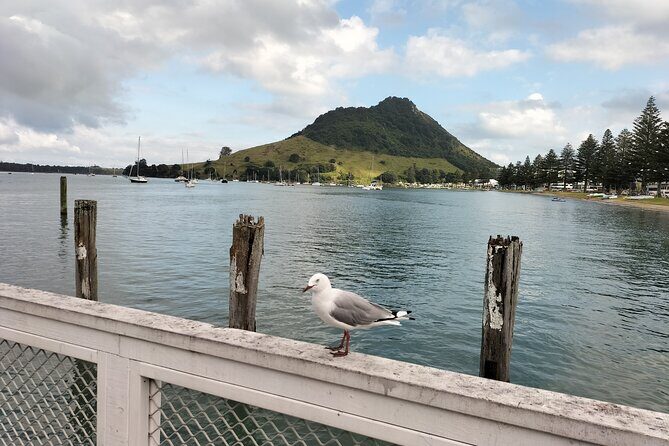
Your day begins with a drive-by of Mount Maunganui, and your guide uses that view as a starting point for ancestral stories. Even without stopping on a trail, it’s a smart way to set context. You’re learning what the mountain represents before you spend time elsewhere.
You’ll also get the sense of how coastal this area is as you head toward Tauranga. It’s a quick “get oriented” moment that helps the rest of the history feel anchored to real geography.
This stop is listed as free for admission, and the time here is short by design. If you dislike lots of brief scenic pauses, you’ll probably appreciate this one.
Tauranga stop with an ancient navigational compass and 925AD arrival stories
Next comes Tauranga itself, where you’ll hear about Māori arrival and settlement in Aotearoa, including the reference to 925AD. The story is tied to a navigational compass concept—so you’re not just hearing dates. You’re learning how voyaging and wayfinding connect to landfall and community.
The key value here is perspective. This is where the tour starts explaining how knowledge traveled with people, then how that knowledge shaped where they lived, farmed, and built relationships.
It’s a short stop (about 20 minutes), and the admission ticket is free. If you’re hoping for a long lecture, adjust your expectations; the tour is paced for a storytelling flow rather than a classroom session.
Gate Pa Memorial Reserve: how 1864 conflict is explained on foot
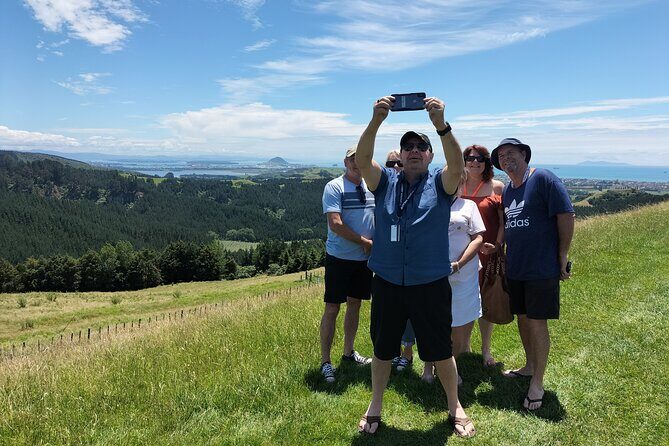
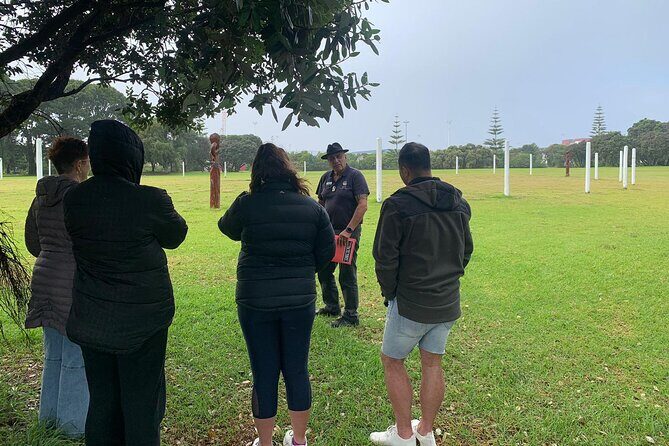
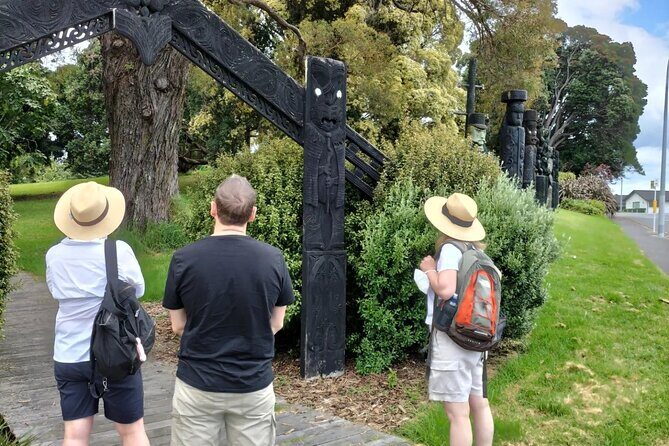
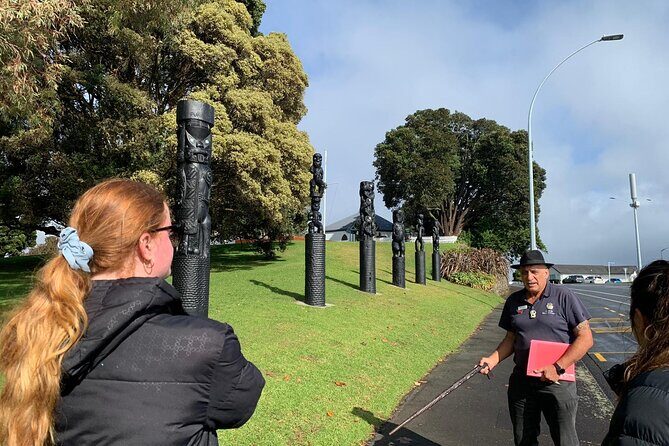
At Gate Pa Memorial Reserve, you’ll walk through the site connected to one of the most significant conflicts between colonial troops and local Māori tribes in 1864. This is where the tone of the day turns serious.
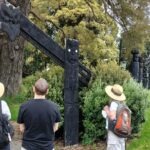
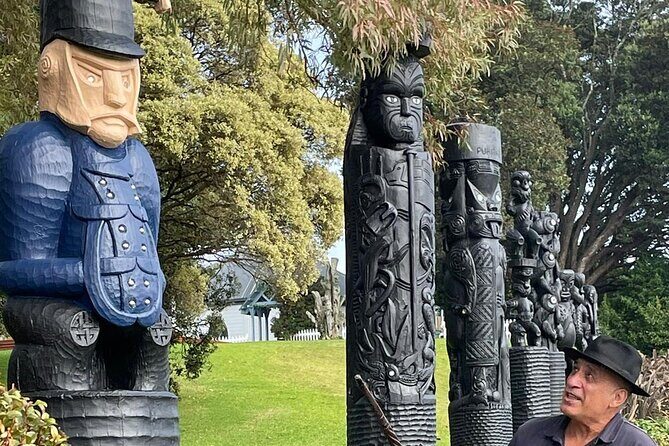
You’ll spend about 30 minutes here, and your guide explains what you’re seeing, including carvings and what the conflict meant locally. This kind of stop is important on a culture tour because it prevents history from turning into a postcard. It also helps you understand that culture lives alongside struggle, survival, and memory.
The practical note: this is one of the stops most likely to involve walking on uneven ground. If you have mobility limits, pace yourself and ask your guide to clarify where the easy viewing points are.
You can also read our reviews of more historical tours in Tauranga


Tauranga Crossing lunch: Patrick’s Pies is part of the experience
Lunch is served at Tauranga Crossing, and it’s not an afterthought. The tour includes an iconic Kiwi pie from Patrick’s Pies, which your guide describes as award-winning in New Zealand pie circles.
The lunch stop is about 20 minutes, so it’s quick. You’re not choosing a menu for an hour, which is actually helpful in a day like this—you keep the cultural momentum going.
If you’re picky about food timing, plan for a short break rather than a long sit-down. With a day running around 6 hours, that structure works best when you treat lunch as refueling.
Whakarewarewa, The Living Māori Village: the thermal valley plus performance
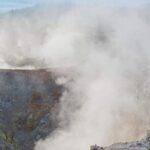
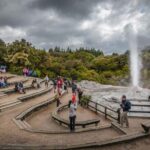
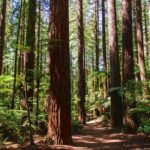
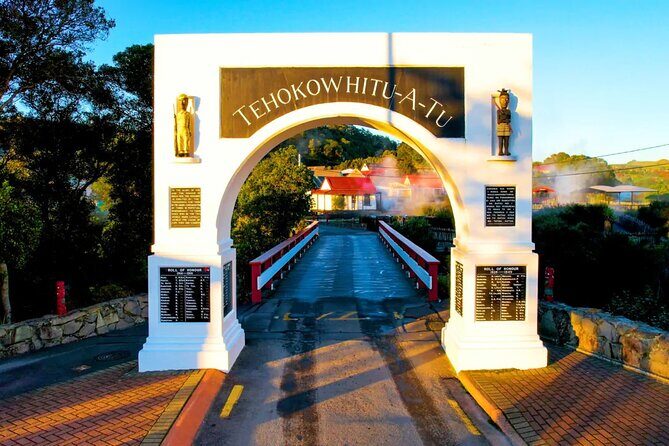
Rotorua’s portion starts when you reach Whakarewarewa – The Living Māori Village. You’ll travel through forests to get there, and then you’ll experience Māori stories and cultural performance at the village site. Admission here is listed as included, which is a real value add because it’s one of the more ticketed components of the day.
Your time is about 1 hour. That hour matters: it’s long enough to take in the performance, but short enough that you don’t feel trapped in a show with no context.
What I like about this stop is the combination. You get a setting that connects to the thermal valley environment, plus the performance elements that people often come for. But your guide frames what you’re seeing so it doesn’t feel like entertainment alone.
From the tour experience style and guide feedback, the haka and associated entertainment are often called a highlight. Even if performance isn’t your main interest, it’s worth paying attention to how the guide explains meaning and values during the show.
Tahuwhakatiki Marae visit: community ties you can’t get from a brochure
The last major cultural stop is Tahuwhakatiki Marae, where you’ll spend about 30 minutes. This is where the day shifts from storytelling about places to direct connection with local tradition and community connections.
You’ll learn local customs and stories, and the goal is that you leave with a stronger understanding of Māori culture and how community ties work in real life. A marae visit tends to do that because it’s not just about sightseeing—it’s about relationships, shared identity, and respectful interaction.
As a traveler, your best move here is simple: be present. Listen closely to what your guide explains, and follow any cues about how to behave in the space.
Again, walking can be involved. This stop is likely easier than some reserve paths, but if you know you’re sensitive to 20+ minutes on foot, plan your pace.
Price and value: is $148.39 a fair deal for a full 6-hour day?
At $148.39 per person, this tour is priced in the mid-range for a guided, cultural day with entry included where it counts. The value question comes down to what’s included and how personal the guide approach is.
Here’s the practical breakdown from what you’ll actually do:
- A full 6 hours of guided time with travel included
- A small group (max 9), which usually means more interaction
- Multiple cultural and historical stops, with free admission noted for several
- Lunch included at Tauranga Crossing (Patrick’s Pies)
- Whakarewarewa admission included, plus a cultural performance
When you compare that to tours that cram in fewer stops or charge extra for key admissions, this one holds together as a complete day. The only caution is that you’re paying for guided interpretation, so if you just want viewpoints and photos with minimal storytelling, you may not get your money’s worth.
Who this tour suits best (and who may want to think twice)
This is a strong fit if you want Māori history explained through someone connected to the community and its ancestors. The guide approach—storytelling, personal connections, and teaching with examples—comes through clearly, and many people rate the experience as more than a basic excursion.
It also works well for cruise and short-stay travelers because the day starts at the port area and ends back there. If you have a schedule jammed with other Rotorua sights, this gives you a cultural backbone that helps the region make more sense.
You might want to think twice if:
- You have limited mobility and find 20 minutes of walking difficult
- You prefer light, low-emotion entertainment over historical topics (Gate Pā includes conflict)
- You want more free time to wander independently (this is a guided loop, not a self-guided day)
Booking tip: how to get the most out of your guide-led day
Your best strategy is to treat this like a conversation, not a checklist. Bring curiosity, and don’t be shy about asking what a specific place meant to the people connected to it.
Also, since the tour is in a small van, listening matters even when you’re driving. Some of the strongest storytelling is built around views you might otherwise ignore—like Mount Maunganui as a story starter.
Finally, plan your day to be present during the marae and memorial reserve stops. Those parts of the tour do the heavy emotional lifting, and rushing them reduces the payoff.
Should you book this Māori culture tour from Tauranga to Rotorua?
If you want a guided Māori history and culture day that ties Tauranga landmarks to Rotorua’s cultural performance, this is a solid booking. The combination of small-group pacing, a guide who teaches with personal story, and included elements like lunch and Whakarewarewa entry make it good value for a focused, meaning-driven experience.
Just be honest with yourself about walking comfort and whether you’re ready for historical gravity at Gate Pā. If that fits, you’ll likely leave with a sharper, more respectful understanding of the places you visited—and a better sense of how Māori identity connects across the region.
FAQ
How long is the Māori history and culture tour from Tauranga to Rotorua?
The tour runs for about 6 hours.
Where do I meet, and when does it start?
You meet at Port of Tauranga Ltd, 2 Salisbury Avenue, Mount Maunganui 3116, New Zealand. The start time is 9:00am, and the tour ends back at the same meeting point.
Is pickup available?
Pickup is offered.
What stops are included during the day?
You’ll visit Mount Maunganui (drive-by), Tauranga, Gate Pa Memorial Reserve, Tauranga Crossing for lunch, Whakarewarewa – The Living Māori Village, and Tahuwhakatiki Marae.
Is lunch included?
Yes. Lunch is served at Tauranga Crossing and features an iconic New Zealand pie from Patrick’s Pies.
What should I know about walking and group size?
The tour has a maximum of 9 travelers. It can be challenging for people who find walking for 20 minutes or more difficult.