REVIEW · AUCKLAND
The Classic: Discover Amazing Auckland on an Electric Bike
Book on GetYourGuide →Operated by Power to the Pedal · Bookable on GetYourGuide
Volcano views, minus the sweat. This 210-minute electric bike tour is a smart way to see Auckland’s top sights and local neighborhoods with a real-time guide narrative as you roll along cycleways.
I love the 360-degree payoff from Mt Eden/Maungawhau, where the motor helps you get that big summit look without turning it into a hike. I also really like the headset communication, so you hear directions and stories while you keep moving, not constantly stopping.
One thing to consider: even though you use cycleways a lot, you’ll still ride some city streets to reach the best spots. If you’re not comfortable around traffic flow, build in extra attention and follow the guide’s pacing closely.
In This Review
- Key things I’d circle before you go
- Princes Wharf setup: where the tour really starts
- From Wynyard Quarter to Westhaven: Auckland’s harbor hits fast
- Freemans Bay and Victoria Park: neighborhoods with personality
- The Pink Path (Te Ara i Whiti / Lightpath): a photo stop that isn’t a gimmick
- Mt Eden / Maungawhau: the summit moment you paid for
- Auckland Domain and Museum views: when the city opens up again
- Waterfront cycleways back to the Viaduct: old wharves, new angles
- What this costs ($107) and why it can be good value
- Safety, gear, and what to bring (so you enjoy it, not survive it)
- Who should book this Auckland e-bike tour
- Should you book the Classic: Discover Amazing Auckland on an Electric Bike?
- FAQ
- How long is the electric bike tour?
- Where do I meet for the tour on Princes Wharf?
- How big is the group?
- What’s included with the tour?
- Do I need to bring water?
- Is food included?
- Are there age, height, and shoe requirements?
Key things I’d circle before you go
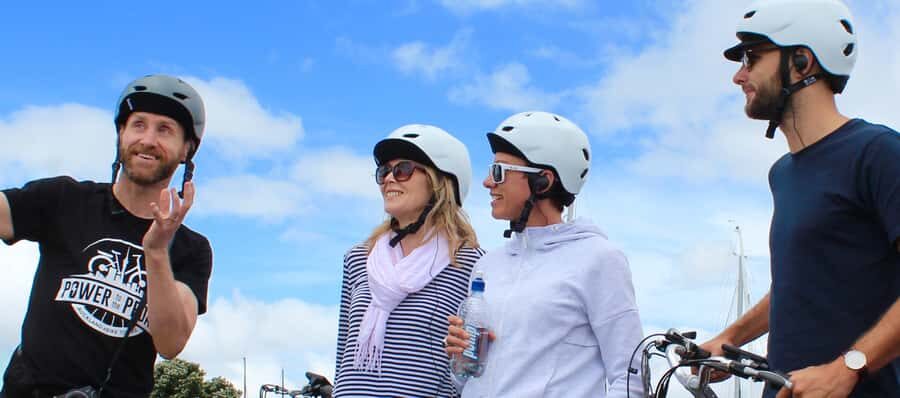
- Mt Eden summit views with effortless motor-assisted climbing and big photo moments
- Te Ara i Whiti / Lightpath (the Pink Path) for fast, fun city-photo energy
- Headset commentary and safety cues so you get context without losing rhythm
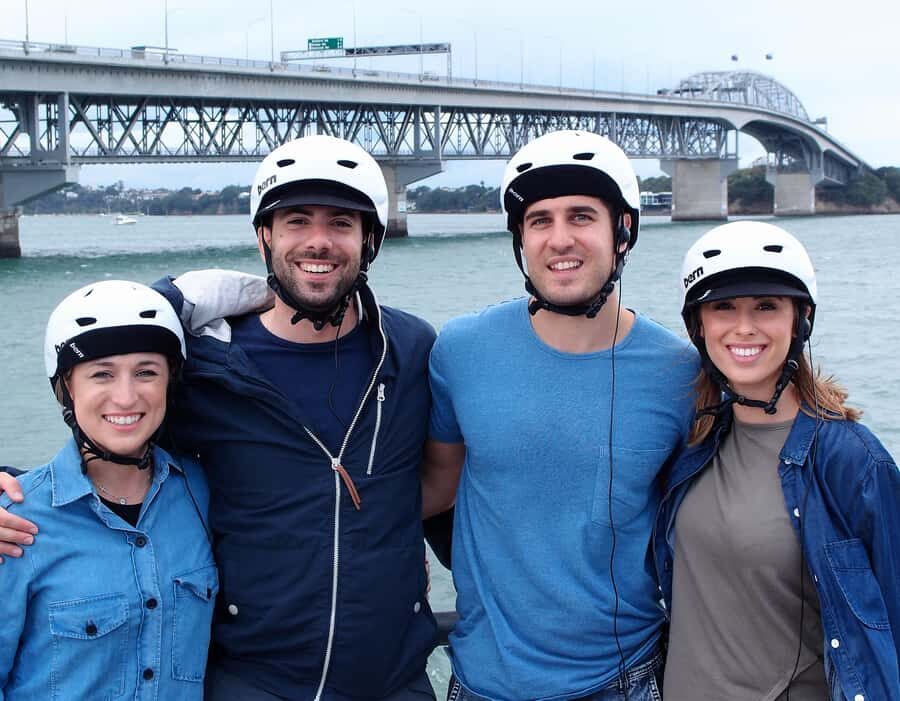
- Westhaven + Harbor Bridge proximity from a scenic route that feels very close-up
- A small group (max 6 riders) that keeps the experience personal and controlled
Princes Wharf setup: where the tour really starts
The whole experience hinges on a smooth start. The meeting point is on Princes Wharf, at Unit 8/145 Quay Street. It’s right where cruise ships and lots of hotels cluster, which matters because you want to arrive calm, not sprinting to a bike pickup.
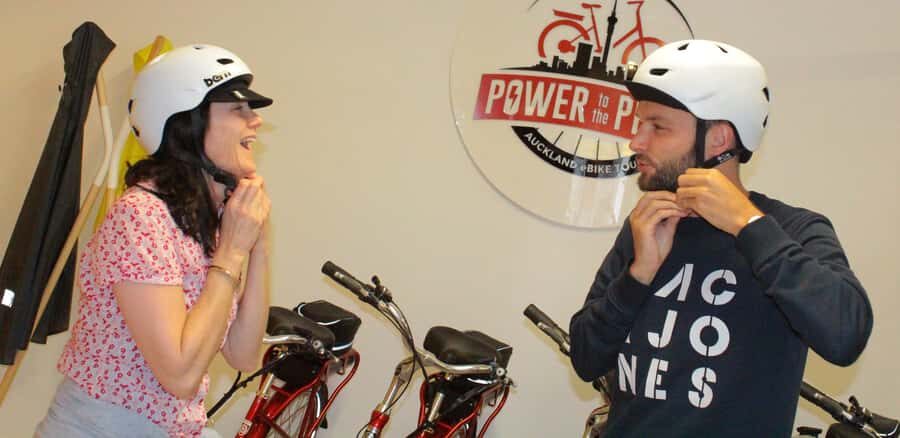
Once you’re there, you get kitted up: a helmet, plus a cycle-specific headset designed so you can listen to the guide as you ride. You also get a short orientation and a nearby practice ride. I like this part a lot because Auckland can be hilly, and e-bikes make that easier—but you still need to feel in control of braking, starting, and how the bike responds when you add pedal assist.
They also hand you a small bag mounted on the bike for your phone or camera. That’s a small detail, but it’s the difference between enjoying the ride and constantly holding something awkward while you wait for a sightline.
In the same way that a good walking tour uses your feet sparingly, this tour uses your energy sparingly. The motor handles the steep parts so your brain can focus on the streetscape, the view, and the guide’s story.
You can also read our reviews of more cycling tours in Auckland
From Wynyard Quarter to Westhaven: Auckland’s harbor hits fast
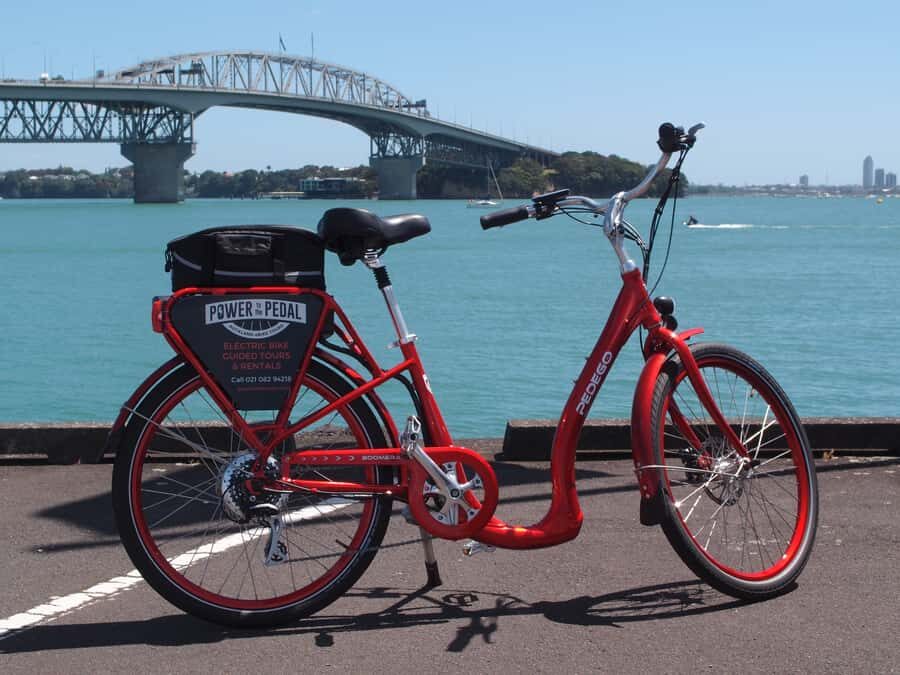
After the practice area, you head out from the city center and into Wynyard Quarter, one of Auckland’s newer waterfront developments. It’s a good warm-up because it’s not the steepest terrain, and you’re still in “getting your bearings” mode.
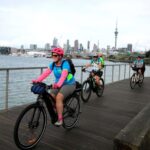
Next up is the Silo Park area, and then you slide toward Westhaven and the Harbor Bridge. This is where the ride stops feeling like just transportation and starts feeling like sightseeing on purpose. You get boardwalk-style scenery and a view that’s very hard to replicate from inside a car.
Westhaven is highlighted as the largest marina in the Southern Hemisphere, and you can feel why they call it out once you’re riding near it. It’s wide, active, and visually busy in a good way—boats, water, and bridge angles all working together.
And then there’s the Harbor Bridge itself. When you’re on a bike path near it, you’re not just seeing it from a distance; you’re getting that “close enough to hear the scale” feeling. If you’re the type who likes iconic sights but also wants to feel the city instead of only looking at it, this section delivers.
Freemans Bay and Victoria Park: neighborhoods with personality
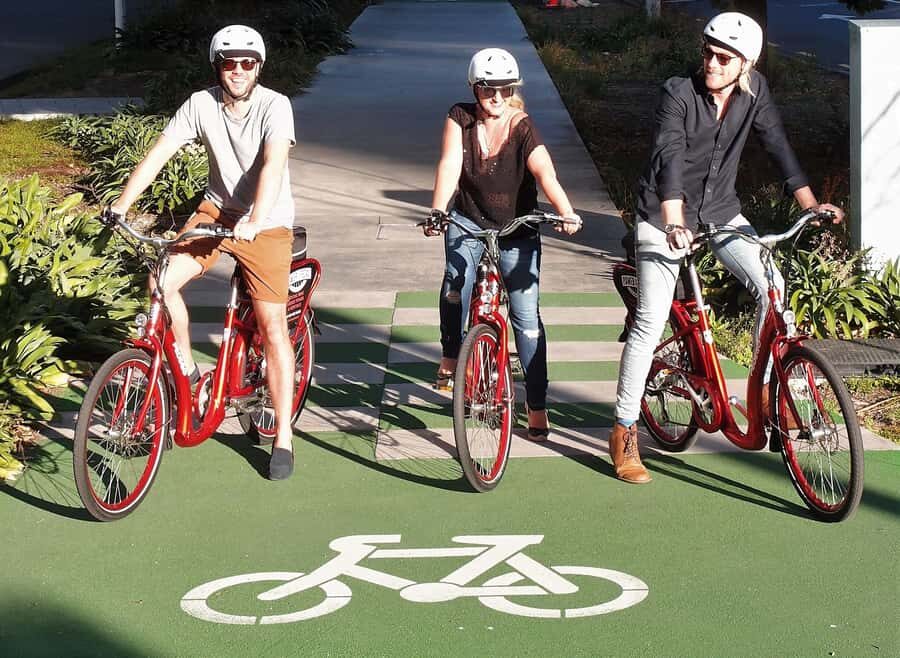
As you continue through Freemans Bay and Victoria Park, the vibe shifts from pure waterfront wow-factor to “okay, this is Auckland living in real time.” These stops matter because Auckland isn’t one thing. It’s a collection of coastal pockets, hills, and everyday street life.
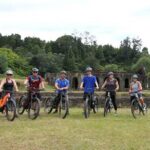
You’re still moving on cycleways where possible, which helps you keep your stamina for the fun stuff later. The pace is designed for a mixed group, too—there are frequent stops for photos and for listening to the guide, so you’re not just grinding for 3 hours straight.
This is also the point where the guide’s role becomes clear. Local guides in small groups don’t just point at buildings. They explain how the neighborhoods got shaped, what locals care about, and how the city’s relationship with water and land shows up in the streets.
From the reviews, names like Carson and Eddie show up again and again as guides who keep the storytelling tight, clear, and not rushed. In a tour like this, that matters because you’re relying on them to connect the dots while you’re moving.
The Pink Path (Te Ara i Whiti / Lightpath): a photo stop that isn’t a gimmick
One of the best stretches on the route is Te Ara i Whiti / the Lightpath, described as an award-winning cycleway and famously pink. Yes, it’s fun that it’s pink, but the deeper value is how it fits the ride.
This section gives you:
- a smooth, cycle-friendly path
- a moment that’s made for stopping and shooting photos
- an easy way to see Auckland’s design choices in motion
It’s not just a color-trick. Cycleways like this are part of why Auckland can work as a biking city. They reduce stress, keep the group together, and let you enjoy the ride instead of constantly negotiating crossings.
If you care about logistics, the Pink Path also acts like a “breather” before the hillier climax. You’re building momentum without wearing yourself out too early.
Mt Eden / Maungawhau: the summit moment you paid for
Now the big one: Mount Eden / Maungawhau, the highest volcanic cone in Auckland’s area. This is the reason many people sign up, and it’s also the reason the e-bike format is so smart here.
You cruise up with the motor doing the hard work. That changes the emotional math. On a regular bike (or a walk), Mt Eden can feel like a workout. On an e-bike, it becomes a viewpoint mission: you arrive with time and attention for the view, not just exhausted relief that you made it.
At the summit, you get spectacular 360-degree views, and the guide explains the volcanic story and Auckland’s early years. The altitude and open sky do a lot for you. You start to see how the city is built on volcanic terrain and why hills shape everything from neighborhoods to movement.
Then you head back down. Descents matter on e-bike tours because it’s when you can actually relax your legs and focus on the surroundings again. You’re not stuck in a sweaty limbo; you transition from “wow summit” to “let’s keep exploring.”
One review note to take seriously: one guest reported that they did not reach Mt Eden because the group waited for late arrivals. That’s a good reminder that this tour runs on a route plan. If Mt Eden is your top priority, arrive early, listen carefully in the lead-up, and don’t let lateness become everyone else’s tradeoff.
A few more Auckland tours and experiences worth a look
Auckland Domain and Museum views: when the city opens up again
After the summit, the tour drops toward sea level and takes you through the Domain, one of the largest parks in Auckland. This is a welcome change of pace: you’re trading steep gradients for space and breathing room, and you’re still in viewpoint territory.
The route includes views from Auckland Museum, which matters because it gives you a sense of Auckland’s layout from a different angle than the harbor and the volcano did. If the waterfront showed you the city’s relationship with shipping, boats, and open water, the Domain and museum area shows you the inland structure—green space, institutions, and the way the city holds hills around its core.
This section also tends to feel like the tour’s “second act.” You’ve gotten the iconic big climb, now you’re being guided back into broader context.
Waterfront cycleways back to the Viaduct: old wharves, new angles
On the return ride, you shift onto Auckland’s waterfront cycleways. That’s where the earlier effort pays off. You get to enjoy the ride without the climb being the headline again.
The guide points out historic wharves and talks about Auckland’s relationship with the sea over the years. This is the kind of storytelling I like on bike tours: it gives meaning to what you’re physically passing. You’re not learning facts in a vacuum. You’re watching the city’s maritime logic play out block by block.
As you head toward the center, you pass through the Viaduct area. Here, the guide can recommend dining spots for the rest of your visit—helpful if you want to go from “tour mood” to “food plan” without researching for hours.
You finish back near where you started on Princes Wharf. It’s satisfying because you don’t feel like you got dropped miles away. You end where your day likely already anchored.
What this costs ($107) and why it can be good value
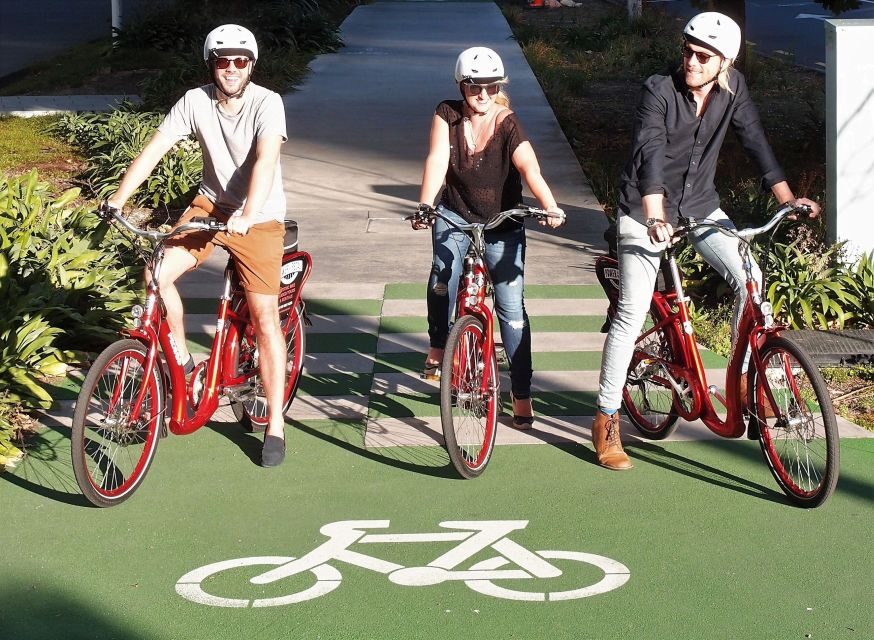
At $107 per person for 210 minutes, this isn’t a budget activity. But it also isn’t paying for just bikes. You’re paying for:
- an experienced local guide
- use of an electric bike (not a standard rental)
- helmet + cycle-specific headset for continuous commentary
- a small storage setup on the bike
- souvenir photos
- local taxes
For me, the value question is simple: how much would it cost you to replicate this with a rental bike plus someone who knows the right route and can explain what you’re seeing?
The e-bike angle is also a big deal. You can do Auckland’s hills without planning a cardio day. That’s why this tour fits so many different fitness levels, and why it’s a smart “first major activity” when you’re still learning the city.
Small group size—no more than 6 riders and your guide—is another value driver. It keeps instruction clear, helps with safety at crossings, and means the guide can adjust when someone is struggling.
Safety, gear, and what to bring (so you enjoy it, not survive it)
This is a cycling tour with hills and city connections, so the safety setup is part of the experience.
You’re required to wear:
- closed-toe shoes
- a helmet (provided)
Unaccompanied minors aren’t allowed, and the minimum age is 14. Height minimum is 152 cm, and there’s a weight limit listed at 113 kg.
A few practical tips you’ll appreciate:
- Bring your own water bottle. There’s a water fountain near the meeting point for refills.
- Sunscreen is recommended all year round.
- Sports gear isn’t necessary, but you should dress for weather. They also provide a rain jacket if needed.
One review mentioned gloves being provided for colder conditions, which suggests they think about comfort beyond just the helmet. Still, don’t assume winter gear is automatic—bring layers if you run cold.
Also note: the tour uses cycleways as much as possible, but to reach the best places you’ll ride some city streets. One guest even mentioned adjusting to the left-side cycling context, so if you’re new to that, give yourself a mental buffer and stay focused when the guide leads the group.
Who should book this Auckland e-bike tour
This is a great fit if you:
- want a high-value city overview in half a day
- like cycling but don’t want hills to dominate the day
- want local context from a guide without stopping constantly
- enjoy photo moments like Mt Eden and the Pink Path
It’s less ideal if you:
- can’t meet the age/height/shoe requirements
- hate the idea of riding any city streets at all
- aren’t comfortable on an e-bike and would panic with basic street adjustments
And if your top goal is Mt Eden, show up early. One late arrival scenario affected whether they reached the summit for that group, and that’s your cue that timing matters here.
Should you book the Classic: Discover Amazing Auckland on an Electric Bike?
I’d book it if you want the fastest way to understand Auckland’s geography—volcano views up high, harbor views up close, and neighborhoods in between—while keeping your legs fresh enough for the rest of your trip. The headset setup, small group size, and motor-assisted climbing make it a rare combo: active, but not punishing.
If you’re arriving in Auckland and want a plan for the next day or two, do this early. You’ll come away knowing where things are and what you’ll want to revisit on foot or by car.
If you’re cautious about city-street cycling, arrive with a calm mindset and follow the guide’s instruction. This tour works best when you treat it like a guided ride first, not a “free cycling” day.
FAQ
How long is the electric bike tour?
The tour runs for 210 minutes (about 3.5 hours).
Where do I meet for the tour on Princes Wharf?
You meet at Unit 8/145 Quay Street on Princes Wharf. It’s very close to the cruise ship terminals and many hotels.
How big is the group?
Groups are small, limited to a maximum of 6 riders plus the guide.
What’s included with the tour?
You get an electric bike, an urban cycle helmet, and a cycle-specific headset for commentary while you ride. The guide is included, plus a small bag on the bike, rain jacket if needed, souvenir photos, and local taxes.
Do I need to bring water?
Yes—bring your own water bottle for hydration. There is a water fountain near the meeting point if you need to refill.
Is food included?
Food and drinks are not included unless specified.
Are there age, height, and shoe requirements?
Yes. The minimum age is 14. Minimum rider height is 152 cm. Closed-toe shoes are required, and open-toed shoes are not allowed. A weight limit of 113 kg also applies.