REVIEW · WANAKA
Wanaka: 2-Hour Beginner Waterfall Cable Climb
Book on GetYourGuide →Operated by Wildwire Wanaka · Bookable on GetYourGuide
Twin Falls looks like a movie set, then you climb it. This Wanaka waterfall cable climb turns a working farm waterfall into a beginner via ferrata route with cables, rungs, bridges, and rock steps. I love how it mixes real vertical climbing with big outdoor drama, and I also love the fact that you get a proper practice run so you’re not thrown onto the first rung feeling lost.
What makes it especially appealing is the way the route stays approachable. You’ll scale rock sections (about 1 hour on the beginner route) with guide support, cross suspension bridges over pools, and stop for snacks and panoramic views over farmland and Lake Wanaka. The one real consideration: you should be comfortable with heights and have full body mobility, because the climb involves exposure and movement that goes beyond an easy hike.
If you fit the requirements, this is the kind of activity that gives you a strong sense of achievement fast, without demanding past climbing experience. It’s also good value for what you get: top-notch gear, training, and a route designed for first-timers, not just experienced climbers.
In This Review
- Key points at a glance
- Why Twin Falls feels special for a beginner cable climb
- Meet at the Wildfire gate and get trained like you mean it
- The climb itself: from practice rungs to waterfall bridges
- The views and the snack stop over Lake Wanaka country
- The descent: your legs get a breather, your confidence grows
- Price and value: what $118 buys you in real terms
- Safety culture that matters for heights and nerves
- Who should do this (and who should skip it)
- What to bring and how to prep for a day on metal and rock
- Weather and comfort: the two things you can control
- Should you book the Wanaka waterfall cable climb?
- FAQ
- Where is the meeting point for the Wanaka Twin Falls cable climb?
- How long is the experience?
- Is prior climbing experience required?
- Do I get training before climbing the waterfall?
- How big is the group?
- What’s included in the price?
- What should I bring?
- Are open-toed shoes allowed?
- What are the age and weight requirements?
Key points at a glance
- Twin Falls via ferrata basics first: helmet and harness on, then a safety briefing and practice climb before the real route.
- Small groups mean real help: you’ll climb with no more than 5 people per guide.
- Working-farm waterfall setting: you’re climbing a waterfall trail in a farm environment, with hidden pools and waterfalls along the way.
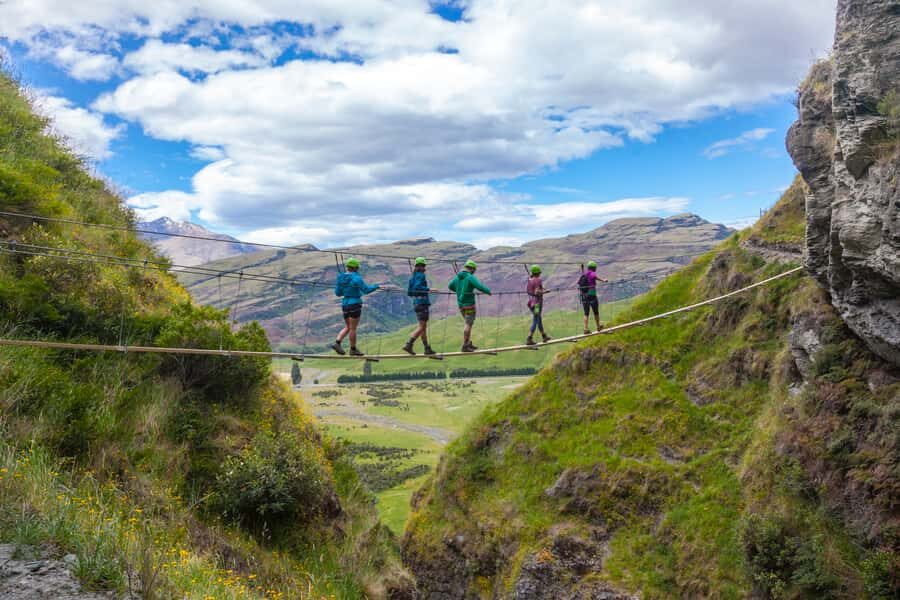
- Suspension bridges on a beginner route: the thrills show up even on level 1.
- Scenery break halfway: snack and drink with panoramic views before you descend.
- Upgrade option on the day: if you feel good at the top, you may be able to continue beyond the beginner section.
Why Twin Falls feels special for a beginner cable climb
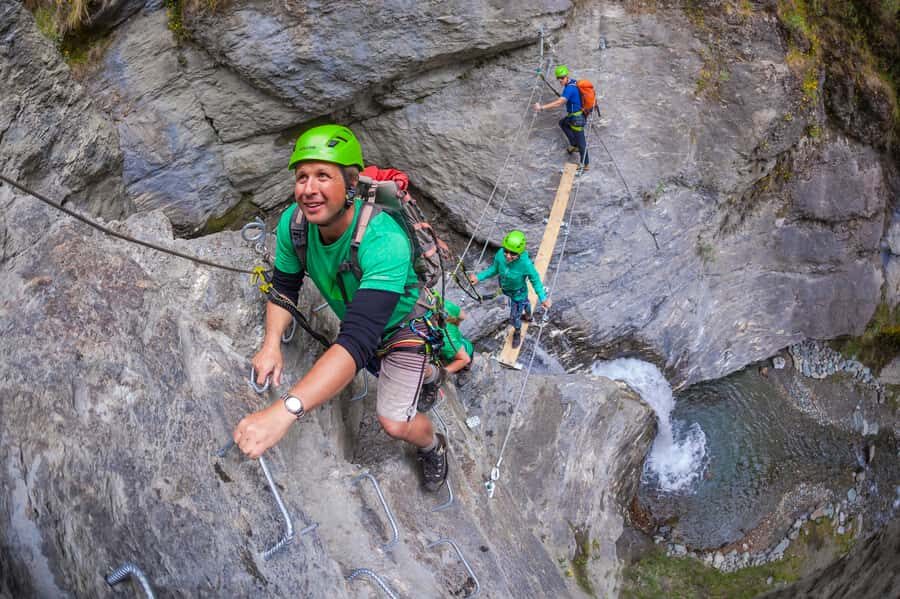
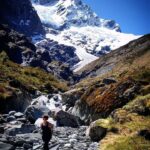
Wanaka has lots of outdoor options, but this one is different because it’s built around a waterfall, not just a viewpoint. Twin Falls is a working farm waterfall setting, so you get that mix of rugged geology plus a lived-in landscape.
What makes the experience click for beginners is the route design. It uses cable, iron rungs, pegs, bridges, and ladders, which means you’re learning a system, not just guessing your way up rock. Once you understand how the equipment works and how to move from one hold to the next, the climb starts to feel logical, not random.
I also like that the views arrive while you’re working for them. You’re not just hiking to a photo spot. You’re crossing suspension bridges over pools, finding little waterfall pockets as you ascend, and then looking out over Lake Wanaka and the surrounding mountain ranges when you finally reach the end.
A few more Wanaka tours and experiences worth a look
Meet at the Wildfire gate and get trained like you mean it
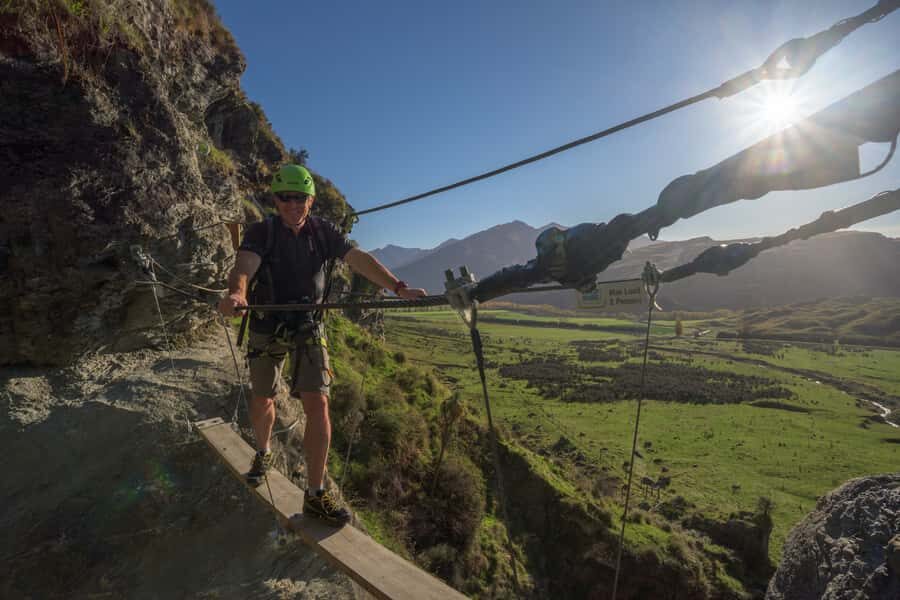
The experience starts at the Wildfire meeting point at Twin Falls Waterfall, about 20 minutes from Wanaka. You’re looking for a locked farm gate with the activity provider’s sign in front of the waterfalls, and that’s where your guide meets you. It’s worth arriving about 15 minutes early, because you’ll want time to check in, get your gear, and settle before the briefing.
You’ll meet your guides, then you’ll put on helmets and a harness and get a full safety briefing. Before you go up the real route, there’s a practice climb so you can try the basic moves in a controlled setting. This matters because via ferrata is less about being strong and more about learning how to trust the system.
Small details here help a lot. Open-toed shoes are a no-go, and you’re expected to wear hiking shoes with grip. And yes, the guides speak English, so you should have no language barrier while learning how to clip in and move safely.
From the guide names I’ve seen associated with this trip, people consistently highlight support and calm coaching. Luke and Maddie are mentioned in particular for taking good care of groups, and Rocky and Chester show up often as reassuring guides for nervous first-timers.
The climb itself: from practice rungs to waterfall bridges
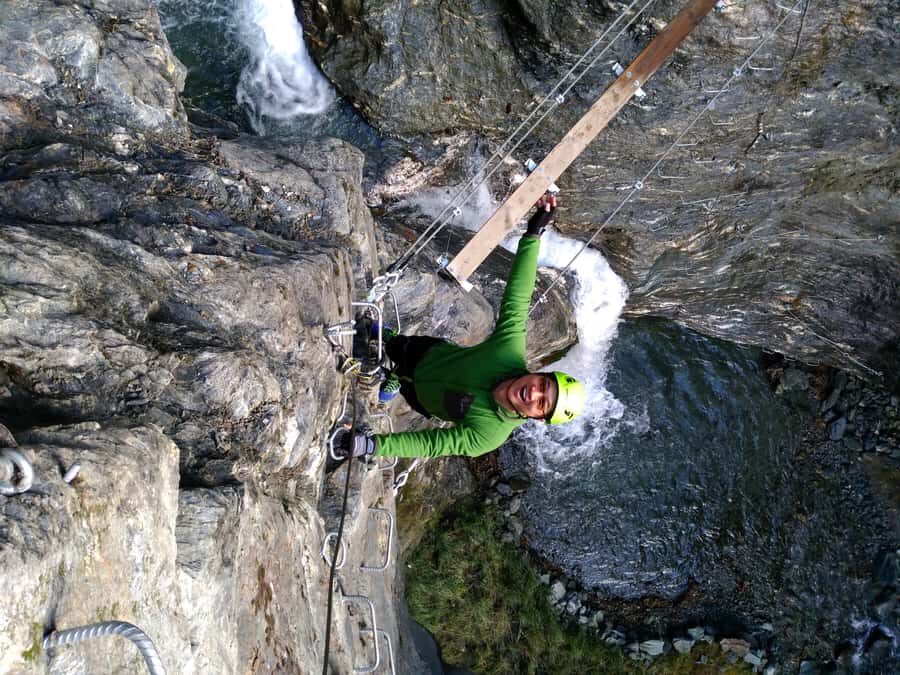
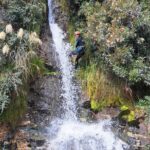
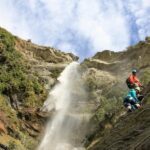
After the short walk to the cliffs, you get into the main event. For the beginner route, plan on roughly 1 hour scaling vertical and horizontal rock sections. It’s not a straight vertical ladder. You’ll move across and up, using rungs and handholds designed for first-timers, plus the occasional engineered element like pegs and ladders.
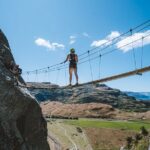
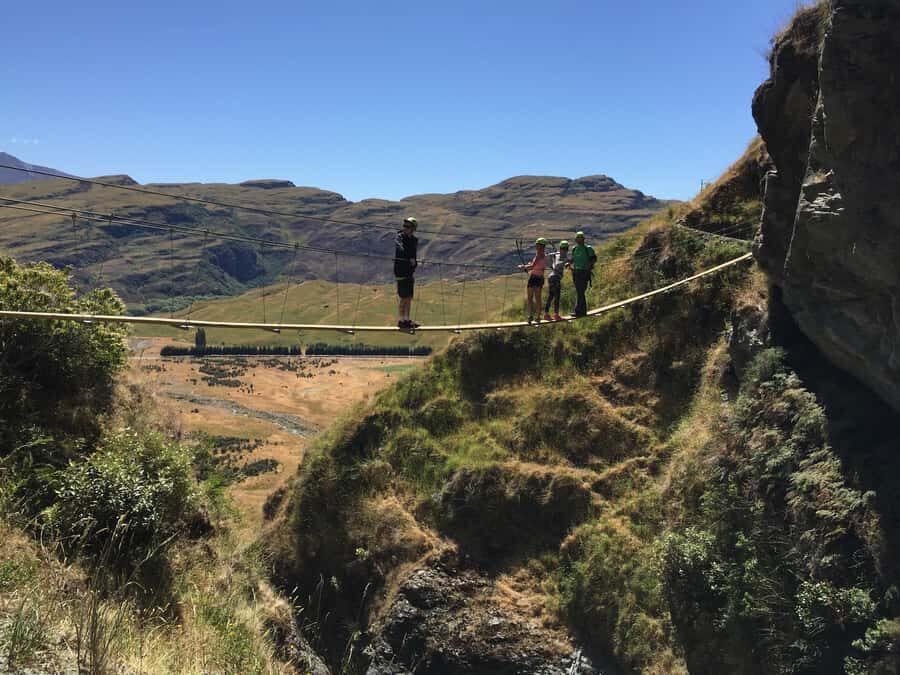
One of the biggest thrills is the suspension bridge work. You cross bridges over pools while the waterfall area is right there in front of you. Even if you’re not a high-adrenaline person, this is the kind of moment that makes the whole day feel worth it, because you feel the exposure and you see the water below.
Along the way, the route is built to show you hidden pieces of the waterfall system. Expect hidden waterfalls and beautiful pools as you ascend. This is one of those “you can’t get this view from the path” activities, because the route passes through spots the average viewpoint doesn’t reach.
And since this is a via ferrata-style climb, your guide stays close. The group format is small: no more than 5 people per guide. That low ratio is exactly what helps beginners feel steady, especially if you’re still figuring out what you’re supposed to do with your hands and feet.
The views and the snack stop over Lake Wanaka country
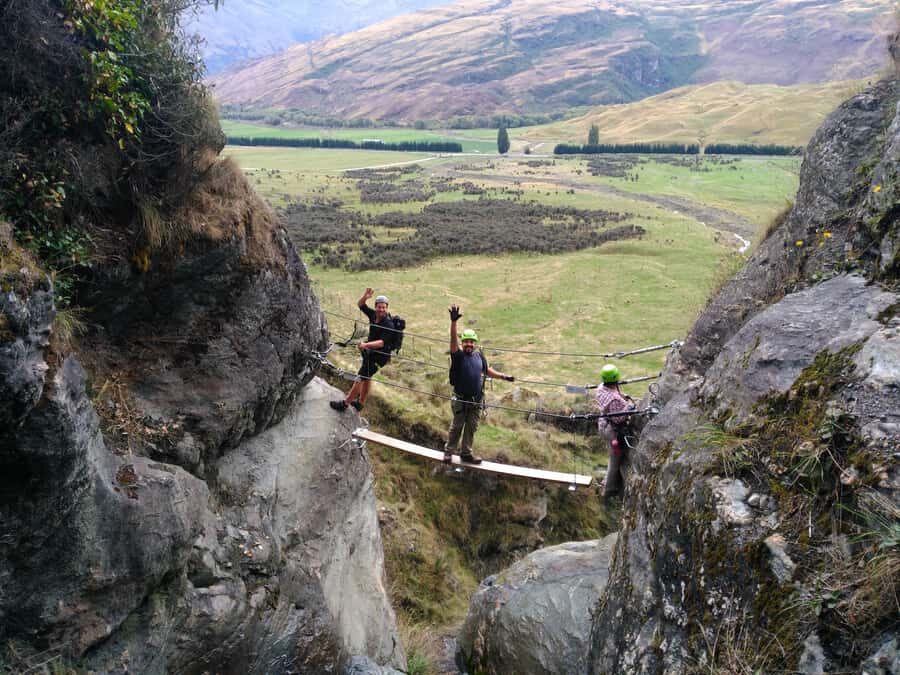
At the end of the trail, there’s a small snack and drink break. This isn’t just a pause to recover. It’s timed so you get panoramic views while you still have the energy to appreciate them.
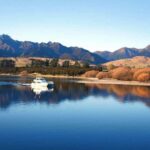
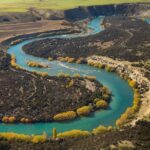
From this spot, you’ll be looking over farmland, mountains, and Lake Wanaka. It’s the payoff moment where the climb stops feeling like a workout and starts feeling like a story you get to tell. People who start nervous tend to become very proud here, because you’ve actually earned those views.
This is also where you can assess whether you want more. Some groups have the opportunity to continue with a second level if time permits. If you loved the experience but want more vertical excitement, this is the moment to listen to your guide and decide while you’re still at the top.
The descent: your legs get a breather, your confidence grows
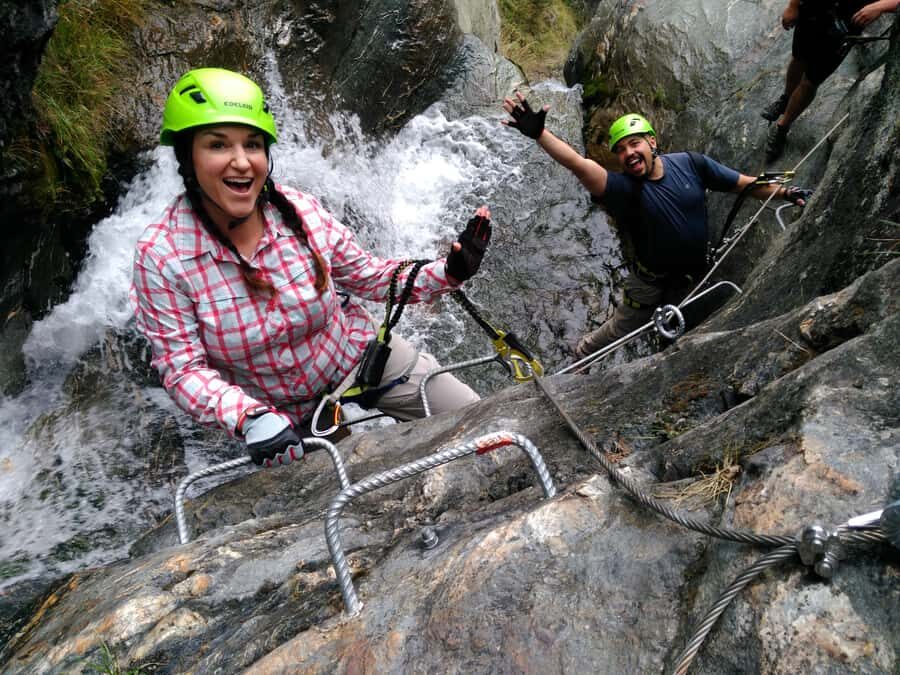
Once your climb portion is done, you start a descent back down the mountain to the base of the waterfall. The beginner route includes a 15-minute descent, which is usually just long enough to reset your body without turning the day into a long trek.
This matters for first-timers because the total time on the go is still manageable. The tour runs about 3 hours total, which usually means you get real action without eating your whole day.
If you were wondering whether the activity is more fear than fun: the descent tends to shift the feeling. You’ve already handled the hard part, and now you’re moving down with a different mindset, even if you’re still thinking about the bridge crossing.

Price and value: what $118 buys you in real terms
The price is $118 per person, and what you’re paying for is not just access to a waterfall. You’re paying for training, gear, and a guided route that’s built for beginners.
Here’s what that translates to on the ground:
- Expert guide coaching, so you’re learning the system (not guessing).
- Safety equipment and a safety briefing, including helmets and harnesses.
- A practice climb before the main route, which reduces stress and improves confidence.
- Small snacks and water during the experience.
What you need to cover yourself is the stuff that’s personal: bring a daypack, weather-appropriate clothing, and your own hiking shoes. Also, they note that a water bottle isn’t included, so bring one even though water is provided.
For me, the value angle is this: you get a high-impact outdoors moment with engineering-grade safety support. If you tried to replicate it alone, you’d lose the training and you’d gain the risk. For a beginner, that difference is the whole point.
Safety culture that matters for heights and nerves
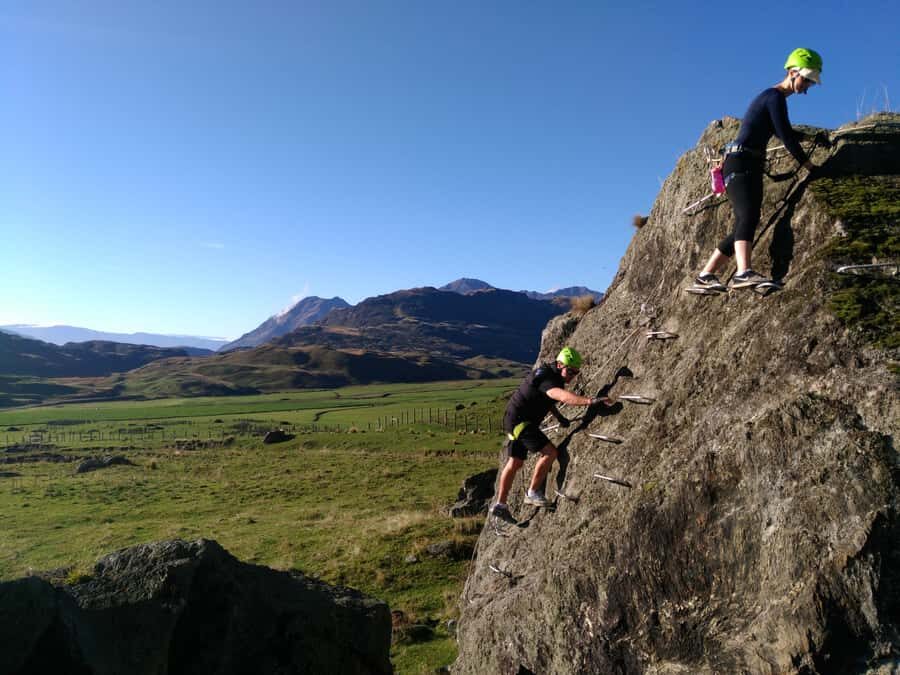
A cable climb sounds intense, but the safety structure is clear: you get equipment, training, and a short practice run so you know how to move before you commit. Your guide’s job isn’t just to lead. It’s to help you stay calm and confident while you’re on the rungs, near bridges, and scaling up.
The other big safety factor is the pace and the group structure. With no more than 5 people per guide, you’re not one face in a big line. You’ll get support when you need it, and guides can spot hesitation early and coach you through it.
If you’re anxious about heights, you’ll still want to take it seriously. The climb involves suspension bridges and exposed movement, so it’s not the right activity if heights reliably shut you down. But if you can handle the idea of heights with support, guides often help people get from shaky to steady quickly.
A recurring theme from guide experiences in the field is reassurance and patience. People mention guides like Rocky, Tristan, Jasper, Connor, and Liam for being supportive, explaining equipment clearly, and keeping the mood calm while still running a real adventure.
Who should do this (and who should skip it)
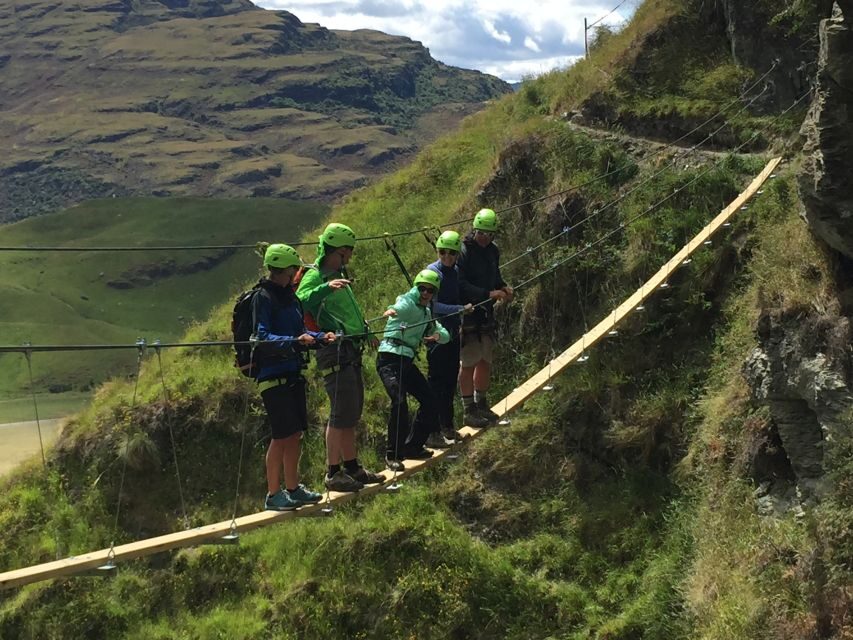
This is designed for beginners, and you don’t need previous climbing experience. If you can hike and you have the ability to move your full body, you’ll likely do well. The route also includes a lot of “learning while doing,” so first-timers tend to get a faster confidence boost than they expect.
That said, it’s not for everyone. The experience requires full body mobility and a moderate fitness level because it combines hiking, rock climbing, and walking. It’s also not suitable for people with mobility impairments.
The minimums and maximums are specific:
- Minimum age: 10 years
- Minimum weight: 40 kg (88 lbs)
- Maximum weight: 120 kg (264 lbs)
- Minimum height requirement: 120 cm (3 ft 9 in)
So if you’re above those thresholds but still worried, use your instincts. If you’re good with ladders, bridges, and controlled climbing, you’re probably a match.
What to bring and how to prep for a day on metal and rock
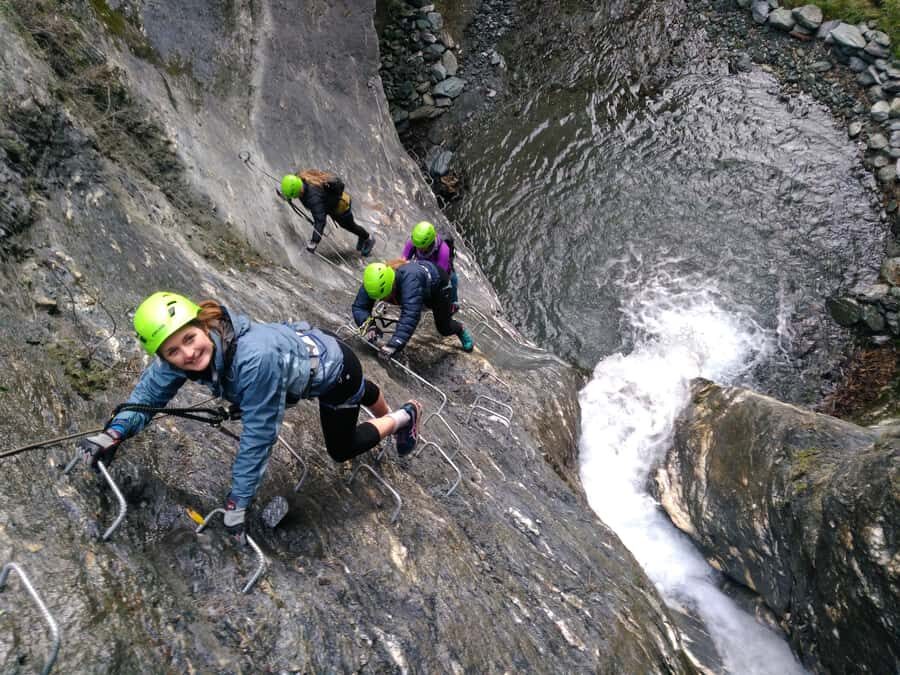
What you bring affects how smooth the climb feels. The essentials:
- Water (and your own water bottle since it’s not included)
- Weather-appropriate clothing
- A daypack
- Hiking shoes with good grip
Not allowed: open-toed shoes. That’s non-negotiable for obvious reasons around safety and protection.
Also, bring a camera at your own risk. If you have a GoPro, you’re recommended to attach it to your person, or ask a guide for a helmet with a slide attachment. That’s a small detail that can save you time and frustration if you want photos without juggling gear while climbing.
Finally, think about mobility in advance. This is not a seated activity. You’ll be using your arms and legs, clipping in, and moving through metal-and-rock steps. If you’re stiff in the hips or ankles, a quick warm-up before meeting your guide can help you feel less awkward once you’re on the route.
Weather and comfort: the two things you can control
The only weather advice you need from the essentials list is weather-appropriate clothing. That’s practical because waterfall areas can mean damp air and slick surfaces at times. Even when conditions are fine, metal rungs and wet rock can feel different than dry ones.
The comfort factor is your own comfort with heights. This is one of those activities where the fear may shrink once you start, but it doesn’t magically disappear. If you know you freeze at suspension bridges, don’t force it. If you’re nervous but willing, you’ll probably benefit from the training and the small-group support.
Should you book the Wanaka waterfall cable climb?
Book it if you want a beginner-friendly via ferrata that feels like an adventure, not a lesson you walk through. If you like waterfalls, bridges, and earning views over Lake Wanaka farmland, this delivers. It’s also a great fit if you’re nervous but you can follow instructions and you have full body mobility.
Skip it if heights are a dealbreaker, if you fall outside the age/weight requirements, or if mobility limitations make ladder-and-bridge movement unrealistic for you. And if you hate being cold or wet on outdoor activities, plan your clothing carefully.
Bottom line: for most first-timers who meet the requirements, this is one of the most memorable ways to experience Wanaka’s dramatic scenery while building real confidence on the rocks.
FAQ
Where is the meeting point for the Wanaka Twin Falls cable climb?
You’ll meet at the Wildfire meeting point at Twin Falls Waterfall. Look for a locked farm gate with the activity provider’s sign, in front of the waterfalls.
How long is the experience?
The total duration is about 3 hours.
Is prior climbing experience required?
No. The experience is described as beginner-friendly, and your expert guides will assist you with the equipment and climbing moves.
Do I get training before climbing the waterfall?
Yes. You start with a safety briefing and a short introduction plus a practice climb so you can master the basics before the main beginner route.
How big is the group?
The experience runs with small groups of no more than 5 people per guide.
What’s included in the price?
Included items are expert guidance, a climbing safety equipment setup with briefing, small snacks and water, and the introductory training climb.
What should I bring?
Bring water, weather-appropriate clothing, a daypack, and hiking shoes. You should also plan to have full body mobility for the climb.
Are open-toed shoes allowed?
No. Open-toed shoes are listed as not allowed, and you should wear hiking shoes.
What are the age and weight requirements?
The minimum age is 10 years, and the minimum weight is 40 kg. The experience also lists a maximum weight of 120 kg.