REVIEW · WANAKA
Wanaka: Water Taxi & Mou Waho Island Tour
Book on GetYourGuide →Operated by Wanaka Water Taxi & 4x4 Explorer · Bookable on GetYourGuide
Russian-doll lakes beat most island trips. I like the water taxi cruise on Lake Wanaka with history stops, and I love having the option to swim at the island’s lake beach; my only heads-up is the climb to the hidden lake is steep and rocky in places. You get guided storytelling on the way out, then 1.5 hours to explore Mou Waho at your own pace, with a special chance to meet cheeky weka in a predator-free reserve.
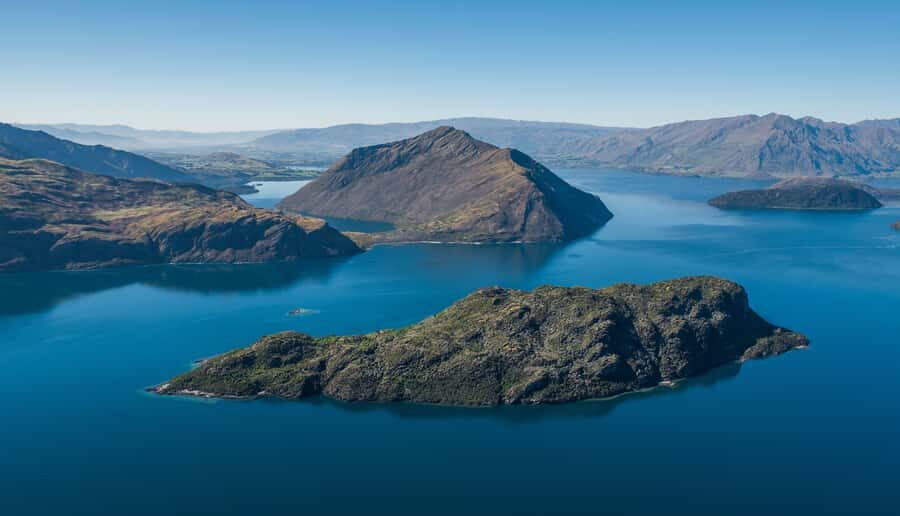
Mou Waho is the most remote and one of the prettiest Lake Wanaka islands, and the best part is that you’re not stuck on a tight schedule on land. Names like Hannah, James, Brent, and Crystal show up as guides and skippers, and the consistent theme is clear directions plus friendly, practical info as conditions change.
In This Review
- Key things that make this tour worth your time
- Water taxi to Mou Waho: the cruise part you’ll actually enjoy
- The 1.5-hour on-island window: freedom with a time box
- The steep rocky climb to the hidden lake (and why it’s worth it)
- Tyrwhitt Peak: the viewpoint that turns the whole island into one view
- Predator-free bird life and Weka behavior you can’t plan
- Beach time and the Lake Wanaka swim: bring swimwear, even if you think you won’t
- Who this tour suits best (and who should reconsider)
- Price and value: what $83 buys you in 3 hours
- When to go for fewer people and better conditions
- Should you book the Wanaka Water Taxi & Mou Waho Island Tour?
- FAQ
- How long is the Mou Waho Island tour?
- Where do I meet for the water taxi?
- What should I bring?
- Is the hike to the hidden lake difficult?
- Do I have to hike the whole time to join the tour?
- What wildlife can I expect to see on the island?
Key things that make this tour worth your time
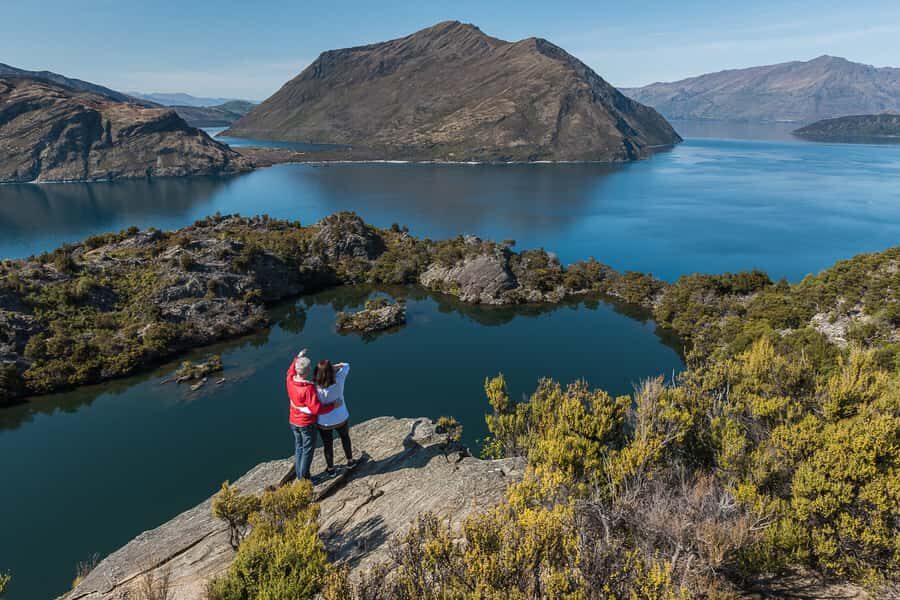
- The island-within-a-lake-within-an-island-within-a-lake concept is the whole point, and it’s not just a slogan
- 1.5 hours on Mou Waho means you can choose your pace instead of rushing through photo stops
- Weka encounters can be real up-close moments in a predator-free setting
- Tyrwhitt Peak viewpoints fit into a short hike plan: about 20 minutes to the hidden lake, then roughly 5 more minutes to the top
- A sheltered beach swim is built into the experience, so bring swimwear
- Walking poles are included, which helps on the steep rocky stretches
Water taxi to Mou Waho: the cruise part you’ll actually enjoy
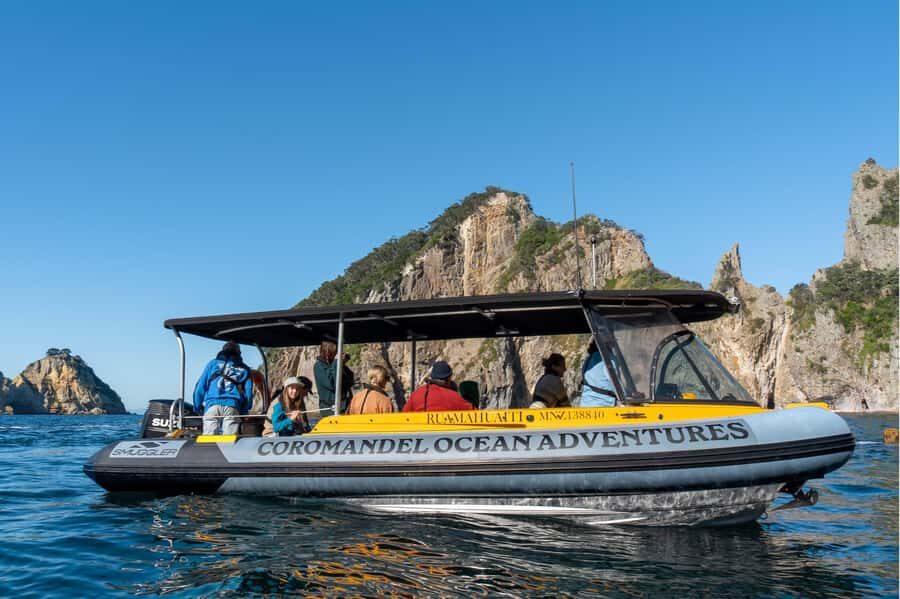
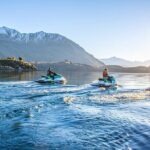
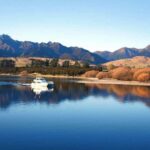
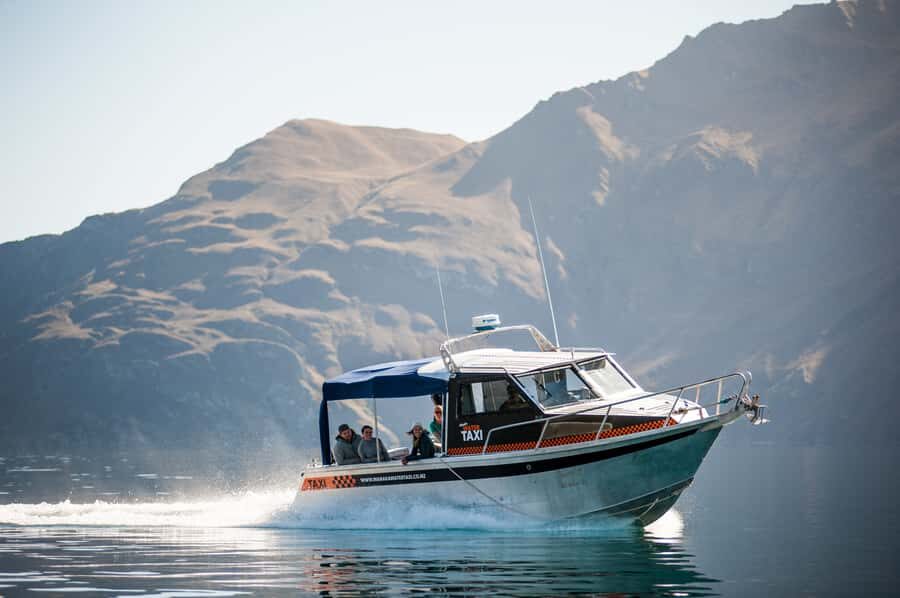
This tour starts at Wanaka Marina on Lakeside Rd, at the bigger jetty across from the toilet block. You’ll board a comfortable water taxi and head across Lake Wanaka while your guide provides commentary and makes a couple of stops along the way.
Why I think the boat ride matters: it sets the mood. You get context for what you’re looking at—geology and local history—before you ever lace up for the trail. Several skippers are described as warm, hands-on, and good at adjusting the route if the water gets choppy, which helps if you’re not thrilled by rough starts.
Expect the vibe to be small and personal. One review specifically called out that the boat is small with a small number of people, which usually means easier conversation and quicker fixes if someone needs help.
You can also read our reviews of more tours and experiences in Wanaka.
The 1.5-hour on-island window: freedom with a time box
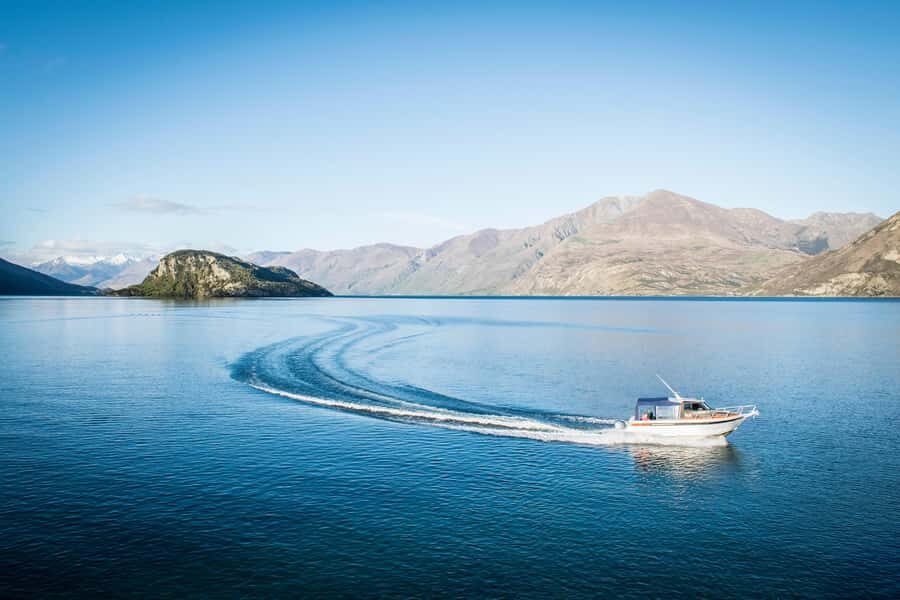
Once you land on Mou Waho, you’re given 1.5 hours to enjoy the island on your own terms. This is a sweet spot for me because it’s long enough to do the main climbs, plus time to wander back toward the beach area without feeling behind.
The tour is designed around that time. You hike about 20 minutes to the hidden lake, then walk around 5 minutes from there to Tyrwhitt Peak, the highest point on the island. After you come back down (at your pace), you can spend the rest of your island time bird-watching, taking in views, and relaxing before the return taxi.
If you’re the type who likes options, this setup works well. You can prioritize the lake and lookout, or you can slow down and focus on wildlife and the beach. Either way, you still get a real experience of Mou Waho rather than just a quick turnaround.
The steep rocky climb to the hidden lake (and why it’s worth it)
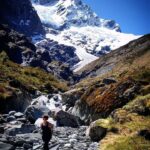
Here’s the main physical part: the walk up to the hidden lake and view point is steep and rocky in places, but it isn’t long. There are benches along the way so you can rest if you need a breather.
Also: this isn’t a long endurance hike, it’s a short climb with uneven footing. That’s why the included walking poles are a smart add. If you’ve ever regretted not bringing traction or something to steady yourself on rocks, you’ll appreciate having poles here.
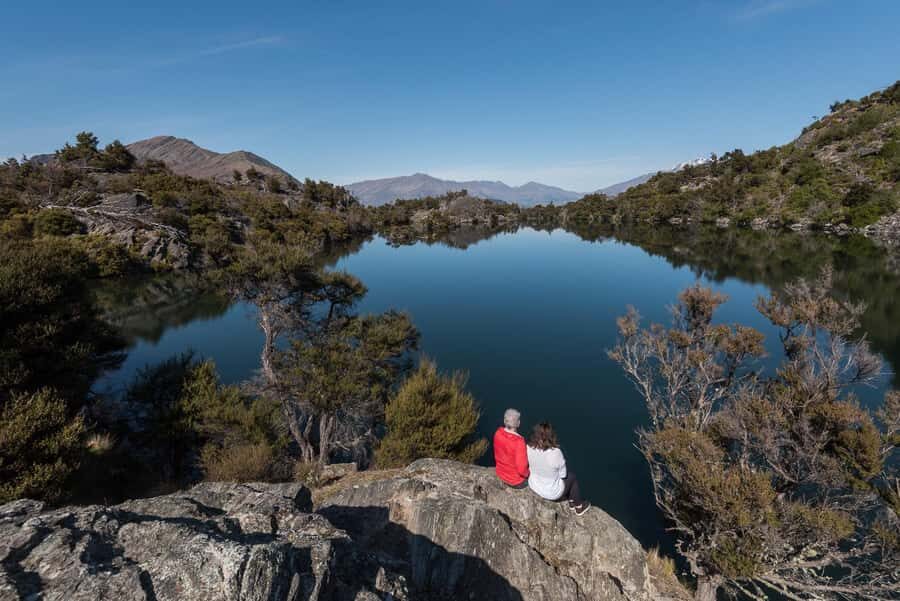
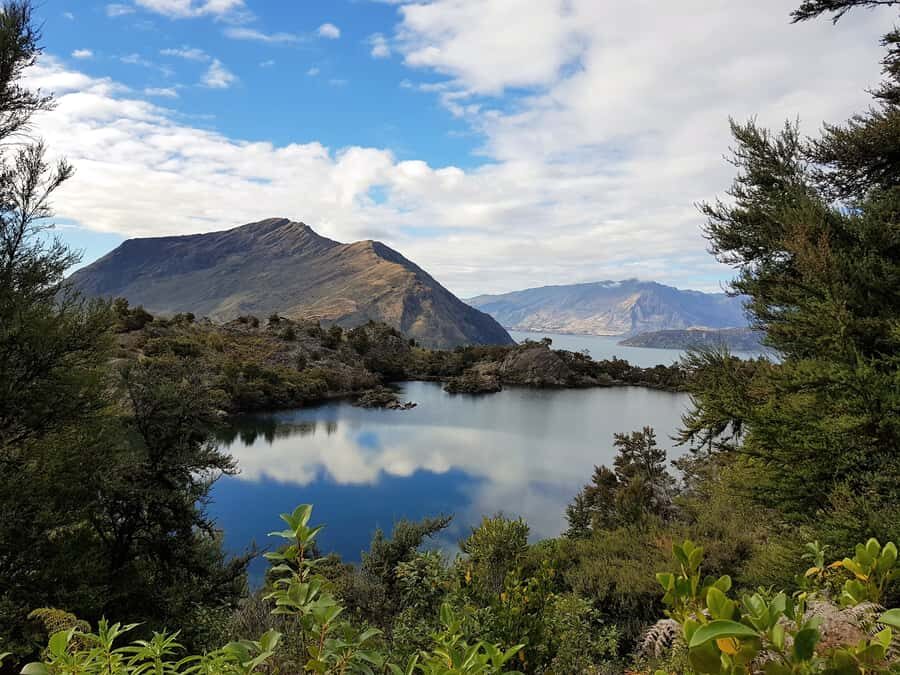
Your payoff is what the tour is selling: a secluded lake created by glacial action thousands of years ago, and a lake that contains its own island. From that hidden-lake spot, you then have a brief walk to Tyrwhitt Peak, where you get a panorama over the surrounding lakes and jagged peaks.
Practical tip: if you want the least-stress experience, aim for a day with decent weather and plan your pace from the start. Steep rocky sections feel harder when you rush early.
Tyrwhitt Peak: the viewpoint that turns the whole island into one view
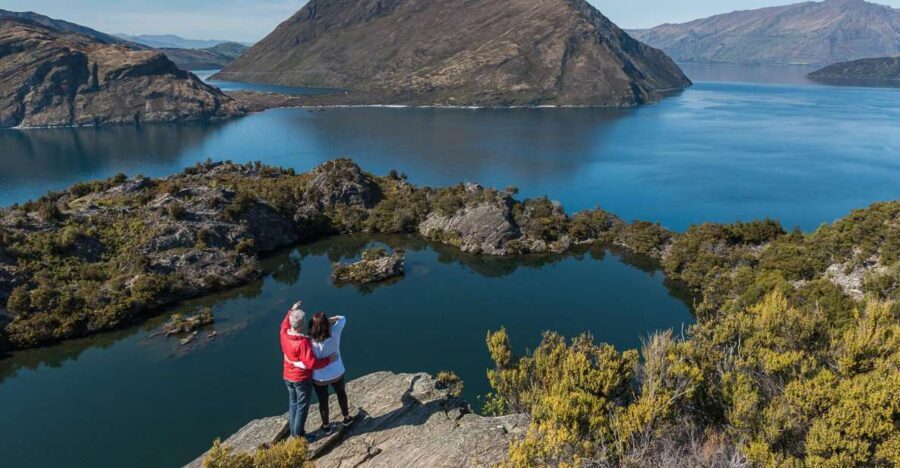
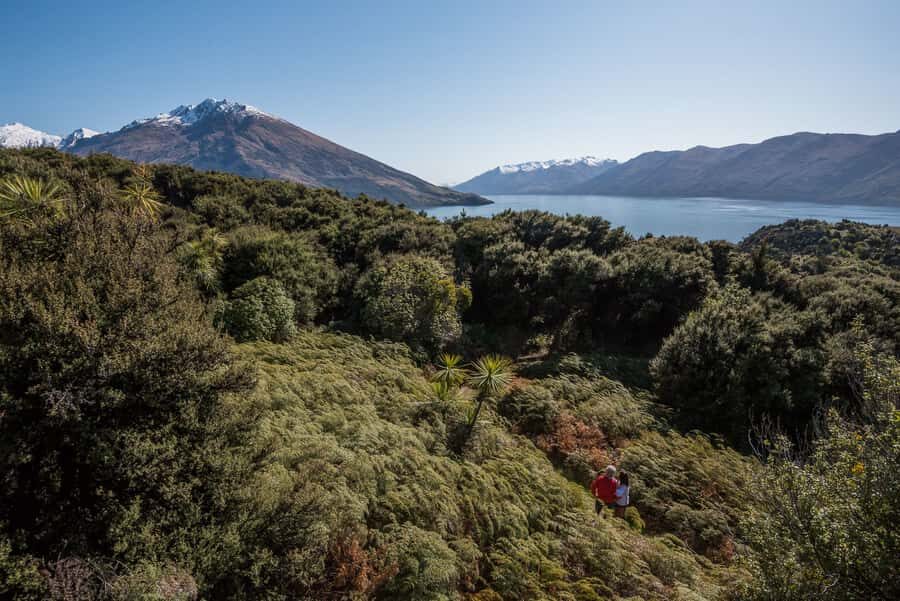
Tyrwhitt Peak is the island’s highest point, reached after your hidden-lake section. The walk from the hidden lake to the peak is only about 5 minutes, so you’re not stuck in a long uphill grind at the end.
What you’re really buying here is the switch from close-up discovery (the hidden lake) to wide-angle appreciation (the summit views). From the top, you can take in the network of lakes and surrounding rugged terrain—exactly the kind of view that makes you understand why Mou Waho is considered remote and beautiful compared with more accessible islands.
This is also where the “time on your own” becomes useful. If you like lingering—quiet photos, a slower look around, a moment just to breathe—you can do it without feeling like you’re holding up a big group.
Predator-free bird life and Weka behavior you can’t plan
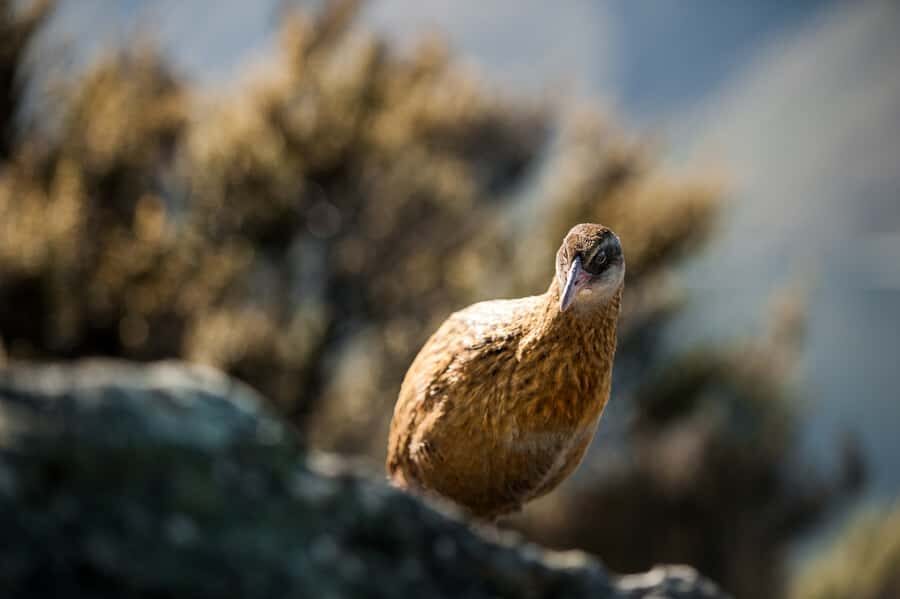
Mou Waho is a predator-free nature reserve, and that’s why the bird life feels so different from many other spots in New Zealand. The tour route and timing are built around those sightings, and your guide helps you notice what’s around you.
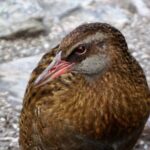
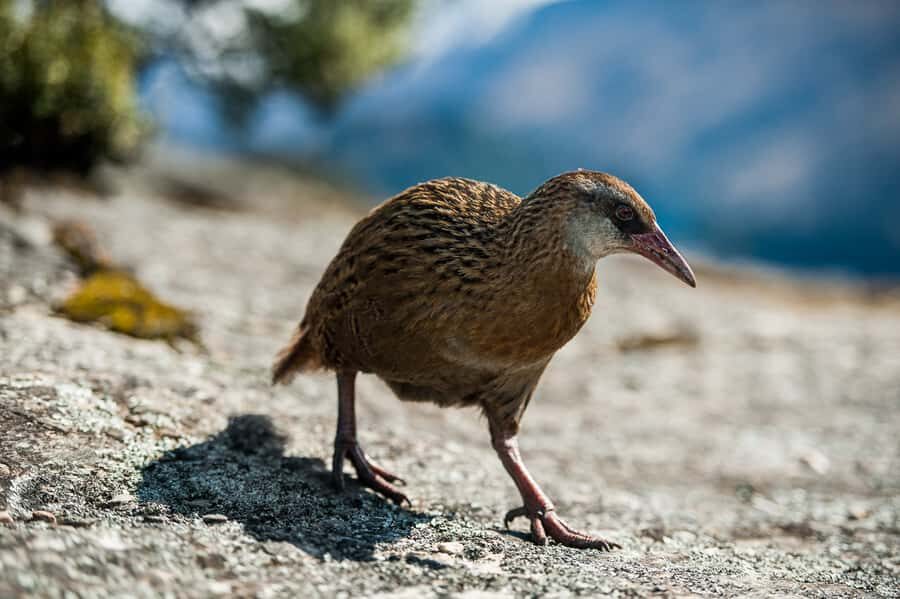
You might see kereru (wood pigeon), korimako (bellbird), tomtit, and—most famously—weka. Weka are rare flightless native birds that disappeared from the mainland and were introduced to these islands as part of a breeding program in 2002.
The best part is not just seeing them; it’s how they act. Weka are described as charismatic and cheeky, and they often show curiosity toward humans. When you spot one, the tour’s approach is straightforward: stop and say hello (and keep your space, so you don’t stress the bird). If you’re a bird lover, you’ll feel like you’ve stepped into a place where the animals don’t treat people like a threat.
One review also called out seeing a Buff Weka, which is a nice reminder that the island can deliver more than just the usual highlights if conditions are good.

Beach time and the Lake Wanaka swim: bring swimwear, even if you think you won’t
After the climbs and bird time, you’ll have a small sheltered beach to relax at. Then comes the classic Mou Waho option: a swim in the waters of Lake Wanaka from the island.
I love that this isn’t optional in a vague way. It’s part of the experience flow: you hike, you rest, and then you cool off. Since multiple people mention the water being cold, go in with the right mindset. You don’t need to force a long swim—just enough to feel the temperature shift and reset after the climb.
What to bring is simple: swimwear. That’s the one explicit item the tour asks you to pack. If you’re planning to spend the rest of your 1.5 hours lounging, you might also want to have a towel ready, but the tour data only guarantees swimwear, so plan on that first.
Who this tour suits best (and who should reconsider)
This trip is great if you want a mix: water travel, a short steep hike, wildlife, and a real payoff view. It’s also a strong choice for families and mixed groups because the island time is self-paced, and kids get activity sheets during the experience.
That said, the steep rocky hike is the deciding factor. If stairs or rough uneven trails are a struggle, plan to approach the climb carefully. The tour does offer a helpful option: guests who aren’t up for the walk but are mobile enough to get on and off the boat and the island are welcome to join anyway to enjoy the lake and bird life.
So I’d sort it like this:
- Book it if you’re okay with a short, steep, rocky ascent and want the hidden lake plus a summit view.
- Consider another option if you need a flat, easy path with no uneven footing.
- Bring swimwear even if you think you might skip it—you’re in the right place to change your mind.
Price and value: what $83 buys you in 3 hours
At $83 per person for a 3-hour experience, you’re paying for three things at once: boat transport, guided interpretation on the ride, and a structured island visit built around a key hike and viewpoints.
Here’s why the value works. You get:
- a guided Lake Wanaka cruise with commentary and a couple of stops
- walking poles included (which reduce the friction of the rocky sections)
- a predator-free bird setting with guided help to find species like kereru, bellbird, tomtit, and weka
- time on the island (1.5 hours) that’s long enough to do the main highlights and still breathe
I also like the flexibility in how you can spend your time on land. Instead of being locked to a rigid script, you can move at your pace and decide how long you want at the hidden lake, the summit, and the beach.
If you need booking flexibility, the tour offers free cancellation up to 24 hours in advance and also has a reserve now & pay later option. That’s useful in Wanaka weather, where conditions can change quickly.
When to go for fewer people and better conditions
The tour experience is strongly affected by weather and water conditions, mostly because the trail and the boat ride both get more uncomfortable when conditions are rough. One person recommended the morning slot around 8:30am as a way to keep the island from feeling crowded.
If you’re choosing between times, I’d go earlier when you can. It increases your odds of quiet wildlife encounters and easier photo moments at the viewpoints. And if you’re sensitive to choppy water, plan a time slot on a calmer-weather day.
Should you book the Wanaka Water Taxi & Mou Waho Island Tour?
If you want a short trip that feels like a real mini-adventure—boat first, then a steep-but-not-long climb to a hidden lake, then summit views, weka encounters, and a chance to swim—you should book this. It’s one of the few Wanaka activities that blends scenery, wildlife, and a bit of physical effort without eating your whole day.
I’d book it especially if you like animals and you’re curious about the conservation angle behind weka on the islands. It’s also a good match for groups because the island time is self-paced, and the guides keep things organized even when the water gets a little rough.
On the flip side, if you know your body doesn’t do well on steep rocky sections, take the island-without-hiking option seriously. It’s built into the experience, so you can still enjoy the bird life and the lake setting without forcing the climb.
FAQ
How long is the Mou Waho Island tour?
The tour lasts 3 hours.
Where do I meet for the water taxi?
Meet at Wanaka Marina on Lakeside Rd, at the bigger jetty across from the toilet block.
What should I bring?
Bring swimwear, since there’s time to go for a swim on the island in Lake Wanaka’s waters.
Is the hike to the hidden lake difficult?
The walk up to the hidden lake and view point is steep and rocky in places, but it’s not long, and there are benches along the way.
Do I have to hike the whole time to join the tour?
No. If you can get on and off the boat and the island but you’re not up for the walk, you’re welcome to join for the lake and bird life.
What wildlife can I expect to see on the island?
You may see kereru (wood pigeon), korimako (bellbird), tomtit, and weka, which are cheeky and curious in a predator-free nature reserve.