REVIEW · WANAKA
Wanaka: Tandem Skydive Experience
Book on GetYourGuide →Operated by NZONE Skydive & Skydive Wanaka · Bookable on GetYourGuide
Wanaka skydiving is one of those things that turns a trip into a story. You choose your jump height (9,000, 12,000, or 15,000 ft) and then you drop into an eye-popping view of the Southern Alps and Mt. Cook. I love that the experience is built around a smooth, staged process: briefing, gear-up, a scenic flight, then a clear freefall plan. I also like the safety emphasis, plus the fact that you’ll be with an experienced tandem master from first step to harness check. One consideration: if you’re prone to motion sickness, the time under canopy can feel a bit spinny for some people.
This is a high-adrenaline activity, yes, but it’s also a really practical one to plan. The whole outing runs about 3 hours, includes a 5-minute canopy flight, and gets you back to the drop zone with an easy post-jump setup for photos and video. Expect a big crew, fast communication, and a lot of joy in the hangar afterward—especially if you’re lucky enough to get instructors like Chris (who multiple people highlighted as calm and professional) or Lucas, Ben, Jamie, Daniel, Rory, and the camera team support like Vance.
In This Review
- Key Highlights You’ll Feel Immediately
- Wanaka Tandem Skydive: What You’re Really Paying For
- Getting There and Getting Set Up (Without a Headache)
- Gear, Briefing, and the Tandem Master Assessment
- The Scenic Flight: Southern Alps, Lakes, and Mt Cook
- Choosing 9,000, 12,000, or 15,000 Feet
- The Leap: 25 to 60 Seconds of Pure Freefall
- Canopy Time: The 5-Minute Landing Plan
- Post-Jump: Harness Off, Joy On, Video and Photos Next
- Price and Value Check: Is $214 Worth It?
- What It’s Like with the Crew (and Why People Feel Safe)
- Timing Reality: Weather, Waits, and Motion Sensitivity
- Who Should Book This Wanaka Tandem Skydive?
- Final Call: Should You Book It or Put It Off?
- FAQ
- What altitudes can I jump from?
- How long is the freefall?
- How fast will the skydive go?
- How long is the whole experience?
- Is the scenic flight included?
- Do I need to bring anything?
- Are cameras allowed?
- What are the age and weight limits?
- Can children jump from any height?
- Is pickup included?
- Can I cancel for a refund?
Key Highlights You’ll Feel Immediately
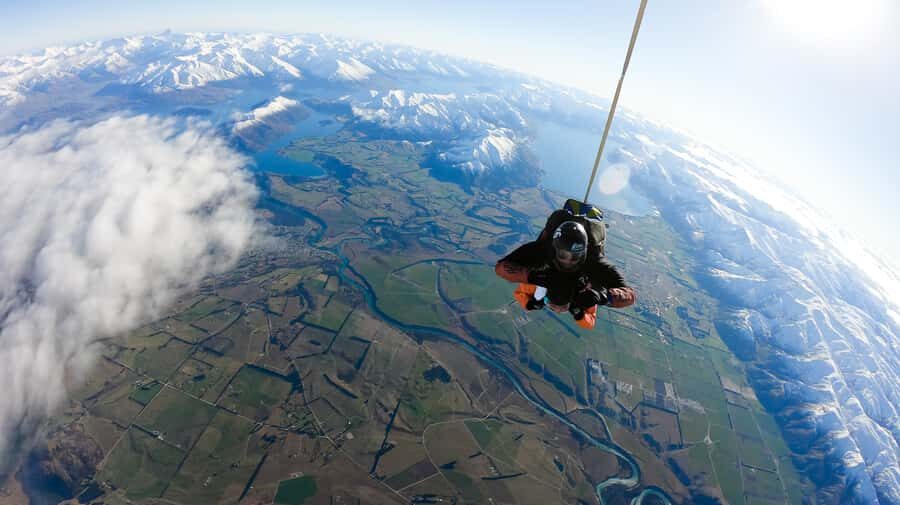
- Pick your altitude: 9,000, 12,000, or 15,000 ft for different levels of wow factor and freefall time
- Big-name views in one flight: Mt. Cook, Mt. Aspiring, Southern Alps, six lakes, and the Clutha River
- Freefall timing is built into the plan: 25 to 60 seconds at speeds up to 200 kph
- Safety comes first at the drop zone: you’ll get a tandem master assessment and multiple gear checks
- Comfort features while you wait: lockers for valuables plus internet kiosks and free Wi-Fi at the base facilities
- Optional photos and video: camera packages are available, but cameras are not allowed during the jump
Wanaka Tandem Skydive: What You’re Really Paying For
At $214 per person, you’re not buying just adrenaline. You’re buying a whole system: aircraft time, parachute gear, an experienced tandem master, and the guided flight path that lines up the views people come for in Wanaka and Central Otago.
Here’s the value breakdown in plain terms. You get a scenic flight to your chosen altitude, then a controlled jump with a set window of freefall (25 to 60 seconds depending on the height), followed by a 5-minute canopy descent. That means you’re not just dropping from the sky at random—you’re getting the full experience package.
The optional photo and video add-on is where it’s easy to misjudge value. You can’t bring your own camera, so if you want the footage, plan to budget extra at check-in.
You can also read our reviews of more tours and experiences in Wanaka.
Getting There and Getting Set Up (Without a Headache)
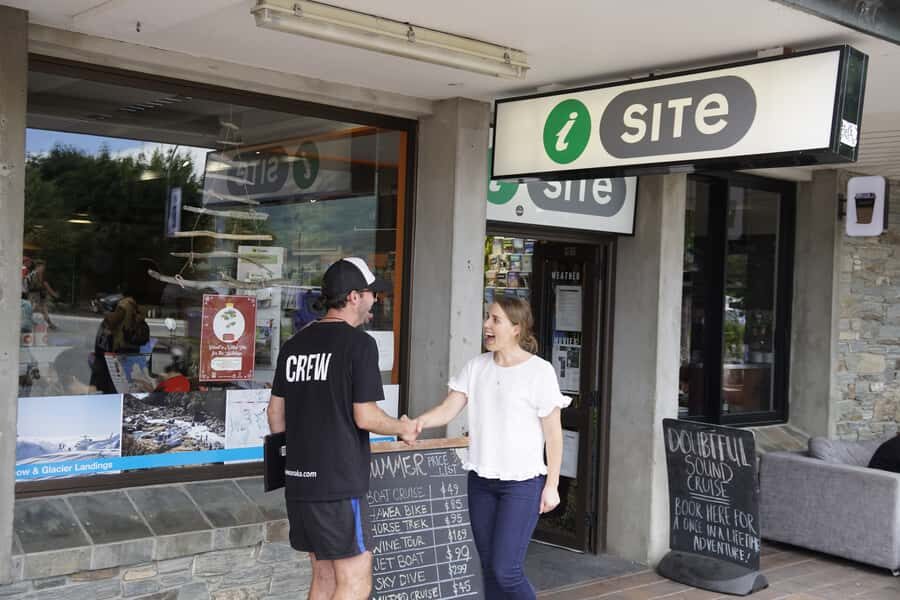
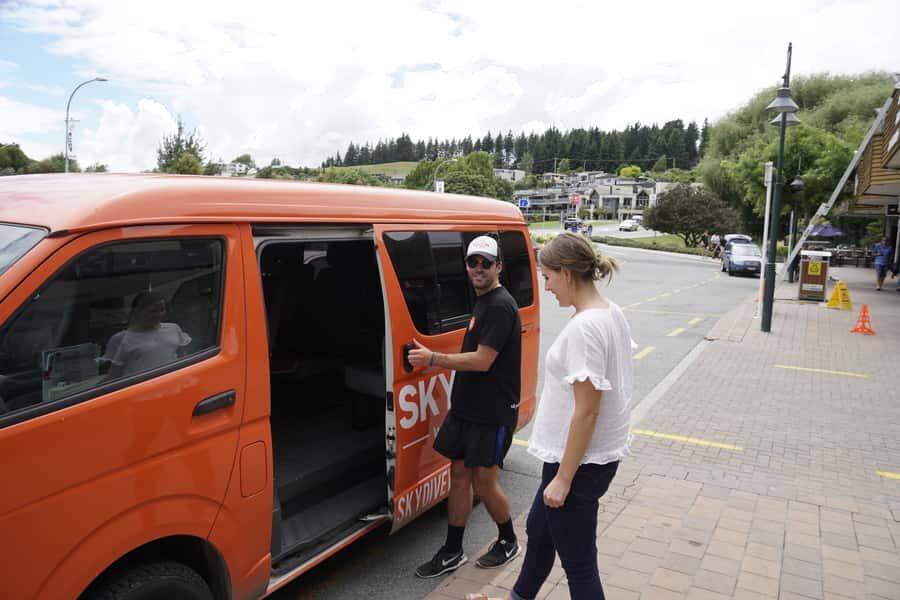
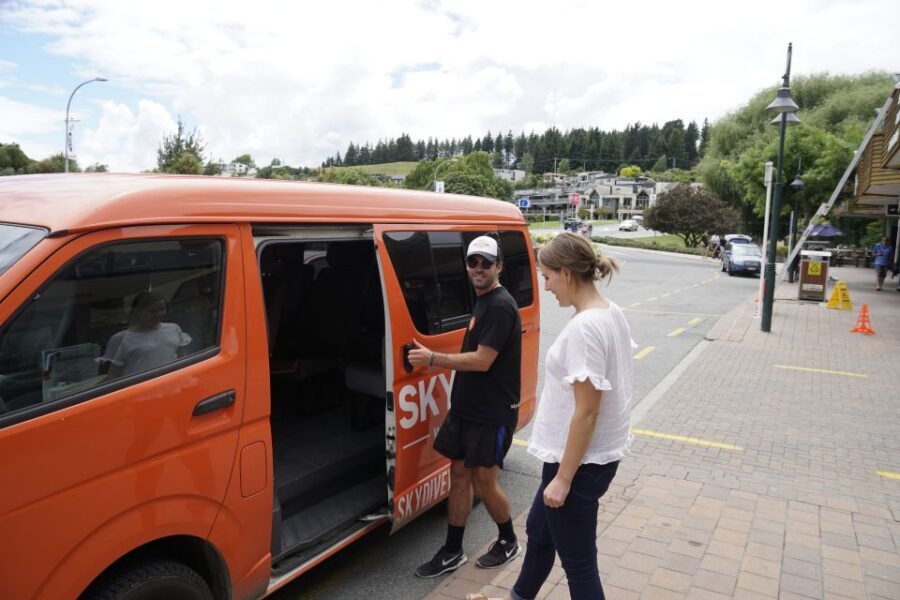
Your day starts with meeting the crew and getting briefed. If you’re using the included transport, the timing is tight in a good way: meet outside Wanaka i-Site 30 minutes prior for return transfers. If you’re self-driving, you’ll want to meet at 14 Mustang Lane about 20 minutes early.
This matters because skydiving operations are a weather-and-schedule game. Your time on-site is designed to keep the day moving, but it can still be subject to aircraft timing and other groups. One caution from real-world experience: delays can happen when another party runs late, which can push your jump time back.
Once you arrive, you’ll get:
- a full briefing
- gear-up with the harness system and jump clothing
- a tandem instructor pairing and safety check
You’ll also get on-site lockers for valuables, plus internet kiosks and free Wi-Fi. It’s a small detail, but it helps when you’re waiting. In a place like Wanaka, you often want your phone and map apps ready—and then you want to forget the world for a bit.
Gear, Briefing, and the Tandem Master Assessment
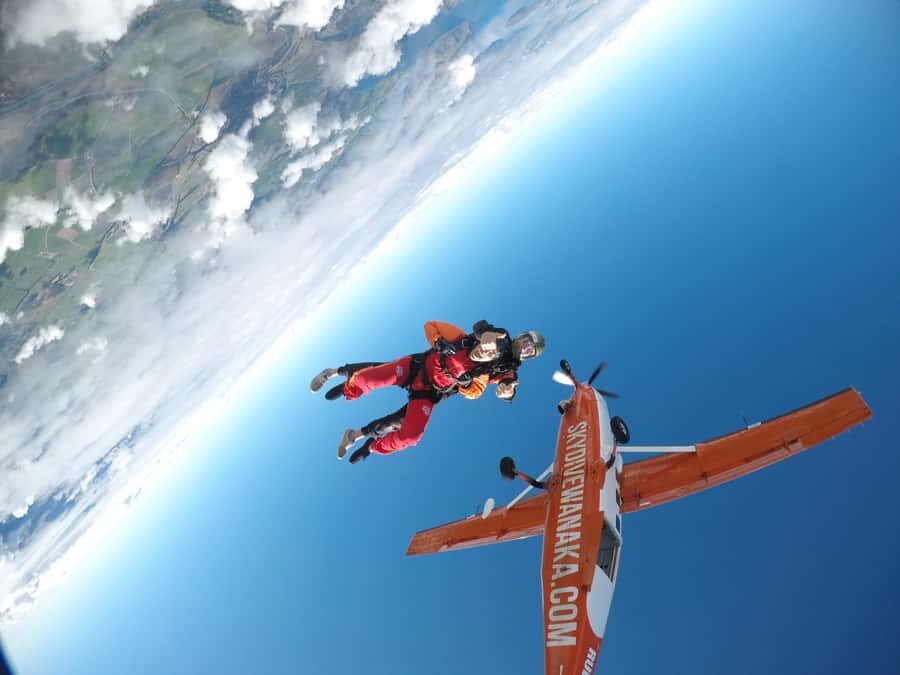
The biggest mental hurdle for many first-timers is the jump itself. The operation tries to shrink that fear with structure.
Before you climb into the plane, you’ll go through a tandem master assessment at the drop zone. All passengers must fit securely into the harness, and safety checks are repeated—not once, but as a normal part of the workflow.
You’ll be provided with everything you need:
- jumpsuit
- helmet (called a frap hat)
- goggles
- gloves
- harness and all safety equipment
What to bring is simple: closed-toe shoes. That’s it for clothing, beyond whatever you wear to stay comfortable in New Zealand weather while waiting.
Also note the limits so you don’t get surprised at the drop zone:
- minimum age is 6
- minimum weight is 30 kg (66 lbs)
- maximum weight is 115 kg (254 lbs)
- children 12 and under may only jump from 9,000 ft
- pregnant women aren’t suitable for this activity
The Scenic Flight: Southern Alps, Lakes, and Mt Cook
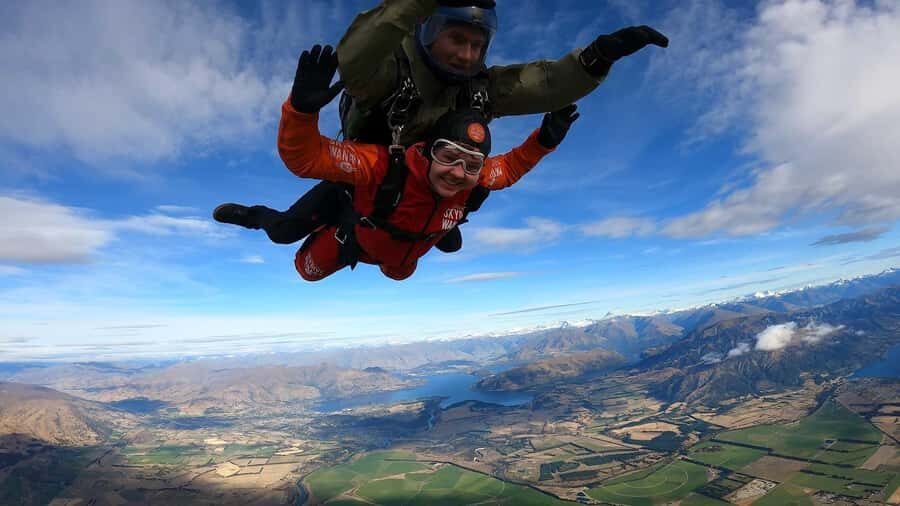
The plane ride is part of the show. You’re up for about 20 minutes of scenic flight, and your tandem instructor points out key landmarks so the view has context, not just drama.
From the air, you can look for:
- Mt. Cook
- Mt. Aspiring
- the Southern Alps
- several lakes (you’ll see six lakes highlighted)
- the Clutha River
This is where Wanaka earns its reputation. The mountains aren’t far away. They’re the horizon. So as you rise, it stops feeling like a generic thrill and starts feeling like you’re floating over a real geographic masterpiece.
If you’re visual—if you like recognizing places while they happen—this guided pointing-out makes a big difference. Even if you’re nervous, you can still focus on what you’re seeing.
Choosing 9,000, 12,000, or 15,000 Feet
The altitude choice is the real customization.
Higher altitude generally means longer freefall time. In this experience, freefall ranges from 25 to 60 seconds, and you’ll hit speeds up to 200 kph during that phase.
So how do you pick?
- If you want the classic first-timer experience with less time in freefall, 9,000 ft is a good match.
- If you want a stronger thrill without going straight to the maximum, 12,000 ft often hits the sweet spot.
- If you want the full punch—the longer freefall, the bigger adrenaline spike—15,000 ft is the choice.
Keep in mind that children 12 and under can only jump from 9,000 ft. That’s a built-in rule, so plan around it early.

The Leap: 25 to 60 Seconds of Pure Freefall
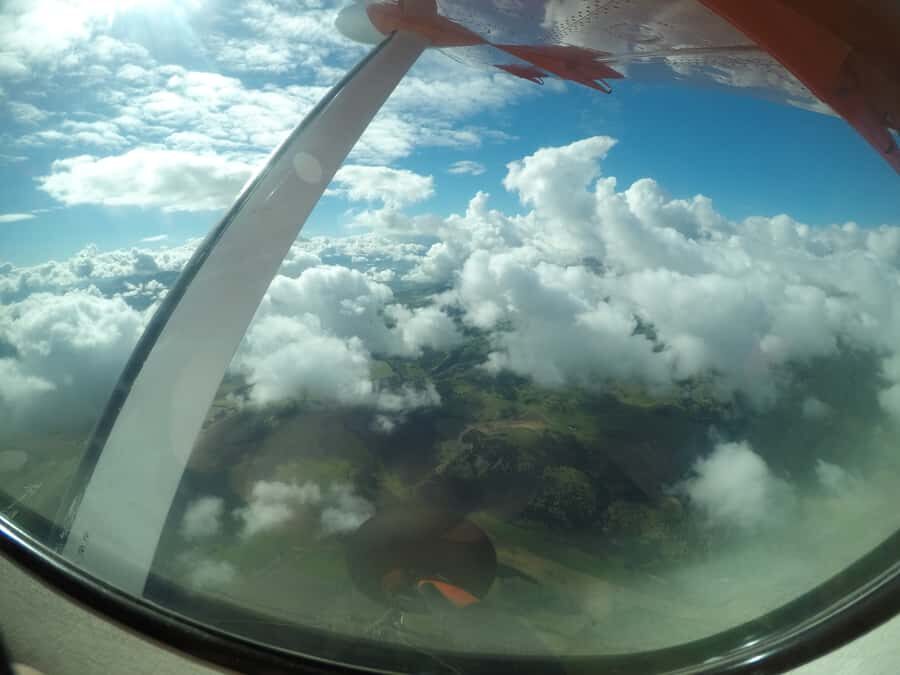
Then comes the moment you’ve been thinking about since you booked. You climb to your chosen altitude, and you leap out while strapped to your tandem instructor.
This is tandem skydive, so you’re not operating equipment. Your instructor handles the technical parts: body position, timing, and the parachute deployment sequence.
What you feel is the speed and the quiet snap of reality changing. Even 25 seconds can feel like a mini movie. At the higher end (up to 60 seconds), it’s longer than most people expect, and that extra time is why the jump height matters.
One practical tip: if you’re camera-minded, remember you can’t bring your own camera. That policy can be annoying, but it’s also part of why the operation can run a consistent workflow for their own photo and video package.
For some people, the adrenaline wave is followed by a breath-you-did-it moment. That’s normal.
Canopy Time: The 5-Minute Landing Plan
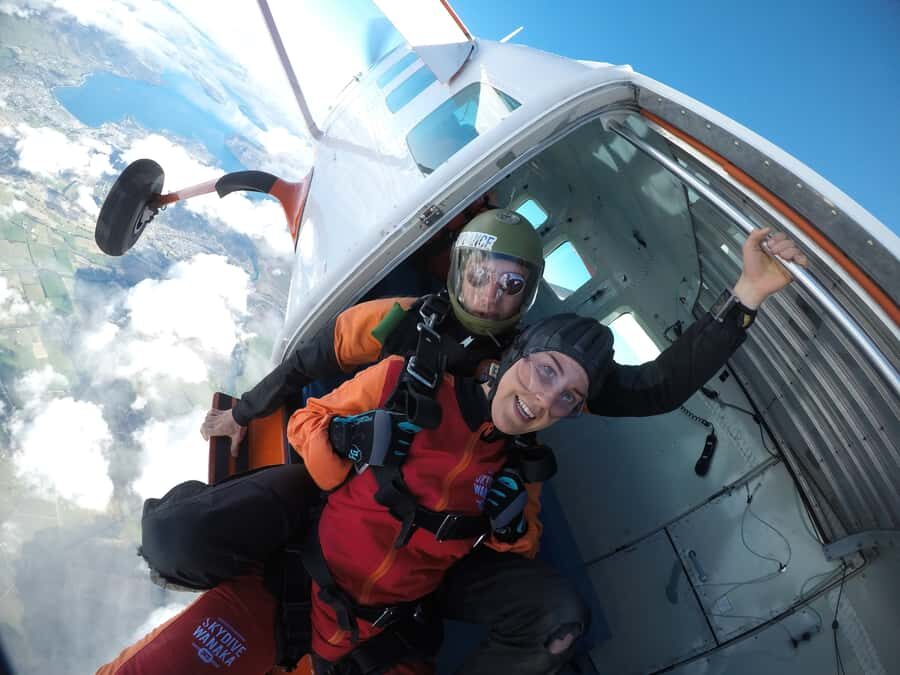
After freefall, you switch to canopy flight. You’ll experience a smooth glide down, then land back at the drop zone.
The time under canopy is included and runs about 5 minutes. It’s often where your thoughts catch up. You can look around, feel the lift, and take in what you missed during the fastest part.
One consideration: if you’re sensitive to motion, you might find the spinning during canopy flight a bit much. If that’s you, tell the staff right away before the flight. They can advise you on what to expect and help you set up mentally.
Post-Jump: Harness Off, Joy On, Video and Photos Next
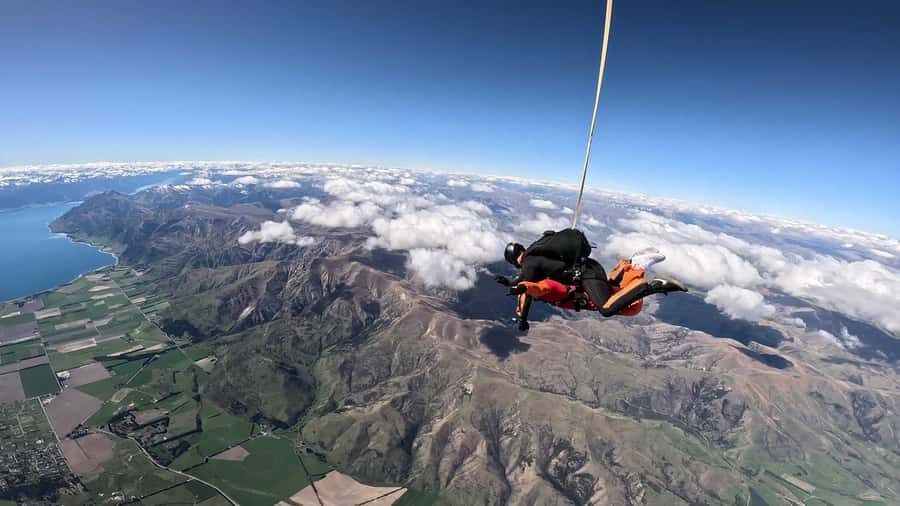
When you’re back on the ground, the vibe is usually pure relief and happiness. Expect the typical tears of joy and fist-pump energy. It’s a strange mix—fear, speed, then suddenly you’re smiling at your own hands.
Then you’ll head back to the hangar to be de-geared. After that, you’ll wait for your edited video and photos.
Here’s the part that’s easy to underestimate: the viewing experience. Your jump footage isn’t just handed over quickly like a ticket. Once your video is ready, you’ll plug it into a computer and gather with friends and family to relive it right there.
Video and photo packages are not included in the base price. You can purchase them at check-in, so if you want the full memory package (and you probably do, because you can’t film yourself), you’ll want to plan for it.
Price and Value Check: Is $214 Worth It?
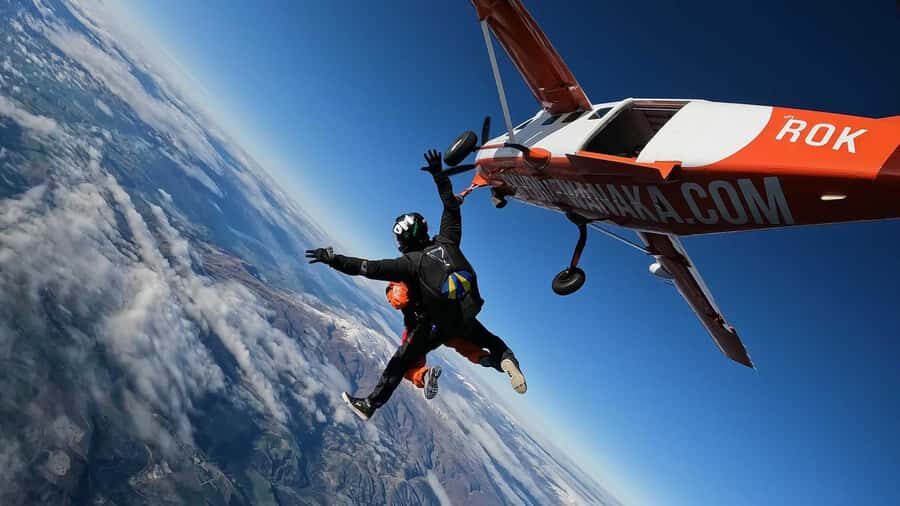
For $214, you’re getting the core skydive experience with:
- your selected tandem skydive from 9,000, 12,000, or 15,000 ft
- 25 to 60 seconds of freefall time
- about 5 minutes under canopy
- an experienced tandem master
- all safety gear (jumpsuit, helmet, goggles, gloves, harness)
- lockers for valuables
- Wi-Fi and internet kiosks on-site
So where does your money go? Mostly into the logistics that most people can’t DIY: trained tandem masters, the aircraft and drop zone setup, and the parachute system. That’s why tandem skydive costs what it costs. This isn’t a casual activity you can rent and figure out.
Where you might spend more: the photo/video package. Since you can’t bring a camera, those add-ons become the practical way to capture your jump. If you’re going to buy only one memory thing in Wanaka, this is usually the one.
If you’re the type who wants proof that you really did it, budget for the package.
What It’s Like with the Crew (and Why People Feel Safe)
What repeatedly comes through is how the crew reduces fear with professionalism.
People specifically highlighted instructors by name. Chris was praised for being professional and making first-time jumpers feel relaxed and excited rather than overwhelmed. Lucas also got strong mentions for first-jump comfort and for delivering the kind of calm energy you want when the plane is climbing.
You’ll still have your own nervous moments. That’s normal. But the operation runs with repeated gear checks and a tandem master who guides you step-by-step, which is exactly what you want if you’re excited and worried at the same time.
Also, the transport gets strong marks—93% of reviewers gave it a perfect score. That doesn’t matter much on the emotional side, but it matters on the practical side. Your day goes smoother when getting to the drop zone doesn’t turn into a side quest.
Timing Reality: Weather, Waits, and Motion Sensitivity
This activity is dependent on conditions. The schedule can shift, so you should plan your Wanaka day with breathing room.
A small heads-up from real-world experience: sometimes you may wait longer than expected due to an additional party arriving late. The jump might slide later even if you arrive on time for your appointment window. It’s frustrating when you’re on a tight itinerary, so I’d keep your calendar flexible on that day.
Then there’s motion sensitivity. If you’ve had motion sickness before—boats, cars, amusement rides—tell the crew. One person flagged that the canopy phase spinning felt like too much. That doesn’t mean it will for you, but it’s worth flagging early.
Who Should Book This Wanaka Tandem Skydive?
This is a great fit if:
- you want one big, bucket-list adventure that’s straightforward
- you care about scenery and want landmarks pointed out during the flight
- you’re okay being strapped in and guided (tandem style)
- you’re traveling with friends or family who want to watch and then share the video afterward
It’s not a great fit if:
- you’re pregnant
- you’re under 6 or under the weight minimum (30 kg / 66 lbs)
- you’re over the weight limit (115 kg / 254 lbs)
- you’re planning to bring your own camera (you can’t)
- you know motion sickness hits you hard and you don’t want to risk it (tell staff first)
Final Call: Should You Book It or Put It Off?
If you’re even moderately curious about skydiving, I’d book this in Wanaka—especially if you’re choosing it for the view. The combination of altitude options and guided sightings of Mt. Cook, Mt. Aspiring, the Southern Alps, and the Clutha River is the kind of planning payoff you don’t get from thrill rides that just stay generic.
Book it if you can handle a little waiting, and if you’re ready for a fast, safe, very guided experience. If motion sickness is a concern, mention it before you fly. If you want photos and video, plan for that extra cost at check-in, since you can’t film with your own camera.
FAQ
What altitudes can I jump from?
You can choose a tandem skydive from 9,000, 12,000, or 15,000 feet.
How long is the freefall?
Freefall time ranges from 25 to 60 seconds, depending on your chosen altitude.
How fast will the skydive go?
You can reach speeds up to 200 kph during freefall.
How long is the whole experience?
The duration is about 3 hours total.
Is the scenic flight included?
Yes. You’ll have an included scenic flight to altitude, and you also get a 5-minute flight under canopy.
Do I need to bring anything?
Bring closed-toe shoes. Everything else safety-wise is provided.
Are cameras allowed?
No. Cameras are not allowed.
What are the age and weight limits?
Minimum age is 6. Minimum weight is 30 kg (66 lbs), and maximum weight is 115 kg (254 lbs).
Can children jump from any height?
Children 12 years under may only jump from 9,000 ft.
Is pickup included?
Yes. If self-driving, you meet at 14 Mustang Lane about 20 minutes prior. For return transfers, you meet outside Wanaka i-Site 30 minutes prior.
Can I cancel for a refund?
Yes. You can cancel up to 24 hours in advance for a full refund.