REVIEW · AUCKLAND
Auckland Walking Tour: Small-Group History & Culture Experience
Book on Viator →Operated by Auckland Story - Small group guided walks · Bookable on Viator
Auckland tells its story on foot. This small-group Auckland walking tour strings together volcano origins, Māori legends, and city milestones, with guide Paula keeping the flow easy to follow. I really like how Paula brings the details to life, plus the group stays small enough for real questions and conversation.
You’ll move through central Auckland with stops that mix landmark architecture, public art, and civic memory. Expect time near Albert Park, the University of Auckland Clock Tower grounds, Old Government House, Women’s Suffrage Memorial areas, Britomart’s artwork, and the harbour-side stretch that leads to the Viaduct Harbour zone.
A possible drawback: it’s a 3-hour walk with frequent short stops, so you’ll want comfortable shoes and a bit of patience if the day is rainy or windy.
In This Review
- Quick hits before you go
- How a small group (max 6) changes your Auckland walking tour
- Starting at Khartoum Place, ending at 143 Quay Street (with a harbour finale)
- Albert Park to the University of Auckland Clock Tower: where stories meet landmarks
- Old Government House and civic memory: reading Auckland’s past in small pauses
- Women’s Suffrage Memorial and public art: culture you can spot without a museum ticket
- Britomart to Queens Wharf: the move from city streets to water views
- Sky Tower area, an America’s Cup yacht, and the maritime museum vibe
- The refreshment break and insider tips you can actually use
- Duration and pacing: what 3 hours really feels like
- Price and value: is $73.23 worth it?
- Who should book this Auckland story walk (and who might skip it)
- Should you book Auckland Story with Paula?
- FAQ
- How long is the Auckland Walking Tour?
- What is the price per person?
- What is the maximum group size?
- Where does the tour start and end?
- Is there a mobile ticket?
- Will I get confirmation when I book?
- What main areas and landmarks are included on the route?
- Are any admissions included?
- Is free cancellation available?
- Is the tour suitable for most travelers, and are service animals allowed?
Quick hits before you go
- Max 6 travelers means more personal pacing and easier conversations.
- Volcano-to-waterfront story arc ties together Māori legends, pioneering people, and modern Auckland.
- Clock Tower + campus grounds at the University of Auckland gives you a local sense of time and place.
- Public art stops in Britomart help you read the city like a gallery, not just a list of sights.
- Finish at 143 Quay Street with Waitematā Harbour views and that Sky Tower skyline moment.
- Refreshment break + food tips so you leave with places to eat, drink, and shop nearby.
How a small group (max 6) changes your Auckland walking tour
This is the kind of Auckland experience that works because it stays human-sized. With a maximum of 6 travelers, you’re not lost in a crowd, and the pace can match the group. That matters on a city walk where the best parts often happen at street level: small carvings, statues you’d miss from across the road, and bits of public art that don’t scream for attention.
Paula’s style is practical and story-led. You get the big connections—how Tāmaki Makaurau developed from its volcanic origins toward the city scenes around the Viaduct Harbour—but you also get the “how do I read this place?” moments. Those are the details that turn a walk into a personal map.
Another reason I like this format: you spend your attention where it counts. Instead of racing from photo spot to photo spot, you get short stops long enough to understand what you’re looking at, then move on.
You can also read our reviews of more walking tours in Auckland



Starting at Khartoum Place, ending at 143 Quay Street (with a harbour finale)
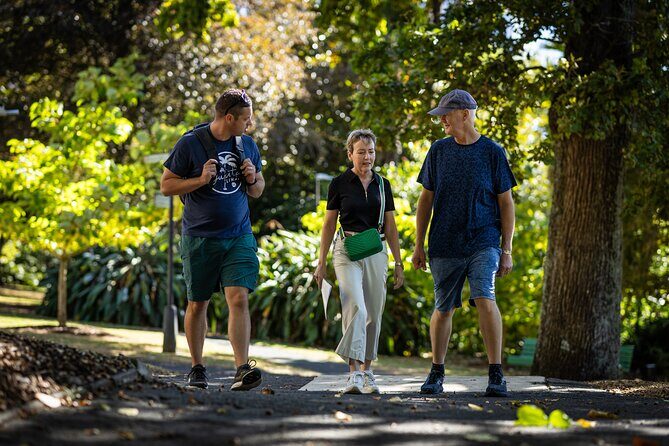
The tour begins at Khartoum Place in Auckland Central and ends at 143 Quay Street, right by the waterfront area. Starting in the central grid helps you settle in quickly. You’re close to major hotel zones and public transport, so it’s easy to arrive without turning your day into a logistics puzzle.
By the end, you’re pushed toward the water—exactly where Auckland’s skyline and character make sense. You’ll get harbour views and that satisfying feeling of your whole walk connecting into one bigger picture: city history meets current-day views over the Waitematā Harbour.
This kind of start-to-finish layout is also efficient. Even if you’re only in Auckland briefly, you’re covering the parts that give you immediate bearings: central parks, civic sites, and the waterfront draw that brings you back to the heart of the city.
Albert Park to the University of Auckland Clock Tower: where stories meet landmarks
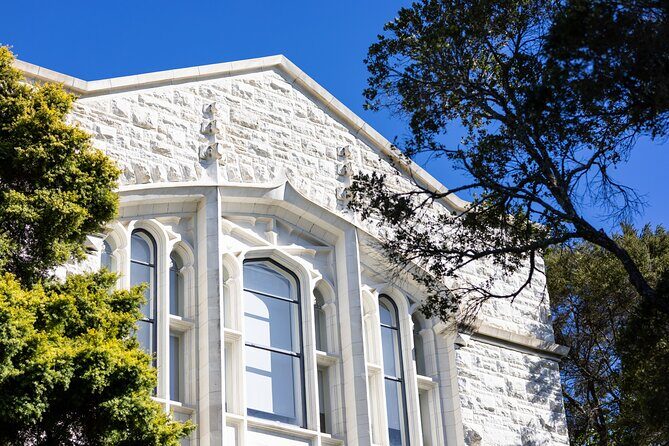
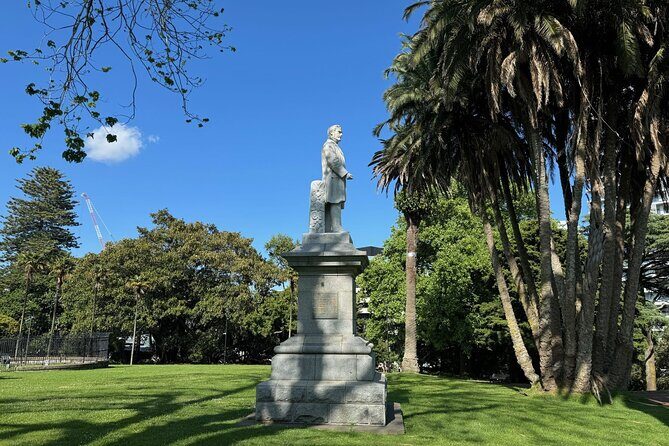
Early on, you head into Albert Park, with time to wind through the greenery and settle your eyes on the surroundings. Parks are more than a break from traffic here. They give you a clue to how Auckland parcels space for community life, and they set a calmer tone after you’ve been moving through streets.
From there, the walk shifts to the University of Auckland grounds, including a look at the Clock Tower. Even if you’ve never visited campus, the Clock Tower works like an anchor point: it’s one of those landmarks that makes the city feel grounded in institutions, education, and long-term planning.
This stop is also where the tour’s history-and-culture approach pays off. You’re not just seeing a pretty building. You’re learning how places like these shaped daily life in Auckland as it grew—plus the campus setting gives you context for the modern city around it.
If you’re the type who likes to understand why a place looks the way it does, this section is a strong payoff. If you’re only chasing skyline photos, you might feel like the Clock Tower moment is quieter than expected—but it’s worth it for the way it adds depth.
Old Government House and civic memory: reading Auckland’s past in small pauses
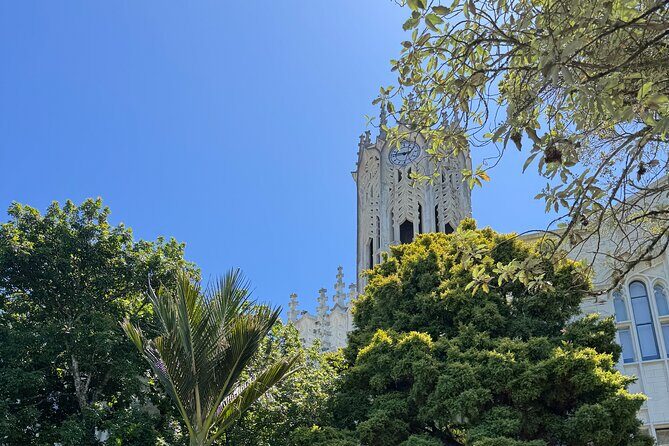
After the university stop, you’ll make a brief stop at Old Government House to learn about its history. This is the “city governance and heritage” part of the walk, the side of Auckland that explains how power and public life evolved—not just how the skyline changed.
You also pause at the Emily Place Reserve area, where admission is included for that specific stop. That’s useful because it hints you’re not just passing by casually; there’s something at that reserve worth seeing closely.
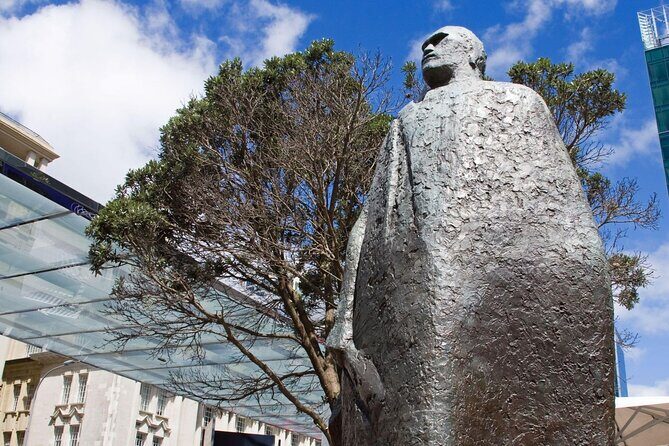
Then you’ll get a stop for the Lord Freyberg statue. Statues can be hit-or-miss on walks—some feel like background noise. Here, the value is in the framing: you’re learning what the monument connects to, and how it fits into the story of Auckland’s identity.
A practical note: these stops are short. That’s by design for a 3-hour loop. You won’t see every corner in slow detail, so if you want to linger, keep an eye on what the guide points out and plan your follow-up around the items that hook you.
Women’s Suffrage Memorial and public art: culture you can spot without a museum ticket
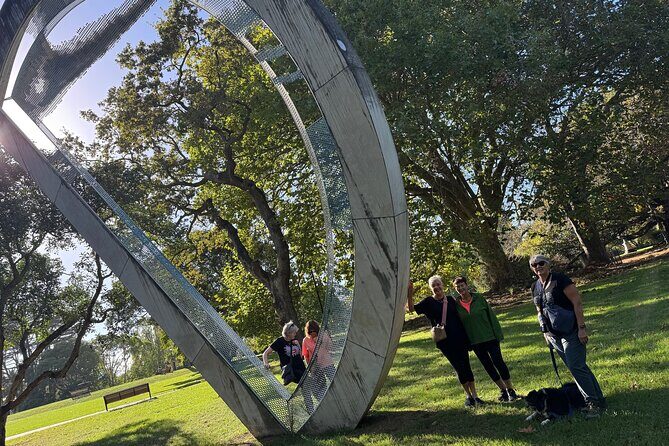
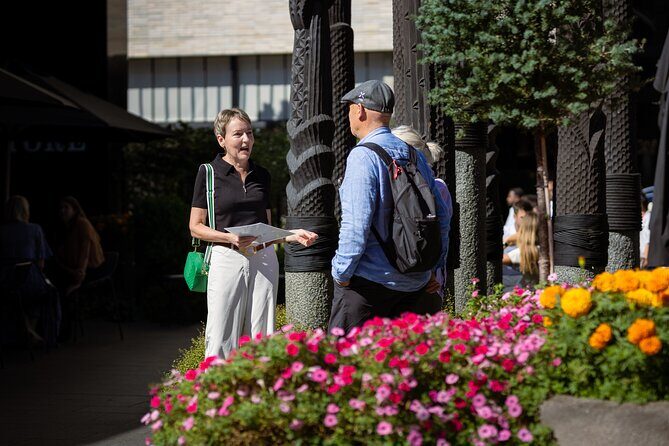
One of the tour’s best strengths is how it treats culture as something you can encounter on sidewalks. You’ll see unique public art, plus time around areas connected to the Women’s Suffrage Memorial.
That pairing is smart. A memorial like this isn’t only about the monument itself. It’s about civic change—who gets remembered, who gets recognized, and how public spaces reflect values. When you layer that with public art, you start noticing how Auckland talks about identity in different visual languages.
Britomart is another key area for this. You’ll spend time in Britomart, including public art displays. Britomart often feels like a “go here for shops” district from a distance. On this walk, you’re trained to slow down and treat it as an outdoor gallery. That shift is surprisingly satisfying.
If you love cities where art and history blend into everyday life, these stops are where you’ll feel the tour is doing more than sightseeing.
You can also read our reviews of more historical tours in Auckland





Britomart to Queens Wharf: the move from city streets to water views
As you leave the Britomart area, the tour guides you toward the harbour. You get to Queens Wharf, with views over Waitematā Harbour.
This is a turning point. Up to now, you’re mostly learning by looking at institutions, memorials, statues, and street-level artistic details. At the harbour, the city’s geography takes over. You see how water shapes movement, the look of the skyline, and the way Auckland presents itself to the world.
You’ll also be close to the Viaduct Harbour zone and the atmosphere that comes with it. Even if you’ve visited harbours elsewhere, Auckland’s setting gives it a specific feel—big-city energy paired with an open-water horizon.
In my view, this section is a “breathing” moment with value. It helps you reset your attention so the final portion doesn’t feel like one long stream of information.
Sky Tower area, an America’s Cup yacht, and the maritime museum vibe
Near the end, the tour includes seeing the Sky Tower at a short distance, plus the feel of major waterfront attractions such as an America’s Cup Yacht and the New Zealand Maritime Museum area.
You’re not meant to treat this like a full museum day. Instead, the tour gives you orientation: how these icons fit into Auckland’s harbour identity, and why maritime connections matter in a city built around sea trade and movement.
This also helps you if you’re deciding what to do after the tour. You’ll end with enough context to choose whether you want to spend extra time near the museum exhibits or simply enjoy the waterfront atmosphere.
The refreshment break and insider tips you can actually use
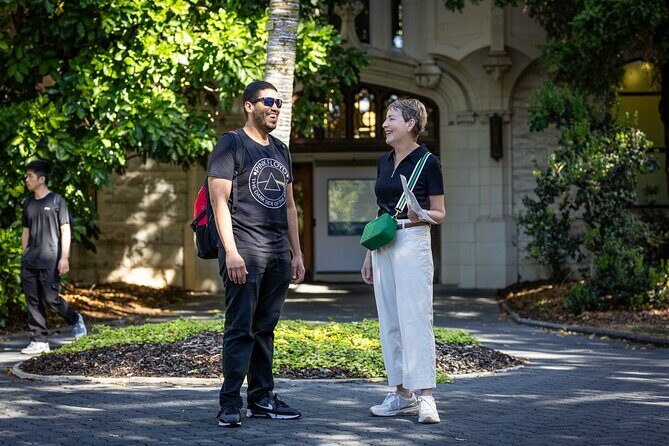
Midway through, you’ll get a break for refreshments. You also receive insider tips on the best places to eat, drink, and shop.
That’s a big deal for value. A walking tour can be fun, but if it leaves you with nothing practical, you still have to figure out dinner. Here, you’re getting recommendations tailored to the area you’re standing in.
Paula also adds personal stories about living in New Zealand. That’s where the walk becomes more than dates and landmarks. It gives you small cultural cues—how people talk about the city, what locals notice, and what matters day to day.
If you like tours that help you plan the rest of your day, this added guidance is one of the main reasons this experience earns strong recommendations.
Duration and pacing: what 3 hours really feels like
The tour runs about 3 hours. The format is built around brief stops—some as short as 5 minutes—so you get variety without the fatigue that can come from one long attraction.
Here’s how to think about it: you’re doing a guided route through central Auckland, with enough time at each point to understand the connection, not enough time to turn every stop into a separate outing.
That pacing works well for:
- first-time visitors who want bearings fast
- people who like stories more than photos
- travelers who don’t want a car day
The pacing might be less ideal if you:
- want a very slow, unstructured walk
- need long breaks or lots of downtime
- dislike moving frequently, even at a comfortable touring pace
Price and value: is $73.23 worth it?
At $73.23 per person for roughly 3 hours, you’re paying for three things: a qualified local guide, a tight small-group format, and curated stops that mix free public spaces with at least one included ticket (Emily Place Reserve).
To judge value, compare it to what you’d spend on:
- multiple entry tickets if you tried to self-tour everything
- taxis or rides just to cover the same central loop
- paying a guide for a short, intense orientation session
This tour leans toward value because many stops are free to access on your own. The real cost is the guidance: what to look for, how sites connect into a bigger story, and what you should do next afterward. With max 6 travelers and a guide who can slow down when the group needs it, the price starts to look more like “you’re buying time and context,” not just transportation between landmarks.
If you’re the type who likes to learn quickly and use it right away—like picking dinner spots after the walk—this price tends to feel fair.
Who should book this Auckland story walk (and who might skip it)
I’d point you to this tour if you want:
- a small-group Auckland walking tour with lots of context
- a mix of Māori legends, pioneer-era stories, and modern city identity
- a route that includes Albert Park, University Clock Tower grounds, Old Government House, Britomart public art, and harbour views
- a guide who shares personal perspective, not only textbook facts
I’d consider skipping if you want:
- a deep museum-only day
- a purely photo-based walking route with minimal talking
- a very long stop at one single attraction
In other words, this is best for people who enjoy the city as a story, not just a checklist.
Should you book Auckland Story with Paula?
Yes, if you want an organized way to understand central Auckland without bouncing around on your own. The small group size, Paula’s informative approach, and the practical add-ons—refreshment break plus food and shopping suggestions—make it a solid first-day-or-second-day option.
Book it if you’re curious about how Auckland became what you see now: from volcanic beginnings to harbour icons, with culture shown in memorials and public art as much as in named landmarks.
Pass if you want one big attraction after another with lots of free time, or if you prefer to wander without guidance. Otherwise, you’ll walk away with clearer bearings and a stronger sense of what you’re looking at when you’re back on the streets.
FAQ
How long is the Auckland Walking Tour?
The tour is approximately 3 hours.
What is the price per person?
The price is $73.23 per person.
What is the maximum group size?
The tour has a maximum of 6 travelers.
Where does the tour start and end?
It starts at Khartoum Place, Auckland Central, and ends at 143 Quay Street, Auckland Central.
Is there a mobile ticket?
Yes, the tour includes a mobile ticket.
Will I get confirmation when I book?
Confirmation is received at the time of booking.
What main areas and landmarks are included on the route?
You’ll see places around Albert Park, the University of Auckland Clock Tower area, Old Government House, Britomart public art, Queens Wharf harbour views, the Sky Tower at a short distance, and the waterfront area (including the New Zealand Maritime Museum vicinity and an America’s Cup Yacht).
Are any admissions included?
Most stops are free. The Emily Place Reserve stop includes an admission ticket.
Is free cancellation available?
Yes. You can cancel up to 24 hours before the experience start time for a full refund.
Is the tour suitable for most travelers, and are service animals allowed?
Most travelers can participate, and service animals are allowed. The tour is also near public transportation.