REVIEW · FOX GLACIER
Fox Glacier and Mount Cook Helicopter Flight
Book on GetYourGuide →Operated by The Helicopter Line West Coast · Bookable on GetYourGuide
Fox Glacier looks unreal.
This is one of the rare chances to not just watch ice, but land on the snowfield right above Fox Glacier’s active terrain, then fly onward for views of Aoraki/Mount Cook. I love how quickly you get to the big, dramatic stuff (crevasses and ice formations), and I love the pilot’s informative commentary as the flight turns toward the Southern Alps. One thing to consider: the whole trip is weather dependent, so if conditions are poor you may end up with a shorter or altered route.
You’ll depart from the Helicopter Line base in Fox Glacier Township and check in about 30 minutes early, so build in time for parking, coats, and getting camera-ready. Plan for cold air at altitude and expect a compact cabin with close seating, since this is a short flight built to pack a lot of scenery into one go.
In This Review
- Key highlights to know before you go
- Fox Glacier is the draw here, and landing is the difference
- From Fox Glacier Township to the Helicopter Line base
- The 35-minute helicopter flight: what you’ll actually see from the air
- The snowfield landing on Fox Glacier: the moment you’ll remember
- Aoraki/Mount Cook pass-by: seeing the tallest peak from a different scale
- Weather, passenger minimums, and why flexibility is part of the deal
- What to bring (and what to skip) for the smoothest flight
- Seating, timing, and how to get the best photos
- Value for $289: what you’re paying for and when it’s worth it
- Who should book this helicopter flight?
- Should you book Fox Glacier and Mount Cook by helicopter?
- FAQ
- How long is the helicopter flight including the snow landing?
- Where do I depart from and where can I park?
- What time should I check in?
- What should I wear or bring for the flight?
- What items are not allowed during this activity?
- Is this activity wheelchair accessible?
Key highlights to know before you go
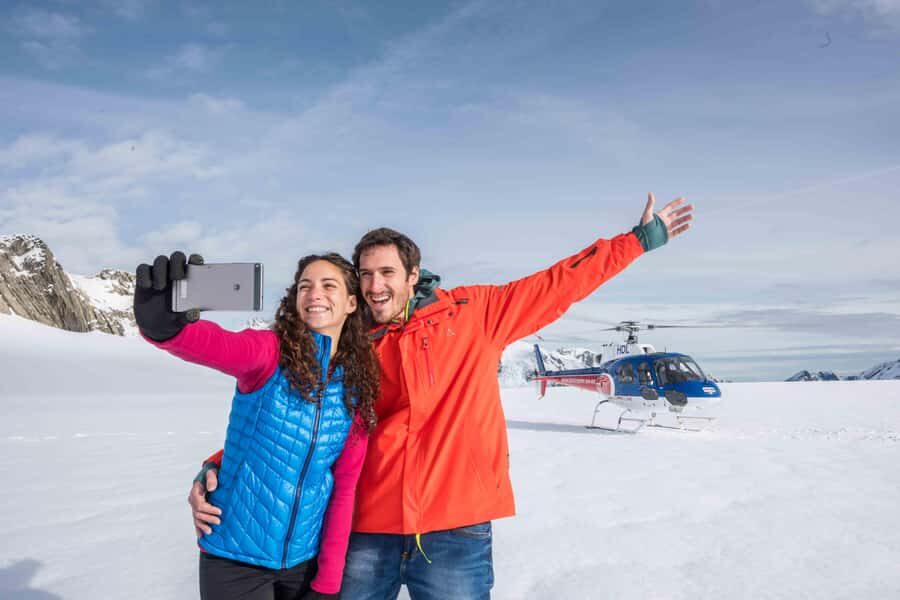
- Snowfield landing on top of Fox Glacier for about 10 minutes
- Fox Glacier scale: 13 km long and fed by four alpine glaciers
- Aoraki/Mount Cook pass-by from the air, with a sense of the mountain’s size
- 35 minutes total including the landing, so you feel the full experience quickly
- Live commentary in English to help you understand what you’re seeing
- Bring warm, waterproof gear because the helicopter air can feel much colder than town
Fox Glacier is the draw here, and landing is the difference
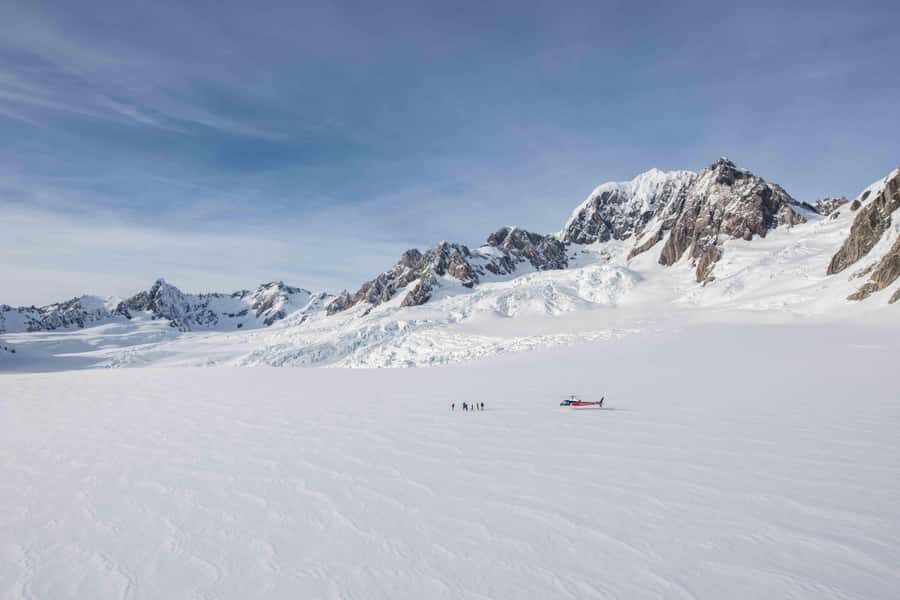
Fox Glacier isn’t a small, tame glacier you can casually admire from a walkway. It’s long (about 13 km) and fed by four alpine glaciers, which is why the ice has so many textures and breaks you can actually make sense of from above. On this flight, you go past the “wow, it’s white” phase and into the “how is that crevasse so big” phase.
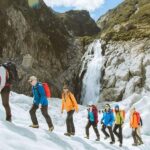
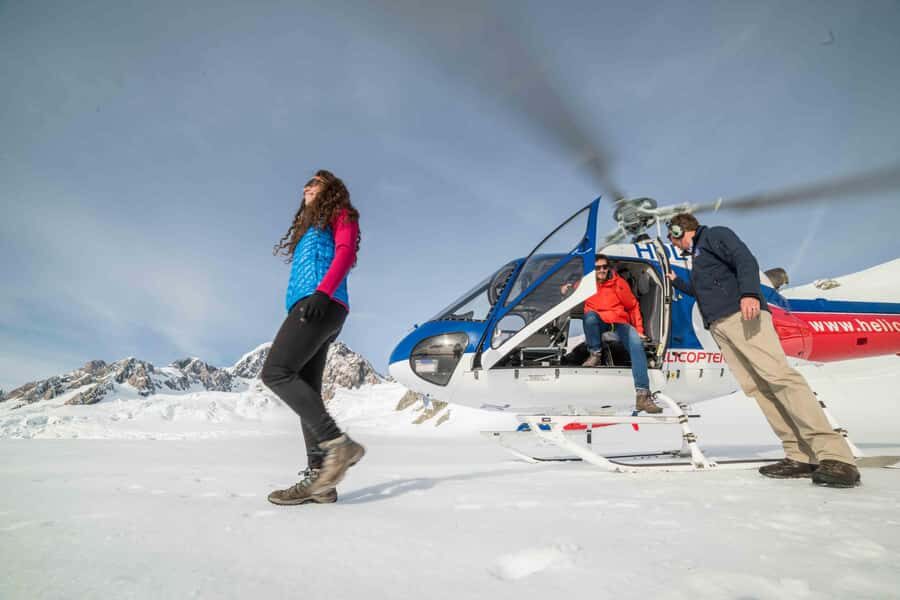
The biggest reason this feels worth the money is the snowfield landing. When you land, you’re no longer only watching from a window. You’re standing on the top of the glacier’s snowfield area, surrounded by ice forms, with the pilot’s route giving you a sense of how the glacier sits in the broader West Coast terrain. It turns the flight from a scenic ride into a short, physical moment on ice.
That said, it’s also why you should go into this with flexibility. Helicopter flying is weather-first, and glacier flying is even more sensitive. If visibility is limited, the route and what you see can shift.
A few more Fox Glacier tours and experiences worth a look
From Fox Glacier Township to the Helicopter Line base
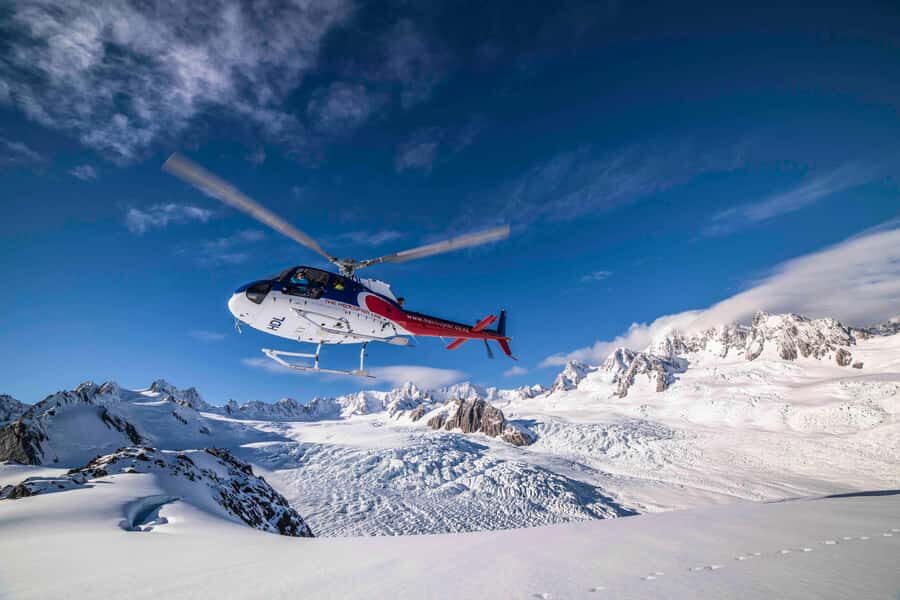
Your trip starts on the main road in Fox Glacier Township, at the Helicopter Line Base on State Highway 6. There’s free parking available either on the main road or behind the base, which makes the whole start less stressful than it can be with remote launches.
Plan your timing around the check-in rule: you should check in 30 minutes before your departure time. In plain terms, this is not a “show up whenever” kind of experience. Helicopters run to schedules that depend on weather, passenger counts, and flight planning. If you’re coming straight from the glacier view walks or a short drive from town, give yourself extra minutes so you’re not sprinting in your boots.
Also note that this activity departs and returns from the same base. You’re not transferring to another launch point, which keeps your day simpler if you’re pairing this with other South Island stops.
The 35-minute helicopter flight: what you’ll actually see from the air
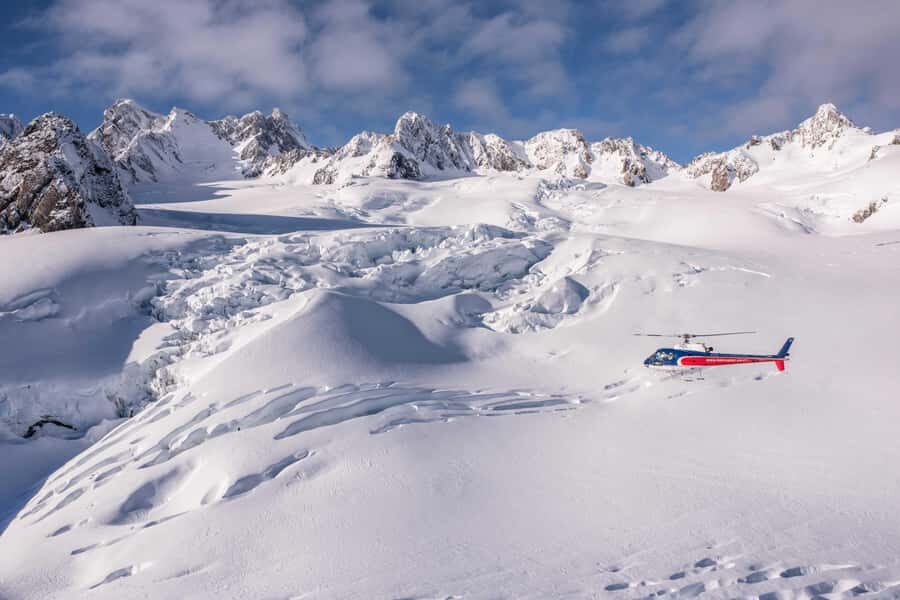
This is a short flight by design. Duration is 35 minutes total, and that includes the time on the snowfield. So the “story” of the ride is fast: helicopter lift-off, Fox Glacier ice viewing, snowfield landing, then onward airspace views and a pass-by of the Southern Alps before you head back.
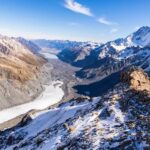
From the air, Fox Glacier looks like an evolving, fractured system. You’ll see the glacier’s scale and the ice formations below—the kind of detail you just can’t get from ground viewpoints. The pilot’s informative commentary helps you interpret what you’re looking at: which parts of the glacier system you’re flying over, and how the glacier’s formation connects to the West Coast mountain environment.
Because this is a quick outing, the flight tends to prioritize “maximum visibility moments” over long hovering. That’s good news if you like compact trips. It also means you’ll want your camera ready early—fumbling mid-flight wastes the best sightline windows.
The snowfield landing on Fox Glacier: the moment you’ll remember
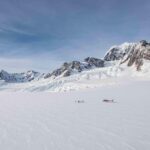
The featured action is the snowfield landing, lasting about 10 minutes. This is the part that turns the experience into more than scenery-from-a-plane. You’re up top of Fox Glacier and can look around the ice in a way that feels immediate.
Here’s what makes this landing meaningful for your trip planning:
- You get perspective you can’t fake. From the air, glaciers look like patterns. On foot, you sense how the ice sits and how the formations relate to each other.
- The time is short but concentrated. About 10 minutes doesn’t sound long until you realize this is a helicopter landing on snow/ice—time is traded for safety and flight scheduling.
- Cold matters. Even if the day in town feels mild, you’re on open snow. Warm clothing and waterproof footwear aren’t optional; they’re what lets you enjoy the landing instead of just surviving it.
One practical note: a snowfield landing can feel crowded with attention because everyone wants photos. If you’re traveling with people who get impatient in tight spaces, it helps to agree on a photo plan before you land—like who shoots first, and what direction you want to face for the mountain views.
Aoraki/Mount Cook pass-by: seeing the tallest peak from a different scale
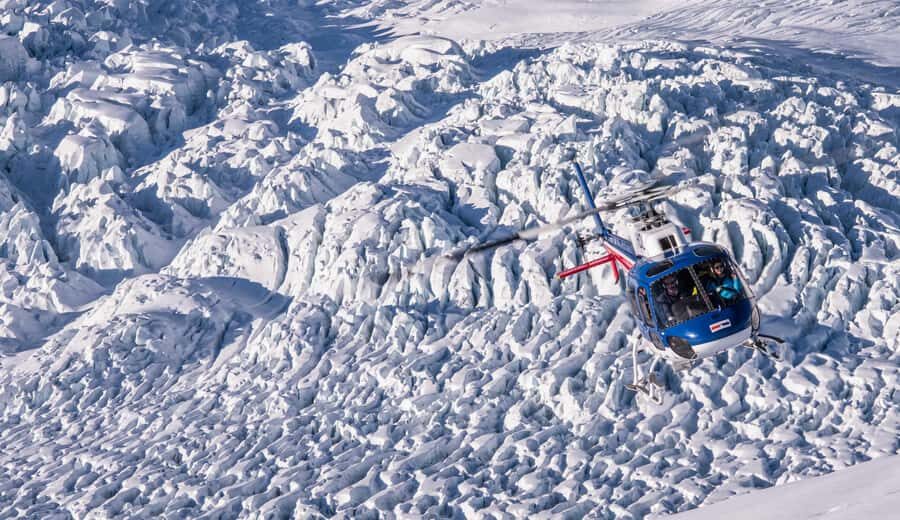
After landing, the pilot takes you past Aoraki/Mount Cook, known as Aotearoa New Zealand’s tallest mountain. You’ll get a sense of why it’s such a magnet for climbers and why weather on the South Island can feel so dramatic. Seeing Mount Cook from the air isn’t only about having the mountain in frame—it’s about seeing how it rises relative to the surrounding terrain.
This matters because Mount Cook can feel distant on the ground. From the helicopter, it’s closer in your mental map. Even in a short pass-by, you get the “this peak dominates the region” feeling that photos can’t fully explain.
If you’re the type of traveler who booked specifically for Mount Cook, keep one consideration in mind: helicopter routes can change when weather is unsuitable. Don’t assume the plan will be identical to a perfect-weather scenario. If Aoraki is your top goal, it’s worth thinking of this as a best-odds flight, not a guarantee.

Weather, passenger minimums, and why flexibility is part of the deal
This flight is subject to favorable weather conditions, and it also runs based on minimum passenger numbers. If there aren’t enough people booked for a departure, your booking can be coordinated with other paying passengers to reach those minimums, so the schedule is still likely to work out—but you’re not in total control.
Here’s how I’d handle it like a pro:
- Book early in your trip with some breathing room. Weather changes fast in the Southern Alps, and you don’t want to be locked into a single day with zero alternatives.
- Be ready for changes. The trip can be canceled due to poor weather, but even when it proceeds, the pilot may need to adjust what they can safely fly and what they can clearly see.
- Have backup expectations. If weather limits visibility or route options, you’ll still be seeing glaciers and ice formations, just possibly without the Mount Cook portion you hoped for.
If you’re the type who needs a perfectly timed “Mount Cook moment,” consider scheduling a second chance day in the region, or pairing your helicopter booking with another glacier activity that doesn’t rely on a specific sky window.
What to bring (and what to skip) for the smoothest flight
Helicopter comfort is all about warm, dry, grippy gear. Pack for the air, not for town.
Bring:
- Warm clothing
- Closed-toe shoes
- Waterproof shoes
- Camera
You’ll be dealing with cold wind and possible mist off ice environments, so waterproof footwear is a big quality-of-life upgrade. If you’re wearing sneakers that aren’t truly water-resistant, you might feel it later even if the ground is dry.
Not allowed:
- Drones
- Selfie sticks
- Tablets/iPads
This is one of those rules that can surprise people. If you travel with a tablet for photos and planning, leave it packed. A phone camera or compact camera is what will work best in the real-world flow of the flight.
Seating, timing, and how to get the best photos
Because the flight is short and the helicopter is compact, you should assume close seating. That doesn’t automatically ruin the experience—it just changes how you should aim for photos and comfort. If you’re sensitive to tight spaces, bring a calm mindset. If you’re flexible and excited by glacier scale, you’ll likely find the close cabin adds to the shared focus on the view.
For photos, the trick is simple:
- Take a few “setup” shots before takeoff, then focus on video for the glacier sections and the Mount Cook pass-by.
- Keep your camera accessible so you don’t miss the best seconds while searching for it.
- Expect window glare and vibration. Even when the scenery is perfect, helicopter shooting is never like a calm window seat on a commercial plane.
If “getting the shot” is the priority, plan to be efficient. With only 35 minutes total, you’ll get fewer retries than you might think.
Value for $289: what you’re paying for and when it’s worth it
At $289 per person for a 35-minute total experience (including the snow landing), this sits in the premium category. So the value depends on your travel style.
Here’s what the price buys you, practically:
- A helicopter ride that gives access to views you can’t get by road or short hikes.
- Landing on the snowfield for about 10 minutes, which adds real time on ice rather than only sightseeing from above.
- A pilot who provides informative commentary while flying you across the glacier terrain and toward Aoraki/Mount Cook.
So when is it worth it? If you want a high-impact glacier experience and don’t mind paying for “time saved” and “access gained.” This is ideal if you’ve already seen some West Coast glacier viewing points and want to level up to the ice itself.
When might it disappoint? If you treat the Mount Cook portion as the only acceptable outcome, or if you’re not emotionally prepared for weather adjustments. Since the flight depends on conditions, the best value happens when you’re flexible and excited by Fox Glacier even if the sky doesn’t fully cooperate.
Who should book this helicopter flight?
This flight suits you if:
- You want a fast, unforgettable glacier experience without committing to longer hikes.
- You’re okay with a short ride and want maximum scenery per hour.
- You enjoy learning as you watch, especially with English commentary from the pilot.
It may not be ideal if:
- You dislike cold and tight seating and want lots of space.
- You need a guaranteed Mount Cook viewing moment at all costs.
- You’re hoping for a slow, exploratory glacier experience. This is more “access and awe” than “walk and linger.”
Wheelchair access is listed as available, which is a strong point for inclusive planning. Just keep in mind that helicopters and snow environments are still physical spaces, so plan around what staff can accommodate at the base.
Should you book Fox Glacier and Mount Cook by helicopter?
If your priority is scale—big ice, deep crevasses, and a real sense of where Aoraki/Mount Cook sits in the Southern Alps—then I think you should book. The snowfield landing is the key: it’s the part that feels genuinely different from every road-view glacier stop.
Just don’t treat it like a fixed promise. Book early, keep an extra day if you can, and be ready to adjust if weather changes what the pilot can fly and what you can see clearly. If you’re flexible and you’re excited to stand on glacier snow, this trip is money well spent for the time you have.
FAQ
How long is the helicopter flight including the snow landing?
The total experience time is 35 minutes, including the snow landing. The snow landing itself is approximately 10 minutes.
Where do I depart from and where can I park?
You depart and return from the Helicopter Line Base on the main road in Fox Glacier Township (State Highway 6). There is free parking available on the main road or behind the base.
What time should I check in?
You should check in 30 minutes prior to your departure time.
What should I wear or bring for the flight?
Bring warm clothing, a camera, closed-toe shoes, and waterproof shoes.
What items are not allowed during this activity?
Drones, selfie sticks, and tablets/iPads are not allowed.
Is this activity wheelchair accessible?
Yes, it is listed as wheelchair accessible.