REVIEW · AUCKLAND
Bioluminescence Kayak Tour – Est. 1994
Book on Viator →Operated by Canoe & Kayak Adventures · Bookable on Viator
Ocean lights show up at night. This Auckland North Shore kayaking trip takes you into the dark waters of the Long Bay–Okura Marine Reserve to watch bioluminescent plankton spark under your paddle. It’s a simple, guided way to swap city glow for a real natural light show.
I like that you get a 1–6 guide-to-guest ratio, and the vibe from guides such as Josh and Elena (plus Eloise and Paul) is consistently patient and safety-first for first-timers. I also like that everything is handled for you: stable sea kayaks or sit-on-tops, full safety gear, and instruction built around helping you get comfortable quickly.
The only real catch is that the glow can be subtle and varies with conditions, so if you’re chasing bright, camera-ready effects, you may feel a little let down. Also, you should expect to get wet at least a bit, because night paddling means the water is part of the experience.
In This Review
- Key things I’d circle before you book
- Why Auckland nights turn into a science show
- Getting there: Rosedale meeting point and a straightforward start
- The Long Bay–Okura paddle: protected water, real night atmosphere
- Stop-by-stop flow: what you’ll do during the 2 hours
- Guides and group size: why the small ratio matters
- Gear, safety, and the kayak type you’ll likely use
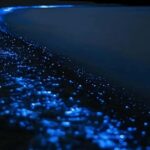
- The bioluminescence reality check: how bright should you expect it?
- Price and value: $73.85 for a night that’s hard to replicate
- What to wear and bring so the night stays fun
- Weather and refunds: how the operator handles the inevitable
- Who should book this kayak bioluminescence tour
- Should you book Bioluminescence Kayak Tour in Auckland?
- FAQ
- How long is the bioluminescence kayak tour?
- Do I need kayaking experience?
- What’s included in the price?
- What kind of kayak will I use?
- Where does the tour take place?
- Where do I meet the guide?
- How big are the groups?
- When is the location confirmed?
- What if the weather is bad?
- Can I cancel for a full refund?
Key things I’d circle before you book
- No-kayaking-needed lessons so you can focus on the water, not the basics
- Protected Long Bay–Okura waters that keep the trip calmer and more beginner-friendly
- Small group size (up to 24) with 1–6 ratio for real attention, not crowd control
- All gear included, including the safety kit and the kayak type used on the night
- Bioluminescence intensity varies, so you’re booking a natural phenomenon, not a guaranteed photo effect
- You return to the same Rosedale meeting point, which keeps the night simple
Why Auckland nights turn into a science show
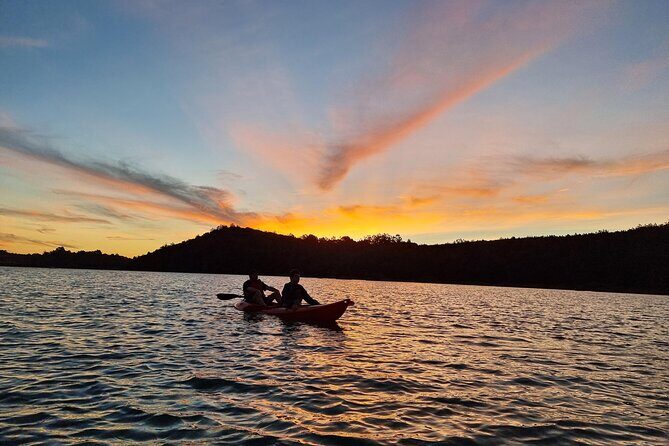
There’s something about Auckland at night that feels different. Strip away the city lights and you’re left with a darker sky, quiet water, and the kind of natural display that looks almost unreal until it happens right in front of you.
On this tour, you paddle along the northern coast around Mairangi Bay, within a 6-mile (10-kilometer) radius of North Shore Canoe & Kayak Store. The goal is to reach the right patch of ocean for bioluminescent plankton, the tiny organisms that create that glowing effect when disturbed by movement. The guides teach you how to paddle so you can actually create those sparkles without panicking, which matters more than you’d think.
One more detail I appreciate: you’re not expected to be an athlete. You’re expected to be curious, follow instructions, and enjoy the night. The calm and the stars are part of the deal, and several guides are known for blending kayaking basics with what’s happening in the water.
A few more Auckland tours and experiences worth a look
Getting there: Rosedale meeting point and a straightforward start
The tour meets at 2/20 Ascension Place, Rosedale, Auckland 0632. It’s not in the middle of downtown, but it is close enough to public transport that you can get there without turning your night into a logistical puzzle. If you’re relying on rideshare, expect the usual Auckland rhythm: short trips, quick drop-offs, and an easy way back after you’re done.
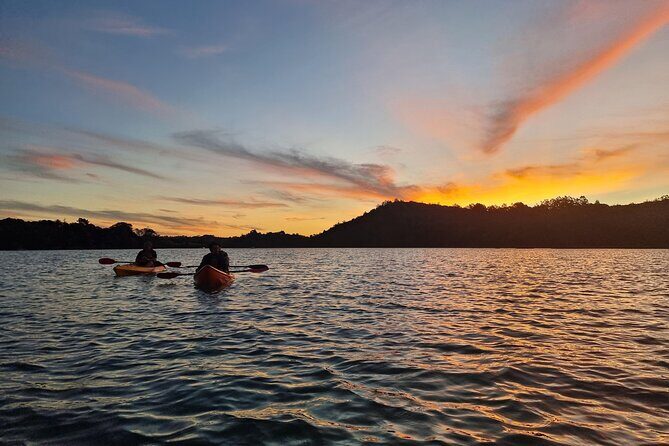
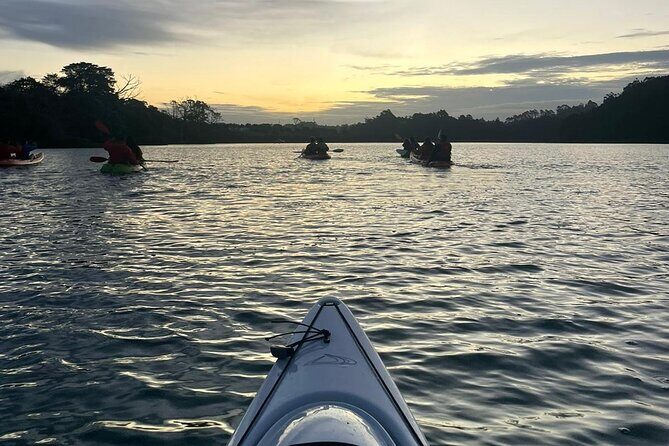
Timing-wise, the tour is about 2 hours. You’ll typically go out around sunset so you get the shift from daylight into full dark, which is when the bioluminescence becomes easier to notice. That transition also helps first-timers: you get to practice paddling when it’s still readable, then the night magic starts.
One important practical point: the exact water area is confirmed before 3:30pm on the day of your tour (within that 6-mile radius). So even if you’re planning your whole evening like a machine, keep some flexibility in mind until that time.
The Long Bay–Okura paddle: protected water, real night atmosphere
Your main action happens in and around the Long Bay–Okura Marine Reserve, in protected waters designed to make the kayaking smoother. That matters because bioluminescence tours are all about control: you want calm enough water that you can focus on the glow rather than fighting waves.
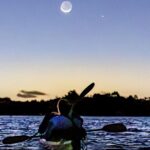
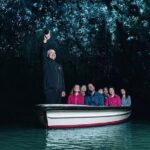
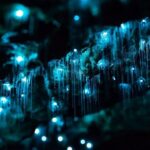
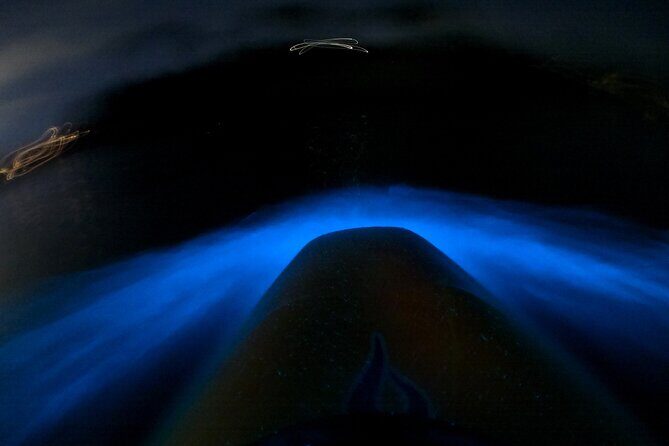
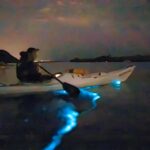
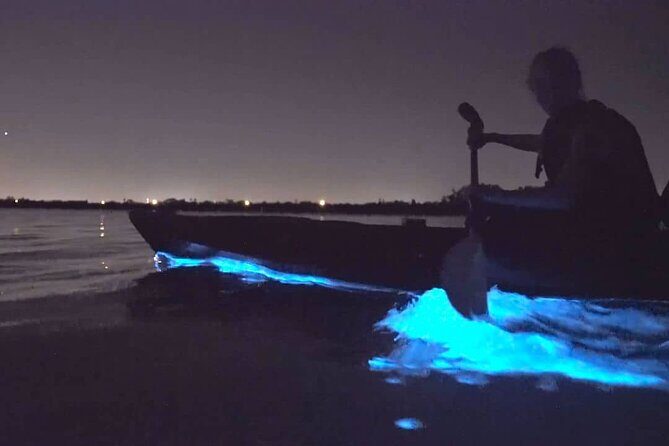
You’ll paddle out, get taught what to do, and then spend time in the dark watching the effects. This is where the tour earns its reputation: the glow is often described as lights in the water around your paddle, like sparks or stars rising from below. Many people also mention star visibility at the same time, which turns it into a sky-and-ocean experience rather than one single moment.
What I’d watch out for is expectation management. The glow isn’t constant like an aquarium light. It depends on conditions, and it can be brief or subtle. Some nights deliver bigger, more frequent flashes; other nights are more like occasional sparkles when you move through the water. That’s not a failure. It’s the nature of bioluminescence.
Stop-by-stop flow: what you’ll do during the 2 hours
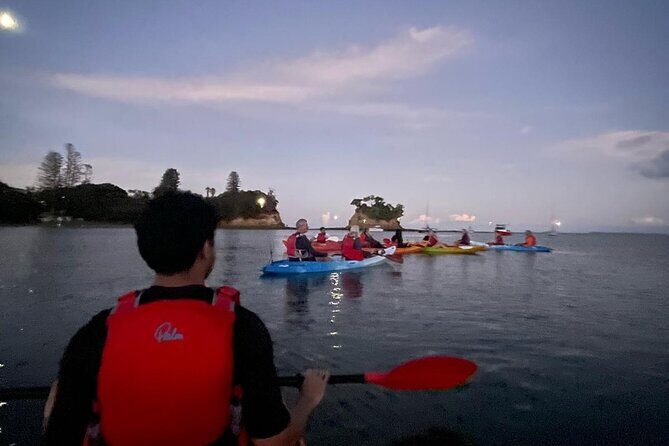
Even though you only have one main operating location, your time breaks into clear phases.
1) Meeting and gear handoff
You meet at the Rosedale address, then get matched up with your kayak (stable sea kayaks or sit-on-tops) and the full safety setup. You’ll also get your basic orientation before you head out. For first-timers, this is the stage where you should ask questions if anything feels unclear, especially about staying balanced and doing gentle paddle strokes.
2) Learning how to paddle in the dark
Once you’re on the water, the guides focus on making you comfortable fast. With a 1–6 ratio, you’re not stuck watching someone else while you wonder if you’re doing it wrong. The idea is to help you paddle smoothly enough to create movement in the water without being chaotic.
3) The bioluminescence viewing window
Then the tour shifts into observation mode. The guides guide you toward where you’ll see plankton glow and show you techniques to trigger the effect. Expect the most noticeable moments when you change paddle rhythm or when your movement stirs the water. If you’re hoping for constant, bright glow, plan for bursts and patterns instead.
4) Wrap-up and return
After your time on the water, you return back to the meeting point. The whole arc is short enough that you’ll feel like you got your money’s worth without spending half your night in transit.
Guides and group size: why the small ratio matters
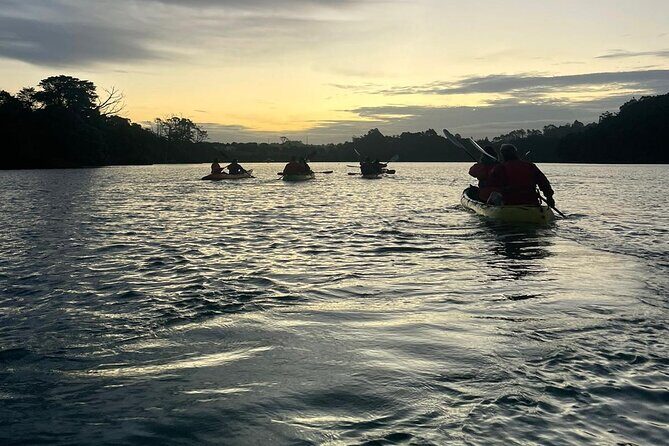
I’m a big fan of small group tours, and this one is built for that. You’re capped at 24 travelers, and the key detail is the 1–6 guide-to-guest ratio. That ratio is what turns bioluminescence from a vague idea into a manageable activity for people who have never held a kayak paddle before.
From the guide names that show up repeatedly—Josh and Elena, Eloise, Paul, Gareth and Madison, Sam, and others—the consistent theme is instruction with patience. That doesn’t mean you’ll be talked to like a child. It means you’ll be corrected before you build bad habits.
A couple other practical coaching notes that show up in people’s experience:
- The guides tend to give tips that make the paddle easier and safer, especially for first-time kayakers.
- They also know how to keep the group together in the dark, which reduces stress and keeps you in the best viewing zone.
If you’ve ever worried you’ll feel clumsy or slow, this is exactly the kind of tour where a good guide can fix that quickly.

Gear, safety, and the kayak type you’ll likely use
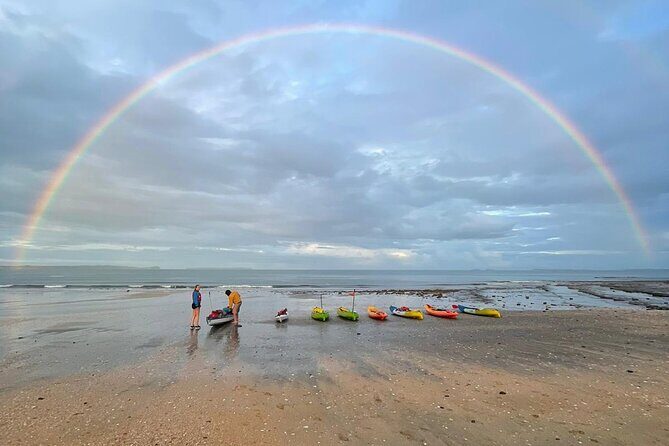
You don’t just rent a kayak and hope for the best. The tour includes all kayaking and safety equipment. You’ll be on stable kayaks—either sea kayaks or sit-on-tops—and you’ll get instruction tied to how those boats handle.
From a practical standpoint, stable matters because at night you’re less focused on the boat itself and more focused on what’s happening in the water. The stable design helps you keep posture and paddle control without turning the outing into a balancing act.
Also, you should plan like it’s wet. Even when the water looks calm, you can get splash or damp gear, especially when you’re moving paddles in the dark. Bring a change of clothes if you want to feel human afterward—some people mention that convenient changing space may not be available after the trip, so don’t rely on a quick onsite reset.
The bioluminescence reality check: how bright should you expect it?
Bioluminescence is not a guarantee of fireworks. It’s living plankton, and it responds to conditions. Even on excellent nights, the glow can vary in intensity and timing.
A useful way to think about it:
- You’re likely to see sparkling effects around paddle movement rather than a glowing ocean wall.
- If you’re lucky, you’ll see brighter patches and more frequent bursts.
- If conditions aren’t perfect, it may be more subtle, with shorter flashes.
This is also why photos can be tricky. Several people note that phone cameras don’t capture the effect the way the naked eye does. If you want the best experience, treat the glow as something to watch in person first, not something to document like a concert.
If you’re the kind of person who wants to compare brightness, remember that some nights will feel like a galaxy under water and other nights will feel like quiet twinkles. Both are real. The difference is mostly conditions and how your movement triggers the plankton.
Price and value: $73.85 for a night that’s hard to replicate
At $73.85 per person for about 2 hours, you’re paying for three things that are genuinely hard to DIY: guided instruction, the right setup, and the nighttime timing.
Most of the value is in what you don’t have to manage:
- you don’t need to figure out kayak basics in the dark
- you’re not handling safety gear sourcing
- you’re going to protected waters with a plan for where the bioluminescence is more likely to show
If you were to rent a kayak on your own, you’d still need to learn, transport, and find the best conditions yourself. Here, the guide-to-guest ratio keeps the learning curve from becoming frustrating, which is a big part of why beginners tend to have a good time.
Also, the tour is close to the city. You’re not spending hours commuting deep into the countryside. That makes the experience more doable as an evening plan, even if you’ve got only a couple days in Auckland.
What to wear and bring so the night stays fun
For a night kayaking tour, comfort beats style. Here’s what helps most based on the reality of getting out on the water after dark:
- Bring warm layers even if it’s mild earlier in the day.
- Wear clothes you don’t mind getting wet. One big tip from people who went: if you use jeans, plan for a backup outfit, and be ready to swap if needed.
- Pack a change of clothes if you want to avoid a cold, damp walk afterward.
- Keep your phone ready, but don’t expect it to perfectly capture the glow. The best moments are often the ones you just watch.
Since the tour confirms the water area by 3:30pm, try to avoid the plan where you’ll need to dress and travel immediately at the last minute. Give yourself a buffer so you can stay calm and ready.
Weather and refunds: how the operator handles the inevitable
This experience requires good weather. If conditions are poor, the tour may be canceled and you’ll be offered a different date or a full refund. That’s a fair setup for an activity dependent on night visibility and ocean conditions.
The smartest move is to plan this tour early enough that you have another evening to reschedule. If your schedule is packed with only one possible night, you’ll want to keep that day flexible as a backup. Because this is a short tour, a reschedule still keeps it within reach.
Who should book this kayak bioluminescence tour
This is a strong choice if:
- you’re new to kayaking and want instruction from the start
- you want a night activity that’s close to Auckland but feels like you escaped the city
- you’re curious about natural ocean light and you don’t need it to be nonstop bright
- you like the idea of stars and sea together, not just one single attraction
It might be less satisfying if:
- you expect photos and video to look exactly like bright promotional shots
- you strongly want consistent, high-intensity glowing at all times
- you hate getting wet at least a little
One plus for families and first-timers is the guide attention built into the small ratio. The tour is designed so you can learn, paddle, and enjoy without feeling left behind.
Should you book Bioluminescence Kayak Tour in Auckland?
I think you should book it if you want a guided, beginner-friendly night on the water with a real natural phenomenon. The small group ratio, included safety gear, and stable kayaks do a lot of heavy lifting for you, which is what makes the experience work for people who arrive with zero experience.
Just go in with the right mindset: the glow is alive and it varies. If you’re okay enjoying it as a shifting, underwater-light show rather than a constant neon effect, you’re likely to leave impressed.
FAQ
How long is the bioluminescence kayak tour?
It runs for about 2 hours.
Do I need kayaking experience?
No. The guides teach you how to kayak.
What’s included in the price?
The tour includes all kayaking and safety equipment, plus instruction from the kayak guides.
What kind of kayak will I use?
You’ll use stable sea kayaks or sit-on-tops.
Where does the tour take place?
Paddling happens within a 6-mile (10-kilometer) radius of the North Shore Canoe & Kayak Store in Mairangi Bay, in protected waters around the Long Bay–Okura Marine Reserve.
Where do I meet the guide?
The meeting point is 2/20 Ascension Place, Rosedale, Auckland 0632, New Zealand. The tour ends back at the same meeting point.
How big are the groups?
Maximum is 24 travelers, with a guide-to-guest ratio of 1–6.
When is the location confirmed?
The paddling area within the 6-mile radius is confirmed before 3:30pm on the day of the tour.
What if the weather is bad?
The experience requires good weather. If it’s canceled due to poor weather, you’ll be offered a different date or a full refund.
Can I cancel for a full refund?
Yes. You can cancel up to 24 hours in advance of the experience for a full refund.