REVIEW · FOX GLACIER
Franz Josef: Twin Glacier Helicopter Flight and Snow Landing
Book on GetYourGuide →Operated by The Helicopter Line West Coast · Bookable on GetYourGuide
Glaciers look different from above. What I like most about this twin-glacier helicopter trip is flying over Franz Josef and Fox Glaciers and then landing on the snow for a front-row view. You get that rare feeling of being close to something huge, yet still safe enough to enjoy it without hiking all day.
The flight is short but intentional: you follow the ice flow high up, spotting crevasses and glacial formations from a pilot’s-eye viewpoint, with informative commentary in English. Then you step out onto snow for about 10 minutes to look down at the path the glacier has carved.
One possible drawback: where you sit matters. If you land in a less ideal seat position, your view can be blocked compared to seats closer to the front or sides.
In This Review
- Key Things That Make This Helicopter Glacier Flight Worth It
- Why Fly at Glacier Level (and Not Just Look from the Road)
- The 35-Minute Flow: Your Real Timeline From Takeoff to Touchdown
- Over Franz Josef and Fox: What You’re Actually Looking For
- The Snow Landing: The Part That Turns a Scenic Flight Into a Memory
- Getting the Best Seat: A Small Issue That Can Make a Big Difference
- What to Pack (and What Not to Bring) for Glacier Weather
- Price and Value: Is $289 Worth It for 35 Minutes?
- Practical Notes That Help You Actually Enjoy It
- Should You Book This Twin-Glacier Helicopter Flight With Snow Landing?
- FAQ
- How long is the helicopter experience?
- How long do you spend on the glacier snow?
- Where does this tour depart from?
- When should I check in before departure?
- Do I need to reconfirm my booking before flying?
- What happens if weather cancels the flight?
- What should I bring and wear?
- Is the experience wheelchair accessible?
Key Things That Make This Helicopter Glacier Flight Worth It
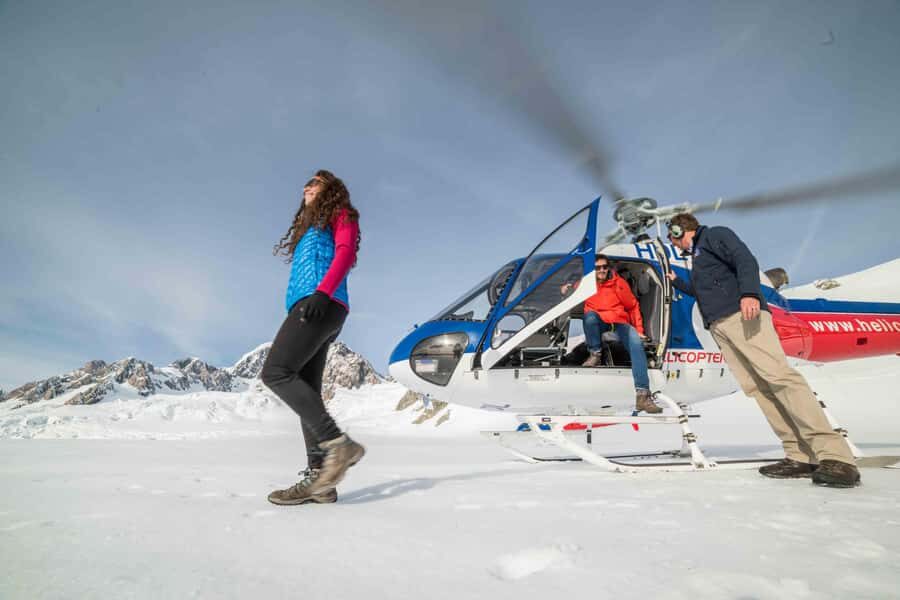
- Twin-glacier route over Franz Josef and Fox: you see two famous glaciers in a single outing, not just one.
- Snow landing on glacier head: about 10 minutes standing on the snow for a closer, more grounded perspective.
- Follow-the-ice-flow vantage: the most impressive views come when you’re guided along how the ice moves.
- Pilot commentary you can understand: live English narration helps turn shapes into real geography.
- Photo time built into the landing: you get a dedicated window to shoot from ground level, not just from the air.
- Weather and departure minimums are real factors: plan around the fact that flights can be delayed or rerouted when conditions don’t cooperate.
Why Fly at Glacier Level (and Not Just Look from the Road)
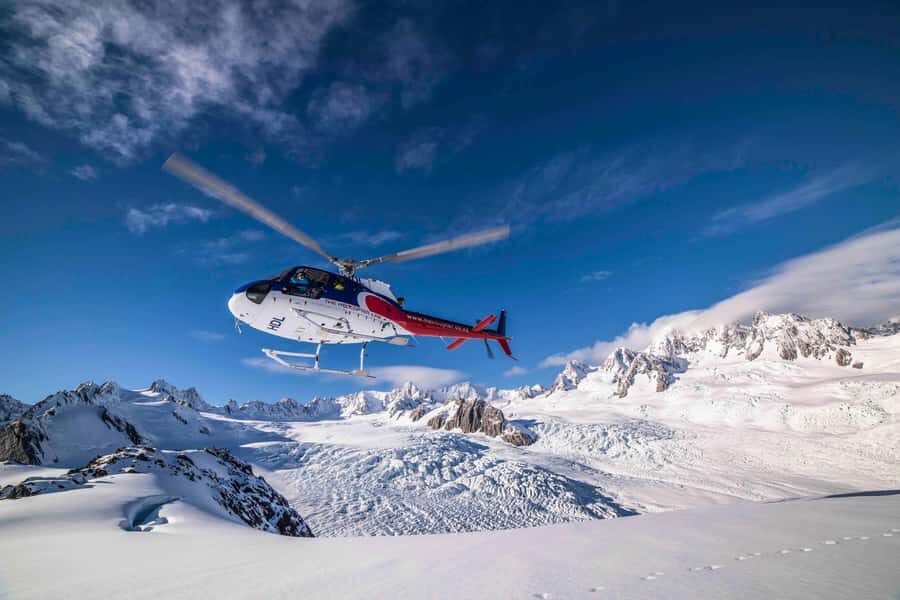
On the West Coast of New Zealand, it’s easy to think you already understand glaciers. You see ice, you take a photo, and you move on. From the air, though, glaciers stop looking like scenery and start looking like moving systems.
This is one reason I think the twin-glacier flight option works so well for first-timers. You’re not limited to one glacier’s personality. Franz Josef and Fox are both world-famous, and seeing them back to back gives your brain a quick comparison: where the ice is breaking, where it’s flowing, and how the terrain shapes what the glacier does next. It’s like getting two chapters of the same story in one sitting.
The second reason this experience stands out is the snow landing. Looking down from the helicopter is impressive. Standing on snow near the glacier head is a different feeling. The ground is cold, bright, and textured. Your attention snaps from the view outward to the glacier itself—how it sits, how it’s shaped, and how it has carved the route below.
A few more Fox Glacier tours and experiences worth a look
The 35-Minute Flow: Your Real Timeline From Takeoff to Touchdown
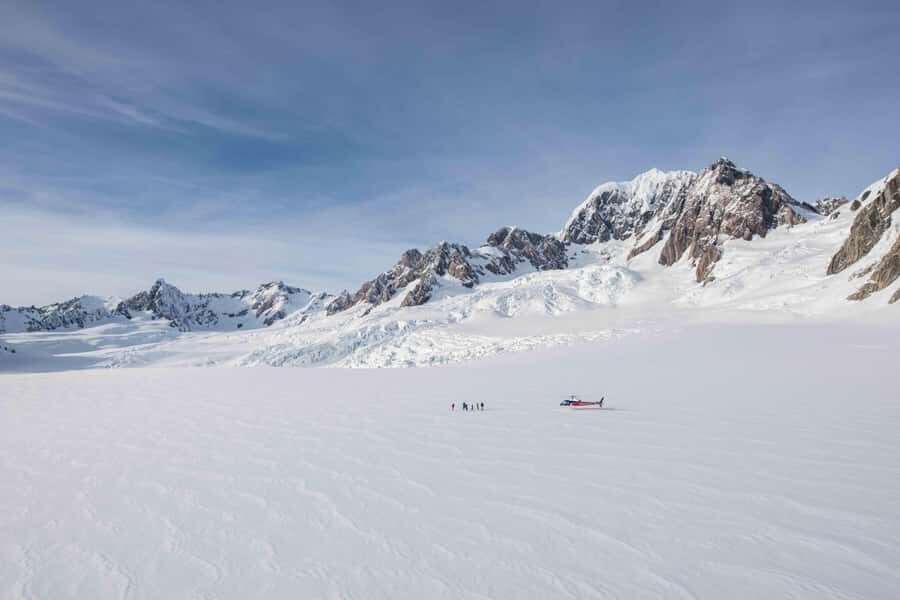
This trip runs 35 minutes total, and that includes the snow landing. That matters because it keeps your expectations realistic. You’re not buying a full-day expedition. You’re buying a high-impact burst of glacier viewing with a landing that turns the helicopter ride into something more than sightseeing.
Here’s how the timing tends to feel in practice, in the order you’ll experience it:
At the start, you lift off from the helicopter base on Main Road (State Highway 6), Franz Josef Glacier (7856). From there, you gain height and begin the aerial pass over the valley and town area below. It’s the moment where you’ll often notice how the helicopter frames the whole region, not just the glacier edge.
Next comes your viewing time over Franz Josef Glacier. You get a chunk of flying time to see the glacier’s structure and the areas where the ice breaks into crevasses and formations. Then you shift to Fox Glacier for another stretch of aerial viewing so you can compare what you’re seeing across the two systems.
Finally, you return to Franz Josef Glacier for a photo stop and visit at the landing point. The landing itself is about 10 minutes on snow. After that, you head back down to the base by helicopter and the whole experience ends before you start feeling tired or restless.
This compact timing is a plus if you’re traveling with limited mobility, families, or anyone who doesn’t want to wait hours for one highlight.
Over Franz Josef and Fox: What You’re Actually Looking For
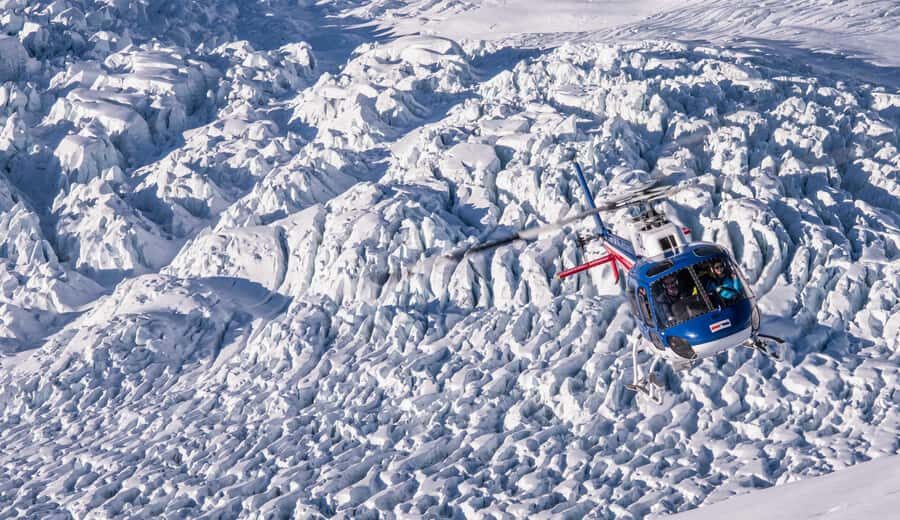
From the air, glacier viewing stops being a vague wow and becomes more specific. The guided route is built around the ice flow, so instead of just staring at white ice, you get a sense of direction and movement.
When you’re flying above Franz Josef, keep your eyes on three things:
- Crevasses: these long cracks help you understand where the ice is under stress.
- Glacial formations: the surface can look smooth in places and fractured in others, and the differences help you “read” the glacier.
- The scale: the helicopter perspective shows how huge the ice fields are compared to nearby terrain.
Then when you move to Fox Glacier, your comparisons get sharper. You’ll be able to notice how the ice’s shape and structure look from a new angle. Even if you’re not a geology person, the view becomes easier to interpret once you’ve seen the first glacier and are now watching the second with fresh context.
One thing that helps: there’s live pilot commentary during the flight. When someone explains what you’re looking at, you spend less time guessing and more time enjoying. It also helps you avoid the common issue where you fly over an attraction, take photos, and later realize your pictures don’t really tell a story.
The Snow Landing: The Part That Turns a Scenic Flight Into a Memory
The best part of this trip is the landing itself. You’re not just viewing from a seat. You’re landing at the head of one of the glaciers, which means you’re close to where the glacier starts its long, downhill journey.
That’s why the landing feels so different:
- You’re looking downward at the glacier’s path carved below you.
- You get a brief window to take photos and videos from snow-level.
- You can stare longer without constantly worrying about motion or changing angles.
Expect the snow to be bright and cold-looking, even if the weather outside seems mild. Closed-toe shoes and warm clothing make a real difference here. The idea is simple: you want to focus on your surroundings, not on how chilly your feet feel.
Because the snow landing is about 10 minutes, you’ll likely feel like you’re stepping out for a mini “walk around the view,” not a long hike. It’s designed for maximum impact with minimum time on the ground—perfect if your trip schedule is tight or you just want the highlight without committing to a strenuous outing.
Getting the Best Seat: A Small Issue That Can Make a Big Difference
I’m going to be blunt here because it affects your photos and your enjoyment.
This is one activity where seat position matters. If you’re in the wrong spot—like a less ideal seat in the back row—you may find your sightlines are reduced. People in front of you can block parts of what you want to photograph, and the best angles can feel harder to reach.
So how do you handle it?
- When booking, ask what seating options are available if the operator provides any guidance.
- If you’re sensitive about photo composition, tell your check-in staff you want the clearest views possible.
Even if you end up in a less-than-perfect seat, don’t panic. You’re still flying over the glaciers and you still get the snow landing. But if your priority is photos, the seat can be the difference between a bunch of great images and a bunch of decent ones.
A few more Fox Glacier tours and experiences worth a look
What to Pack (and What Not to Bring) for Glacier Weather
This is a cold place, even when the day looks sunny from town. Plan for wind chill and quick changes in conditions.
Bring:
- Warm clothing
- Warm shoes
- A camera (you’ll want it up fast)
- Closed-toe shoes
Leave at home:
- Drones (not allowed)
- Selfie sticks (not allowed)
- Tablets/iPads (not allowed)
That list matters because it affects how you plan your photo routine. It’s also why I recommend traveling light with fewer gadgets. You’ll move around quickly for boarding and the flight, and you don’t want to be fussing with gear you can’t use.
If you’re someone who dislikes bulky outerwear, this trip is a good time to practice a “warm but not heavy” approach. The helicopter ride is short, but you still want to stay comfortable.
Price and Value: Is $289 Worth It for 35 Minutes?
At $289 per person, this isn’t a budget activity. You’re paying for a helicopter, two glacier aerial passes, and the privilege of landing on snow.
So the value question becomes: what makes it different from a basic sightseeing flight?
Here’s why I think it’s worth considering:
- The snow landing adds something that most air-only flights can’t offer. Standing near the glacier head changes how you experience scale.
- You get Franz Josef and Fox in one go, which is efficient if you’re limited by time on the South Island’s West Coast.
- The flight is 35 minutes total, so you’re not paying for hours of driving or waiting around. Your time is protected.
Still, be honest with yourself. If you’re mainly chasing photos and you’re the type who can get by with views from the ground, this may feel pricey. But if you want the kind of view that only exists when you’re above the ice and then standing on it, the price starts to make sense fast.
For me, the real value is the landing plus the twin-glacier comparison. That combination is what turns the experience into something you can’t easily replace.
Practical Notes That Help You Actually Enjoy It
A helicopter flight is weather-dependent, and you should plan like that. If conditions aren’t favorable, your flight can be changed or canceled, and you’ll typically get an option for an alternative date or a full refund.
Also, the departure requires appropriate passenger numbers to run smoothly. If minimum passenger numbers aren’t met, bookings may be coordinated with other paying passengers to reach the required number before departure.
Two more practical tips:
- Check in 30 minutes prior to departure so you’re not rushing in cold conditions.
- Reconfirm your booking 24-hours prior by phone. This helps you avoid unpleasant surprises if schedules shift.
If you travel with kids, this is one area where I’d feel comfortable being optimistic. The experience is structured, and families have reported good care even with a young child during the flight and landing. That doesn’t mean it’s effortless with toddlers, but it suggests the operation handles the real-world needs of families rather than treating everyone like a calm adult with perfect patience.
Should You Book This Twin-Glacier Helicopter Flight With Snow Landing?
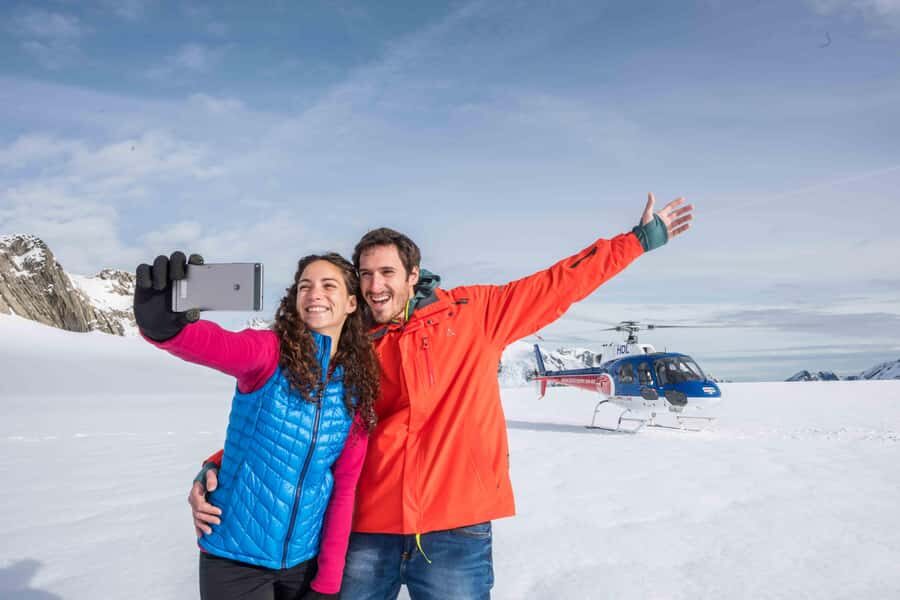
Book it if you want one outing that gives you:
- Two glaciers in one short flight
- A real snow landing experience near the glacier head
- Views guided by pilot commentary so you understand what you’re seeing, not just what it looks like
- A time commitment that’s easy to fit into a West Coast itinerary
Skip it (or think twice) if:
- You’re very price-sensitive and prefer to save money for hikes and viewpoints on land
- You’re determined to take the perfect set of glacier photos and your seat comfort is critical, since sightlines depend on where you sit
- You’re traveling during a period when weather reliability is already a concern for your whole plan, since helicopter flights can be affected
If you do decide to go, aim to dress for cold, keep your camera ready, and treat the snow landing like the main event. The aerial views are spectacular, but the landing is what makes you feel like you truly visited the glacier.
FAQ
How long is the helicopter experience?
The total trip duration is 35 minutes, including the snow landing.
How long do you spend on the glacier snow?
The snow landing lasts approximately 10 minutes.
Where does this tour depart from?
It departs and returns from The Helicopter Line Base on Main Road (State Highway 6), Franz Josef Glacier, 7856.
When should I check in before departure?
Check in is required 30 minutes prior to the departure time.
Do I need to reconfirm my booking before flying?
Yes. You should call 24-hours prior to departure to reconfirm your booking.
What happens if weather cancels the flight?
If the flight is cancelled due to poor weather, you’ll be offered an alternative date or a full refund.
What should I bring and wear?
Bring warm clothing and a camera. Wear closed-toe shoes and warm shoes.
Is the experience wheelchair accessible?
Yes, the activity is wheelchair accessible.