REVIEW · AUCKLAND
Full-Day Grand Auckland Volcanoes Tour
Book on Viator →Operated by Voltours Limited · Bookable on Viator
Volcanoes shape Auckland, and this tour makes that obvious fast. You’ll get a full day of geology by Mike and a route built around some of the best Waitematā Harbour viewpoints. I especially like that the stops are tied to what the land is doing, not just where it happens to be.
I love the mix of crater walks, shoreline lava features, and classic viewpoints across the city’s volcanic field. You’ll also get clear cultural context, including early Māori settlement stories connected to places you’re standing on.
One consideration: this is a walking-heavy day with uphill bits and uneven paths around craters and coastal rocks. If you’re not comfortable with steady walking (and time on your feet), you may find it tiring.
In This Review
- Key takeaways before you book
- Why Auckland’s volcanoes feel personal from day one
- Price and logistics: what you’re really paying for
- Pickup, timing, and the group-size reality
- The day’s walking game plan (so you can pace it)
- Stop 1: Achilles Point and the Hauraki Gulf volcano view
- Stop 2: Mt Wellington crater walk (a 10,000-year-old reminder)
- Stop 3: Mangere Mountain craters and Manukau Harbour views
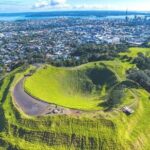
- Stop 4: One Tree Hill (Maungakiekie) and Cornwall Park craters
- Stop 5: Mt Eden summit views around Auckland’s volcanoes
- Lunch in Auckland Central: use the hour wisely
- Stop 6: Lake Pupuke and the crater-lake transformation
- Stop 7: Takapuna Beach and the lava-flow coastline details
- Stop 8: North Head Historic Reserve, tunnels, and volcano-built fort guns
- Devonport, Mt Victoria option, and crossing back your way
- Who this tour is best for (and who should skip it)
- My booking verdict: should you do the full-day version?
- FAQ
- How long is the full-day Auckland volcano tour?
- What time does the tour start, and where do I meet?
- Is port pickup included?
- What does the price include?
- Is lunch included?
- What kind of walking should I expect?
- Does the tour operate in bad weather?
- How many people are on the tour?
- Can I return by ferry instead of being driven?
Key takeaways before you book
- Small group (max 11) means you’ll get more personal attention at the stops
- Mike’s volcano-and-Māori storytelling turns “pretty views” into real place meaning
- Lots of viewpoints across the Auckland skyline, Waitematā Harbour, and multiple volcanic sites
- Crater walks are optional in places, but you still need comfortable shoes
- Lava coastline stops add variety beyond the usual city sights
- Port pickup/drop-off makes this feel unusually easy if you’re on a cruise
Why Auckland’s volcanoes feel personal from day one
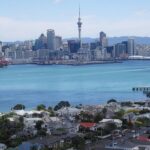
Auckland looks smooth from the road, but it’s built on repeated volcanic action over thousands of years. What I like about this tour is that it doesn’t treat volcanoes like museum pieces. You’re moving from harbor islands to city craters to lava coastline, so the “Auckland = volcanoes” idea clicks quickly.
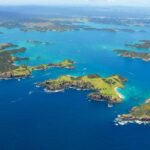
And you’re not just getting one type of view. One stop shows the Hauraki Gulf volcanic islands (including Rangitoto and Motukorea), while another lifts you into summit-level panoramas around Mt Eden. This is a great way to understand how Auckland’s geography works without needing a geology degree.
The cultural layer matters too. You’ll hear about early Māori settlement patterns connected to volcano areas, and later you’ll get a quick history thread about early British and Māori interaction at One Tree Hill (Maungakiekie). That blend of land + people makes the day feel more like a guided walk through Auckland’s character, not a list of viewpoints.
A few more Auckland tours and experiences worth a look

Price and logistics: what you’re really paying for
At $179.97 per person for about 10 hours, this isn’t a bargain bus deal. It is priced like a full-day experience where someone is doing the route planning, guiding your stops, and keeping the day coherent.
Here’s where the value shows up for you:
- Pickup and drop-off are included, including port transfers (ideal if you’re arriving by cruise).
- The tour is built around multiple paid-in-nature moments: crater access areas and historic reserve time.
- You get a structured flow: drive between sites in a minivan, then walk in short bursts so you’re not stuck doing one long slog.
Also, lunch is on you. Food and drinks aren’t included, so you’ll want a realistic lunch budget and a plan to use that lunch hour in Auckland Central well.
Pickup, timing, and the group-size reality
This tour starts at 8:00 am with the meeting point at 148 Quay Street, Auckland Central. It ends back at the meeting point. The provider runs a max of 11 travelers, which is small enough that you’re not disappearing into the crowd at each stop.
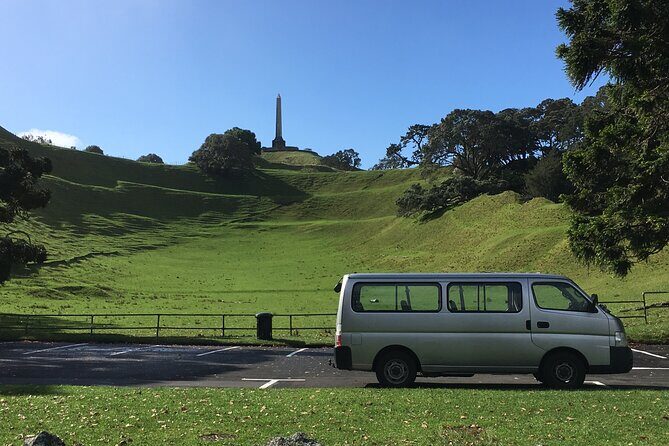
You’ll travel by minivan, and there’s a catch: when the van is full, seating can feel tight. So if you’re taller, or you just hate cramped seats on long drives, bring patience and consider bringing a small item to get comfortable (like a light layer or a small cushion).
Because it operates in all weather, you should dress for wet and cool conditions even if the forecast looks fine. Crater areas and coastal paths can get slippery. Comfortable, enclosed shoes are the smart call.
The day’s walking game plan (so you can pace it)
You’re signing up for “lots of walking,” and the itinerary reflects that. Most stops are around 15 to 45 minutes of being outside, moving, and sometimes climbing around crater edges.
The tour does offer flexibility at certain points (for example, an option to enter a steep-sided crater at Mt Wellington). Some paths can be a bit uneven, especially where you’re near volcanic rock and coastal areas. You don’t need to be a trail runner, but you should be comfortable with steady uphill and down-hill walking and basic balance.
If you’d like a simple self-check: if you can handle a moderate day hike at a relaxed pace, you’ll be fine. If craters and coastal rocks make you nervous, stick to the viewpoints and choose the easier viewing options when they’re provided.
Stop 1: Achilles Point and the Hauraki Gulf volcano view
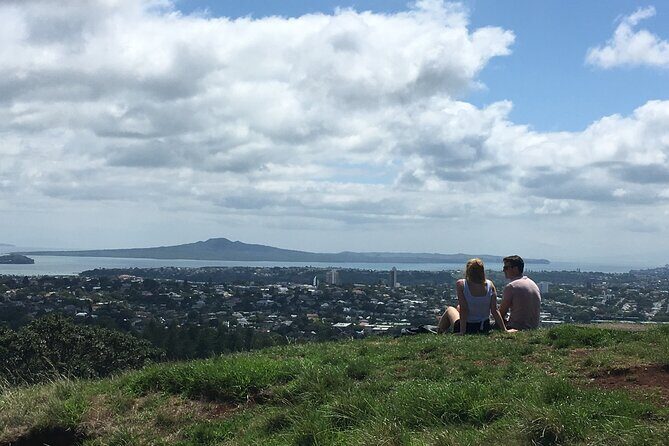
You start with Achilles Point, where the harbor islands come into focus. From here, you’ll look out over the Hauraki Gulf volcanic chain, with big names like Rangitoto and Motukorea showing the volcanic story in a way maps can’t.
You’ll also connect the geology to people, hearing about the arrival of early Māori settlers to New Zealand. The point isn’t just trivia—it helps you understand why certain natural features mattered for settlement and movement.
This stop is short (about 15 minutes), so treat it like a fast “orientation” moment. Take the photos quickly, then listen closely to the guide’s framing so the rest of the day makes more sense.



Stop 2: Mt Wellington crater walk (a 10,000-year-old reminder)
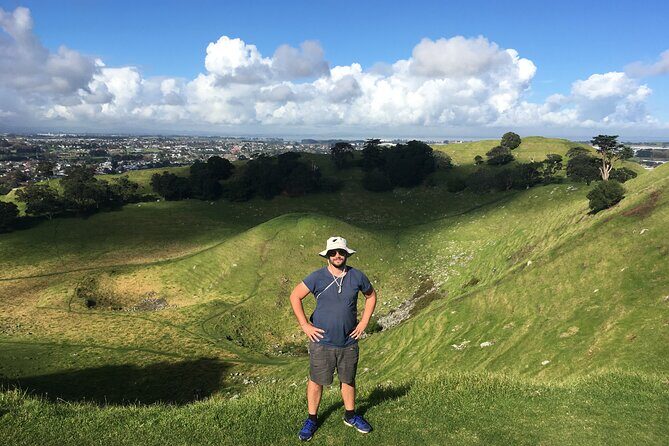
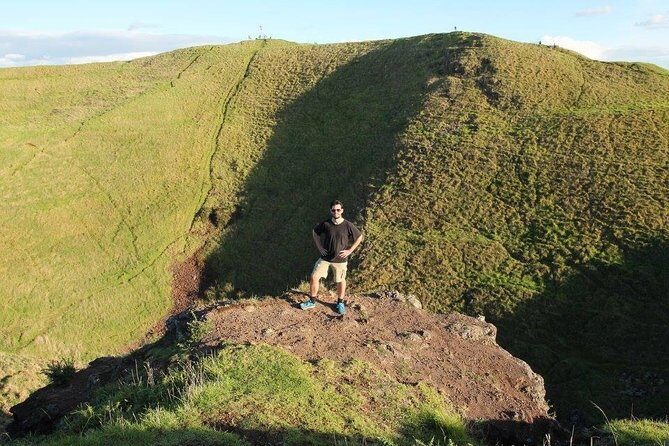
Next is Mt Wellington, where you walk up to a crater near the peak of a volcano estimated at 10,000 years old. That age detail helps you realize the volcanic field isn’t ancient in a vague way—it’s part of a timeline you can actually picture.
You’ll learn how Māori settlements relate to volcanic areas, and you’ll get an introduction to the Auckland Volcanic Field. If you want the full crater experience, there’s an option to enter the steep-sided crater.
This is one of the day’s “real effort” moments because it’s a crater walk. Go at your pace, and don’t rush the viewing stops. The whole point is to look, then understand what you’re seeing.
Stop 3: Mangere Mountain craters and Manukau Harbour views
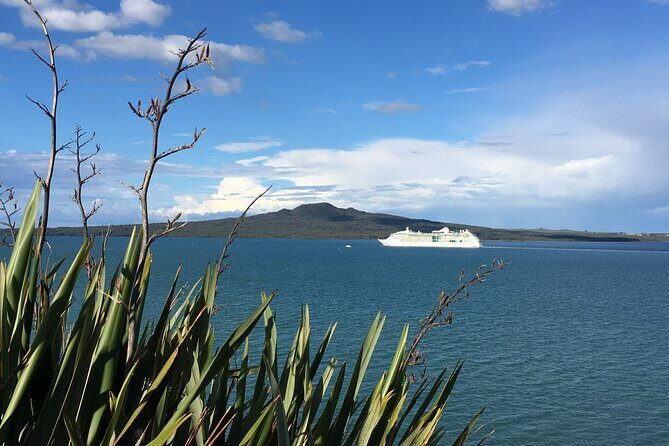
At Mangere Mountain, you’ll walk around the craters and learn more about Māori settlement on the volcano. You’ll also catch views over Manukau Harbour, which adds a new dimension: Auckland isn’t just one harbor. From different volcanoes, the whole city changes shape.
This stop also runs around 45 minutes, so you’ll have time to move slowly and still get your bearings. It’s a great chance to compare volcano types and what crater edges look like from different angles.
Stop 4: One Tree Hill (Maungakiekie) and Cornwall Park craters
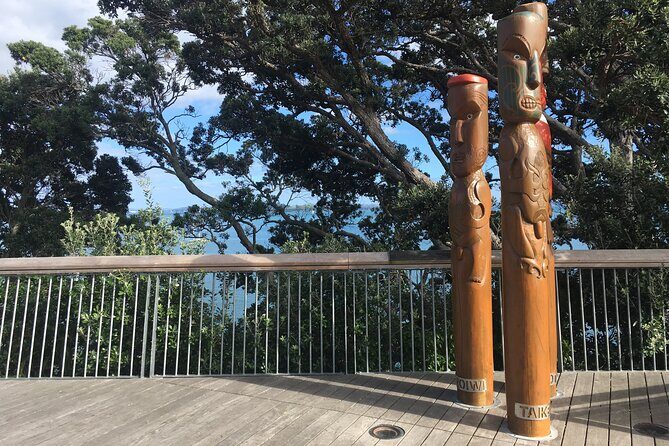
One Tree Hill (Maungakiekie) is a high-value stop because the views and the story come together. The guide gives a summary of New Zealand history with a focus on early British and Māori interaction.
Then you’ll drive around Cornwall Park and see additional volcanic craters nearby. Even though you’re not always walking here, it’s useful: you start noticing how many volcanic features are “hidden in plain sight” inside normal neighborhoods.
This stop clocks in around 30 minutes, so it feels like a focused reset. You’ll likely enjoy it most if you’re paying attention to how the viewpoint connects with the surrounding volcanic field.
Stop 5: Mt Eden summit views around Auckland’s volcanoes
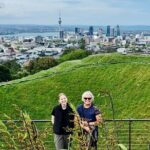
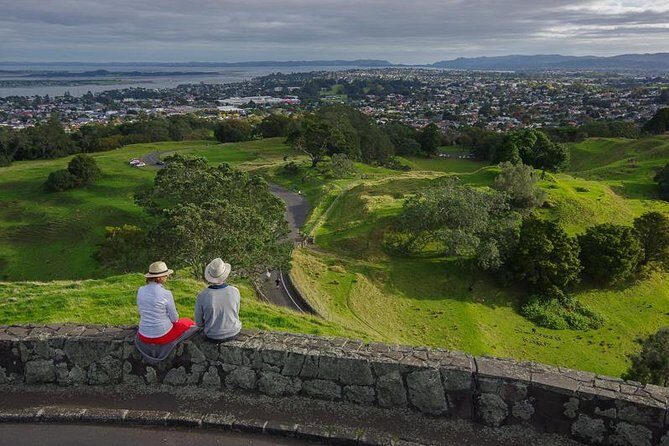
Then comes the big panoramic classic: Maungawhau / Mt Eden. You’ll walk around the crater and enjoy the summit-style views of the city and the surrounding volcanoes.
This is another 45-minute stop, and it’s often the moment where Auckland stops feeling flat. From the crater edge, you can visually connect the dots between multiple volcanic hills and the urban layout that grew around them.
If you like your photos with a clear skyline, this is the stop to slow down. Look first, then shoot. You’ll get more out of it that way.
Lunch in Auckland Central: use the hour wisely
After all that walking, you get a lunch break in Auckland Central with about an hour. Food and drinks aren’t included, and you can choose where to eat.
Since you don’t have a provided meal, I’d treat lunch as part of your comfort plan for the afternoon: pick something easy to access, hydrate, and don’t schedule anything right after the tour.
If you’re the type who gets hungry early, consider grabbing a snack before you board in the morning. The afternoon still includes walking and coastal exploring, and you’ll enjoy it more with steady energy.
Stop 6: Lake Pupuke and the crater-lake transformation
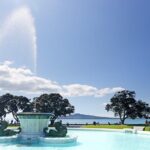
Next you’ll head to Lake Pupuke, a large volcanic explosion crater now turned into a freshwater lake. This is one of the best “wait, that’s the inside of a volcano?” moments.
You’ll learn what this crater explosion means and how it became a lake that now looks calm and scenic. The stop is brief at about 15 minutes, but it’s memorable because it shows how volcanic damage can become everyday beauty.
It also breaks up the day rhythm. After earlier crater-edge walking and skyline views, this feels like a quieter reset before the coastline portion.
Stop 7: Takapuna Beach and the lava-flow coastline details
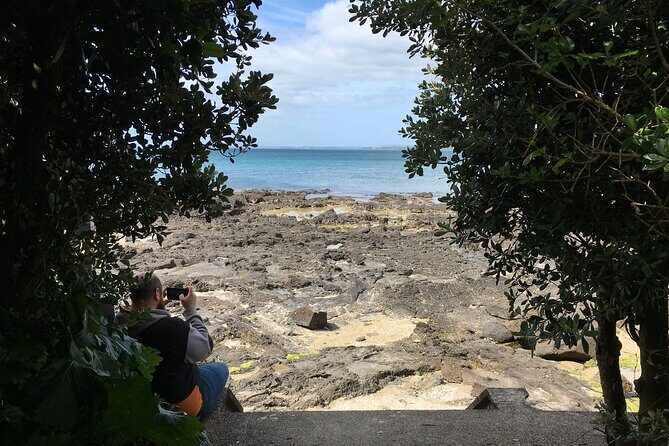
In the afternoon you shift toward the coast with Takapuna Beach, where you explore old lava flows near the shoreline. This is a strong change of pace because the visuals are more tactile: rocky textures, coastal angles, and geological features you might not expect to find in an urban region.
You’ll see volcanic features like tree moulds and lava tubes along the stretch. If you’re a photo person, this stop can be a feast—shapes and rock patterns read differently depending on tide and light (and you’ll likely have more than one good viewing angle).
There’s also an optional walk along the beach area. With everything else in the day, I suggest treating the optional walk as your “choose your effort” moment.
Stop 8: North Head Historic Reserve, tunnels, and volcano-built fort guns
At North Head Historic Reserve, the story turns into military history built into volcanic terrain. You’ll explore tunnels and see the guns at a British military fortress that was built into a volcano.
The walk here is described as an easy walk around the periphery of the volcano. That’s a key detail because it makes the stop feel doable even if your legs are starting to feel it. You still get harbor and city sights, which helps you keep the “Auckland from above and around” theme alive.
One of the reasons this stop works is that it shows geology can shape human decisions. Volcanic ground isn’t only scenery—it can become infrastructure, defense, and usable space.
Devonport, Mt Victoria option, and crossing back your way
The day also includes seeing Devonport, known for historic houses. There’s an optional walk up toward Mt Victoria volcano for more city views.
Then you’ll either be driven back over the Auckland Harbour Bridge to your hotel, or you can take the ferry from Devonport back to the city as an option.
Here’s the practical way to decide: if you want the simplest finish and fewer variables, take the drive. If you enjoy finishing with a water view and don’t mind timing, the ferry option can be a nice change from road travel.
Who this tour is best for (and who should skip it)
This tour is a great match if you:
- love views and want them from crater edges and harbor lookouts
- want the story behind Auckland’s shape, not just the usual city checklist
- prefer a small group day (max 11) with time to ask questions
- value a guide who connects geology with cultural and historical context (Mike is repeatedly highlighted for his ability to explain these connections)
You might want to choose a lighter option instead if:
- you struggle with uphill walking, crater steps, or uneven coastal rock
- you get grumpy with long seat time in a small minivan
- you’re hoping for a mostly seated sightseeing day
My booking verdict: should you do the full-day version?
If you can handle a full day of movement, I’d book this. The standout reason is the variety: you’re not repeating the same view from the same height. You’ll go from island horizons (Rangitoto and Motukorea), to crater walks (Mt Wellington, Mangere Mountain, Mt Eden), to volcanic coastline features (tree moulds and lava tubes), then finish with North Head’s tunnels and guns.
The guide element is another deciding factor. Mike’s explanations are clearly a big part of why this day works—he connects what you’re seeing to why it matters, including Māori settlement stories tied to specific places.
Just go in knowing what it is: a 10-hour walking-and-viewing day with lunch on your own. If you do that, you’ll come away with a much sharper mental map of Auckland—and why it looks the way it does.
FAQ
How long is the full-day Auckland volcano tour?
The tour runs for about 10 hours.
What time does the tour start, and where do I meet?
It starts at 8:00 am. The meeting point is 148 Quay Street, Auckland Central, Auckland 1010.
Is port pickup included?
Yes. Port pickup and drop-off are included.
What does the price include?
Pickup and drop-off are included, along with admissions at the listed stops (where admission tickets are included).
Is lunch included?
Lunch isn’t included. You’ll have about 1 hour in Auckland Central for lunch at a location of your choosing.
What kind of walking should I expect?
This tour includes lots of walking and includes walking up to crater areas and around historic reserve paths. You should have a moderate fitness level.
Does the tour operate in bad weather?
Yes, it operates in all weather conditions, so you should dress appropriately.
How many people are on the tour?
The maximum group size is 11 travelers.
Can I return by ferry instead of being driven?
Yes. After the Devonport portion, you can be driven back over Auckland Harbour Bridge or take the ferry back to the city.