REVIEW · AUCKLAND
Māori Cultural Experience & Auckland Museum General Admission
Book on Viator →Operated by Auckland War Memorial Museum · Bookable on Viator
That haka moment starts with context. At Auckland Museum, the Māori Cultural Experience pairs a powerful stage performance with museum entry, so you get both the performance and the backstory.
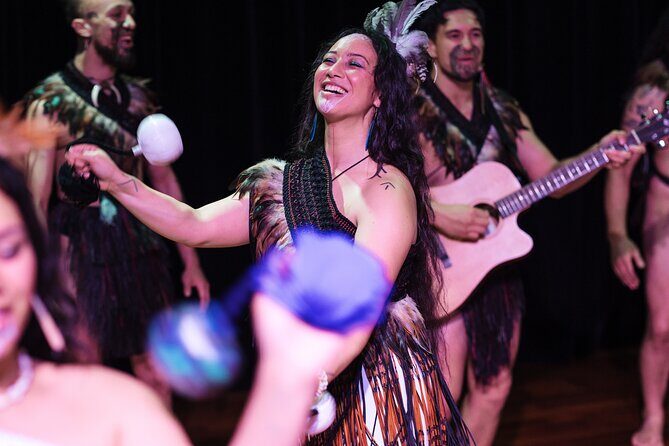
What I like most is the way the show uses waiata (songs) and poi to teach without turning it into a lecture. I also appreciate that the program focuses on the meaning behind the haka, not just the look of it.
One thing to consider: the performance timing can feel tighter than you might expect, and the museum galleries you may want may be limited because the Māori Court & Pacific Galleries are temporarily closed for maintenance.
A Living Taonga stage performance plus museum admission
Poi skills and waiata that explain more than you think
Haka origins and meaning, explained in plain language
Plan for museum time too, since special exhibits are extra
Māori Court & Pacific Galleries are closed during maintenance
In This Review
- Living Taonga at Auckland Museum: what you’re really buying
- Getting to the Auckland War Memorial Museum and where you check in
- The Māori Cultural Experience: waiata, poi, storytelling, and the haka focus
- How the show handles haka
- The pace: short performance vs big impact
- Auckland Museum general admission: where to spend your time
- A museum that helps you contextualize the performance
- The temporary closure: what changes because Māori Court & Pacific Galleries are down
- Timing tips: how to fit 45 minutes to 3 hours without rushing
- Value check: does the $38.48 ticket make sense?
- Who should book this, and who should skip it
- Should you book the Māori Cultural Experience at Auckland Museum?
- FAQ
- How much does the Māori Cultural Experience cost?
- What’s included in the ticket?
- How long does the experience take?
- Where do I start, and where do I end?
- Is there anything closed during the experience?
- What’s the cancellation policy?
Living Taonga at Auckland Museum: what you’re really buying

This ticket is basically two experiences bundled into one visit: a Māori Cultural Performance at the Auckland War Memorial Museum, and general admission to Auckland Museum right after. The performance centers on the Māori idea of taonga, meaning treasured things, and treats culture as something living, not stuck in the past.
The price is $38.48 per person, and it’s a smart deal if you were already planning to visit Auckland Museum. You’re not paying extra just to see the stage show and then realizing the museum part is separate or overpriced.
The overall duration is listed as 45 minutes to about 3 hours, which is a wide range. That matters because you’ll want to decide how much of your time you’ll spend in exhibits versus how much you’ll spend watching the show and then grabbing food and walking around.
Getting to the Auckland War Memorial Museum and where you check in
You start at the Auckland War Memorial Museum in Parnell (Auckland 1010), and the experience ends back at the meeting point. The ticket redemption point is also at the museum, so you’re not bouncing around town with a scavenger hunt for check-in.
The good news: it’s near public transportation, so you can use the bus/train option without stress. And if you’re traveling with a service animal, they’re allowed, which is helpful for people who need that support.
Because confirmation is handled within 48 hours of booking (when available), you should still keep a little flexibility in your schedule. If you’re in Auckland for a short window, try to book early so you don’t end up waiting on availability.
You can also read our reviews of more museum experiences in Auckland



The Māori Cultural Experience: waiata, poi, storytelling, and the haka focus
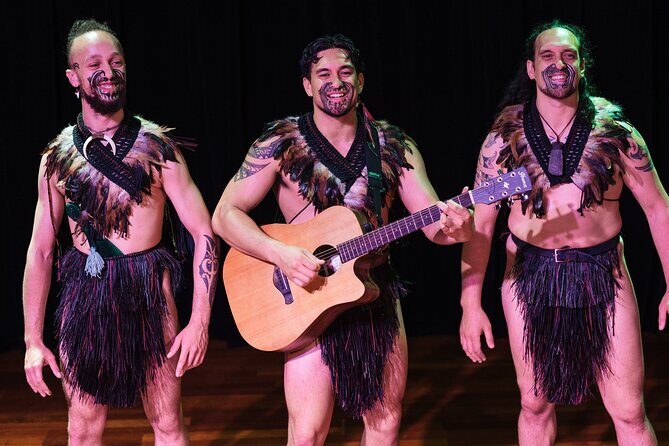
The stage part is the reason most people book, and it starts with Māori artists and orators guiding you through culture through performance. Expect waiata (traditional songs), poi (the skilled use of poi in movement), storytelling, and dance.
What makes this more than just entertainment is the way the show links technique to meaning. Songs aren’t treated like background noise, and poi isn’t just a skill showcase. You get explanations that help you understand what you’re seeing and why it matters.
How the show handles haka
The program explicitly includes the origins, traditional uses, and differences of the haka, plus what it communicates. That’s valuable because haka gets treated online like one-size-fits-all, and this experience aims to give you the cultural logic behind it.
That said, there are mixed expectations in the feedback around the haka moment. Some people felt they didn’t see the haka portion the way they expected, or that it felt brief. If your priority is a long, full haka performance, go in with the mindset that you’re there for education and explanation, not a guaranteed long centerpiece.
The pace: short performance vs big impact
The performance time can vary, and some visitors felt it ran shorter than they expected. You might also notice that the focus is often welcome-and-inclusion style, which can mean more guided narration than you’re hoping for.
That’s not necessarily bad. In fact, if you’re new to Māori culture, a structured intro can help you connect without needing a glossary in your hand. Just know what you’re signing up for: an introduction, not a multi-hour cultural immersion program.
Auckland Museum general admission: where to spend your time
Your ticket includes general admission entry to Auckland Museum, so you can walk through the exhibits before or after the performance. The museum is known for natural history, New Zealand heritage, and cultural treasures (taonga), which gives you plenty of room to keep learning.
Here’s the practical idea I like: don’t try to do everything. Pick one theme to match the show, then let the museum build on it. For example, if the performance made you curious about identity, history, or cultural meaning, aim your first museum stops at sections tied to New Zealand heritage and objects.
Also, keep in mind that special exhibitions aren’t included unless you buy a separate ticket. So if you see a headline exhibition with a separate price at the museum entrance, plan on treating it as optional.






A museum that helps you contextualize the performance
What I find useful about doing the show at Auckland Museum is that it’s not floating in a vacuum. The cultural performance gives you the living side of Māori tradition, and the museum setting helps you connect that to broader themes like heritage and taonga.
Some people loved the museum side so much they felt the whole day was worth it, not just the stage moment. That’s a good sign for value, especially if you’re already the type of traveler who likes to balance shows with galleries.
The temporary closure: what changes because Māori Court & Pacific Galleries are down
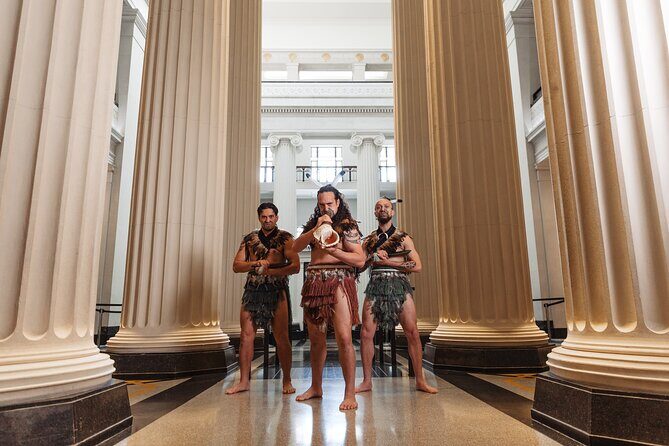
One key note is built into the experience: the Māori Court & Pacific Galleries are temporarily closed due to essential maintenance work. That’s not a small footnote, because these areas are exactly the kind of space you’d expect to connect directly with a Māori cultural program.
Practically, this means you should expect your museum experience to feel slightly incomplete if you were hoping to spend time in those specific galleries. You can still have a strong visit, but your route through the museum may need to shift toward other sections that are open.
If you like to plan tightly, check what galleries are running before you commit to a strict timeline. If you’re more flexible, treat the museum as a chance to explore and adjust on the spot.
Timing tips: how to fit 45 minutes to 3 hours without rushing

Because the duration is listed as 45 minutes to about 3 hours, you’ll want to think like a scheduler, not a sprinter. If you only have an hour, you might still make it work, but you’ll have almost no buffer for wandering the museum.
If you can, give yourself time for a second pass through the museum. The stage performance can leave you with questions, and the museum is where you can chase answers at your own pace. This is especially helpful when the show focuses on meaning and symbolism, since you’ll likely want to connect it to objects or stories you see afterward.
A simple plan: arrive a bit early, find your museum bearings fast, attend the performance, then spend the rest of your time in the exhibits that match the themes you care about most. That way, the day feels intentional instead of like you popped in, watched a show, and left with half-formed thoughts.
Value check: does the $38.48 ticket make sense?

The big value here is the combination. You pay once and you get both:
- the Māori Cultural Performance ticket
- general admission to Auckland Museum
That’s the value math. If you would have paid for museum entry anyway, the performance effectively rides along as part of the same plan. If you only care about the show and don’t plan to do much in the museum, it can feel more expensive, because you’re still paying for general entry.
Also watch out for the things that are not included. Special exhibition entry requires separate ticketing, and guided tours are not part of this booking. So if you were hoping for a full guided walkthrough, you’ll need a different option.
Where the feedback trends strongest is on the presentation quality and the educational tone. Many people describe it as moving and respectful, with the performance explaining details rather than just performing to perform. That’s exactly what you want from an intro when you don’t want to misread the meaning.
Who should book this, and who should skip it
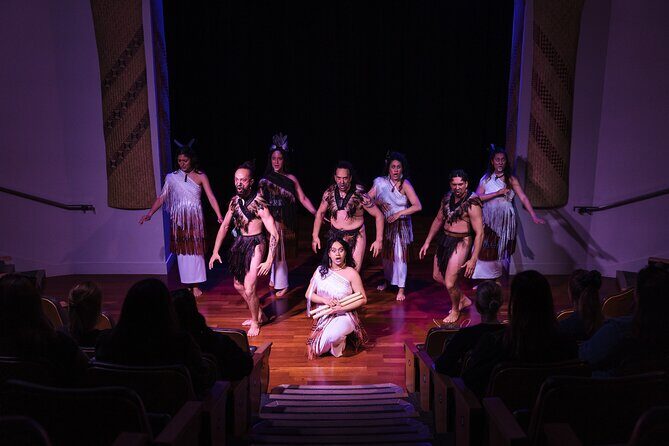
This experience fits best if you want a structured introduction to Māori culture in an environment that also supports self-guided learning. If you like live performance, enjoy music and dance, and want the context behind concepts like haka, you’ll probably leave with a clearer sense of meaning.
It’s also a good fit for couples, solo visitors, and anyone who likes a “one ticket, two parts” day. The museum entry lets you round out the story after the performance, instead of feeling like you only got a 30-minute show and then ran off.
Who might pause before booking: if you’re expecting a long, dramatic haka performance as the main event, you might be disappointed by how the program is paced. Some people also flagged that the number of performers and the length of key moments felt different from their expectations, so manage your expectations and focus on the overall intro rather than one specific highlight.
Should you book the Māori Cultural Experience at Auckland Museum?

Yes, if you want a respectful, structured introduction to Māori culture paired with a museum visit you can actually use. The combination is the key: a stage performance with meaning plus Auckland Museum general admission for extra learning time.
Book it especially if you’re already planning to see the museum, because the ticket is built to make that day efficient. Just keep the closure in mind and plan for the fact that the Māori Court & Pacific Galleries won’t be part of your museum route.
If you’re traveling with tight time limits or you’re mainly hunting for a long haka centerpiece, I’d still consider it, but go in expecting an education-focused program. That mindset will help you enjoy what’s on offer instead of counting minutes.
FAQ
How much does the Māori Cultural Experience cost?
The price is $38.48 per person.
What’s included in the ticket?
Your booking includes the Māori Cultural Performance ticket plus general admission entry to Auckland Museum. Special exhibitions that require separate tickets are not included, and guided tours are not included.
How long does the experience take?
The duration is listed as 45 minutes to 3 hours (approx.). That range can affect how much museum time you have.
Where do I start, and where do I end?
You start at Auckland War Memorial Museum, Parnell, Auckland 1010 and the activity ends back at the same meeting point. Ticket redemption is also at Auckland Museum, Parnell, Auckland 1010.
Is there anything closed during the experience?
Yes. Māori Court & Pacific Galleries are temporarily closed because of essential maintenance work.
What’s the cancellation policy?
You can cancel for a full refund if you cancel at least 24 hours before the experience’s start time. The experience may also be canceled if a minimum number of travelers is not met, in which case you’ll be offered a different date/experience or a full refund.