REVIEW · QUEENSTOWN
Milford Sound and Big Five Glaciers Scenic Flight
Book on Viator →Operated by Air Milford · Bookable on Viator
Milford Sound hits different from the sky. This 1-hour flight strings together Mt. Aspiring National Park, multiple glacier fields, and a bird’s-eye view of Milford Sound with live commentary. It’s a fast way to see a lot without spending the day on roads and waiting around.
My favorite part is the pilot-led briefing and live narration. You’re not just staring out a window—you’re getting real names, heights, and what you’re looking at as the route unfolds.
The other thing I like: it’s small and efficient, with hotel pickup and a smooth loop over Shotover Canyon and the Southern Alps. The main thing to consider is weather—this experience depends on good conditions, so you’ll want to keep your schedule flexible.
In This Review
- Key things that make this flight worth your time
- Why this scenic flight can beat a full-day Milford itinerary
- Entering Air Milford: the pre-flight briefing that helps your eyes
- Over Shotover Canyon and Coronet Peak: the route starts strong
- Mt. Aspiring National Park: Matterhorn of the South in full context
- Glacier Alley and the Olivine Ice Plateau: Big ice without the crowds
- Milford Sound from the air: Mitre Peak and the fiord’s drama
- What you get vs what you don’t: no landing, no cruise
- Timing, comfort, and how small-group flights feel in practice
- Sutherland Falls and the Arthur Valley: a final wow moment
- Price and value: is $343.70 per person fair?
- Who should book this flight (and who should maybe skip it)
- Should you book this Milford Sound and Big Five Glaciers flight?
- FAQ
- How long is the Milford Sound and Big Five Glaciers scenic flight?
- Where does the tour start, and do you get hotel pickup?
- Is a Milford Sound cruise or landing included?
- Do you get live commentary during the flight?
- What glaciers and landmarks will I see?
- How many people are on the flight?
- What should I bring for the flight?
- What happens if the weather is poor?
- Is there free cancellation?
Key things that make this flight worth your time
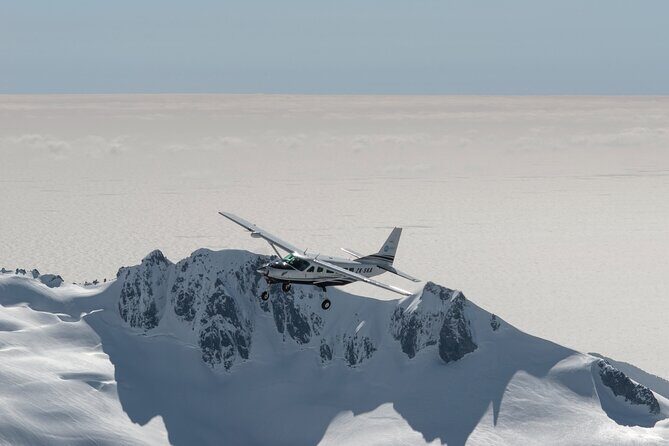
- Pilot briefing before takeoff so you know what to spot right away
- At least five major glaciers on one short hop through the Alps
- Milford Sound from above including Mitre Peak rising straight out of the fiord
- Small group size (max 12) for a more relaxed feel in the aircraft
- Hotel pickup and drop-off from central Queenstown to keep the day simple
Why this scenic flight can beat a full-day Milford itinerary
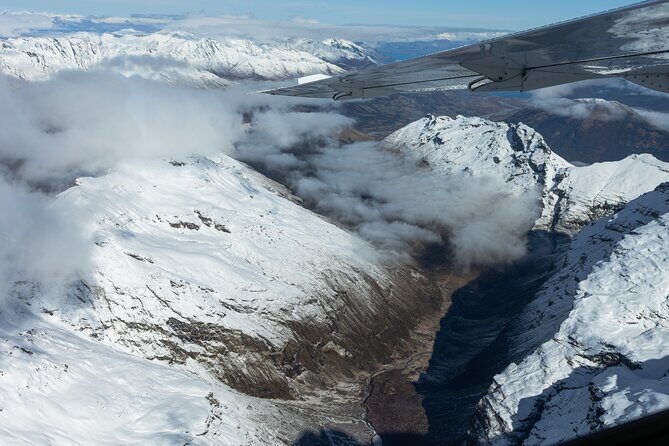
If you want Milford Sound, the scenic flight is the shortcut. You trade boat schedules and long drives for a tight route that hits the big visual anchors—glaciers, mountain passes, and the fiord—while everything stays in view.
I also like that this isn’t only about the famous spotlight glaciers further north. You’re seeing a cluster of less-visited ice features that still look dramatic from above, plus the geography connecting them: valleys, divides, and the way forests change as altitude and exposure shift.
One practical note: since this is a flight, you’re at the mercy of the sky. When the weather is good, it feels effortless. When it’s not, you’ll have to roll with the operator’s plan.
You can also read our reviews of more tours and experiences in Queenstown.
Entering Air Milford: the pre-flight briefing that helps your eyes
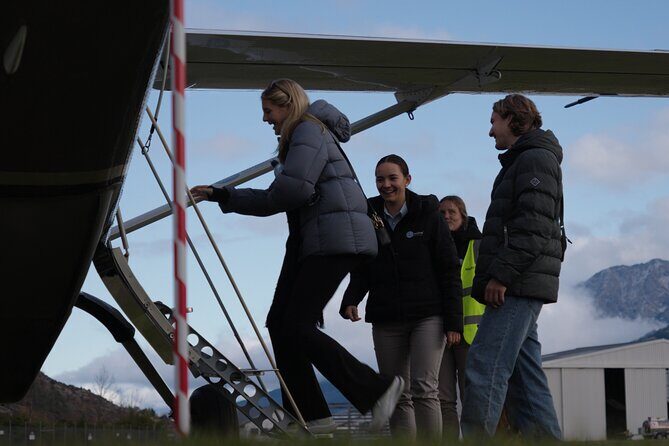
You start at Air Milford (in Frankton, Queenstown), where there’s a thorough pre-flight briefing with your pilot. The whole point is simple: you want your eyes to know what they’re seeing before the plane is already on the move.
You’ll get a rundown of the sights likely to appear during the hour, and then the pilot keeps talking through the route. That matters, because from a window at speed, mountains and glacier fields can look similar until someone gives you the names and cues. With live commentary, you end up watching with purpose instead of just hoping for the best photo angle.
Also, do yourself a favor and bring the basics the operator asks for—a jacket and a camera. Even in good weather, air gets chilly fast once you’re up near cloud level and flying over snow.
Over Shotover Canyon and Coronet Peak: the route starts strong
Right after takeoff, you’ll see Coronet Peak, one of New Zealand’s premiere ski areas. It’s a good early marker because it confirms you’re already in the right mountain zone—this is not a slow coast-and-pray flight.
Then the route moves over the Shotover River and Skippers Canyon. There’s a neat historic detail here: gold was discovered in the 1860s, and the Shotover River became known as the world’s second highest gold-bearing river, right behind Alaska’s Klondike. You get a “wait, that’s where it happened?” moment when you realize the scenery is tied to real, intense history.
What I like about starting with this section is how the view transitions. You go from recognizable peaks and river corridors into bigger alpine country where glaciers and fiords become the main event.
Mt. Aspiring National Park: Matterhorn of the South in full context
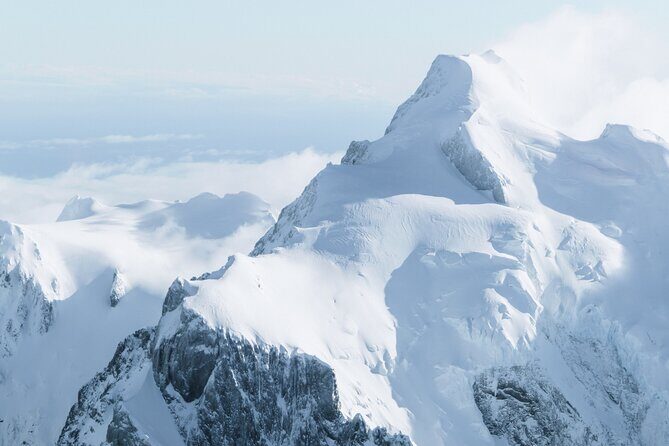
Once you head north out of the Wakatipu Basin, the mountains open up fast and you enter Mt. Aspiring National Park. This is where the flight gets especially memorable, because the pilot’s descriptions match what you can actually see—peaks, glaciers, and the way the land stacks up in layers.
The highlight is Mount Aspiring, often compared to the Matterhorn of the South. The height given is 10,000 ft / 3,030 meters, and the pilot points out how it connects to a network of ice fields—six related glaciers, with the largest being the Upper Volta Glacier.
Why this matters for you: it turns a single peak into a whole system. Instead of thinking of glaciers as isolated ice patches, you start noticing how they feed off surrounding slopes and how the terrain funnels ice and melt patterns into distinct areas. Even if you’re not a “glacier person,” this is the kind of explanation that makes the visuals click.
Glacier Alley and the Olivine Ice Plateau: Big ice without the crowds
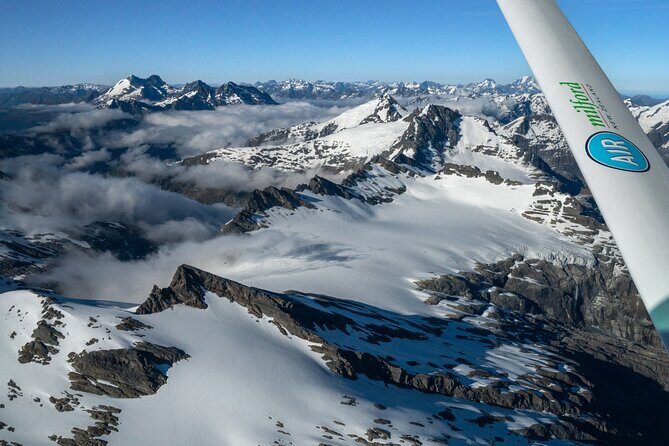
As you transition west toward Fiordland National Park, you fly down what’s described as glacier alley. This is where the route leans into the theme of the tour: multiple glaciers in a compact window.
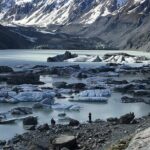
The flight may include at least five major glaciers, and the list of possible features is impressive: Rob Roy, Bonar, Jura, Volta, Dart, Olivine, and Donne. Even if you don’t catch every one on your specific day, you’ll still get that “five glaciers in one flight” feel the name promises.
You’ll also pass the Olivine Ice Plateau, described as a unique glacial amphitheater. From above, that kind of landform often looks like a natural bowl—ice occupying a shaped basin—so it’s the sort of spot where the pilot commentary makes a big difference. You don’t just see white streaks. You see a structure.
One more reason I like this section: these glaciers are described as less visited than the famous Fox and Franz Josef areas further north. Translation: you get the alpine spectacle without turning this into a crowded, checklist-driven day.


Milford Sound from the air: Mitre Peak and the fiord’s drama
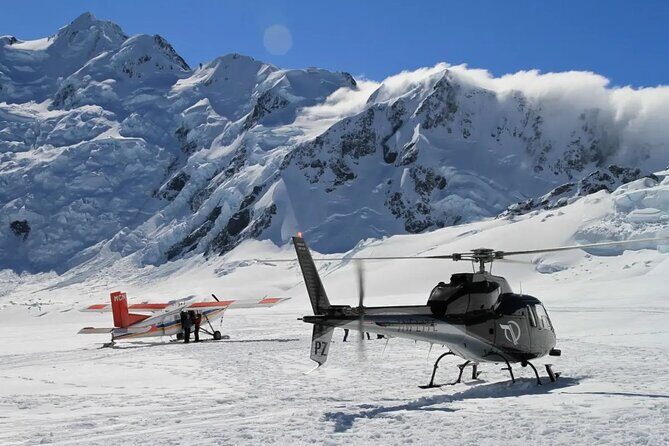
Milford Sound appears after the glacier-focused segment, and the view shifts from ice and high peaks to something darker and deeper. You’ll fly overhead of Milford Sound itself, which is noted as the most northerly of 14 fiords in Fiordland and one of the most dramatic.
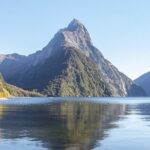
The standout focal point is Mitre Peak. It rises directly out of the fiord water to a summit of 5,560 ft / 1,690 meters. The pilot also notes that it’s more than a mile of vertical gain—so from above, you really get the idea that this is not a gradual slope. It’s a wall.
The route then tracks east across the Southern Alps and back toward Queenstown. Along the way, you’ll likely spot Lake Te Anau, described as New Zealand’s second-largest lake, and then fly across the Greenstone Valley with its beech forests before emerging above Lake Wakatipu.
From a travel-sense standpoint, I love that this section doesn’t just show Milford. It shows how Milford connects to the wider region—lakes, valleys, and the mountain divide that shapes everything.
What you get vs what you don’t: no landing, no cruise

This is strictly a scenic flight. There’s no landing in Milford Sound included, and there’s also no Milford Sound boat cruise included.
So if your dream day is to get wet on the water, watch wildlife from a boat, and stand on the fiord shoreline, you’ll need a separate boat option. But if your priority is to see a lot of the region fast—glaciers, fiords, and peak systems—then a flight is often a better match than trying to squeeze everything into one day.
I think of it like this: the plane gives you the big-picture geometry. A boat gives you up-close atmosphere at water level. This tour is clearly in the first category.
Timing, comfort, and how small-group flights feel in practice
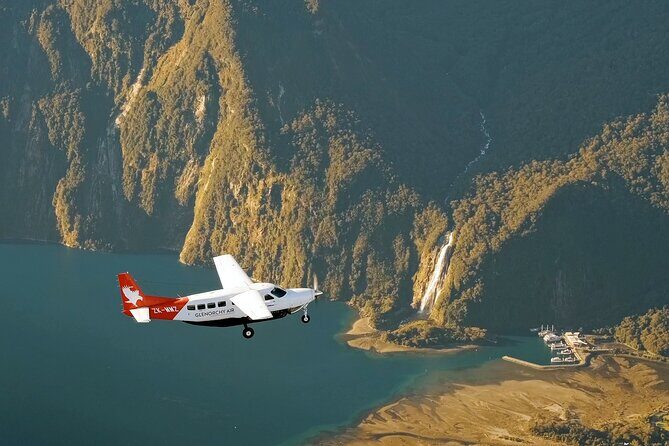
The duration is listed as about 1 hour (scenic flight time, plus the pre-flight briefing time). The whole experience also includes hotel pickup and drop-off from centrally located Queenstown hotels, and it ends back at the start point.
A detail worth caring about: the aircraft has a maximum of 12 travelers. That small ceiling is one reason people tend to enjoy this style of tour more than larger buses or long multi-stop days. With fewer bodies, you get easier sightlines and a calmer pace.
Another practical point: this tour strongly depends on a clear day or at least break-through visibility. When clouds sit low, you may lose some detail. Still, the upside is that you can sometimes catch dramatic cloud-and-snow contrast if you’re flying above or skimming near cloud layers.
Sutherland Falls and the Arthur Valley: a final wow moment
After leaving Milford Sound, the route tracks south down the Arthur Valley. At the head of that valley, you can view Sutherland Falls, described as New Zealand’s highest waterfall, falling 1,900 ft.
Even from the air, a waterfall at that height tends to show up as a bright ribbon cutting through darker terrain. It’s a strong closing image because it adds motion and scale to everything you’ve already seen—ice up high, then the gravity-driven drama of water descending.
Price and value: is $343.70 per person fair?
At $343.70 per person, this isn’t a budget activity. But it can feel like good value if you look at what you’re buying: a single short flight that connects Queenstown to two major alpine worlds—Mt. Aspiring and Fiordland/Milford Sound—plus multiple glaciers.
Here’s the value math I use when judging a scenic flight:
- You’re compressing a lot of geography into about an hour.
- You’re getting pilot commentary (so it’s not just window time).
- You’re avoiding the “time tax” of road travel and slow sightseeing loops.
Where it might not be a great deal is if you’re already planning a Milford boat cruise and only care about the fiord itself. In that case, you might decide to spend less on a second experience and more on water-level time. But if you want the glaciers and the fiord drama in one day, this price can make sense fast.
Who should book this flight (and who should maybe skip it)
This scenic flight is ideal if:
- You want glaciers and Milford Sound visuals without losing half your day to logistics.
- You enjoy understanding what you’re seeing, especially with live pilot narration.
- You’re okay with weather-based timing and can be flexible.
You might skip it if:
- You specifically want to land at Milford Sound or do a cruise there (those aren’t included here).
- You hate the idea of losing an outing to weather conditions, even though the operator offers an alternative date or full refund if it’s canceled for poor weather.
Also, for families: the information given is clear that children must be accompanied by an adult, and most travelers can participate. So it can work for families, as long as everyone is comfortable with the flight.
Should you book this Milford Sound and Big Five Glaciers flight?
I’d book it if you want a high-impact day with minimal fuss. The combination of glacier views, Mt. Aspiring’s major peak, and Milford Sound overhead hits multiple “big ticket” sights in a short time, and the pilot commentary turns the route into something you’ll remember for the names as much as the views.
I’d think twice if you’re the type who needs to be on the water at Milford Sound. This flight is more about the aerial structure and the scale of the region than about stepping onto the fiord itself.
If your schedule can flex a bit and you pack a jacket, this is one of those Queenstown experiences that feels like it was designed for your time—tight, focused, and genuinely scenic from start to finish.
FAQ
How long is the Milford Sound and Big Five Glaciers scenic flight?
The flight duration is listed as about 1 hour (approx.), and there is also a pre-flight briefing at Air Milford.
Where does the tour start, and do you get hotel pickup?
The experience starts at 3 Tex Smith Lane, Frankton, Queenstown 9300. Hotel pickup and drop-off are included for centrally located Queenstown hotels.
Is a Milford Sound cruise or landing included?
No. There is no landing in Milford Sound included and no cruise of Milford Sound is included.
Do you get live commentary during the flight?
Yes. The tour includes live commentary from the pilot during the flight, plus a full pre-flight briefing.
What glaciers and landmarks will I see?
You should see views of at least five major glaciers, and glaciers may include Rob Roy, Bonar, Jura, Volta, Dart, Olivine, and Donne. You’ll also fly over major landmarks such as Mount Aspiring and Mitre Peak above Milford Sound, with views that can include Lake Te Anau and Lake Wakatipu.
How many people are on the flight?
The aircraft has a maximum of 12 travelers.
What should I bring for the flight?
Bring a jacket and a camera, since the experience is outdoors in feel and you’ll want photos from the air.
What happens if the weather is poor?
This experience requires favorable weather. If it’s canceled due to poor weather, you’ll be offered an alternative date/time or a full refund.
Is there free cancellation?
Yes. You can cancel up to 24 hours in advance for a full refund.