REVIEW · MOUNT COOK
Mount Cook and The Glaciers 55-Minute Helicopter Flight
Book on Viator →Operated by Totally Tourism - The Helicopter Line · Bookable on Viator
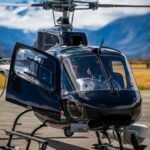
Glaciers fly by fast. This 55-minute helicopter ride from Glentanner Park gives you big-Alps views you can’t earn on foot, including a real alpine snow landing where you can step out and walk around in the snow. I especially like that a pilot guide shares what you’re seeing while you hover above Aoraki/Mt Cook, then swing down over the Tasman Glacier before heading across to the West Coast glaciers.
The only true drawback is the obvious one: this is weather-dependent. When winds are high, flights can be delayed, shortened, or cancelled, so you’ll want buffer time in your South Island plan.
In This Review
- Key things you should know before you go
- Why this Mt Cook and Glaciers helicopter route feels like cheating
- Getting from Glentanner Park to the helipad without stress
- The first leg: hovering above Aoraki/Mt Cook and the National Park
- Tasman Glacier lake: the quiet, weird beauty break
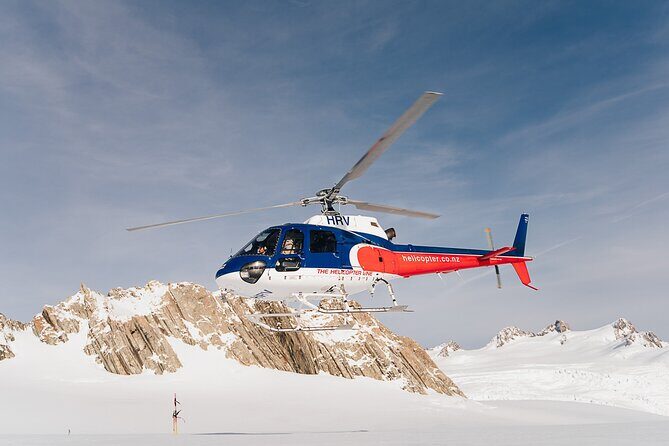
- The Alpine snow landing: step out, breathe cold air, get your bearings
- Crossing to the West Coast: Franz Josef and Fox glaciers from above
- What the ride feels like inside the helicopter
- Price and value: where $556.93 makes sense (and when it doesn’t)
- Weather reality in the Mackenzie Basin and how to plan around it
- Who this Mt Cook glaciers flight suits best
- Final call: should you book this heli-glacier ride?
- FAQ
- How long is the Mount Cook and Glaciers helicopter flight?
- Where does the tour start?
- What will I see during the flight?
- Is there a landing during the tour?
- Does the pilot provide commentary?
- How many people are on the flight?
- Is there a weight limit?
- What should I wear?
- What happens if weather is bad?
- What is the cancellation/refund rule?
Key things you should know before you go
- Alpine snow landing: you step out on pristine snow, not just hover above it
- Aoraki + Tasman + West Coast in one flight: Mt Cook National Park to Franz Josef and Fox in about an hour
- Tasman Glacier highlights: you’ll see the glacier lake and fly along the length of the glacier
- Small group: flights run with a maximum of 6 travelers
- Safety-first operations: aviation standards are a core part of the experience
- Weight limit applies: total weight per passenger is capped at 364 lbs, and seating can depend on passenger weights
Why this Mt Cook and Glaciers helicopter route feels like cheating
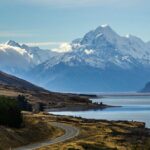
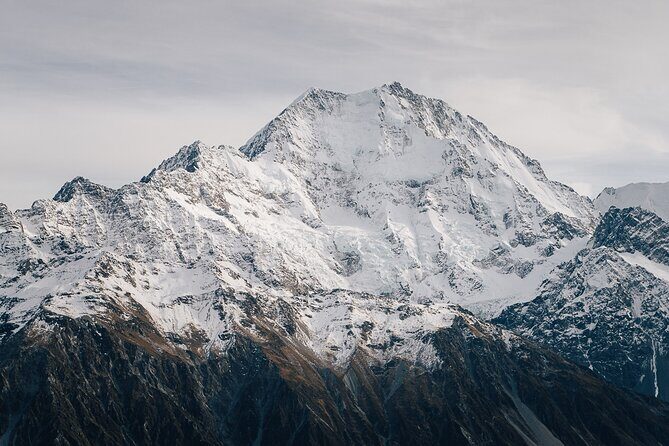
If you’re picturing New Zealand’s Southern Alps as a place you have to “earn” with hours of hiking, this flight changes the game. The big mountains are still there—Aoraki/Mt Cook looming sharp and enormous—but you’re seeing them from the air, without the physical struggle that comes with high alpine terrain.
This ride is also built for perspective. You don’t just get a single “pretty view” and move on. You fly across major zones—Aoraki/Mt Cook, the Tasman Glacier, then the West Coast glaciers—so your brain starts mapping how these landscapes connect. One flight, and suddenly the whole region makes more sense.
And yes, the snow landing is the moment you’ll remember. Stepping out in cold, quiet snow while giant peaks sit above and around you hits a different note than looking at a glacier from a viewpoint.
A few more Mount Cook tours and experiences worth a look
Getting from Glentanner Park to the helipad without stress
Your trip starts at The Helicopter Line at Helicopter Line, Mount Cook Glentanner Park, State Highway 80 (7999, New Zealand). The good news is the meeting point is straightforward, and the tour ends back at the same place.
One small detail that matters: you’ll make your own way to the helipad. That’s not scary, but it does mean you should show up ready to move—especially if you’re wearing hiking boots and heavy layers. Plan for cold conditions and chilly wind on the ground.
If you’re trying to time this around other plans in Mt Cook Village or Tekapo area, give yourself cushion. Even when your flight is scheduled, weather can shift the experience window.
The first leg: hovering above Aoraki/Mt Cook and the National Park
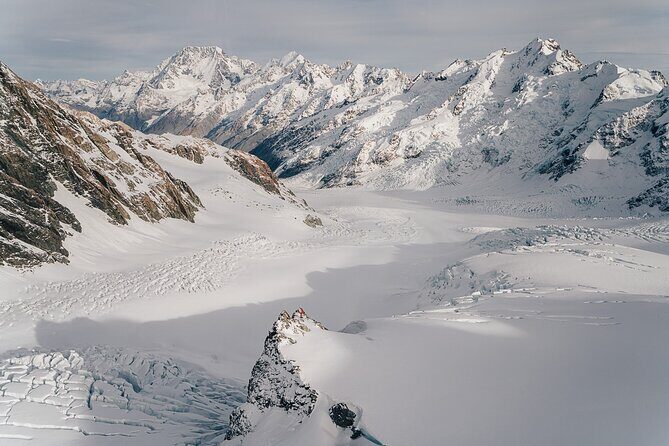
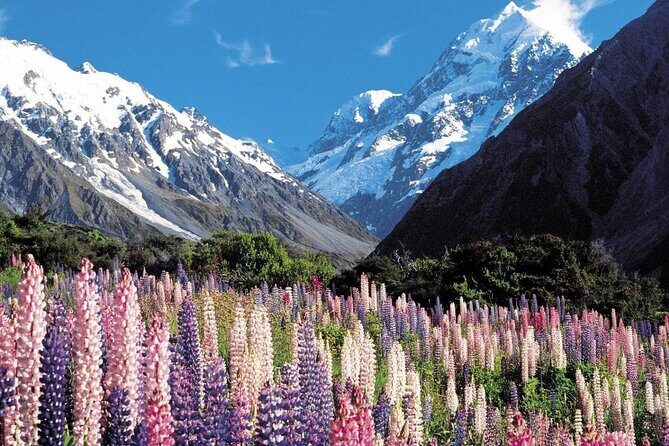
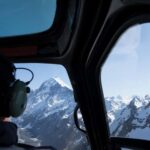
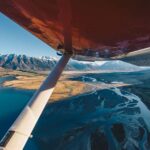
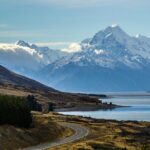
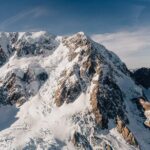
Once you lift off, the mountains stop being “background” and start being scale lessons. You soar over Mt Cook National Park, watching snowfields and glacier-fed terrain stretch out under you. Aoraki/Mt Cook is the headline, and the route is designed so it keeps showing up in different angles, not just one quick fly-by.
This is where the pilot guide becomes more than a formality. As you cross the Southern Alps, the commentary helps you connect shapes on the ground to what they actually are. You’re not just passively viewing. You’re building quick understanding of why glaciers look the way they do from above.
A detail I really appreciate from how this kind of flight is run: safety and seat planning matter. There’s a 364 lbs per passenger weight limit listed for the tour. Also, seating can be based on total passenger weights, so try to go in with a realistic mindset if you’re near the limit.
Tasman Glacier lake: the quiet, weird beauty break
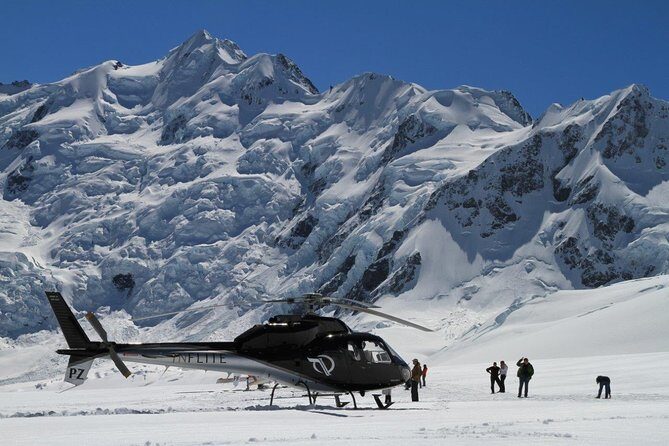
Then comes the Tasman Glacier lake view. The route includes time to see the ancient-looking waters associated with the glacier system—an odd and beautiful contrast. It’s not just ice. It’s ice-linked water, changing color and texture with the light.
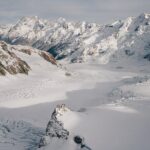
After that, you fly the length of the Tasman Glacier, which is New Zealand’s longest glacier. That matters because you’re not only seeing a single spot. You’re getting a sense of how far the ice stretches across the valley.
From a value point of view, this is one of the best parts of the flight. If you’re the type who loves geology but hates spending all day reading plaques, the aerial route gives you the “story” in minutes: source area up high, glacier movement shaping the valley, and the scale that’s hard to appreciate from the ground.
The Alpine snow landing: step out, breathe cold air, get your bearings
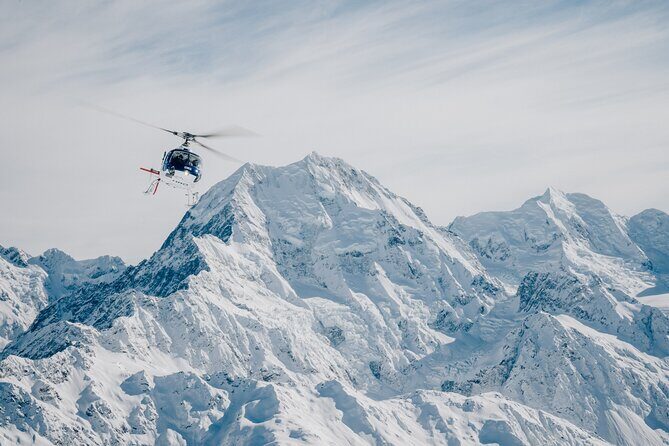
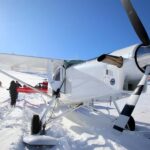
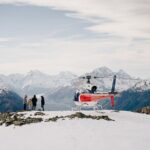
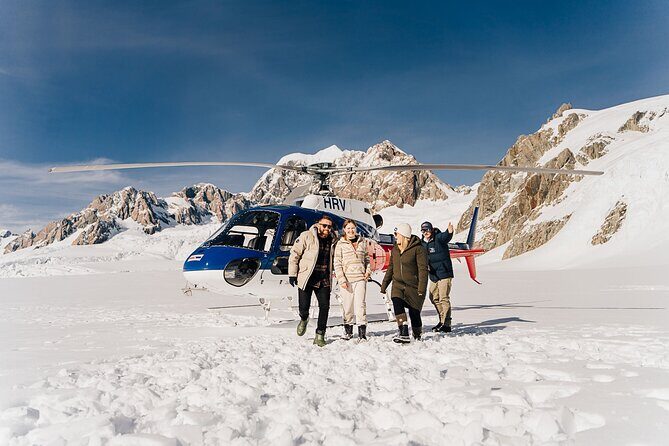
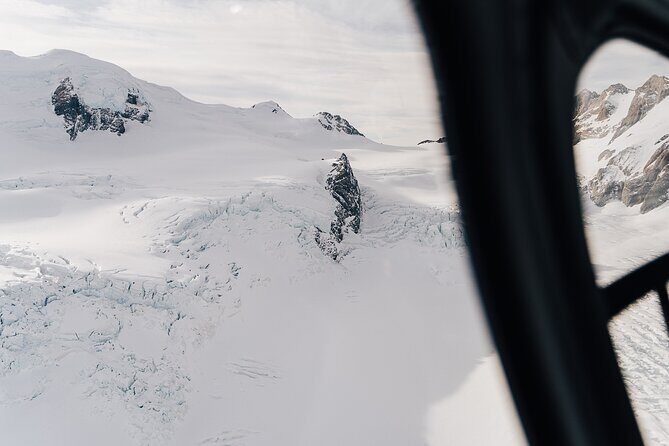
The highlight that keeps coming up is the alpine snow landing. You land in pristine snow, then you get a chance to walk around. Think of it as a short reality check: yes, you’re really on a glacier-adjacent surface, and yes, the mountains are close enough to feel massive.
One guest noted the 360-degree effect on the new snow and even mentioned spotting a mountain goat running across the mountain. You shouldn’t count on wildlife on every flight, but it’s a nice reminder that the landing isn’t just for photos—it’s for being present in the environment.
Practical tip: dress like you expect standing still. Even if the flight is short, you can end up outdoors while you step out, take in the view, and get shots. Warm clothing is strongly recommended, and suitable footwear matters because snow and uneven ground can be slick.
Crossing to the West Coast: Franz Josef and Fox glaciers from above
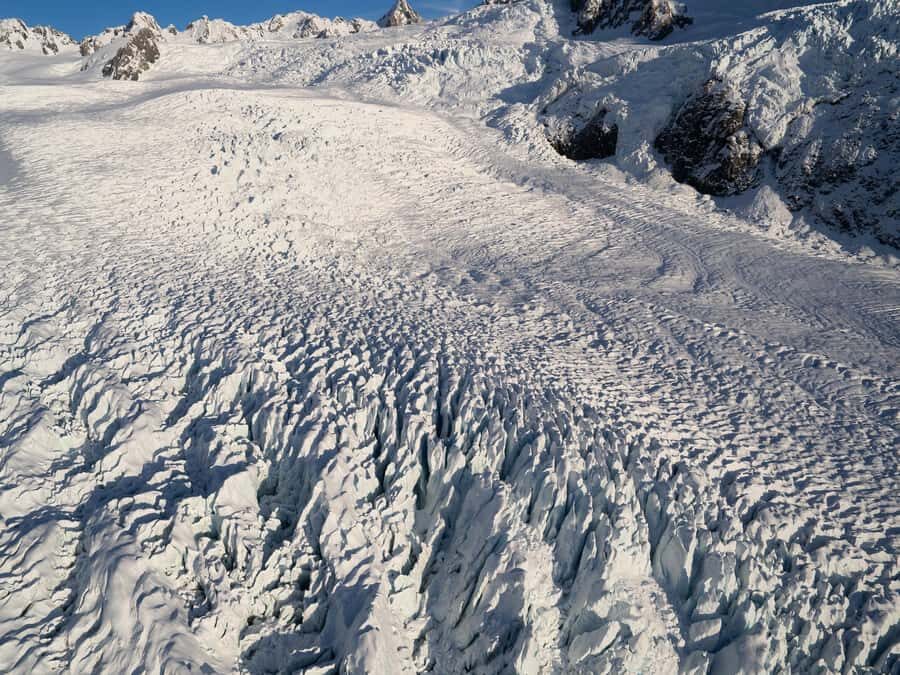
Next you cross to the West Coast for a glimpse of Franz Josef Glacier and Fox Glacier. From the air, these glaciers have a dramatic, almost sculpted look, and you can usually spot the contrast between icy white and darker rock lines where the glacier edges meet the land.
What I like here is that you don’t have to choose one glacier. The flight is built to show both, plus it continues to deliver uninterrupted summit ridge views of Aoraki/Mt Cook. That’s a rare combo in a single time block.
This is also the stretch where you’ll want your camera ready but not rigidly glued to your hands. The best photos often happen when you glance up first, then shoot. Let your eyes enjoy the scale, then capture it.
What the ride feels like inside the helicopter
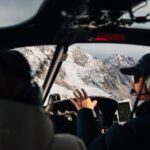
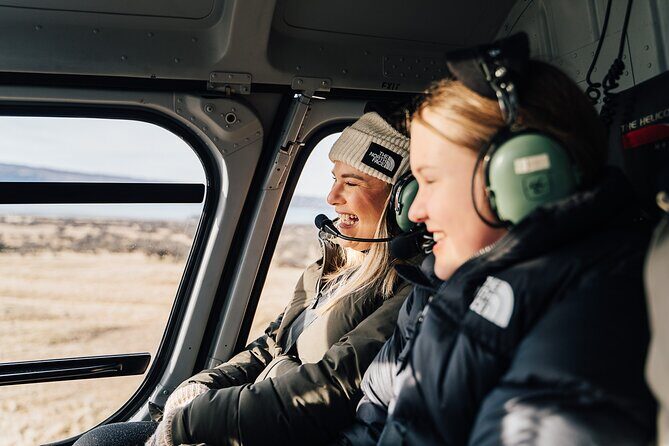
This is a 55-minute flight (approx.), and the company includes a pilot guide. Your flight time is clearly the “core,” but you should still expect a bit of extra time around check-in and safety briefing. The tour is capped at 6 travelers, which usually means less crowding and more room to settle in.
One safety-related note surfaced in the provided feedback: microphones are turned off for safety and pilot awareness. So don’t expect the “talking the whole time” vibe you might be used to in some attractions. The pilot’s commentary is part of the experience, but your best move is to listen actively rather than rely on your own audio device setup.
If you’re nervous about helicopters, it can help to know this type of operation prioritizes safety standards and structured procedures. Several guests highlighted experienced pilots and a calm, organized atmosphere, including pilots named Simon and Greg in specific accounts.
Price and value: where $556.93 makes sense (and when it doesn’t)
At $556.93 per person, this is not a budget activity. You’re paying for three things at once:
- access that’s hard to replicate on foot (glacier country and major ridge views),
- time efficiency (about an hour for a huge visual sweep),
- and a true experience add-on (the snow landing), not just a scenic pass.
Here’s how I’d judge value for you. If you’re already hiking around Mt Cook, you’ll feel the difference immediately. A helicopter flight doesn’t replace every walk, but it gives you angles and scale that hiking can’t match in the same time frame—especially if you’re short on days or energy.
On the flip side, if you’re traveling on a tight schedule and you hate the idea of weather delays, the cost becomes harder to justify. You’re still far from the “pay and forget it” category, because conditions can change. You’ll get the most satisfaction if you can build flexibility into your South Island itinerary.
Weather reality in the Mackenzie Basin and how to plan around it
This tour requires favourable weather. If it’s cancelled due to poor weather, you’ll be offered an alternative date or a full refund.
In practical terms, treat your helicopter day like a high-value slot that can shift. Even when flights operate, you might have delays while conditions are checked. In at least one account, bad weather caused waiting and a later ride on the same day, which is exactly the kind of outcome you want—flexibility—rather than a total washout.
My advice: if you can, give yourself at least one extra day near Mt Cook. That way, a weather disruption doesn’t force you into a corner.
Who this Mt Cook glaciers flight suits best
I think this experience is a strong match if you:
- want to see Aoraki/Mt Cook + Tasman Glacier + West Coast glaciers in one go,
- are short on time but want maximum scenery per hour,
- don’t want the physical effort of alpine routes,
- and like a guided explanation while you fly over the big shapes of the landscape.
It may be less ideal if you:
- can’t handle weather uncertainty,
- have limited mobility and prefer not to deal with cold conditions on the ground (even if the helicopter part is easy, the snow landing has real outdoor time),
- or you’re looking for a low-cost activity.
The tour also notes that most travelers can participate, and children must be accompanied by an adult—so families are possible, as long as you’re prepared for cold and tight time windows.
Final call: should you book this heli-glacier ride?
If you want the glaciers of the South Island with a minimum of hiking and a maximum of scale, I’d book this. The combination of snow landing, the Tasman Glacier lake views, and the West Coast glaciers in one 55-minute flight is the kind of “only in this region” value that’s hard to beat.
Do it especially if you can build in a little flexibility for weather. And if you’re near the weight limit (364 lbs), double-check your situation before you commit.
If you want a helicopter day where you trade effort for perspective—and you’re excited by the idea of stepping out onto snow in the middle of some of the Southern Alps’ most dramatic scenery—this is a pretty solid yes.
FAQ
How long is the Mount Cook and Glaciers helicopter flight?
The flight duration is about 55 minutes.
Where does the tour start?
It starts at The Helicopter Line, Mount Cook Glentanner Park, State Highway 80, Glentanner 7999, New Zealand.
What will I see during the flight?
You’ll see Aoraki/Mount Cook, the Tasman Glacier (including the glacier lake), and West Coast glaciers including Franz Josef and Fox, with views back toward Aoraki/Mt Cook.
Is there a landing during the tour?
Yes. The tour includes an alpine snow landing, and you’ll get a chance to walk around after landing on the snow.
Does the pilot provide commentary?
Yes. The tour includes a pilot guide who provides helpful commentary during the flight.
How many people are on the flight?
This activity has a maximum of 6 travelers.
Is there a weight limit?
Yes. The total weight per passenger is listed as 364 lbs.
What should I wear?
Warm clothing and suitable footwear are recommended because it’s cold.
What happens if weather is bad?
If the tour is cancelled due to poor weather, you’ll be offered an alternative date or a full refund.
What is the cancellation/refund rule?
You can cancel up to 24 hours in advance for a full refund. If you cancel less than 24 hours before the start time, the amount paid is not refunded.