REVIEW · DUNEDIN
Queenstown to Dunedin Incl Taieri Gorge Train (One-Way)
Book on GetYourGuide →Operated by Cheeky Kiwi Travel · Bookable on GetYourGuide
That train ride hits different. This one-way trip links Queenstown’s dramatic start to Central Otago’s gold-rush towns, then finishes with the Taieri Gorge Train running through canyons, tunnels, and river valleys toward Dunedin. I like that it’s a small group (up to 16) in a comfortable Mercedes-Benz, so the road portion feels easy and organized. I also love the mix of quick stops with real atmosphere, like St Bathans and a photo stop at an 1880 suspension bridge. One thing to consider: it’s a long day (about 8 hours) with some walking, so wear shoes that won’t hate you by mid-afternoon.
The best part for me is the pacing: you get enough time to look, not just drive past. You’ll also have a morning tea stop at Dunstan House in Clyde, with food available to purchase, which is a nice break in the middle of the journey. If the idea of a short walk in historic towns makes you nervous, plan for it up front and you’ll be fine.
In This Review
- Key highlights you’ll actually care about
- Road comfort from Queenstown, then straight into Central Otago
- Lake Dunstan and Cromwell: where the scenery has a mining story
- Dunstan House in Clyde: a real break (and a good excuse to stretch)
- The 1880 suspension bridge stop: quick, classic, and photo-friendly
- Ophir and St Bathans: gold-rush atmosphere with short walking time
- Ophir: fast look, photo stop, guided flavor
- St Bathans: ghost-town feel and the Blue Lake
- Pukerangi safety briefing: the 5-minute handoff to rail magic
- Taieri Gorge Train to Dunedin: canyons, tunnels, and viaduct views
- Ending at Dunedin Railway Station: ornate Edwardian arrival
- Price and value: how $173 stacks up for a whole day
- Who this tour suits best (and who should think twice)
- Should you book this Queenstown to Dunedin one-way option?
- FAQ
- How long is the Queenstown to Dunedin one-way Taieri Gorge train experience?
- Is this a small-group tour?
- What’s included in the price?
- Do I have to pay for the Dunstan House morning tea?
- Where do we board and where do we finish?
- Is there walking involved?
- Is the tour suitable for wheelchair users?
Key highlights you’ll actually care about
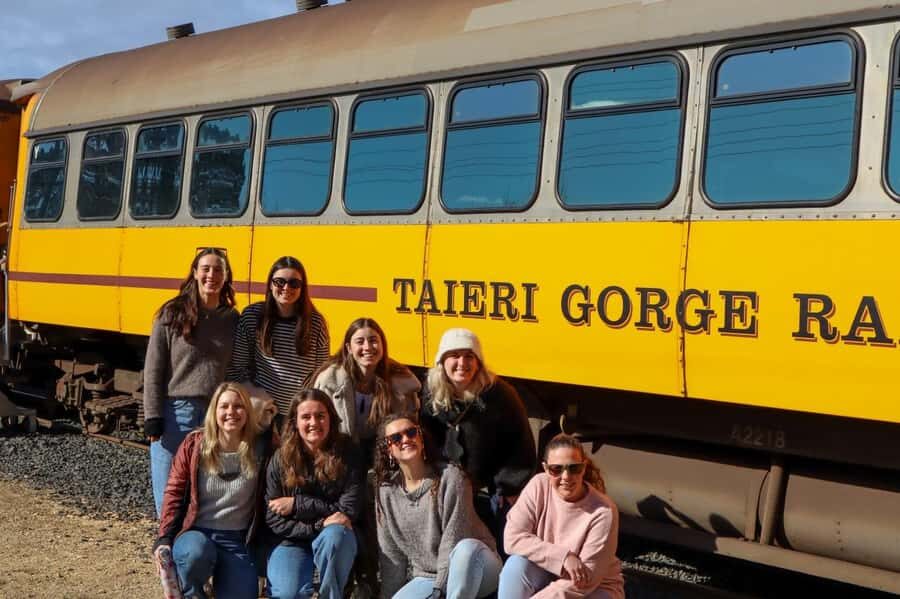
- Small-group Mercedes comfort for the whole Queenstown to Pukerangi road journey
- Dunstan House tea stop at a restored 1898 hotel in Clyde
- Gold-rush stops with photo windows like Ophir and the ghost-town feel of St Bathans
- Taieri Gorge Train views: deep canyons, viaducts, tunnels, and scenic river valleys
- Drop-off at Dunedin Railway Station, a standout Edwardian arrival point
Road comfort from Queenstown, then straight into Central Otago
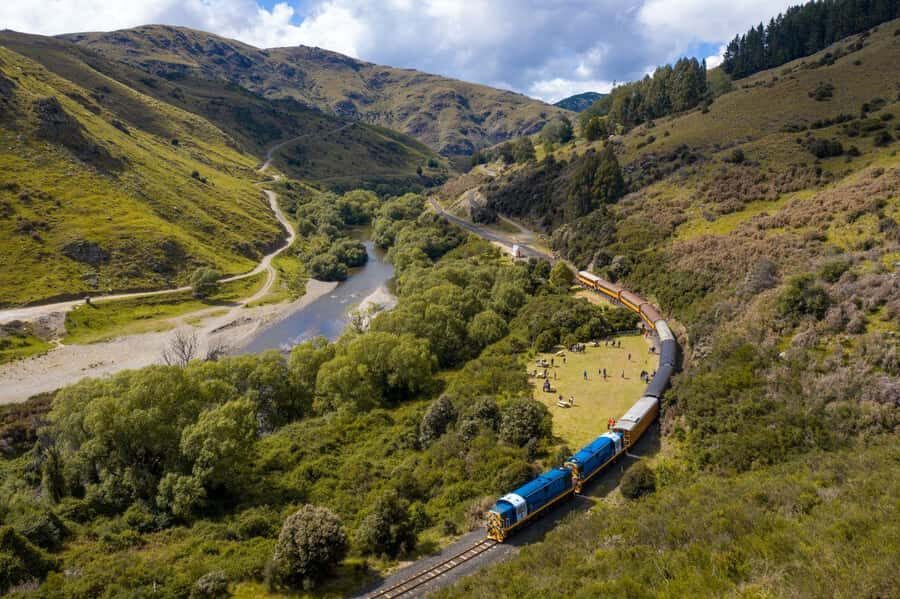
This is a one-way, door-to-station kind of day. You start with a hotel pickup around Queenstown, and you ride east in a Mercedes-Benz with a small group. That matters more than it sounds. When you’re traveling for hours and then switching to a train, you don’t want a chaotic bus full of strangers trying to figure out where to sit.
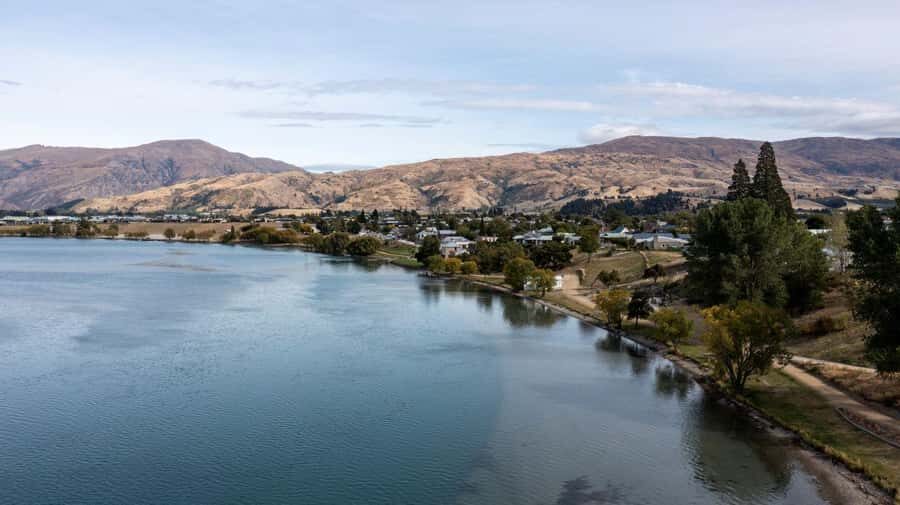
Once you’re rolling, the route leans into the big scenery right away. You pass through places known for wine country and dramatic gorges, including the Gibbston area and the Kawarau Gorge. Then you shift into Central Otago, where the sky feels wider and the valley views start doing the talking.
If you like photo opportunities, this portion works. You’re not stuck staring at one road the whole time—you get repeated scenic drives, pass-bys, and short stops designed for quick viewing breaks rather than long museum-style detours.
You can also read our reviews of more tours and experiences in Dunedin.

Lake Dunstan and Cromwell: where the scenery has a mining story
A key stop on the drive is around Lake Dunstan. You’ll have sightseeing and scenic views along the way. This stretch is one of those Central Otago moments where water, farmland, and history show up in the same frame.
Cromwell is part of the mix too. The drive takes you alongside shimmering Lake Dunstan and toward Cromwell, a town set at the confluence of the Clutha and Kawarau Rivers. Even if you don’t get a long walking stop in Cromwell itself, the approach is worth it because you’re seeing why this region became so important during the gold rush.
One very practical tip: keep your camera accessible. You’ll want it for the views, and you’ll also want it later for the suspension bridge stop and St Bathans.
Dunstan House in Clyde: a real break (and a good excuse to stretch)
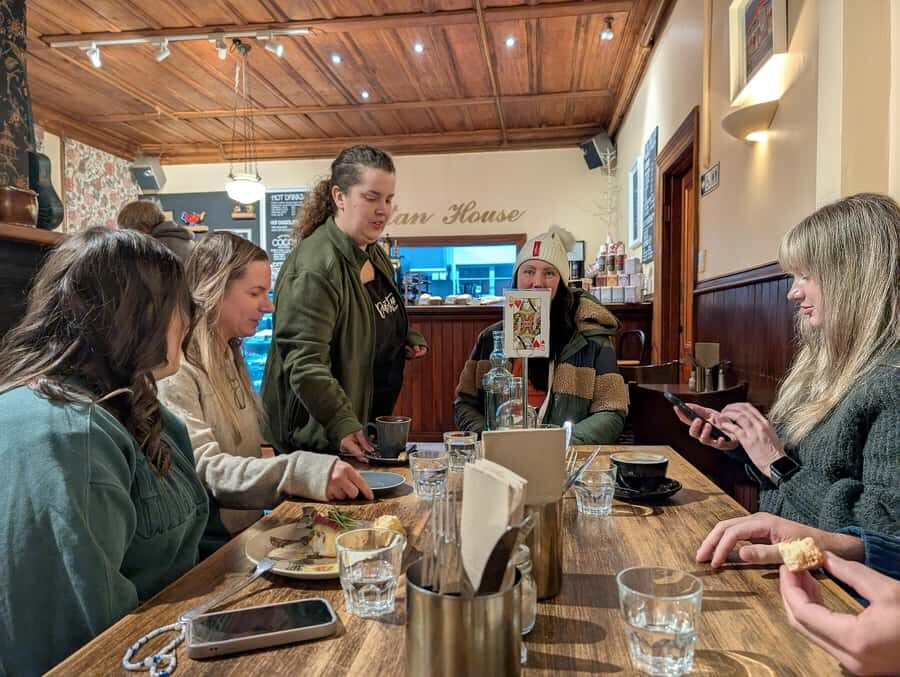
Clyde is where the day softens. You get a break time stop with coffee, tea, and brunch options, and you’ll have around 15 minutes to reset before the next set of sights.
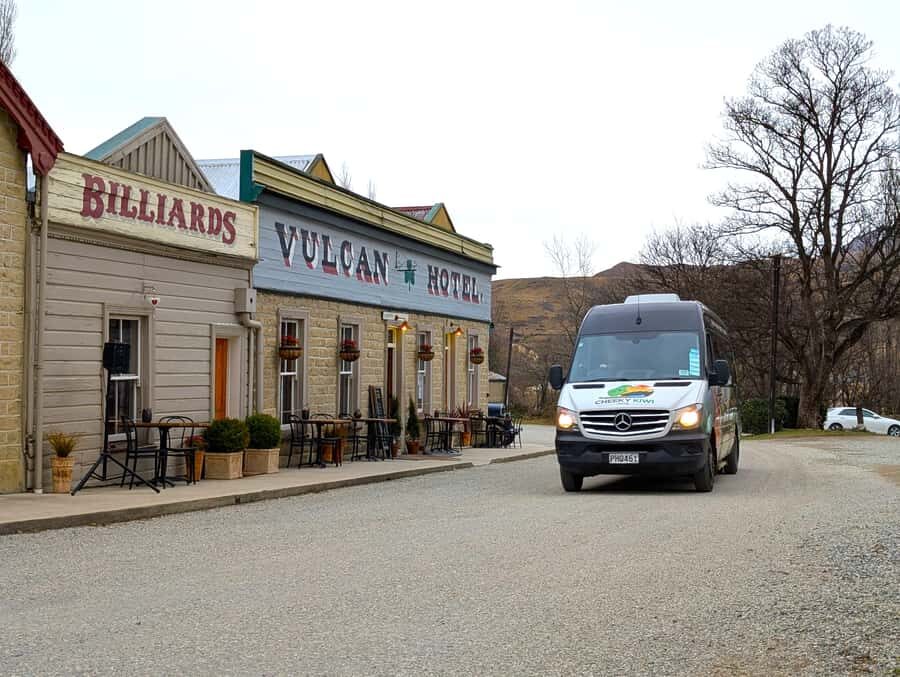
The star here is Dunstan House, a restored 1898 hotel that once served gold prospectors and travelers. That antique, lived-in feel is the point. Even with limited time, it’s the kind of stop that makes the road journey feel like a story instead of just transport.
Important detail: morning tea is included as a stop, but the food you order is available to purchase, not automatically covered. So I’d treat it like a café break, not a free meal.
If your group is anything like most people, this is the moment where everyone stops rushing for a second. You’re still on a schedule, but it feels like a pause.
The 1880 suspension bridge stop: quick, classic, and photo-friendly
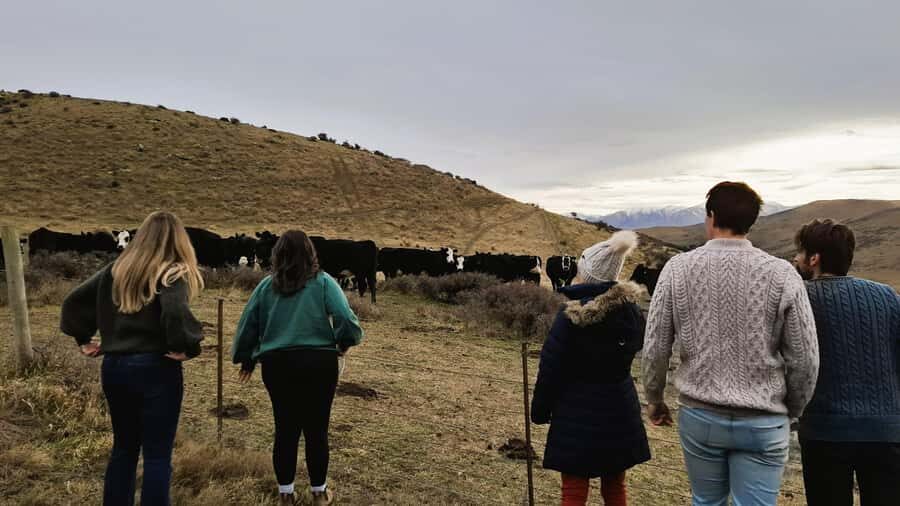
Between the Clyde area and the gold-town vibe ahead, you’ll also pause for photos at an 1880 suspension bridge. It spans the Manuherikia River and is tied to Central Otago’s older settlements and engineering history.
This isn’t a long wander. It’s a photo stop. But it’s the kind of stop that turns “nice scenery” into “I remember this.” The bridge gives you a strong foreground so your valley shots don’t look flat.
If you’re traveling with your phone camera, you’ll get better results by taking a couple wide shots and one close-to-the-structure shot. The angle with the river and the bridge lines usually looks good.
Ophir and St Bathans: gold-rush atmosphere with short walking time
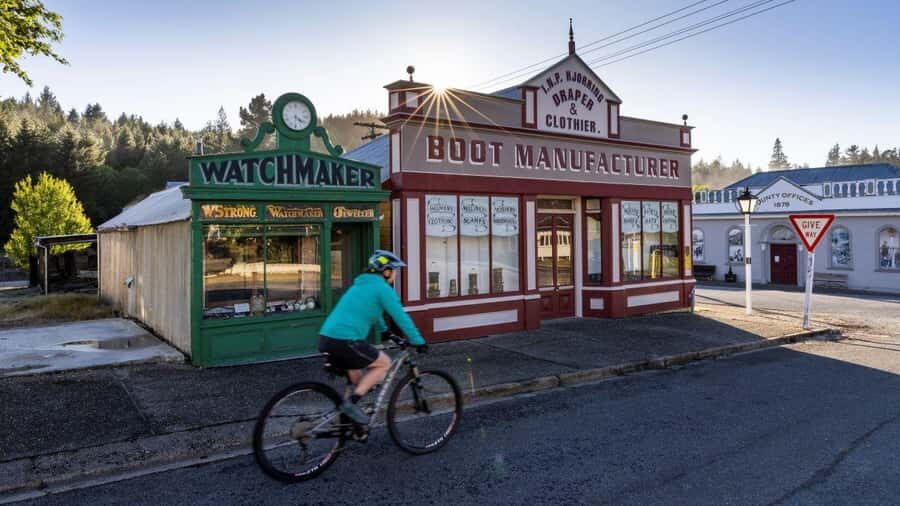
After Cromwell, the trip turns more specifically into gold-rush places.



Ophir: fast look, photo stop, guided flavor
Ophir is a brief stop (about 5 minutes) with a photo pause plus a guided tour and sightseeing. The whole point is to get a taste, not to spend hours here. If you like history but don’t want a classroom experience, this short structure works.
The drawback is also obvious: you’re not going to “learn everything” in five minutes. You’ll get just enough to make St Bathans hit harder later.
St Bathans: ghost-town feel and the Blue Lake
St Bathans is the one you’ll want to take your time on. You get a break time plus a photo stop, then you’ll visit and do a walk for around 30 minutes.
The atmosphere is the highlight. This is a ghost town where gold once ruled, and the stories still linger in the preserved buildings. The stop also includes seeing the Blue Lake, formed by mining. That detail matters because it explains the color, not just the view.
I like this stop because it balances two different kinds of travel pleasure:
- a “walk and look” moment in historic buildings
- a “wow” moment when the scenery looks unusual and you know why
Wear comfortable shoes here. 30 minutes doesn’t sound like much until you’re walking on uneven ground and trying not to miss the photo angles.
Pukerangi safety briefing: the 5-minute handoff to rail magic
Before the train ride, there’s a short safety briefing at Pukerangi (about 5 minutes). This is the handoff moment—when the road portion ends and the Taieri Gorge segment begins.
It helps to go into this ready to board quickly. Keep your camera accessible, and make sure you’ve got what you need for the rail ride. The day is timed, and the train portion is the main scenic payoff.
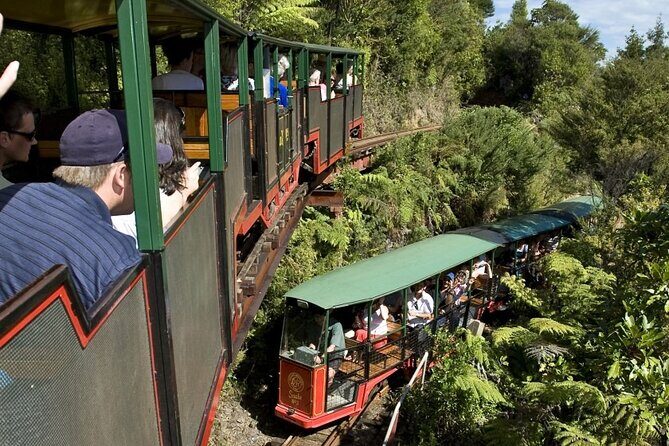
Taieri Gorge Train to Dunedin: canyons, tunnels, and viaduct views
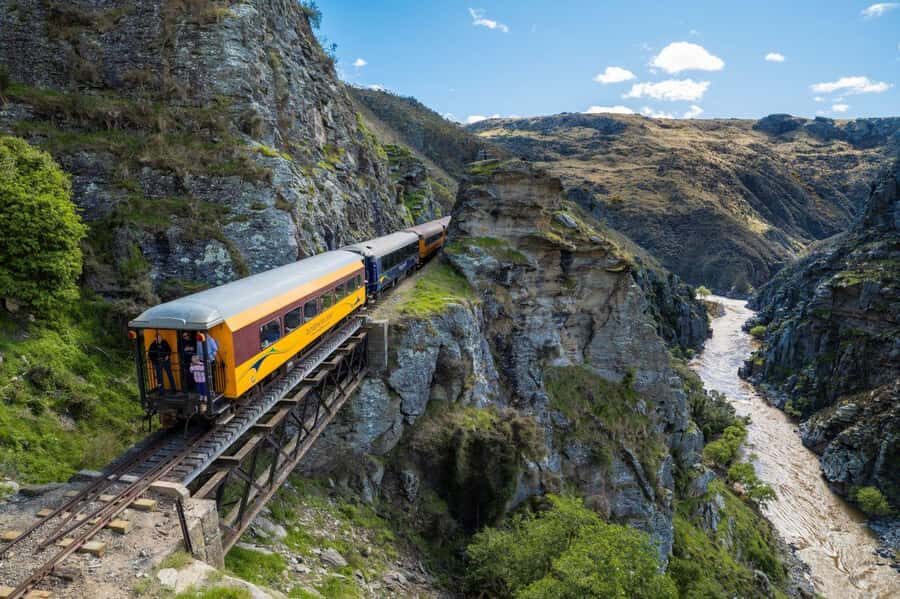
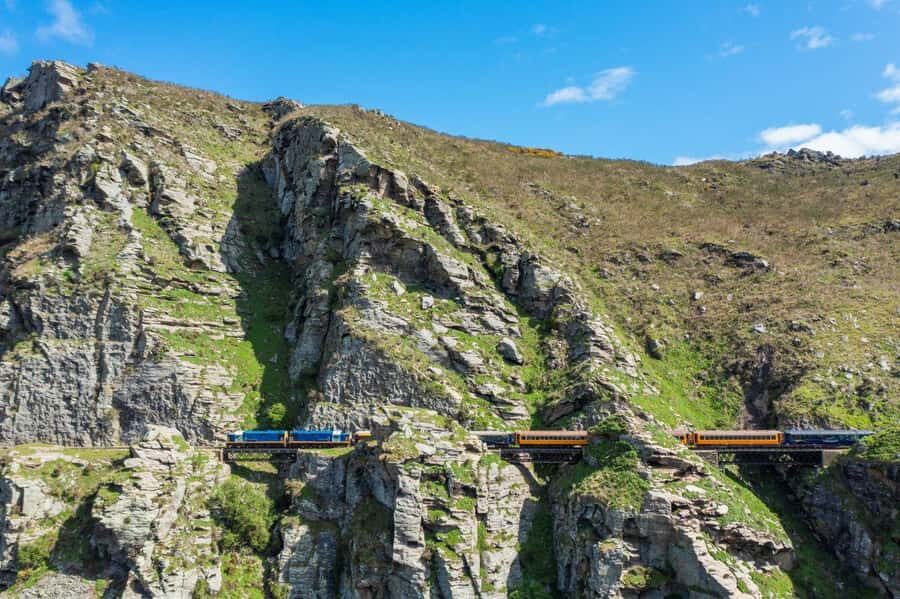
Now comes the reason many people choose this one-way itinerary. From Pukerangi, you board the iconic Taieri Gorge Train for about 2 hours to Dunedin.
The experience is built around panoramic views through rugged Otago. You’ll see:
- deep canyons
- ancient tunnels
- scenic river valleys
- viaducts that make you stop thinking and start staring
This is classic heritage-rail scenery: the train becomes a moving viewpoint, and you don’t have to stress about driving turns or parking.
A practical note: bring a camera plan. During the most scenic stretches, you’ll want both stable shots and quick grabs. If you’re using your phone, wipe the lens area if it’s dusty or fogged from movement.
The other benefit of the train is the rhythm. After hours in the vehicle, rail gives you time to relax, look out, and actually enjoy the scenery instead of watching the clock for the next stop.
Ending at Dunedin Railway Station: ornate Edwardian arrival
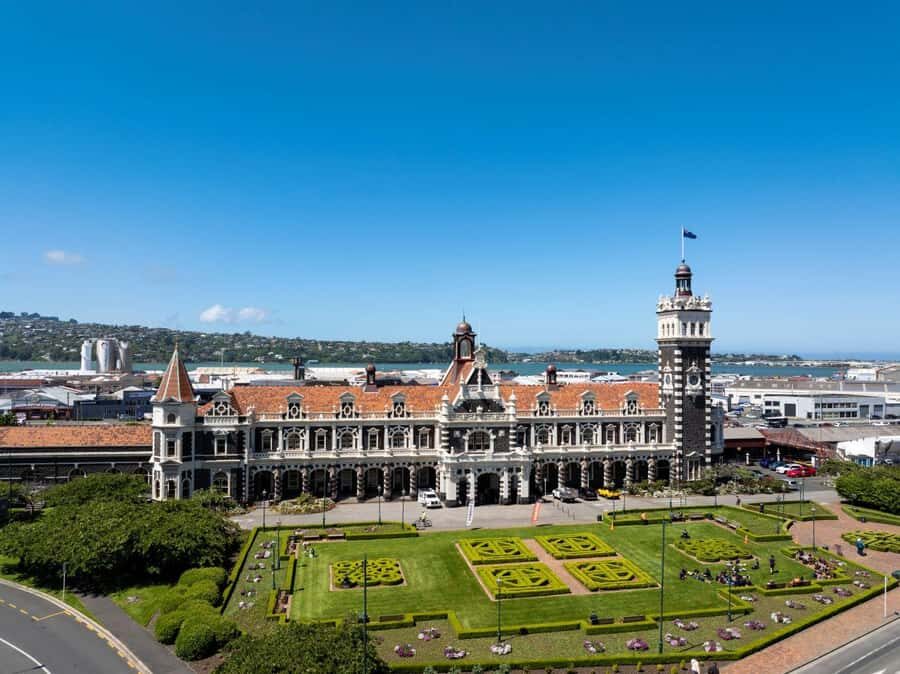
You finish at Dunedin Railway Station, known for its ornate Edwardian design. That matters even if you’re only passing through. It’s a satisfying arrival point, like the day has a proper “final scene” instead of just dropping you somewhere inconvenient.
From there, you’re dropped off at the station, which is useful if you’re continuing to other parts of Dunedin right away. You’re in the city, not somewhere out in the countryside.
Price and value: how $173 stacks up for a whole day
At about $173 per person for an 8-hour one-way journey, the value mostly comes from what’s bundled together:
- hotel pickup in Queenstown
- Mercedes-Benz road travel
- a guided road journey through the region
- Taieri Gorge Train ticket (the big-ticket scenic piece)
- water and snacks
- a Dunstan House morning tea stop (food purchased separately)
- drop-off at Dunedin Railway Station
If you were trying to DIY this, you’d likely end up piecing together transport plus train plus timed stops. That’s where package pricing starts to make sense. You pay for convenience and a schedule that moves you through the good bits of Central Otago without requiring you to plan every turn.
My “is it worth it?” rule for this trip: if you want the Taieri Gorge Train but you also want gold-rush stops along the way, this package is a smart way to do it in one shot.
Who this tour suits best (and who should think twice)
This works especially well if you:
- want a small-group day trip with comfortable road transport
- care about heritage rail scenery more than long walking trails
- like a mix of photo stops and short, guided town moments
- prefer a schedule that handles logistics for you
You might want to think twice if you:
- hate walking during historic stopovers (there is some, especially around St Bathans)
- need wheelchair accessibility (this tour is listed as not suitable for wheelchair users)
And if you’re the kind of traveler who loves turning “a transfer day” into “a real sightseeing day,” this one is built for that.
Should you book this Queenstown to Dunedin one-way option?
I’d book it if you want one smooth day where the road sets the mood and the Taieri Gorge Train does the heavy lifting. The combination of Central Otago gold-rush stops with an actual, iconic rail ride is the formula here, and it’s a good one.
The biggest reason to pass would be if you’d rather take your time slowly on your own schedule and you don’t like walking in small historic areas. For many people, though, the short guided touches plus the train views hit a sweet spot.
One last nudge: pack for weather changes and bring shoes you trust. Central Otago days can shift, and you’ll want to walk comfortably at St Bathans and stand for photos at the bridge.
FAQ
How long is the Queenstown to Dunedin one-way Taieri Gorge train experience?
The duration is 8 hours.
Is this a small-group tour?
Yes. It’s a small group with a maximum of 16 guests.
What’s included in the price?
Included items are the hotel pickup in Queenstown, fully guided road journey to Pukerangi, comfortable Mercedes-Benz transport, the Taieri Gorge Train ticket from Pukerangi to Dunedin, a morning tea stop at Dunstan House (food available to purchase), water and snacks, and drop-off at Dunedin Railway Station.
Do I have to pay for the Dunstan House morning tea?
Morning tea is available at Dunstan House, but the food cost is not included.
Where do we board and where do we finish?
You board the Taieri Gorge Train at Pukerangi and finish with drop-off at Dunedin Railway Station.
Is there walking involved?
Yes. The day includes some walking, especially during historic town stops.
Is the tour suitable for wheelchair users?
No. It is not suitable for wheelchair users.