REVIEW · WAIHEKE ISLAND
Waiheke Island History and Heritage Tour
Book on Viator →Operated by Terra & Tide · Bookable on Viator
Māori-led stories turn Waiheke into more than scenery. This 6-hour day gives you sea views over the Hauraki Gulf and Auckland, then slows down for the culture and land knowledge many standard tours skip. I especially like the focus on carving and traditional tattooing, plus how the guide connects language revitalisation and colonisation’s impacts to real places you can see.
I also like the native-bush walk with practical details on medicinal plants, ending at a pa site where you can look for kumara pits, shell middens, and defensive terraces. One thing to consider: it is not a full do-nothing day. You’ll be on your feet for the bush section and pa viewpoint, and the extra ferry cost and lunch/tastings can add up.
Because the price covers the guide but not the ferry, lunch, or alcoholic tastings, you’ll want to plan your full budget before you lock it in. On the plus side, the group size is capped at 12, and the small-team format helps the pace feel human.
In This Review
- Key highlights worth your attention
- Waiheke from a Māori lens, not a cruise-ship checklist
- Getting your bearings: Oneroa and island orientation views
- Waiheke’s Māori community focus: carving, tattooing, language, and colonisation
- Native bush walk: medicinal plants and bird-spotting chances
- Pa summit and archaeology: kumara pits, shell middens, defensive terraces
- Lunch in a local cafe: fuel that keeps the day human
- Time management and the 4pm ferry return
- Price and value check for $381.65 per person
- What kind of person will love this most?
- Optional add-ons: wine and olive oil tasting detours (when time allows)
- Quick wrap: should you book this Waiheke history and heritage tour?
- FAQ
- What time does the Waiheke Island History and Heritage Tour start?
- How long is the tour?
- Where do I meet the tour?
- Is the ferry included in the price?
- Is lunch included?
- Is wine or olive oil tasting included?
- How big is the group?
- Can I cancel and get a refund?
Key highlights worth your attention
- Māori-first perspective: carving, tattooing, language revitalisation, and colonisation explained through Waiheke places
- Native bush walk + plant uses: traditional and medicinal uses of local plants, plus bird-spotting chances
- Pa site archaeology: kumara pits, shell middens, and defensive terraces at a summit viewpoint
- Big views early: orientation with Hauraki Gulf, Auckland City, and Pacific Ocean sea panoramas
- Lunch at a local cafe: food and coffee included in the middle of the day
- Small group format: maximum 12 people, led by an expert local guide
Waiheke from a Māori lens, not a cruise-ship checklist
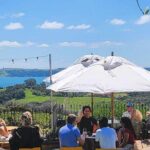
Waiheke is famous for beaches and vineyards, but this tour gives you a different way to read the island. You start with orientation views over the Hauraki Gulf, Auckland City, and the open Pacific, then you shift your attention to the Māori connection to land and knowledge. That change matters. It turns the day from sightseeing into understanding.
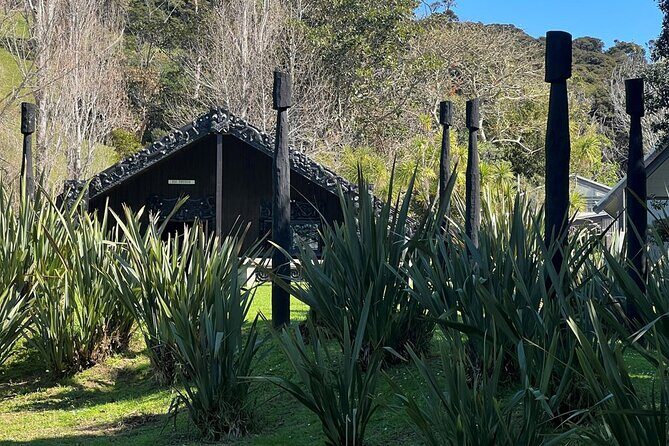
The best part is the way culture is woven into place. You’re not just hearing stories in the abstract. You visit community focal points and learn about carving and traditional tattooing, then the day moves into the bush where plants were used for practical reasons. Even the bird-spotting is part of that same theme: living Waiheke, not just a photo backdrop.
You can also read our reviews of more historical tours in Waiheke Island
Getting your bearings: Oneroa and island orientation views
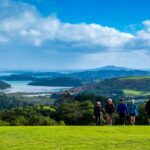
The day starts at the Fullers360 Matiatia ticket office area in Oneroa, at 9:45 am. You’ll begin with an orientation around Waiheke that leans on the big geography: the Hauraki Gulf, Auckland City, and the Pacific Ocean. This is the moment to get your mental map working fast. Once you know which direction the water is and how the island sits, the later walks and viewpoints feel more meaningful.
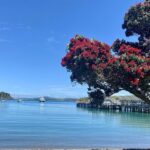
You’ll also get introduced to beach areas, including pristine white sand beaches. I like this approach because it balances “wow” with “why.” The view pulls you in, and then the guide starts connecting that view to stories of people and land.
A practical note: wear sunscreen and a hat early. The orientation portion is view-heavy, and the day is about being outside.
Waiheke’s Māori community focus: carving, tattooing, language, and colonisation
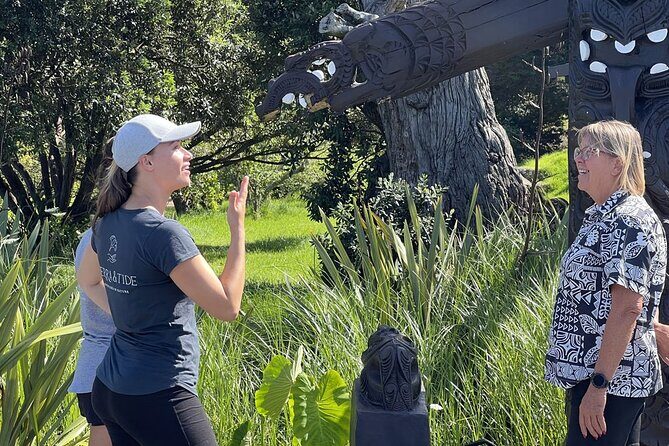
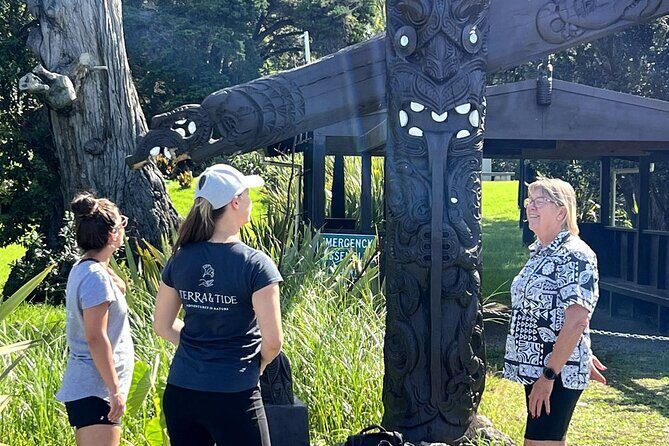
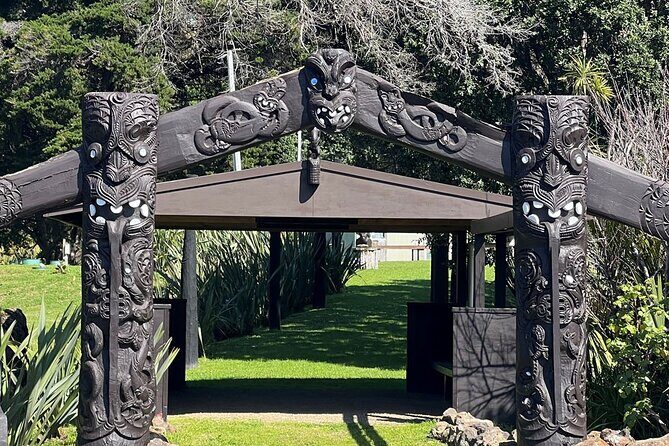
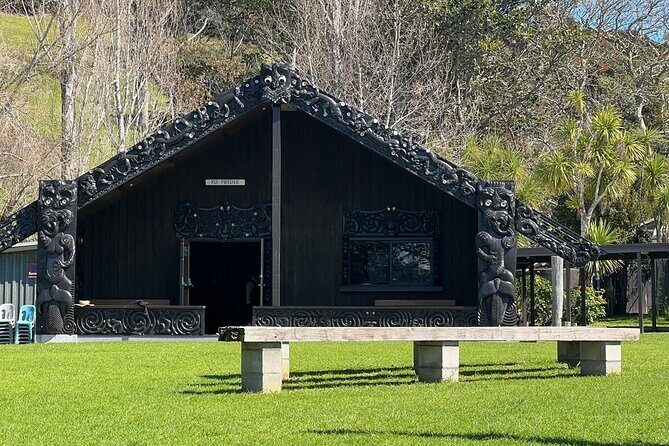
A key highlight is the stop at the Māori community focal point on Waiheke. Here, the guide explains the significance and importance of carving and traditional tattooing. This is not presented as a costume or a quick cultural stop. You’ll learn the meaning behind the art and why it carries identity, memory, and responsibility.
The day also touches the revitalisation of Māori language and the impact of colonisation on Māori people. What makes this valuable is that you see how the language and history connect back to places on the island, not just to a distant classroom lesson. It gives you context you can feel when you’re walking later in the bush or looking up at pa remnants.
If you care about respectful travel, this is the kind of tour that gets it right. The tone is grounded and place-based, not performative.
Native bush walk: medicinal plants and bird-spotting chances
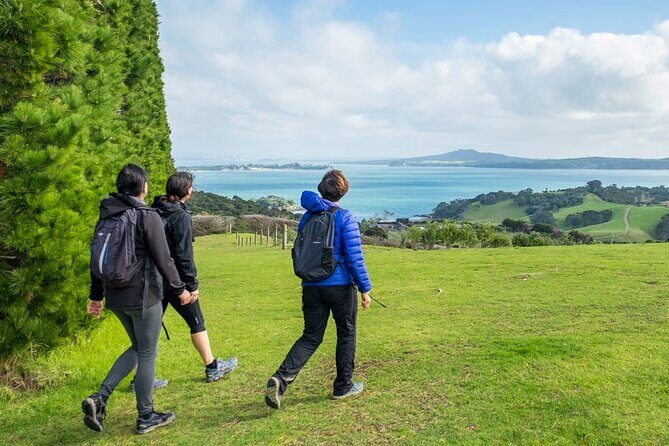
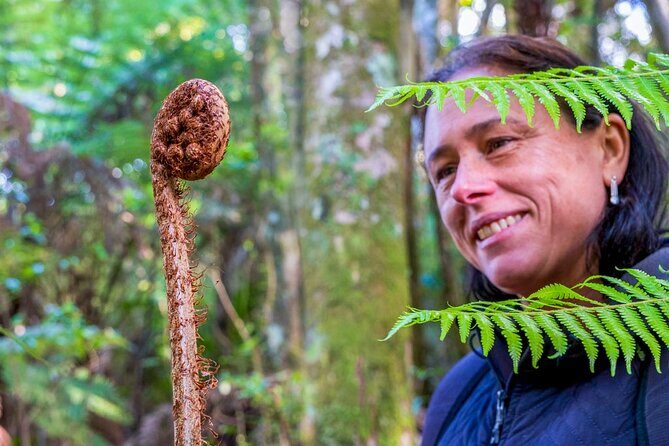
After the culture stops, you’ll go walking through native bush. This is one of the parts I’d prioritise if you like nature and learning at the same time. Your guide explains traditional and medicinal Māori uses of native plants. The point isn’t to turn the forest into a museum exhibit. It’s to show how knowledge was lived—what people used, what mattered, and how the island supported communities.
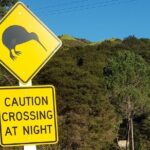
You’re also likely to see native birds such as tui, kereru, and piwakawaka. Bird sightings are never guaranteed, but I love that the tour gives you permission to look up and around, not just at your shoes. With the right light and a bit of patience, you might catch a glimpse.
What to bring for this section
- Sturdy shoes or trail-ready footwear
- A light rain layer (weather can shift quickly around the water)
- Water, even if you plan to buy it later
Pa summit and archaeology: kumara pits, shell middens, defensive terraces
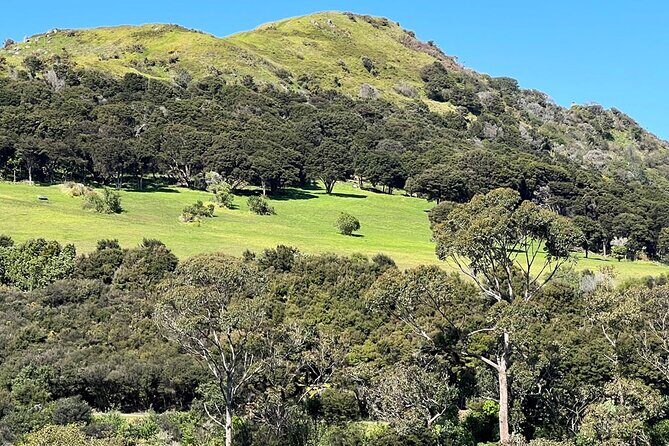
One of the most absorbing moments comes at the summit of a pa (fortified village) site with archaeological remains. You’re guided to see and understand features like kumara pits, shell middens, and defensive terraces. This is where the day’s themes lock together: people, survival, land knowledge, and how communities shaped and defended their space.
Kumara pits are especially interesting because they connect food storage to specific landscape needs. Shell middens show long-term use of coastal resources. Defensive terraces point to how settlement design considered protection. Even if you’re not an archaeology person, the guide’s explanations help you read the ground like a historical document.
This is also a good viewpoint moment. If you like photos, you’ll get them—just try not to treat it like a quick selfie stop. Spend a few extra minutes looking around and letting the scale settle.

Lunch in a local cafe: fuel that keeps the day human
Lunch is at a local cafe, with food and coffee included. I like that this is built in, because you’re not scrambling during the middle of a full 6-hour day. It’s also a gentle rhythm break after walking and learning outdoors.
What you’ll get from lunch depends on the cafe’s current menu, but the key value is timing and convenience: you can sit, refuel, and keep your energy for the later segments.
If you’re sensitive to coffee or dairy, it’s still worth asking what’s available. But the tour generally makes it easy.
Time management and the 4pm ferry return
You’ll be dropped back to the wharf in time for the 4pm ferry. That’s a big deal for planning, because Waiheke days can turn into stress if your timing slips.
There’s also an optional choice if you want more island time: the guide can drop you in Oneroa, and you can make your own way back to the ferry by either walking for about 15 minutes or taking a short bus ride. This is ideal for adding a bit of shopping or lingering beach time without missing the return boat.
For your own sanity, build in a buffer. Waiheke is lovely, but it’s not a place you want to rush at the last moment.
Price and value check for $381.65 per person
At $381.65 per person, the first thing to know is what you’re paying for. The tour price includes an expert local guide, but it does not include the ferry to and from Waiheke, lunch, or alcoholic wine and olive oil tasting.
Ferry cost is listed as $42 per adult return (tickets can be purchased from the operator). Lunch is included as part of the experience, but wine/olive oil tastings are not. That means your total day cost depends on whether you add tastings.
Is it good value? For the kind of instruction you get—Māori cultural education tied to specific places, a native bush walk with plant uses, and pa archaeology explanations—yes. You’re paying for a knowledgeable local guide and a focused route that’s not just a scenic bus loop.
Where the price can feel steep is if you’re only seeking beaches and don’t care about history, language revitalisation, or walking. In that case, a more general Waiheke day tour might be cheaper.
What kind of person will love this most?
This is a strong fit if you:
- Want a Waiheke day that goes beyond wineries and Instagram views
- Like guided learning that’s tied to what you can actually see
- Appreciate culture shared with care, including language and historical context
- Enjoy moderate walking in native bush settings
It’s less ideal if you want a fully relaxed “sit most of the day” outing, or if you dislike learning-based tours. Also, because the tour includes walking segments outdoors, plan for good footwear and weather flexibility.
Optional add-ons: wine and olive oil tasting detours (when time allows)
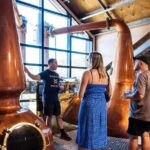
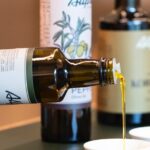
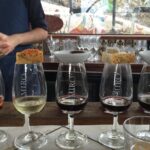
Alcoholic wine and olive oil tasting are not included. Still, the day’s timing and stops in Oneroa often leave room for people to add tastings in town if they want them. In the overall experience, I’d treat these as extras, not the main purpose of the tour.
If you do choose tastings, keep it light. You’ll want energy for the bush and summit portions later.
Quick wrap: should you book this Waiheke history and heritage tour?
If you’re choosing between a standard Waiheke highlights day and something more grounded, I’d lean toward this one. The combination of orientation views, Māori cultural focus, native plant knowledge, and pa-site archaeology gives you a fuller picture of Waiheke than most packed half-days.
Book it if you want meaning with your scenery and you’re happy to walk outdoors for parts of the day. Skip it if your only priority is wine tasting or beach lounging and you’d rather keep the learning portion minimal.
FAQ
What time does the Waiheke Island History and Heritage Tour start?
It starts at 9:45 am.
How long is the tour?
It runs for about 6 hours.
Where do I meet the tour?
Meet at the Fullers360 Matiatia ticket office, 1 Ocean View Road, Oneroa, Auckland 1081, New Zealand.
Is the ferry included in the price?
No. Ferry tickets to and from Waiheke are not included. Tickets can be purchased from the operator for $42 per adult return.
Is lunch included?
Yes. Lunch is at a local cafe, and food plus coffee are included.
Is wine or olive oil tasting included?
Wine and olive oil tasting are not included.
How big is the group?
The maximum group size is 12 travelers.
Can I cancel and get a refund?
Yes. You can cancel up to 24 hours in advance for a full refund.