REVIEW · ROTORUA
Whakarewarewa Village Guided Tour
Book on Viator →Operated by Whakarewarewa, The Living Maori Village · Bookable on Viator
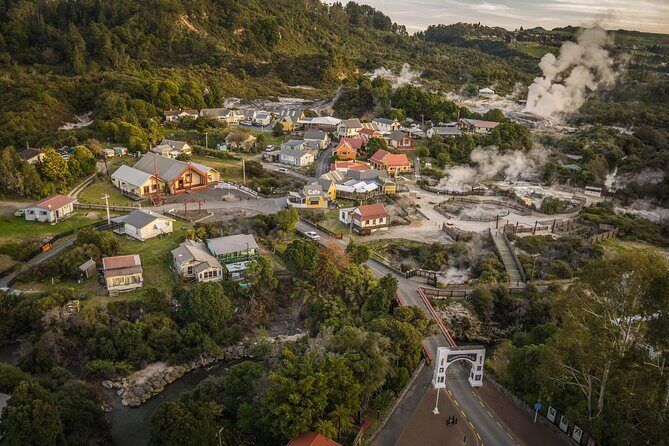
Geothermal heat plus Māori storytelling is a winning mix. At Whakarewarewa – The Living Maori Village, you’ll get a guided introduction to daily Māori life while you watch active geothermal features, including Pohutu Geyser, from safer viewing points.
I love that this isn’t a theme-park version of culture. It’s an active community, shared through a guided tour that highlights how the Tūhourangi Ngāti Wāhiao people live and explain their world.
I also love the food moment built into the visit: you can try corn on the cob cooked in a geothermal hot pool. One possible drawback: with only about 1 hour, the tour packs in both culture and geothermal sights—so if you want a longer performance-heavy experience, you may need to stay a bit after.
In This Review
- Key things to know before you go
- Why Whakarewarewa feels different from the usual Rotorua tour
- Prebook entry and pick a time slot that actually fits your day
- Your 1-hour guided walk: what you’ll cover and what to watch for
- Geothermal viewing: boiling mud, hot-spring pools, and Pohutu Geyser
- Kai cooked in the hot pool: the corn-on-the-cob moment
- Guides who make it feel personal: Philip, Daniel, Kylie, and more
- Timing tips: singing shows, performances, and shop time
- Shoes, walking pace, and what a group of 20 means for you
- Price and value: is $34.13 for 1 hour a good deal?
- Who should book this guided tour (and who might want another option)
- Should you book the Whakarewarewa guided tour?
- FAQ
- Where does the Whakarewarewa guided tour start?
- How long is the guided tour?
- Is admission included in the price?
- Will I be able to try food cooked in the geothermal pools?
- What geothermal sights will I see?
- How big is the group?
- What if the weather is bad?
Key things to know before you go
- A living village, not a static exhibit: you’re visiting a community that continues to run day-to-day.
- Guided access to geothermal activity: you’ll see boiling mud pools and hot-spring areas with safe viewing platforms.
- Pohutu Geyser viewing without the danger: the tour is designed to help you watch this famous geothermal feature safely.
- Kai cooked in geothermal heat: corn on the cob is included in your guided time.
- Smallish group size: up to 20 travelers means you’re less likely to get lost in the crowd.
- Time slots beat ticket-line stress: prebooking helps you plan your Rotorua day.
Why Whakarewarewa feels different from the usual Rotorua tour
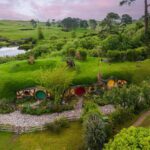
Rotorua can be a blur of geysers, steam, and souvenir stops. Whakarewarewa breaks that pattern by mixing two things that often stay separate: living culture and active geothermal power. You’re not just looking at bubbling ground—you’re learning why that environment matters to the people who call this place home.
This is also one of those rare experiences where the guide’s perspective isn’t pulled from a script. The village is described as the home of the Tūhourangi Ngāti Wāhiao people, sharing their legacy and stories with visitors for more than two hundred years. That long continuity shows up in the way the tour is paced and explained.
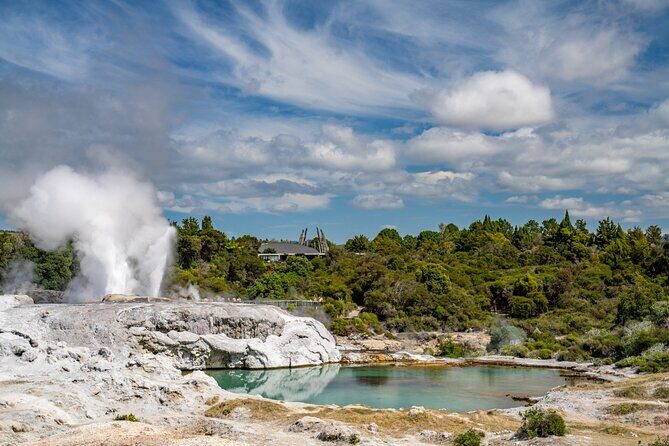
Finally, the experience is built for real viewing. You’ll see boiling mud and hot-spring pools, and you’ll get to watch Pohutu Geyser from viewing platforms rather than trying to scramble for your own angles. It’s practical, and it keeps the focus on what’s worth seeing.
You can also read our reviews of more guided tours in Rotorua
Prebook entry and pick a time slot that actually fits your day
One of the best bits of planning help here is simple: prebooking gives you guaranteed entry. In a place like Rotorua, that matters because lines and timing can eat up your best daylight hours.
Instead of guessing what time you’ll arrive and hoping you get in, you can choose a time slot that matches your schedule. That’s a big deal if you’re stacking activities, like a geothermal walk in the morning and something else later. A scheduled entry also helps keep the day from turning into an anxious wait game.
The tour itself runs about 1 hour, so it’s easy to slot into a busy itinerary without feeling like you’ve signed up for your whole afternoon. That makes it a smart choice when you want a cultural experience without sacrificing the rest of your Rotorua plans.
Your 1-hour guided walk: what you’ll cover and what to watch for
Your tour starts at 17 Tryon Street, Whakarewarewa and returns you to the same meeting point. From there, you join a Māori guide to learn about traditions and the way geothermal features support village life.
Expect a guided path through the village with stops that connect the stories to what you can see around you—hot-spring areas, boiling mud pools, and viewpoints for famous geothermal activity. The tour description also emphasizes warmth and hospitality (manaakitanga), which you can feel in how the guide brings the village’s daily reality into the conversation.
What makes the hour work is the pacing. You get an introduction that’s educational and fun, and it’s intended for families too. There’s walking involved, so you’re moving, but it’s not the kind of hike where you spend half the tour catching your breath.
Still, don’t expect the tour to cover everything. In one hour you’ll get the big picture: how this community lives, what the landscape does, and how the village explains it. If you want deeper history or longer singing and performances, this is a “start here” experience more than a “stay all day” one.
Geothermal viewing: boiling mud, hot-spring pools, and Pohutu Geyser
Let’s be honest: Rotorua’s geothermal features are part of the draw. Here, they’re not just background scenery—they’re part of how the village operates and explains its relationship with the earth.
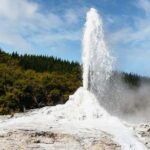
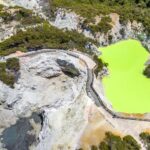
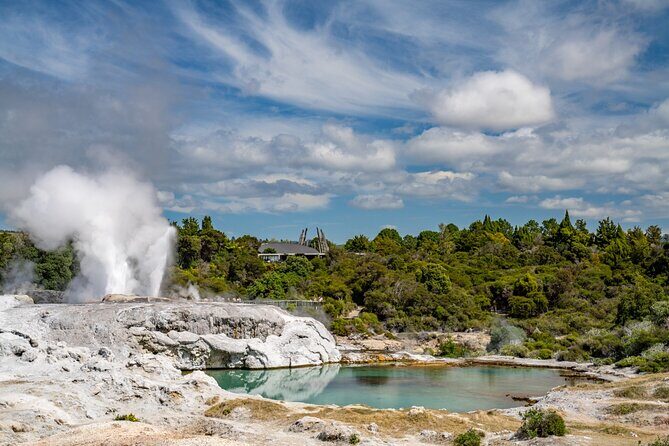
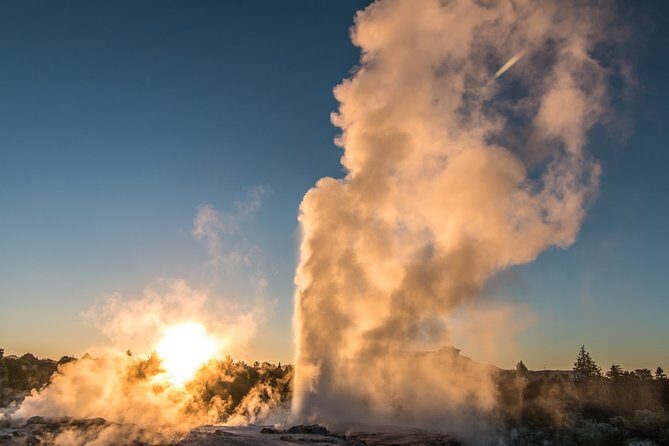
During the guided time you’ll see boiling mud pools and hot-spring areas. The key is that you’re doing it safely. The description calls out viewing Pohutu Geyser from two viewing platforms, which matters because you’re watching a powerful geothermal feature without putting yourself in the danger zone.
One of the best ways to get value from this part is to keep your eyes open for the guide’s “why.” For example, when the guide points out geothermal activity, you’ll usually learn what it means for daily life here—how people used hot water and geothermal warmth as part of routine life. That connection is what turns a quick “look at the steam” moment into an actual lesson.
If you’re trying to take great photos, you’ll likely appreciate the fixed viewing areas. They keep you from wandering into places you shouldn’t be and let you focus on angles that actually work from the right spots.
Kai cooked in the hot pool: the corn-on-the-cob moment
The tour includes a neat included food feature: you’ll get the chance to try corn on the cob cooked in the village’s largest hot pool. This is the type of experience that sounds minor until you taste it, and then you realize it’s doing two things at once: it’s fun, and it’s a hands-on example of geothermal life.
What you can take away from that moment is the practical side of culture. Kai here isn’t just a meal—it’s a demonstration of how heat from the earth gets used. That makes it easier to understand the village’s relationship to the environment, not just admire it from a distance.
If you’re picky about food timing, plan around it. The corn is included as part of the guided tour experience, so you won’t be waiting around for a separate meal. It’s also a quick way to break up the walking and keep things light even if you’re learning history and language details.






Guides who make it feel personal: Philip, Daniel, Kylie, and more
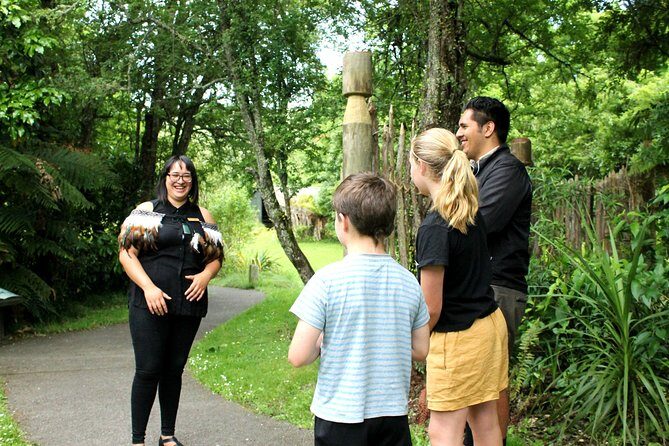
A guided tour lives or dies by the guide. Luckily, the experience includes local Māori guides tied to the village, and the names that show up in the guide stories include Philip, Daniel, and Kylie.
The best sign you’re in good hands is how the guide answers questions and sets the pace. You’ll see this in tours led with energy and patience—explaining not just facts, but how community life works. One guide’s style may be more funny, another more focused on history, but the common thread is pride in the village and clear explanations.
If you want to get more out of your hour, come ready with one or two questions. Things like how daily community life connects to geothermal work, or how traditions have changed over time. The guide’s job is to connect what you see around you with the meaning behind it.
Also, if you’re the type who loves to listen to stories, pay attention even when you think you’re just passing by another geothermal point. In this village, those points are usually part of the story.
Timing tips: singing shows, performances, and shop time
This is one area where planning helps. The village has traditional singing and chant elements, and some tours may align with performances. A few reviews mention shows daily at 11, 12, and 1, with the note that they might cost extra.
If your tour time is earlier and you’re hoping to catch singing after, keep your schedule flexible. If your tour runs later, you might have less time for performances and the village shops.
Speaking of shops: there are museum, shop, cafe, and gift shop options inside the village area, and one practical warning is that if you go later in the day (like a 3pm tour), shop hours may be tight by the time the tour ends. So if souvenirs or browsing matter to you, consider picking an earlier time slot.
There’s also a small tip that’s easy to miss: bring a couple of dollar coins if you’re the type to enjoy the penny diver attraction mentioned by visitors. It’s the kind of extra you might only notice if you’re already thinking about activities inside the village area.
Shoes, walking pace, and what a group of 20 means for you

Comfort counts here. The tour includes walking, and the village terrain is part of the experience—so wear comfortable shoes. Even if you’re not doing a long hike, you’ll likely appreciate footwear with grip, especially if Rotorua weather is damp.
Group size is capped at 20 travelers, which is helpful. It means the guide can actually keep track of the group and keep the explanations flowing without long delays. If you’ve ever felt lost in a huge tour, this size makes it more manageable.
The pace is usually guided: you’ll want to follow along during key explanation parts. If you fall behind, you can miss context that helps you understand what you’re seeing at the geothermal points. Still, most visits include time after for exploring at a slower pace, which is great if you want to linger near the museum or take a second look at something the guide mentioned.
Price and value: is $34.13 for 1 hour a good deal?
At $34.13 per person, this tour isn’t the cheapest thing you’ll do in Rotorua. But the value is in what’s packed into that hour: a guided cultural introduction, access to the village’s geothermal sights with safe viewpoints, and included kai (the corn on the cob).
Think of it as paying for two guided experiences in one slot. You’re getting both interpretation and access. Without a guide, you’d still see geothermal features—but you’d likely miss the “why” that makes the experience meaningful.
Also, your ticket includes admission and the tour includes the corn. That reduces the temptation to spend extra for basics once you’re inside. And because the tour is only about an hour, you’re not paying for a half-day block if your schedule is tight.
If you’re the type who loves learning from local voices, you’ll likely feel this price is fair. If your priority is purely geothermal views, you might question the cultural focus. But if you want the Rotorua experience to have context, the cost makes more sense.
Who should book this guided tour (and who might want another option)
This tour is a strong match if you want a real Māori community experience paired with Rotorua’s geothermal power. It’s also a good fit if you like guided explanations and you value hearing stories from locals who live the culture, not just perform it.
It’s less ideal if you’re chasing a long, performance-heavy itinerary. The hour moves fast enough that the tour may not include everything you want—like extended singing or extra time for the museum and shops. In that case, plan to arrive with time for extra exploration after your guide ends.
If you want something highly flexible and you’re sensitive to timing, prebooking and picking the right time slot becomes your friend. It helps you avoid the stress of waiting and it improves your odds of catching village activities that happen outside the guided window.
Should you book the Whakarewarewa guided tour?
Yes, if you want an hour that mixes living Māori culture with safe, guided geothermal viewing—and you like the idea of trying food cooked in a hot pool. The included corn on the cob is a fun, easy win, and the village atmosphere is the real reason to go.
If you’re the type who expects every minute to be a performance or nonstop music, book with your eyes open. This is built as a guided introduction. After that, if you want more, you’ll likely need to add your own time to explore the village and see what’s happening during your visit window.
FAQ
Where does the Whakarewarewa guided tour start?
The tour starts at 17 Tryon Street, Whakarewarewa, Rotorua 3010, New Zealand. The activity ends back at the same meeting point.
How long is the guided tour?
The duration is about 1 hour.
Is admission included in the price?
Yes. Admission is included with the guided tour ticket.
Will I be able to try food cooked in the geothermal pools?
Yes. Your guided tour includes an opportunity to try corn on the cob cooked in the village’s hot pool.
What geothermal sights will I see?
You’ll see boiling mud pools and hot-spring pools, and you’ll view the Pohutu Geyser safely from the village’s viewing platforms.
How big is the group?
The tour has a maximum of 20 travelers.
What if the weather is bad?
This experience requires good weather. If it’s canceled due to poor weather, you’ll be offered a different date or a full refund.