REVIEW · ROTORUA
Kaituna River and Tutea Falls Whitewater Rafting
Book on GetYourGuide →Operated by Kaituna Cascades Rafting · Bookable on GetYourGuide
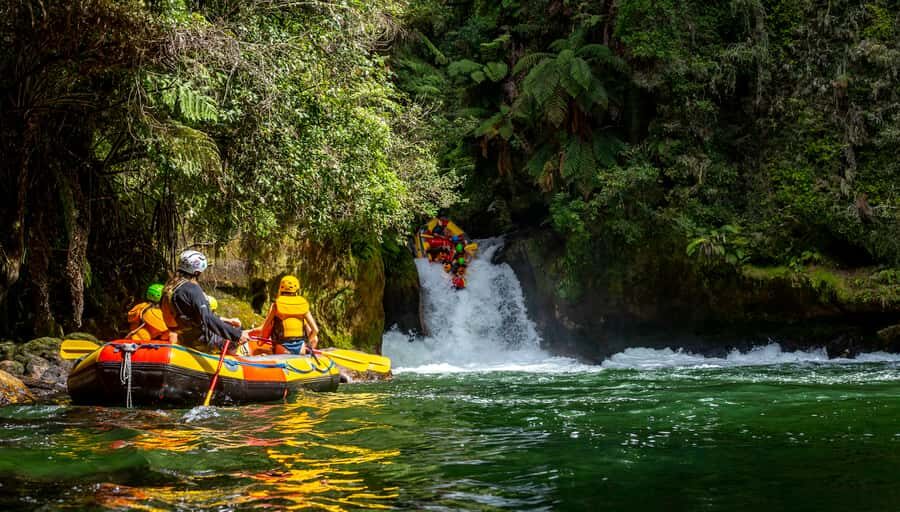
Grade 5 rapids meet a seven-meter waterfall. On the Kaituna River, you blast through 14 rapids and take on the famous Tutea Falls, the highest commercially rafted waterfall in the world.
I love how this trip is built for real first-timers and adrenaline seekers at the same time. You get thorough training from a friendly team, and the included kit (wetsuit, helmet, life jacket, paddles, booties, and splash gear) means you can focus on the ride, not shopping for gear.
One thing to consider: the $80 price covers the rafting experience, but professional photos cost extra, and there’s no accommodation pickup or drop-off. Plan on driving yourself to the base.
In This Review
- Key things that make this rafting run worth your time
- Tutea Falls and the Kaituna River: the real reason to go
- Where you meet: next to Okere Falls, not deep in the countryside
- Training and gear: how first-timers get confident fast
- The 2-hour experience: how your time really gets used
- Before you hit the water
- The river run: 14 rapids over ~50 minutes
- After the rapids and waterfall
- Bracing for the rapids: what grade 5 feels like here
- Tutea Falls moment: the seven-meter drop you plan for
- What to do after: walking track, photos, and craft beer nearby
- Price and value: is $80 fair for 14 rapids and Tutea Falls?
- Who should book this, and who should skip it
- Booking advice: how to get the most out of your raft time
- Should you book this Kaituna River and Tutea Falls rafting run?
- FAQ
- How long is the Kaituna River and Tutea Falls rafting trip?
- How much does it cost?
- Do I need rafting experience before I go?
- Where do I meet for the tour?
- What’s included in the price?
- What should I bring?
- Is there an age minimum?
- What restrictions mean I should not take the tour?
- Can I use a GoPro, and is there a mount rental?
- Are the tour and briefing offered in multiple languages?
Key things that make this rafting run worth your time
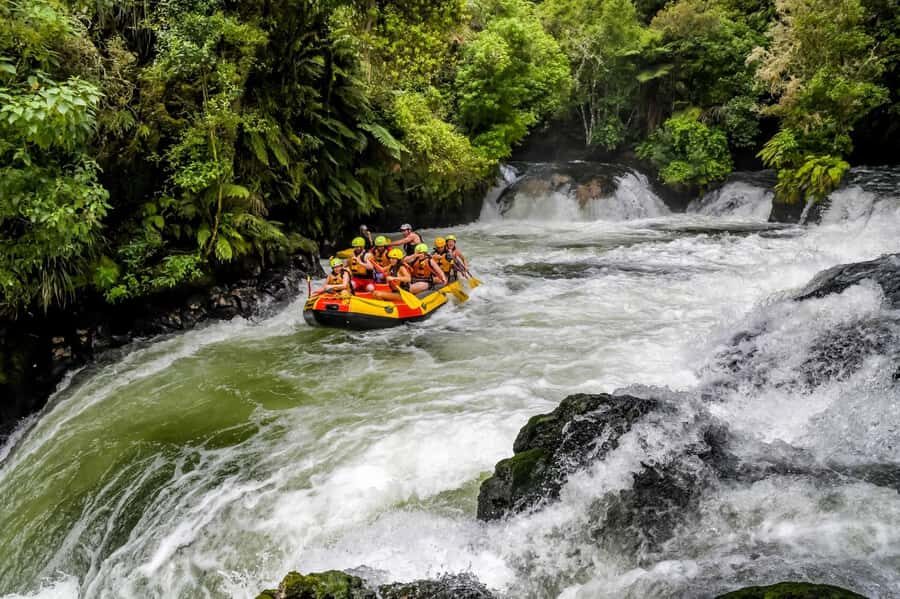
- Tutea Falls is the headline: it’s the seven-meter drop you’ll talk about long after the water dries.
- 14 rapids in a short window: the main action is about 50 minutes, so you spend less time waiting and more time moving.
- Safety coaching is the point, not just paddling: you’ll get instruction before you run the rapids.
- Big, supportive guides: guides like Jason, Josh, Malcolm, and Pete are repeatedly praised for keeping the vibe fun and the safety tight.
- Year-round operation: winter means extra warm gear, so the adventure stays on schedule.
- Photo and GoPro options: you can buy pro photos after, and you can rent a chest mount on the day if you bring your own camera.
Tutea Falls and the Kaituna River: the real reason to go
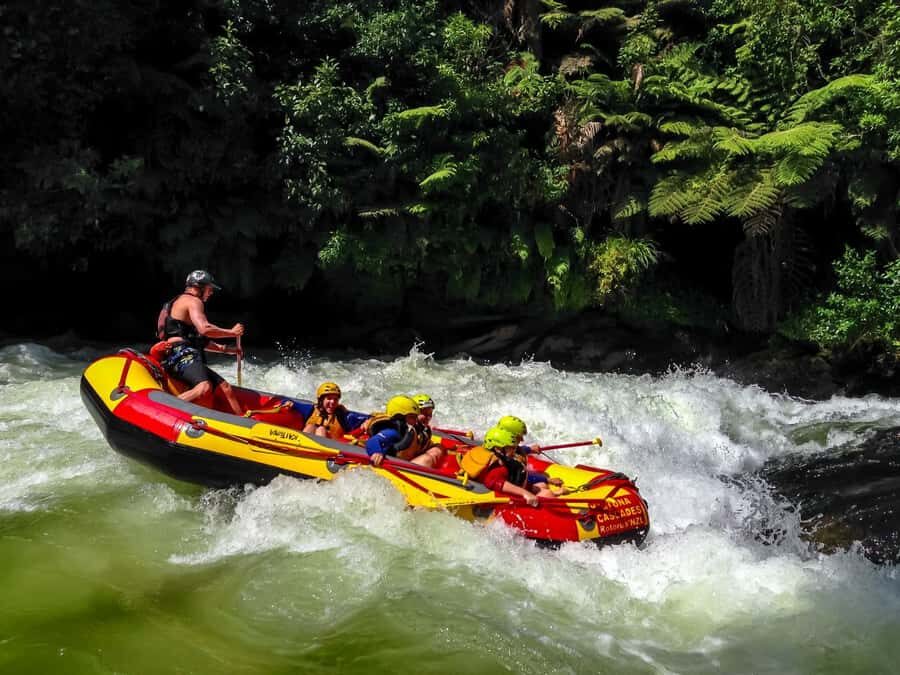
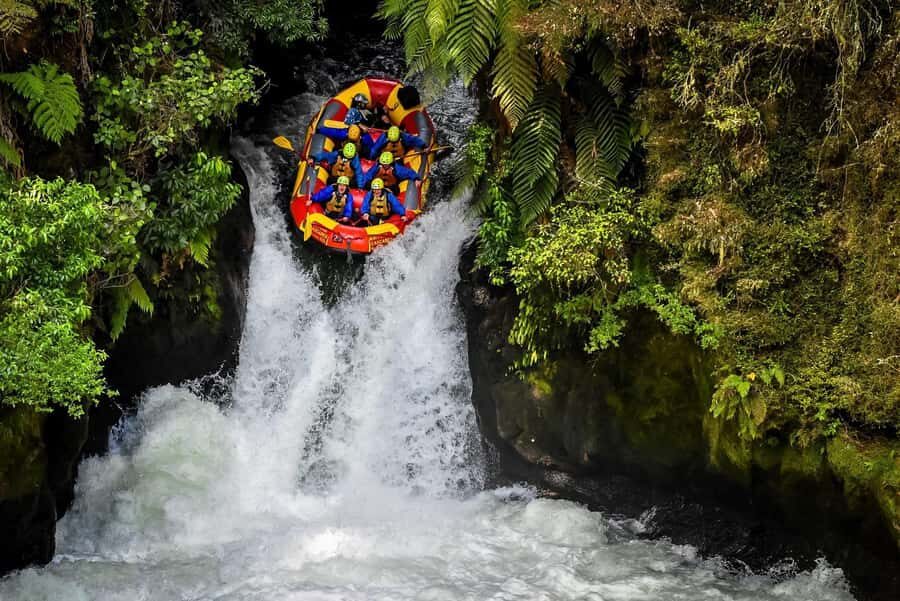
This rafting run is all about contrast. You start in deep, warm water canyons where the river feels close and loud, then you hit a sequence of rapids that builds your confidence quickly. And at the top of the excitement is Tutea Falls: a seven-meter waterfall drop that is famous because boats are actually sent over it on a guided trip.
What makes that special is the combination of scale and structure. This isn’t random whitewater where you just hold on and hope. The guides aim to set you up with simple, repeatable paddle cues and safety steps, so you’re not guessing. That matters most if you’ve never rafted before, since the grade 5 rating can sound intimidating on paper.
If you’re chasing pure adrenaline, you’ll get it. But if you’re more “I want to try this once,” you’ll likely appreciate the way the team adjusts for comfort. In the feedback I saw, guides are noted for helping people feel safe even when the rapids get intense, and even for dialing the level of challenge to the group’s mindset.
You can also read our reviews of more tours and experiences in Rotorua.
Where you meet: next to Okere Falls, not deep in the countryside
The meeting point is practical and easy to find: 18 Okere Falls Road, Okere Falls, Rotorua. The rafting base is about a 20-minute drive from central Rotorua, next to the Okere Falls Scenic Reserve, and you’re looking for the big red and yellow building on the right side of the road.
That location is a win for logistics. You can build this into a half-day plan without losing time to long transfers. It also means you can pair it with other Rotorua-area stops if you’re moving around the region anyway.
If you’re driving, keep it simple: arrive a bit early so you can do the waiver and get kitted up without rushing. The day works best when you treat the pre-briefing as part of the experience, not a chore.
Training and gear: how first-timers get confident fast
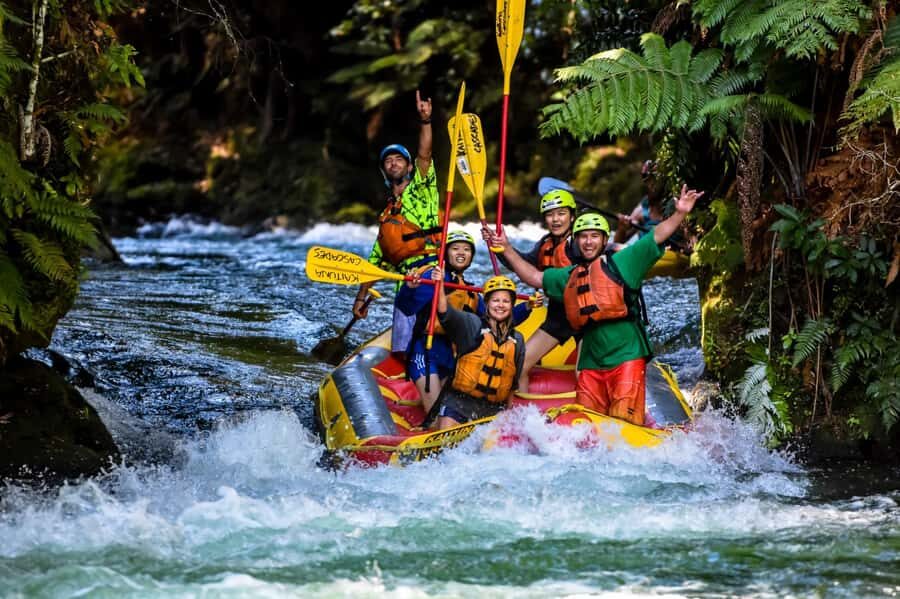
This is the part you’re most likely to remember later, because it changes how you experience the rapids. You don’t just receive a checklist and get sent downstream. You get hands-on coaching from local guides, and you’ll go over what to do in the boat, how to paddle effectively, and what safety looks like if something goes sideways.
Gear is also handled for you. The trip includes:
- wetsuits and fleece tops
- helmets and life jackets
- paddles, wetsuit booties, and splash jackets
So you’re not showing up in regular clothes that get ruined in 30 seconds. You’re also not guessing what to wear. Bring your own swimsuit, towel, and camera if you want one, but everything meant to keep you warm and protected is provided.
One detail worth calling out from real experiences: some groups describe practice that goes beyond paddle technique. A couple of guides are mentioned for doing drills that include short swimming practice, which helps people learn that getting back to the raft is manageable. That kind of preparation can be a game changer if you’re nervous before your first waterfall drop.
You’ll also be working with a team that has an active safety presence on the water. Several comments mention a kayak safety spotter/lifeguard who helps escort and watch the boats closely. It’s a calm reassurance for people who are thinking, what if I fall out.
The 2-hour experience: how your time really gets used
The total duration is listed as 2 hours, but the action is about 50 minutes on the river itself (14 rapids total). The rest of the time is the stuff that makes the rafting feel smooth: check-in, waiver, fitting, and the safety and technique briefing.
Here’s how the timing tends to feel when you’re in it:
Before you hit the water
You meet at the base, complete the required waiver form, and get geared up. Then your guide runs the essentials: how to hold your paddle, when to listen for commands, and what to do if you end up in the water. If you’re the nervous type, this is also where you can ask questions and get reassurance.
This is also where the included multilingual audio guide can help. It’s available in English, Japanese, Korean, and Spanish, which is nice if English isn’t your comfort zone.


The river run: 14 rapids over ~50 minutes
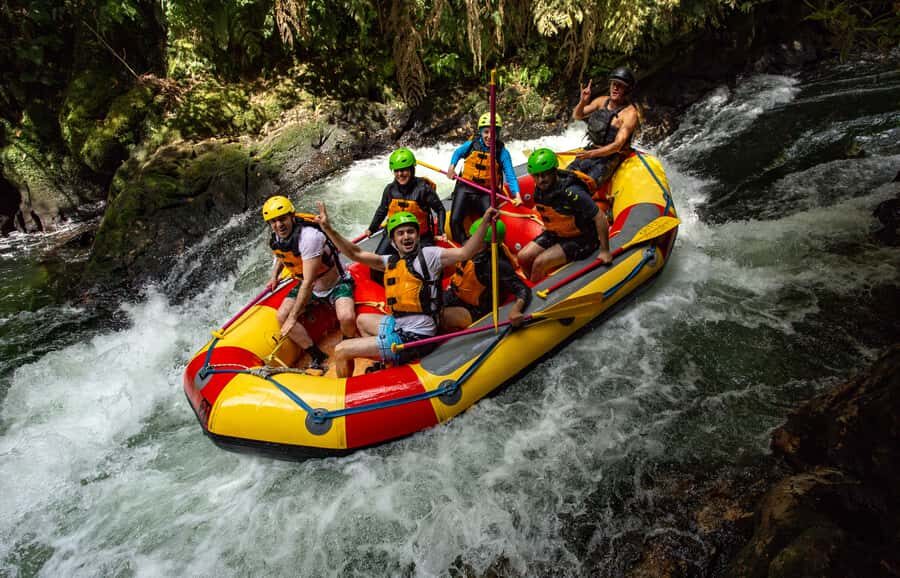
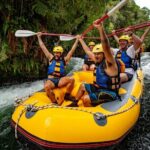
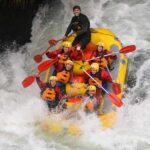
The rafting section is the core of the experience. You’ll paddle through 14 exciting rapids, with grade 5 intensity and the big set piece at Tutea Falls. The guides lead the boat line and coach you through the parts where your paddle timing matters most.
Even if you’re not thinking in terms of tactics, you’ll feel the progression. At first, rapids teach you how the boat moves and how quickly you can reset. Then the pace becomes more intense, and that’s when the waterfall moment lands.
After the rapids and waterfall
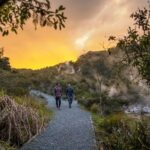
Once you’ve finished, you get a moment to stretch your legs. There’s a nearby walking track where you can watch the water tumble over the falls. If you want to just take it in for a minute, this is a good place to do that before you head to food or a drink.
Bracing for the rapids: what grade 5 feels like here
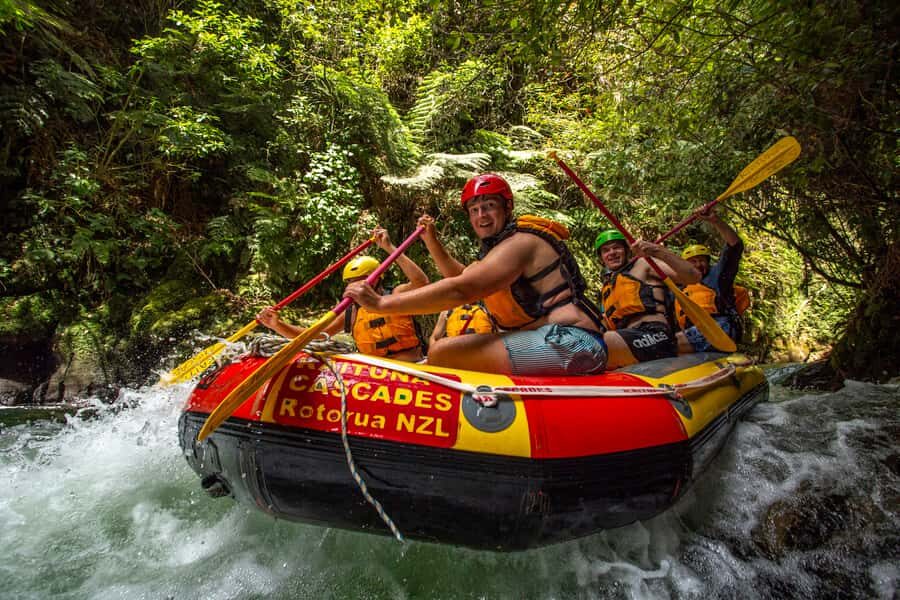
Grade 5 is serious enough that it deserves respect, but the way this trip is structured keeps it from feeling chaotic. The guides’ job is to keep the ride fun while also minimizing the kinds of mistakes that turn nerves into panic.
In the feedback you’ll find a common theme: people felt safe because the instruction was thorough. First-time rafters often mention that the rapids were not as scary as they expected, partly because the safety briefing lowered the unknowns.
Also, the trip is designed to fit a range of comfort levels. Some comments mention that guides can adjust how extreme the run feels based on what the group is ready for. That doesn’t mean you’ll avoid the thrill at Tutea Falls. It means they help match the pacing and your role in the boat.
A practical tip: listen more than you talk during the commands. Whitewater is loud and busy, and your guide’s timing matters. If you focus on their cues, you’ll feel more in control even when the river is throwing you around.
Tutea Falls moment: the seven-meter drop you plan for
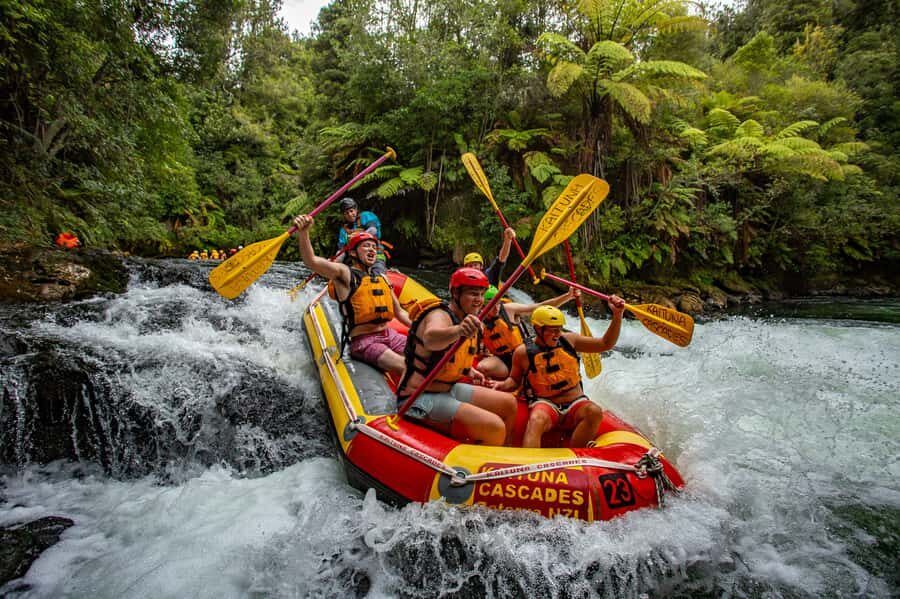
The waterfall is the reason most people book, and it hits with a very specific kind of adrenaline. It’s not just that it’s a drop. It’s that it’s a known drop you approach with coaching in your head.
Because it’s the highest commercially rafted waterfall, the whole operation is built around doing it safely and consistently. You’ll be placed in a boat situation where you know what your job is: hold steady, paddle when told, and stay in sync with the rest of the raft.
If you’re worried, remember this: the guide has done this repeatedly. The best way to handle your fear is to treat it as signal, not prediction. Fear tells you to pay attention; attention is what turns the moment from overwhelming into unforgettable.
When you get past it, the ride becomes a celebration. Several comments describe laughter, screaming in the fun way, and a strong feeling of accomplishment once the main drop is behind you.
What to do after: walking track, photos, and craft beer nearby
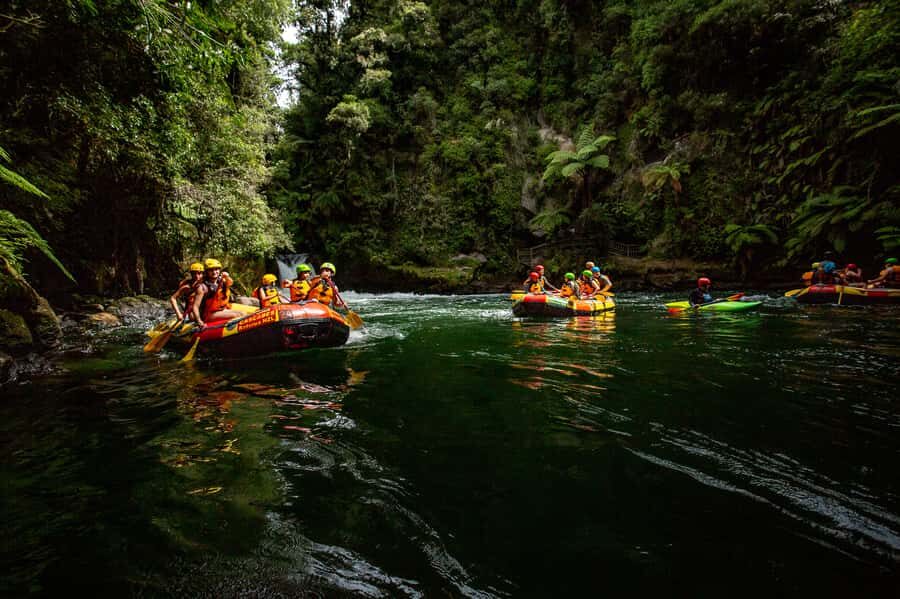
When you finish, you don’t just leave right away. You can use the nearby walking track to see the falls and the rapids you just rode. That’s a nice reset for your body and brain. It also helps you connect the moment you were in with the waterfall you saw from shore.
Then there’s the photo question. Professional photos are available to purchase on the day, and multiple reviews call out that they’re worth considering. If you want proof of your paddling and waterfall moment, bring a bit of cash or card you’re comfortable spending.
If you’re bringing your own camera, you may also want a chest mount. A limited number of chest mounts are available for rent for NZ$5 on the day if you have a GoPro and want to capture your perspective.
Finally, the base area includes a nearby cafe, where you can grab food. Reviews also mention it as a good stop for a solid selection of craft beer in Rotorua, which is a great follow-through after something wet and loud.
Price and value: is $80 fair for 14 rapids and Tutea Falls?
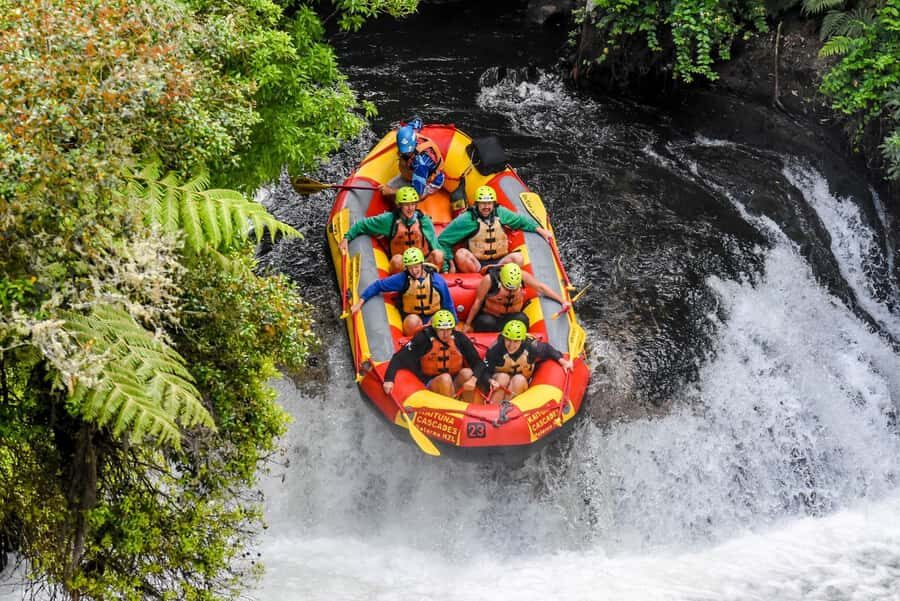
At $80 per person for a 2-hour experience, this rafting trip sits in the “high impact for the money” category. You’re not paying for a long half-day drive or a long tour that stretches out. You’re paying for the concentration: 14 rapids, grade 5 intensity, and the Tutea Falls waterfall moment.
The value improves because the essentials are included. You don’t have to buy or rent wetsuits and helmets separately. Your outfitting (wetsuit, helmet, life jacket, paddles, booties, splash protection) is part of the base price, which is a real savings and also reduces friction.
Where cost can creep up is after the fact:
- professional photos cost extra if you want them
- your ride to the base is on you since pickup/drop-off isn’t included
Still, compared with other adventure activities where you pay extra for basic safety gear, this one keeps it straightforward. You show up with a swimsuit and towel, and you’re ready.
Who should book this, and who should skip it
This trip is a strong match for people who want a clear adrenaline hit without needing prior experience. No previous experience is required, and the guides work with first-timers in a safety-focused way.
It’s also a good choice if you want a short, high-energy Rotorua activity rather than an all-day commitment.
But it’s not for everyone. Based on the rules:
- you must be at least 13 years old
- it isn’t suitable for pregnant women
- it isn’t suitable for people with heart problems
- it isn’t suitable for people over 260 lbs (118 kg)
If you’re in any of those categories, you should look for a different activity in Rotorua. Whitewater isn’t a “try it and see” situation.
Booking advice: how to get the most out of your raft time
A few smart moves can make your day smoother:
- Bring a towel and your swimwear ready to go. You’ll change on-site.
- Consider a camera strategy. If you’re using a GoPro, check whether you want the NZ$5 chest mount rental option on the day.
- Arrive early enough to feel settled before the briefing.
- If you’re nervous, use that time. Ask your guide what they’re looking for and how to respond if you feel you’re losing control. Many guides keep the tone encouraging and funny, but the real win is clarity.
Also, keep expectations realistic: you’re going to get wet. That’s the point. Pack your confidence, not just your clothes.
Should you book this Kaituna River and Tutea Falls rafting run?
If your idea of a great Rotorua day is loud water, serious adrenaline, and a guided experience that takes safety seriously, I think you’ll love it. The standout combination is grade 5 rapids plus Tutea Falls, delivered in a tight 50-minute run that doesn’t drag.
Book it if:
- you want the famous seven-meter waterfall moment
- you’re okay getting soaked and you like high-energy activities
- you want a provider that emphasizes training, not just thrills
Skip it if:
- any of the medical or age restrictions apply
- you’re uncomfortable with a hands-on adventure that involves risk awareness (waiver required)
- you’d rather pay for scenery-only experiences instead of rapids and waterfall intensity
Done right, this is one of those rare trips where the memory is immediate: the sound of the river, the feeling of paddling together, and then that moment at Tutea Falls.
FAQ
How long is the Kaituna River and Tutea Falls rafting trip?
The total experience is listed as 2 hours, with about 50 minutes spent rafting on the river.
How much does it cost?
The price is $80 per person.
Do I need rafting experience before I go?
No previous experience is required. You’ll get training from the guides.
Where do I meet for the tour?
Meet at 18 Okere Falls Road, Okere Falls, Rotorua. The rafting base is about a 20-minute drive from central Rotorua.
What’s included in the price?
Local guides and the rafting tour are included, along with wetsuits, helmets, life jackets, paddles, fleece tops, wetsuit booties, and splash jackets.
What should I bring?
Bring swimwear, a towel, and a camera if you want one.
Is there an age minimum?
Yes. You must be at least 13 years old.
What restrictions mean I should not take the tour?
The tour is not suitable for children under 13, pregnant women, people with heart problems, and people over 260 lbs (118 kg).
Can I use a GoPro, and is there a mount rental?
If you have a GoPro with a chest mount, you can bring it. A limited number of chest mounts are available to rent on the day for NZ$5.
Are the tour and briefing offered in multiple languages?
Yes. The instructor languages listed are English, Japanese, and Korean, plus Spanish. An audio guide is included in English, Japanese, Korean, and Spanish.