REVIEW · WELLINGTON
Star Safari Stargazing Experience, Martinborough
Book on Viator →Operated by Star Safari · Bookable on Viator
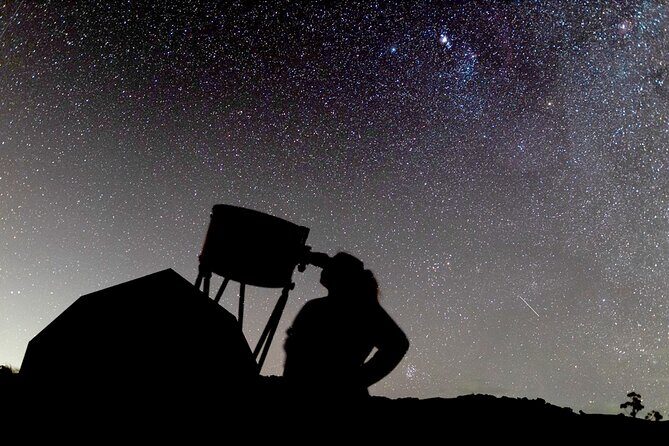
New Zealand’s darkest skies are close by. Star Safari takes you to the Wairarapa International Dark Sky Reserve, about 80 km from Wellington Airport, where you get direct access to the night sky with Hari and Sam guiding the show. I like that the session is built around real observing—strong telescopes, plus time to ask questions—so you leave with a sense of how the sky works, not just pretty views.
My second favorite thing is the flexibility. When the stars are out, you’ll use telescopes (manual 16-inch units) to hunt deep-sky targets like the Milky Way and planets such as Saturn. When clouds or haze ruin the night, you still get an astronomy program with planetarium software and virtual reality, plus a complimentary hot drink. One drawback to weigh: this is a weather-dependent activity, so on less-clear evenings you may get fewer telescope moments.
In This Review
- Key things that make Star Safari work
- Moon Garden stargazing: the setting and why it matters
- Hari and Sam: real Q&A, not a one-way lecture
- Telescopes, Milky Way, Saturn, and the small-group rhythm
- If it’s cloudy: planetarium software and VR night-sky time
- The 90 minutes: how the evening usually flows
- What to wear and bring for cold, clear skies
- Price and value: why $62.06 can make sense
- Who should book Star Safari (and who might not)
- Should you book Star Safari in Martinborough?
- FAQ
- How long is the Star Safari stargazing experience?
- Where does Star Safari start?
- Who guides the session?
- What happens if the weather is cloudy?
- Is there a hot drink included?
- How big are the groups?
- Do you get time with telescopes?
- Is this for beginners or advanced stargazers?
- Is a mobile ticket used?
- Are service animals allowed?
Key things that make Star Safari work
- Dark-sky location: Wairarapa’s reserve aims for some of the darkest, clearest skies in New Zealand.
- Two science specialists: An astrobiologist (Hari) and an astrophysicist (Sam) field questions nonstop.
- Serious telescope time: Up to 3–4 telescopes are available for small groups (max 10).
- Beginner-friendly guidance: You’ll learn where to start, how to orient yourself, and how to observe.
- A solid backup plan: Cloudy night? You switch to VR/planetarium instead of losing the whole evening.
Moon Garden stargazing: the setting and why it matters
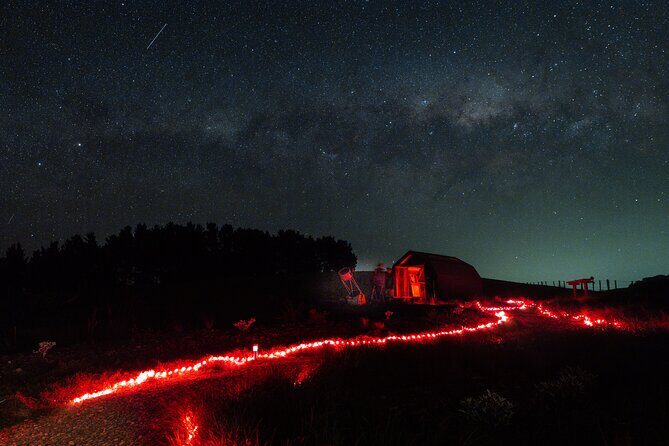
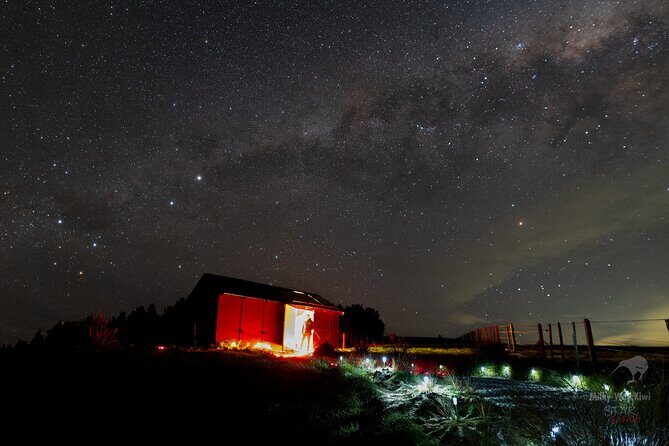
Star Safari is based in the Wellington region, with the action meeting at VG48+C6 Ponatahi. From there, the telescope viewing area sits about 25 meters away inside a place called the Moon Garden. It’s close enough that you’re not trekking in the cold just to catch the show, but far enough that you’re not stuck in Wellington’s light haze.
The big reason this matters is the dark-sky reserve. If you’ve ever tried stargazing near a city, you know the problem: the sky brightens and the fainter objects vanish. Here, the location is chosen to fight that. You’re more likely to see the kinds of targets that make stargazing feel like real discovery—star clusters, nebulae, and the delicate glow of the Milky Way band.
If you’re traveling with kids or anyone who gets impatient in the dark, this setup is also a win. You can wait comfortably, get your gear together, then step out to the viewing area without a long shuffle through the night.
A few more Wellington tours and experiences worth a look
Hari and Sam: real Q&A, not a one-way lecture
What sets this tour apart is the way it’s structured for conversation. You’re not just watching a guide point at the sky—you can ask questions during the session, and you’ll get answers from two different perspectives.
You’ll spend time with Sam, an astrophysicist, plus Hari, an astrobiologist. That pairing is more than a label. Sam focuses on the physics and what you’re seeing through the telescope, while Hari connects the dots to questions about life in the universe—how we think about conditions elsewhere, and why certain targets matter to astrobiology.
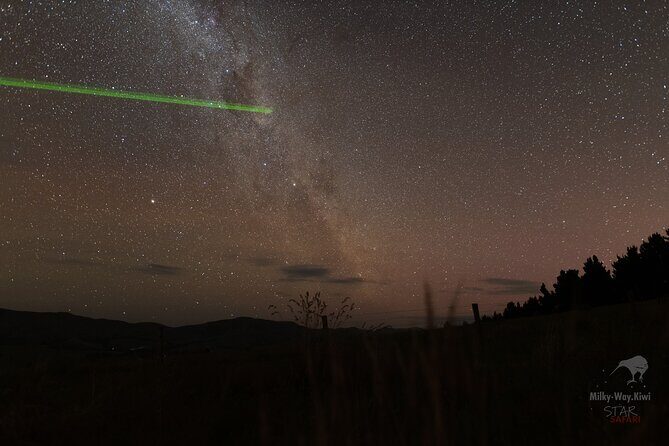
They also use licensed laser pointers, which helps a lot when you’re learning where things are. It’s one thing to hear about a constellation; it’s another to see the guide indicate it in real time. The result is that you’ll likely pick up practical skills quickly: how to orient yourself, how to find targets, and how to understand what you’re seeing instead of just admiring it.
Telescopes, Milky Way, Saturn, and the small-group rhythm
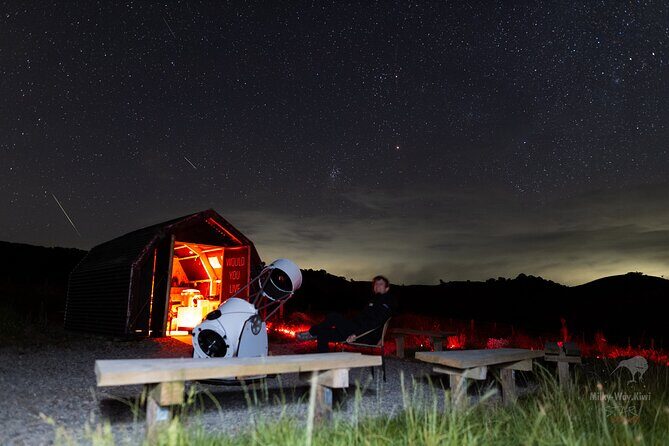
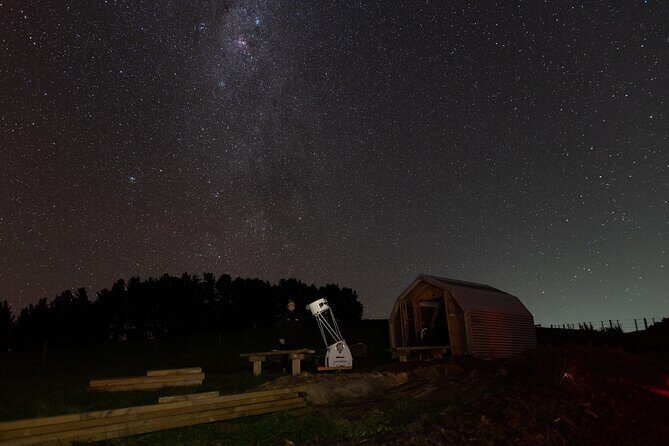
The core stargazing portion runs about 60–90 minutes. After you arrive, you’ll be directed to blankets or jackets at the reception area, then head over to the telescope zone. With up to 10 people total, and 3–4 telescopes available, you’re not waiting in a giant line just to get one quick look.
The equipment is built for performance. Star Safari uses two manual 16-inch telescopes, plus astronomy binoculars. Manual telescopes can sound old-school, but that often makes the experience more hands-on. If you’re willing to learn, you’ll get a better feel for the sky and for how observing changes with your position and time.
What you can hope to see depends on the night sky conditions and what’s visible for your session. Still, the program is clearly geared toward big, satisfying targets:
- You’ll look for the Milky Way.
- You might spot planets and bright objects, including Saturn—a highlight that people specifically call out as jaw-dropping, with rings and moons visible when conditions line up.
- You’ll have a shot at noticing satellites and the ISS if it passes overhead during your time window.
- You may catch shooting stars (or multiple), since there’s always a chance of activity even on nights when you’re focused on telescopes.
They also cater to different experience levels. Advanced stargazers can bring an observing list, and you’ll get help tracking it. Beginners will be guided step-by-step through where to start and how to orient yourself. That matters because beginners often get intimidated: they worry they’ll miss everything. Here, you’ll have enough structure to not feel lost.
One practical thought: stargazing can be a slow game. Your eyes adapt as you go, and the sky reveals itself gradually. If you’re the type who wants instant gratification, you might have to give your night vision a few minutes. But that’s also the fun part—when it clicks, it clicks.
If it’s cloudy: planetarium software and VR night-sky time
A lot of stargazing tours get derailed by weather. This one tries hard not to. If the night can’t support proper telescope observing, you switch to an e-astronomy program.
That means you’ll tour the universe using state-of-the-art planetarium software, then explore the solar system in virtual reality. It’s a different sensory experience, but it still ties into the same big themes: space science, orientation, and what you’d normally point a telescope at on a clear night.
There’s also a nice added detail for curious minds: a collection of astrobiology-relevant rocks from across New Zealand. They’re tied to the search for life on Mars, and you’ll hear how that connects to why astrobiology matters.
Keep one consideration in mind: VR can be tough for some people. One participant noted slight 3D sickness during the VR portion. If you’re prone to motion discomfort, it’s worth planning for that—talk with your group leader in advance if you can.
Still, this backup plan is better than a reschedule if you’re short on time. And it keeps the “90-minute science evening” idea intact even when the sky isn’t cooperating.
The 90 minutes: how the evening usually flows
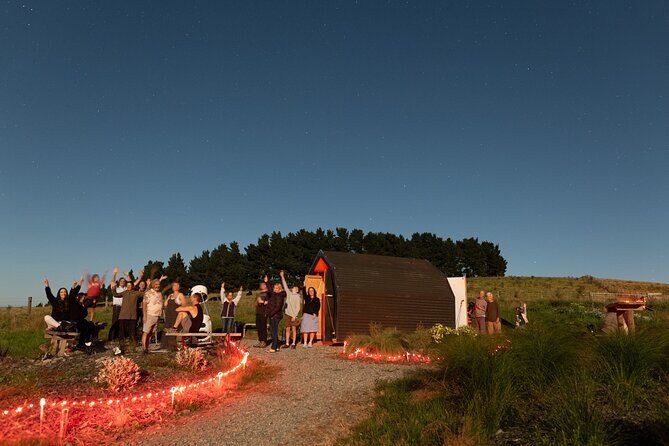
This is a 1 hour 30 minutes (approx.) experience, and the timing is built around the best use of your limited night hours. You’ll meet at the start point, then head to the reception area where you can pick up a blanket or jacket. After that, you move to the telescope viewing zone inside the Moon Garden, where the bulk of time is spent observing and asking questions.
The tour is designed so you’re not stuck waiting around. With multiple telescopes available, you’ll rotate through views and get chances to look more than once. That’s especially helpful if you want multiple targets in the same night, or if you’re traveling with a range of ages and attention spans.
They also explicitly leave room for learning during the observing time. The goal isn’t just to say what you’re seeing; it’s to help you understand how to see. You should leave with a better sense of how to orient yourself in the sky—an important skill if you want to keep stargazing after the tour.
And yes, there’s a hot drink included. People mention hot chocolate as part of the tradition, which makes sense: stargazing cold is real, and warm drinks keep you comfortable while you focus on faint light.




What to wear and bring for cold, clear skies
You should dress for night like you’re going hiking. It gets very cold after sunset, and the tour doesn’t sound like it’s designed for lightweight summer clothes.
At minimum:
- Wear warm layers, plus a jacket you’d actually trust in cold wind.
- Bring anything you’d use for cold ground or hands if you get chilled easily.
You’ll have blankets or jackets available at reception, which helps, but it’s still smart to be proactive. The night sky can be worth it—just don’t gamble with your comfort.
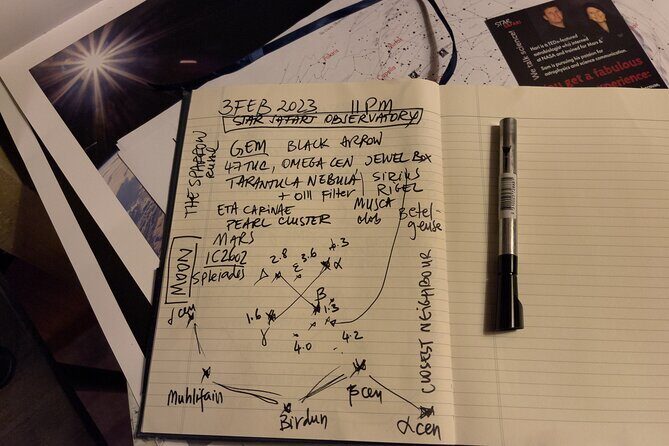
Also, if you’re an advanced observer, bring an observing list. If you’re a beginner, come with questions. The guides are there for both.
Price and value: why $62.06 can make sense
The price is listed as $62.06 per person. That’s not “impulse buy” money, so value matters.
Here’s where the value comes from:
- You’re paying for small-group astronomy (max 10), and multiple telescopes (3–4) means real time at the eyepiece.
- You get access to two specialists—Sam and Hari—which is unusual compared to tours with one host doing everything.
- The stargazing isn’t just a quick “look up and go.” It includes learning, Q&A, and guidance on how to orient yourself.
- If the weather fails, you don’t lose your whole booking to disappointment. You still get planetarium software and VR plus the astrobiology theme.
I also like that the tour calls out it’s suitable for both beginner and advanced stargazers. That means you’re not paying for “one-size-fits-all” entertainment that doesn’t meet your level.
One note on families: one family in the provided feedback highlighted that younger kids were free. Since that isn’t stated as a general rule in the core details, I’d treat it as a good sign to ask about child pricing before you book.
Who should book Star Safari (and who might not)
This is a strong fit if you want:
- A guided night sky session in a dark-sky setting, not a casual group with a single speaker.
- A tour where you can ask questions and get answers from both physics and astrobiology angles.
- Telescope time plus a structured “learn the sky” approach.
- A plan B for cloudy conditions that still feels like a complete astronomy evening.
It may not be your best match if:
- You’re extremely sensitive to VR motion effects, since the backup program includes virtual reality.
- You’re traveling during a period when cloud cover is common and you’d be frustrated if you end up doing the VR/planetarium route rather than full telescope observing.
Should you book Star Safari in Martinborough?
If you’re within reach of Wellington and you care about astronomy beyond the basics, I’d say yes. Star Safari hits the sweet spot: dark skies, real telescopes, and a learning-centered format led by Hari and Sam. The biggest reason to book is the combination of two things that are hard to get together—serious observing time and a thoughtful backup plan for weather.
Before you go, do two simple things: dress for the cold and be ready for the sky to depend on conditions. If you do that, you’re likely to walk away with practical star-finding skills and some memorable views—especially when Saturn and other clear-sky targets are on the menu.
FAQ
How long is the Star Safari stargazing experience?
It’s approximately 1 hour 30 minutes, with about 60–90 minutes typically spent on telescope viewing when stars are visible.
Where does Star Safari start?
The meeting point is listed as VG48+C6 Ponatahi, Wellington Region, New Zealand, and the activity ends back at that meeting point.
Who guides the session?
The experience is guided by Hari (astrobiology) and Sam (astrophysics), and you’ll have opportunities to ask them questions during the tour.
What happens if the weather is cloudy?
When conditions aren’t suitable for stargazing, the tour switches to an e-astronomy program with planetarium software and virtual reality.
Is there a hot drink included?
Yes. A complimentary hot drink is included as part of the tradition during the experience.
How big are the groups?
The tour has a maximum of 10 travelers.
Do you get time with telescopes?
Yes. There are 3–4 telescopes available, and the program is designed so you get plenty of telescope time.
Is this for beginners or advanced stargazers?
Both. Beginners are shown where to start and how to orient themselves to the stars, while advanced stargazers can bring an observing list.
Is a mobile ticket used?
Yes, the tour uses a mobile ticket.
Are service animals allowed?
Yes, service animals are allowed.