REVIEW · CANTERBURY NEW ZEALAND
Akaroa: Guided Electric Mountain Bike Tour-Lava Loop
Book on GetYourGuide →Operated by Akaroa Guided Kayak Safari · Bookable on GetYourGuide
Crater rim views start uphill and speed up. This guided electric mountain bike tour in Akaroa takes you along the Lava Loop up to the crater edge for nonstop sea-to-summit scenery.
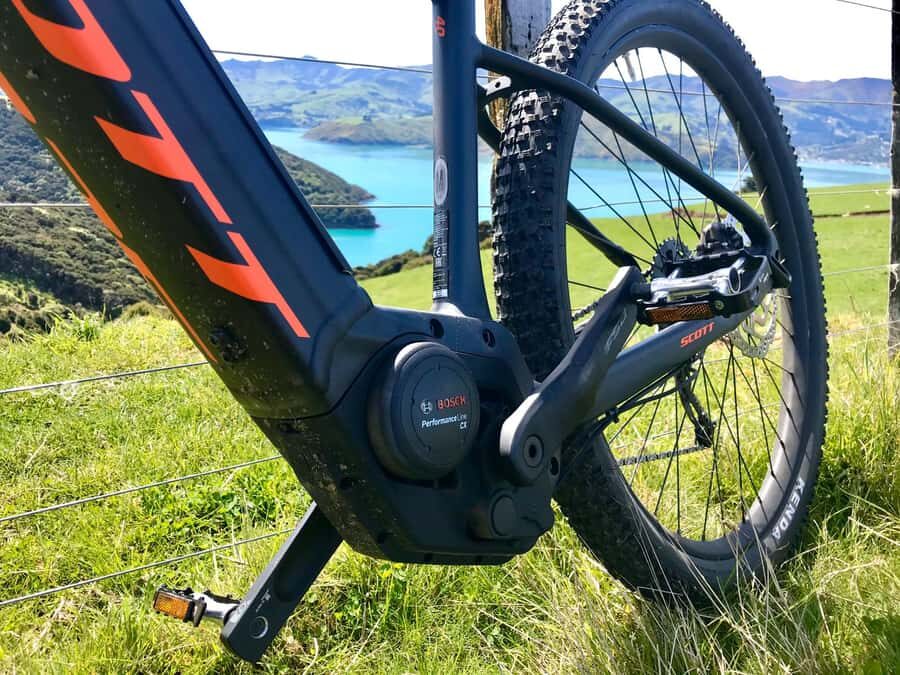
I love the Scott e-bikes with Bosch pedal assist and the handy turbo mode when the climb starts to feel like a workout. I also love that your guide calls out what you’re seeing and even helps with photos, with local stories from guides like Max and Louann.
The main drawback to think about is weather. Even though the ride runs in most conditions (not heavy rain or extreme winds), rain and wind can still make the return descent feel slippery and reduce visibility.
In This Review
- Key moments that make the Lava Loop special
- Akaroa Lava Loop: what a crater-rim e-bike ride actually feels like
- E-bike setup: the Bosch assist and turbo mode that change everything
- Who this tour suits best (and who should skip it)
- The guide factor: safety, stories, and photo-friendly stops
- The Lava Loop ride breakdown: from Main Street to sea-level return
- Climb to the crater rim
- The descent back down
- Views that actually last: sea-to-summit panoramas in one ride
- Gear and what to bring so you’re comfortable (and not freezing)
- Price and value: is $104 for 3 hours worth it?
- Weather reality check: rain, wind, and slippery descents
- The small-group advantage in a big-view destination
- Getting the timing right: when 3 hours works best
- Should you book the Akaroa Lava Loop e-bike tour?
- FAQ
- How long is the Akaroa Lava Loop electric mountain bike tour?
- Where is the meeting point in Akaroa?
- What’s included in the price?
- Do I need to be an experienced mountain biker?
- What bikes do you use?
- What should I bring with me?
- Is the tour guaranteed to run in bad weather?
- What languages are the tours in?
- What is the group size?
- Is there a weight limit?
Key moments that make the Lava Loop special
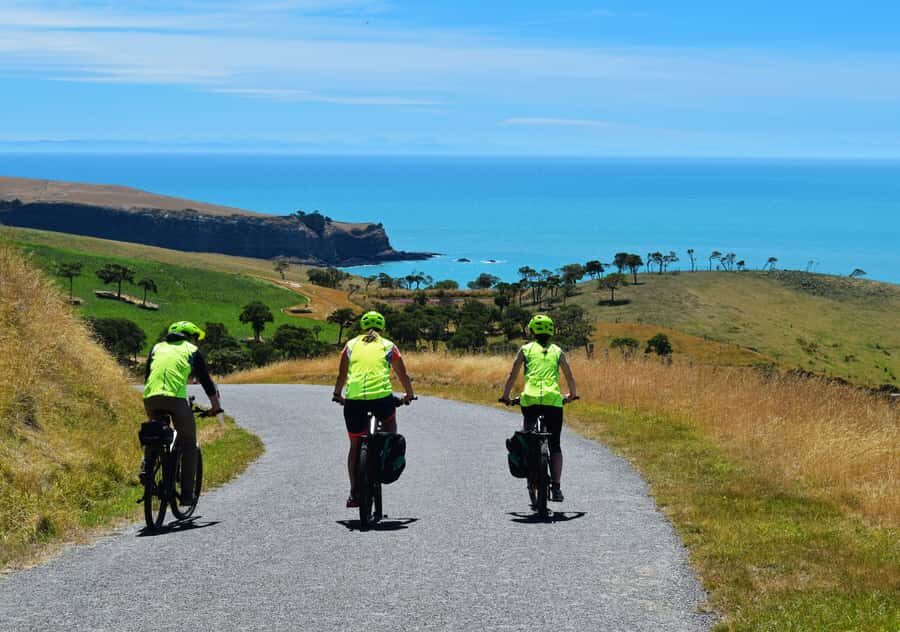
- Scott or Trek electric mountain bikes with powerful pedal assist
- Turbo mode for steep sections when you start to fade
- Crater-rim loop on quiet sealed roads with a fast, satisfying downhill
- Photo stops plus guide-led stories about Akaroa’s scenery and character
- Small group size (up to 10) and English/Spanish guiding
- A tight 3-hour duration that still delivers a big sense of achievement
Akaroa Lava Loop: what a crater-rim e-bike ride actually feels like
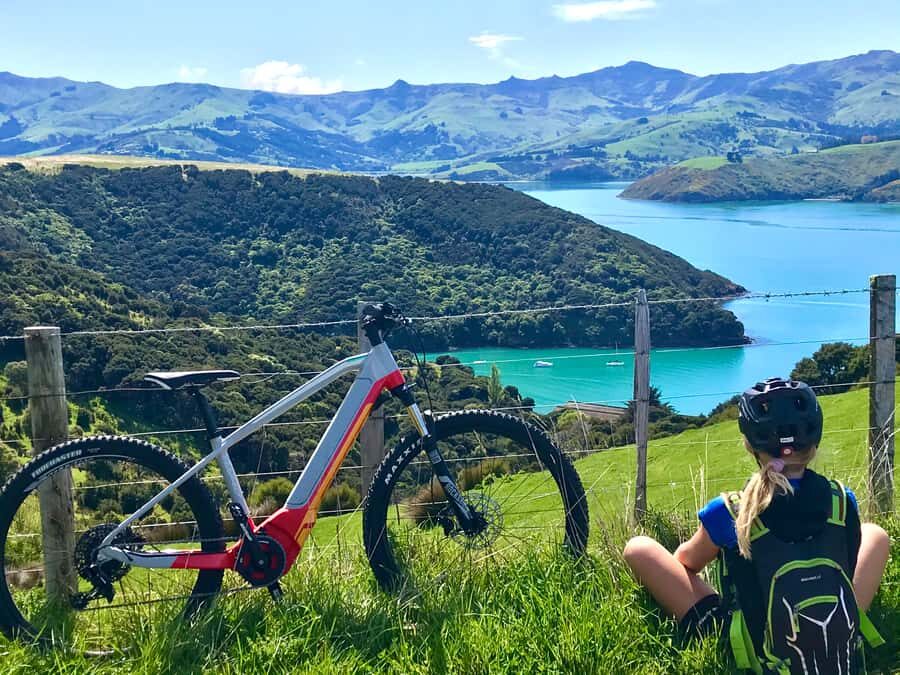
Akaroa sits on the edge of a dramatic volcanic landscape, and the Lava Loop uses that setting in the best possible way: you work for the top, but you do it fast. The route climbs to the crater rim, then drops back toward sea level on quiet sealed roads, so you get real views without a constantly jarring trail.
A big part of why this tour hits is the pacing. You’re not stuck grinding slowly or wondering if you’re going the right way. With electric assist doing the heavy lift, you can keep a steady cadence and focus on the panorama—sea to summit—rather than just your breathing.
Expect steep ascents and descents. One rider specifically noted a climb of about 700 m up to the crater rim, which matches the feeling: it’s a workout, just not the same kind you’d get on a normal bike.
You can also read our reviews of more tours and experiences in Canterbury New Zealand.
E-bike setup: the Bosch assist and turbo mode that change everything
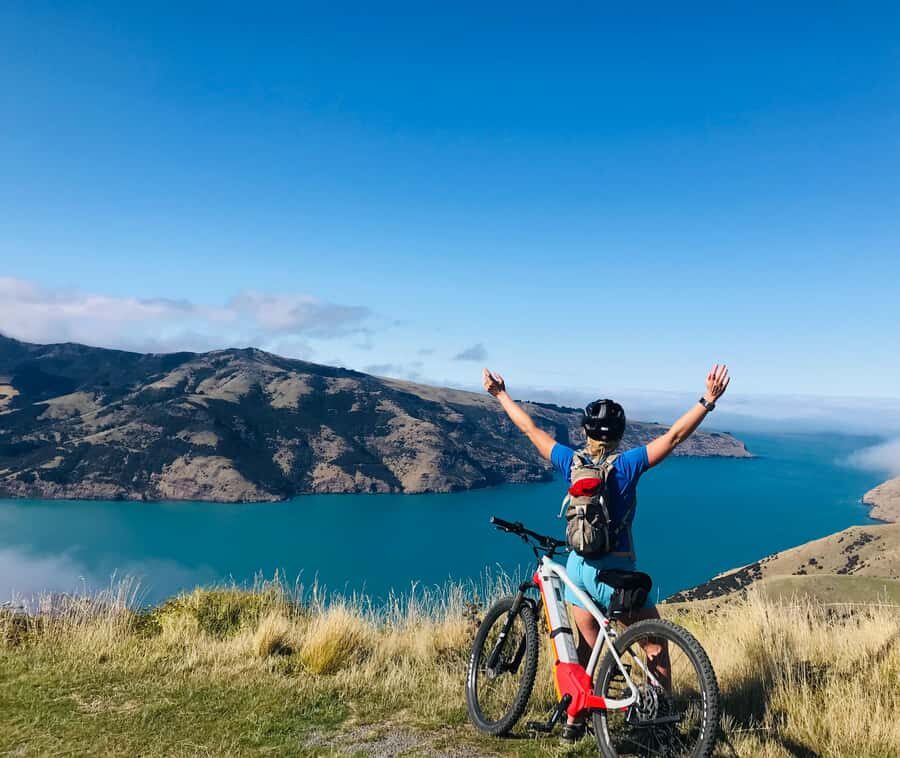
This tour is built around premium electric mountain bikes—Scott or Trek—with powerful pedal-assist systems (including Bosch setups mentioned in the tour details). Practically, that means the bike helps you move up steep sections without you needing to sprint or wrestle for every pedal stroke.
Where you’ll feel the advantage most is on the “I didn’t know this was so steep” parts. When that moment shows up, the tour’s assist options—especially turbo mode—are there so you can keep moving confidently instead of turning the ride into a slow hike.
There’s a key rider fit here. You’ll get the most out of it if you’re confident riding a normal mountain bike and you’re at least in moderate-to-high fitness. Low fitness and very limited mobility are specifically listed as no-go, and there are weight limits too.
Who this tour suits best (and who should skip it)
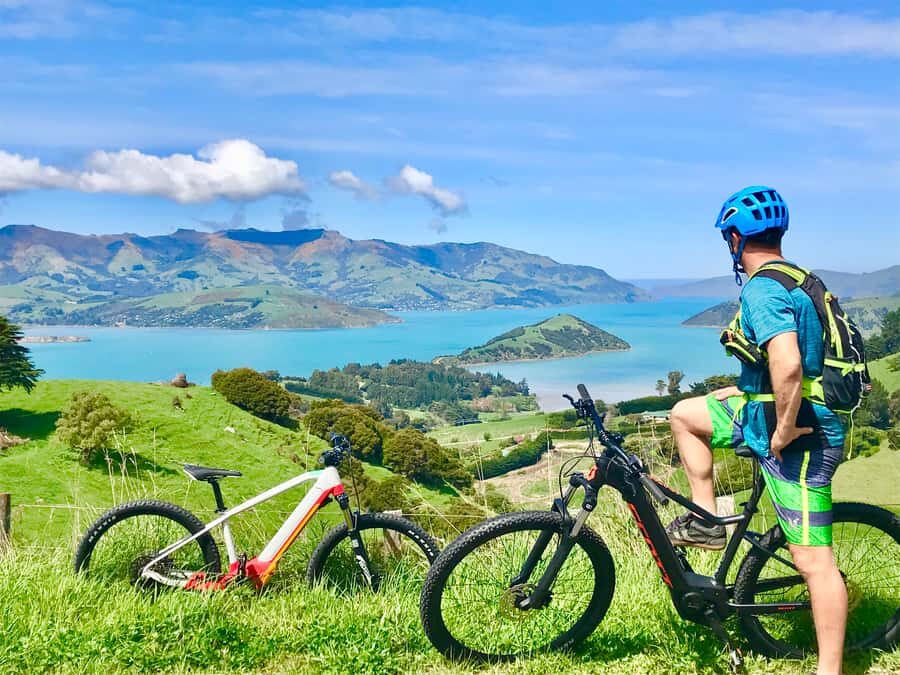
This ride is for active people who want a scenic challenge. The tour description leans toward riders with conventional mountain bike experience, and the route includes steep climbing and descending even though the electric assist reduces the effort.
It’s not a fit for every body or every comfort level. The tour isn’t suitable for people with back problems, mobility impairments, or low fitness. There’s also a clear maximum weight limit of 209 lbs / 95 kg.
If you’re on the fence because you’re worried about “mountain bike” riding, treat that as a real question. The bike can help you climb, but it can’t remove the basic demands of balance and control on a steep ride—especially in wet weather.
The guide factor: safety, stories, and photo-friendly stops
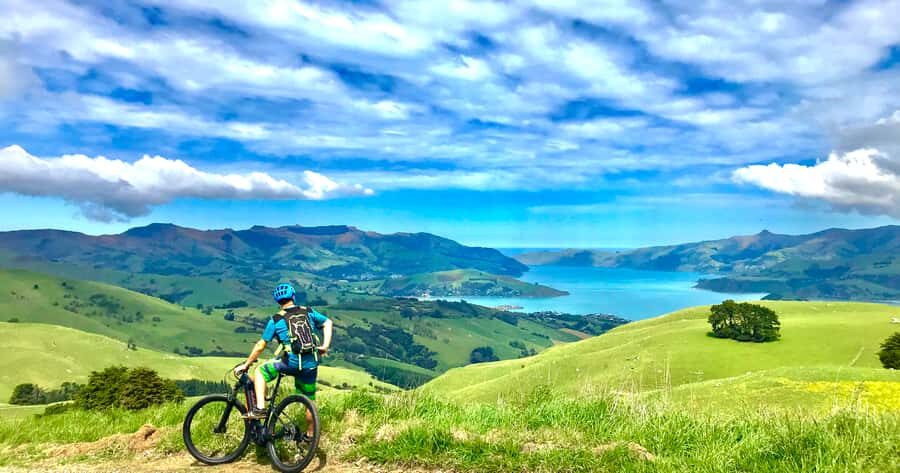
The guides make a noticeable difference. The tour is offered in English and Spanish, and guides like Max, Louann (also spelled Lourn in one review), and Jack show up in feedback as friendly, energetic, and focused on safety.
A detail I appreciate is the photo element. Your guide points out places of interest and takes photos, which matters because the best views are often at moments when you’d otherwise be fiddling with your phone or trying to find a safe place to stop.
Small group size helps too. The tour is limited to 10 participants, so you’re not lost in a crowd. In one case, a rider did the ride as a two-person group and the guide offered route options based on their interests. That’s not guaranteed, but the small-group setup makes flexibility more likely.
The Lava Loop ride breakdown: from Main Street to sea-level return
The tour starts in central Akaroa at Main Street, between the petrol station and the 4 Square supermarket. It’s easy to find, and it’s also described as an easy walk from Akaroa Port—useful if you’re arriving on foot and not trying to coordinate parking.
From there, you’ll gear up with what’s provided and then roll out to start the climb. The tour follows a loop route that uses quiet scenic sealed roads. That matters: sealed roads mean smoother surfaces and fewer “trail surprises,” while still delivering a real vertical challenge.
You can also read our reviews of more guided tours in Canterbury New Zealand
Climb to the crater rim
The climb is the “earning it” part. Expect steep segments, plus the mental shift that comes when you stop thinking about leg fatigue and start thinking about views. If you begin to get tired, you’re meant to switch on assist and keep rolling—especially turbo mode when needed.
This is also where your guide’s attention is most useful. You’ll get pointed to places of interest and likely stop at good lookouts for photos and a moment to take the view in.
The descent back down
The payoff is the descent. The tour description calls it a delicious decent that flows back toward sea level, and the feeling is usually the same: you’ve just earned elevation, and now you get momentum.
In one piece of feedback, rain and wind turned the return into a more careful ride because the road felt slippery. So if you go when weather is iffy, take the descent slower and stay smooth with your braking and body position.
Views that actually last: sea-to-summit panoramas in one ride
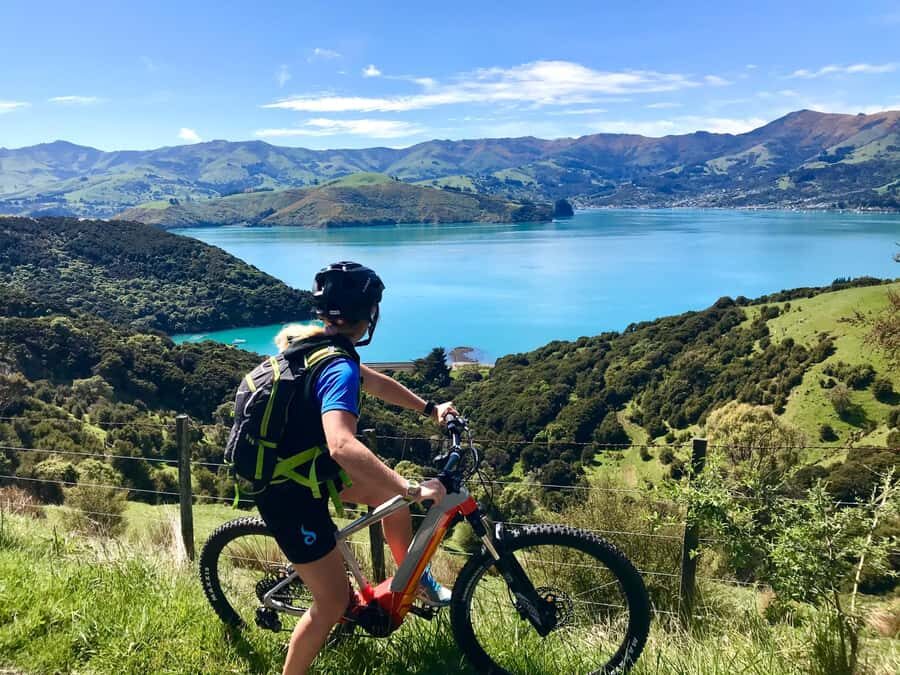
The Lava Loop is essentially a viewpoint tour disguised as a bike workout. The best promise here is uninterrupted views from the sea to the summit. On many routes, you’d spend time circling back and forth to get angles; here, the climb naturally builds height and the loop structure keeps you moving.
You’ll also get sightlines across the harbour and countryside. The tour notes specifically reference the turquoise harbour and the broader surrounds, and the whole experience is framed as riding “like a postcard.”
Just remember: views depend on visibility. The tour generally runs in most weather, but one rider reported that pouring rain and strong wind meant no visibility on part of the route. That doesn’t mean the tour is only for sunshine—it means you should still bring the right outer layer and be ready for the possibility of gloomy skies.
Gear and what to bring so you’re comfortable (and not freezing)
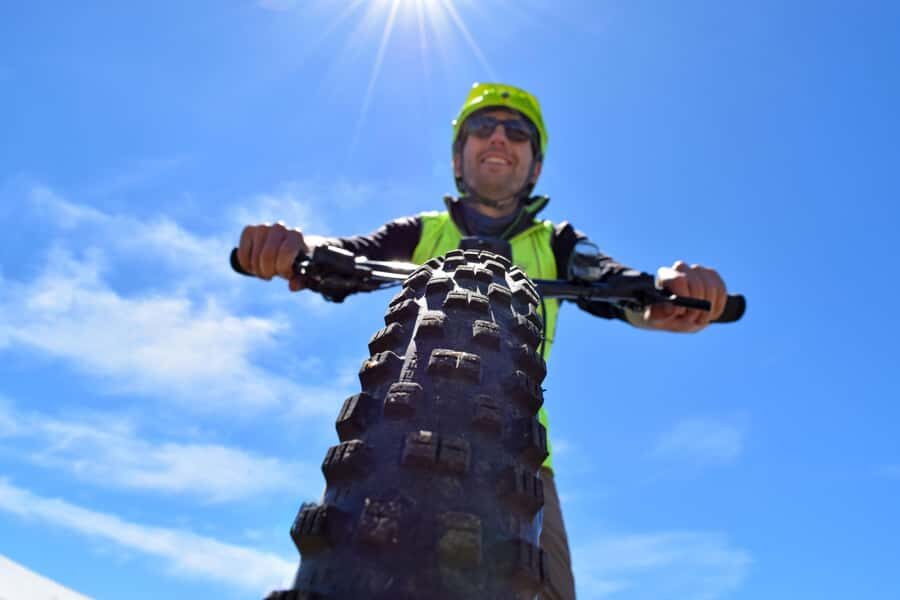
The tour provides key riding gear:
- Helmet
- High visibility vest
- Riding backpack with an easy-access phone holster
- A powerful Scott or Trek electric mountain bike
- A local guide
What you should bring is straightforward, and it’s mostly about weather and comfort:
- A windbreaker (or light jacket)
- Sunscreen
- Water
- Snacks (optional but smart for a 3-hour active ride)
- Sports shoes
That phone holster detail is more than a gimmick. If you want photos, you’ll have a safer, simpler way to keep your phone accessible for the guide’s photo moments and your own quick snaps.
On a sunny day, sunscreen and water matter because you’ll be outside and working. On a breezy day, a windbreaker keeps you from feeling chilled during the slower uphill sections.
Price and value: is $104 for 3 hours worth it?
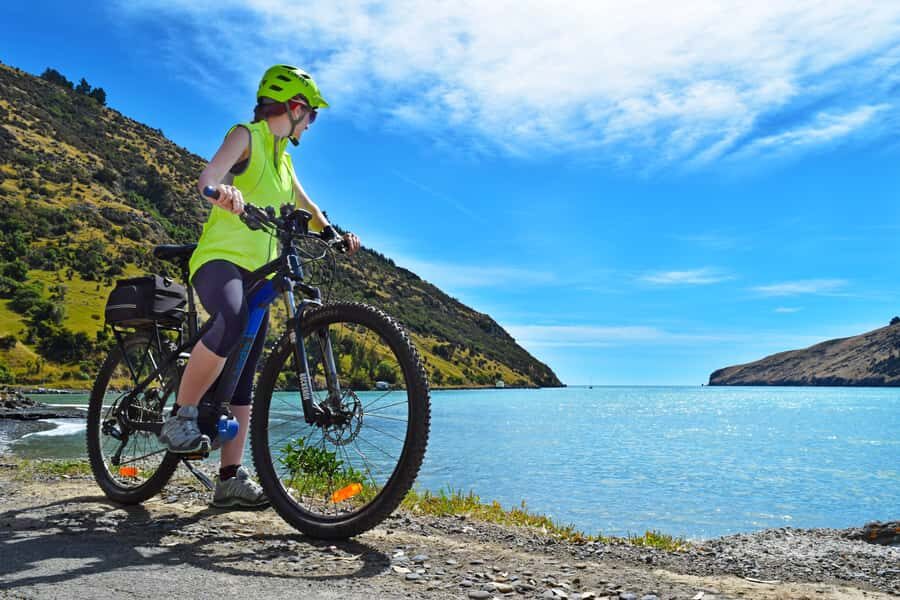
At $104 per person for a 3-hour guided ride, you’re paying for more than a bike rental. You’re paying for an electric mountain bike (not a bargain scooter-style e-bike), the gear, the guide, and the route design that puts you at the crater rim without you needing to plan logistics or worry about navigation.
Here’s why that can be good value in real life:
- The guide helps with pacing and safety on steep sections.
- You get photo support and local stories that make the view feel more specific.
- The bike choice (Scott/Trek with powerful assist) changes how much of the ride you’ll actually enjoy.
If you’re the type of person who loves scenic rewards but doesn’t want to brute-force every climb, the price makes sense. If you only want flat cruising, then this isn’t the best match. This is a challenge ride with big view dividends.
Weather reality check: rain, wind, and slippery descents
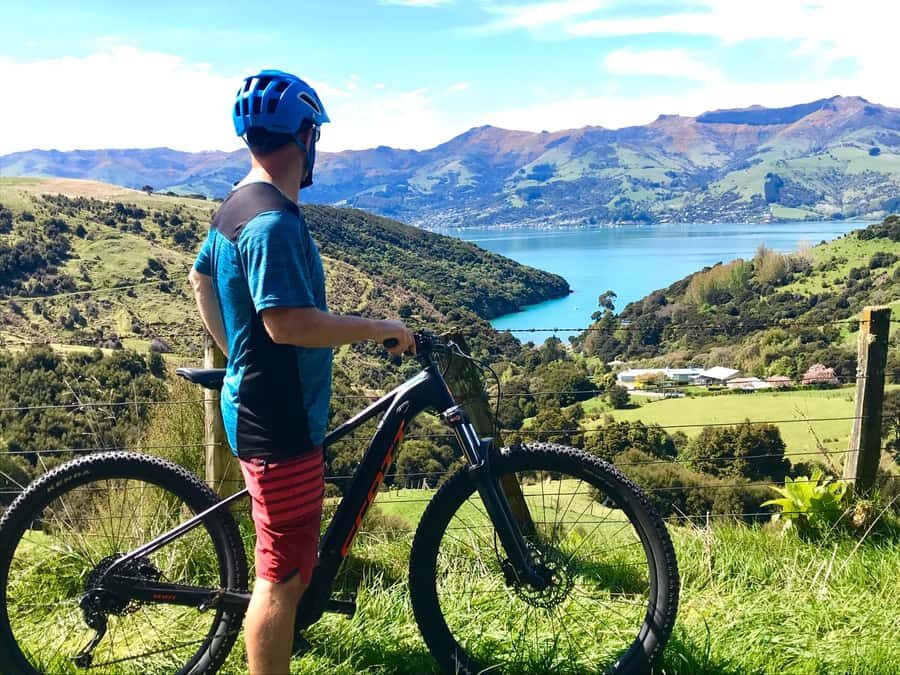
The tour is described as going ahead in all weather except heavy rain or extreme winds. That’s helpful, but it doesn’t mean every ride will be dry and calm.
One review described starting in rain with pouring conditions and strong wind, leading to poor visibility and a slippery return. They also mentioned that part of the planned route wasn’t completed because of conditions, and they couldn’t switch to another day.
So how should you plan? Bring that windbreaker. Wear sports shoes with solid grip. And if conditions look rough, tell yourself the goal is safe fun, not hero biking.
The small-group advantage in a big-view destination
Akaroa can feel like “one more stop” for some people, but this tour treats it like a place with time worth spending. The small group size (up to 10) helps the guide keep an eye on everyone, especially on steep climbs and during the descent.
It also means you’re more likely to get interaction. Guides named in feedback—Max, Louann, Jack—were praised for friendliness and local knowledge, and that kind of attention makes a short 3-hour tour feel personal rather than rushed.
If you like active days that still feel scenic and social, this format fits well.
Getting the timing right: when 3 hours works best
The duration is 3 hours, which is a sweet spot for a “big views, minimal wasted time” day. It’s long enough to feel like you did something physical and memorable, but short enough to still plan other Akaroa activities after.
If you’re on a tight schedule, this tour’s structure helps. You’re not committing a whole day to logistics. You’re going out, climbing, riding the loop, and returning to sea level within a compact window.
Should you book the Akaroa Lava Loop e-bike tour?
Book it if you want:
- Crater rim views with real elevation gain
- A fun way to exercise using pedal assist and turbo mode
- A guided ride that includes photo moments and local storytelling
- A challenge that’s doable if you have basic mountain bike confidence and moderate-to-high fitness
Skip it or think hard if:
- You have back problems, mobility limitations, or low fitness
- You’re over 95 kg / 209 lbs
- Wet, windy conditions would make you uncomfortable with slippery descents
If you’re cruising and you’re wondering about logistics, the tour details mention free pick up and drop off when arriving via Akaroa Port, and special booking for cruise arrivals from Lyttleton Port so return transport is included.
If you show up with a windbreaker, water, and sports shoes—and you’re ready for a steep climb—you’ll likely leave with that rare mix: a big view moment and a sense of accomplishment without wrecking your whole day.
FAQ
How long is the Akaroa Lava Loop electric mountain bike tour?
The tour duration is 3 hours.
Where is the meeting point in Akaroa?
Meet on Main Street of Akaroa between the petrol station and the 4 Square supermarket.
What’s included in the price?
The tour includes a local guide and riding gear: helmet, high visibility vest, and a riding backpack with an easy-access phone holster. The electric mountain bikes (Scott or Trek) are also included.
Do I need to be an experienced mountain biker?
You should be confident riding a normal mountain bike. The tour is aimed at people with conventional mountain bike experience and moderate to high fitness.
What bikes do you use?
You’ll ride a powerful Scott or Trek mountain e-bike, with the tour describing powerful Scott Bosch pedal assist systems.
What should I bring with me?
Bring a windbreaker (light jacket), sunscreen, water, snacks, and sports shoes.
Is the tour guaranteed to run in bad weather?
The activity will go ahead in all weather except heavy rain or extreme winds.
What languages are the tours in?
Tours are guided in Spanish and English.
What is the group size?
The group is kept small, with a limit of 10 participants.
Is there a weight limit?
Yes. The tour is not suitable for people over 209 lbs (95 kg).