REVIEW · CANTERBURY NEW ZEALAND
Twizel Stargazing Experience with a Guide (Carbon Positive)
Book on GetYourGuide →Operated by Silver River Stargazing · Bookable on GetYourGuide
Some nights, space feels close. Twizel’s Aoraki Mackenzie International Dark Sky Reserve makes this a standout for stargazing, and the 75-minute guided format keeps it focused instead of dragging. I like that you get high-quality telescopes plus a guide who steers your eyes to the right targets, including the Milky Way, distant galaxies, star clusters, and planets. One possible drawback: the tour can start late, even after midnight, so you’ll want to plan for a colder, quieter night than a typical evening activity.
What also works well is the small group setup—tours cap at 20 people, so you’re not fighting a crowd at the eyepiece. Guides can really shape the experience too: I’ve seen strong feedback for guides like Neal and Jamie, and on clear-sky nights Sam can turn a short session into a real lesson about what you’re actually seeing. Still, this is an outdoor evening, so if clouds roll in, your view may be less impressive than you’d hoped.
If you’re after a practical, telescope-focused night that feels grounded in the sky above you, this is a good pick. You’ll come away with a sharper sense of how the constellations and Milky Way fit together—and you’ll have a complimentary digital photo to remember it.
In This Review
- Key Things That Make This Twizel Stargazing Tour Worth Your Time
- Twizel’s Dark-Sky Advantage: Why the Night Sky Here Matters
- Price and Value at $59: What You’re Really Paying For
- Getting There Without Stress: Shuttle, Timing, and the Right Arrival Plan
- What Happens in 75 Minutes: Your Night Sky Timeline
- Telescope Time in a Small Group: How the 20-Person Cap Changes Everything
- Milky Way and Deep Sky Targets: What You’ll Actually Be Looking At
- Your Guide Makes the Difference: Neal, Jamie, and Sam
- Comfort and Night Etiquette: Bring Warm Clothes and Keep Quiet
- Complimentary Photo Under the Stars: A Small Extra With Real Payoff
- Carbon Positive Evening: What That Means for Your Trip Mindset
- Should You Book This Twizel Stargazing Tour?
- FAQ
- How long is the Twizel stargazing experience?
- How much does it cost?
- Where does the tour take place?
- Do I need to drive, or is there shuttle transport?
- When should I arrive for pickup?
- What’s the maximum group size?
- What language is the guide?
- What should I bring?
- Are flash photos allowed?
- Is there a refund if plans change?
Key Things That Make This Twizel Stargazing Tour Worth Your Time
- Dark-sky location in the Aoraki Mackenzie International Dark Sky Reserve, where the sky stays properly dark
- 75 minutes that balance learning with real telescope time
- Telescope access with a cap of 20 people, meaning less waiting and more individual viewing
- Deep-sky targets like star clusters and distant galaxies, not just casual star spotting
- A guide-led session in English that helps you understand what you’re looking at
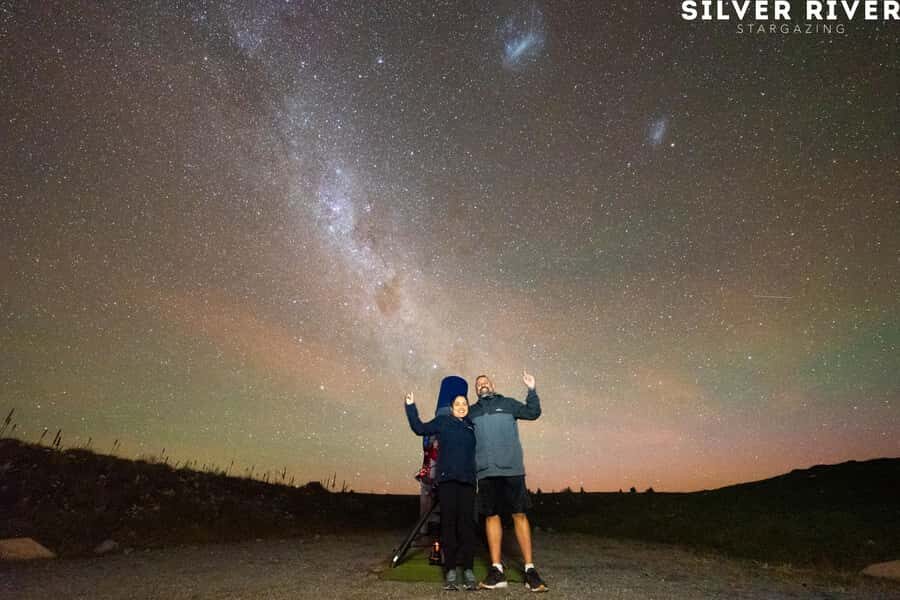
- A complimentary digital group photograph under the stars
Twizel’s Dark-Sky Advantage: Why the Night Sky Here Matters
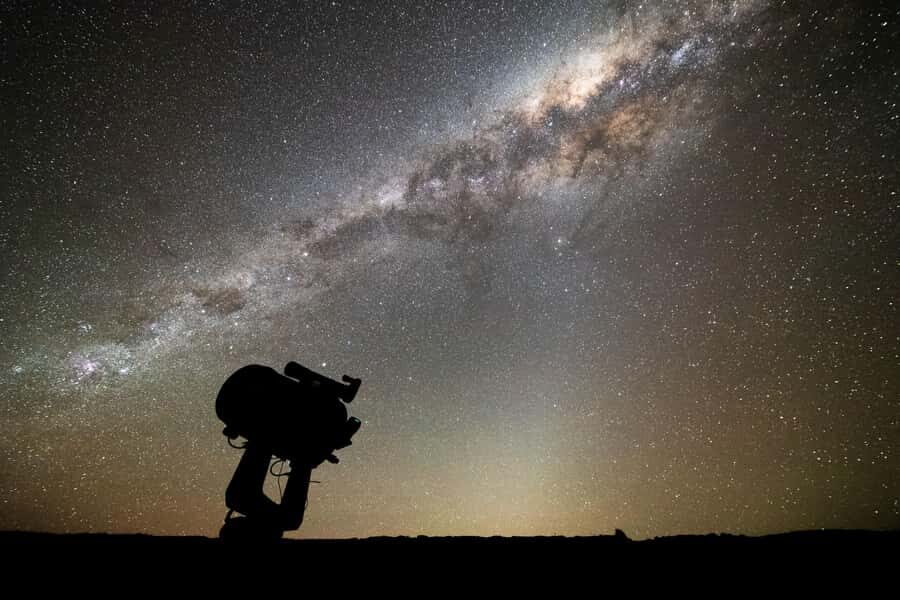
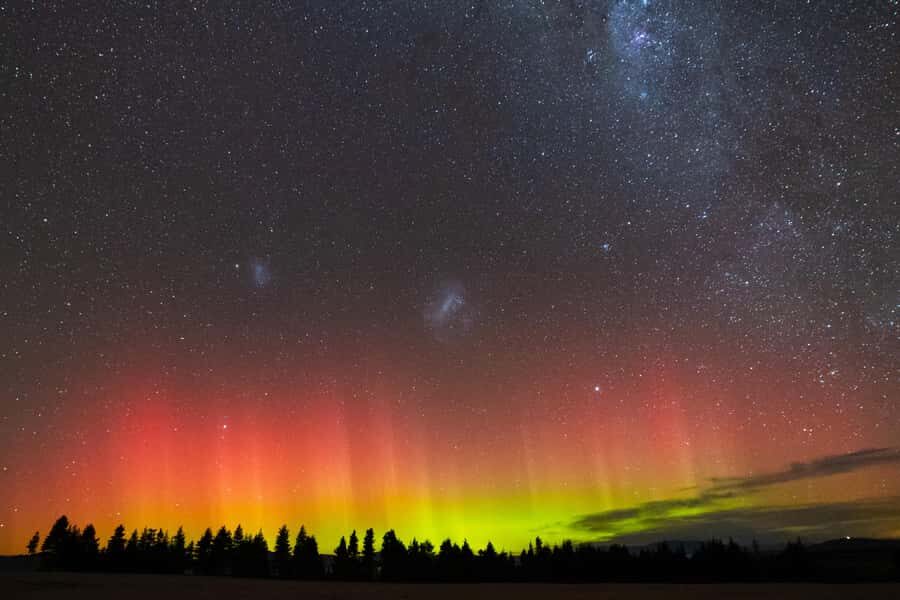
Twizel is built for stargazing. It’s in the Aoraki Mackenzie International Dark Sky Reserve, which is the key reason this works so well. A dark-sky reserve isn’t a marketing label you can ignore. It means the area is managed so light pollution stays low, so the Milky Way can actually look like something you can study—not just a faint smear.
That changes what you notice through the evening. Under a darker sky, you start separating layers: bright stars from background haze, clusters from single points of light, and the Milky Way’s structure from vague brightness. You also get a better sense of scale. With a good telescope, you can watch the sky shift from familiar pinpricks to textured depth—distant galaxies and compact star clusters start to look like objects, not just distant dots.
You’ll also feel the calm. Twizel is quiet, and that matters when you’re trying to adapt your eyes to the dark. The rules reflect this: you’re asked not to make noise, and flash photography is not allowed. Those aren’t just strict-sounding policies. They help keep the viewing environment usable for everyone.
You can also read our reviews of more guided tours in Canterbury New Zealand


Price and Value at $59: What You’re Really Paying For
At $59 per person for a 75-minute guided session, you’re paying for three things: access to a good sky, a guide who can translate the night sky into something you understand, and a telescope setup that’s meant for deep sky viewing.
A lot of stargazing experiences are either:
- mostly chatting with little telescope time, or
- telescope time without much context.
This one aims for the middle. Because the tour is limited to 20 people, you’re more likely to actually see through the telescope comfortably instead of watching it from the side. That’s where your value shows up. Telescope time isn’t infinite. If you arrive with the expectation that you’ll get more than a quick glance, this setup supports that.
It also includes a few extras that help you remember the night:
- a complimentary digital photo of you and your group under the stars
- a complimentary shuttle from the check-in point to the stargazing site
And there’s a carbon positive framing. The details aren’t spelled out in what you’re given, but it’s a clear signal they want this to be more considerate than a basic car-driven night out.
Getting There Without Stress: Shuttle, Timing, and the Right Arrival Plan
This is one of those tours where your evening goes smoother if you arrive prepared.
You’ll want to be on time. The instructions say to arrive 15 minutes before the scheduled start, and the shuttle picks you up at the hotel entrance. There’s also a Twizel Stargazing footpath signboard at the hotel entrance so you can find the pick-up point easily.
If you drive yourself, you can park at the hotel’s car park zone. One small detail worth noting: there’s no office at the hotel. If you get there early and don’t see anyone immediately, don’t panic. The team will show up about 15 minutes before the tour begins.
Plan for cold and possibly late. Tours may start after midnight. That means you should check consecutive dates for availability and sanity-check your sleep schedule. If you’re juggling multiple activities in New Zealand, this one can quietly become your late-night anchor.
What Happens in 75 Minutes: Your Night Sky Timeline
The total experience is 75 minutes. That duration is short enough that you’ll stay alert, but long enough for more than a single stop-and-look moment.
Here’s the structure you should expect from this kind of guided telescope tour:
1) Arrival and settling in
You’ll meet up and then head by complimentary shuttle to the darker site. The guide will orient you so you know what you’ll be looking for.
2) Start with the Milky Way
The tour centers on the Milky Way, so you should expect the guide to show you where it is in the sky and explain how to recognize it with your eyes before you use the telescope.
3) Switch to deeper targets
After the Milky Way viewing, you’ll move to other objects that benefit from telescope light-gathering, like distant galaxies and star clusters. This is where the “guided” part really matters, because the objects can be small in the eyepiece—and your guide’s direction helps you catch them faster.
4) Look at planets when included
Planets are mentioned as part of the targets. Since the sky changes nightly, you might find the exact planet viewing depends on the night’s conditions and visibility, but the tour is designed to include planetary views when possible.
5) Group photo and wrap-up
You’ll get a complimentary digital photograph of you and your group under the stars, then the session ends.
The upside of this compact timeline is momentum. You won’t lose your focus waiting around. The downside is that if clouds cover the sky or if you’re very sensitive to cold, you may wish you had more time than 75 minutes allows.
Telescope Time in a Small Group: How the 20-Person Cap Changes Everything
A tour capped at 20 people sounds like a small detail—until you’re at the telescope.
When there are fewer people, two things happen:
- You spend less time waiting to look.
- You get more meaningful back-and-forth with the guide, because questions don’t keep getting swept off the queue.
The tour description specifically highlights a low ratio of telescopes to guests, which is the practical point you care about. Stargazing is one of those activities where “guided” only works if you can actually access the equipment. Here, you’re set up to do that.
This is also why you’ll likely enjoy the session more if you’re not feeling confident about astronomy. Even if you’ve never used a telescope before, you’re in an environment designed to slow down enough for you to ask what you’re seeing.


Milky Way and Deep Sky Targets: What You’ll Actually Be Looking At
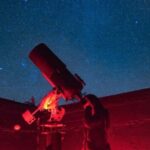
The core promise is that you’ll explore real astronomical objects using powerful telescopes. That matters, because the night sky is full of things you can see with your eyes, but telescopes change what’s visible.
Here’s what the tour includes and why each one is special:
Milky Way
The Milky Way is the reason many people travel for stargazing. In a dark-sky reserve, you’re not just looking for a vague band—you’re trying to understand the structure and direction of the galaxy as it stretches across the sky.
Star clusters
Clusters are often the “wow” factor for first-timers. In a telescope, stars stop looking like random dots and start looking like groups with a shared presence.
Distant galaxies
Galaxies are faint. That’s exactly why the tour emphasizes deep sky observation with high-quality telescopes. Without the telescope, galaxies are usually invisible or frustrating. With proper equipment and guidance, they become targets you can actually locate and study.
Planets
Planets are brighter and more obvious than many deep sky objects. If planets are visible that night, they give you a satisfying break from faint targets and a different kind of viewing experience—more about recognizable objects than subtle smudges.
The key takeaway: you’re not doing astronomy as trivia. You’re doing it visually, with objects you can point at, zoom in on, and understand with help.
Your Guide Makes the Difference: Neal, Jamie, and Sam
A stargazing tour can be either a calm science lesson or a confusing lecture performed while pointing at the sky. This one is built to help you connect.
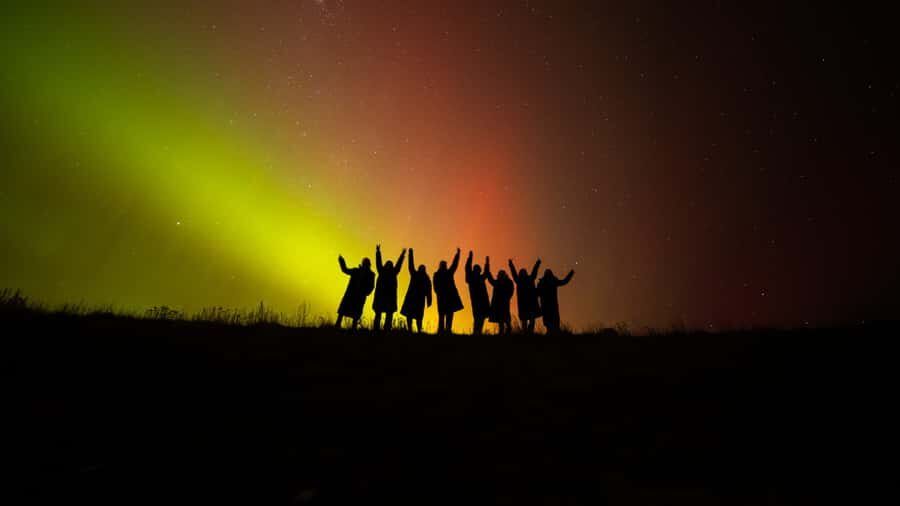
The feedback highlights guides who are both entertaining and skilled at teaching. Names that came up include Neal and Jamie, praised for knowledgeable and engaging instruction during the session. Another guide, Sam, is noted for turning a clear-sky night into a major highlight of a New Zealand trip.
What that suggests for you is simple: you’ll get more than directions. You’ll get explanations that help you recognize what you’re seeing and how to make sense of constellations and sky stories. Even in 75 minutes, a good guide can make the experience feel like it has a beginning, middle, and payoff—not just a series of telescope peeks.
It’s also smart that the guide is English-speaking. If you want astronomy to be understandable, language matters. You don’t want to guess through explanations while your night vision is adjusting.
Comfort and Night Etiquette: Bring Warm Clothes and Keep Quiet
This is an outdoor activity in a place chosen for darkness. That means comfort isn’t optional.
Bring:
- Warm clothing
- Comfortable shoes
You’ll likely be standing or moving slowly around a dark sky area for a short time. Warm layers make a big difference in how much you can enjoy the viewing instead of thinking only about getting back inside.
Also follow the rules:
- No flash photography
- No alcoholic drinks in the vehicle
- No making noise
Each rule has a purpose. Flash and noise ruin dark adaptation and distract others at the telescope. This is one reason the experience tends to feel respectful and focused once you’re there.
Complimentary Photo Under the Stars: A Small Extra With Real Payoff
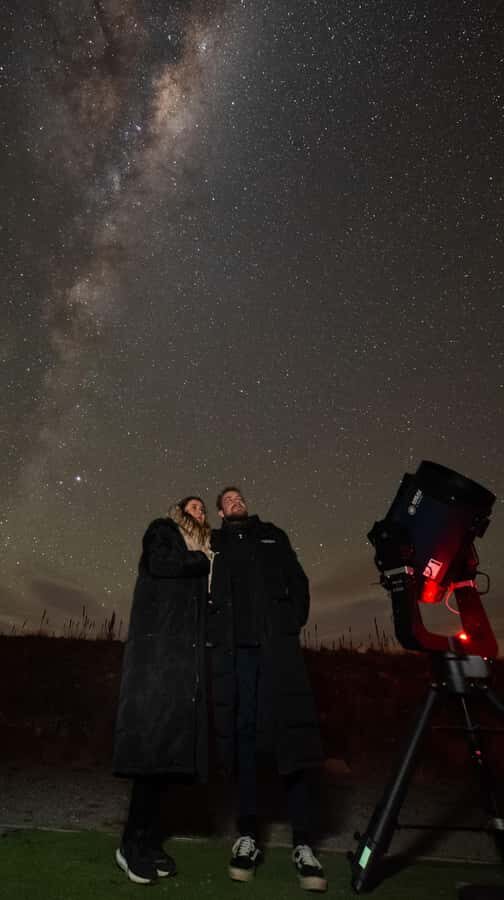
A complimentary digital photograph of you and your group under the stars is included. It’s a small line item, but it’s genuinely useful.
Why? Because night sky photos are hard to manage yourself. If you’re using a phone, you usually get disappointing results: shaky exposure, bright phone artifacts, and stars that look like noise instead of points of light. A guided group photo solves that problem without you needing to bring extra gear.
Plus, it gives you an actual memory of the moment, not just the fact that you looked through a telescope and nodded thoughtfully into the dark.
Carbon Positive Evening: What That Means for Your Trip Mindset
The tour is described as carbon positive. You won’t get a breakdown of how that’s handled from the info provided, so I can’t tell you the exact method. But the label matters for the kind of traveler this is geared toward.
This is the type of activity where you can choose responsible operators and feel better about the trip. Stargazing depends on a healthy night environment—keeping emissions in mind fits the overall theme of dark-sky protection and respect for the area.
Should You Book This Twizel Stargazing Tour?
Yes, I’d book it if you want:
- a guided stargazing session with real telescope focus
- dark skies in the Aoraki Mackenzie International Dark Sky Reserve
- small-group comfort with 20 people max
- a short, structured 75-minute format that gives you Milky Way plus other deep sky targets
- the included digital group photo so you don’t have to fight your camera in the dark
I’d think twice if:
- you hate late nights, since tours may start after midnight
- cold weather is a dealbreaker for you, since you’re outdoors with minimal time spent rushing around
- you’re expecting a long, slow exploration. This is efficient, not all-night astronomy.
If your goal is a clear plan for seeing the Milky Way and more through a telescope—without getting stuck in crowds—this is a strong value at $59 and a great fit for most visitors to South Island.
FAQ
How long is the Twizel stargazing experience?
The tour lasts 75 minutes.
How much does it cost?
The price is $59 per person.
Where does the tour take place?
It’s in Twizel, in the Aoraki Mackenzie International Dark Sky Reserve area.
Do I need to drive, or is there shuttle transport?
A complimentary shuttle is provided from the check-in point to the stargazing site. The shuttle picks you up at the hotel entrance.
When should I arrive for pickup?
Arrive 15 minutes before your scheduled tour start time.
What’s the maximum group size?
Tours are capped at 20 people.
What language is the guide?
The live tour guide speaks English.
What should I bring?
Bring comfortable shoes and warm clothing.
Are flash photos allowed?
No, flash photography is not allowed.
Is there a refund if plans change?
The experience offers free cancellation up to 24 hours in advance for a full refund.