REVIEW · ROTORUA
Cultural Performance
Book on Viator →Operated by Whakarewarewa, The Living Maori Village · Bookable on Viator
A few minutes of song and movement can tell a lot. This 30 to 40 minute performance at Whakarewarewa Living Maori Village gives you a clear way to watch Māori dance with explanations of how the gestures connect to story, people, and place, and I love how the performers keep it welcoming and easy to follow. My favorite part is the mix of singing plus the physical language of hand actions, poi, and eye and body movements. One thing to think about: if you’re expecting a full village experience with guided touring and geothermal trails, this ticket is mostly the show, so you should confirm what you’ll be able to access afterward.
You’ll start at midday in central Rotorua, at 12:30 pm, with a ticket redemption at 17 Tryon Street in Whakarewarewa. The performance is delivered by the Tuhourangi and Ngati Wahiao people, and it’s designed as an introduction—great for first-timers, less ideal if you already know the basics and want more hands-on time.
In This Review
- Key points to know before you go
- Whakarewarewa show basics: what you’ll see in 30–40 minutes
- Price and value in Rotorua: why $21.72 can be a smart buy
- Entering the Living Maori Village: your starting point and timing
- What the performance feels like: song plus storytelling you can follow
- Why the dance move explanations matter for first-timers
- Poi, technique, and eye focus: how to watch without overthinking
- After the show: explore the village or just the performance?
- Cultural performance versus a bigger attraction: match the format to your day
- Who should book this, and who might want another option
- Practical tips for a smooth show day
- Should you book the Whakarewarewa cultural performance?
- FAQ
- How long is the cultural performance?
- Where does the experience take place?
- What time does it start?
- Where do I redeem my ticket?
- What is included with the ticket?
- Is a guided tour or geothermal trails included?
- Can I explore the village after the performance?
- Is it easy for most people to participate?
- What is the cancellation policy?
- Is there public transportation nearby?
Key points to know before you go
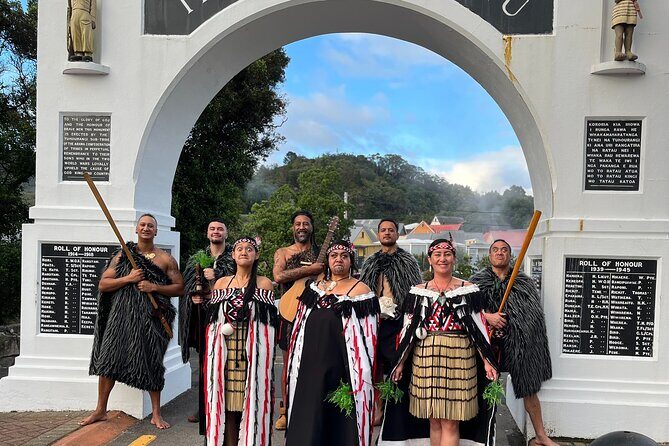
- Dance move meanings are part of the show, not just background entertainment.
- Song and dance storytelling ties traditions and ancestors to Rotorua.
- Poi and physical technique (eye, body, hands) are used to communicate the narrative.
- Your ticket includes admission for the performance, and you’re told you can explore afterward.
- It’s short (about 30–40 minutes), so manage expectations if you want a long cultural visit.
Whakarewarewa show basics: what you’ll see in 30–40 minutes
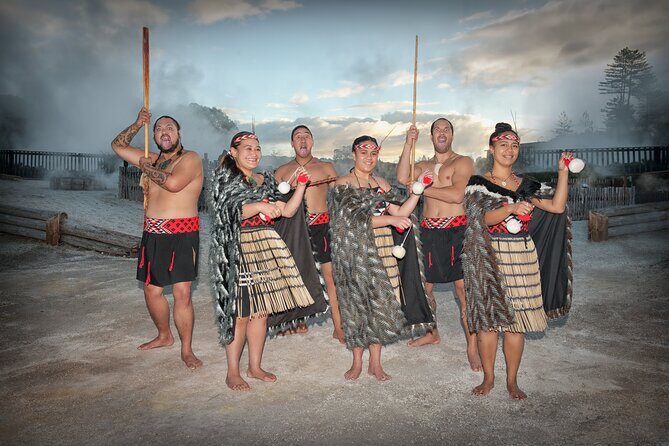
Rotorua has plenty of ways to experience Māori culture, but this one is refreshingly focused. You’re going for a cultural performance at Whakarewarewa Living Maori Village, where the emphasis is on song, dance, and storytelling. Think of it as a high-quality cultural intro session that uses the performers’ bodies to do the explaining.
The performers deliver the show using hand actions, poi (those small balls attached to strings), plus eye and body movements. That matters because Māori performance language isn’t just decorative. It’s communication—rhythm, emphasis, and gesture all carry meaning. Even if you don’t know the language, you can still follow the shape of the story.
The show is also specifically framed as relevant to the people and their connection to Rotorua. It’s presented by the Tuhourangi/Ngati Wahiao people, which gives it a clear cultural source rather than a generic “Māori-themed” performance.
You can also read our reviews of more tours and experiences in Rotorua.

Price and value in Rotorua: why $21.72 can be a smart buy
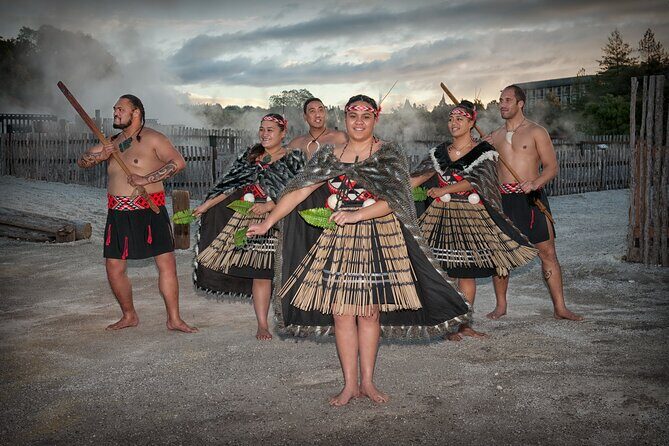
At about $21.72 per person, this is priced like an entry-level cultural experience. And for that price, you’re not just paying for seats. You’re paying for explanations tied directly to what you’re watching.
The value angle here is the structure. A 30–40 minute show means you’re not spending half a day. In a place like Rotorua, where you may also want geothermal stops, lakeside walking, or a longer cultural venue, having a compact option is useful.
One caution on value: this ticket does not list guided touring or geothermal trails as included. In other words, don’t treat this as a full-day package. If you’re building your own Rotorua itinerary, plan to pair it with something else that provides the extra time you want.
If you do want a larger “village plus activities” day, you’ll likely be happier picking a different format or confirming what access comes with your specific booking.
Entering the Living Maori Village: your starting point and timing
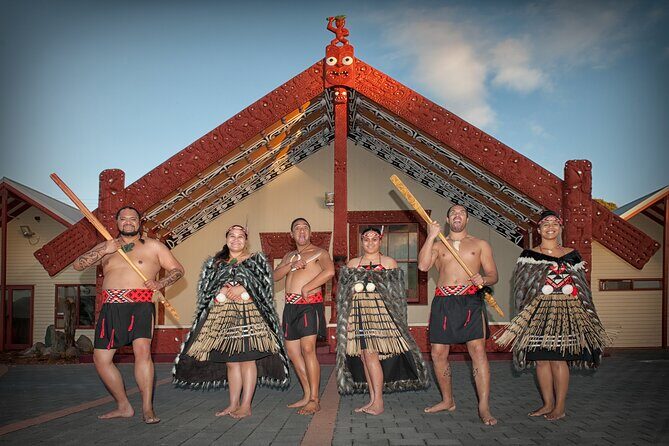
You’ll meet at the ticket redemption point: 17 Tryon Street, Whakarewarewa, Rotorua 3010. The start time is 12:30 pm. That midday timing can be a plus. It slots neatly between morning sightseeing and afternoon geothermal walks, and it’s easy to plan around meals.
The location is also described as near public transportation, so you’re not stuck worrying about a rental car if you’re staying close enough to connect with transit options.
Most travelers can participate, and that’s consistent with the format. This is not an active participation class. You’re watching a performance and learning to read what you’re seeing. That makes it a good pick if you want cultural context without needing to manage physical steps during the show.
What the performance feels like: song plus storytelling you can follow
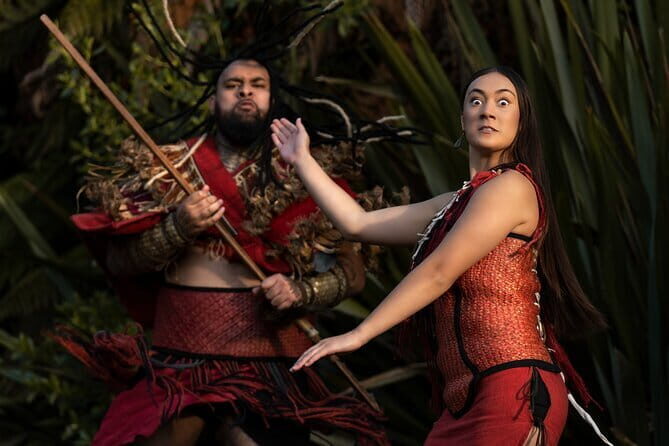
The heart of this experience is the performance itself: Māori song and dance that tells stories about history, traditions, and ancestors. The pacing is built for an audience that ranges from total beginners to people who just want a solid refresher.
What I like about this kind of show is that it doesn’t assume prior knowledge. Instead, the experience teaches you how to watch. You learn the relevance of each dance move as you see it. That approach changes the whole experience. Without it, a show like this can feel like impressive movement with no anchor. With it, the gestures become part of the narrative.
Because the performers use hand actions, poi, eye, and body movements, you’ll likely notice different “layers” of communication:
- the rhythm of the singing,
- the punctuation of eye focus,
- the emphasis and timing of hands,
- and the visual flow created by poi swings.
That’s not just technical showmanship. It’s how the performers build meaning with the audience in real time.
Why the dance move explanations matter for first-timers

If you only remember one thing from this review, let it be this: the show includes learning the relevance of dance moves. That’s where the experience earns its keep.
When you understand what the gestures are doing, you stop watching passively. You start looking for clues. You’ll likely find yourself thinking, Ah, that hand shape is part of the story. And that shift in body movement isn’t random. It’s intentional.
This is also why the show works well for people who want a basic understanding of Māori traditional culture. You’re not asked to become an expert. You’re given a way to interpret what you’re seeing so the performance lands on a deeper level than costumes and music alone.
This is especially helpful in a short time window. With only 30–40 minutes, you want your attention to matter, and the explanations do that.




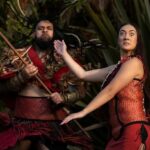
Poi, technique, and eye focus: how to watch without overthinking
Poi is often the most visually striking element. The small balls on the end of strings create motion patterns that look almost like calligraphy in the air. Even if you don’t know the names of specific movements, you can still track tempo and contrast.
The show also highlights eye and body movements, which are easy to miss if you’re watching just for the arms. Eye focus can signal emphasis, mood, or connection to the story being told. Body movement gives the rhythm structure—how the performance holds still, how it shifts weight, how quickly it transitions from one idea to the next.
Practical trick: don’t try to memorize choreography. Instead, pick two things to pay attention to across the whole show. I like focusing on poi timing and the singers’ rhythm. Then, when the performers explain a gesture, you mentally connect it to what you already noticed.
That approach makes the short show feel longer, in the best way.
After the show: explore the village or just the performance?
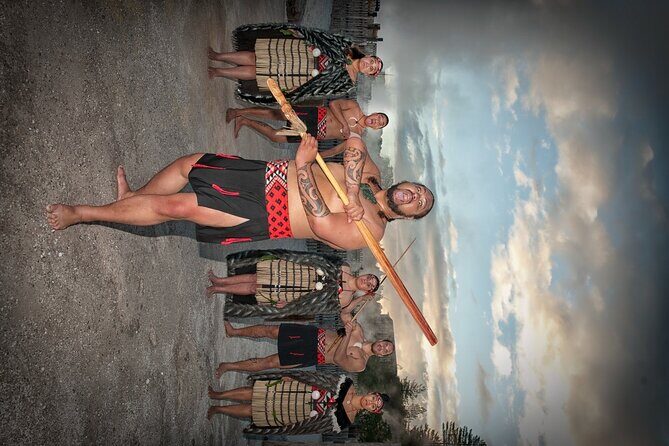
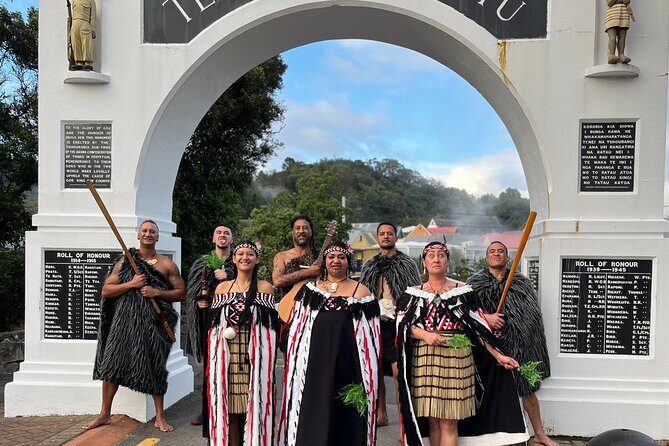
The experience description says you can explore the rest of the Living Maori Village after the performance. That sounds like a great bonus. But here’s the practical consideration: one of the key complaints in the feedback was that the reservation experience felt limited to the cultural dance and did not include access to the village itself.
So, what should you do with that?
Before you treat the “afterward exploration” as guaranteed, I recommend you confirm what’s included with your exact ticket during redemption at 17 Tryon Street. Ask a simple question: will I have access to the village grounds and other areas after the show, or is my ticket performance-only?
This isn’t being difficult. It’s just protecting your expectations. If you’re planning your day around seeing village elements beyond the show, that confirmation is worth it.
Cultural performance versus a bigger attraction: match the format to your day
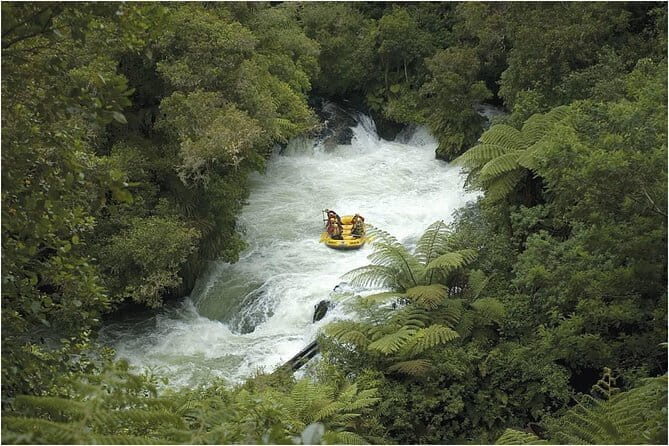
Rotorua has options that include not only performances but also hands-on crafts and longer sightseeing routes. If your goal is a deeper multi-activity cultural day—carving, workshops, and a longer stay—then a short performance-only format may feel too light.
On the other hand, if you want a cultural experience that’s:
- easy to fit into a packed itinerary,
- not overly long,
- and built for understanding the basics as you watch,
then this is a good match.
Think of it like this: this show is your cultural “primer.” It’s the part that helps you read what you’ll encounter elsewhere around town, even if you later choose a larger venue for more time on-site.
Who should book this, and who might want another option
This experience is best for:
- first-timers in Rotorua who want a clear introduction,
- people who enjoy music and movement and want the meaning behind the gestures,
- visitors who prefer a short, scheduled activity rather than an open-ended exploration.
It might be less ideal if:
- you specifically want a full guided tour of the village grounds or geothermal trails (those are not listed as included),
- you arrive expecting an all-day experience from a short ticket,
- or you want more hands-on time than a performance provides.
A helpful mindset: if you treat this as a compact, meaningful cultural introduction, you’ll likely enjoy it more.
Practical tips for a smooth show day
Because this is a tight time block, a few small habits make your visit feel smoother.
- Arrive a bit early for redemption at 17 Tryon Street so you’re not rushing.
- Dress for comfort. Even if you’re mostly seated, Rotorua weather can change quickly.
- Keep your expectations aligned: this is about the performance and the move explanations, not a long guided tour.
- If you care about village access after the show, confirm it at redemption before you settle in.
One more practical note: the experience is delivered by the Tuhourangi/Ngati Wahiao people, and the whole point is to connect stories of ancestors and traditions to Rotorua. So try to watch it as cultural communication, not just entertainment. It takes only a few minutes, but it changes how much you get from it.
Should you book the Whakarewarewa cultural performance?
If you’re on the fence, here’s my straight answer: book it if you want a short, well-paced cultural introduction that helps you understand what you’re seeing. At around $21.72 and a 30–40 minute duration, it’s a strong value slot in Rotorua—especially if you want music, dance, and clear context.
I’d be more cautious if your main goal is a full village exploration with guided touring and geothermal trails, because those elements are not listed as included with this ticket. In that case, either confirm access after the show or consider a longer, more activity-packed alternative.
Quick decision rule: Want meaning in a small time window? This fits. Want a day-long cultural itinerary? You’ll likely want something bigger.
FAQ
How long is the cultural performance?
It runs about 30 to 40 minutes (approx.).
Where does the experience take place?
It’s at Whakarewarewa, The Living Maori Village in Rotorua.
What time does it start?
The start time is 12:30 pm.
Where do I redeem my ticket?
You redeem at 17 Tryon Street, Whakarewarewa, Rotorua 3010, New Zealand.
What is included with the ticket?
The cultural performance is included, and admission ticket coverage for the performance is part of the experience.
Is a guided tour or geothermal trails included?
No. Guided Tour and/or Geothermal Trails are not included.
Can I explore the village after the performance?
The experience description says you can explore the rest of the Living Maori Village after the show, but it’s smart to confirm what your specific ticket gives you at redemption.
Is it easy for most people to participate?
Yes. The experience notes that most travelers can participate.
What is the cancellation policy?
Free cancellation is available up to 24 hours in advance for a full refund.
Is there public transportation nearby?
Yes. The meeting area is described as near public transportation.