REVIEW · ROTORUA
Rotorua: White Island, Mount Tarawera & Waimangu Volcanic …
Book on GetYourGuide →Operated by Volcanic Air · Bookable on GetYourGuide
Two hours can feel like a whole volcano story. This Rotorua flight stands out because you go by floatplane and you get pilot commentary that ties each view to real volcanic action. You’re not just looking down—you’re learning while the world rotates beneath your wings.
I also like how the tour builds a neat “volcano-to-coast” picture: geothermal shapes, then back over the Bay of Plenty coastline, then Rotorua’s lake district. You’ll get that mix of steam-and-stone wonders and the calm, pretty human geography that surrounds them.
One thing to consider before you book: if Whakaari/White Island is your top priority, double-check your confirmation for the specific stops guaranteed that day. There’s at least one cautionary note out there where someone expected the White Island part but ended up with a different plan that focused on Mount Tarawera and a landing option at Orokai instead.
In This Review
- Key points
- Rotorua Floatplane 101: why flying beats driving
- Safety Briefing and Volcanic Air check-in: short, practical, and worth paying attention to
- Bay of Plenty views and Rotorua’s 14 lakes: the quick orientation you’ll actually remember
- Whakaari/White Island: the 15-minute circle and how to watch the crater
- Mount Tarawera: reading a volcanic rift from above
- Waimangu Volcanic Valley: geothermal colors and the surreal effect of speed
- Rotorua after the volcano: why the return flight feels like closure
- Price and Value at about $615 for 2 hours
- Who should book this volcanic flight, and who should skip it
- Should you book this tour? My take
- FAQ
- How long is the Rotorua White Island and volcano flight?
- Where does the tour start?
- How large is the group?
- Is the tour guided, and what language is used?
- Does the price include hotel pickup and drop-off?
- Are food and drinks included?
- What should I bring?
- Who is the flight not suitable for?
- Does weather affect the flight?
Key points
- Floatplane takeoff and landing on Lake Rotorua: You start and finish on serene water, not a runway.
- About a 15-minute circle over Whakaari/White Island: It’s the signature moment, seen from the air.
- 48 km offshore to Whakaari: You’re far enough out to see the coast arc away and feel truly “out on the water.”
- Mount Tarawera and the Waimangu Valley by air: Short viewpoint segments keep the pace brisk but focused.
- Small group (up to 10) with English commentary: You’ll hear the geology explained without being lost in a crowd.
Rotorua Floatplane 101: why flying beats driving
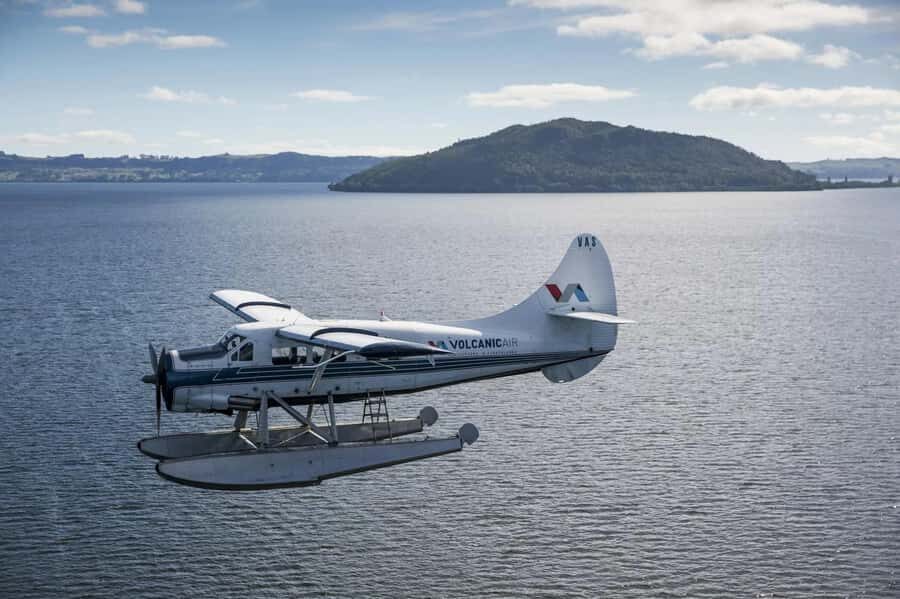
If you’re in Rotorua, most volcano sightseeing is on roads and walking paths. This one is different because you’re seeing the main event from the air—where crater geometry and steam behavior make instant sense. From up high, you don’t have to imagine what’s happening underground. You can connect the dots visually right away.
The floatplane detail matters too. You take off and land on Lake Rotorua, so the start feels like an event, not a transfer. You also get an airy, unobstructed view of the water and shoreline early on, which makes the rest of the flight feel like a natural escalation.
The tour’s format also stays efficient. In about 2 hours, you cover multiple icons: Whakaari/White Island, Mount Tarawera, and Waimangu Volcanic Valley, plus aerial views around Rotorua and the Bay of Plenty.
You can also read our reviews of more tours and experiences in Rotorua.
Safety Briefing and Volcanic Air check-in: short, practical, and worth paying attention to
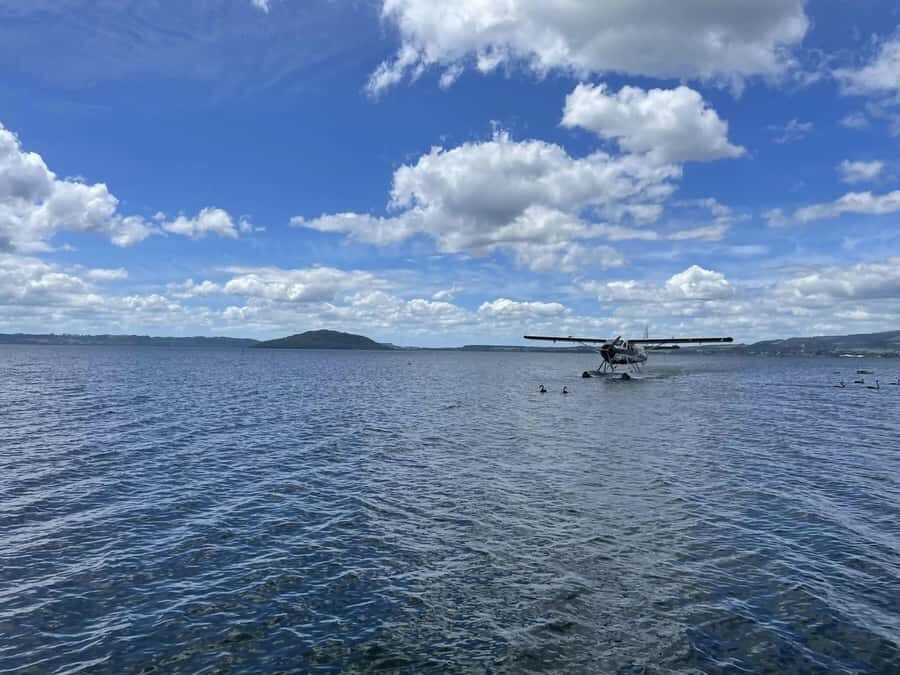
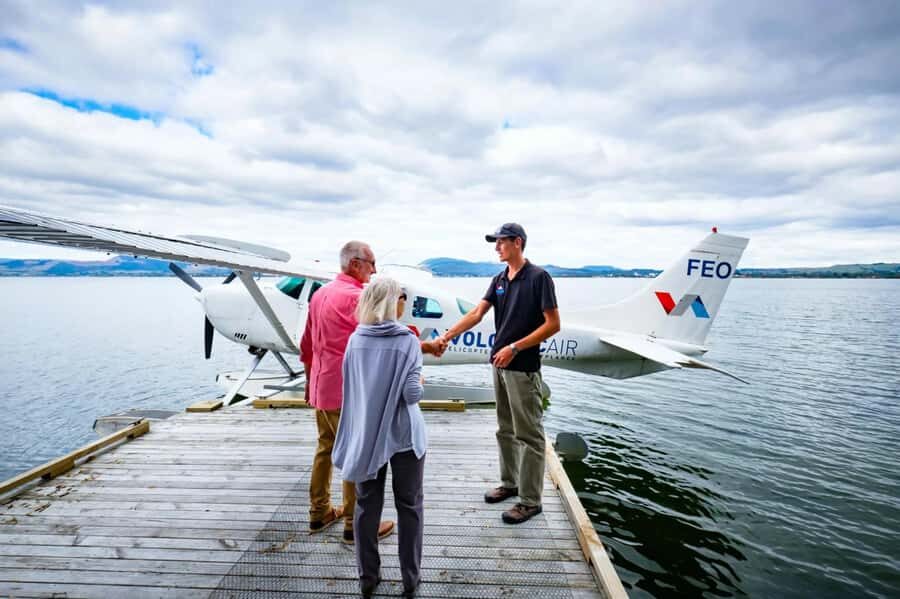
You’ll begin at Volcanic Air in Rotorua. Plan to arrive at least 30 minutes early so you can settle in and not feel rushed before boarding. The tour includes a safety briefing (around 15 minutes), which is time well spent with aircraft like this.
Wear comfortable clothes suited to what Rotorua weather does next. Bring a hat and sunscreen because when you’re above the clouds or out toward the ocean, sun exposure can sneak up on you. And yes, pack your camera—a flight like this is mostly about capturing angles you can’t recreate later.
One practical note: you’re flying, not hopping on a rollercoaster, but the tour isn’t recommended for everyone. People who are prone to seasickness (or have conditions affecting breathing/heart function) should think twice, because the experience is still an aircraft ride over open water.
Bay of Plenty views and Rotorua’s 14 lakes: the quick orientation you’ll actually remember
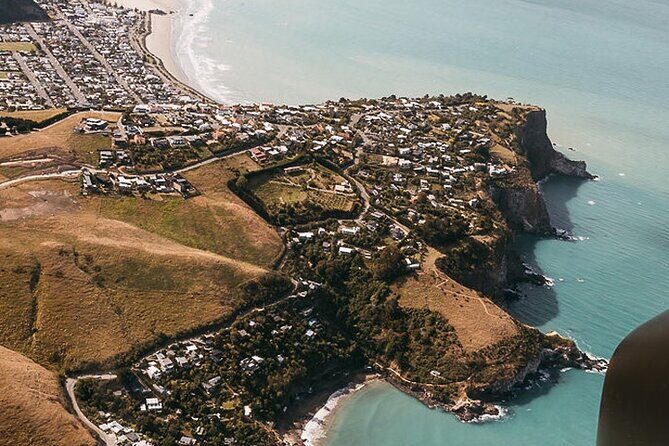
Before you reach the hotter volcanic action, you’ll get the calm geography around Rotorua. You’ll see the Bay of Plenty coastline, fertile farms and orchards, and the broader lake district. That matters because it gives you scale—what’s lush and inhabited, and what’s volcanic and active.
Rotorua is known for lakes, and from above the 14 lakes become more than a trivia point. You start recognizing how water sits in volcanic basins and how the terrain patterns guide what you’ll see later around geothermal valleys.
There’s also a brief photo stop early in the tour (around 5 minutes). It’s short, but it’s a useful moment to lock in your camera settings and grab an easy “I’m here” photo before the flight rhythm picks up.
Whakaari/White Island: the 15-minute circle and how to watch the crater
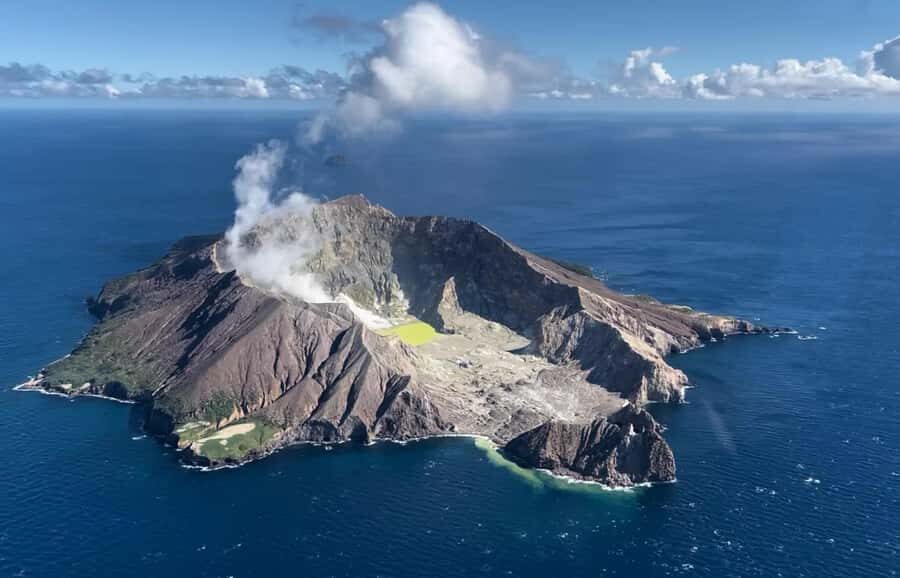
This is the reason most people book. You’ll head about 48 km off the coast to reach Whakaari/White Island, and the experience centers on an aerial view of the active marine volcano. Expect around 15 minutes circling the island so you can see the crater lake and surrounding activity from different angles.
From the air, White Island is easier to read than it sounds. You’ll be able to spot where the heat shows up, how the coastline curves around the island, and how steam and coloration shift with the moment. Even if you’ve only seen photos before, watching it in motion helps you understand why it’s considered so important.
Your pilot also gives commentary on history and geology, which turns the view from pretty into meaningful. They’ll point out what to look for in the volcanic features, and you might also get pointers about possible marine life sightings—like dolphins, whales, or schools of fish—especially as you fly the surrounding waters.
Important expectation check: the exact day’s focus can vary. If your plan specifically includes Whakaari/White Island, confirm it clearly. Otherwise you could end up with a different emphasis—like a Mount Tarawera-focused day with an Orokai landing option and no White Island circling, which is the kind of mismatch that can leave you disappointed.
Mount Tarawera: reading a volcanic rift from above
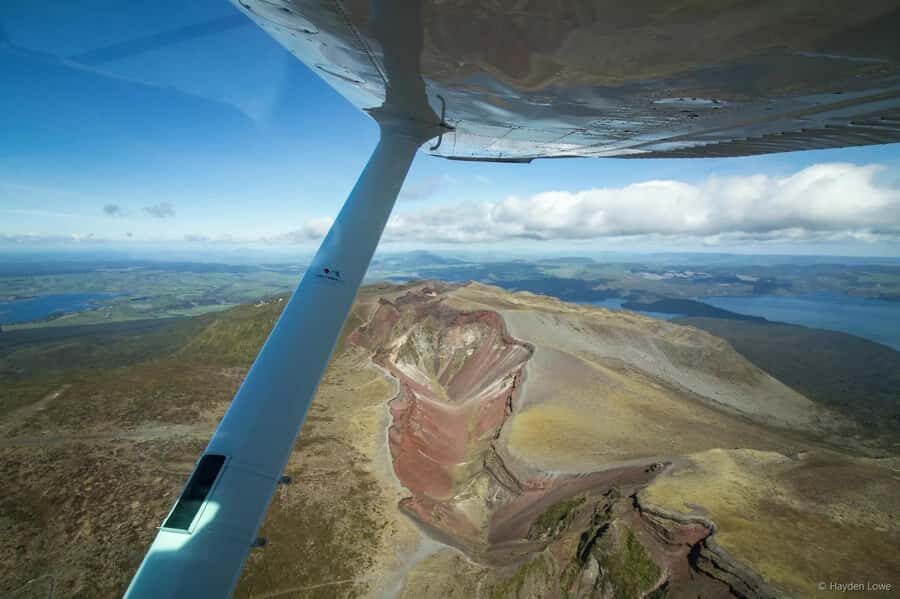
After Whakaari, you’ll fly back across the Pacific region toward other volcanic landmarks. Mount Tarawera is one of those names that comes up constantly in New Zealand geology, and seeing it from the air gives you a fast “why this matters” understanding.
The flight includes aerial viewpoint time over the volcanic area (you’ll spend short segments looking down at the peaks and craters). The big value here is perspective. From the ground, crater edges can be hard to visualize; from the sky, you can trace how the terrain breaks apart and where volcanic features concentrate.
The pilot’s geology explanations help you interpret what you’re seeing. You’re not just observing “mountain + steam.” You’re learning how the rift relates to volcanic activity and why certain zones look the way they do.
If you’re the type who loves maps, this segment is satisfying. You can mentally overlay the volcanic shapes onto the geography you saw earlier—lakes around Rotorua, farmland patterns, then the stark volcanic forms that stand apart.



Waimangu Volcanic Valley: geothermal colors and the surreal effect of speed
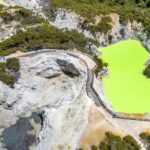
Next comes Waimangu Volcanic Valley, a place famous for otherworldly geothermal features. From the air, you’ll see the valley’s geothermal shapes in a way that’s hard to replicate on foot. Colors can look especially intense when viewed from above, and the way steam and thermal areas spread makes the terrain feel almost engineered.
Expect another brief aerial viewpoint segment (around 5 minutes) dedicated to this area. It’s short, but that’s part of what makes the overall tour work: you get focused looks at each iconic site rather than spending your whole time trapped in a single valley.
This is also where pilot commentary really adds value. Waimangu isn’t only about visuals; it’s about the ongoing story of geothermal systems. Your pilot can point out what you’re seeing and help you connect colors and shapes to volcanic and geothermal processes.
One practical tip for this part: hold off on trying to take “perfect” photos the first time around. The best shots often come after you realize what angle shows the feature clearly.
Rotorua after the volcano: why the return flight feels like closure
You’ll return toward Rotorua with more aerial sightseeing time (including another guided viewing segment over Rotorua). This matters more than it sounds. Coming back over the lake district gives you emotional contrast: volcanic chaos up front, then calm water and human farmland patterns again.
That loop can be a real mental reset. You’ll likely find you understand the region better after seeing both the volcanic and non-volcanic parts from the same perspective. It’s the kind of “big picture” view that helps you plan what you might want to see on land afterward.
There’s also a short scenic drive / viewpoints time included along the way, which gives you a chance to orient yourself on the ground after you’ve been in the air. It’s not a long ride, but it helps the tour feel connected rather than like a quick takeoff and fly-by.
Price and Value at about $615 for 2 hours
At $615 per person for roughly 2 hours, this isn’t a budget activity. The value equation is more about what you’re buying than the clock.
You’re paying for a floatplane (takeoff/landing on Lake Rotorua), an experienced pilot who provides live commentary, and the time savings of seeing multiple iconic volcanic areas in one go. Driving around Rotorua to hit the same set of features would cost time and might still leave you wishing you could see the shapes from above.
Small group size (up to 10 participants) is also part of the value. It reduces crowding, and you’re more likely to hear the pilot’s explanations clearly. And because you’re flying, you’re getting a consistent vantage point without the “I missed the view because I was behind someone” problem.
One more practical value angle: it’s weather-dependent. That means your best “value” move is to keep your schedule flexible. If you’re locked into tight connections, consider having a backup plan.
Who should book this volcanic flight, and who should skip it
This tour fits best if you want a high-impact overview of New Zealand’s volcanic icons without spending an entire day on logistics. If you’re short on time in Rotorua, or you’d rather spend your energy looking up instead of walking down, the floatplane format makes a lot of sense.
It’s also a good match for people who like learning as they go. The pilot commentary on history and geology is central to the experience, so you’ll get more out of it if you enjoy explanations rather than pure sightseeing.
Skip or be cautious if any of these apply:
- Pregnant women
- People with heart problems
- People with respiratory issues
- People prone to seasickness
Finally, bring the basics. Pack your camera, hat, and sunscreen, and wear comfortable clothes. The tour doesn’t include food or drinks, so make sure you’ve eaten before you go.
Should you book this tour? My take
If Whakaari/White Island, Mount Tarawera, and Waimangu are on your list, this is one of the most efficient ways to tie them together. The floatplane on Lake Rotorua, plus the pilot-led geology explanations, is the kind of combination that turns a scenic flight into a real learning experience.
Before you hit book, do one simple thing: confirm that Whakaari/White Island is actually part of your day’s plan. If you’re especially attached to that feature, verify the exact inclusions on your confirmation so you don’t get stuck with a different focus.
If you want a powerful aerial intro to Rotorua’s volcanic world—and you’re comfortable flying—then yes, I think it’s worth it.
FAQ
How long is the Rotorua White Island and volcano flight?
The experience runs for about 2 hours.
Where does the tour start?
The tour starts at Volcanic Air in Rotorua.
How large is the group?
It’s a small group limited to 10 participants.
Is the tour guided, and what language is used?
There is live guidance in English, and you also receive pilot commentary.
Does the price include hotel pickup and drop-off?
No. Hotel pickup and drop-off are not included.
Are food and drinks included?
No. Food and drinks are not included.
What should I bring?
Bring a hat, camera, sunscreen, and wear comfortable clothes.
Who is the flight not suitable for?
It’s not suitable for pregnant women, people with heart problems, people with respiratory issues, and people prone to seasickness.
Does weather affect the flight?
Yes. You should check weather conditions before your flight, since conditions matter for flying.