REVIEW · ROTORUA
Mārama: Geyser Light Trail at Te Puia
Book on Viator →Operated by Te Puia · Bookable on Viator
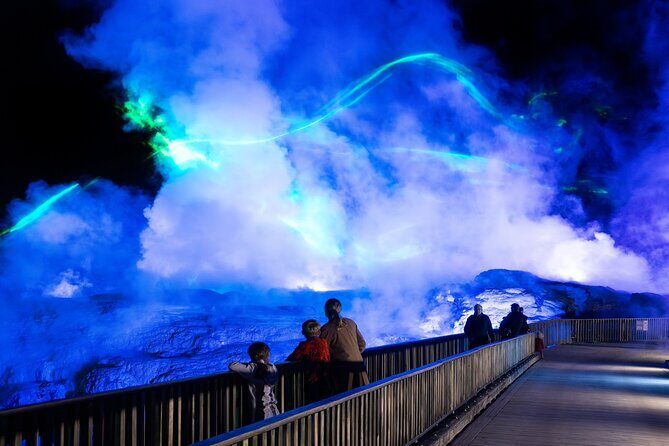
Mārama turns Te Puia’s geysers into a night show. It’s a 1.5km light trail where paths, geysers, and sculptural moments appear in sequence, guided by sound and storytelling from local artist Maisey Rika. I love that it’s paced as an easy walk at your own tempo, not a sprint. I also like the “stop and look” feeling near the big geothermal highlights, especially by the Pōhutu Geyser. One thing to consider: if you’re hoping for constant bright lighting start to finish, the experience can feel darker in stretches between scenes.
The best part for me is how the music and sound help you find the rhythm of the valley at night. Instead of just wandering, you move through ten unique light scenes that feel like a designed route, then you land at a warm, scenic viewpoint. The main drawback is sensory: the effects can feel intense, and that’s not a great fit if you’re light-sensitive or prone to motion sickness.
You’ll want to dress for Rotorua’s night air and wear shoes for uneven ground. This trail uses unpaved paths, so it’s not meant for wheelchairs or prams, and it expects a moderate fitness level for the walk and stops.
In This Review
- Key highlights to know before you go
- Mārama at Te Puia: what the 1.5km night walk really feels like
- Maisey Rika’s music and the sound-led pacing
- From the festival-like entrance into the valley scenes
- The terrace stop by Pōhutu Geyser (and why warmth helps)
- Timing and pacing: how to use your 60 minutes well
- Weather and why it’s a big deal for this kind of night event
- Price and value: what $30.41 gets you at Te Puia
- Who this experience suits best (and who should skip it)
- Should you book Mārama: Geyser Light Trail?
- FAQ
- Where is the ticket redemption point?
- How long does the Mārama geyser light trail take?
- What is the trail like underfoot?
- Is the admission ticket included in the price?
- Is it near public transportation?
- What should I wear for the walk?
- Who should avoid this experience?
- What happens if weather is poor?
- Can I get a refund if I need to cancel?
Key highlights to know before you go
- A 1.5km self-paced trail: you’re on a route, but the walking pace is yours
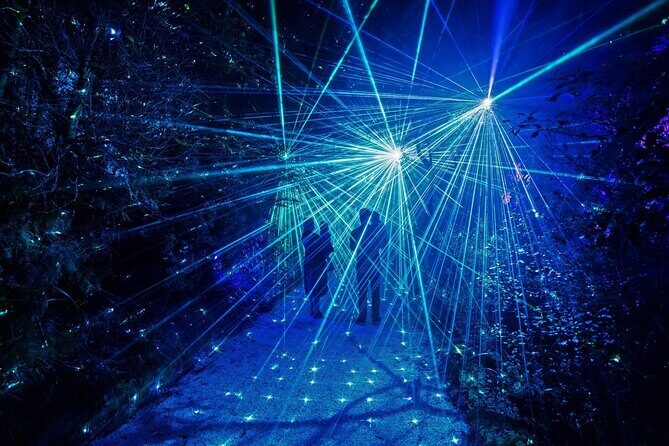
- Ten light scenes in the geothermal valley: lights and artworks appear in sequence
- Maisey Rika’s music guides the experience: sound is part of the pacing, not just background
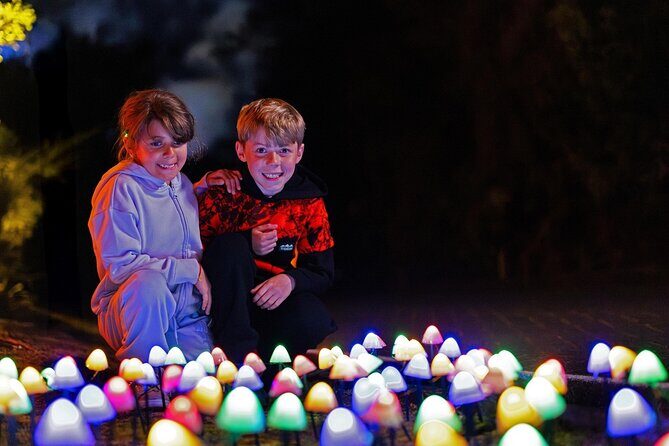
- Interactive artworks and a festival-like entrance: the show starts with energy, then slows down
- A terrace near Pōhutu Geyser: plan on a scenic pause with food or drinks for purchase
Mārama at Te Puia: what the 1.5km night walk really feels like
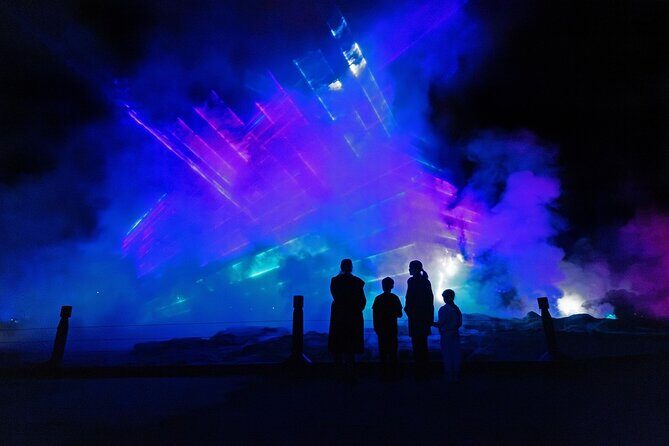
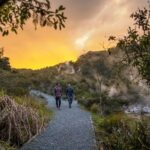
This is a hosted, night-time walking experience at Te Puia in Rotorua. You’ll follow a planned path through the geothermal area as lights bring out forms you usually miss after dark: steam, ground textures, and the dramatic shapes of geysers. The route is about 1.5km, and the experience is designed to take around 60 minutes at your own pace.
What I like about that format is the balance. You’re not stuck waiting around for long explanations, but it also isn’t a “go wander alone” night walk. You’re guided through the valley through different scenes, then you’re given a natural place to pause and take it in.
The trail also has a clear “arc.” It begins with a festival-style feeling at the entrance, then the route carries you down the valley through light-based scenes. It ends back up as you exit through Pikirangi Village, with one final view as the lighting returns to the night sky.
You can also read our reviews of more tours and experiences in Rotorua.

Maisey Rika’s music and the sound-led pacing
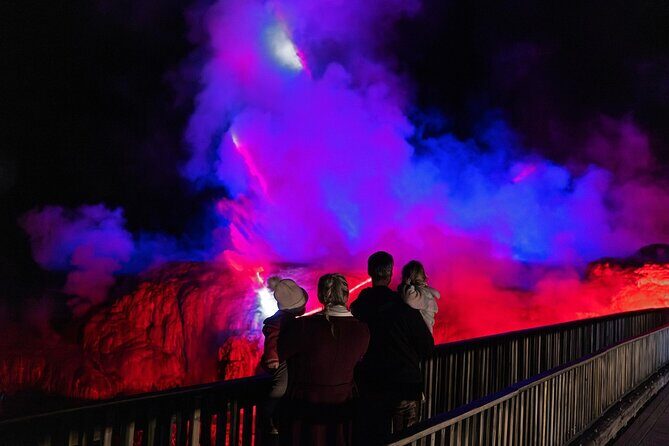
A big part of Mārama is the soundtrack. The experience weaves in the melody of local artist Maisey Rika alongside the collaborative sound of the event, and that’s not just a nice extra. In practice, sound becomes one of your navigation tools. When lights change and new scenes appear, the music helps you sense the “next moment” without constantly looking at your surroundings.
For me, that’s where this experience can outperform a standard night photo walk. You’re moving through light, but you’re also listening. It turns the trail into something closer to a guided performance, where your attention gets directed gently: look ahead, notice the scene shift, then slow down.
One caution: because the event includes light effects and sound as part of the storytelling, it’s not a good match if bright visuals or sensory triggers are an issue for you. The program specifically notes it isn’t recommended for people with epilepsy or those triggered by light.
From the festival-like entrance into the valley scenes
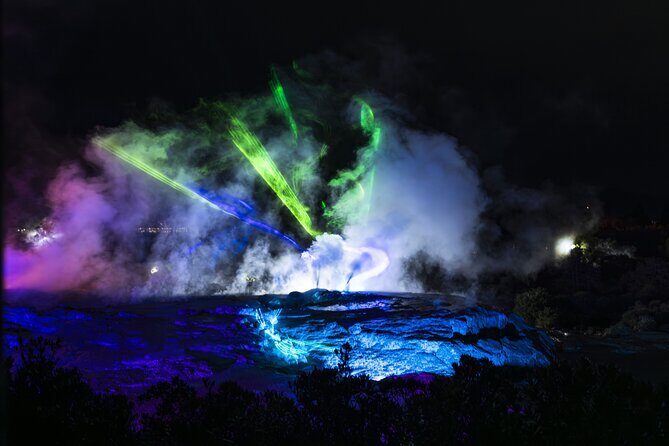
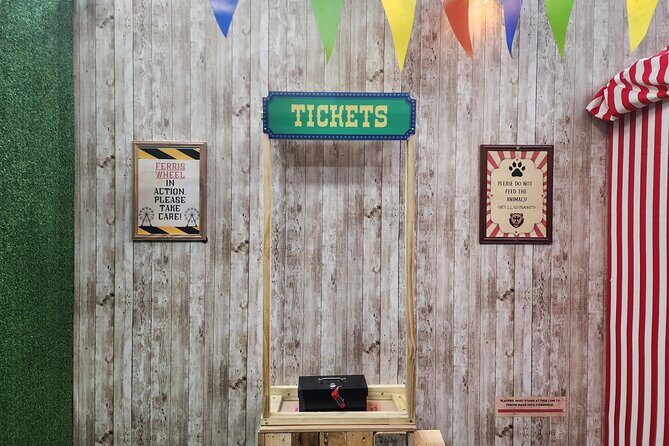
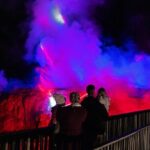
Your first stop is Te Puia, and the early stretch matters because it sets expectations. The experience starts with a festival-like entrance and interactive artworks before you move downward into the valley. Then you spend time in the heart of the geothermal area as ten unique scenes are brought to life with light.
This matters because Te Puia is a place where geothermal features can look very different at night. In daylight, you notice what’s visible. At night, you notice what the light chooses to reveal. That’s the entire trick of the trail: it amplifies geothermal moments by isolating them with illumination and guiding your gaze from one point to the next.
If you’re the type who likes to get oriented fast, you’ll probably appreciate the hosted flow. If you prefer total quiet and do-not-touch storytelling, this one may feel more “show” than “nature walk,” but that’s also why it’s fun.
The terrace stop by Pōhutu Geyser (and why warmth helps)
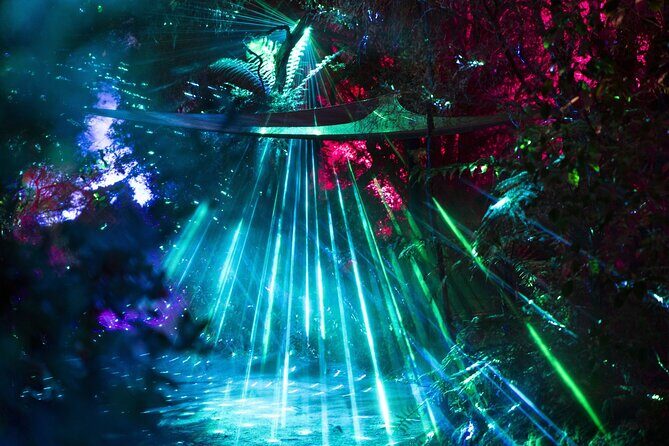
There’s a key moment built in at the Terrace, where you can pause to enjoy a sweet treat or drink. The food and drinks are available for purchase, so it’s smart to bring a card or cash you’re comfortable spending.
The terrace is also where the Pōhutu Geyser view anchors the experience. This is the part where you can slow your pace, soak in the atmosphere, and take photos when the lighting and view line up.
One review detail that’s worth taking seriously: when someone visited at 8:30pm, the experience felt extremely dark in many areas, with light mainly around heated stones near the geyser viewing area. That tells me something practical for your expectations. The event may not light the entire valley like a stadium. Instead, you may get concentrated lighting around key stops and viewing points, with darker stretches in between scenes.
So if you’re planning your visit hoping every step is bright, adjust your mindset: you’re walking through a designed sequence, not a constant floodlit path. The darkness is part of the effect.
Timing and pacing: how to use your 60 minutes well
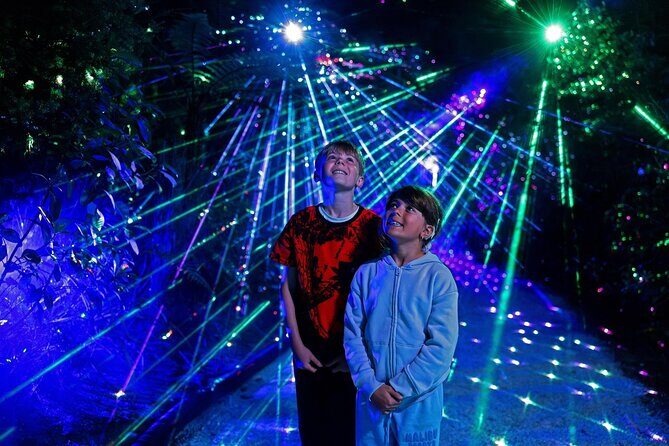
The experience is set up so you can explore at your own pace. Plan around 60 minutes for the 1.5km walk, plus a little buffer for your pauses—especially if you want photos and time to sit at the terrace.
A few practical tips based on how these light trails tend to work and what this one flags:
- Bring warm layers. You’re outside for about an hour in Rotorua at night.
- Wear comfortable footwear. The paths are not described as paved, and the event says they’re unpaved.
- Don’t expect pram or wheelchair access. The trail is not suitable for wheelchairs or prams.
- Move slowly through changes in lighting. If you have any motion sensitivity, take your time on turns and between scenes.
There’s also a “moderate physical fitness level” note. That usually means it’s not a long hike, but it still asks you to walk, stand, and handle uneven ground at night.





Weather and why it’s a big deal for this kind of night event
Mārama requires good weather. That makes sense: a night walk with light effects depends on visibility, and geothermal areas can be slick when conditions aren’t ideal.
If the experience is canceled due to poor weather, you’ll be offered a different date or a full refund. I like that option because it protects you from losing your money to a rain-soaked night that would ruin the whole point of the show.
Price and value: what $30.41 gets you at Te Puia
At $30.41 per person, this is a mid-range add-on experience for Rotorua. The key value piece is that your admission ticket is included. That means you’re not paying separately just to enter Te Puia and then hoping something magical happens.
You are also paying for more than basic entry. You’re getting:
- a hosted route through the geothermal valley at night
- ten light scenes designed to guide your attention
- music and sound integrated into the walk, including Maisey Rika
- a walking experience that takes about an hour, so it fits easily into a day’s schedule
What’s not included is the terrace snack or drink, which is purchase-only. If you’re budgeting, plan for that. If you don’t buy anything, that’s fine too—you can still enjoy the view and use the pause for a breather.
From a value angle, I think it’s worth it if you like nighttime experiences, sound-and-light art, and geyser views from a different angle than typical daytime sightseeing.
Who this experience suits best (and who should skip it)
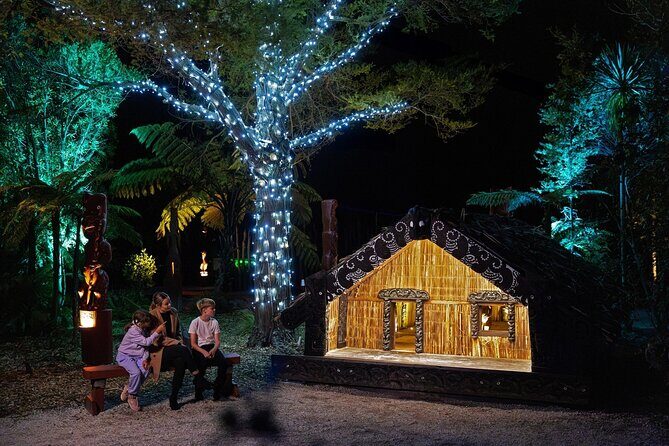
This is a great fit if you want a nighttime Te Puia experience that’s guided, structured, and designed for photos without turning into a rushed tour. It also suits you if you like art that interacts with a location, because the trail includes interactive artworks and clear scene changes.
Skip it if:
- you’re sensitive to light or likely to feel sick from light effects
- you have epilepsy
- you need wheelchair or pram access
- you’re not comfortable with unpaved paths and a moderate walk level
If you fall somewhere in the middle—say, you’re fine with darkness but not intense visuals—then it’s worth thinking carefully about your personal comfort. The program directly warns that some visual effects may be intense.
Should you book Mārama: Geyser Light Trail?
Book it if you want a fun, timed night experience at Te Puia that mixes geothermal sights with sound-led storytelling and a route of ten light scenes. I especially think it works well as a second Te Puia outing if you’ve already done the daytime highlights and you want the “what it looks like at night” version.
Think twice if you’re expecting nonstop brightness. One review experience at 8:30pm points to many darker stretches, with more lighting around heated stones near the geyser viewing area. If you know you get frustrated by low light, go in with the right mindset: this is about scenes, not constant illumination.
Also, be honest about sensory triggers. The event’s own safety notes are there for a reason.
If all that sounds like your kind of evening, Mārama is one of the better ways to experience Rotorua’s geothermal area after dark.
FAQ
Where is the ticket redemption point?
You’ll redeem your ticket at Te Puia, Rotorua, on Hemo Road, Whakarewarewa, Rotorua 3010, New Zealand.
How long does the Mārama geyser light trail take?
Plan around 60 minutes to explore, on an approximately 1.5km track.
What is the trail like underfoot?
The experience takes place on unpaved paths, so it’s not suitable for wheelchairs or prams.
Is the admission ticket included in the price?
Yes. The admission ticket is included.
Is it near public transportation?
Yes. The meeting area is described as near public transportation.
What should I wear for the walk?
The experience recommends comfortable footwear and warm clothing, since it’s an outdoor night walk and the paths are unpaved.
Who should avoid this experience?
It’s not recommended for travellers with epilepsy or those triggered by light.
What happens if weather is poor?
This experience requires good weather. If it’s canceled due to poor weather, you’ll be offered a different date or a full refund.
Can I get a refund if I need to cancel?
Yes. You can cancel up to 24 hours in advance for a full refund. Within 24 hours, the amount paid is not refunded.