REVIEW · ROTORUA
Mount Tarawera/Orakei Korako “Thermal Explorer” Dual Landing
Book on Viator →Operated by Volcanic Air · Bookable on Viator
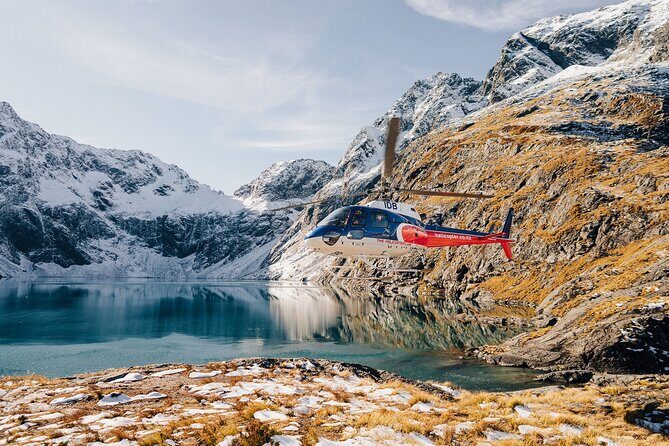
Two landings, one hour of fire-and-ice views. This helicopter tour is built for big aerial storytelling over Rotorua and the Central North Island, then it pays you back with real ground time on Mt Tarawera. You’ll fly over famous geothermal zones, watch dramatic colors in the sky view, and end up walking through active hot-spring country at Orakei Korako.
I especially like the Mt Tarawera landing part, because you get a rare chance to stand near the craters and domes tied to the 1886 eruption and look around from the volcano itself. And I love that the experience keeps moving: short, focused stops that fit into about 3 hours total, rather than turning into a half-day slog.
One thing to factor in: this is weather dependent. If conditions aren’t right for a safe flight, you’ll be offered a different date or a full refund, so build in some flexibility.
In This Review
- Key things that make this Thermal Explorer worth it
- Rotorua to Mt Tarawera by helicopter: what the flight gets you
- The Waimangu and Wai-O-Tapu flyover: aerial geothermal hits before you land
- Mt Tarawera landing: volcano craters and 1886 eruption views
- Orakei Korako Cave & Thermal Park: geysers, mud pools, and boardwalk walking
- Price and time: does $961.89 buy you real value?
- What to expect for logistics: timing, meeting point, and comfort
- Who this helicopter dual landing fits best
- Should you book the Mt Tarawera / Orakei Korako Thermal Explorer?
- FAQ
- How long is the Mount Tarawera / Orakei Korako Thermal Explorer tour?
- What is the flight time on this tour?
- Where does the tour start and end?
- What are the two main stops during the tour?
- Are admission tickets included?
- What is the price per person?
- How many people are in the group?
- Is there a weight limit?
- Is good weather required?
- When will I receive confirmation, and can I cancel for free?
Key things that make this Thermal Explorer worth it
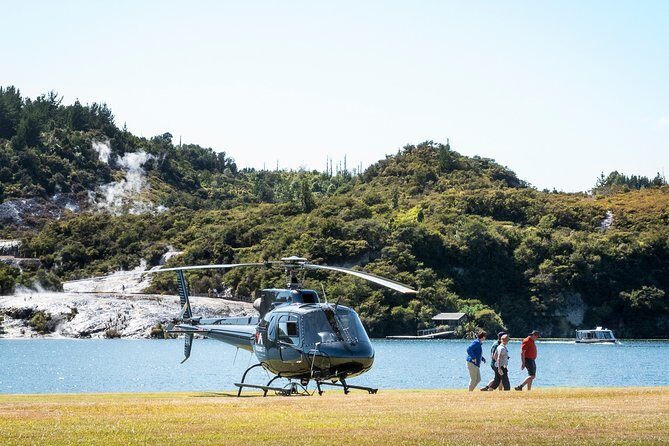
- Dual landing format: Mt Tarawera on the volcano, then Orakei Korako in the geothermal park
- Aerial geothermal set pieces: Tarawera Falls, Frying Pan Lake, and Inferno Crater from above
- Short, well-timed ground visits: 20 minutes at Mt Tarawera and about 1.5 hours at Orakei Korako
- A guided thermal walk with boardwalk access: bubbling mud pools, hot springs, and geyser areas
- Small group cap: up to 6 travelers, which helps the pacing stay calm
- Pilot-led safety and comfort: reviews specifically mention strong pilot skills and smooth operations
Rotorua to Mt Tarawera by helicopter: what the flight gets you
If you’re trying to see a lot around Rotorua without spending the day driving, this is the smart play. You get about 1 hour 20 minutes of flight time folded into an overall trip of about 3 hours, which means your time goes toward views and active geothermal terrain instead of transit.
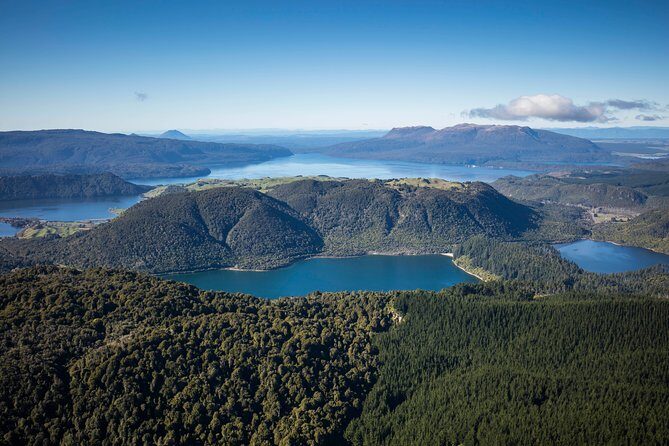
From the air, you’re treated to the Central North Island as a patchwork of lush farmland, geothermal activity, and volcanic features. Then it turns very specific. You’re not just flying over generic “hot stuff.” You’re looking for named features like Tarawera Falls, crater lakes, and the big geothermal theaters that make this region famous.
The helicopter experience also changes how you read the terrain. On foot, geothermal areas can feel like a maze of steam, boards, and signs. From above, the shapes tell the story fast: ridges, craters, and water basins line up in a way that helps everything click once you land.
And yes, this tour is small: the maximum group size is 6. That matters because it keeps the ground time focused, and it helps you get through the thermal park without feeling herded.
You can also read our reviews of more tours and experiences in Rotorua.

The Waimangu and Wai-O-Tapu flyover: aerial geothermal hits before you land

Before you’re even on the volcano or in the thermal park, you get a meaningful “pre-show” from the air. The flight route includes Waimangu Valley and a look at its famous geothermal features.
One highlight is the Frying Pan Lake, described as one of the world’s largest hot spring areas. From above, you don’t just see a steaming spot. You see its scale and the way it sits within the broader geothermal landscape.
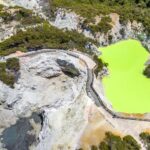
You also fly over the Inferno Crater, a teal-blue lake that’s noted for rising and falling by as much as 12 meters. That detail is exactly why a helicopter works here. You can’t fully grasp that kind of vertical change from a distance at ground level. From the air, the crater shape and the water presence give you a better mental map.
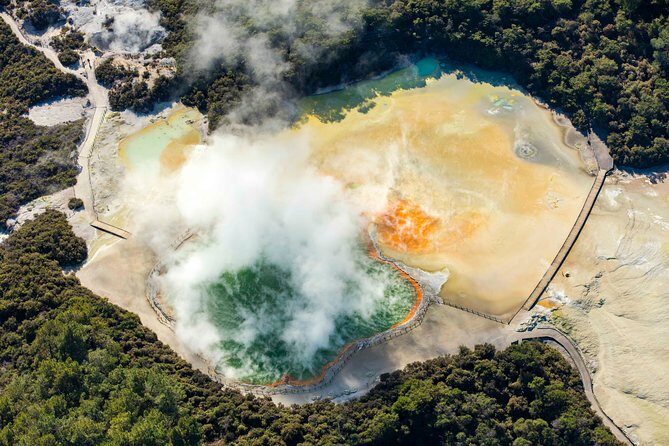
Next, you get the flyover over Wai-O-Tapu, which is known for some of New Zealand’s most colorful geothermal displays. The key here is that you see it first as color and pattern, and then later you get to experience the heat and textures up close at Orakei Korako.
Mt Tarawera landing: volcano craters and 1886 eruption views
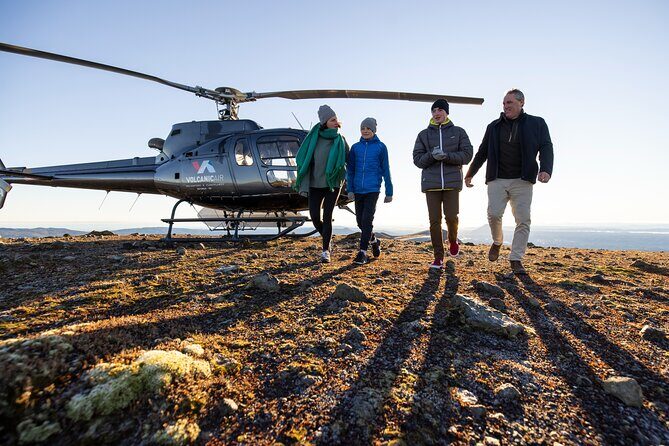
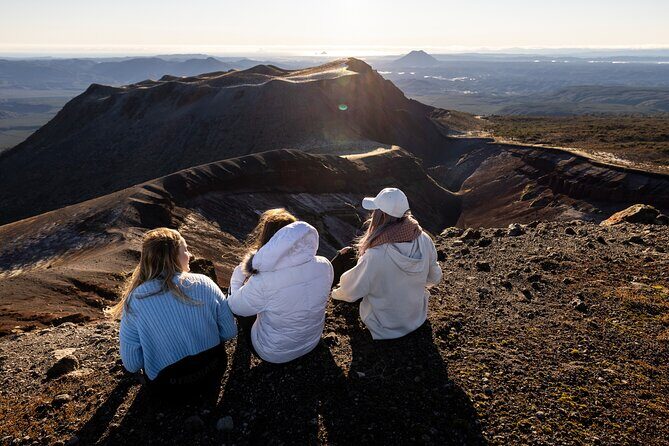
The Mt Tarawera landing is the moment the trip goes from scenic flight to something you can really point to. You stand on one of New Zealand’s culturally significant volcanoes, and you get about 20 minutes on site with an admission ticket included.
On the ground, the focus is the 1886 eruption. You’ll look at craters and domes formed by that eruption, and you’ll see how the terrain is shaped by violent change rather than slow evolution. Even with a short time window, that’s powerful because it gives context for everything you’ve been seeing from the air.
What I like about a short volcano stop is that it stays sharp. You’re not stuck waiting for an hour of “volcano talk.” You get a focused dose of crater terrain, then you move on while the experience still feels fresh.
Practical tip: keep an eye on lighting and your seat position during the flight. Views of craters and domes can look different depending on angle, and helicopter tours are all about catching the right side view when you’re circling.
Orakei Korako Cave & Thermal Park: geysers, mud pools, and boardwalk walking
After landing, you shift from volcanic craters to geothermal activity you can smell and see up close—Orakei Korako Cave & Thermal Park. This is the largest geyser park in New Zealand, and the vibe is hands-on rather than just scenic.
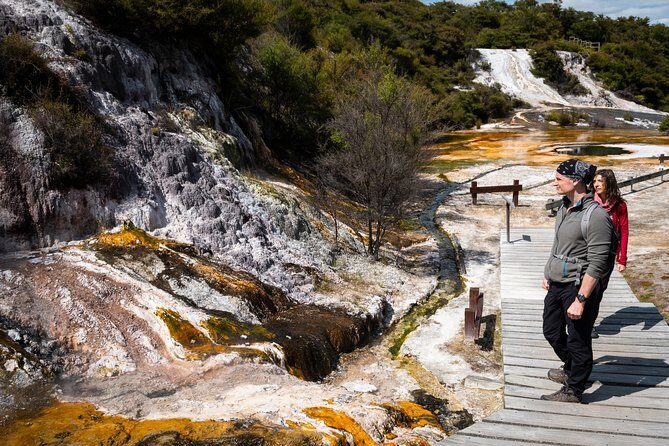
You’ll spend about 1 hour 30 minutes here, with admission included. The main sights are bubbling mud pools, colorful hot springs, and areas tied to geyser activity. There’s also a built-in rhythm to how you move through the park: paths are board-walked, which is exactly what you want in active geothermal terrain.
One of the best parts of this stop is that you can choose your pace. You might find you can do as little as you want or stretch it closer to an hour of walking time within the park, depending on how your legs and curiosity are doing. That flexibility is underrated. Thermal parks look similar if you rush. Take your time just enough and the colors and bubbling patterns start to become their own show.
What you’re really learning here is how geothermal systems work visually. Steam is obvious, but mud pools, mineral color bands, and bubbling intensity give you clues about temperature and activity levels. The boardwalk setup also helps you stay oriented while you’re surrounded by steam and hot ground.
Don’t ignore your senses, either. If you’ve never been in geothermal country, the smell can surprise you at first. It fades into the background quickly, but it’s part of what makes the place feel real.
Price and time: does $961.89 buy you real value?
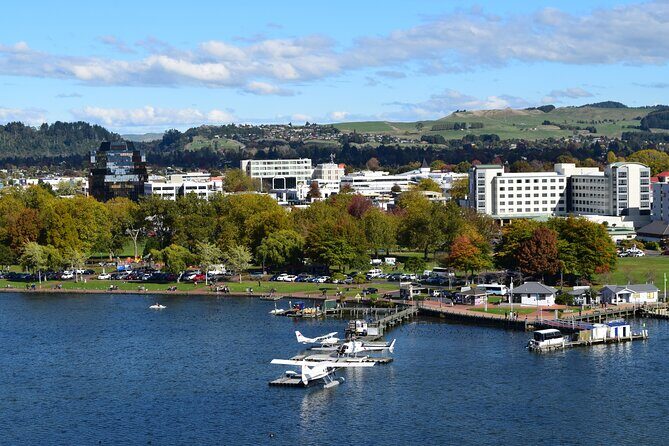
At $961.89 per person, this is not a budget add-on. You’re paying for a very specific combo: helicopter time plus two high-impact experiences—Mt Tarawera landing and Orakei Korako walking—plus admission tickets included.
Here’s how I think about value for a tour like this:
- Time compression: in about 3 hours, you cover both a volcano landing and a major geothermal park stop, with flight time doing the heavy lifting.
- Access: you’re standing on a volcano, not just viewing it from afar, then walking through geyser country.
- Operational quality: reviews highlight smooth coordination and experienced pilots (names mentioned include Tracy, Tim, and Brian, and office help noted from Alice), which matters when you’re trusting a helicopter over active terrain.
The drawback is obvious: it’s expensive. If you mainly want pretty scenery and don’t care about landing and walking, you could probably find cheaper ways to tour the Rotorua area. But if you want a “wow factor” day with real ground access on two geothermal icons, the price starts to make sense.
Group size helps the math too. With a maximum of 6, the experience doesn’t feel like it’s being scaled for mass tourism. Smaller groups usually mean better pacing and less friction when you’re moving between a landing area and a thermal walk.
Also, you’ll want to like the weather rules. This tour requires good weather, and if flights can’t safely run, you get rescheduling or a refund. When you pay premium pricing, that flexibility matters.




What to expect for logistics: timing, meeting point, and comfort

The tour starts and ends at the same place: Lakefront Drive, Ohinemutu, Rotorua 3010. Plan to show up a bit ahead so you’re not rushing through check-in.
This activity uses a mobile ticket, and you should receive confirmation within 48 hours of booking, depending on availability. It’s also described as near public transportation, which is handy if you’re staying in central Rotorua and don’t want to deal with parking.
There’s a stated weight limit: 287 lbs per passenger. That’s worth checking early so you don’t get stuck with last-minute issues.
In terms of participation, the tour notes that most travelers can participate. The thermal park is boardwalk-based, and the Mt Tarawera stop is short, so you’re not signing up for a long hike. Still, you’ll be standing and walking some, so it’s a good idea to wear shoes you’d trust on boards in hot, potentially steamy air.
Finally, the tour is capped at a minimum of 2 adult fares to operate. That’s another reason to book dates you’re comfortable using.
Who this helicopter dual landing fits best
This is a strong match if you:
- Want both a helicopter view and real ground time at geothermal sites
- Like short, focused experiences that fit into about 3 hours
- Are visiting Rotorua and want a day that feels different from standard sightseeing
- Prefer a small group setup (max 6)
It might be the wrong fit if:
- You’re traveling on a tight budget and don’t want premium pricing tied to helicopter access
- You’re not flexible with weather changes
- You need long time on the ground at one site. Mt Tarawera is about 20 minutes, and Orakei Korako is about 1.5 hours. You’ll get the highlights, not a day-long wander.
Should you book the Mt Tarawera / Orakei Korako Thermal Explorer?
If you can handle the cost and you’re willing to work with the weather, I’d book it. The dual landing is the real reason to choose this specific tour: it compresses the best parts of volcanic and geyser country into one clean itinerary with admissions included.
Book it especially if your Rotorua trip is short and you want maximum “I can’t believe we’re doing this” moments—standing near Mt Tarawera craters, then walking Orakei Korako’s geyser park boardwalks. For peace of mind, this experience is also set up for flexibility: free cancellation up to 24 hours in advance and full refund if it’s canceled due to poor weather.
If you’re on the fence, do this quick test: can you picture spending about three hours total on a high-impact geothermal day, where flight time gives you context and the walk gives you the texture? If yes, you’ll likely love it.
FAQ
How long is the Mount Tarawera / Orakei Korako Thermal Explorer tour?
The tour lasts about 3 hours (approx.).
What is the flight time on this tour?
Flight time is listed as 1 hour 20 minutes.
Where does the tour start and end?
The tour starts and ends back at Lakefront Drive, Ohinemutu, Rotorua 3010, New Zealand.
What are the two main stops during the tour?
You land at Mt Tarawera, then visit Orakei Korako Cave & Thermal Park.
Are admission tickets included?
Yes. Admission tickets are included for Mt Tarawera (20 minutes) and Orakei Korako Cave & Thermal Park (1 hour 30 minutes).
What is the price per person?
The price is $961.89 per person.
How many people are in the group?
The tour has a maximum group size of 6 travelers.
Is there a weight limit?
Yes. The total weight per passenger is listed as 287 lbs.
Is good weather required?
Yes. The experience requires good weather, and if it’s canceled due to poor weather, you’ll be offered a different date or a full refund.
When will I receive confirmation, and can I cancel for free?
You’ll receive confirmation within 48 hours of booking, subject to availability. You can cancel for a full refund up to 24 hours before the experience starts.