REVIEW · ROTORUA
Rotorua: Waimangu Volcanic Valley Entry Ticket
Book on GetYourGuide →Operated by Waimangu Volcanic Valley · Bookable on GetYourGuide
New Zealand’s steam show is seriously stunning. Waimangu Volcanic Valley is the world’s youngest geothermal site, and the combination of native forest paths plus major geothermal sights makes it feel like you stepped into a living science lesson. I especially love the numbered-sight map that helps you “read” each feature as you go, and I also can’t get over the color and drama at Inferno Crater. One catch: the Mt Haszard Hiking Trail is steep and rough, and the experience isn’t wheelchair-friendly.
What makes it work well for real travelers is that it’s self-guided. You check in at the Waimangu Visitor Centre, choose a walk length (about 45 minutes up to 4 hours), and use the internal shuttle to cut down walking when you want. You’ll end near Lake Rotomahana, then ride a shuttle back to wrap up your visit.
In This Review
- Key Things I’d Prioritize in Waimangu
- Waimangu Volcanic Valley Entry Ticket: What You’re Really Buying
- From Rotorua or Taupō: Getting Into the Valley Atmosphere
- Your First Decision: Which Walk Fits Your Day
- The Numbered-Sight Map: Your Shortcut to Enjoying It
- Echo Crater and Inferno Crater: The Crater-Lake “Wow” Factor
- Frying Pan Lake: One of the World’s Largest Hot Springs
- Native Flora, Birds, and Wildlife: Geothermal Meets Life
- Terraces, Steam Vents, and Hot Springs: Where the Park Feels Alive
- Mt Haszard Hiking Trail: The Tough Option With the Payoff
- Using the Shuttles to Keep Your Legs Happy
- Ending at Lake Rotomahana: The Calm Finish After the Steam
- Price and Value: Is $44 Worth It?
- Timing and What to Bring for a Comfortable Visit
- Who This Entry Ticket Suits Best (And Who Should Think Twice)
- Should You Book Waimangu Volcanic Valley Entry Ticket?
- FAQ
- Where is the meeting point for the Waimangu Volcanic Valley entry ticket?
- How long should I plan to spend in the valley?
- What time does Waimangu Volcanic Valley open?
- Is there a last entry time?
- Do I have to hike the whole way?
- How do I return after my walk?
- What should I bring to the park?
- Are pets allowed?
- Is it wheelchair accessible?
- Is the Mt Haszard Hiking Trail for everyone?
Key Things I’d Prioritize in Waimangu
- Numbered sights map that keeps the park making sense as you walk
- Inferno Crater and Echo Crater viewpoints for big crater energy
- Frying Pan Lake, one of the world’s largest hot springs
- Walk options from short strolls to the steeper Mt Haszard Hiking Trail
- Shuttles that reduce leg-burn and help you pace your day
- Native flora, birds, and wildlife in geothermal terrain
Waimangu Volcanic Valley Entry Ticket: What You’re Really Buying
For $44 per person, you’re not paying for a packed guided tour script. You’re paying for access to one of the most dramatic geothermal areas on the North Island, plus the tools to explore it your way. That distinction matters, because Waimangu works best when you can stop often, look longer, and adjust your route based on weather and energy.
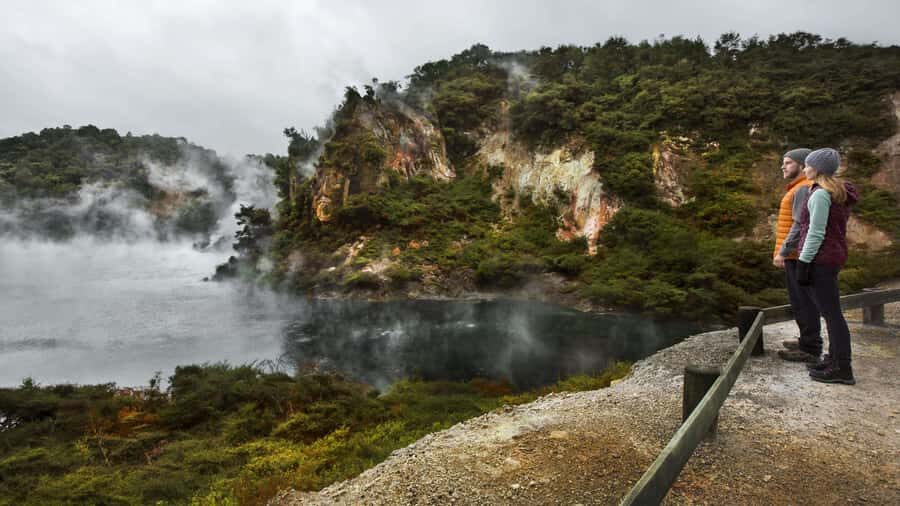
The valley is built around geothermal features you can actually see up close: steam vents, hot springs, crater views, and terraces laid out across native forest and open grassland. The “young geothermal” angle gives the whole place a fresh, active feel. There’s a sense that the land is still doing its job of changing form.
And yes, the sights are the star. But what you’ll remember is how the whole park is designed to be legible without being complicated. The map and information sheet help you connect what you’re seeing with why it’s happening, so the walk doesn’t turn into random wandering.
A few more Rotorua tours and experiences worth a look
From Rotorua or Taupō: Getting Into the Valley Atmosphere
Waimangu is an easy day add-on. It’s about a 20-minute drive south of Rotorua, or roughly 40 minutes north of Taupō. That’s handy if you want something more moving and outdoorsy without committing to a long travel day.
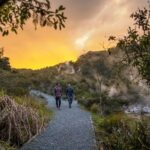
When you arrive, check in at the Waimangu Visitor Centre (587 Waimangu Rd). From there, you enter the valley at your leisure. That open start is a gift: you’re not stuck waiting for a set group time, and you can pick your pace right away.
Your First Decision: Which Walk Fits Your Day
The park is built for different styles of hiking, from a shorter route to a longer outing that can take around 4 hours. If you’re aiming for at least a couple of hours, you’ll hit a sweet spot: enough time to see the big highlights without feeling rushed.
You’ll also want to know the clock. The valley is open daily from 8:30 am, and the last admission time for the shortest walk is at 3:00 pm. If you arrive later in the day, plan to stick with the shorter option so you don’t get cut off.
I like treating Waimangu like a choose-your-own hike. Start with your goals. If your goal is crater views and the signature hot spring scenery, you can do it without a punishing climb. If you want the tougher “get up high” experience, plan for the Mt Haszard Hiking Trail—but only if your legs and footwear are ready.
The Numbered-Sight Map: Your Shortcut to Enjoying It
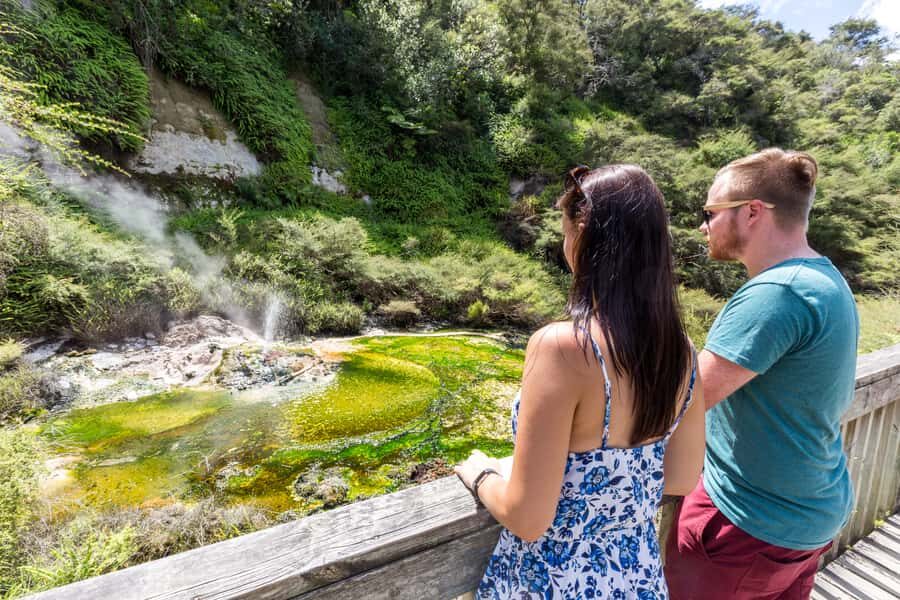
One of the most praised aspects of this experience is how informative it is, especially the map with numbered sights. In practice, this is exactly what you want on a geothermal site. The ground looks magical, but without labels you can lose track of which feature you’re standing in front of.
With the numbered sights, you can:
- Identify major geothermal features faster
- Spend more time on the sights that grab you
- Understand what you’re looking at as you move
It’s also available as a guide sheet and map, and it’s offered in multiple languages, with English listed. So even if you prefer to keep things low-key, you won’t be left guessing.
Echo Crater and Inferno Crater: The Crater-Lake “Wow” Factor
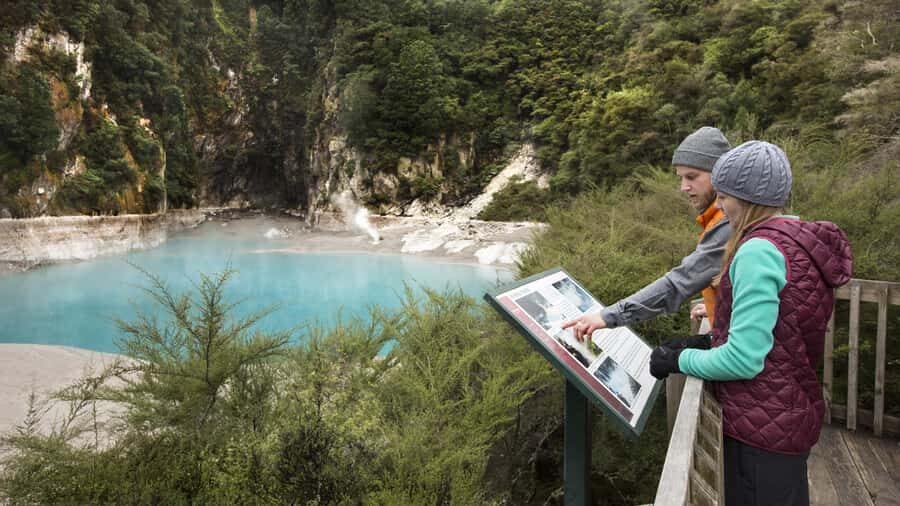
If you want the moment that makes people remember Waimangu, it’s crater views—especially Echo Crater and Inferno Crater.
Echo Crater is a key stop because it gives you a clear crater-lake perspective. Instead of just seeing geothermal steam, you get the more dramatic shape of a volcanic feature. It feels like the park is letting you look into the geology itself.
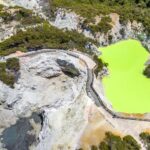
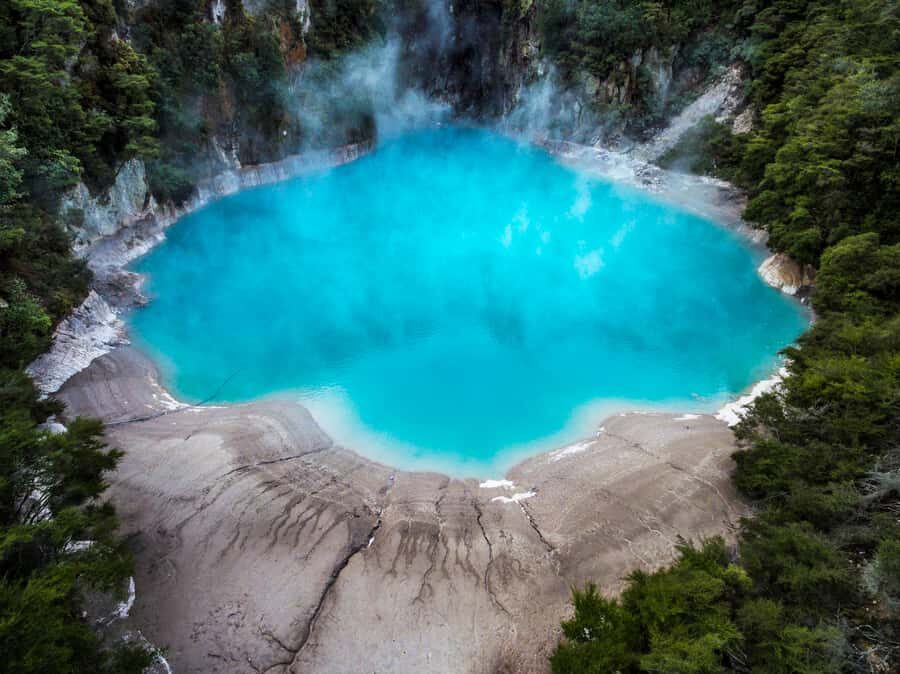
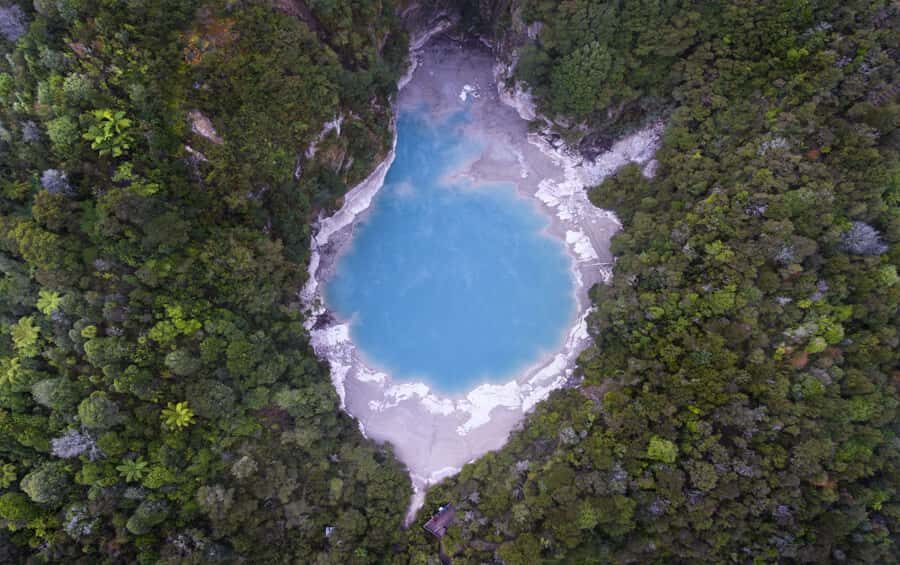
Then comes Inferno Crater, known for its dazzling blue color. That color is part of why this place lives in so many photos and memories. But don’t treat it like a one-second photo op. Slow down, take the viewpoint in stages, and give your eyes time to adjust. The crater edges and surrounding geothermal activity make the scene feel layered rather than flat.




Frying Pan Lake: One of the World’s Largest Hot Springs
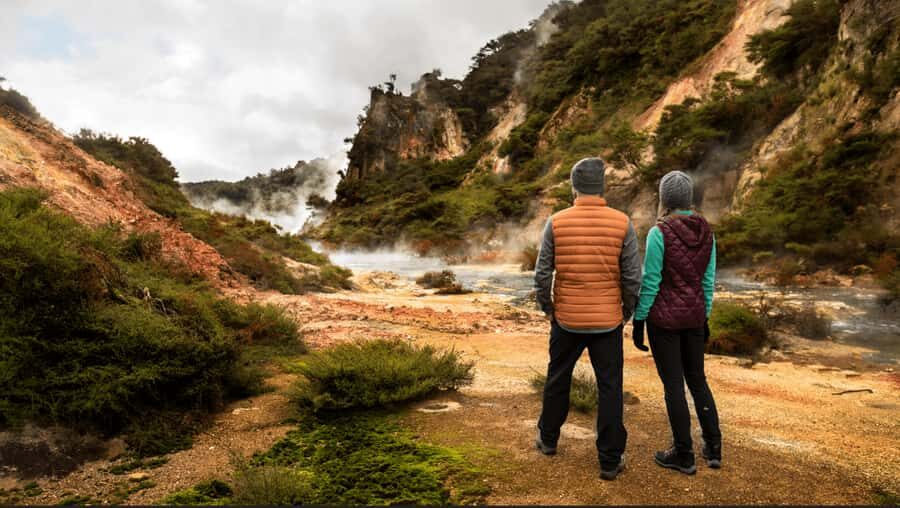
Frying Pan Lake is one of the big “how can it be that hot” sights. It’s described as one of the world’s largest hot springs, and the scale is what gets you. You’re not just looking at a small thermal pool. You’re watching an enormous geothermal feature shape the area around it.
This is also a spot where you’ll feel the character of Waimangu’s geothermal terrain: steam vents, hot spring activity, and the sense that the ground is doing real work. Even if you’ve seen geothermal features elsewhere in New Zealand, Frying Pan Lake tends to feel more expansive because of its size and visibility.
Tip I’d follow: pair Frying Pan Lake with your observation habit. Look, then check the map again. When you connect a visible feature to what the park’s guide is pointing out, the experience gets more satisfying.
Native Flora, Birds, and Wildlife: Geothermal Meets Life
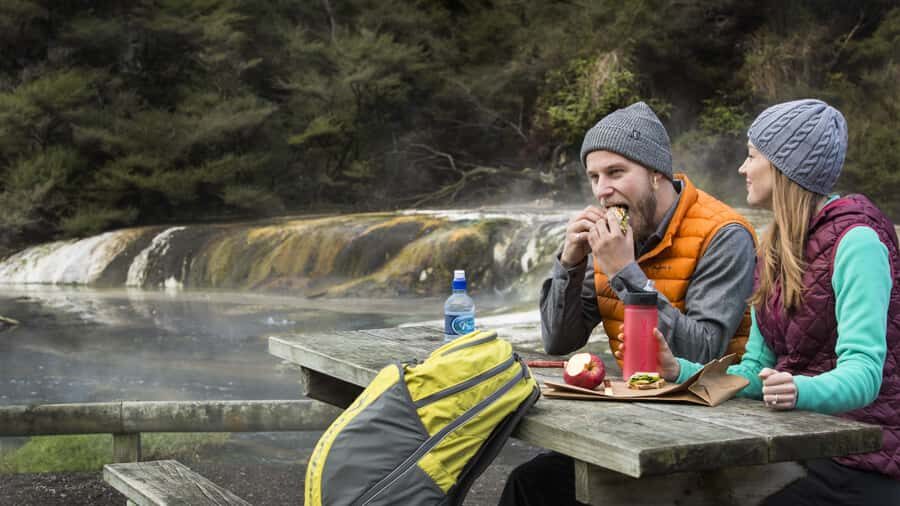
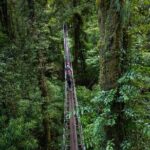
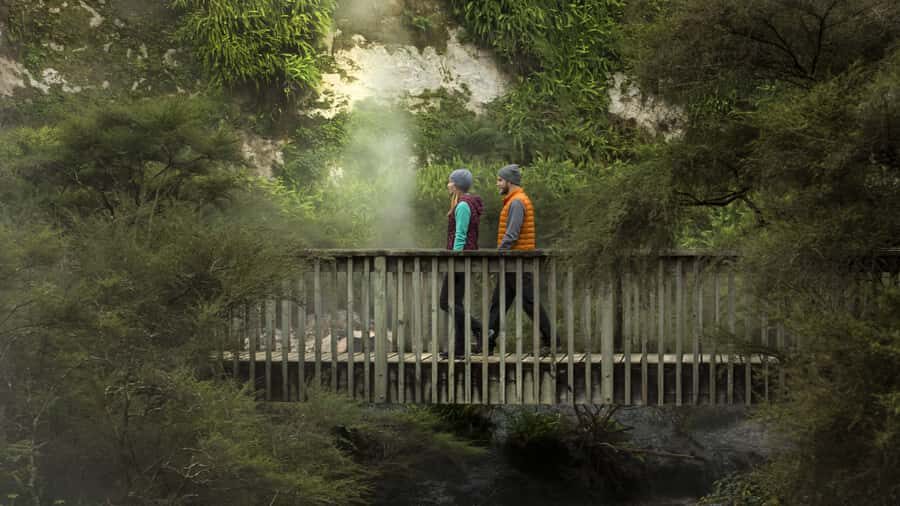
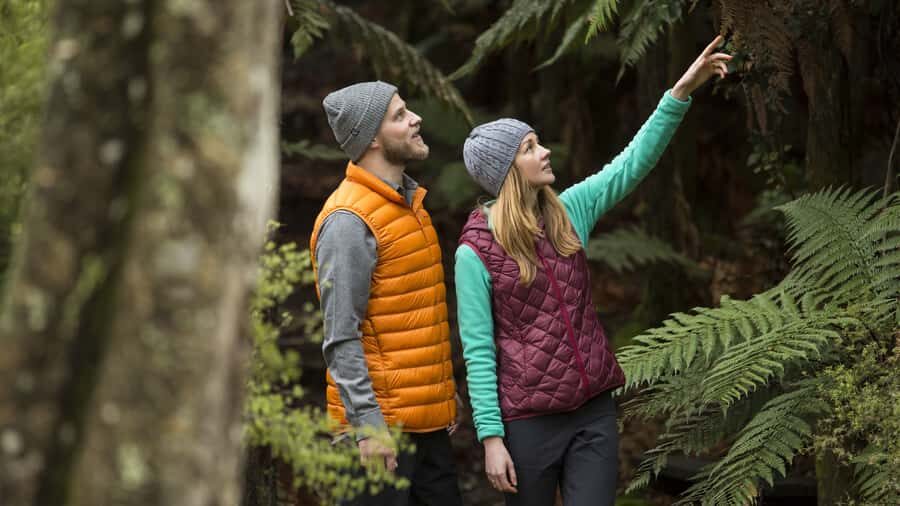
Geothermal areas can sometimes feel sterile in other countries. Waimangu doesn’t. The valley mixes geothermal activity with beautiful native forest and grassland. As you walk, you’re not just moving through steam and rock. You’re surrounded by plants adapted to this weird environment, and you may also see birds and wildlife unique to the geothermal terrain.
This matters because it changes how the walk feels. You’re not just hunting for big photo stops. You’re also walking through a living place where the geothermal activity and the ecosystem coexist.
If you’re the type who slows down for nature details, Waimangu will reward you. If you only want the biggest viewpoints, you can still focus on the craters and signature thermal areas and skip some of the slower side paths.
Terraces, Steam Vents, and Hot Springs: Where the Park Feels Alive
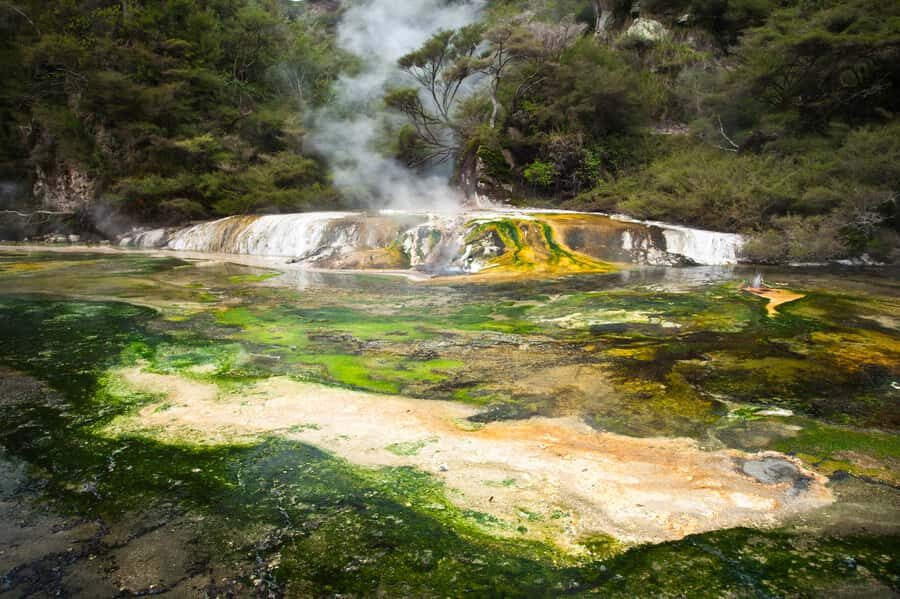
Between the major named sights, the park offers a steady stream of geothermal textures: terraces, steam vents, and hot springs. These aren’t filler. They’re the “in-between story” that makes the named highlights hit harder.
A good way to approach this is to stop whenever you see repeated patterns: multiple vents in one area, terraces stepping down, or a hot spring edge where steam rises consistently. Those repeated features are where the geology becomes readable.
Also, don’t expect everything to look the same at every step. Geothermal activity can shift in intensity, and your viewing angle changes how steam and color show up.
Mt Haszard Hiking Trail: The Tough Option With the Payoff
If you want panoramic views from above, the Mt Haszard Hiking Trail is the one mentioned for a more invigorating hike. This is not a gentle stroll. It’s described as steep and rough in places.
That’s why it’s not suitable for:
- Children
- Strollers
- Wheelchairs
If you’re considering it, be realistic about your fitness and footwear. Flat walking shoes are recommended for the park, but for Mt Haszard you’ll want shoes that can handle uneven, rough spots and steady climbing.
I’d treat this as the day’s main hike. Do it early enough that you still have energy to enjoy the later crater and ending area without rushing.
Using the Shuttles to Keep Your Legs Happy
Waimangu isn’t a hike-only park. There are shuttle options that make it easier to manage distance.
Here’s what to expect:
- A courtesy shuttle regularly circles the valley back to the Waimangu Visitor Centre.
- There’s also an internal shuttle bus so you can transfer between bus stops and reduce walking distances.
- After your walk or hike, you’ll finish around Lake Rotomahana and then return to reception by a complimentary shuttle bus.
In other words, you can build a route that matches your energy level. If you start feeling beat up, you don’t have to “power through” to keep your plan intact. You can shorten the day and still see the main geothermal sights.
A small detail I really like: the shuttle support makes it easier to do a longer walk option without it turning into an endurance test.
Ending at Lake Rotomahana: The Calm Finish After the Steam
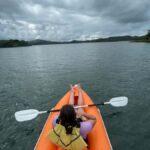
Your walk or hike finishes at Lake Rotomahana. After craters, terraces, and steam vents, ending at a lake is a natural reset. The scene shifts from intense geothermal textures to a calmer viewpoint, and the overall flow of the day feels more balanced.
Once you finish, take the complimentary shuttle bus back to the reception area. That gives you a clean wrap-up without last-minute guesswork.
Price and Value: Is $44 Worth It?
$44 per person can sound like a lot at first, especially in a country where many outdoor sights are free. Here’s why it still tends to feel fair: you’re not just buying access to scenery. You’re paying for a managed geothermal park experience with:
- Admission to multiple major geothermal features
- A self-guided system with an information sheet and map
- Shuttle help inside the valley
- Different walk lengths so you can match your day to your mobility
If you’re the kind of traveler who likes to explore at your own pace and wants to understand what you’re seeing, you get strong value from the map and the structure of the trails. If you hate walking, you might not feel the value as much, because even with shuttles, Waimangu is built for feet-on-the-ground exploration.
My rule of thumb: if you can comfortably spend at least about 2 hours outdoors and you want geothermal highlights like Frying Pan Lake and the crater lakes, then $44 is a solid buy.
Timing and What to Bring for a Comfortable Visit
Plan for at least 2 hours. There are self-guided walks ranging from about 45 minutes up to 4 hours, so your time will depend on how much you stop and how ambitious your route is.
For what to bring, you’ll be happiest if you come prepared for both sun and sudden weather shifts:
- Comfortable shoes
- Sunglasses
- Sun hat
- Sunscreen
- Rain gear
- Weather-appropriate clothing
Also remember the “don’t forget” category: if you’re visiting for crater and hot spring views, bring protection for your eyes and face. Steam, glare, and open walking areas can be hard on a bright day.
Who This Entry Ticket Suits Best (And Who Should Think Twice)
This is a great fit if you:
- Want a self-guided outdoors day with major geothermal highlights
- Enjoy nature walks and don’t mind stopping for views
- Like having information tools so the scenery feels understandable
- Appreciate shuttle support to tailor your walking distance
Think twice if you:
- Need wheelchair access, because it’s not suitable for wheelchair users
- Want strollers to work as your main mobility tool, since the Mt Haszard Hiking Trail is not suitable for strollers
- Have very limited ability for uneven ground and steep rough sections (especially if you’re aiming for Mt Haszard)
Kids can go, but they must be accompanied by a responsible adult.
Should You Book Waimangu Volcanic Valley Entry Ticket?
I’d book it if you’re craving a high-impact geothermal visit without committing to a strict tour schedule. The park gives you named highlights like Echo Crater, Inferno Crater, and Frying Pan Lake, then backs them up with enough trails, terraces, and geothermal detail to make the whole day feel worth it.
Also, the combination of a well-used guide sheet plus shuttle options makes it easier to get a satisfying visit even if you’re not chasing every last viewpoint.
Skip it only if mobility needs or access needs won’t work for you, especially if you’re relying on wheelchairs or you’re hoping Mt Haszard will be part of your plan.
FAQ
Where is the meeting point for the Waimangu Volcanic Valley entry ticket?
You check in at the Waimangu Visitor Centre, 587 Waimangu Rd, Rotorua, New Zealand.
How long should I plan to spend in the valley?
Allow at least 2 hours. Walks range from about 45 minutes to 4 hours depending on the route.
What time does Waimangu Volcanic Valley open?
It opens daily at 8:30 am.
Is there a last entry time?
Yes. The last admission for the shortest walk is at 3:00 pm.
Do I have to hike the whole way?
No. There is a courtesy shuttle that circles the valley, plus an internal shuttle bus to transfer between bus stops and reduce walking distances.
How do I return after my walk?
After finishing around Lake Rotomahana, you return to the reception area by a complimentary shuttle bus.
What should I bring to the park?
Bring comfortable shoes, sunglasses, a sun hat, sunscreen, rain gear, and clothing that matches the weather.
Are pets allowed?
Pets are not allowed. Assistance dogs are allowed.
Is it wheelchair accessible?
No. It is not suitable for wheelchair users.
Is the Mt Haszard Hiking Trail for everyone?
No. It’s steep and rough in places, and it isn’t suitable for children, strollers, or wheelchairs. You’ll need a degree of fitness and suitable footwear.