REVIEW · ROTORUA
Rotorua: Redwoods Altitude High Ropes Adventure
Book on GetYourGuide →Operated by Redwoods Treewalk & Nightlights · Bookable on GetYourGuide
Treetops, ziplines, and real glowworms. This Rotorua adventure sends you 25 metres up into the Redwoods canopy, then adds a daytime Glowworms stop that turns the whole outing into more than just adrenaline. If you’re nervous, the vibe is practical and calm, and guides like Eden and Amara set the tone with a safety-first approach that still feels friendly.
Two things I like a lot: the mix of challenge and support on the course, and the fact you get meaningful context while you’re up there. You’re not just doing bridges and ziplines; you’re also hearing Māori legends and learning about the forest’s people and land, then finishing with a Treewalk through the 120-year-old coastal redwoods.
One consideration: this is high ropes. There’s a real chance you’ll feel vertigo, and moving bridges can be scary even when you’re securely harnessed, so it’s not the best pick for anyone who panics around heights or has certain medical issues.
In This Review
- Key things to know before you go
- Treetops in Rotorua: the “Indiana Jones” feeling with real safety
- Your start point: Redwoods Altitude hanger check-in (not the Treewalk)
- The high ropes loop: 25 bridges, 3 ziplines, plus the jump
- What the bridges and ziplines feel like in practice
- Getting the forest story while you’re above it
- Treewalk time: up among 120-year-old coastal redwoods
- Redwoods Glowworms eco-cave: a calm contrast to adrenaline
- Value check: why $86 can feel fair (or not)
- Who should book this, and who should skip it
- It’s a strong fit if you…
- Skip it if…
- Practical tips: what to wear, what to do, and what to avoid
- Safety reality: what you’re agreeing to when you clip in
- The guide effect: why patience changes everything up there
- Should you book Rotorua Redwoods Altitude High Ropes?
- FAQ
- How long is Rotorua Redwoods Altitude?
- How high does the adventure go?
- What activities are included in the high ropes course?
- Is the experience fully guided and how large are the groups?
- What are the minimum age and child supervision rules?
- What are the weight and height requirements?
- Is food or drink allowed during the tour?
- Do I need to bring safety equipment or special shoes?
- Who should avoid this activity?
Key things to know before you go
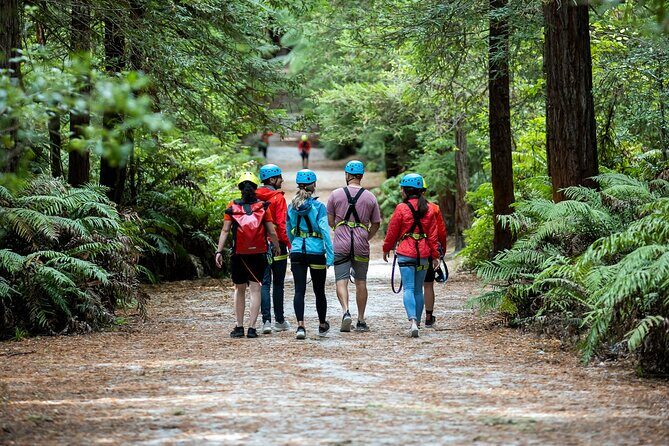
- 25 jungle bridges, 3 ziplines, and a jump on a 650-metre loop way above the forest floor
- Small groups (up to 10) means more hands-on help and a tour pace that fits your comfort level
- Māori legends plus forest history during the walk helps the experience feel rooted, not just sporty
- Daytime Treewalk + eco-cave glowworms, including entry to Redwoods Glowworms
- Clear limits for safety: weight 30–120 kg, min height about 140 cm, plus restrictions for medical conditions and pregnancy
Treetops in Rotorua: the “Indiana Jones” feeling with real safety
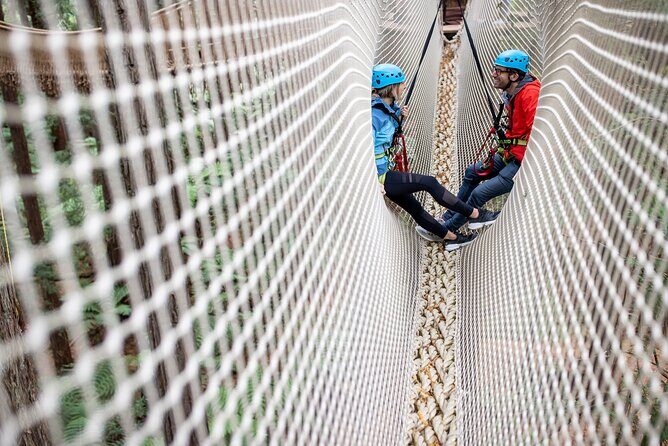
You come for the thrill. You stay for the forest. Redwoods Altitude is a high ropes adventure in Rotorua’s Redwoods Forest where you literally work your way along suspended lines, bridges, and zip runs with the guide right there.
The height alone tells you this isn’t a casual stroll. The course starts at 25 metres above the ground (and the activity can run up to around 30 metres), so expect the sights to feel huge and the air to feel thinner. That can be intimidating, but it’s also why the views and the sense of stepping into another world are so satisfying.
What makes it work is how the guides handle the first moments. People who described being nervous also credited the instructors’ patience and humor. Names that kept popping up for this kind of supportive, safety-conscious energy include Eden, Amara, Michelle, Rachel, Tori, Henry, and others—basically the staff seems good at turning your brain from fear mode into just one next step at a time.
You can also read our reviews of more tours and experiences in Rotorua.
Your start point: Redwoods Altitude hanger check-in (not the Treewalk)
Planning matters here because check-in isn’t where you’d expect if you’re also thinking about the Treewalk. You need to check in at the Redwoods Altitude hanger—it’s in the far corner of the main car park—and you should arrive about 15 minutes before your booked time.
This matters because you’ll be wearing gear and starting higher up quickly. If you show up late, you can end up rushing the safety talk, and this course really rewards calm, steady listening.
Once you’re checked in, the experience shifts into gear-and-brief mode. The operator provides the safety equipment, and you’re expected to follow the guide’s instructions closely—especially around securing long hair and anything loose.
The high ropes loop: 25 bridges, 3 ziplines, plus the jump
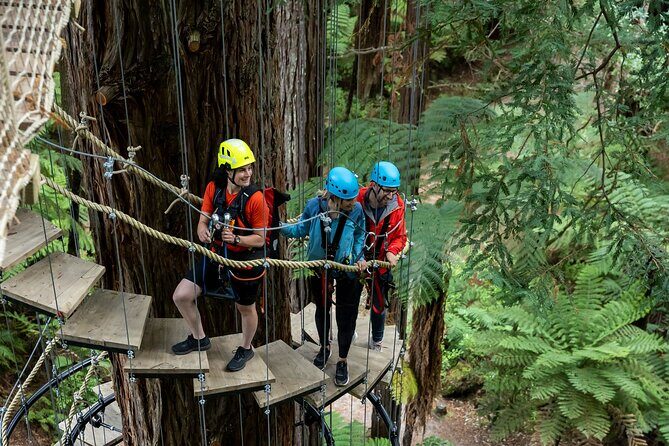
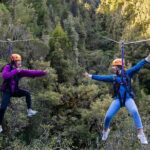
Here’s the heart of it: a 650-metre loop suspended among the treetops. The format is classic adventure course, but it’s packed with variety so you’re not doing one trick for two hours straight.
You’ll navigate:
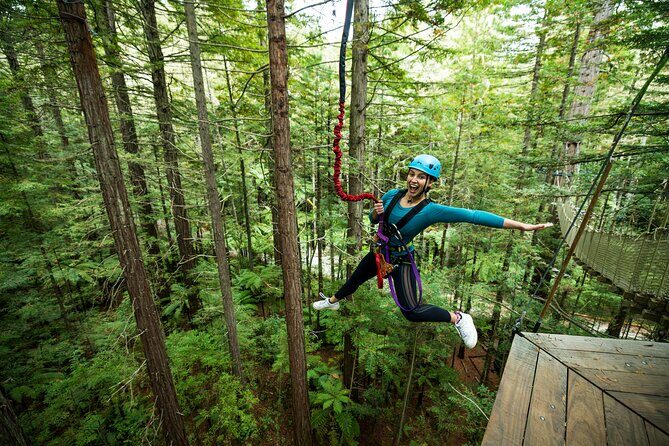
- 25 jungle bridges (including moving ones, which can feel the most intense for some people)
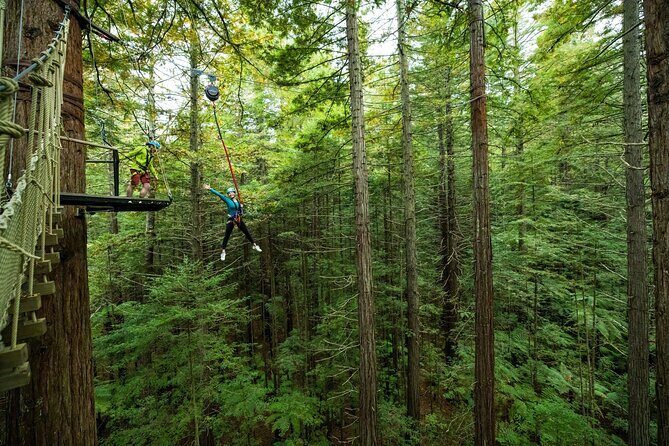
- 3 ziplines
- A jump at the end
The operator describes it as true Indiana Jones style. In plain terms, you’re walking where walking usually isn’t possible, then switching to speed via zip lines, then finishing with something that goes against your survival instinct. If you’re the type who needs one extra minute to commit, that’s normal—and the guide role is partly about pacing you.
What the bridges and ziplines feel like in practice
The moving bridge element is the one I’d flag most. Some people love it. Others call it the scariest part, mainly because it changes your balance rhythm. The key is that you stay clipped in correctly, keep moving when the guide tells you to move, and let your body follow the routine you’re learning.
The zip lines are usually the relief valve. Once you’re harnessed and the line is ready, the fear shifts from balance to motion. That’s often why people who started shaky ended up saying the ziplines were amazing.
Getting the forest story while you’re above it
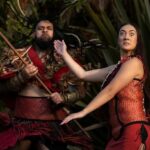
A ropes course is fun. A ropes course in a living forest with cultural context is better. You’ll learn about Māori legends and the history of the Redwoods, including how the forest relates to the people (iwi) and the land (whenua).
I like experiences that don’t treat culture like decoration. Here, that learning sits alongside the physical activity. As you move through the treetops, it gives your brain something to do besides focus on the drop below.
If you care about authenticity, this matters. It helps explain why the forest isn’t just a backdrop. It’s a place with meaning, and the guides seem to bring local knowledge into the course rather than keeping it purely technical.

Treewalk time: up among 120-year-old coastal redwoods
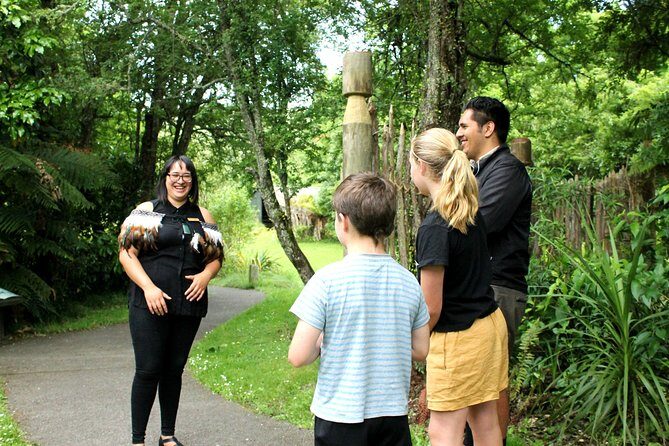
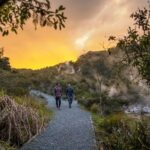
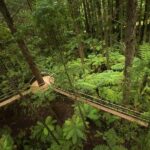
After the high ropes, you get a slower pace with the daytime Treewalk. You’ll walk high among 120-year-old coastal Redwood trees, with the chance to take in what you missed when you were busy counting steps and watching your footing.
This section is valuable because it changes the emotional temperature. The high ropes are all about motion and focus. The Treewalk helps you reconnect with the setting—light filtering through branches, the scale of the trunks, and that quiet feeling you only get when you’re not holding a harness rope at the same time.
It also gives you a natural place to recover if your body is tired. Even if you’re comfortable with heights, two hours of suspended effort can make you feel mentally “wound up.” The Treewalk is what helps that settle.
Redwoods Glowworms eco-cave: a calm contrast to adrenaline
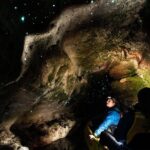
The experience also includes entry to Redwoods Glowworms, described as an eco-cave with thousands of real glowworms. This is your contrast scene. After ziplines and bridges, glowworms are like switching from loud music to a whisper.
Why this works: adrenaline narrows your attention. Glowworms widen it again. You slow down, you look longer, and you stop thinking about the next step.
One practical point: the glowworm segment is included with admission, so check your timing with your booked start. Since the whole adventure is about 2 hours, you’ll want to keep your energy steady—especially if you’re someone who gets cold easily.
Value check: why $86 can feel fair (or not)
At $86 per person for about 2 hours, this is not a budget activity. But it often feels like good value because you’re paying for three things at once:
- A guided high ropes course with equipment
- A Treewalk through the forest at height
- Entry into the Glowworms eco-cave
You’re also paying for staff time and safety infrastructure. Limits like weight and height requirements, plus the use of safety gear, reflect real operational cost. The high ropes piece alone would be expensive in most places; here, you’re getting the forest walk and glowworms as part of the same ticket.
Small group size (limited to 10 participants) is another value factor. It usually means less waiting and more individualized help when someone is stuck at a bridge or needs a breather.
My reality check: if you’re expecting a long, hardcore ropes park, one comment suggested the course felt like it could’ve been more extensive. If you want a bigger, longer ropes circuit, you may feel shortchanged. If you want a focused thrill plus a meaningful forest add-on, this pricing often makes sense.
Who should book this, and who should skip it
This adventure is best for people who can take instructions and stay safe while stressed. You also need enough physical comfort for suspended walking and the commitment of a zip line and a jump.
It’s a strong fit if you…
- Want ziplines and bridges without turning the day into a full training camp
- Like nature, but also like doing something active in it
- Prefer a small group and a guide who paces you
- Have a reasonable comfort with heights, or at least a willingness to try while harnessed
I’ve seen plenty of evidence that even people in their mid-60s managed the course with the right support and patience, which tells me the guides are good at adapting to the group.
Skip it if…
You should not do this if you’re pregnant or you have medical conditions that could be aggravated by the adventure. The provided examples include high blood pressure, heart issues, back or neck problems, and motion sickness, dizziness, or vertigo.
Also note the strict limits:
- Weight must be between 30 kg and 120 kg
- Minimum height is about 140 cm
- Not suitable for children under 8
- Children 8–12 must be actively supervised by a responsible person 16+
- Youths 13–15 can participate, but a guardian completes the disclaimer
If any of those lines look close, ask staff first. The course is mentally and physically challenging, and being honest upfront saves stress later.
Practical tips: what to wear, what to do, and what to avoid
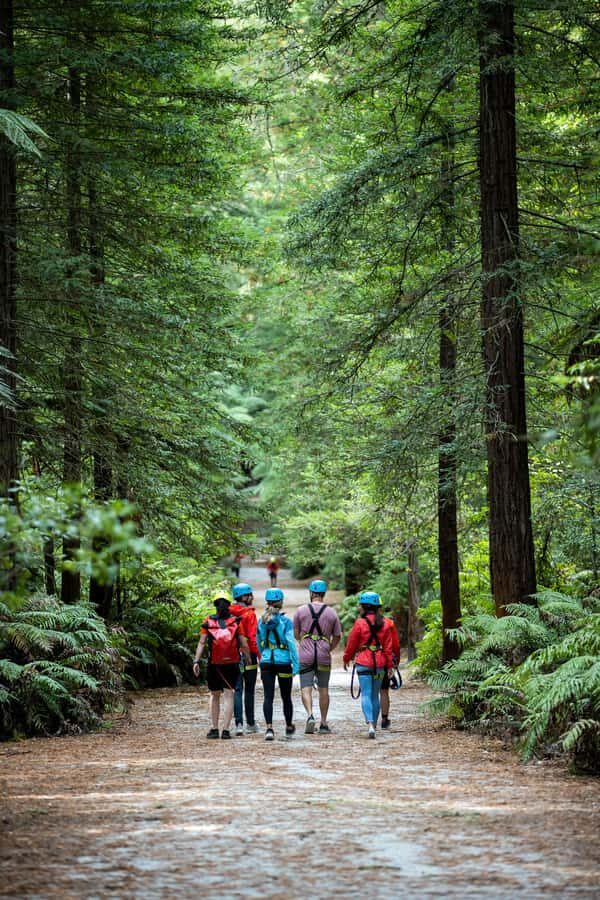
You’re outdoors and you’ll be moving. Wear outdoor clothing and closed-toe shoes. Tie long hair back and secure anything loose. This is the kind of activity where a loose item becomes a distraction fast.
Also plan around rules: no smoking, and food and drinks aren’t allowed during the tour. That affects how you feel halfway through. One suggestion I liked from the field was having a water station partway through, which tells you thirst can creep up as you rack up adrenaline.
So bring your common sense: hydrate before you arrive, then trust the schedule to get you through. After, you’ll have time to refuel.
Finally, if you’re height-anxious, pick the mindset of one step at a time. The course is designed to teach you the rhythm as you go, and the guides tend to keep the group moving without being pushy.
Safety reality: what you’re agreeing to when you clip in
This operator is clear about risk. They follow NZ law and have a safety management plan. Still, they state you can’t eliminate every risk, and they list hazards that can include:
- Uneven terrain, moving bridges and platforms
- Trips and slips
- Falls from height
- Vertigo
- Suspension trauma
- Equipment failure
- Injury up to serious outcomes
That’s not meant to scare you. It’s meant to be honest. You also need to consider natural hazards like high winds and lightning, plus rarer events like earthquakes and landslides, with emergency plans in place.
My advice: if vertigo is your main concern, don’t ignore it. Vertigo isn’t a character flaw; it’s a safety issue on any suspended course. If you’re uncertain, have the conversation with staff before booking so they can guide you on fit.
The guide effect: why patience changes everything up there
High ropes are partly physics and partly psychology. The reviews you can infer from the staff reputation point to a consistent theme: guides are patient, safety-focused, and willing to go step-by-step.
You’ll likely hear jokes. You’ll likely get encouragement. But the more important part is they adjust the pace to the group. That matters on moving bridges where someone might need extra time to reset their balance.
Guide names that have come up in the experience include Eden, Amara, Tori, Henry, Michelle, Rachel, Scott, Tory, Teniah, Tinia, Jordan, Cloe, and others. The common thread is professionalism with a friendly tone, not a drill-sergeant vibe.
If you want a more comfortable first attempt at adventure activities, this staff reputation is one reason the course scores so high.
Should you book Rotorua Redwoods Altitude High Ropes?
Book it if you want a 2-hour Rotorua adventure that blends treetop thrills with forest learning and a calm glowworm finale. The combination of 25-metre height, multiple elements (bridges, ziplines, jump), and included Treewalk plus Glowworms makes it feel complete, not just a one-trick adrenaline stop.
Don’t book it if heights or dizziness are a hard no, or if you fall into the provided restriction categories like pregnancy or medical conditions that could be aggravated. Also skip it if you’re expecting a huge, long ropes park. This is focused and guided, not a never-ending obstacle maze.
If you do book: arrive early, wear the right shoes, hydrate beforehand, and treat the course like a series of small wins. You’ll leave with both a story and a renewed sense of how big the forest really feels when you’re looking down from it.
FAQ
How long is Rotorua Redwoods Altitude?
The high ropes adventure is about 2 hours.
How high does the adventure go?
You start at 25 metres above the forest floor, and the activity can operate up to around 30 metres off the ground.
What activities are included in the high ropes course?
You’ll do a 650-metre loop with 25 jungle bridges, 3 ziplines, and a jump.
Is the experience fully guided and how large are the groups?
Yes. It’s a fully guided experience, with groups limited to 10 participants.
What are the minimum age and child supervision rules?
It’s not suitable for children under 8. Children aged 8–12 must be supervised by a responsible person 16 or older. Youths aged 13–15 can participate if a guardian completes the disclaimer.
What are the weight and height requirements?
Participants must weigh between 30 kg and 120 kg. The minimum height is about 140 cm.
Is food or drink allowed during the tour?
No. Food and drinks aren’t allowed during the tour.
Do I need to bring safety equipment or special shoes?
Safety equipment is provided. You should bring outdoor clothing and wear closed-toe shoes.
Who should avoid this activity?
It isn’t available for expectant mothers and people with pre-existing medical conditions that may be aggravated. Examples listed include high blood pressure, heart problems, back or neck problems, and conditions like motion sickness, dizziness, or vertigo.