REVIEW · ROTORUA
Te Puia: Te Rā Guided Day Tour + Haka Cultural Performance
Book on GetYourGuide →Operated by Te Puia · Bookable on GetYourGuide
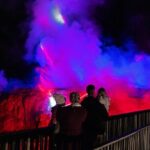
Geothermal steam meets Māori song and haka. Te Puia’s Te Rā guided valley walk brings Pōhutu Geyser to life, and the Te Aronui a Rua performance adds a real cultural welcome, including pōhiri and haka. The main snag: some departures can include a lot of children, so the formal viewing can feel tight.
This is a very efficient combo if you want Rotorua in one tidy block: a 90-minute guided walk through the geothermal valley, the kiwi areas, and the Māori Arts and Crafts Institute, followed by a 30-minute performance. Guides run in English and make time for questions, which makes the whole thing feel less like a drive-by and more like a proper introduction.
Logistics are simple. Check in at the Main Entrance of Te Puia on Hemo Road, wear comfy shoes, and bring a hat, sunscreen, and water. Food and drinks are not included, and photography is allowed but you’re asked to be respectful of cultural sensitivities. Smoking is not allowed.
In This Review
- Key things you’ll notice right away
- Te Puia’s Te Rā + Haka: a science-and-culture hit in 2 hours
- Getting oriented at the Main Entrance on Hemo Road
- The geothermal walk: Pōhutu Geyser and why it feels different here
- Kiwi Conservation Centre: a first look with limits that keep it respectful
- Māori Arts and Crafts Institute: more than a shop stop
- Te Aronui a Rua performance: pōhiri, waiata, mōteatea, poi, haka
- A heads-up about viewing and crowds
- Price and value: does $80 for Te Rā + Haka make sense?
- Who should book this tour (and who should consider alternatives)
- Quick practical tips so you enjoy it more
- Should you book Te Puia’s Te Rā Guided Day Tour + Haka?
- FAQ
- How long is the Te Puia Te Rā guided day tour plus Haka performance?
- Where do I check in for the tour?
- What’s included in the price?
- What is not included?
- How long is the cultural dance show?
- What language is the live guide?
- Can I take photos during the experience?
- What should I bring with me?
- Is smoking allowed?
- What’s the cancellation policy?
Key things you’ll notice right away
- Pōhutu Geyser up close during a guided geothermal valley walk
- Kiwi Conservation Centre access for a real look at conservation work
- New Zealand Māori Arts and Crafts Institute entry to see carving skills in context
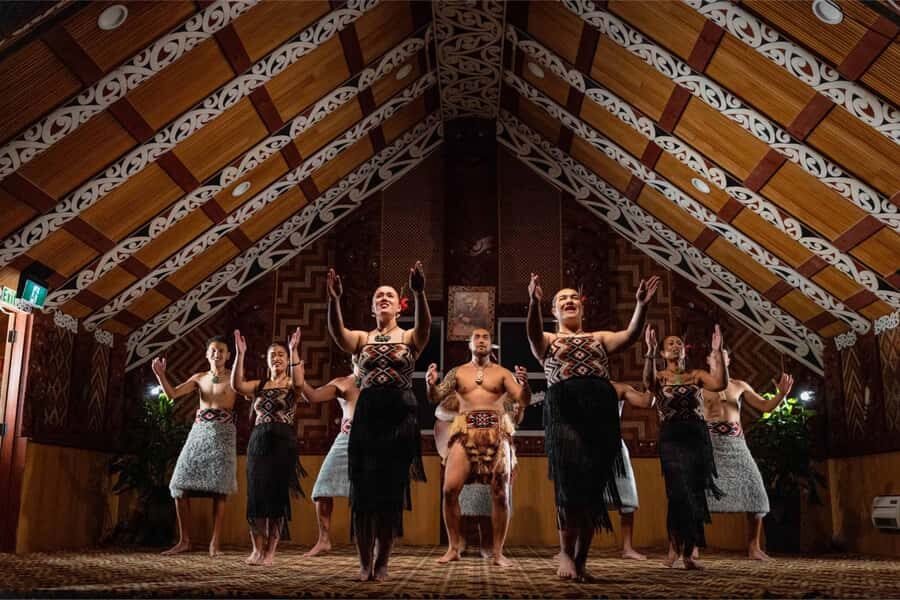
- Te Aronui a Rua cultural performance with pōhiri, waiata, mōteatea, poi, and haka
- Time to wander independently after the guided portion
Te Puia’s Te Rā + Haka: a science-and-culture hit in 2 hours

If your Rotorua plan has one weak link, it’s often too much chasing and not enough understanding. This experience fixes that by pairing a guided geothermal walk with a live Māori performance in the same Te Puia complex. You get both the natural power of the geysers and the human power of story, song, and movement.
What I like most is that nothing feels random. The geothermal walk isn’t just photos and steam; it’s guided explanations as you move between key spots like the Pōhutu Geyser area, kiwi viewing, and the Māori arts institute. Then you end in a carved meeting house for a performance that includes the full set of elements—pōhiri, waiata, mōteatea, poi, and haka—so you’re not just watching something pretty, you’re seeing a cultural flow.
You can also read our reviews of more guided tours in Rotorua
Getting oriented at the Main Entrance on Hemo Road
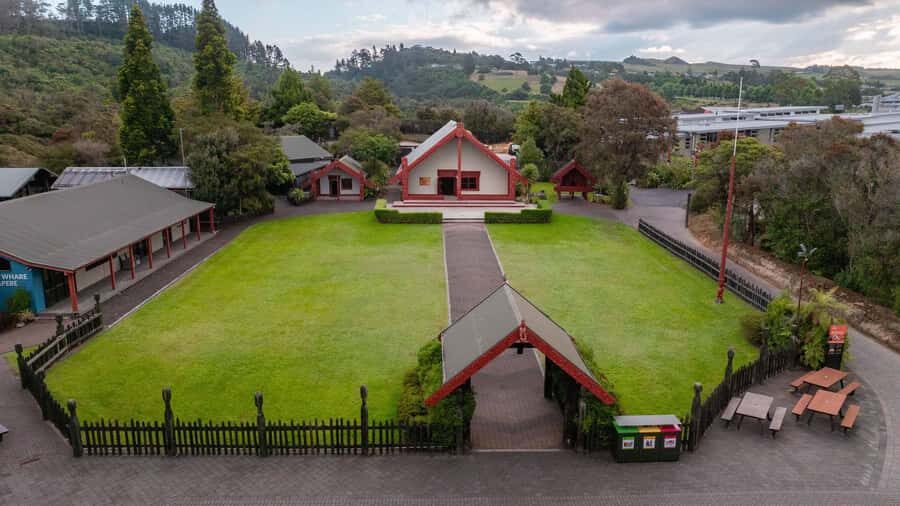
You’ll start at the Main Entrance of Te Puia, 20 Hemo Road, Rotorua. Plan to arrive a few minutes early for check-in so you don’t rush your shoes on the first walking portion.
The tour is designed as a short day window, with a total duration of about 2 hours. That matters because you’ll spend more of your time actually in the experience (walking with a guide, then watching the show) instead of losing half your morning to transit and waiting.
A small practical note: this is a walking experience, and you’ll want proper grip. Te Puia’s site has paths that are best handled in comfortable shoes, not in “cute but slippery” sandals. The basics here—hat, sunscreen, and water—are there for a reason.
The geothermal walk: Pōhutu Geyser and why it feels different here
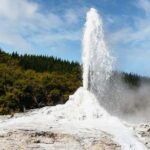
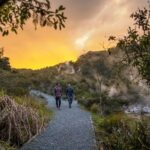
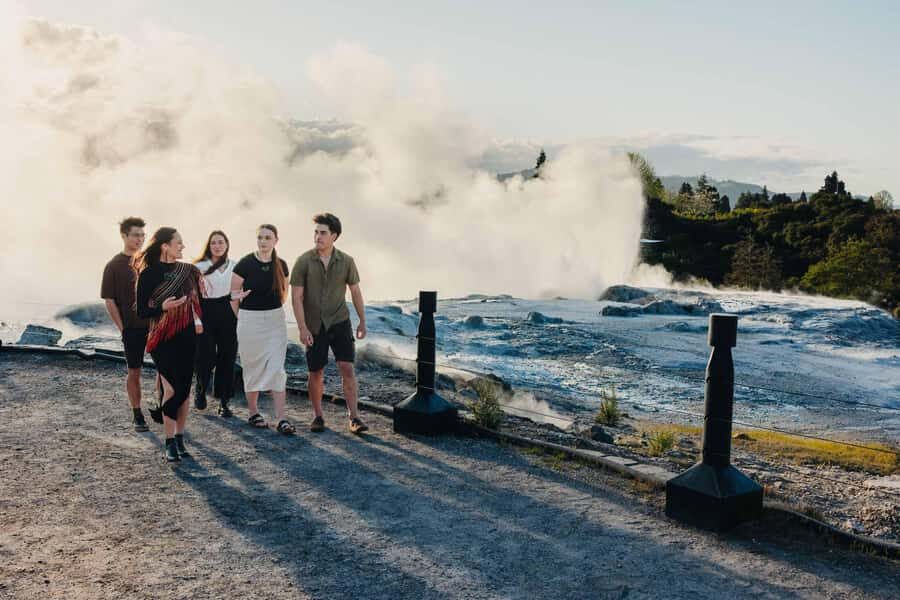
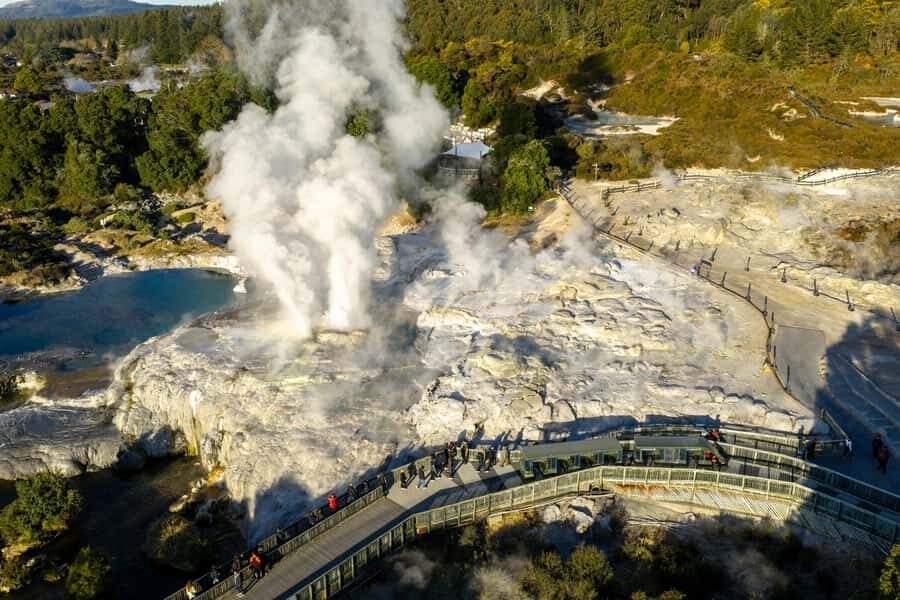
The core of Te Rā is a 90-minute guided walk through the geothermal valley. The headline stop is the Pōhutu Geyser, and it’s the kind of attraction that’s easier to understand when someone is there to point out what’s happening and why.
What makes Pōhutu Geyser especially worth your time is how often it erupts. The experience is set up so you can watch the geyser in action during the guided portion, and you may have another chance to see it again later at your own pace. That repeated opportunity is a big deal because geysers are not “on your schedule” by nature—this one is.
As you walk, you’ll also get context on Māori traditions and ancestral stories shared by your kaiārahi (guide). Even if you’re mainly there for the science, the guide’s cultural framing changes how you read the place. It’s not just hot water and mud; it’s place-making, identity, and memory.
Kiwi Conservation Centre: a first look with limits that keep it respectful
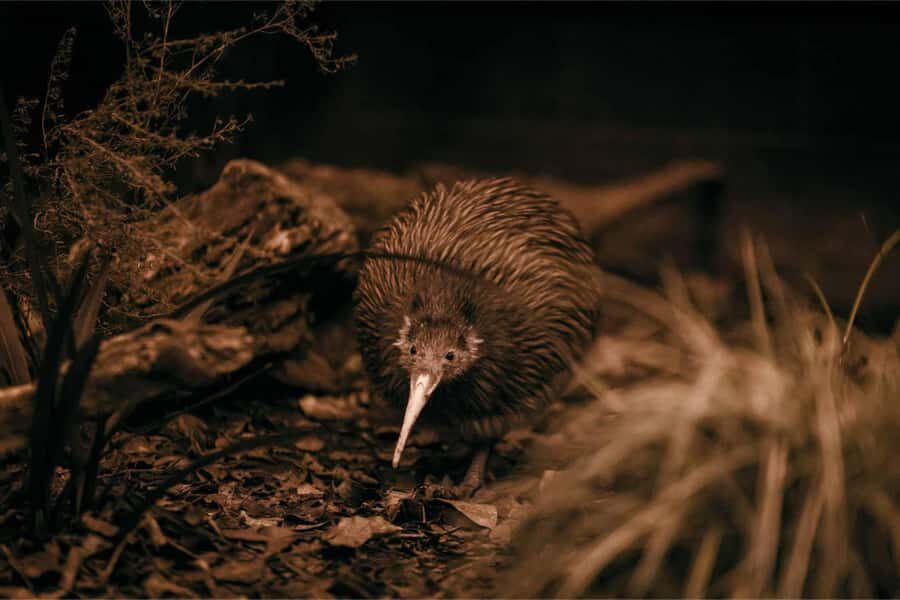
The tour includes access to the Kiwi Conservation Centre, which is one of the best reasons to choose a guided combo instead of trying to piece together tickets on your own. You’ll see kiwis as part of a conservation setting, not as a quick photo stop.
The kiwi experience is often the moment people remember because it feels personal. Seeing a kiwi for the first time is one of those “only in New Zealand” moments that lands fast, even for non-bird people.
One practical thing to know: photography rules can be stricter around the kiwi area. The information you’re given on-site matters, so follow staff guidance there and avoid assuming you’ll be able to shoot everywhere. When in doubt, watch what others are allowed to do and copy the respectful approach.
Māori Arts and Crafts Institute: more than a shop stop
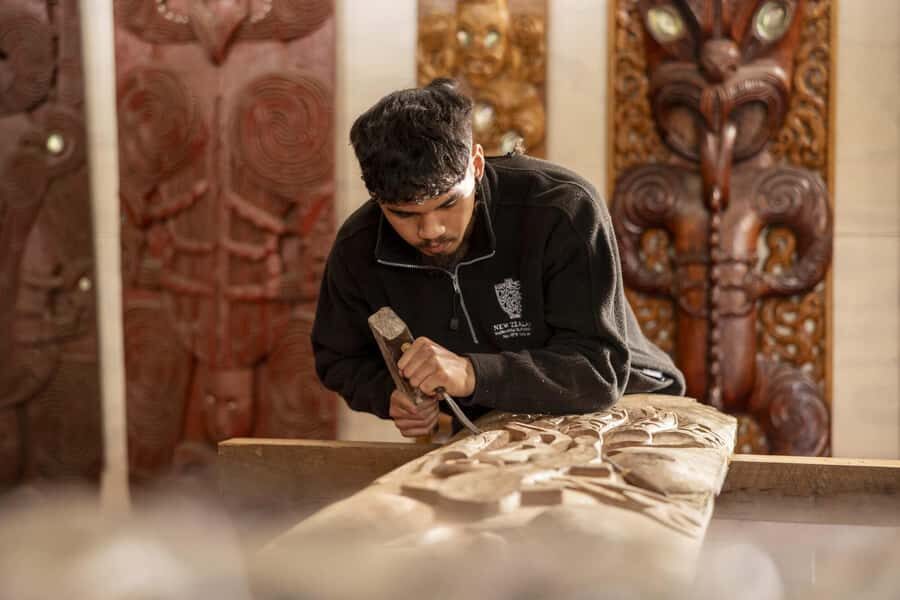
Entry to the New Zealand Māori Arts and Crafts Institute is included, and it’s where the tour adds real depth. Instead of treating Māori culture as a separate “show you attend,” this stop helps you understand how carving and craft carry meaning.
You’ll learn through a guided experience—your guide shares Māori traditions, heritage, and ancestral stories along the way. You also get a chance to notice the craftsmanship in action, including carving and work with natural stones and wood, which gives you a clearer idea of what you’re seeing when you look at Māori designs.
This is one of the best parts of the whole day because it slows things down just enough. You’re not only taking in spectacle; you’re picking up vocabulary for what’s behind the visuals.





Te Aronui a Rua performance: pōhiri, waiata, mōteatea, poi, haka
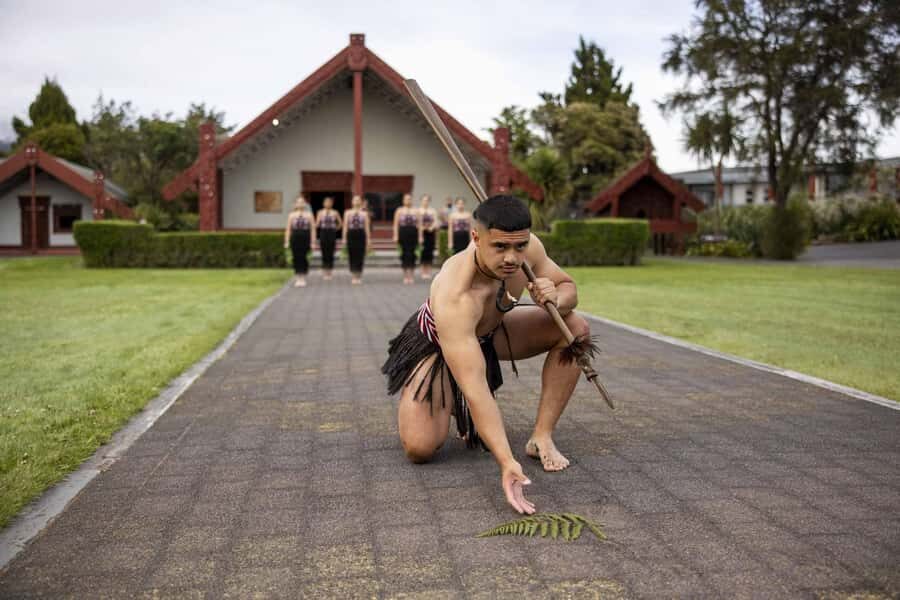
The cultural performance happens in the carved meeting house, Te Aronui a Rua, and it runs about 30 minutes. This is not a background activity while you check your phone. It’s a focused, set-piece welcome and performance that includes pōhiri (traditional welcome), waiata (song), mōteatea (traditional chant), poi, and haka.
If you care about authenticity, this is the part that makes the day worth it. You’re watching a structured set of forms—welcome, vocal pieces, movement with poi, then haka—so you can feel the progression instead of treating it like a single routine.
Your guide can set the tone before you arrive, and that helps you watch better. For example, one English guide named Jay is described as speaking with passion and pride about his Mouri family and colleagues, and about the three kiwis in conservation—so the show doesn’t feel like a random finale. It feels like the same values and stories continuing in a different format.
A heads-up about viewing and crowds
A fair concern: some groups may include many children, and that can make it harder to see the performance clearly. One specific issue you might run into is that the formal positions for the chief ceremony can block sightlines depending on how the group is arranged. If clear sight matters to you, aim to find a place early and stay aware of how people are lining up.
Price and value: does $80 for Te Rā + Haka make sense?
At about $80 per person, this is not a “cheap add-on” type of activity. The value comes from what’s bundled into the 2-hour plan: a 90-minute guided walk, entry into the Māori Arts and Crafts Institute, access to the Kiwi Conservation Centre, the chance to see Pōhutu Geyser, and the cultural performance in Te Aronui a Rua.
If you tried to do the same mix on your own—geothermal guided viewing plus kiwi access plus arts entry plus a live performance—you’d likely spend more time coordinating. Here, the schedule is already built, and you’re paying for that structure and interpretation.
Also, the payoff is split. Even if one part doesn’t click for you (say, geothermal), the other part might land (the performance, or the crafts institute). That makes it a good bet when you want a “both sides of Rotorua” experience without getting stuck in one track.
Who should book this tour (and who should consider alternatives)
I’d put this tour at the top of the list if you:
- Want a short, guided Rotorua experience that teaches as you go
- Like combining nature and culture rather than choosing just one
- Prefer a live cultural performance with multiple elements (not only dance)
I’d think twice if you:
- Need very quiet, slow, uninterrupted viewing for cultural ceremonies (crowd and child group size can affect sightlines)
- Have mobility needs that make walking difficult; the information includes both wheelchair accessibility and a note that it isn’t suitable for wheelchair users/mobility impairments, so confirm what you can realistically manage on the ground before booking
Quick practical tips so you enjoy it more
- Wear comfortable shoes first, style second. You’ll be walking as part of the 90-minute guided portion.
- Bring a hat and sunscreen. Rotorua sun can be strong, and you’ll spend time outside around geothermal areas.
- Bring water. Food and drinks are not included.
- Don’t treat the show like a casual stop. Put your best attention on the pōhiri and haka segments.
- Photography is allowed, but respect cultural sensitivities—follow staff direction, especially near the kiwi area where rules may be tighter.
Should you book Te Puia’s Te Rā Guided Day Tour + Haka?
I’d book it if you want one organized, high-impact Rotorua experience that covers geothermal wonder plus Māori performance in a tight time window. It’s especially strong if you value guided interpretation—seeing Pōhutu Geyser with context, then connecting that place to Māori stories through the arts institute and performance.
If you’re sensitive to crowding or visibility during cultural ceremonies, choose your timing carefully and get to the performance seating area promptly. And if mobility is a concern, confirm the practical walking requirements on-site before committing.
FAQ
How long is the Te Puia Te Rā guided day tour plus Haka performance?
The experience runs for about 2 hours total, including a 90-minute guided walk and a cultural performance.
Where do I check in for the tour?
Check in at the Main Entrance of Te Puia, Hemo Road, Rotorua.
What’s included in the price?
You get a 90-minute guided walk, the cultural performance, a visit to Pōhutu Geyser, access to the Kiwi Conservation Centre, and entry to the New Zealand Māori Arts and Crafts Institute.
What is not included?
Food and drinks are not included, and transportation to or from the activity is not included.
How long is the cultural dance show?
The cultural performance/show is about 30 minutes.
What language is the live guide?
The live tour guide speaks English.
Can I take photos during the experience?
Photography is allowed, but you should respect cultural sensitivities.
What should I bring with me?
Bring comfortable shoes, a hat, sunscreen, and water.
Is smoking allowed?
No, smoking is not allowed.
What’s the cancellation policy?
You can cancel up to 24 hours in advance for a full refund.