REVIEW · WELLINGTON
Guided Wellington Tour by Electric Bike
Book on Viator →Operated by Switched on Bikes · Bookable on Viator
Wellington is windy, but this guided e-bike tour keeps the ride fun by handling the hills and guiding you car-free between highlights. I like that you start with a safety briefing and a chance to practice in a calm spot before you join the waterfront.
In This Review
- You Get Great Stories and a Real Break
- The Main Catch: You Must Be Comfy in Wind and on Roads
- Key Points to Know Before You Ride
- Why This Wellington E-Bike Tour Works So Well
- Getting Started: Switched on Bikes, Safety Briefing, and Quick Practice
- Wellington Waterfront to Oriental Bay: Where the City Feels Like a Movie Set
- Kupe Statue and Te Papa Passing: Māori Connections and Easy Orientation
- Solace in the Wind: The Best Kind of Photo Stop
- Hataitai Beach Café Stop and Cog Park Photos
- The Zephyrometer and Wind Sculptures: Measuring Wellington in Plain Sight
- Maupuia Walkway and Te Wharewaka o Poneke: Coastal Outlooks and Culture Close Together
- Riding Realities: Wind, Road Mix, and How Guides Keep It Safe
- Price and Value: Is $121.01 Worth It?
- Practical Tips That Make the Ride Easier
- Should You Book This Tour?
- FAQ
- How long is the guided Wellington e-bike tour?
- Where does the tour start, and does it return to the same place?
- What’s included in the $121.01 price?
- What fitness level do I need?
- Are there age or height requirements?
- What happens if weather is bad or I need to cancel?
You Get Great Stories and a Real Break
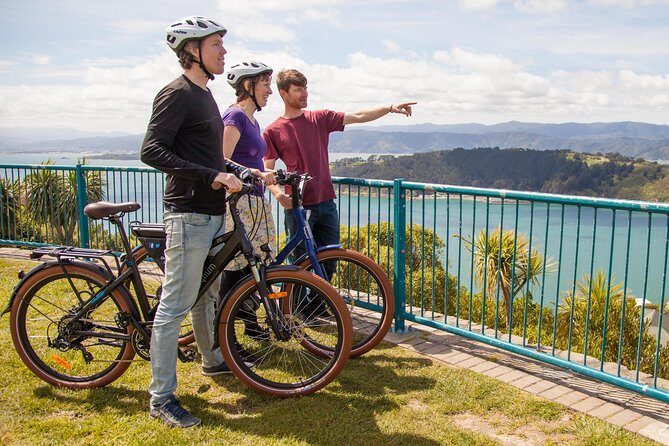
I especially like the guide-led stops, where you learn why places like the Kupe statue and Te Wharewaka o Poneke matter to Māori travel and settlement stories. The included café pause at Hataitai Beach also keeps energy up with tea, coffee, or ice cream.
The Main Catch: You Must Be Comfy in Wind and on Roads
The biggest consideration is riding comfort. This route uses a mix of shared paths and some road sections, and Wellington’s wind can turn even an easy glide into an active ride—so only book if you feel confident on a bicycle.
You can also read our reviews of more cycling tours in Wellington

Key Points to Know Before You Ride
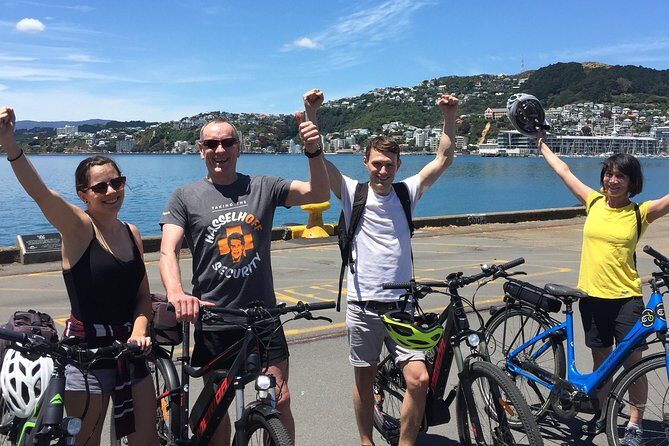
- Practice first at Switched on Bikes so you learn the bike basics before joining the route
- Waterfront views without getting lost as your guide leads the whole way along the harbor and bay areas
- Māori-focused stops including the Kupe statue and Te Wharewaka o Poneke along the waterfront
- Wind-sculpture highlights such as the Zephyrometer and the wind-themed art path
- Café stop built in at Hataitai Beach with tea or coffee (plus time to regroup and take photos)
- Small-group pacing with a maximum of 24 riders for a smoother ride and easier group control
Why This Wellington E-Bike Tour Works So Well
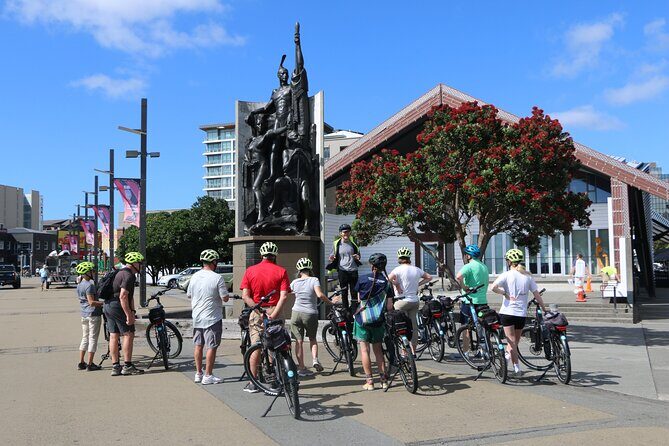
Wellington is the kind of city where the scenery is always close, but getting from A to B can be annoying if you’re on foot or stuck in stop-and-go traffic. This tour fixes that by putting you on an e-bike and staying on a route that shows off the waterfront first, then swings you toward the Miramar side for those classic coastal views.
The real value is how little effort you need to cover a meaningful distance. Wellington’s hills can feel relentless on a regular bike, but with pedal assist you can keep moving while still using your legs enough to stay comfortable and alert. That matters because the ride is not just about speed. It’s about getting time at the viewpoints and enjoying the story behind each stop.
And yes, Wellington wind is a thing. The tour doesn’t hide that. It trains you to expect it, and your guide keeps the group moving in a way that feels safe and manageable—especially if you’ve never ridden an e-bike before.
Getting Started: Switched on Bikes, Safety Briefing, and Quick Practice
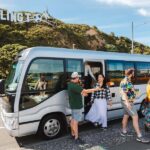
Your day begins at Queens Wharf in central Wellington, then you’ll meet your guide and group. After the safety briefing, you learn how to operate the electric bike and get time to practice in a safe area. That practice is more important than it sounds. If you’re new to e-bikes, it helps you understand how the pedal assist responds before you hit any wind or small inclines.
There’s also the practical side: the bikes and helmets are provided. You don’t have to hunt for gear, guess your size, or stress about whether a rental bike is fit for your comfort. If you’re shorter, you’ll want to tell them your height if you’re under 150 cm (59 inches), since fit matters for stability and ease of mounting.
Timing-wise, you’ll spend about 20 minutes on setup and learning the bike. Then it’s out onto the route.
Wellington Waterfront to Oriental Bay: Where the City Feels Like a Movie Set

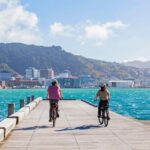
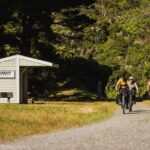
Once the group is ready, you head off along the Wellington Waterfront toward Oriental Bay. This is the part of the tour that hits you immediately: sea air, harbor activity, and shared paths that let you glide with less friction than you’d have driving or walking.
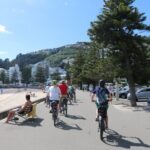
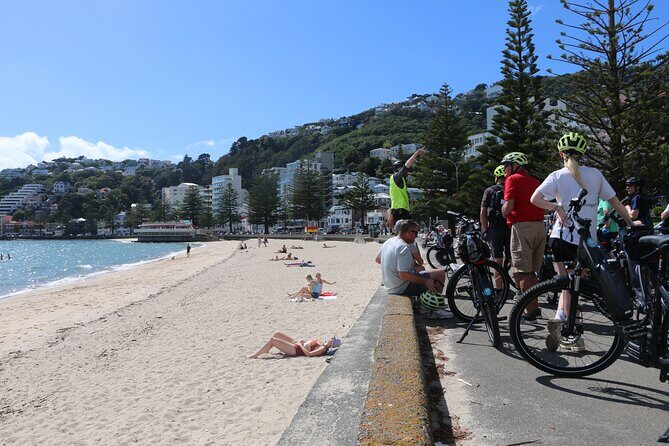
You’ll pass the lively port and harbor areas and ride past beaches like Oriental Bay. On a sunny day, the bay area can feel like a social stage—swimmers, sunbathers, and people out enjoying the weather. Even when it’s not sunny, the views are still the point: it’s Wellington’s relationship with the water, on full display.
There’s a downside to this style of tour: you don’t linger for long. Many stops are short photo-and-learn moments. If you want long beach walks or a slow cafe lunch, plan to do that after the tour. During the ride, the pacing is designed to keep you seeing multiple districts without turning it into a full day.
You can also read our reviews of more guided tours in Wellington


Kupe Statue and Te Papa Passing: Māori Connections and Easy Orientation
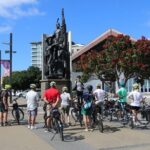
The tour gives you a quick cultural and historical anchor early on. One stop is at the Kupe Statue, a story point about the first inhabitants of New Zealand from nearly one thousand years ago. Your guide explains Māori cultural context as you ride along, so the city landmarks feel connected rather than random.
Then you’ll ride past Te Papa Museum. It’s one of Wellington’s top attractions, and passing it during the tour is a smart move if you plan to visit later. You get an easy sense of where it sits relative to the waterfront, so you’re not starting from scratch when you decide to go back.
There’s also a nice rhythm here: short learning moments that don’t overload you. The ride keeps you moving, and the stories help you notice details you’d otherwise miss.
Solace in the Wind: The Best Kind of Photo Stop
Along the waterfront, you’ll stop at Solace in the Wind. This is one of those Wellington art pieces that people love because it’s both poetic and practical for photos. Your guide will set you up for a picture moment, including posing with the statue as part of the experience.
The wind is part of the joke and part of the design. Wellington gets wind like other cities get traffic. Standing near wind-themed public art is a reminder that the city is built around weather, not against it.
Time here is brief—around five minutes—so treat it like a reset button. Use it to get a quick photo, breathe, and get ready for the next coastal stretch.
Hataitai Beach Café Stop and Cog Park Photos

Next comes a practical break at Hataitai Beach, where the tour stops for tea or coffee. This is the one stop that feels less about sightseeing and more about staying human. If you’ve been riding in gusts, having a warm drink or sweet treat is a real morale boost.
Near this area is Cog Park, which you’ll have a chance to use for photos with the harbor in the background and yachts parked up. This is the sort of view that makes you understand why locals love this coastline. The photos come out better than you expect because the background is already framed by the coastline curves.
The potential drawback is simple: on a windy day, you might want to keep coats zipped and be ready for sudden gusts while you’re standing still. The stop gives you time to regroup, but Wellington wind doesn’t clock out.
The Zephyrometer and Wind Sculptures: Measuring Wellington in Plain Sight
One of the tour’s most memorable sections is the wind-focused area around the Zephyrometer. This is an 85-foot wind sculpture that moves with the air, and your guide uses it as a jumping-off point to explain New Zealand’s innovative energy system.
Even if you’re not a science person, it’s a great stop because it’s visual and immediate. You can watch the wind at work without needing to know technical details ahead of time.
Then you’ll ride through a cycle path area with funky custom-made wind sculptures overhead. Your guide may point out marine life if conditions and timing are right—things like dolphins, penguins, or orcas. No guarantees are mentioned, so think of it as a fun possibility rather than a checklist item.
You might also notice aircraft overhead as planes land in the area. That’s another Wellington reminder: the city doesn’t feel far from the systems that move people and goods. It’s modern and busy, even when you’re riding along scenic paths.
Maupuia Walkway and Te Wharewaka o Poneke: Coastal Outlooks and Culture Close Together
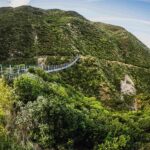
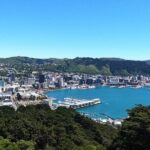
After the wind stops, the tour takes you to Maupuia Walkway, where you get a lookout over Wellington’s bays. This is the kind of viewpoint that makes the whole ride feel worth it. You get distance, light, and a sense of how the city wraps around water.
From there, you’ll head to Te Wharewaka o Poneke, a culturally significant building with a Kupe statue outside. Your guide introduces Māori culture and discusses ancestor travel to Pōneke (Wellington) and Aotearoa (New Zealand). It’s an important capstone because it brings the earlier stories into a real place you can see and imagine.
The stop is about ten minutes—enough time for key points and a few photos, not enough for a long museum-style visit. If you want to spend more time at these cultural sites, you’ll have a base orientation from the tour.
Riding Realities: Wind, Road Mix, and How Guides Keep It Safe
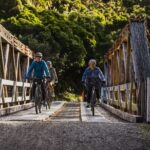
This tour is designed for riders with moderate physical fitness. You should be comfortable riding a bicycle on a mix of path and road: shared paths, on-road cycle lanes, and some regular roads. It’s not a car-free bubble all the way.
The good news is the e-bike assist means you can pedal as much or as little as you want. People often feel that the assist makes hills manageable without turning the ride into a total couch experience. You still get movement in your legs, especially when you’re going uphill.
Wind is the other reality. Wellington can be extremely blustery, and some days you’ll feel gusts more than others. On stronger wind days, the ride can turn into a teamwork activity: staying alert, riding smoothly, and letting your guide set safe pacing. Your guide will lead and tail the group to make sure nobody gets left behind.
If you’ve never ridden an e-bike, don’t be shy about asking questions before you roll out. Guides you might encounter—people like Jack, Dylan, Dillon, Tara, Stephanie, or Kylie—are used to helping riders settle in quickly.
Also, if mounting feels tough, ask about frame options. One common tip is to request a step-through style bike if that makes it easier to get on and off.
Price and Value: Is $121.01 Worth It?
At $121.01 per person, this isn’t the cheapest way to see Wellington—but it’s also not hard to justify if you price it the way you’d plan a day.
You get: a guided group ride, use of an e-bike and helmet, a safety/e-bike briefing, and a built-in break with tea or coffee (and the option of ice cream). Local taxes are included, and the tour runs from either morning or afternoon departures.
If you were doing it on your own, you’d still need bike rental, helmet, and the time to plan a route that strings together waterfront sights and viewpoints without getting lost. The guide adds value by keeping the route efficient and translating what you’re seeing into clear context. And because the tour is 3 to 4 hours, it’s a realistic half-day plan that fits cruise schedules and tight itineraries.
In short: you pay for convenience plus interpretation plus equipment. For many people, that balance is exactly why this tour sells well.
Practical Tips That Make the Ride Easier
A few details matter a lot in Wellington.
Bring an extra layer. Even if the morning looks mild, wind can cut fast along the coast. In summer, add sunscreen because coastal sun bounces back. Wear gloves if you get cold easily; the ride is outdoors the whole time.
Dress for movement. You’ll be riding a bicycle, so comfortable shoes matter. If you’re unsure about your ability on road sections, ask before you start so the guide can help you feel confident.
If you’re on a cruise, the start point is close to the port area, and pickup is offered. One nice touch: getting to the bike shop for setup can be simpler because the meeting process helps you connect the dots quickly.
And if the wind is heavy: hold a steady line, don’t fight gusts by overcorrecting, and trust your guide to adjust pacing.
Should You Book This Tour?
I think this tour is a strong match if you want a guided way to see Wellington’s waterfront highlights plus the wind-themed sights without turning the day into logistical homework. It’s also ideal if you’re not sure you’ll enjoy uphill cycling—e-bike assist changes the math.
You might want to skip or reconsider if you dislike riding on roads with mixed traffic lanes, or if strong wind makes you nervous on a bicycle. The ride can be great fun, but it is still an active street-and-path experience.
If you’re on the fence, here’s the easy decision rule I’d use: if you can handle a short practice ride after a safety briefing and you feel comfortable in blustery coastal conditions, this is one of the best ways to get the city’s highlights in half a day.
FAQ
How long is the guided Wellington e-bike tour?
It runs about 3 to 4 hours.
Where does the tour start, and does it return to the same place?
It starts at Queens Wharf in central Wellington, with the meeting point listed at the Wellington Cruise Ship Port in Pipitea. The tour ends back at the meeting point.
What’s included in the $121.01 price?
You get a group bike tour, use of an electric bicycle and helmet, a guide, a safety briefing, and tea, coffee, or ice cream at a café. Local taxes are also included.
What fitness level do I need?
Moderate physical fitness is advised. You should be comfortable with some physical exertion when pedaling uphill, even with assist.
Are there age or height requirements?
The minimum age is 13 years. If you’re under 150 cm (59 inches), you should advise your height when booking.
What happens if weather is bad or I need to cancel?
The experience requires good weather. If it’s canceled due to poor weather, you’ll be offered a different date or a full refund. There’s also free cancellation up to 24 hours before the experience starts for a full refund.