REVIEW · KAIKOURA
Kaikoura Whale Watching – 45 Minute Ocean Safari
Book on Viator →Operated by South Pacific Helicopters NZ · Bookable on Viator
Kaikoura is one of New Zealand’s best places to see whales, and this helicopter version makes it fast and visual. You’ll fly from above the Kaikōura Canyon, listening on onboard headsets as you scan for marine life. Then there’s a payoff that feels rare for a tour: a remote landing that only the local operator can reach.
What I like most is the mix of science-y spotting and pure viewpoint time. You’re not just sitting in a boat hoping for the right angle; you’re up high, with a pilot’s commentary and a better chance at seeing whales “from head to tail.” I also like the small scale: the group tops out at 6, so the trip feels more personal and easier to hear.
One drawback to plan around: this is weather-dependent. If conditions aren’t safe, your flight can be rescheduled, and you won’t get the “in the air” experience you’re paying for.
In This Review
- Key highlights you’ll care about
- First impressions: Kaikoura’s whale country, from rotor height
- The flight plan: what you do during the 1 hour 15 minutes
- 1) Takeoff and a focused scan over the Pacific
- 2) Mid-flight spotting and narration
- 3) The remote landing and the view-stop part
- What whales and marine life you might actually see
- The remote hilltop landing: the extra “wow” that isn’t just marketing
- Pilot skills and safety vibe: why people mention Daniel
- Price and value: is $511.97 per person worth it?
- Practicalities that matter on day of flight
- Meeting point and timing
- What to bring (and what not to)
- Weight limit and comfort
- Service animals
- Group size
- Who should book this helicopter whale safari
- Should you book it?
- FAQ
- How long is the Kaikoura Whale Watching helicopter tour?
- What whale species might I see?
- Is pickup included?
- What’s included in the price?
- Is bottled water provided?
- What happens if the weather isn’t good?
Key highlights you’ll care about
- 45 minutes of flight time inside a roughly 1 hour 15 minute total tour, so you get real time above the water
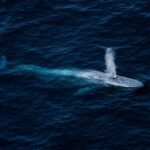
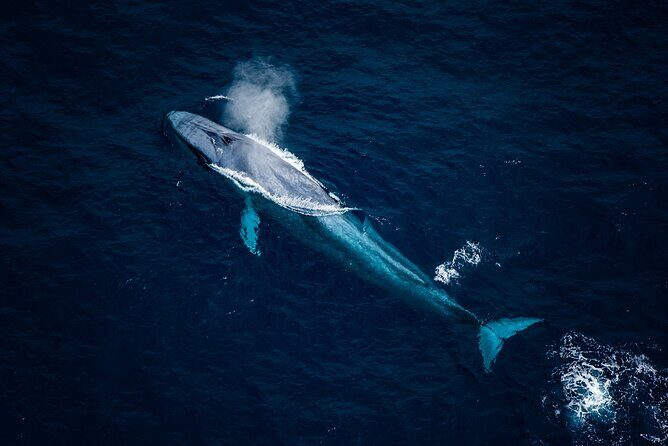
- Kaikōura Canyon views from the air, with chances at sperm whales, humpbacks, southern right whales, orca, and blue whales depending on season
- Remote hilltop landing with panoramic mountains-and-ocean views, not just a quick hover-and-go
- Life jackets and headsets included, which makes the ride feel more controlled and comfortable
- Pilot narration you can actually use (people specifically mention running commentary and spot-the-signs guidance from Daniel)
- Small groups up to 6 travelers, which helps with comfort and attention
First impressions: Kaikoura’s whale country, from rotor height
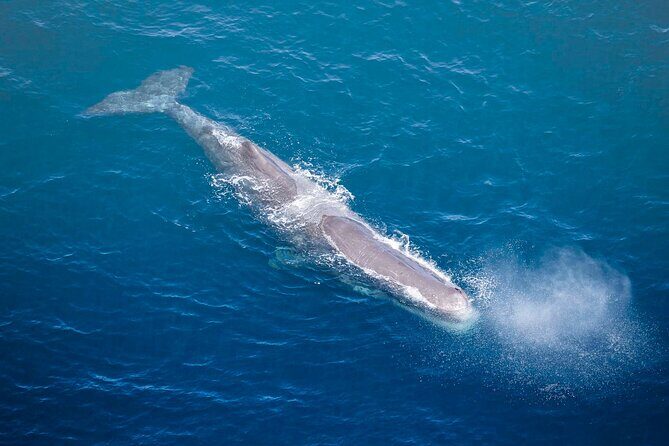
Kaikoura’s marine life has a “moving target” reputation. Predators and prey shift with ocean conditions, and from shore or from a boat, you can get limited angles. This tour changes the game by putting you above the action, over water and canyon systems where whales feed and travel.
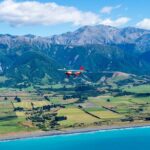
The standout idea here is that you’re not only searching for whales—you’re also getting the geography. The Kaikōura coastline and the canyon area create the kind of vertical viewing that’s hard to replicate from land. From the air, you can follow movement across the water faster, and it’s easier to understand where animals are relative to the coast.
You can also read our reviews of more tours and experiences in Kaikoura.
The flight plan: what you do during the 1 hour 15 minutes
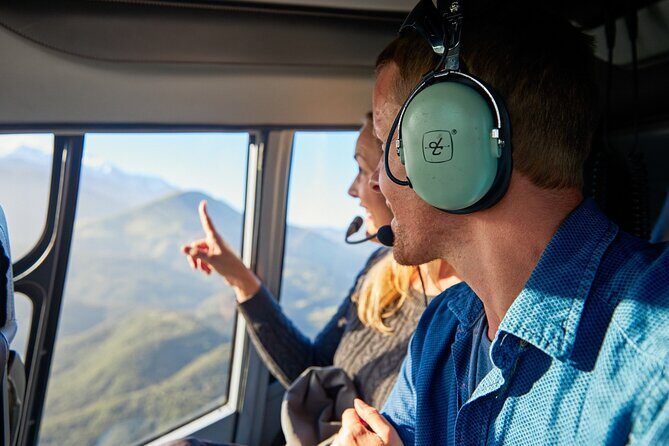
This tour runs about 1 hour 15 minutes total, with 45 minutes of flight time. Pickup is offered, and the experience ends back at the meeting point at 627 State Highway 1, Peketā 7374 in Peketā.
Here’s the rhythm you can expect:
1) Takeoff and a focused scan over the Pacific
Soon after you lift off, your pilot guides you to the areas where whale spotting is most likely. You’re flying high enough to see broad stretches of coast, but low enough for the “look down and track movement” style of spotting. You’ll keep your eyes open for whale blows and changes in the surface.
This is where the tour’s promise of seeing whales head-to-tail (not just glimpses) becomes more realistic. From the air, a whale’s movement reads clearly, especially when you’re watching with the pilot’s guidance.
2) Mid-flight spotting and narration
One of the most consistent themes from people who’ve flown this route: the pilot narration makes the flight feel purposeful, not just scenic. In particular, travelers mention Daniel giving a running commentary—what you’re looking at, why the sea mammals are likely to be there, and how to spot them.
That narration matters because it helps you stop randomly scanning and start scanning with a plan. If you’ve ever tried to “find the whale” with no clues, you’ll feel the difference immediately.
3) The remote landing and the view-stop part
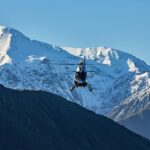
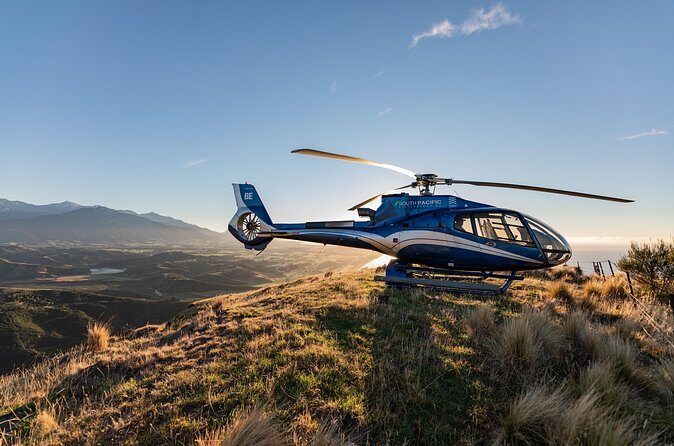
At some point in the flight, you’ll land on a remote coastal hilltop. This isn’t an airport-style stop. It’s described as a site only accessible by South Pacific Helicopters, which is exactly why it feels special: you’re getting a dramatic mountain-and-ocean viewpoint that most people never see.
While you’re on the ground, you’re not distracted by engine noise and constant motion. You can take in the Kaikōura ranges, the coastline below, and the overall shape of the area—views that are hard to appreciate from just a window in the sky.
You can also read our reviews of more whale watching tours in Kaikoura

What whales and marine life you might actually see
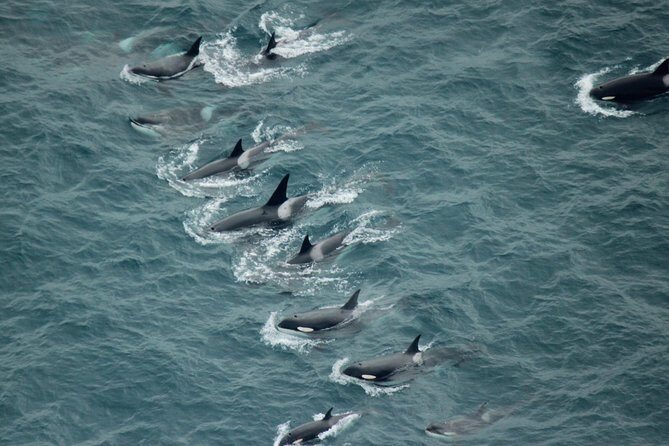
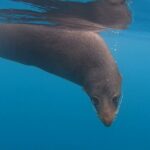
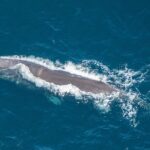
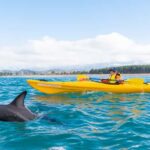
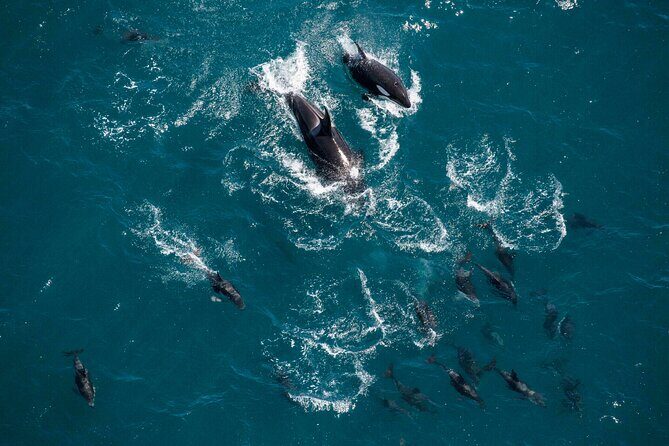
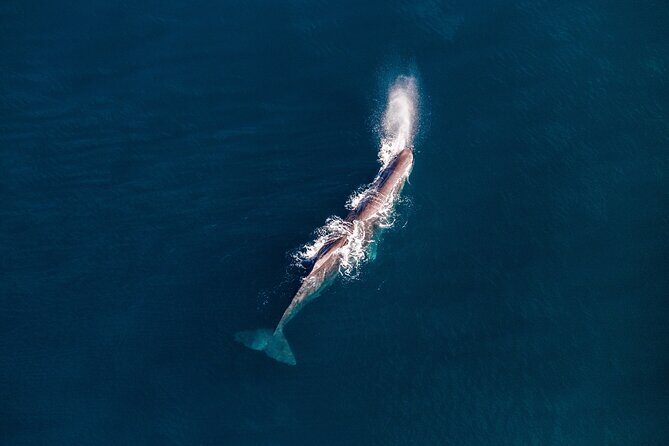
This is a whale watching tour, but it’s also honest about one truth: sightings depend on season and what the ocean is doing. The tour’s likely species list includes sperm whales, humpback whales, southern right whales, orcas, and blue whales (season-dependent). You may also spot dusky dolphins and New Zealand fur seals along the way.
Here’s how to think about that if you’re planning your expectations:
- If your trip lines up with the right season, the odds improve for bigger “signature” whales like sperm whales or even blue whales.
- Dolphins and seals are often the bonus category—smaller, more frequent sightings that can make the flight feel lively even if whale movement is subtle.
- With air spotting, you’re watching behavior and motion more than you’re hunting for confirmation. That means you can still have a strong experience even when you don’t get a long, close “show.”
A practical tip: bring your camera ready early. The air portion is fast. When a whale surfaces, time matters, and you don’t want to be fiddling with settings while everyone else is tracking movement.
The remote hilltop landing: the extra “wow” that isn’t just marketing
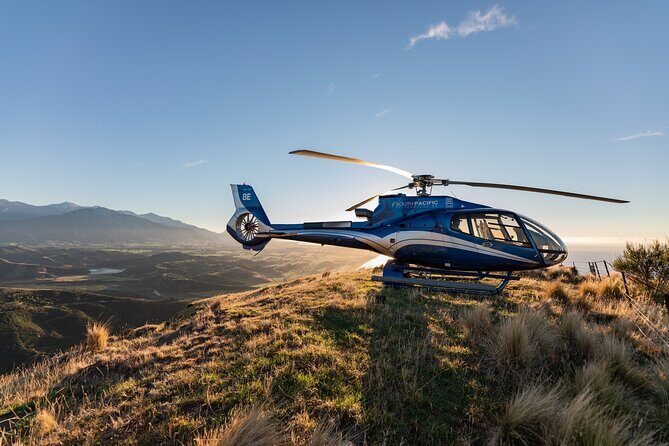
A lot of helicopter tours are mostly about getting from point A to point B. This one adds a distinct second act: the landing on remote coastal hilltops.
Why that matters:
- On foot, you can rotate your body and really take in scale. From the ground, you get a sense of how the mountains and sea meet.
- It gives you a break from constant scanning. Once your eyes adjust, you’ll often start noticing detail you missed from above.
- It’s a photo moment that feels different from window shots. You’re standing somewhere with a view, not just hovering over it.
You might even notice how landing changes the “sound picture.” Even if your headset is great, being on land tends to make the whole experience feel calmer, which helps with photos and just absorbing the place.
Pilot skills and safety vibe: why people mention Daniel
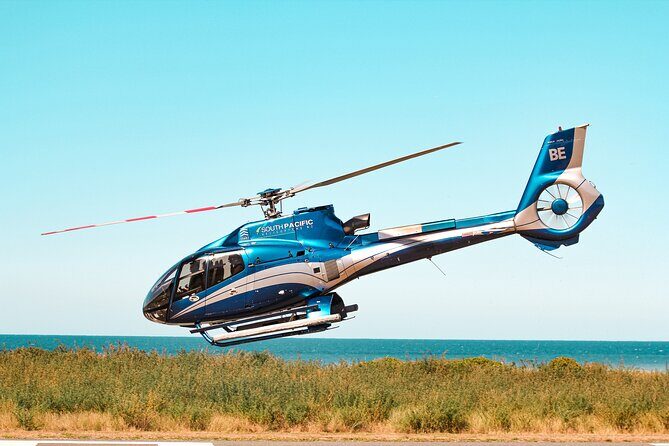
Most people don’t book a helicopter tour for the paperwork. They book it for the feeling of being guided, safe, and close enough to see something real.
Here’s what stands out in the way this operator runs trips: people repeatedly call out the pilot’s professionalism and friendliness. Multiple travelers specifically mention Daniel as a standout—someone who makes everyone feel safe and explains what’s happening during the flight.
Also, the tour includes headsets and life jackets, which tells you they’re building the experience around comfort and clear communication. If you’re sensitive to noise or just want to feel less “handed off,” those extras help.
Price and value: is $511.97 per person worth it?
At $511.97 per person, this is not a budget activity. You should treat it like a premium splurge.
What you’re paying for:
- Helicopter time (45 minutes of actual flight) over a whale-rich area
- Equipment included (life jackets, headsets)
- A remote landing that’s not a typical quick stop
- A route designed for wildlife spotting, not just scenic sightseeing
- A small group size (max 6), which often means less chaos and more attention
Where value can wobble:
- If the weather is rough, you might not get the day/time you planned, even though the tour should offer a different date or a refund if it’s canceled due to poor weather.
- Whale sightings are never guaranteed, even though the tour targets excellent locations.
So I’d frame it like this: you’re not only buying a “chance to see whales.” You’re buying an experience that compresses time, gives you a top-down view, and adds a rare landing stop.
Practicalities that matter on day of flight
Meeting point and timing
Plan to arrive at 627 State Highway 1, Peketā 7374 in Peketā. Pickup is available, so confirm whether you need to be at the meeting point yourself.
What to bring (and what not to)
- Bottled water is not included, so bring a bottle if you get thirsty easily.
- Wear layers. Rotor-air and coastal weather can shift quickly.
- If you’re a photographer, charge devices fully. You’ll want your camera ready for sudden surface moments.
Weight limit and comfort
There’s a stated total weight per passenger limit of 276 lbs. If you’re close to that, it’s worth checking before booking so you don’t hit a snag.
Service animals
Service animals are allowed, which is helpful if you need that accommodation.
Group size
Maximum 6 travelers. That small cap is a big part of the feel of the tour.
Who should book this helicopter whale safari
This is a strong fit if:
- You really want the air view—the kind that helps you understand where whales are moving.
- You’re visiting Kaikoura on a tight schedule and want maximum time in the sky versus hours on the water.
- You value narration and want the pilot to help you spot what matters.
It might be less ideal if:
- You’re very price-sensitive and would rather spend less for a longer time on the water.
- You can’t handle the idea of weather-related changes, even with the tour offering options if conditions are unsafe.
If you want a “special occasion” activity, this is it. It’s also a good pick for families who want the helicopter thrill paired with wildlife time, as long as everyone is comfortable with the setting.
Should you book it?
I’d say book this if you have the flexibility for weather changes and you’re willing to pay for a premium wildlife-and-view experience. The combo of 45 minutes of flight, possible whale species depending on season, and the remote hilltop landing is what justifies the cost.
If you’re hoping for a guarantee of whales, temper that hope. But if your main goal is to see Kaikoura from a perspective most people never get—plus to have a pilot like Daniel helping you track what’s there—this is one of the most compelling ways to do it.
FAQ
How long is the Kaikoura Whale Watching helicopter tour?
The tour runs about 1 hour 15 minutes total, and it includes 45 minutes of flight time.
What whale species might I see?
Depending on the season, you may see sperm whales, humpback whales, southern right whales, orca, or even blue whales. You might also see dusky dolphins and New Zealand fur seals.
Is pickup included?
Pickup is offered, and the tour ends back at the meeting point.
What’s included in the price?
Life jackets and headsets are included.
Is bottled water provided?
No, bottled water is not included.
What happens if the weather isn’t good?
The experience requires good weather. If it’s canceled due to poor weather, you’ll be offered a different date or a full refund.
If you’d like, tell me your travel month and your rough budget comfort level. I can help you decide whether this is the right splurge for your Kaikoura day.