REVIEW · MOUNT COOK
Mount Cook: 50-Minute Aoraki Scenic Helicopter Flight
Book on GetYourGuide →Operated by Southern Lakes Helicopters · Bookable on GetYourGuide
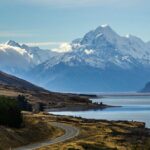
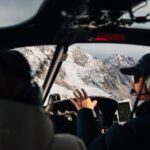
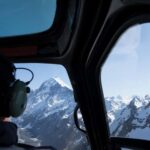
Glaciers look unreal from the air. This 50-minute Aoraki/Mt Cook helicopter flight puts you above New Zealand’s highest peak and right next to the ice—then caps it with a snow landing on the Tasman Glacier. On clear days, you get a coast-to-coast view from the aircraft seat, with in-flight commentary that ties the scenery together.
What I like most is the Tasman Glacier snow landing itself. Stepping out onto real glacier snow is the kind of moment you don’t replace with photos; it’s quiet, high up, and strangely still for a place that looks like it’s moving. I also love the pilot-led perspective: you’re not just watching from a window, you’re getting guided sight lines across glaciers, mountains, and ice formations.
One thing to consider: where you sit affects what you can see. If you end up in the middle of the back, you may find it harder to get clean views and photos.
In This Review
- Key highlights
- A 50-minute Mount Cook helicopter flight that actually feels short
- Meeting point at Southern Lakes Helicopters: find the sliding doors, then turn left
- Getting the best seat: you want clean sightlines, not just a window
- Flying above Aoraki/Mt Cook: what the coast-to-coast views really mean
- The snow landing on Tasman Glacier: the silence is part of the magic
- Why the pilot’s knowledge matters more than you think
- Price and value: is $499 worth it?
- Weather can change the scenery you see
- What to bring (and what not to bring) for an easier flight
- Who this helicopter flight suits best
- Should you book the Mount Cook helicopter and Tasman Glacier landing?
- FAQ
- How long is the Mount Cook scenic helicopter flight?
- What is included in the experience?
- Is the Tasman Glacier snow landing included?
- Where do I meet the operator?
- Are flights guaranteed to run as planned?
- Are drones or selfie sticks allowed?
- Do I need to provide passenger weights?
- What should I bring with me?
Key highlights
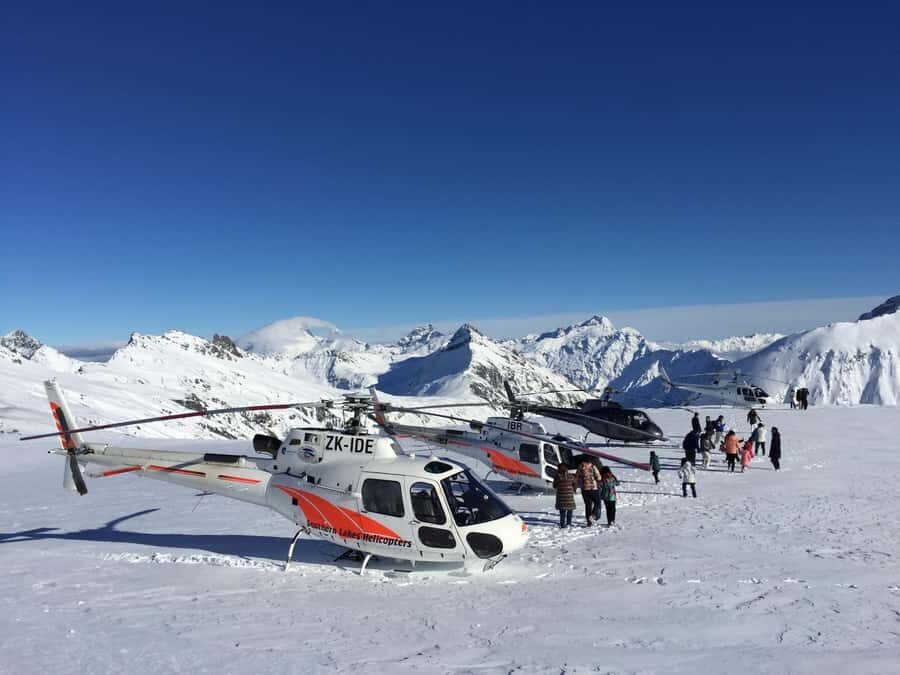
- Snow landing on the Tasman Glacier for that rare, hands-on look at glacial ice
- Coast-to-coast views from the aircraft seat when the weather cooperates
- Glacier spotting plus Lake Pukaki added into the aerial route on the right day
- In-flight commentary that helps you understand what you’re actually seeing
- Weather-dependent flights, so flexibility helps you get the best version of the experience
A 50-minute Mount Cook helicopter flight that actually feels short
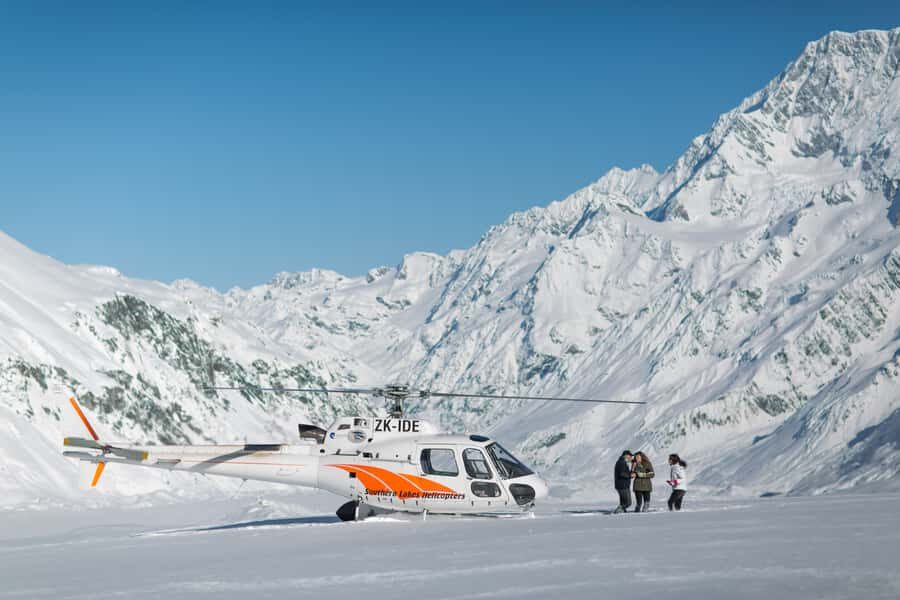
You can fill days with drives, walks, viewpoints, and still only see part of the story. This flight is different. In about 50 minutes, you get an aerial overview of the Aoraki/Mt Cook National Park area—high enough to see the geometry of mountains and ice, and close enough to make the glaciers feel real.
The big reason this works for most people is focus. There’s no slow build. You arrive, get onboard, and then you’re immediately doing the main event: flying over the glaciers and the surrounding peaks, with a snow landing on the Tasman Glacier built into the itinerary. It’s expensive compared to a bus ride, yes—but it’s also time-efficient. If your South Island schedule is tight, this is one of those “pay for the time you can’t buy elsewhere” experiences.
A few more Mount Cook tours and experiences worth a look
Meeting point at Southern Lakes Helicopters: find the sliding doors, then turn left
The day starts at Southern Lakes Helicopters. When you enter the building through the sliding doors, you’ll want to turn left—this is where you’ll find the operator.
I like this setup because it keeps things simple: you’re not wandering around a big, confusing depot looking for “the check-in desk that might exist.” Just go in, follow the direction, and plan on a quick transition from waiting area to briefing.
You’ll also want to keep your comfort in mind early. Wear comfortable shoes (even though you’re flying, you’ll still be walking a bit), and dress for mountain weather. It can be cold fast up high, even when the base area feels fine.
Getting the best seat: you want clean sightlines, not just a window
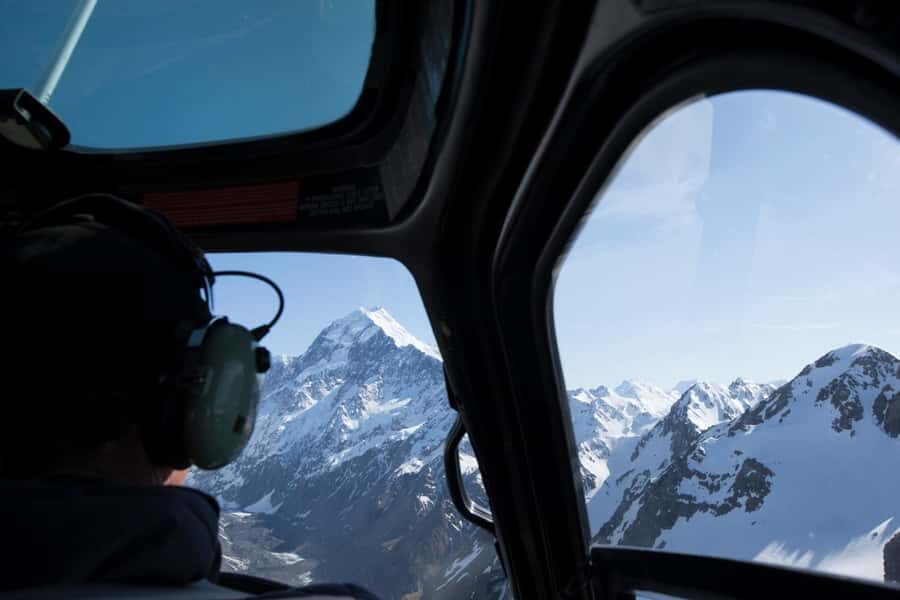
Helicopters are not like big planes with lots of space for perfect framing. Your seat placement can change your photos and your view, especially for the landing portion.
Here’s the practical takeaway from real-world experience: if you end up in the middle of the back, you might find you can’t see as much as you expected. That’s not a reason to avoid the tour—just a reason to be thoughtful. When boarding, if there’s any flexibility in seating, aim for positions that give you a clearer line over the aircraft interior and toward where the pilot is looking during the flight.
Also, keep your camera ready. The flight is only 50 minutes, so you don’t want to spend that time digging for your phone. A charged smartphone is listed as a bring item for a reason, and you’ll likely want it the moment glaciers start popping into view.
Flying above Aoraki/Mt Cook: what the coast-to-coast views really mean
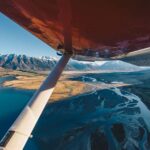
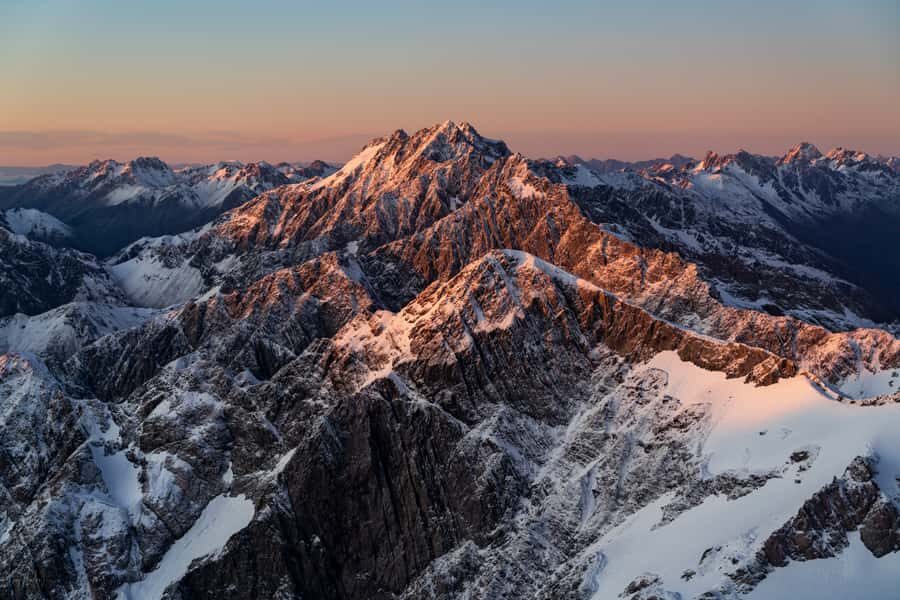
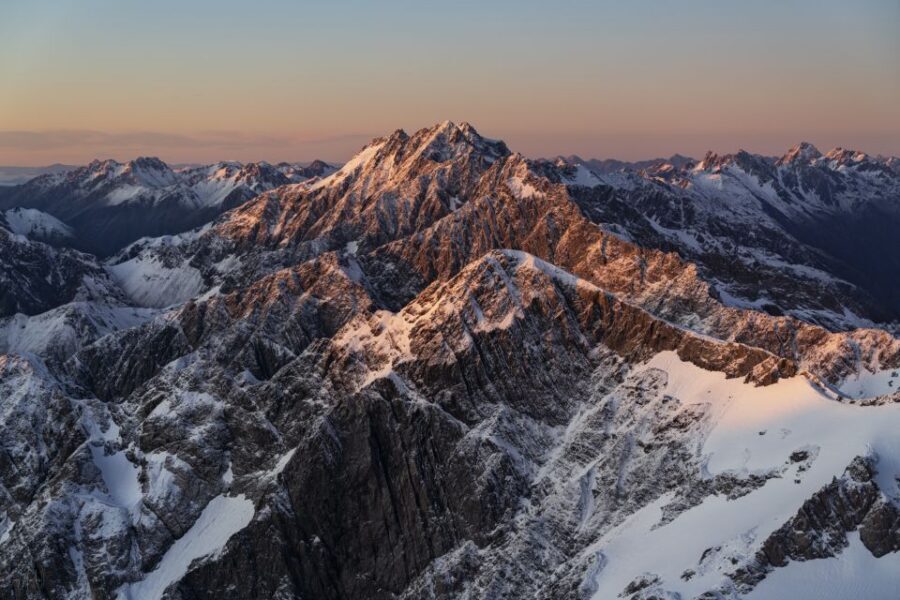
Once you’re airborne, the tour becomes a moving panorama. The highlights you’ll be looking for include:
- Aoraki/Mt Cook itself (the summit area and the surrounding peaks)
- Three glaciers in the region
- Lake Pukaki
- Hanging glaciers and ice-fed river shapes from above
- On clear days, views that reach toward the West Coast and the wild Tasman Sea
That coast-to-coast promise isn’t just marketing language. From the air, you see how the mountain range breaks weather patterns and how ice and rock carve valleys. It helps you understand why Mount Cook Country looks the way it does on the ground: sharp edges, long ice lines, and that dramatic contrast between snowfields and darker valleys.
The in-flight commentary matters here. Without it, glaciers can blur together—pretty, but hard to tell apart. With a good pilot narration, you start recognizing what’s glacier versus rock versus crevasse patterns, and you get a sense of scale: rivers of ice look different when you’re viewing them from above and slightly offset.
And yes, weather is king. On a clear day, visibility can be outstanding. If cloud cover moves in, the pilot still works with what you have. Think of it like getting a great meal even if the first course arrives slower than planned—you’re still getting the experience, just in a different form.
The snow landing on Tasman Glacier: the silence is part of the magic
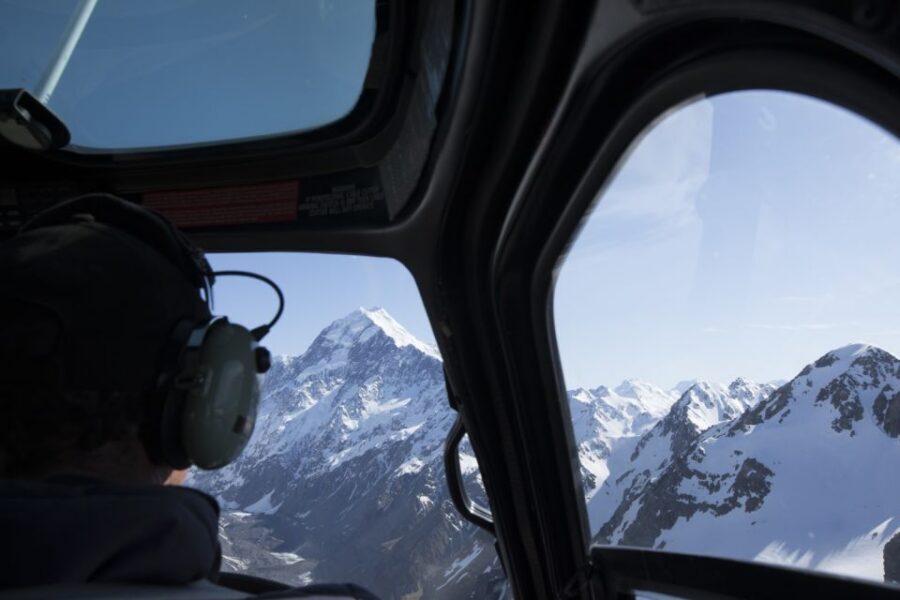
The standout highlight is the snow landing on the Tasman Glacier. This isn’t a quick “we touched down and immediately left” moment in spirit. It’s a chance to stand on glacier snow at altitude and experience the scale and calm of the place.
One description that stands out from real-world feedback is the sense of natural silence. When you step out into that environment, it doesn’t feel like you’re at a busy sightseeing stop. It feels remote. You’re surrounded by ice features—hanging glaciers, ice formations, and the kind of deep blue color that comes from how light hits thick ice and crevasses.
And that’s the practical value of doing the landing rather than just circling overhead: you get depth cues you can’t get from the air. From the cockpit or a seat, you might see the shape. On the snow, you understand the texture and the reality of what those patterns represent.
This is also where you should be most prepared for changes. Helicopter flights are weather dependent, and landing conditions can be tight. If the day’s conditions allow the landing, you’ll likely consider it the memory-maker.
Why the pilot’s knowledge matters more than you think
A scenic flight is nice. A guided flight is better. The reason is simple: glacial terrain can look similar until someone explains the clues.
On one recent flight, the pilot Tony was specifically praised for being informative and pointing out the glaciers and mountains. That type of guidance changes the whole flight. You stop treating the view like a postcard and start treating it like a map—where the glaciers sit, what direction the ice flows, and how the peaks frame the icefield.
Also, pilot skill shows up in the landing itself. A snow landing on a glacier isn’t something you should take for granted. It requires careful handling and judgment, and your comfort and safety depend on it.
There’s one more behind-the-scenes thing that affects the flight plan: you’ll be asked to provide all passengers’ weights for aircraft weight and balance. That isn’t busywork. It’s part of why the operation can run smoothly and safely.
Price and value: is $499 worth it?
Let’s talk straight. $499 per person is not cheap. You’re paying for three things:
1) The helicopter ride (which is time-saving and access-giving)
2) The special component: the Tasman Glacier snow landing
3) A professional operation with in-flight commentary
If you’re the type who enjoys viewpoints, you might wonder if a car-and-walk itinerary would be “good enough.” It won’t compare for one major reason: glaciers are best understood from scale and proximity. From a distance, you see their outlines. From the air and on the snow, you see their structure, texture, and the way crevasses and ice shadows create that otherworldly blue.
You’re also buying something that tours can’t guarantee by car: the ability to see multiple glaciers and Lake Pukaki in a single, short outing. A drive can take hours to cover similar ground. This turns it into a 50-minute concentrated experience.
So the value equation is simple: if you have limited time, limited mobility, or you really want the snow landing and the glacier overview, it starts to make sense fast. If you’re cost-focused and have plenty of days to explore, you might choose a lower-cost approach. But if you want the helicopter-and-landing combo, this is the ticket.
Weather can change the scenery you see
Flights here are weather dependent. On some days, cloud cover can limit what you see from the air. That can mean the summit and broader views aren’t as crisp as you hoped.
The good news is that the pilot is still there to make the flight exciting and informative within the conditions. When the weather isn’t perfect, your best strategy is flexibility in your expectations. You can still get stunning glacier views; you just may not get the same perfect “everyone can see everything” day.
If you’re planning this during a tight window, consider building in a little buffer in your schedule. That way, if weather affects your timing, you’re not forced into disappointment because your day is already packed.
What to bring (and what not to bring) for an easier flight
You don’t need special gear, but a few items make life smoother:
- Comfortable shoes
- Camera (and ideally your charged smartphone too)
- Weather-appropriate clothing
- A charged smartphone for photos
And for rules, keep it simple:
- No drones
- No selfie sticks
- No bags
It’s not just to be difficult. Helicopter carry-on is limited, and having loose items increases clutter in a tight space. Think lightweight and easy to manage. If you bring a camera, keep it accessible so you don’t have to fumble when the view is at its best.
Who this helicopter flight suits best
This is a strong choice if you:
- Have limited time on the South Island
- Want the most direct way to view Aoraki/Mt Cook and nearby glaciers
- Care about getting a memorable highlight, not just another viewpoint
- Enjoy guided interpretation and not just looking
It can be less ideal if you’re:
- Very budget-sensitive and want a low-cost nature experience
- Particularly worried about photo angles and seating visibility
- Easily stressed by weather uncertainty (since flights are weather dependent)
For most people, it lands in the sweet spot: it’s bold, scenic, and short enough that it doesn’t eat your whole day.
Should you book the Mount Cook helicopter and Tasman Glacier landing?
I’d book it if the snow landing on the Tasman Glacier is on your must-do list. That’s the core reason this experience is different, and it’s the part that people talk about because it feels genuinely special rather than merely scenic.
I’d also book it if you value an aircraft-seat viewpoint with in-flight commentary—glaciers make more sense when someone helps you read what you’re seeing. And if your schedule is tight, the 50-minute format is a big win.
But if the price feels like a stretch and you’re okay trading the landing for a slower, cheaper plan on the ground, you can still enjoy Mount Cook Country without paying for the helicopter. You just won’t get the same combination of air views and that on-snow moment.
FAQ
How long is the Mount Cook scenic helicopter flight?
The flight duration is 50 minutes.
What is included in the experience?
It includes a 50-minute scenic helicopter flight, a Tasman Glacier snow landing, an experienced professional pilot, and in-flight commentary.
Is the Tasman Glacier snow landing included?
Yes, the experience includes a snow landing on the Tasman Glacier.
Where do I meet the operator?
Meet at Southern Lakes Helicopters. When you enter through the sliding doors, turn left.
Are flights guaranteed to run as planned?
No. All flights are weather dependent.
Are drones or selfie sticks allowed?
No. Drones and selfie sticks are not allowed.
Do I need to provide passenger weights?
Yes. You’ll need to provide all passengers’ weights for aircraft weight and balance.
What should I bring with me?
Bring comfortable shoes, a camera, weather-appropriate clothing, and a charged smartphone.