REVIEW · MOUNT COOK
Mount Cook Alpine Explorer Helicopter Flight with Alpine Landing
Book on Viator →Operated by Totally Tourism - The Helicopter Line · Bookable on Viator
Snow high in the Alps is the plan. In a small twin-engine helicopter from Glentanner Park, you get pilot narration and a possible snowfield landing near Aoraki Mt. Cook, with views you just can’t match from the ground; the one catch is the snow stop depends on weather and conditions.
I like how efficient this feels: roughly 20 to 25 minutes in the air inside a total 35-minute outing, so you’re not stuck doing hours of transfers. And with a maximum of six passengers, you tend to get the kind of attention that actually helps you spot what you’re seeing.
One consideration: if the mountains don’t deliver snow that day, you may end up with the scenic flight only. In the wrong conditions, flights can also be grounded, so it’s smart to build a little flexibility into your Mt. Cook schedule.
In This Review
- Key things I’d zero in on
- A helicopter from Glentanner Park: quick, high, and direct
- The 35 minutes in the air: what your timing really means
- Ben Ohau Range and the Southern Alps pass: the big-view segment
- The snow landing at Aoraki/Mount Cook National Park: the part that can win or disappoint
- Glaciers and glacial valleys: what you see while the pilot talks
- Return flight over the Tasman Valley toward Lake Pukaki
- Is $359.62 good value for a helicopter flight?
- Who should book this Alpine Landing helicopter flight?
- Practical tips to get the most out of your flight day
- Should you book this flight with a snow landing?
- FAQ
- How long is the total helicopter experience?
- How much time will we actually spend flying?
- Where does the tour depart from?
- Is the snow landing guaranteed?
- How long is the snow landing stop?
- What kind of narration is included?
- How many people are on the flight?
- Is there a weight limit?
- What should I wear?
- What happens if weather cancels flights?
- Can I cancel and get my money back?
Key things I’d zero in on
- Small-group comfort: up to six passengers in a twin-engine helicopter
- Pilot commentary with real names behind it: past pilots like Greg and Dan are praised for history and smooth handling
- A snow landing you plan around: snow is weather/season dependent and isn’t guaranteed
- Big-mountain viewpoints: Ben Ohau Range and Aoraki Mt. Cook (3,724 m / 12,217 ft) from above
- Photo moment: pilots can take photos and arrange them for purchase after the flight
A helicopter from Glentanner Park: quick, high, and direct
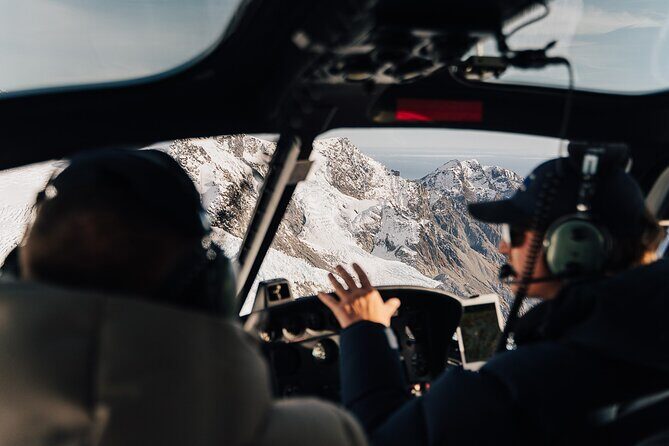
The whole point of this flight is simple: you skip the long climb and go straight to the airspace above Aoraki Mt. Cook and the Southern Alps. You’ll depart from The Helicopter Line at Glentanner Park in Mt. Cook Village, then lift off for a short-but-packed ride that feels like seeing multiple parts of the region at once.
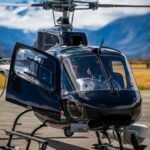
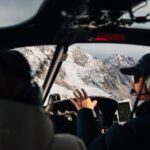
The helicopter holds up to six passengers, and the cabin is set up for a close look at the terrain below. This matters because the best “what am I looking at?” moments come right when the pilot is narrating key areas.
Also, because the entire outing is about 35 minutes including the landing, you can pair it with other Mt. Cook activities without blowing your whole day.
A few more Mount Cook tours and experiences worth a look
The 35 minutes in the air: what your timing really means
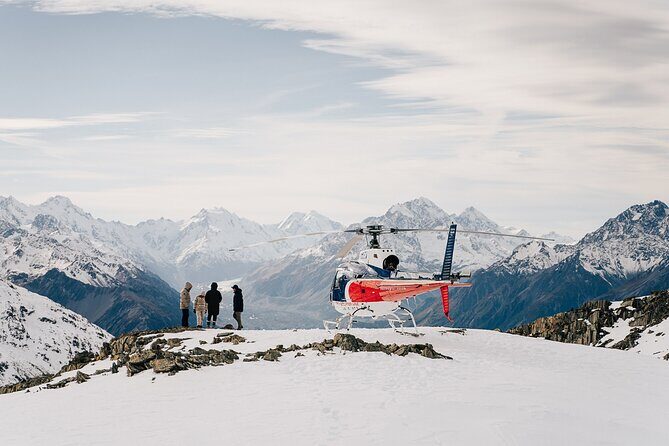
Your total trip is about 35 minutes, and the actual flying portion is around 20 to 25 minutes. That’s a useful detail because it helps you mentally budget: this isn’t a slow scenic loop with long stretches of travel time. You’re up, you’re viewing, you’re landing, and then you’re back—fast and focused.
You’ll do a safety briefing before takeoff. After that, you’ll buckle in and settle down for the main event: seeing how glacier-carved ridges and passes look when you’re literally above them. Ancient scarring in the mountains becomes obvious from the air, and the flight makes the shape of the land feel suddenly legible.
Expect cold conditions at the base, and bring warm layers and proper footwear. Even though you’re not hiking, you’ll step out briefly on the snow landing if conditions allow.
Ben Ohau Range and the Southern Alps pass: the big-view segment
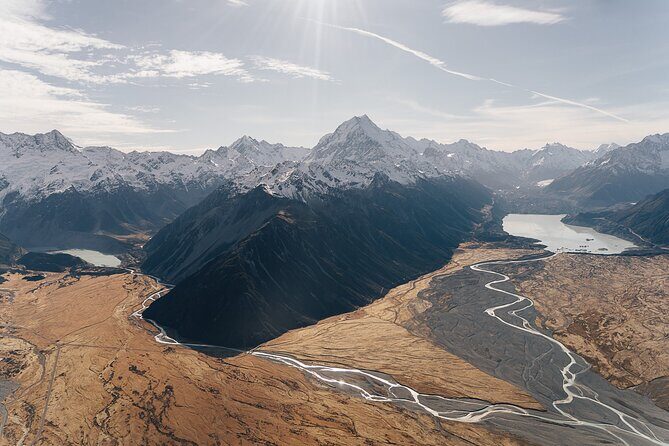
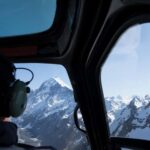
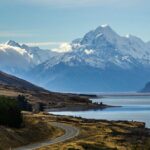
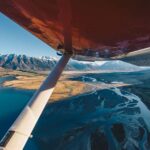
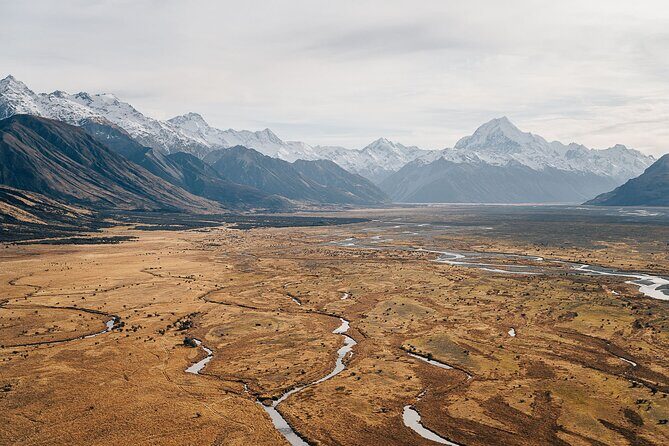
Once you’re airborne, the flight routes you over steep ridges and across the Ben Ohau Range. This is where helicopter travel earns its keep: from ground viewpoints, you might see a peak or two. From the air, you can read the whole system—ridges, passes, and valleys aligning in one continuous view.
Aoraki Mt. Cook is the headline, but the flight also gives you the surrounding context. You’ll rise over a mountain pass in the Southern Alps, which is often the moment when everything “clicks” visually—how the ranges connect and where rivers and valleys begin shaping the terrain.
It’s also the most comfortable place to take in details, because you’re not rushing. With a small group, you’re less likely to feel like you’re fighting for window position or photo timing.
And yes, you’ll have a clear sense of scale with Aoraki at 3,724 m (12,217 ft). Seeing that height from above is the kind of perspective that makes the mountain feel both massive and close.
The snow landing at Aoraki/Mount Cook National Park: the part that can win or disappoint
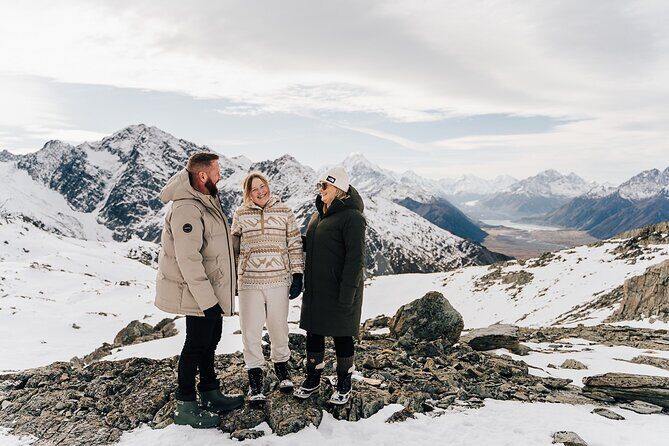
Here’s the heart of the experience: an alpine landing on a snowfield, typically with a chance to step out and play. The stop is described as about 10 minutes, and it’s included as an alpine landing with the understanding that snow landing is seasonal and weather dependent.
When it works, it’s the standout memory. One review highlighted how exhilarating it felt once they stepped onto the snowfield and how the pilot made photo time easy—pictures taken during/around the landing and then provided as a purchase card shortly after.
When it doesn’t work, the flight is still stunning, but you lose the main “wow” moment. One customer specifically noted they booked expecting a snow landing and didn’t get it due to the time of year, and they felt they should have been told more clearly that it wasn’t likely.
So how should you plan?
- If snow landing is your top priority, assume you’ll be booking on a good-weather day and still recognize it’s not guaranteed.
- If you’re okay paying for the aerial views even without snow, you’ll likely feel satisfied no matter what conditions deliver.
Either way, this is the segment where the pilot’s judgment matters. Hovering and landing safely in alpine conditions isn’t guesswork, and you’re trusting the pilot to time it right.
Glaciers and glacial valleys: what you see while the pilot talks
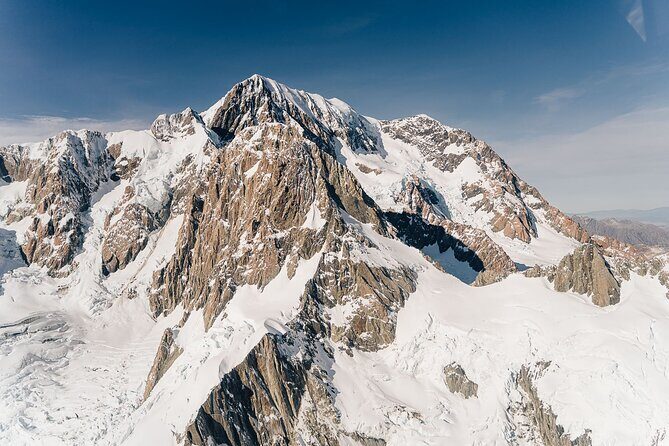
A lot of the value here isn’t just altitude—it’s interpretation. The pilot provides narration as you fly, pointing out areas of interest and helping you connect what you’re seeing to how the region got shaped. Past flights with pilots like Greg were praised for history and identifying what stands out, and Dan received credit for being experienced and confident during takeoff and landing.
This matters because Mt. Cook country can look like a pile of rock and snow if you don’t know what to look for. With narration, ridges start to make sense, glacier-carved scars become meaningful, and the flight shifts from sightseeing to understanding.
It also helps with photos. When you know what feature you’re approaching, you can frame the shot before it’s gone.
Return flight over the Tasman Valley toward Lake Pukaki
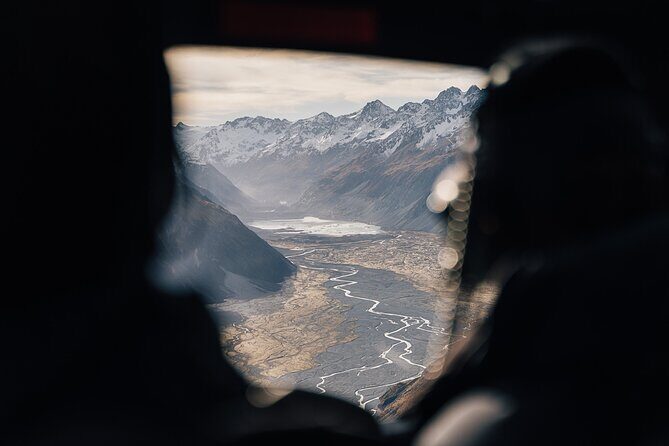
After the landing (or after the main viewpoint portion, if landing isn’t possible), you’ll head back toward Glentanner Park. On the return, you look down toward the Tasman Valley, with Lake Pukaki appearing in the view.
This is one of those “bonus” moments because it gives you a broader read on the region beyond the immediate Mt. Cook peaks. From the air, valleys stretch out with a clarity you just don’t get from roads or short walks.
If you’re trying to build a mental map of where everything sits—peaks, lakes, and valleys—this return perspective helps stitch the experience together.
Is $359.62 good value for a helicopter flight?
At $359.62 per person, this is not a casual add-on. You’re paying for three things at once: speed, access, and the rarity of landing on snow high in the mountains.
Here’s how I’d judge value:
- If you get the snow landing, you’re getting a memorable, hands-on moment plus the scenic flight—often making it feel like more than the sum of its parts.
- If you don’t get snow, you still get incredible views and pilot narration, but the cost-to-moment ratio may feel less satisfying, especially if you booked mainly for the landing.
- If you’re traveling during a period where weather can change quickly, you should treat this as a premium experience with a weather-dependent centerpiece. That’s why building buffer time in your itinerary matters.
Also, with a maximum of six passengers, you’re less likely to feel like you’re in a large crowd. That small-group setup can make a big difference in comfort and attention, and it helps the narration land better.
If you’re comparing this to driving and short walks, the helicopter is the expensive option. But it’s also the only one that routinely puts you above the passes and ridges you usually only read about.
Who should book this Alpine Landing helicopter flight?
This flight fits best if you:
- Want maximum views with minimal time spent in transit or hiking
- Like guided context while you look out the window
- Are comfortable with cold weather gear and a brief outdoor landing step
It can be a good option for people who want a once-in-a-lifetime aerial moment without committing to long treks. The flight can also be described as kid-friendly in practice, with one review praising it as good even for children.
But it may not be for you if:
- Snow landing is non-negotiable and you can’t emotionally absorb the possibility it won’t happen
- You’re hoping for a fully predictable schedule regardless of mountain weather
There are practical limits too. Weight per passenger is listed at 276 lbs total. Children must be accompanied by an adult, and for children under 15 kg, they are required to sit on a parent’s lap.
Practical tips to get the most out of your flight day
This is a small time window, so small choices make a difference.
Dress for cold, not comfort. Even in warmer months, alpine air can feel sharp once you step out. Wear warm layers and suitable footwear, and treat the snow landing like it could happen—because in good conditions, it might.
Arrive ready to move. You’ll meet at Glentanner Park and then board promptly after briefing. If there’s fog or other weather issues, you might be redirected to Mt. Cook aerodrome where conditions are better, so keep your day flexible.
Bring your camera habits. With quick changes in altitude and view angles, think about when you’ll shoot versus when you’ll simply look. The pilot narration helps you anticipate the best moments.
And if you care about photos, plan for the idea that the pilot may take pictures and make them available afterward for purchase. If that sounds like something you’d like, it can turn one great landing moment into a keep-sake.
Should you book this flight with a snow landing?
Book it if you want an aerial “big picture” of Aoraki Mt. Cook that’s hard to replicate on foot, and you’re excited by the possibility of stepping onto snow high in the mountains. This is the kind of experience that feels like Mt. Cook decided to show off for you.
Think twice if snow landing is your only reason for booking. Because it’s explicitly weather and season dependent, you could end up paying for a scenic flight without the snow step-out. In that case, make sure you’d still be happy with the helicopter views and pilot narration alone.
Finally, build in a little schedule slack. Weather can ground flights, and even when it doesn’t, operations can shift based on conditions. If you treat it as a premium weather-dependent adventure, the odds improve that you’ll enjoy it no matter what the mountains decide.
FAQ
How long is the total helicopter experience?
The total trip duration is about 35 minutes, including the alpine landing time.
How much time will we actually spend flying?
The flight time is listed as approximately 20 to 25 minutes.
Where does the tour depart from?
You start at The Helicopter Line at Glentanner Park, Mt. Cook Village (State Highway 80), and the experience ends back at the same meeting point.
Is the snow landing guaranteed?
No. The alpine landing on a snowfield is subject to season and weather conditions on the day.
How long is the snow landing stop?
The alpine landing is described as approximately 10 minutes.
What kind of narration is included?
A pilot guide provides commentary during the flight, pointing out sights and sharing information about the region.
How many people are on the flight?
The helicopter is described as seating up to six passengers, with a maximum of six travelers.
Is there a weight limit?
Yes. The total weight per passenger is listed as 276 lbs.
What should I wear?
Warm clothing and suitable footwear are recommended due to cold temperatures.
What happens if weather cancels flights?
This experience requires good weather. If it’s canceled due to poor weather, you’ll be offered a different date or a full refund.
Can I cancel and get my money back?
You can cancel up to 24 hours before the experience start time for a full refund.