REVIEW · MOUNT COOK
Mount Cook: Mountains High 40-Minute Helicopter Flight
Book on Viator →Operated by Totally Tourism - The Helicopter Line · Bookable on Viator
A glacier snow landing feels unreal. This 40-minute Mountains High helicopter flight from Glentanner Park gets you up close to the ice, including a soft Tasman Glacier snow landing, plus big-sky views of Aoraki/Mt Cook and the ice formations like Hochstetter Icefall. You also fly over the Burnett Mountains and down toward the expansive Mackenzie Basin, so you see more than one “type” of South Island scenery in a short time.
I especially love the hit of scale: you can actually stand on the snow and look up at New Zealand’s tallest peak, Aoraki/Mt Cook. I also like that the trip stays tight and focused at about 40 minutes of flight time, with a dedicated landing window for photos and panorama. One consideration: the snow landing is part of the experience, but it can depend on conditions, and it isn’t something you should assume is guaranteed every day in summer.
In This Review
- Key Points I’d Prioritize Before You Fly
- Why This 40-Minute Mount Cook Helicopter Flight Works So Well
- Getting to Glentanner Park and Into the Helicopter
- Hochstetter Icefall to the Upper Tasman Glacier: The Setup for Your Landing
- The Tasman Glacier Snow Landing: Photos, Cold Details, and Real Scale
- Burnett Mountains to the Mackenzie Basin: When the Views Change Fast
- Pilot Guide Commentary: Getting the Facts Without Missing the Views
- Timing, Seats, and What It Feels Like to Be in a Small Helicopter
- What to Wear and Bring (So the Snow Landing Doesn’t Feel Miserable)
- Price and Value at $416.90 per Person
- Who Should Book This Mountains High Flight
- Should You Book This Tour?
- FAQ
- How long is the Mount Cook Mountains High helicopter flight?
- Is the snow landing included?
- Where does the tour start?
- How many people are in the helicopter?
- What should I wear for the snow landing?
- Is there a weight limit?
- What happens if weather cancels the tour?
Key Points I’d Prioritize Before You Fly
- A snow landing on Tasman Glacier for that step-out, feet-on-ice photo moment
- 40 minutes in the air, with roughly 5–10 minutes on the snow landing
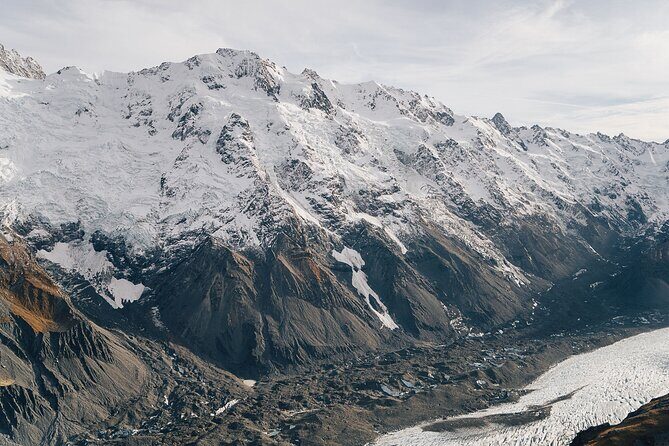
- Views of Hochstetter Icefall, then Burnett Mountains and the Mackenzie Basin below
- Open-plan cabin with up to 6 people, so sightlines are generally good
- A pilot guide with commentary, including context for what you’re seeing
- Small, time-efficient experience that still feels like a major “wow” activity
Why This 40-Minute Mount Cook Helicopter Flight Works So Well
The best part of this kind of flight is that it doesn’t sprawl. You get about 40 minutes of airborne time, plus a short landing break on the snow that’s designed for viewing and photos. For many people, that timing hits the sweet spot between thrill and sanity.
You also get a payoff for the price: it’s not just a scenic loop. The flight includes a snow landing on Tasman Glacier, plus overhead passes where you can see Aoraki/Mt Cook from the ice and look toward other mountain zones like the Burnett Mountains. That combination is what turns it from a “pretty ride” into a real memory-maker.
A few more Mount Cook tours and experiences worth a look
Getting to Glentanner Park and Into the Helicopter
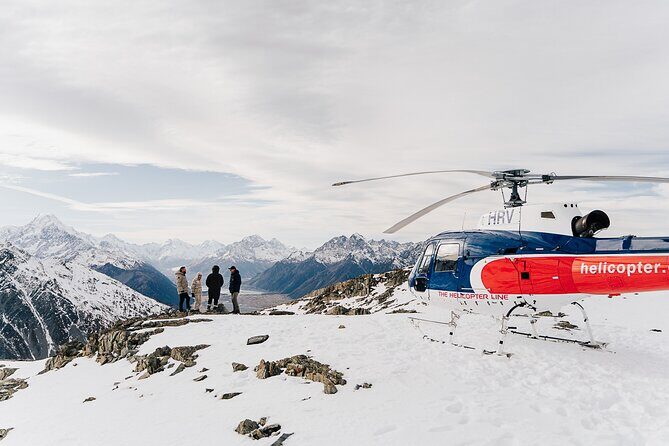
Your start point is The Helicopter Line at Glentanner Park on State Highway 80 (Mount Cook area). The activity ends back at that same meeting point, so you’re not stuck planning a long return drive or second transfer.
You’ll check in as instructed and use a mobile ticket. It’s also smart to factor in that this is a weather-based activity, so your day should stay flexible. If you have preferences for flight time, you can share that when booking, which helps when you’re juggling other Mount Cook plans.
Hochstetter Icefall to the Upper Tasman Glacier: The Setup for Your Landing
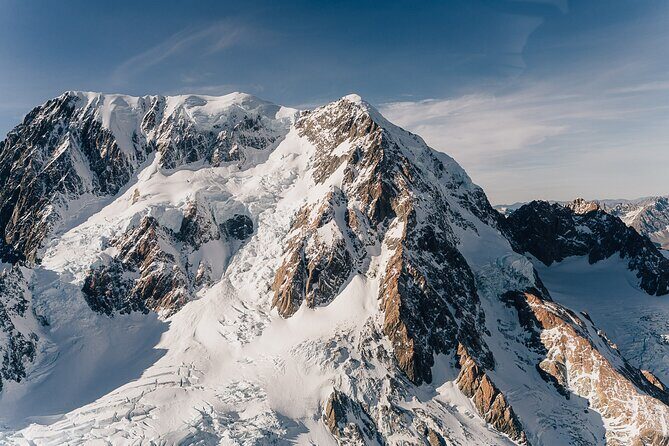
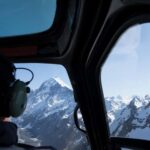
Once you’re in the air, the pilot flies you toward the Tasman Glacier area and past formations on/near Aoraki/Mt Cook’s ice fields. On this route, you’ll go by Hochstetter Icefall and the upper Tasman Glacier before the alpine landing.
This pre-landing phase matters. From above, glaciers don’t just look “white and cold.” They show structure, flow, and texture, and Hochstetter Icefall is one of the places where that becomes obvious fast. If your headset works perfectly, this is also where you’ll start hearing the landmarks put into context.
Then comes the hover. You’ll see the ice fields below, and the helicopter positions for the landing with a soft touch down. Expect the moment to feel quick, because you’re switching from watching the glacier to standing on it.
The Tasman Glacier Snow Landing: Photos, Cold Details, and Real Scale
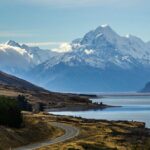
This is the star of the experience. The tour includes a snow landing on Tasman Glacier, typically with about 5–10 minutes on the ground. You step out and stand in the snow for a panoramic view and close-up sight of Aoraki/Mt Cook, which towers 3,724 meters (12,217 feet) above sea level.
A few practical points make this part more enjoyable:
- Bring warm layers you’ll actually wear. You’ll want something windproof, not just a light jacket.
- Use suitable footwear. Cold snow and uneven ice mean you’ll want grip and warmth.
- Keep camera gloves manageable. You’ll likely want to shoot fast, then put your hands back into warmth.
You don’t stay long, and that’s by design. In that short window, you’re there to drink in the scale and capture your photos while the light is good.
One thing to plan emotionally: the “snow landing” can be subject to real-world conditions. There have been situations where a snow landing wasn’t possible due to climate and seasonality, so the landing may be different than what you pictured. If seeing snow is your top reason to book, I’d book with the mindset that conditions decide the exact surface.
Burnett Mountains to the Mackenzie Basin: When the Views Change Fast
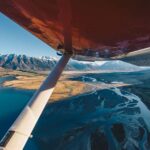
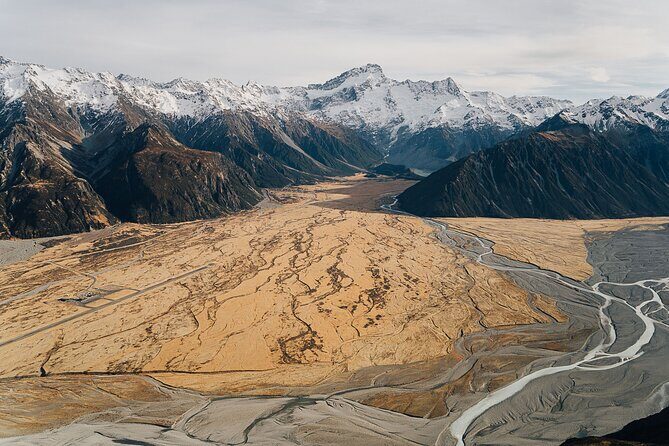
After your landing, you lift off and the pilot continues the route across the region. A highlight here is moving from glacier country to broader alpine and basin views, including the Burnett Mountains and the Mackenzie Basin below.
From the air, the Mackenzie Basin often reads like a big open bowl of terrain. You get a look down on rugged features and sparkling waterways, and you can see how water runs downward toward the native rainforests of the rugged West Coast. Even if you’ve seen photos of the basin before, the helicopter view is the kind that helps you understand distances.
The tour’s “variety in one trip” is also real here. You’re not stuck with one narrow theme. You see ice, then mountain ranges, then wider basin systems, all within a short total time.
Pilot Guide Commentary: Getting the Facts Without Missing the Views
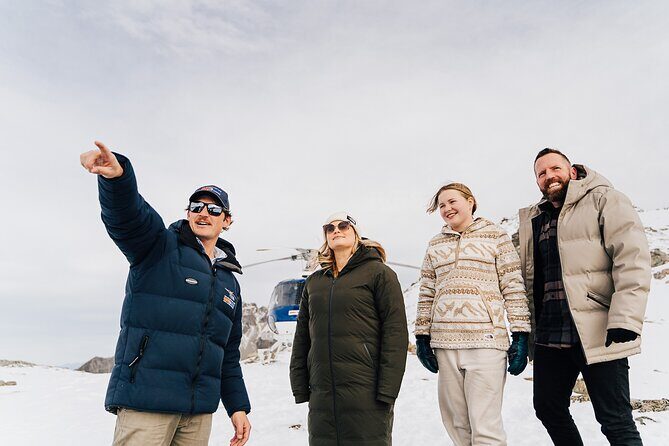
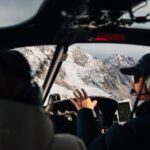
The pilot is your airborne guide and delivers informative commentary throughout. In good conditions, that adds a lot. You don’t just stare out a window; you learn what you’re looking at and why it matters.
From accounts of the experience, pilots can be particularly engaging and clear. Names that have come up include Gillie, Richard, and Marcus. While you can’t count on a specific pilot for every departure, it’s a helpful sign that the team tends to have strong communication skills.
There’s one practical catch. Headsets can be a make-or-break detail. If sound is unclear on your seat or your headset fit, the commentary won’t land as well as it should. I’d treat it like any other shared-gear situation: get your headset positioned early, ask staff if something feels off, and don’t assume it’ll fix itself once you’re in the air.
Timing, Seats, and What It Feels Like to Be in a Small Helicopter
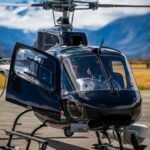
This flight is designed for a maximum of 6 travelers in an open-plan cabin. In plain terms, that usually means two things for you: better sightlines and less time spent waiting while the aircraft loads.
It’s also worth knowing how seating can work. One practical note that comes up in this type of flight is that seats may be re-oriented after the snow landing so more people get front views. That’s great in theory, but you’ll enjoy it more if the crew confirms who’s sitting where after the landing.
Also check the fine print that affects comfort and participation:
- Total weight per passenger: 331 lbs
- Children must be accompanied by an adult
- Most travelers can participate, but you should still be prepared for cold conditions and standing on snow for the landing window
What to Wear and Bring (So the Snow Landing Doesn’t Feel Miserable)
Cold is the main factor here, not motion sickness. The tour explicitly recommends warm clothing and suitable footwear because conditions are cold near the glacier.
Here’s how I’d pack for this kind of Mount Cook ride:
- Layer up: base layer + insulating layer + windproof outer layer
- Warm gloves that let you handle a camera
- Footwear with grip for snowy/icy ground
- A hat (seriously) since wind on open terrain can steal heat quickly
If you wear contact lenses or have cold-sensitive hands, plan for that too. When you’re outside for even a few minutes, your body notices.
Price and Value at $416.90 per Person
At $416.90 per person, this is a premium activity. The value equation comes down to two things: the uniqueness of standing on Tasman Glacier snow and how smoothly the day runs in good weather.
You’re paying for:
- A 40-minute helicopter flight in a small cabin
- A snow landing experience with dedicated time
- Pilot guide commentary throughout
The “only pay attention” twist is weather dependence. If the day cancels due to poor weather, you’ll be offered a different date or a full refund. That reduces risk, but it can still shuffle your schedule.
My best advice on value: if your Mount Cook trip includes one “big money, big memory” activity, this one makes sense because it combines multiple highlights into a single, time-efficient flight.
Who Should Book This Mountains High Flight
Book it if you want:
- A short, high-impact helicopter experience rather than an all-day plan
- To see Aoraki/Mt Cook from the ice and stand on Tasman Glacier snow
- Overhead views that also include Burnett Mountains and Mackenzie Basin
- A guided trip where the pilot explains what you’re seeing
Consider skipping or swapping to another option if:
- You’re not comfortable with flying in mountainous weather conditions (even if it’s well-managed)
- You strongly need the exact snow landing as advertised and would be disappointed if conditions change the landing surface
Also, because it’s a small aircraft and a cold landing, it’s worth coming with a clear tolerance for standing outside briefly in winter-like conditions.
Should You Book This Tour?
Yes, if you’re prioritizing a one-of-a-kind Mount Cook moment: the step-out, feet-on-snow view with Aoraki/Mt Cook towering above. The 40-minute flight window keeps it focused, and the included pilot commentary helps you understand the region instead of just taking pictures.
The only reason I’d hesitate is if you’re booking with zero flexibility and snow landing conditions are your make-or-break requirement. If you can work with weather and keep warm, you’ll be in a strong position for one of the best views in the area.
FAQ
How long is the Mount Cook Mountains High helicopter flight?
The flight is about 40 minutes (approx.). It also includes a snow landing with around 5–10 minutes on the ground.
Is the snow landing included?
Yes. The experience includes a scenic helicopter flight with snow landing on Tasman Glacier.
Where does the tour start?
It starts at The Helicopter Line, Mount Cook Glentanner Park, State Highway 80, Glentanner 7999, New Zealand, and it ends back at the same meeting point.
How many people are in the helicopter?
The helicopter has a maximum of 6 travelers.
What should I wear for the snow landing?
Wear warm clothing and suitable footwear, since temperatures near the glacier are cold.
Is there a weight limit?
Yes. The total weight per passenger is listed as 331 lbs.
What happens if weather cancels the tour?
If it’s canceled due to poor weather, you’ll be offered a different date or a full refund.