REVIEW · ROTORUA
Rotorua Duck Boat Guided City and Lakes Tour
Book on Viator →Operated by Rotorua Duck Tours · Bookable on Viator
This duck tour turns Rotorua into a show. You’ll cruise Rotorua’s city sights, then splash down onto two lakes in a WWII-era amphibious duck vehicle. The whole thing runs about 90 minutes, so you get a lot of wow without spending your day waiting around.
I especially like the land-and-water ride. It’s a rare way to see Lake Tikitapu (Blue Lake) and Lake Okareka while also getting city landmarks like the Government Gardens and the Blue Baths in one outing.
One heads-up: the experience needs good weather, and if it’s windy you might find the onboard audio harder to catch. Still, the shorter format and tight loop make it an easy win if Rotorua is treating you kindly.
In This Review
- Key Things I’d Plan Around
- A WWII Duck Vehicle Is More Than a Gimmick
- From Fenton Street to Lakefront Views: Getting Oriented Fast
- Government Gardens, Mokoia Island, and the Rotorua You Can See
- The 1886 Eruption and Why Rotorua Looks Like It Does
- Rotorua Museum and Blue Baths: Old-School Landmarks With Local Stories
- Treewalk Talk Without Needing to Commit
- Geothermal Sulphur Point: A Real Rotorua Moment
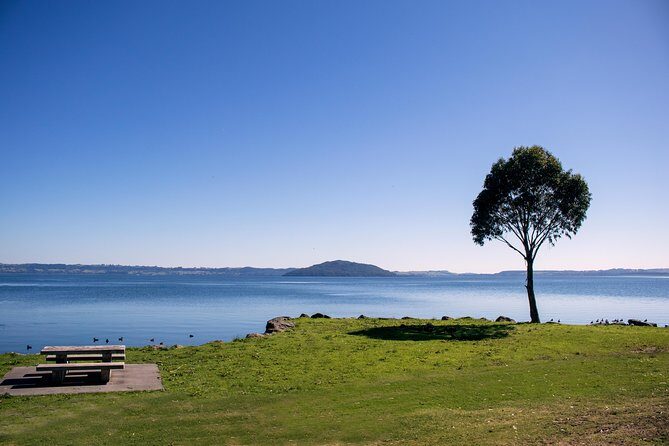
- Splashdown on Lake Tikitapu (Blue Lake)
- Lake Okareka: A Different Feel From the Blue Lake
- Lakeside Community Views and Tarawera From Higher Up
- Guide Style Matters, and This One Usually Delivers
- How Much Time You Actually Need (And Why the Short Loop Works)
- Who This Tour Fits Best
- Should You Book the Rotorua Duck Boat Tour?
- FAQ
- How long is the Rotorua Duck Boat guided city and lakes tour?
- Which lakes does the duck tour visit?
- Where does the tour start?
- What’s included in the price?
- What’s not included?
- Is the tour family-friendly?
- What happens if the weather is bad?
Key Things I’d Plan Around
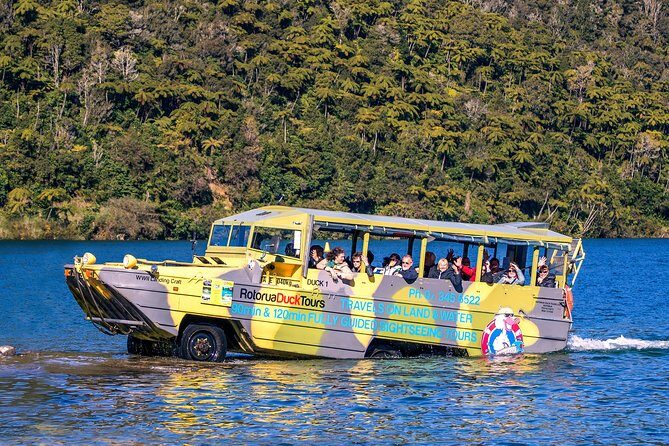
- WWII duck vehicle on land and water: the novelty is real, and it’s built for water days in Rotorua
- Lakes Tikitapu and Okareka: you’ll get scenic views beyond just the town center
- Live guide stories with humor: guides like Rileigh, Ian, Ollie, and Matt are repeatedly called out for both facts and comedy
- Quick city history stops: Government Gardens, Rotorua Museum (Te Whare Taonga o Te Arawa), and Blue Baths get mentioned along the route
- 1886 eruption + Treewalk talk: you’ll learn what shaped the area, plus where local walking viewpoints start
- A small group size: capped at 28 people, so it usually feels friendly rather than chaotic
A WWII Duck Vehicle Is More Than a Gimmick
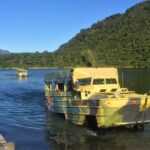
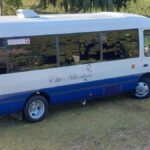
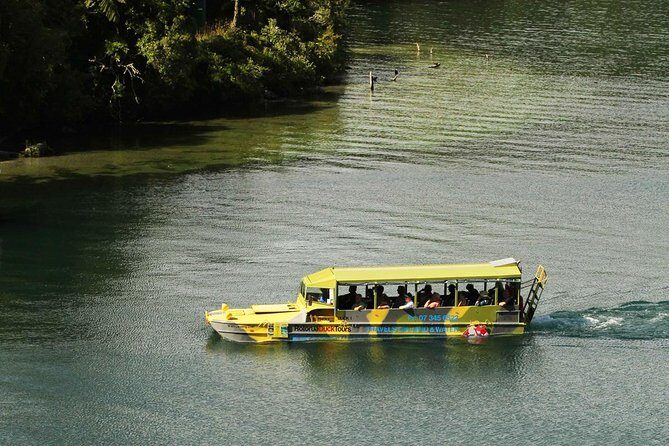
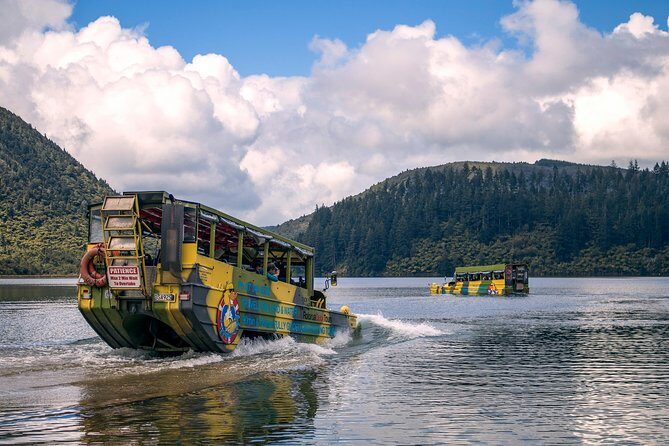
Rotorua can feel like a choose-your-own-adventure place. This tour is one of the easiest ways to start. You’ll board an authentic WWII amphibious duck that drives on land and then floats on water, so you’re not just looking at scenery. You’re moving through it.
I like how the vehicle changes your perspective. From street level, you’re seeing parks and buildings. Then, suddenly, you’re at lake level, looking out over the water with Mt. Tarawera in view from the elevated duck position. It’s a simple shift, but it makes the photos look like you planned two different days.
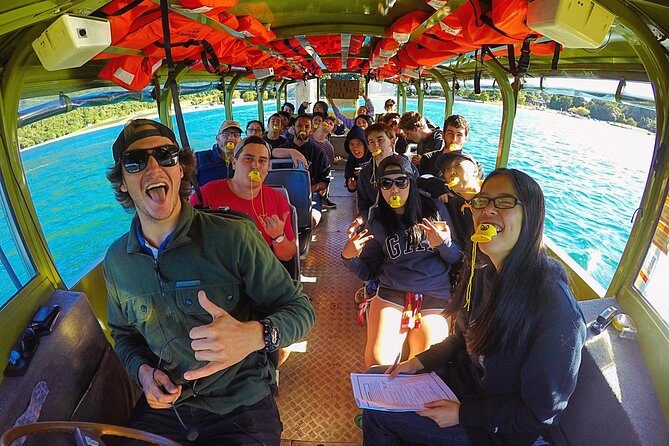
The other big win is live commentary. The guides are doing more than narrating a route. They mix local stories with playful energy, and multiple guides get singled out by name for that combo: Rileigh, Ian, Ollie, and Matt.
You can also read our reviews of more boat tours in Rotorua
From Fenton Street to Lakefront Views: Getting Oriented Fast
The tour starts right in central Rotorua at 1241 Fenton Street. If you’re trying to fit Rotorua into a busy itinerary, this matters. You can knock out a sightseeing loop without burning half the day on long transfers.
After check-in, you’ll do a drive around the lakefront and pick up context before you ever splash down. This is the part that helps the rest of your trip make sense. Rotorua’s geography can be confusing until someone connects the dots for you, and this route does that early.
Photo lovers will like the timing too. You’re not sprinting from stop to stop. You’re getting repeated look angles while the guide explains what you’re seeing, which makes your camera work feel less random.
Government Gardens, Mokoia Island, and the Rotorua You Can See
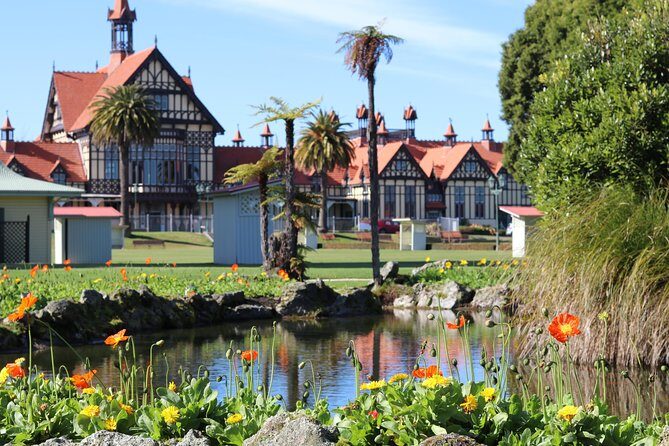
One of the first standout segments is the Government Gardens area near Lake Rotorua, where the tour connects scenic views with local landmarks. You’ll also hear about Mokoia Island, which helps frame why Rotorua looks the way it does: water, landforms, and volcanic history all tangled together.
This stop works for two types of people:
- If you like calm scenery, the gardens and lake edges give you a pleasant sight break.
- If you’re more into storytelling, this is where the guide ties everyday landmarks to Rotorua’s past.
You won’t be wandering for hours here. You’re driving and learning. That’s a drawback for some folks who want a long stroll, but it’s a benefit if your goal is a fast, high-value orientation.
The 1886 Eruption and Why Rotorua Looks Like It Does
Rotorua’s geothermal energy can make the area feel timeless, but the shape of the region was made by dramatic events. On this tour, you’ll specifically be shown and talked through the 1886 eruption.
I like that the story isn’t only geological trivia. It helps you understand why viewpoints, lakes, and the overall terrain connect the way they do. When you later look at the Blue Lake or the distant volcanic backdrop, the explanation makes your brain click.
If you’re short on time, this is a smart way to get context before you do other sights. If you’re the type who reads every sign, you’ll still appreciate the guide’s version because it translates what you see into a coherent timeline.
Rotorua Museum and Blue Baths: Old-School Landmarks With Local Stories
As you continue through town, the tour passes landmarks tied to Rotorua’s development. You’ll hear about the Rotorua Museum (Te Whare Taonga o Te Arawa) and the Blue Baths, established in 1931.
This is the part that feels like a classic guided city ride, but with Rotorua’s twist. The duck vehicle makes it fun, yet the guide is still giving you real anchors—institutions and sites that show how Rotorua’s identity formed over time.
The Blue Baths in particular gives you a sense of how long Rotorua has been drawing people in for water and healing traditions. Even if you skip museums later, you’ll leave with names and context that make the city easier to navigate.
You can also read our reviews of more guided tours in Rotorua

Treewalk Talk Without Needing to Commit
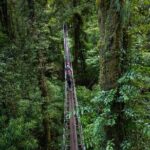
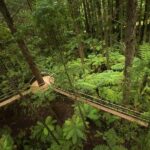
You’ll also hear about Treewalk—including where the track starts and how it’s described on the route. This is a nice touch if you’re trying to decide later whether a higher viewpoint is worth your time.
I’d treat this as a teaser, not a substitute. The tour’s strength is that it keeps moving and stays within about 1 hour 30 minutes to 1 hour 45 minutes total. So if you want a full walking experience up in the trees, you’ll probably need to plan that separately.
Still, the fact that the duck guide points you toward the idea of Treewalk can save you time. You’re not guessing where it is after you’ve already spent your energy.
Geothermal Sulphur Point: A Real Rotorua Moment
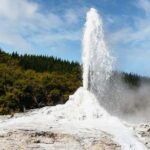
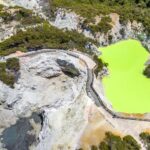
Rotorua is geothermal in a way that’s hard to fake. The tour includes a mention of Geothermal Sulphur Point, giving you a direct connection to the geothermal side of the region.
Even when you don’t step out for a long stop, hearing the story while you’re positioned to look at the site makes it feel more grounded than a quick passing mention. This part is great for first-timers who want to know what makes Rotorua distinct beyond lakes and walking paths.
One practical note: geothermal areas can be active and change day to day. You’ll be doing the tour on a schedule, so you should expect a “see and learn” moment rather than a deep study.
Splashdown on Lake Tikitapu (Blue Lake)
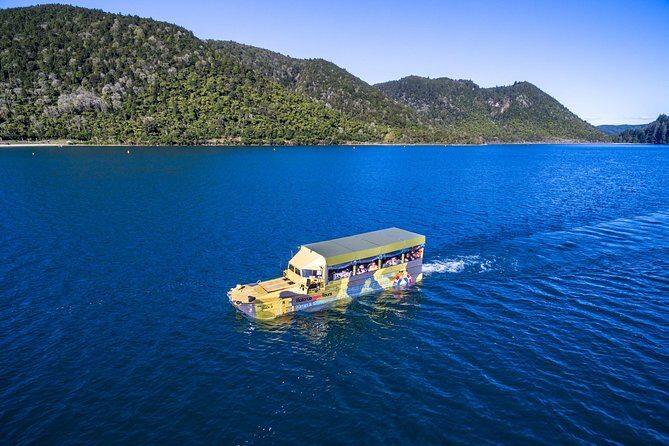
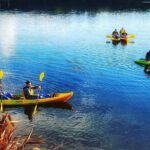
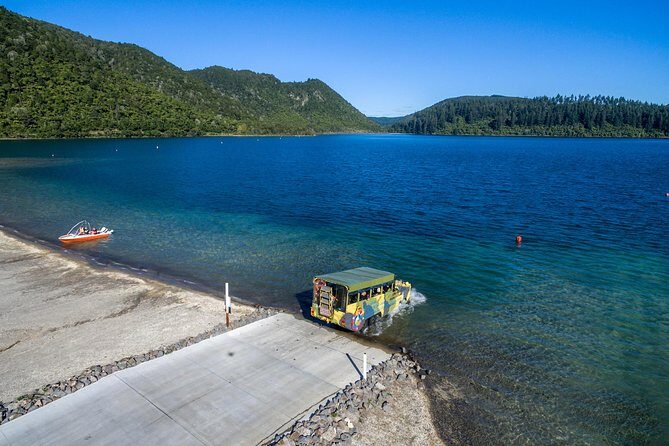
Then comes the payoff: the duck splashes down into Lake Tikitapu (Blue Lake). This is where the whole premise clicks. You stop thinking of this as a city tour with a boat section, and start thinking of it as a water-based Rotorua experience that just happens to travel through town first.
Lake Tikitapu tends to look striking, and the guide’s story helps you see the lake as part of Rotorua’s larger volcanic system rather than just pretty water.
On the water, you’ll likely feel the pace slow down. It’s not a long hike. It’s cruise time, with commentary running the whole way. For families, this is the “everyone can handle it” portion of the day.
Lake Okareka: A Different Feel From the Blue Lake
After Tikitapu, the duck continues to Lake Okareka. This second lake stop helps prevent the experience from feeling like one repeat. You get another stretch of water, another set of shoreline and view lines, and another chunk of story.
This is a good moment to ask yourself what you want your Rotorua trip to feel like. If you want variety in a short time window, the two-lake plan is a smart strategy. If you want only the biggest, most iconic lake view, you might think of Okareka as the bonus.
Either way, getting both lakes by duck makes the tour feel more complete than a single-water excursion.
Lakeside Community Views and Tarawera From Higher Up
There’s also time for a lakeside community segment where the duck’s elevation helps you see farther. The guide points out views of Mt. Tarawera from this higher vantage point.
I like this because it’s not just about flat sightseeing. The elevated duck position gives you a different angle than you’d get standing on the ground. It makes the distant volcanic scenery feel more dramatic and helps your photos capture depth.
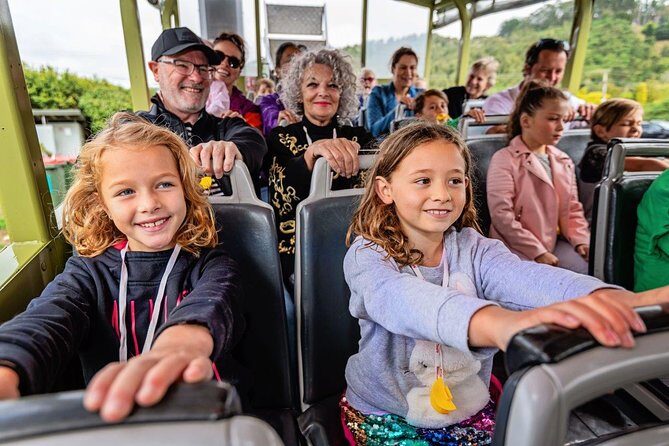
If you’re traveling with kids, this portion tends to land well. It’s easy for younger passengers to stay engaged because they’re looking outward and learning short, story-based facts along the way.
Guide Style Matters, and This One Usually Delivers
The single biggest theme in the guide feedback is not just driving skill. It’s the personality. People repeatedly highlight humor and timing, with named guides like Rileigh, Ian, Ollie, and Matt showing up in the strongest comments.
That matters because the duck tour is an 90-minute format. If a guide is dry, the time can feel long. If a guide is lively, 90 minutes passes quickly.
I’d also call out something practical: safety instructions are part of the onboard experience, and the guides take their job seriously. Multiple comments note that passengers felt safe while riding on the WWII-era amphibious vehicle.
Also, audio quality is the one potential weak point. One comment mentioned the sound system needed replacing, and another described it as hard to hear during a windy drive. So if sound matters a lot for you, sit where you feel you can hear the guide best once you’re on board.
How Much Time You Actually Need (And Why the Short Loop Works)
This isn’t a half-day project. It’s a short tour built for people who want a quick Rotorua intro. The duration runs about 1 hour 30 minutes to 1 hour 45 minutes, which is long enough for city context plus two lake experiences.
That short format is a value play. You’re paying about $55.23 per person for one guide-led outing that stacks multiple sights into one plan. Even if you do other Rotorua activities later, you’ll likely appreciate having this first because it helps you place the rest.
Group size is also a value factor. With a maximum of 28 people, you’re not stuck in a huge herd, and the guide can keep stories flowing without losing everyone.
Who This Tour Fits Best
This works especially well if:
- You’re visiting Rotorua for the first time and want a fast, guided orientation.
- You’re traveling with kids and need an activity that mixes movement, views, and a lot of listening.
- You want a fun, low-effort way to see multiple highlights without juggling separate transport plans.
It’s less ideal if you want long walking time or deep museum-style stops. This tour is about the ride and the explanations, not extended wandering.
And if you’re very sensitive to weather conditions, keep your expectations flexible. The tour requires good weather, and Rotorua’s conditions can change.
Should You Book the Rotorua Duck Boat Tour?
I’d book this if you want Rotorua in a nutshell: city sights, volcanic storytelling, and two lake cruises, all from a WWII amphibious vehicle that makes every photo look like a memory instead of a checklist.
Skip it only if you strongly prefer quiet self-guided sightseeing, or if you’re unlikely to enjoy onboard narration. Also keep an eye on weather plans, since this one depends on conditions to run.
If your goal is a smart first-day or mid-trip reset, this is one of the simplest ways to do it.
FAQ
How long is the Rotorua Duck Boat guided city and lakes tour?
It runs about 1 hour 30 minutes to 1 hour 45 minutes.
Which lakes does the duck tour visit?
You’ll cruise on Lakes Tikitapu (Blue Lake) and Okareka.
Where does the tour start?
The meeting point is 1241 Fenton Street, Rotorua 3010, New Zealand, and the tour ends back at the meeting point.
What’s included in the price?
You get a driver/guide, live commentary on board, and the 90-minute duck tour on the authentic WWII amphibious vehicle.
What’s not included?
Food and drinks are not included.
Is the tour family-friendly?
Yes. The tour is described as family-friendly and suitable for all ages.
What happens if the weather is bad?
The experience requires good weather. If it’s canceled due to poor weather, you’ll be offered a different date or a full refund.